Search
Showing 10 of 490 results for cardguard official website
-
Around the world in five
GLOBAL
Just how important is a university website? Very, new study finds
Institution websites play an important role in student applications, with up to 85 percent of ‘stealth applicants’ primarily applying based on visits to the university website alone.
ASIA
University launched by eight SAARC nations announces admissions
The South Asian Association for Regional Cooperation (SAARC) has announced dates for postgraduate STEM programme admission applications for its South Asia University, including offering specially created multiple-entry South Asia University visas.
EUROPE
54 networks bid to join European Universities pilot
Fifty-four bids have been received by the European Universities Initiative, which aims to deepen the collaboration between European universities.
CANADA
Canada eases application requirements for post-study work permits
The Canadian Government has expanded the window during which international students may apply for a post-study work visa to six months and has also allowed students to apply from outside Canada.
IRELAND
62% of international graduates of Irish HEIs employed in Ireland
At least 62 percent of international student graduates of Irish higher education institutions in 2017 found employment in Ireland.
-
Grow your business with the Skills Lab
At the heart of the Skills Lab is project-based learning. These projects are designed to give you top tips and advice that you can consume in bite-size pieces. The Skills Lab also allows you to post your own comments and share your top tips so we can develop a professional community.
Collaboration at the heart
The Skills Lab was born of industry feedback. In the 2015 Industry Survey, you expressed a desire for more professional development support, and in particular asked for online support in order for you to access content at a time and location that suits you.
We’ve since co-developed the Skills Lab with multiple groups of industry representatives, having taken into account your advice on the structure and features of the website, as well as on key content areas. We’re already working on a range of refinements that you’ve suggested, including on individual projects and website functionality.
Helping grow your business
The Skills Lab is already proving useful. Robbie Pickford, International Director of Takapuna Grammar School, told The PIE News at the New Zealand International Education Conference that the Skills Lab helped her institution learn about new markets.
“I’ve been in the industry for a long time and there hasn’t been that go-to place that I could get intel about the market, the country or the culture. The Skills Lab also encourages industry collaboration, with users able to upload their own information and expertise. There’ll be more and more information available for the sector. It keeps us growing and thinking towards the future,” Pickford said.
Kirstyn Mawdsley, Director International of St Hilda’s Collegiate School, also told The PIE News that the Skills Lab would be of particular benefit to New Zealand’s regional and smaller providers.
“We don’t have the same budget available as bigger programmes, and often we’re working in very small departments. Trying to keep up to date with everything and find professional development opportunities is quite complicated. The Skills Lab helps with that and also alleviates the distance barrier,” she said.

Content examples from the Skills Lab
But wait, there’s more!
The current version of the Skills Lab is just the beginning. We’ll continue to roll out new content, so stay tuned for more case studies and international education-specific content over the coming months. We’re planning more detailed and useful projects that will help you in your specific organisational context.
We’ll also be partnering with individual industry experts to bring you case studies and projects based on their successes. If you have suggestions on content, or would like to offer some of your expertise and contribute to a case study or project, please email us at skillslab@enz.govt.nz.
Sign up and participate
You can access the Skills Lab at skillslab.enz.govt.nz or from the ENZ website.
Make sure you watch the introductory video to learn how you can use this exciting new tool.
Note that only approved New Zealand education providers are able to access the Skills Lab and its content.
If you are experiencing any difficulty in signing up to the Skills Lab, please email skillslab@enz.govt.nz.
-
Digital skills and global citizenship at #NZAsiaTech Code Camp
A team of six students from Te Kura Māori o Porirua, a predominantly te reo Māori medium school in Porirua, interacted with school students in Japan, South Korea, Thailand, Viet Nam, Philippines, Malaysia, and Indonesia.
The overall theme was tourism, seen through the lens of the United Nations Sustainable Development Goals (SDG) - a theme that is highly relevant for the Asia-Pacific region. Students were given the task of profiling their home country’s SDG initiatives, with a focus on sustainable tourism.
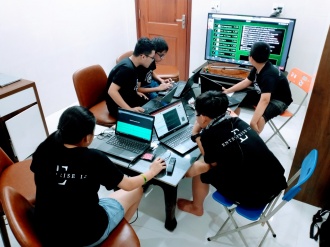
Team Enterprise 12 from Viet Nam work on building website project during #NZAsiaTech Code Camp
The North Asia Centre of Asia-Pacific Excellence partnered with educational coding programme Code Avengers and Education New Zealand Manapou ki te Ao to deliver the event.
“With New Zealand’s borders having been closed for more than two years, it’s crucial that the next generation of students still have opportunities to build cultural competencies and make connections across the globe,” says Education New Zealand’s Regional Director for Asia, Ben Burrowes.
“The #NZAsiaTech Code Camp was an opportunity for Kiwi students to re-establish connections with students in other countries, while gaining critical digital skills to prepare them for the future.
“It also also gave a taste of New Zealand’s education offering to prospective international students from the Asia region, who might consider enrolling in high school or tertiary study in New Zealand in the future.”
Code Camps can help to generate subsequent visits by interested students to New Zealand. For example, the Code Camp held at Waseda Jitsugyo School in 2021 and at Waseda University Junior and Senior High School in 2022 has led to Waseda’s group students’ programme sending around 50 students from three schools to New Zealand for three weeks in March 2023. Code Camp served as a great opportunity for students and teachers from Waseda University affiliated schools to experience our world-class digital education first-hand.
Honam Jeon, the Education Manager at Gangwon International Education Institute said the programme helped increase awareness of New Zealand:
“South Korea is very interested in international engagement and exchange programmes for school students. The #NZAsiaTech Code Camp was a perfect example we want to continue to join. Thanks so much again to ENZ for organising the well-structured programme.”
The online programme included team building exercises, English learning, HTML coding lessons, and the creation of a website by student teams, to demonstrate their understanding of the importance of sustainable tourism.
“As our students look to enter an increasingly globalised word, developing cultural connections and transferable skills is so important,” says Te Kura Māori o Porirua school principal, Whāea Evelyn Wharehinga.
“The Code Camp has been an exciting growth experience for our students, who have extended their digital literacy skills while having the chance to connect with students of different ethnicities and cultures across the Asia-Pacific region.”
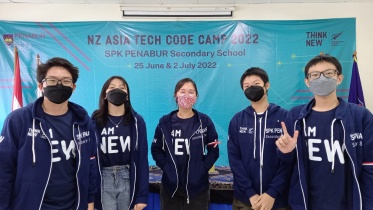
Team Indonesia was the winning team after presenting their newly developed website on Sustainable Tourism to a virtual panel of judges.
The students presented their sustainable tourism-themed websites to a panel of expert judges at the awards ceremony on 2 July 2022, with students from Indonesia winning the top prize.
Steve Budd of Code Avengers, a global edtech company based in New Zealand, said it was a great programme to participate in.
“It was a privilege to gift all participants a one-year free subscription to the Code Avengers site as part of our mission to build lasting digital capabilities for educators and young people, and bridge the digital divide,” says Budd.
-
Reminder of new data collection requirements
Private Training Establishments who do not receive SAC and/or Youth Guarantee funding from the Tertiary Education Commission, and are also signatories to the Code of Practice for the Pastoral Care of International Students are reminded that they are required to submit new data on their international students from 31 March 2016.
The August 2015 change to the Private Training Establishment (PTE) Registration Rules made it a condition of PTE registration to submit specific data to the Ministry of Education.
Consultation with exempted PTEs
A temporary exemption was granted to PTEs that provide English Language training only. For further information on the exemption please refer to the NZQA website.
An independent facilitator, Pania Gray of Kororā Consulting, is consulting with exempted PTEs on their approach to the new data collection requirements. Pania is consulting with exempted PTEs who are members of English New Zealand, via this representative body. Exempted PTEs who are not members of English New Zealand, and who would like to discuss the issues with Pania, are invited to contact her at: pania@kororaconsulting.co.nz.
Background about the data collection project
The Ministry of Education, Education New Zealand and the New Zealand Qualifications Authority (NZQA) have been working on a project which will gather better information from Unfunded International Education Providers (UIPs) using an automated data collection system.
The aim of the data collection project is to provide better market insights and analysis, and more targeted risk assessments, that will to help inform plans and activities relating to international education.
Good data and in-market intelligence can influence government strategy and policy, and enable informed data-driven decisions to be made. These decisions can work to the benefit of international education providers, international students and the wider international education industry.
More about the data and how to submit it
The UIP Data Collection – SMS Specification document explains which providers are required to submit data and how the data must be submitted.
Further information is available on the Services for Tertiary Organisations (STEO) website.
If you have any questions, or need clarification on who the exemption applies to, please email UIP.Datacollection@education.govt.nz.
The rule change took effect on 1 March 2016 and the new data must be submitted from 31 March 2016. If you require assistance with setting up the data return, please email UIP.Datacollection@education.govt.nz.
-
Preferred name and inaugural CE for the IST released by Establishment Board
These conversations provide providers and their stakeholders updates on the progress being made by the Unit and an opportunity to ask questions. These latest conversations will have a focus on the name and brand including the Board’s preferred name for the new national Institute. To support the conversation, a video has been shared that captures the essence of the journey to date. It outlines a vision for the Institute, along with presenting the preferred name.
Once the Regional Kōrero have been completed, the public online consultation will open, allowing everyone to provide feedback on the preferred name being suggested.
The online consultation is open from 14 February until 8 March. Once complete, the IST Establishment Board will consider public feedback on their preferred name and finalise their recommendation to the Minister.
You can watch the video here and the online consultation will be available on the IST Establishment Unit’s website.
Stephen Town has also been named as the inaugural Chief Executive of the New Zealand Institute of Skills and Technology. Stephen is currently in his final year leading Auckland Council and will formally take up his role on 6 July 2020.
You can find out more about Stephen’s appointment on the IST Establishment Unit’s website.
-
INZ student visa update: July 2024
Visa processing update (as at 10 July 2024).
Since January 2024, Immigration New Zealand (INZ) has received 24,541 student visa applications from international students outside of New Zealand. INZ have completed 20,369 of these applications, with 15,242 approved.
Recent processing times for international student visa applications are published on the INZ website and are updated by month: Visa processing times for international students
Work rights available for more partners of students
In June, the Government expanded the eligibility for work visas for partners of some students studying towards a Green List occupation.
People can now apply for a Partner of Student Work Visa, with open work rights, if their partner is studying a specified level 7 or 8 bachelor’s or bachelor’s (honours) degree that will lead directly to professional registration required for a Green List role.
This relates to Green List roles where occupational registration, rather than qualification requirements, are specified, such as nurses, doctors, and teachers.
For people granted a Partner of Student Work Visa, any school-aged dependents they have will be considered domestic students for tuition fee purposes and can apply for a Dependent Child Student Visa.
End of year student visa peak – Apply early!
The processing of international student visas is a key focus for INZ, particularly as we get closer to the end of the year.
INZ receives the highest volumes of student visa applications between October and March. Applications generally take longer to be decided during this peak period, so it is important that anyone who is wanting to come to New Zealand to study next year applies early. It is recommended students apply three months before their intended travel date to give them the best chance of having their application decided in time.
There are a few things applicants can do to make sure their application is able to be processed as quickly as possible. These include:
-
Check out INZ’s student visa information sheet on the INZ website to make sure a good quality application is submitted that includes all the evidence and supporting documents we need to decide the application. INZ will not be contacting applicants to ask for more information during the peak processing period, so it is important that everything is included from the start.
-
Applicants must demonstrate that they can comfortably afford to study in New Zealand. New Zealand has a thorough funds assessment and INZ looks for genuine sources of funds that are credible and can be verified. If INZ cannot verify funds or is not satisfied that any verification would be genuine, then the application will be declined.
-
INZ is seeing decline rates for international student visas increasing for many markets due to the increase in applications that cannot meet immigration requirements, so make sure the requirements are fully understood before submitting an application.
-
-
International education top priority – Tertiary Education Strategy 2014-19
Speaking at the Tertiary Education Strategy launch at the Higher Education Summit in Auckland, Mr Joyce said the new Strategy is about achieving faster progress with some of the key challenges facing New Zealand learners in the 21st century.
“Our tertiary education sector must continue to adapt and change to provide the skills and qualifications New Zealanders will need to contribute in the labour market in innovative and competitive ways,” Mr Joyce said.
The Tertiary Education Strategy 2014-19 sets out six strategic priorities designed to encourage a more adaptable outward-facing New Zealand tertiary education system that makes the most of strong links with businesses, communities and the world economy. They are:
-
Priority 1: Delivering skills for industry
-
Priority 2: Getting at-risk young people into a career
-
Priority 3: Boosting achievement of Māori and Pasifika
-
Priority 4: Improving adult literacy and numeracy
-
Priority 5: Strengthening research-based institutions
-
Priority 6: Growing international linkages.
For the full text of Mr Joyce’s speech see the Beehive website.
The Strategy is available on the Ministry of Education website.
-
-
The PIE News returns as media partner for NZIEC 2019
The PIE is an independent media, recruitment and events company connecting a global community of professionals working in international education.
The PIE is the only targeted media platform covering the international education sector that can boast a truly global audience of senior stakeholders working across the whole sector. We have reached over 2.7 million users so far and have 70,000 unique visitors to our website each month.
Anton and his team will cover the entire conference, providing updates on sessions through social media and the website.
-
October update from Immigration New Zealand
Update on student visa processing*
Since the borders reopened on 1 August 2022, we have received 7,710 student visa applications from international students outside New Zealand. We have decided 4,885 of these applications with over half of these decisions being made in less than 4 weeks and 95% being made within 7 weeks.
*Figures current as at 17 October 2022.
Submit your student visa application for early 2023 study now
Thank you to everyone who has followed our guidance around waiting to submit applications for a student visa for 2023 study. We now encourage students who are intending to begin their studies in New Zealand in early 2023 (up to the end of March) to submit their applications. If you have all your documents ready (including your offer of place and up to date financial evidence) then apply now to give enough time for your application to be processed before your intended travel date. Follow the checklists on the INZ website Student visa information | Immigration New Zealand for guidance on what to provide with your application.
Sending your passport to INZ
We have changed the rules for when you need to send us your passport. Now, if you are applying for a student visa you only need to send us a high-quality scan of your passport, you will not usually need to send your actual passport to be scanned at a Visa Application Centre (VAC) or an Immigration New Zealand office. This is a temporary measure to help with visa processing. Please note applicants may still receive an automated letter asking for a passport to be submitted. This is not required. We are updating the letter to address this issue.
More information: Sending your passport | Immigration New Zealand
Post-study work visa eligibility
Changes have been made to the Post-Study Work Visa eligibility requirements and visa conditions, to reflect the government decisions announced on 11 May 2022. For more information check the INZ website: New Post Study Work Visa requirements announced | Immigration New Zealand
-
Kiwi scholars to gain international skills
The scholarships, funded by the New Zealand Government and administered by Education New Zealand, support recent graduates or current students to undertake study, research or internships at institutions in Latin America and Asia, including Brazil, Mexico, China, India and Japan.
Awardees in this round (2019-2020 Round Two) are in fields including languages, law, business, health, sustainability and the arts. They will attend for periods ranging from four weeks to one year.
The scholarships enable a wide range of educational experiences, including: a cultural exchange and internship programme for Māori and Pasifika graduates in Vietnam; a group of arts and design students who will attend a course on the economic and cultural significance of modest fashion at the Islamic Fashion Institute in Indonesia; and an internship with an Indian charity supporting the health and education of street children in Jaipur.
‘’A key aspect of international education is sending New Zealand learners out to the world to gain all-important global skills and experience,’’ says ENZ’s Director Student Experience and Global Citizens, Partnerships and Marketing, Sahinde Pala.
“When they return, they bring new perspectives and expertise with them, helping to grow New Zealand’s international networks and inter-cultural awareness.’’
Most awardees undertake programmes that can be credited back to their New Zealand qualification. Similarly, international internships are usually part of their home institution’s work integrated learning programme, Sahinde says.
Background
PMSA and PMSLA support the Government’s International Education Strategy: to build a thriving and globally connected New Zealand through international education.
A total of 2,399 young New Zealanders have taken part since the programme was launched in 2013, initially for Asia (PMSA), and extended to Latin American (PMSLA) in 2016.
The full list of PMSA and PMSLA recipients from this round is on the Education New Zealand website: PMSA recipients and PMSLA recipients. Information on past PMSA and PMSLA recipients can be found here.
How to apply
There are two rounds of PMSA and PMSLA scholarships offered each year, in August and March.
Applications for the next PMSA and PMSLA round (2019-2020 Round Two) open from mid-January 2020 and close on 30 March 2020. More information on the application process can be found on our website. Institutions are encouraged to contact ENZ to discuss potential group applications.