Search
Showing 10 of 490 results for cardguard official website
-
Game On English launched in style
New Zealand has teamed up its expertise in rugby and English language teaching to develop a new edu-sport programme for Japan in the lead up to the 2019 Rugby World Cup and the 2020 Summer Olympics.
On Monday 7 July Prime Minister John Key and Japanese Prime Minister Shinzo Abe launched Game On English in Auckland as part of Mr Abe's official visit to New Zealand.
The leaders threw a rugby ball to the programme’s inaugural students – Japan's national sevens female champions from Iwami Chisuikan High School – to kick off a rugby skills training session and officially launch the programme.
The Prime Ministers, current All Black Conrad Smith and Huriana Manuel, captain of the New Zealand women's sevens team and Black Fern, met and shook hands with each of the rugby players before they went through their training paces.
In the lead up to Japan hosting the Rugby World Cup and Summer Olympics Prime Minister Abe has announced a government goal to improve English language skills and increase sporting capacity amongst youth.
"As a country with an envious track record of developing the world’s best rugby players and a top quality education system, New Zealand is well placed to help the Japanese government meet their goal," says Grant McPherson, Chief Executive, Education New Zealand.
The Game On English programme matches English language providers with sports academies to deliver centrally-organised, bespoke courses for young athletes.
"Growing export revenue from international education is a key part of the Government’s Business Growth Agenda. Programmes such as Game On English are aligning New Zealand’s educational expertise with demand in the global market."
Japan is now the third largest source of international students to New Zealand.
"Our success as a country will be determined by our level of connectedness with the rest of the world. Education is one of the best ways to build international linkages.
"These students will act as ambassadors for New Zealand education promoting the quality of our education system when they return to Japan," says Mr McPherson.
The Iwami Chisuikan sevens team are studying English at the English Language Centre of Auckland Institute of Studies (AIS) in the morning and training with Auckland Rugby Academy in the afternoon for the month they are in New Zealand.
"New Zealand is very different from Japan, but the people here made it really easy for me to adapt and feel comfortable. I enjoy being able to communicate freely with people from different backgrounds in class, and the support we get from teachers is invaluable," says Iwami Chisuikan player Aoi Kurokawa.

"Kiwis train differently – they emphasise technique and make training fun. I would like to bring what I learned back to Japan."
Ran Aoki is also enjoying her rugby in New Zealand. "The best part of the programme is the training. Auckland Rugby make it fun and give invaluable comments and feedback."
"Kiwis value the quality of training in a given timeframe over accumulated hours which allows us to get the most out of our short stay in New Zealand.
"I learn English all around – in class, whilst training, and at home with my homestay family!"
In two weeks a second group of Game On English students will arrive from Japan.
Eleven secondary school players from Kanto Super League will be based in Dunedin - studying English at the University of Otago Language Centre and receiving rugby training from Otago Rugby Football Union and local Dunedin high schools.
Both groups of students are in New Zealand at the invitation of the New Zealand government to pilot the programme.
"It is our intention that Game on English will be rolled out nationally and New Zealand will support Japan in achieving their English language and sporting ambitions in the next five to six years and beyond," says Mr McPherson.
We will evaluate the pilot programme over the next month and advise the next step in due course.
-
Growing visibility of New Zealand education in Latin America
From 12 -21 March, Education New Zealand Manapou ki te Ao (ENZ) held its first in-market, in-person roadshow in Latin America since before the Covid-19 pandemic. A total of 18 New Zealand education providers took part in the activities held in Colombia (Bogotá), Brazil (São Paulo), and Chile (Santiago), which brought together 143 representatives from 97 education agencies.
Representatives from institutions across New Zealand’s education sector (universities, English language schools, PTEs, and secondary schools) had the opportunity to network with agents and recruit students directly, strengthening connections with strategic partners and raising the profile of New Zealand in Colombia, Brazil, and Chile.
ENZ’s Director of Engagement for Latin America, Javiera Visedo, and Brazil Market Development Manager, Bruna de Natale, led the activities in all three countries. They provided full support to the New Zealand delegation, offering strategic information to maximise the professionals' time with Latin American partners, as well as sharing insights about the New Zealand institutions with local agents.
Through institutional presentations, one-on-one meetings with agents from the three countries, and collaborative discussion panels, where all shared best practices and ideas for continuing partnerships and New Zealand institutions were able to advance their business relationships with local partners.
This was also the perfect opportunity to launch the Spanish and Portuguese versions of ENZ’s Learn New Everyday marketing campaign, that was well received by agents as it provided them new assets and videos to use in local languages.
During the South America Roadshow, some New Zealand institutions also took part in parallel events in Bogotá and Santiago, organised by ENZ in collaboration with local partners. This included a student fair and a dedicated session with private and International Baccalaureate schools, reflecting the growing interest from students and families in pursuing undergraduate studies in New Zealand.

ENZ's Director of Engagement Latin America Javiera Visedo (pictured fourth from left, bottom row) and Coordinator Simone Cocco (to Javiera's right) with roadshow participants at one of the events in Bogota.
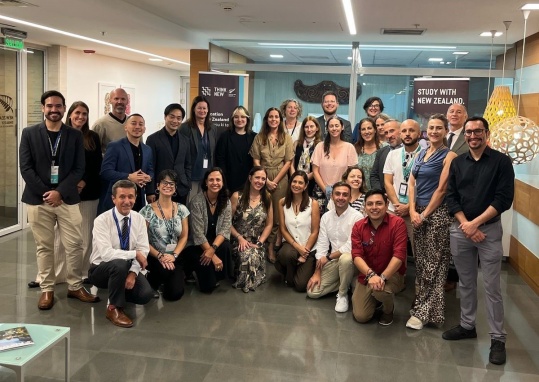
ENZ's Market Development Manager Bruna de Natale (pictured second from right, bottom row), Director of Engagement Latin America Javiera Visedo (pictured fifth from left, bottom row) and Coordinator Simone Cocco (pictured second from right, bottom row) with roadshow participants at one of the events in Santiago.
Director of Engagement Latin America, Javiera Visedo, said engagement between New Zealand institutions and the Latin America market advanced significantly during the roadshow.
“There is no substitute for the connections and momentum we build when we meet face-to-face, and the trusted relationships we build,” she said.
“Engagements like these are key to ensuring the sustainable growth of students from Chile, Colombia, and Brazil to New Zealand,” Javiera added.
Feedback from education sector participants was positive. Director of Mount Maunganui Language Centre, Geoff Butler, said he wouldn’t hesitate to get involved in these events again.
“Post-pandemic, we were keen to have official events to reconnect with these markets - the events didn’t disappoint,” he said.
“There were excellent opportunities throughout each event day to engage with agents not only at our desks, but informally too,” Geoff added.
If you’re a New Zealand education provider and are interested in learning more about the Latin America market, reach out to the team via email: latinamerica@enz.govt.nz.
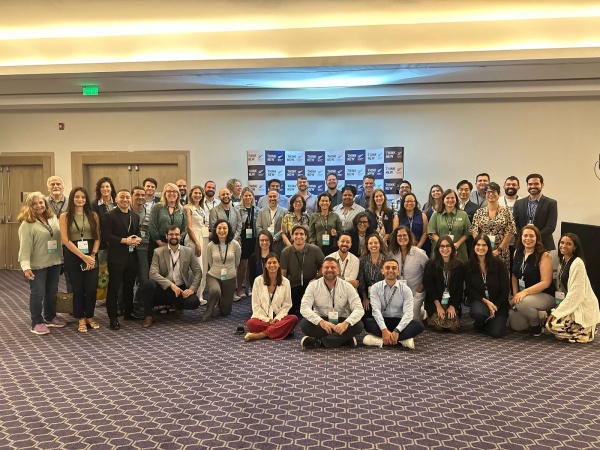
Attendees of the São Paulo ENZ agent event.
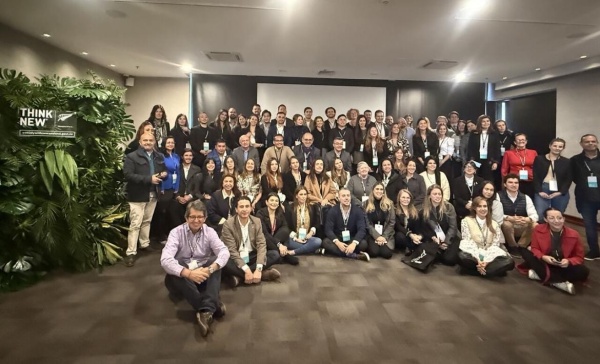
Attendees of the Bogotá ENZ agent event.
-
World-class fusion cuisine and culinary skills at Viet Nam gala dinner
The three teams, each consisting of two Vietnamese and two New Zealand students, showcased their culinary skills on stage in front of 170 guests, including New Zealand Minister of Tertiary Education, Skills and Employment, Steven Joyce.
The event was the outcome of two months’ hard work for the three teams, who initially worked together online to develop their menus under the guidance of culinary mentor and 2013 MasterChef New Zealand finalist, Vanessa Baxter. The teams met face-to-face in Ho Chi Minh City on 3 June, and then spent the following three days visiting Vietnamese markets to collect their fresh local produce before finalising their menus at the Caravalle Hotel kitchen.
At the gala dinner, the guests were treated to a selection of dishes from the students’ three-course fusion menus. Meanwhile, the three official judges – Haike Manning, New Zealand Ambassador to Viet Nam; Le Xuan Tam, Executive Chef, Caravelle Hotel and Brendon Partridge, Executive Chef, JW Marriott Hanoi – sampled all of the student’s dishes throughout the evening.
Decision making was tough and competition was high. Team 1 narrowly missed coming first, and Team 2 won the guest vote.
Minister Joyce announced Team 3 as the overall winner. Their braised lamb shanks with pickled cabbage, potato rosti and reduced jus proved most popular. This team included Jamin Gibson (Auckland University of Technology), Emma Waser (Otago Polytechnic), Phan Văn Lâm (Viet Giao Tourism School), and Nguyễn Ngọc Quân (VATEL International Business School Hotel & Tourism Management).

“It is so amazing that we won the competition,” said Emma Waser. “We gelled so well as a team throughout the whole competition but we worked especially well together on the night.
“We had to delve into each other’s cultures and traditions to come up with our fusion menu. I have learned how important it is to mix it up – to use different flavours and borrow from other traditions and cuisines.
“It has been amazing to come to Viet Nam and see what else is out there in the world – to find out more about different cultures, different people and different food.”
Said Jamin: “I have really enjoyed the food, the friendliness of the people and their hospitality. I definitely want to return to Viet Nam with my wife.”
Nguyễn Ngọc Quân enjoyed learning how to cook lamb the Kiwi way. “I learned to cook lamb the way that is more traditional in New Zealand. Typically the Vietnamese dislike the smell of lamb but our slow cook method and flavours in the lamb shank proved really popular.
“I admired my New Zealand team mates’ techniques and knowledge as well as their ability to think innovatively and creatively,” he said.
The gala dinner was the result of the New Zealand – Viet Nam Culinary Collaboration, an initiative that came out of the New Zealand – Viet Nam Strategic Plan on Education signed in November 2015. The plan is designed to deepen the level of engagement between the two countries and enrich students’ learning.
“The New Zealand – Viet Nam Culinary Collaboration is yet another example of the growing education relationship between our two countries,” said ENZ Chief Executive, Grant McPherson.
“While it has been fantastic to see the outstanding teamwork between the students, the gala dinner was also an opportunity to showcase New Zealand institutions’ vocational expertise and our education system’s world-renowned practical application of skills which prepare students for the working world.”
Grant emphasised that everyone involved in the collaboration was a winner.

Team 1 included Ryan Prouting (Ara, Institute of Canterbury), Tuainekore Taringa (NZMA), Trịnh Xuân Hoàng (Viet Giao Tourism School), and Nguyen Thuy Tra Giang (VATEL International Business School Hotel & Tourism Management).
Team 2 included Ella Ritson-Jones (Southern Institute of Technology), Jamie Bell (Wellington Institute of Technology), Dương Nhật Huy (Viet Giao Tourism School) and Phan Trong Bao Chau (VATEL International Business School Hotel & Tourism Management).
-
WeChat – THE Chinese social media
WeChat has become a default social networking tool for Chinese users.
WeChat is China’s version of WhatsApp or Viber but with many additional social networking features. Released in January 2011 it is the largest standalone messaging app with more than 500 million monthly active users of which 15% are based outside of China.
WeChat provides text messaging, hold-to-talk voice messaging, broadcast (one-to-many) messaging, sharing of photographs and videos, and location sharing. It is well integrated with other social networking services. Photographs can be enhanced with filters and captions, and an automated translation service is available.
To understand the scale of WeChat’s growth, the following statistics are interesting:
25% of users check WeChat more than 30 times a day Subscribers spent US$15.3B on mobile data using WeChat last year 86.2% of WeChat users are aged 18 to 36 WeChat users consume more content on WeChat than any other app.
When it comes to marketing, WeChat has a number of advantages;
Relationship building - WeChat acts like a customer relationship management (CRM) tool due its one to one communication, allowing a personal conversation between brands and followers.
Customer Feedback - Customers also use WeChat for collecting information, opinions and comments about products. It is a great platform to gauge consumer satisfaction and to collect followers’ feedback.
Education New Zealand’s WeChat platform was launched last August and has more than 2,500 followers. It is designed to enhance the awareness and understanding of New Zealand education among Chinese students and parents.
Alexandra Grace, Education Counsellor of the New Zealand Embassy Beijing said, “Through the New Zealand’s official Weibo and WeChat, we hope to engage more stakeholders in China about New Zealand’s quality education, encourage exchanges and interactions, promote and enhance cooperation in early, secondary, higher education, and vocational education between the two countries.”
If you are on WeChat, follow Education New Zealand and let us know how this new marketing tool is helping to grow awareness for your business.
-
Full house fairs
The fairs in Santiago, Sao Paulo, Rio de Janeiro and Beijing, as well as New Zealand fairs in Surabaya and Jakarta in Indonesia, were all characterised by big crowds, with lots of keen interest shown by prospective students.
The prize in the round went to Beijing, where the New Zealand exhibition was awarded ‘best pavilion’ by the organisers of the China International Education Exhibition Tour (CIEET). CIEET is acknowledged as China’s most influential international education fair ¬– the October 2013 tour attracted 443 education institutions from 32 countries, and over 40,000 visitors. Numbers were high again this year: on day one of the Beijing event, Education New Zealand staff handed out 1200 brochures.
We applied a bit of ‘Think New’ to our fair programme in Latin America this year. Innovations introduced in Chile included partnering with a reputable local education media/expo company to run a New Zealand only fair, which produced real improvements in the number and quality of student attendees. This bodes well for the coming fair in Bogota, Colombia. In Brazil we attended the FPP Edu-Expo commercial fairs in Sao Paulo and Rio de Janeiro and the New Zealand pavilion at both fairs was really popular.
Another innovation was to host a live feed from two Brazilian bloggers currently studying in Dunedin (between them this pair have an online following of several million). The sessions with Caio Komatsu and Luana Mazotti at the New Zealand stand ¬in Sao Paulo attracted a lot of attention, with the second sitting extended from 30 minutes to an hour to accommodate all the questions from students at the booth.
In Indonesia, the New Zealand Education Fair in Jakarta was opened by the Minister of Tertiary Education, Skills and Employment Steven Joyce. The official launch, accompanied by a cultural performance by Te Puia, was well attended by over 20 media organisations, including national and cable television.
A new aspect of the Jakarta fair was an alumnus presentation, by a graduate of Takapuna Grammar School and Auckland University. Vikra Ijas held a large audience in thrall with a humorous presentation on ‘The seven hardest things about living in New Zealand for Indonesian students’. With a closing endorsement “Life is about choices, I made the right one” it was a high value addition to the fair programme, the organisers believe.
Student numbers were high in Jakarta and in the fair in Surabaya the day before, with lots of the attending institutions commenting on the increased numbers of high quality prospective students, and greater awareness of New Zealand as a preferred study destination.
Next up:
March closes with events in Kuching, Malaysia (where New Zealand Week festivities are keeping Kiwis in the spotlight in lots of ways), and Shanghai and Guangzhou, China. In April, the fair round kicks off in India and in the Gulf states.
Hyderabad fair advisory
If you’re interested in The Hindu Education Plus fair in Hyderabad on 27 April, please get in touch with the organisers directly. Due to space restrictions we will run only a standalone ENZ booth. If you want to participate please contact event organisers directly: www.thehindu.com/features/education/article5339215.ece. -
Student ambassadors appointed in Christchurch
“The Student Ambassador programme is one of several initiatives aimed at better supporting international students so that they make the most of their time in Christchurch and perhaps encouraging them to stay longer in the region,” said Richard Ashmore, International Student Pathway Coordinator with Christchurch Educated.
“It is also a great personal development opportunity for the new ambassadors who will receive training and the chance to expand their own international networks.”
The inaugural group of ambassadors is made up of 14 students from New Zealand, Australia, Afghanistan, India, China, Japan, Malaysia, Russia and the Philippines.
“Some of the New Zealanders in the group benefitted from similar programmes during their own overseas study experience and want to help others in the same way,” said Richard.
Izzie Guo arrived in Christchurch in 2009 totally unprepared for the shock of landing in a foreign environment with only a limited understanding of the language. She was fortunate to have amazing support from her homestay mum and senior classmates to help her adjust to a lifestyle, language and living environment vastly different to the one she had left behind in China. Now Izzie is looking forward to helping other international students faced with the challenges that come with embarking on a learning experience in a new country.
“I have always wanted to help students new to Christchurch. I remember when I first arrived. I had many difficulties and so many people helped me in many ways. I want to give a little help and hopefully that can make a difference,” said Izzie.
The student ambassadors are studying at mostly tertiary institutions including the University of Canterbury, Christchurch Polytechnic Institute of Technology, Southland Institute of Technology, along with Middleton Grange and Kaiapoi high schools.
The student ambassadors were received into the programme by Christchurch Mayor Lianne Dalziel in mid-October. In addition to their mentoring duties, the ambassadors will represent Christchurch Educated and the city of Christchurch at official functions and international education visits and events. They will start in their roles as fully trained ambassadors in January 2015.
Interest in the roles was so high that a second group of ambassadors will be inducted into the programme next year.
-
Diplomas recognised by Chinese authorities
Vice Minister of Education Dr Hao Ping and Secretary for Education Peter Hughes signed the Arrangement on Mutual Recognition of Academic Degrees in Higher Education between the Government of New Zealand and the Government of the People’s Republic of China at the 8th Joint Working Group on Education and Training.
The Arrangement, first signed in 2002, was updated and re-signed to take into account the range of changes to the New Zealand Qualifications Framework and related settings that have occurred since 2002.
In a new move, two and three year diplomas from New Zealand were also added to the list of qualifications officially recognised by Chinese authorities.
The changes will see greater recognition of academic qualifications between New Zealand and China, making it easier for students to further their studies in either country.
“This increases New Zealand’s attractiveness at a study destination and expands opportunities for New Zealanders looking to study in China,” said Tertiary Education, Skills and Employment Minister Steven Joyce when announcing the signing.
When Chinese students return to China after their studies, they get their foreign qualifications verified by the China Service Center for Scholarly Exchange (CSCSE). The updates to the Arrangement ensure that a greater number of students receive the appropriate recognition, enabling them to gain official comparability of their qualifications within the Chinese system.
-
Great ideas from schools
The ENZ Schools’ Reference Group was set up last year as a way to collect school feedback and ideas about how the sector can best develop.
ENZ Business Development Manager Mary Camp says the latest meeting on 25 February generated a swag of suggestions for the professional development workshops held in the lead-up to the New Zealand International Education Conference (NZIEC). More are welcome…
“This reference group is really benefitting our work to support the industry,” Mary says.
“Given there are so many schools, spread from one end of the country to the other, and with so much variety of character and programme, it can be hard for us to be sure we’re hearing what we need to hear from schools.”
“It’s great now to have an official channel open for that conversation, as well as the other connections we have through regional clusters and the like. We’ve been able to design services and products to suit schools’ current needs, and schools’ feedback on other parts of Education New Zealand’s work has been hugely valuable.”
Mary says the pre-conference workshops in 2013 (on business planning, social media and working with agents) were well attended and rated highly by participants. The aim is to keep relevance high for this year’s NZIEC – held in Wellington on 21-22 August 2014.
Additions to this ‘working topic list’ from the Schools’ Reference Group meeting are welcome:
-
Collaboration – looking at different collaborative business models, eg regional, niche
-
Homestay systems/ processes, building your homestay community, sharing ideas
-
Alumni – using them effectively
-
Agent perspectives – what are they looking for? (panel)
-
Market analysis – including hard stats, competitor analysis, and recommended key markets for schools.
To make a suggestion for workshop topics please contact one of ENZ’s Business Development Managers for the school sector, Richard.Kyle@enz.govt.nz or Mary.Camp@enz.govt.nz. -
-
MyStudy NZ WeChat mini programme gets a refresh
MyStudy NZ is our intelligent matching tool which matches prospective students to courses and institutions in New Zealand based on a set of questions and areas of interest. It can be found on www.studyinnewzealand.govt.nz for our western markets.
However, for our China market who predominantly use WeChat, we developed a mini programme for them in November 2018.
The new version of the mini programme continues the original smart matching, but is more user-friendly and personalised, making it easy for students to obtain official information about application.
How is 2.0 better than 1.0? We believe it’s better in eight different ways:
- Social sharing enabled – Prospective students who come across their dream school can now share it to a WeChat friend or group chat immediately. The recipient can open the mini programme and view the details of the school as well.
- One-click authorisation – Students won’t have to fill in all the details to become a member anymore. With one click, prospective students can authorise their WeChat accounts to become registered MyStudy NZ members.
- Clear living costs displayed – Once prospective students get a match, they can expand and view the annual living costs in a pop-up window.
- You can see the latest content with added filter – Without registering, students can view the latest OA articles and filter based on views or posting date.
- UX (user experience) optimisation – Users can now choose paths when entering the mini programme.
- Complete UI (user interface) update – To remain consistent with the refreshed ‘I am New’ brand.
- New notifications – Push notifications will be sent to remind students to register, do course matching, bookmark favourite schools and talk to them.
- Speed optimisation and no more errors – We have done some coding optimisations and upgraded our server so the mini programme will load faster and users shouldn’t receive any more error messages.
-
Global initiatives show the benefits of collaboration

New Zealand Ambassador to Thailand, Taha Macpherson, at the opening of the AUT/RMUTT Thai-New Zealand Centre.
Auckland University of Technology (AUT) is celebrating two new transnational educational initiatives.
Designed to share New Zealand’s unique education offering with the world, these new projects are the result of years of relationship-building.
AUT joined with Thailand’s prestigious Rajamangala University of Technology Thanyaburi (RMUTT) to open the AUT/RMUTT Thai-New Zealand Centre earlier this month.
Based at RMUTT’s Bangkok campus, the centre is dedicated to English language learning – for students, entrepreneurs and the general public. Eventually, this will enable more Thai students to study at English-speaking providers overseas.
Secondly, in early August, AUT became the first New Zealand university to sign a Memorandum of Understanding (MOU) with the Tokyo Metropolitan Board of Education. This makes AUT the official institutional partner for the board’s new learning platform to promote inquiry-based learning to both students and teachers.
ENZ General Manager International, Lisa Futschek, describes these collaborative efforts as “significant milestones”.
“Transnational education initiatives like these ones not only raise the profile of New Zealand education overseas, but are crucial steps in New Zealand’s internationalisation journey,” she says.