Search
Showing 10 of 982 results for search for pheen4uuu from wiki 2025
-
Diverse New Zealand experience on show at the symposium on offshore delivery
Dr Rob Griffiths, Programme Director of Occupational and Aviation Medicine at the University of Otago summed up the mood of over 70 participants from across the university, Institutes of Technology and Polytechnics (ITP), Private Training Establishments (PTE) and educational services sector that attended a symposium on offshore delivery organised by Education New Zealand (ENZ) in partnership with Victoria University of Wellington on Thursday 9 June. Senior education professionals shared their experiences - both the good and bad – in delivering education services offshore. Sessions covered quality assurance, sustainable models, collaboration and the power of partnerships, critical success factors and explored a variety of markets from Singapore to Russia, the Middle East to Association of Southeast Asian Nations (ASEAN).
The future of digital and online learning technologies to transform and disrupt higher education was discussed with examples ranging from early childhood training, software development, and aviation medicine to training in wildlife rescue after an oil spill. ENZ’s General Manager Business Development Clive Jones said that the day “created a network bringing together a diverse group at different stages of development who were keen to stay together”.
One of the keynote speakers on international trends was Boston-based Richard Garrett from The Observatory on Borderless Higher Education, an education think tank with a focus on transnational education (TNE). Garrett was positive about the huge global opportunity and the TNE potential for New Zealand. In particular, the opportunity to learn from the main TNE providing countries - UK and Australia – and take a strategic approach in partnership with destination countries. His view that offshore delivery was like a permanent start up resonated strongly with participants.
“With around 3,500 offshore international student enrolments there is quite a way to go to achieve the target of 10,000 by 2025 set by the Government’s Leadership Statement for International Education. But the diversity of providers, markets and projects showcased at the symposium confirmed that New Zealand has the products, range of capability and interest in moving forward together. ENZ has been challenged to keep the conversation we started in Wellington going” said Adele Bryant, Business Development Manager at ENZ.
For more information contact Adele Bryant.
-
Around the world in five
China
A new visa scheme announced by China this month to woo international STEM talent to the country could encourage more short-term exchanges, visiting fellowships, and cooperative research projects, according to experts.
Global
ICEF Monitor explored how proposed changes to post-study work policies in the US and UK could reshape international student mobility.
United States of America
A National Foundation for American Policy report warns that many US colleges could shut down without international students and immigrants.
Australia
Australia’s international education sector has endured 18 months of turmoil. Sudden policy shifts, political rhetoric blaming both students and agents, and a looming cap on international student numbers have shaken confidence in what was once a beacon for global learners.
Pakistan
Pakistan's large youth population is fuelling a surge in student mobility, with the UK, US and Germany seeing the largest growth, a new report has revealed.
-
Around the world in five
The United States
The USA’s higher education section reached a new benchmark of 1.17 million international students in the 2024/25 academic year driven by a surge in OPT participants, according to the latest Open Doors research, although a snapshot report on enrolments in the current year flags a decline in new students amid visa delays and policy changes.
United Kingdom
As the UK prepares for the Graduate Route to be shortened from two years to 18 months, London’s business leaders have had their say on international graduates in the workforce, with 90% showing support.
North America
Canadian and American universities are struggling amidst government policies meant to curb immigration and/or international student numbers. Meanwhile, Asian and European institutions are gaining market share of international student enrolments.
India
Institutions that adapt to India’s new student mindset will lead the next decade of international education growth, says Landmark Global Learning.
Asia
As Asian economies rise to global leadership, upwardly mobile young populations driven by unprecedented aspirations are increasingly open to non-traditional educational pathways. These pathways include micro-credentials, with countries such as India, the Philippines, Singapore and Thailand leading the way in redesigning higher education structures.
-
Around the world in five
Canada
The government of Canada has announced a CAN$1.7 billion scheme to attract international research talent, including scholarships for international doctoral students, as well as funding to recruit established and early career researchers.
The United Kingdom
Franchise providers have been told to “clean up or close down” as the UK government moves to bring the fast-growing sector under mandatory regulation and crack down on “rogue operators” exploiting students and public funds.
America
Just 4% of international students recently surveyed said they felt “very or extremely” safe in the US, as shifting visa rules and hostile immigration policies contribute to a climate of fear on American campuses.
India
The number of Indian students pursuing higher studies abroad has declined for the first time in three years, according to data from Ministry of External Affairs (MEA) released to the Indian parliament.
Global
Times Higher Education’s new report, Towards 2035: Projecting the Future of Global Higher Education, predicts that university-level enrolments will continue to grow through 2035 from their present number (264 million globally), but that those enrolments will be shaped and driven by much different forces than in the past.
-
Regional partners’ workshop goes to Hawke’s Bay
The workshop is an initiative of ENZ’s Regional Partnership Programme (RPP), and drew a group of more than 20 regional coordinators from across the country. The RPP is a part of a strategic focus by ENZ to grow the value of international education across the whole of New Zealand as part of the effort to grow the industry’s value to $5 billion by 2025.
“The aim of the workshop was for participants to share experiences and receive professional development to increase their effectiveness in working with education providers in their regions,” said Greg Scott, ENZ’s Regional Partnership Programme Manager.
Topics included:
-
Product development
-
Inbound familiarisation planning
-
The upcoming regional digital resource
-
Increasing awareness of the value of international education in regional communities.
Participants enjoyed a range of presentations including lively show-and-tell sessions from Education Wellington and Education Hawke’s Bay, as well as an update from Karen Chalmers, NZQA’s Director International and Policy.
The day before the workshop, a smaller group of new regional coordinators came together at an ENZ-facilitated orientation session. They learned more about the RPP, contributed to an interactive business plan workshop, and heard some first-hand insights from Education Taranaki’s Rachael Berndt.
Greg said feedback about both days was extremely positive.
“We've seen a good number of regions join the RPP over the last 12 months, and there is a significant increase in regional growth initiatives as a result of the formation and implementation of their strategies.”
-
-
From the Chief Executive: Growth and global partnerships in international education
Kia ora koutou,
It’s great to be home following an impactful, whirlwind visit to Beijing for the China Annual Conference and Expo for International Education (CACIE).
I am pleased with the collective outcomes we have achieved from this visit. For one, New Zealand education institutions formalised 32 new partnerships with their Chinese counterparts that present real opportunity for knowledge exchange and pathways for students to experience the best of both countries.
ENZ signed a letter of intent with the China Center for International People-to-People Exchange to grow our education cooperation, particularly through institutional relationships across higher education and schools.
As Country of Honour at CACIE 2025 New Zealand had unparalleled opportunity to demonstrate why we are a high-quality education destination, backed by a strong student experience and a reputation for safety, inclusivity and innovation.
Last week ENZ’s extended leadership team, including our offshore Regional Directors, came together in Wellington. As part of our programme we visited four education providers across the region – Wellington College, Victoria University of Wellington, Whitireia and WelTec Petone and Le Cordon Bleu Wellington – before meeting with the Schools International Education Business Association (SIEBA) to understand the work they do with schools nationwide. These were insightful engagements that enriched our understanding, and we appreciated the warm welcome extended.
In other news, I am pleased to share with you that Tony Gray has been appointed permanent Chair of the Board of Education New Zealand. Tony has been a strong advocate for us while Acting Chair and a genuine pleasure to work with, so it is fantastic to have him confirmed in the role to 31 October 2027.
Lastly, I wanted to finish by acknowledging the sad passing of two public sector colleagues, Paul Irwin and Neil Miller, during the month of October.
Paul Irwin was a valued colleague at ENZ, having been a member of the Senior Leadership Team and part of our whānau for seven years. Although I didn’t work with Paul at ENZ, I knew him from his advertising industry days when we worked together on the ‘It’s Not OK’ campaign for action on family violence. His passing is a tremendous loss and he will be remembered for his strategic smarts, calm nature, and his leadership of New Zealand’s education brand over the years.
As Chief Advisor - Policy and International at the New Zealand Qualifications Authority, Neil Miller was a regular presence at International Peak Body meetings over the last four years. Neil would bring his deep-thinking skills and humour to these meetings, and always took a genuine approach to listening and helping solve issues that matter to us all.
Our thoughts are with their families and friends.
Moe mai rā, Paul and Neil.
Kua whetūrangitia kōrua
Return, take your place amongst the stars along with your ancestors that adorn the sky.
Ngā mihi nui,
Amanda Malu
Chief Executive
-
2026 New Zealand School Scholarships launched in Viet Nam
Education New Zealand Manapou ki te Ao (ENZ) launched the New Zealand Schools Scholarships (NZSS) 2026 programme, recording the highest level of participation since the programme’s inception in 2019.
A total of 56 New Zealand secondary schools and 55 Vietnamese education agents have participated in NZSS 2026, reflecting strong education provider and market confidence in the programme.
Launched on 5 January, the programme will have applications close on 22 March 2026, with 56 scholarships available across a diverse range of state, private, single-sex and co-educational schools, offering NCEA, Cambridge or IB curricula.
To grow awareness and interest in the scholarships and New Zealand’s school study options, ENZ delivered a series of New Zealand School Scholarships information sessions in collaboration with six education agencies and one partner school in Viet Nam. This was in addition to two public webinars livestreamed on a partner media fanpage.
ENZ also strengthened agent capability through a dedicated six-part webinar series for Vietnamese agents, delivered from 3-18 December 2025. The series featured 36 speakers from New Zealand secondary schools, NZQA and SIEBA, and focused on building agent knowledge of the New Zealand school system, regional school offerings, and NZSS promotion guidelines.
The agent webinar series attracted over 160 registrations, with 60-98 agents attending each session, indicating strong engagement across the market. The sessions were designed to equip agents with practical tools to confidently advise parents and students and to support consistent, accurate promotion of NZSS.
ENZ’s Market Manager – Viet Nam, Van Banh said these activities aim to provide prospective school students and their parents clear, consistent information about the NZSS programme and application process.
“With the programme’s record school participation this year, expanded market outreach, and a strong focus on education agent capability-building, NZSS 2026 is a significant step forward to strengthen awareness of New Zealand’s secondary education offering in Viet Nam and support its long-term, sustainable growth.
“It’s fantastic to see a sustained level of commitment and contribution from education providers for this programme, it really highlights the strategic value of the NZSS as a pathway programme to study in New Zealand and underlines the sector’s continued confidence in Viet Nam’s secondary school market,” Van said.
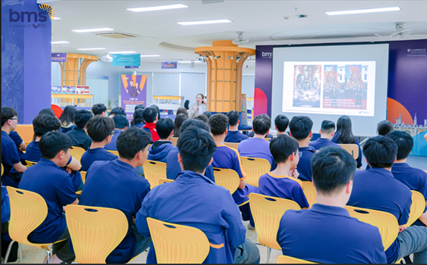
Above: Students from Ban Mai School (Ha Noi) attend a workshop about New Zealand education and opportunity with NZSS
Collectively, participating New Zealand schools have committed an estimated $441,702 NZD in scholarship investment, with each school offering a scholarship valued at 50 percent of the first-year tuition fee.
Since its first launch in 2019, NZSS has awarded nearly 80 scholarships, enabling Vietnamese students to access high-quality secondary education in New Zealand and progress to positive academic and career outcomes. Alumni achievements continue to reinforce NZSS’ reputation as one of the most established and impactful government-backed secondary school scholarship programmes in Viet Nam.
-
Investment in international education provides boost
Over $600,000 of co-funding was awarded in the third round of International Education Growth Fund grants to a mix of projects across the international education sector aimed at growing New Zealand’s international education industry.
The University of Waikato received co-funding to partner with law schools in China to enable Chinese students to complete their Chinese LLB and undertake a LLM at Waikato, as well as to enable Waikato students to obtain LLM qualifications that are recognised in China.
Study Applied Sciences – a marketing alliance of Christchurch Polytechnic Institute of Technology (CPIT), Eastern Institute of Technology (EIT), Universal College of Learning (UCOL) and Otago Polytechnic (OP) – received co-funding to create print and digital material to raise awareness in Germany of applied science at New Zealand institutes of technology and polytechnics.
Other successful initiatives include a collaboration of four high schools from Auckland and Tauranga to attract more students from Mexico and a project by Hamilton-based Online Education Ltd to translate its ‘Code Avengers’ online computer programming and web development courses for new markets.
“A common theme across this round’s participants is collaboration, an imperative for the industry if we are to achieve our goal of increasing the value of international education to New Zealand to $5 billion by 2025,” says Grant McPherson, Chief Executive of Education New Zealand.
The IEGF offers co-funding to new and innovative projects targeted at international markets. Education New Zealand invests between $10,000 and $50,000 per project to match successful applicants' funding.
“Over three funding rounds we have invested just over $2 million in 59 growth projects that have helped develop new education products, opened the door to new markets, and facilitated contacts that will lead to new business or investment.
“International education brings social and cultural benefits to New Zealand, as well as contributing to economic growth, and we welcome opportunities to develop the market offshore for our world-class education programmes, products and services,” says Mr McPherson.
Applications for round four of the International Growth Fund open on 1 September 2014.
-
Upcoming webinar: New Zealand International Education Enrolments 2024
Webinar details
- Wednesday 30th July, 11:00am-12:00pm (UTC+12)
- Register here: New Zealand International Education Enrolments 2024
Following the recent launch of the International Education Going for Growth Plan, join this webinar with Marie Clark, Director Insights, Education New Zealand Manapou ki te Ao, to hear more about the 2024 international student enrolments.
The full-year 2024 international student enrolments saw New Zealand reach 72 percent of pre-pandemic levels seen in 2019, with most sub-sectors contributing to this growth. Primary and intermediate schools have experienced the strongest growth, and New Zealand universities and government-funded PTEs are now very close to meeting or exceeding their 2019 enrolment numbers.
During this session, Marie will take participants through the data, including total enrolment numbers by subsector, highlight emerging trends and will offer advice on how this information can be used in your organisational planning.
If you have something you would like us to specifically highlight or a question please email insights@enz.govt.nz by 5pm Monday 28 July.
-
Does it matter if New Zealand wasn’t a student’s #1 choice? Join the Insights and Student Experience teams and find out!
In this session, Director of Insights, Marie Clark, Insights Analyst, Dr Tom Vardy, and Student Experience Manager, Ross Crosson, will give an overview of the key findings of the survey and will also exclusively preview our deep dive into the questions on decision making and country choice. Answering the question: Does it matter if New Zealand wasn’t an international student’s first choice?
In the 2024 International Student Experience Survey, students lifted their positive rating of their experience to 86 percent, two percent higher than the previous year. In addition, the number of students who rated their experience as “excellent” lifted eight percent to 41 percent. ENZ’s media release which includes links to the report and data sets can be found on our website - Rise in international students rating New Zealand experience positively.
As many education providers are looking to take advantage of new opportunities, this webinar is an important first chance to identify what additional support for international students may be required for the 2025 academic year.
Click this link to join the session: Student Experience Webinar | Tuesday 24 September 11am to 12pm.