Search
Showing 10 of 982 results for search for pheen4uuu from wiki 2025
-
Tokyo fair sparks excitement around New Zealand study opportunities
Earlier this month, Education New Zealand Manapou ki te Ao (ENZ) delivered a two-day event in Tokyo that brought New Zealand education to the forefront for Japanese students, families, and education agents.
The ENZ Fair attracted around 600 prospective students and their parents, while more than 150 education agents attended the seminar. The strong turnout and enthusiastic engagement reflected growing interest in New Zealand as a study destination.
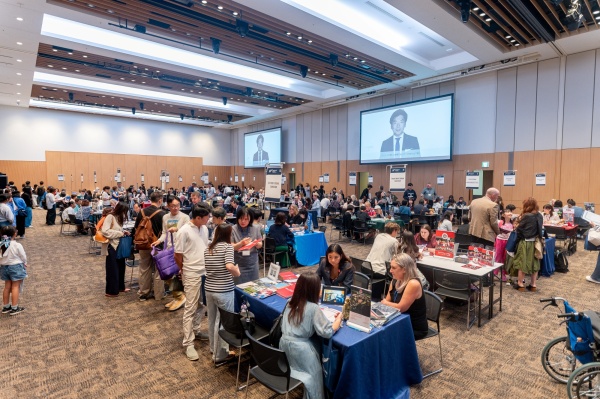
A total of 62 New Zealand education providers took part, representing schools, universities, English language institutions, private training establishments (PTEs), and New Te Pūkenga New Zealand Institute of Skills and Technology (Te Pūkenga) providers.
The school sector led the charge, with 52 providers represented, highlighting the increasing demand for secondary education pathways.
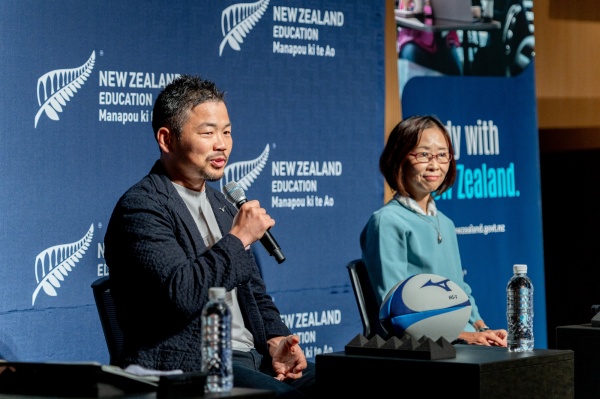
Fumiaki Tanaka sharing his personal experience studying in New Zealand.
Attendees heard from inspiring guest speakers who shared personal stories and connections to New Zealand. Fumiaki Tanaka, a former Japan national rugby player and the first Japanese athlete to play Super Rugby with New Zealand’s Highlanders, spoke about his journey as an international student. Yukiko Chiba, Executive Officer and Director at Sekai Bunka Publishing, offered a parent’s perspective, reflecting on her child’s life-changing experience studying at a New Zealand high school.
Agent seminar
At the agent seminar, ENZ provided a New Zealand market update with the latest information, guidance and promotional materials.
The seminar also included a session focused on building long-term relationships between New Zealand and Japanese institutions. Headon John Paul, who represents the Oceania region for Ritsumeikan Uji Junior and Senior High School, and Ritsu Hidume, a New Zealand alumni now studying at Ritsumeikan Uji, shared their insights and advice with New Zealand education providers.
A roundtable discussion with four education agents and members of the Japan Association of Overseas Studies (JAOS) explored how agents support New Zealand education, current trends in the study abroad market, and opportunities to strengthen collaboration.
ENZ Senior Market Develop Manager Takako Tominaga said the feedback from New Zealand providers was overwhelmingly positive.
“We were really pleased to hear that New Zealand providers were impressed by the quality of the agents who attended, and that Japanese families showed genuine enthusiasm and interest in learning more about studying in New Zealand.”
-
Hong Kong student wins Wellington award for unstinting community service
The Year 12 student from Wellington Girls’ College has been named a winner at the annual Wellington International Student Excellence Awards for her contribution to the city’s international student community and her tireless community service.
She was among a group of 24 high-achieving secondary and tertiary international students recognised at the event for excelling academically, in the arts, sport, community, or online.
As the only child of a teacher and a primary school assistant, Jasmine came to New Zealand in November 2019 to complete her education. Leaving behind a competitive school environment, and a tense and complex political environment, she arrived in Wellington ready to embrace the open and culturally diverse environment she found herself in.
Jasmine says that she had always wanted to get involved in community activities, but until arriving in New Zealand she lacked both the confidence and the opportunities.
“As an international student here, I have been given so many opportunities. I want to treasure all of them and get involved.”
Jasmine quickly understood the value of participation and leadership.
“Arriving in a new country where you don’t know anyone can be a lonely experience, and it’s easy to just hang out with people from your own country, but I have made great friends, both from New Zealand and around the world, and gained support through the organisations I’m involved with.”
From helping to reinvigorate the International Club at school, Jasmine went on to be a key player in the establishment of the Wellington International Students’ Association, which not only connects international students across city schools, but also seeks to build relationships between domestic and international students.
Domestic and international students learn from each other
She believes there is much that domestic students stand to learn from international students.
“They get to see a perspective from another part of the world. Coming here to study has allowed me to immerse myself in New Zealand's culture and learn far more about the country than I would if I was a tourist.
“I’m sure the same applies to New Zealand students who haven’t had the opportunity for exchanges or travel. Through encouraging domestic students to get involved in our events we have built stronger connections.”
But Jasmine hasn’t stopped there. From Mary Potter Hospice to Conservation Volunteers New Zealand to the Student Volunteer Army (SVA), she has put in the mahi. She recently earned her SVA Silver Service Award pin for clocking up more than 250 volunteer hours working to meet the UN Sustainable Development Goals.
Taking her community service to the next level, Jasmine has been selected to represent Wellington Girls’ College in the National Ambassador programme. She will join other like-minded students from around the country working to connect, support, and empower international students.
All of this while juggling studies, sport, mentoring, and music. However, she insists that she has gained more from her community service than she has given.
Volunteering builds skills and network
“Volunteering gave me the opportunity to get out there and build a strong network with experienced people. I’ve gained important inter-personal skills like customer service and communications, and I’ve also learned a lot about New Zealand culture.”
Jasmine says being an international student in New Zealand has also allowed her to appreciate some of the important issues which other communities, such as the LGBTQIA, face.
“I appreciate the inclusiveness towards gender minorities here. In Asia, people are much more reserved about their beliefs and opinions but here we can have open discussions and everyone can be passionate about sharing their thoughts. It has had a powerful influence on me.”
Global citizen skills important
The global citizen skills acquired through international education are so important for the current generation of students heading off to Uni or into the workforce, Jasmine says.
“It’s important to know people from other parts of the world, understand some of the issues they face, and appreciate their culture and beliefs. Building relationships in-person is so much more valuable than learning from the internet.”
“The diversity of ethnicity and cultures, religious and political opinions here in New Zealand has really enhanced my worldview.”
Jasmine is delighted to have been recognised for her contribution to the community, and says her parents were thrilled when her name was announced at the awards ceremony. “Not only are they proud of my own achievements, but they feel that I am representing Hong Kong well in New Zealand.”
Jasmine’s parents were among 214 friends and family of recipients who joined the livestream of the awards ceremony from around the world.
As for the future, Jasmine is looking forward to completing Year 13 and being a member of the student executive next year, striving for the SVA Gold Award for volunteering, being a National Student Ambassador, and ultimately heading to the US to study Computer Science.
-
English New Zealand and Universities New Zealand sign MOU
The MOU was signed on 19 June between Universities New Zealand, the peak body representing all New Zealand universities, and English New Zealand, which represents 22 private and state-owned English language schools (all Category 1) in 12 destinations around New Zealand.
As part of the MOU, each of New Zealand’s eight universities will accept the Accredited Pathways Assessment ofan individual English New Zealand member as evidence of meeting their English language proficiency requirements.
The Accredited Pathways Assessment for English New Zealand members will be in addition to the quality assurance requirements that all member schools must meet, over and above NZQA requirements. Member schools with accredited assessments will show the Accredited Pathways Assessment quality mark in addition to the English New Zealand membership logo.
With approximately 20,000 students per year from over 75 countries studying at English New Zealand member schools, the memorandum will encourage a diverse range of students to consider a quality pathway to higher education in New Zealand, adding to the sector’s diversity and sustainability.
English New Zealand Chairman, Wayne Dyer, said English New Zealand and Universities New Zealand have been working together for some time to encourage and enable pathways to tertiary study in New Zealand.
“This agreement is a significant step forward and combines rigorous quality assurance with pragmatism for the benefit of individual students and for New Zealand’s international education sector as a whole,” Dyer said.
Universities New Zealand Chief Executive Chris Whelan agreed the university sector benefited enormously from these sorts of partnerships.
“But we enter them only when absolutely certain that they meet the rigorous quality standards expected of New Zealand university education and qualifications,” Whelan said.
“The fact that we have signed this MOU is a vote of confidence in the high quality of English New Zealand’s accredited providers.”
ENZ Chief Executive Grant McPherson said the agreement was a great example of the ongoing collaboration between the university and English language sectors.
“The MOU will go a long way to enabling the long-term growth of the international education sector.
“This is in perfect alignment with the New Zealand International Education Strategy, with its focus on the sector’s sustainable growth,” McPherson said.
-
NZ strengthens education ties in North America
The visit was an opportunity to form relationships with international ministerial counterparts and key stakeholders, lead and participate in policy dialogue, and promote understanding of Aotearoa New Zealand’s education system and reforms.
Minister Tinetti began her action-packed week of engagements in Ottawa, Canada where she hosted a round table lunch on international indigenous education at the New Zealand Official Residence. This was attended by Patty Hadju, Minister of Indigenous Services and representatives from Indigenous Services Canada, the Canadian Commission for UNESCO, the Canadian Ministry of Education, the Canadian Bureau of International Education, and Global Affairs Canada.
In between formal engagements, Minister Tinetti took time to visit York Street Public School where, as a former teacher and Principal, she enjoyed connecting with local students and teachers.
Following a busy few days in Canada, Minister Tinetti and her delegation moved on to Washington D.C for the International Summit on the Teaching Profession (ISTP). The ITSP conference brings together 22 countries to discuss how to strengthen the teaching profession and ensure all students have access to quality education.
ENZ’s Director of Engagement, Americas, Middle East and Europe, Dubois Jennings said Minister Tinetti made it clear that New Zealand valued the potential opportunities for mutually beneficial collaboration, and her interest in developing these relationships.
“Minister Tinetti used her time at ISTP to make important connections with other countries, several senior US education officials and experts in specific areas of interest for New Zealand. Those interests include national policies around compulsory education, teacher training, professional development, higher education and vocational training” he said.
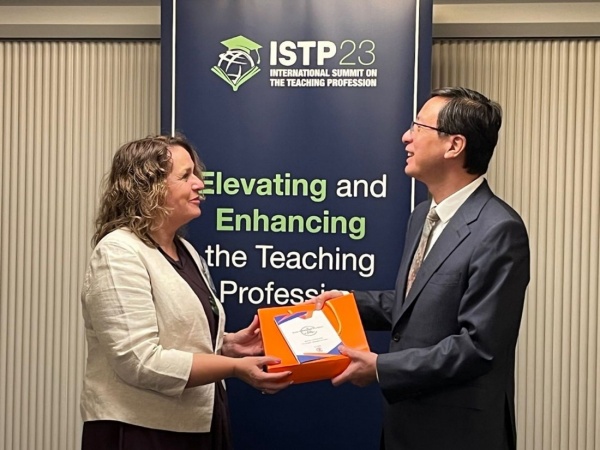
Minister Tinetti with China Education Vice Chancellor Chen Jie
Whilst in Washington D.C, Minister Tinetti also met with China Vice Minister of Education, Chen Jie. This bilateral meeting between New Zealand and China adds to the list of engagements at the Ministerial and Officials level over the past few months adding value to the strong education relationship between our two countries.
Later in the week Minister Tinetti attended the ANZAC Dawn Service where she had the opportunity to meet with Australia's Minister for Education Jason Clare.
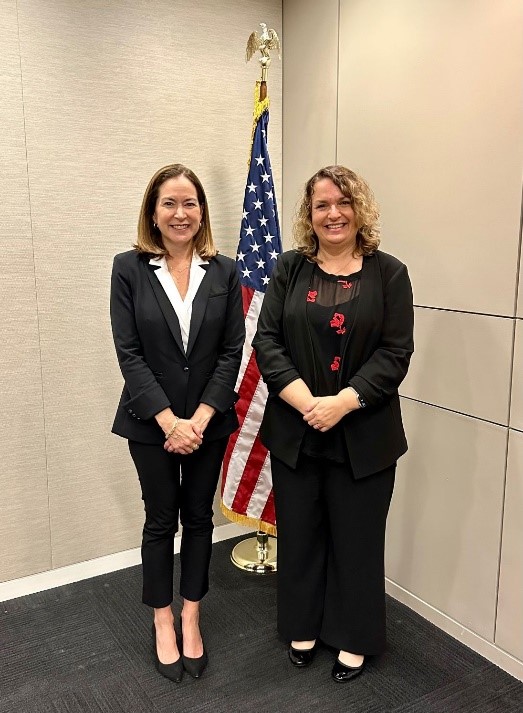
Left: Assistant Secretary, Bureau of Educational and Cultural Affairs Lee Satterfield and Minister Tinetti at the US Department of State.

Minister Tinetti meeting with US officials at the Department of State
-
Around the world in five
BRAZIL
Brazil unveils new HE internationalisation scheme
Brazil is replacing the Sciences without Borders (CSF) initiative with a new international mobility financing regime, aiming to enhance bilateral relationships with overseas partners. The new fund will be targeted towards postgraduate students and early career researchers looking to develop research abroad. While the CSF was managed at a federal level, the new scheme gives more autonomy to universities, requiring them to form an internationalisation strategy with international partners.
GLOBAL
Is fear of unqualified leads holding back your school website?
If universities optimised their websites, most could multiply the number of enquiries captured by up to 400%. Achieving this result requires just a few simple tweaks that make it easier for visitors to register their interest, such as decreasing the number of questions on a web form, segmenting by readiness (the distinction between “Keep me updated” forms and “Talk to me” forms) and using more student testimonials and videos.
UK
74% of public value international students when economic worth revealed
New research has found that people’s attitudes towards international students change when learning of their economic contribution and the jobs they generate. In a recent survey, only 12% of respondents wanted to see more international students in the country, but this doubled to 24% when they learned of the economic gains. Similarly, the 20% who wanted to see less international students in the country dropped to 13% when told of the economic value of international students.
FRANCE
French tech: A hot spot for entrepreneurs, 15 years in the making
Watch out Silicon Valley – the tech scene in France is gaining massive traction. Students from France’s world-leading business schools are now choosing tech over other job options, with one third of French students stating they would like to either found or join a start-up. The French talent pool is also impressive: Paris has over 134,000 professional developers, the second highest in Europe behind London, and 43% possess an MSc in Computer Science.
SOUTH KOREA
South Korean teens top in maths and science, but lack interest
South Korean students are excelling in science and mathematics, but the way the subjects are taught is not kindling interest in the students, a new report reveals. While South Korea placed fifth worldwide in the Program for International Student Assessment (PISA) 2015 science test, and first for maths, they ranked 26th and 28th (out of 35) in terms of interest. Professor Lee Joo-ho of the Korea Development Institute (KDI) says the disparity can be traced to the “learning by rote” method in the nation’s schools.
-
PIF Recipient: Virtual Medical Coaching
In the United States alone, approximately 800 women die each year during pregnancy and within 42 days after delivery. More than 60% of those deaths are believed to be preventable. In developing countries, the rate of pregnancy-related deaths is up to 300 times higher.
An important part of the solution is education. Globally, midwives are in high demand, with the UK’s NHS increasing their places for student midwives by 3000, starting this year. Australia is also planning to increase numbers, while in New Zealand, a funding boost will increase the number of Māori and Pacific students training in midwifery.
While the demand for midwifery training is growing, education offerings haven’t kept up. Childbirth is deeply personal, and feedback from mothers – validated by hospital staff – is that they do not wish to have extra staff or students in the room for training. With no effective opportunities for face-to-face learning, there is a global need for a realistic and scalable childbirth simulation.
That’s where Virtual Medical Coaching’s vision comes in, supported as a recipient of the International Education Product Innovation Fund. Virtual reality (VR) software will provide a safe and controlled environment for students to see and assist in childbirth simulations, both with and without complications and in a range of different scenarios. As the student improves, the simulations they encounter increase in difficulty. A machine-learning algorithm enables fast and accurate feedback to both the learner and any tutors.
The simulation will be interactive and responsive, meaning that any action taken by a student creates a life-like consequence and reaction. The outcome is that learners are taught to effectively make decisions and problem solve.
Existing options for midwifery training include a physical mannequin simulator, but this can be prohibitively expensive, out of reach of many training providers, and doesn’t offer students maximum learning hours. In addition, existing options don’t include the ability to witness mechanisms like rotations/restitutions or the ability to have back and forth conversations. By contrast, the VR simulation will be available to students wherever they are, and whenever they need to practice. The nature of the VR experience means that modern learning styles, such as asynchronous and remote learning, are well catered for.
With support from the International Education Product Innovation Fund, Virtual Medical Coaching’s childbirth simulation is on track to become fully released by the end of 2024. A beta-version is already used by some educators globally. The Product Innovation Fund is a New Zealand Government-funded initiative to reimagine what a New Zealand education can look like and mean for global learners.
Managed by Education New Zealand Manapou ki te Ao (ENZ), New Zealand’s government agency for international education, the fund is supporting a range of pilot projects from existing and emerging New Zealand education providers. Together, the projects rethink how an education experience from New Zealand can be delivered, and create impact, for global learners.
For Virtual Medical Coaching, it’s about finding a better solution to a serious issue. Like many other innovative Kiwi education technology companies, Virtual Medical Coaching is designing technology that will create positive impact around the world. It’s already successfully developed an x-ray simulation for healthcare professionals which has won multiple national and international awards. Now, with the support of ENZ through the International Education Product Innovation Fund, Virtual Medical Coaching is set to respond to a clear need for better midwifery training options and develop another cutting-edge learning product for both New Zealand and offshore markets.
More information:
-
New Zealand and international secondary students to grow cultural competence skills together
Qualitative research[1] from ENZ concluded that New Zealand businesses who employed staff with cross-cultural competencies found this contributed to a more energising workplace, which helped to foster creativity and innovation as well as other benefits.
The employers agreed cross-cultural competence was a sought-after skill when hiring staff, leading ENZ to fund the programme for more high school students around the country.
Grant McPherson, Education New Zealand’s Chief Executive says, “The insights from New Zealand businesses around the benefits of cross-cultural competencies within their teams have been one of the key reasons we’ve taken this initiative to help grow cultural competency, providing an alternative to international school exchange experience while borders are closed.”
This work supports the third goal of the New Zealand International Education Strategy 2018-2030 to develop global citizens within New Zealand and aims to help both students and teachers develop their cross-cultural skills together with their global peers.
ENZ and Massey University first partnered with the American Field Service (AFS) in July 2020 to launch a pilot of the NZGCC programme. The virtual programme delivers animated videos, quizzes, assignments and weekly live facilitated dialogue sessions for local and offshore learners to talk with each other online in real time.
Following the success of the pilot, ENZ today announced a further $380,000 investment to subsidise the cost for 321 New Zealand and 486 international learners to develop cultural self-awareness, empathy for other cultures, emotional resilience and ways to build bridges in multicultural settings.
18 online modules cover topics such as stereotypes, empathy, dealing with conflict and resilience, and will be delivered to international learners from India, China, Japan, Vietnam, Thailand, the Republic of Korea, Indonesia, Brazil, Mexico, Colombia, Peru and Chile.
The newest students to benefit from the NZGCC programme are Whanganui Girls College, Cullinane College, Whanganui High School and Awatapu College pupils. Starting today, 23 Whanganui and Manawatu students will partake in a virtual learning exchange with 20 high school students in Tokyo, Japan, in a partnership with the Tokyo Board of Education.
Whanganui Girls College principal Sharon Steer says the new programme will help students build their understanding of global cultures – critical ‘soft’ skills that will also prepare them for life after high school as they enter the workforce.
“An important part of our curriculum is developing strong communication skills and setting our students up for success in the workplace. The NZGCC programme will add another dimension to our lessons by teaching our students how to develop meaningful relationships with one another despite language and cultural differences,” said Steer.
“This allows our students to connect with peers in Japan and learn more about their culture without having to get on a plane when international travel remains limited.”
In addition to secondary school students, the NZGCC programme will support teachers in indigenous communities in Pacific Alliance countries, and people undertaking English language and teacher training in Indonesia, Vietnam and the Republic of Korea.
Around 100 students from decile 1 to 5 schools across New Zealand will be offered NZGCC scholarships to participate in a virtual exchange with their peers in Asia.
ENZ’s Chief Executive Grant McPherson said the programme’s expansion is a key part of diversifying education in new virtual forms fit for a globally connected world.
“We’re pleased to continue our support for the NZGCC programme to bring New Zealand and international learners together in a virtual environment to gain the skills needed to live, work and learn globally.
“As well as helping to develop the global citizens of tomorrow, this programme demonstrates the reciprocal benefits of international education, giving our rangatahi a chance to learn with high school students from around the world, and giving their offshore peers a chance to learn ‘with’ New Zealand and our unique way of thinking.”
More information about the NZGCC can be found here: https://www.globalup.com/
ENDS
[1] https://intellilab.enz.govt.nz/document/583-employer-perceptions-of-hiring-international-graduates
Notes to editor:
- Education New Zealand is the government agency responsible for building international education to benefit New Zealand socially, culturally and economically. For more information, visit enz.govt.nz
- Developing Global Citizens is the third goal of the New Zealand International Education Strategy 2018-2030.
- Education New Zealand has a focus on developing global citizens within New Zealand, so that more learners gain the knowledge they need to live, work and learn globally.
- The Global Competency Certificate (GCC) is a research backed programme teaching cultural self-awareness, empathy for other cultures and ways to build bridges in multicultural settings. It is designed by American Field Scholars (AFS), a global non-profit internationally recognised as leaders in Global Citizenship.
- In 2020, Education New Zealand partnered with Massey University and American Field Scholars to deliver a customised version of the GCC programme to New Zealand students and international students in New Zealand and abroad.
- One Palmerston North student who completed last year’s pilot summarised the experience as ‘eye-opening’: “The main takeaway was the ability to see life from different perspectives to our own, to understand how different cultures, experiences and beliefs can impact others. Being part of this course has truly opened my eyes to some of these viewpoints and I’ve learned to embrace them with an open mind.”
Media contact
Hazel Dobbie, ENZ Director Communications
Hazel.Dobbie@enz.govt.nz 021 579 917 -
Brazil to headline NZIEC as Country of Honour
ENZ has joined with the Brazilian Embassy in Wellington to bring to life the partnership, which celebrates the growing education connections between New Zealand and Brazil.
Lisa Futschek, ENZ Regional Director Americas and Europe, said ENZ is excited to showcase Brazil this year.
“As the largest student recruitment market in Latin America and with momentum growing, Brazil is an important diversification market for New Zealand’s international education industry.
“Moreover, conference participants will revel in tasters of Brazil’s vibrant music and cuisine culture!”
Paulo Camargo, Ambassador of Brazil in New Zealand, is delighted to see Brazil featured as the Country of Honour at NZIEC 2018.
“Every year, thousands of Brazilians come to New Zealand to study across a variety of sectors. I also see a growing interest of New Zealand students going to Brazilian universities. In the process, this exchange builds one of the best foundations for the strong relationship between two countries: the human ties of friendship and understanding.
“Brazil and New Zealand share many values and have great potential to enhance educational cooperation. I look forward to working with Education New Zealand to turn 2018 into a landmark for our two-way partnership."

Be sure to soak up some of the sights and sounds of Brazil at NZIEC 2018
Last year, almost 3,600 Brazilian students studied in New Zealand. Engagement with Brazilian institutions is also increasing due in part to the Prime Minister’s Scholarships for Latin America and the funding offered to help internationalise Brazil’s postgraduate departments.
In March this year, five New Zealand universities participated in the Brazil/New Zealand Academic Cooperation Forum designed to enhance collaboration and research linkages at postgraduate level.
The Country of Honour designation at NZIEC celebrates and showcases New Zealand’s international education connections with partner countries.
NZIEC delegates can look forward to engaging with the team from the Brazilian Embassy at its booth in the Expo Hall – and experience a few delights during conference.
NZIEC 70% sold out!
With fewer than a third of places left at NZIEC 2018, make sure you book your ticket soon. Register today at www.nziec.co.nz

-
Crowdsource your NZIEC 2017 experience
Alongside the usual presentations, workshops and panel discussions, we’re introducing crowdsource cafés.
Crowdsource cafés are designed to harness the collective intelligence of the group. Rather than listening to ‘a sage on the stage’, these interactive sessions will see you working with others to brainstorm and problem solve.
“Crowdsource cafés are a neat way to explore the breadth and depth of experience and insights from professionals across our industry,” says Sam Mackay, ENZ Strategic Projects Manager.
“You’ll connect with other delegates, share challenges, learn what others are doing, and come away with new ideas and inspiration you can implement.”
There’s a crowdsource café for school delegates to share international marketing tips, and another for all delegates to explore emerging trends and developments.
“To make the most of these sessions, come prepared to share your insights, tips and best practice with fellow participants,” says Sam.
"We’ll also be announcing three new session formats in the lead-up to August. Stay tuned!"
-
New Zealand Global Competence Certificate programme proves a hit
What is New Zealand’s Global Competence Certificate programme?
The customised cultural exchange programme, which started as a pilot partnership last year between New Zealand’s international education agency, Education New Zealand Manapou ki te Ao and AFS Intercultural Programs, Inc. has proved so successful it is now being extended and taken up by schools and tertiary institutions around the country, connecting them with students in Asia and Latin America.
The “Kiwi way” has much to offer the world, and international education has much to offer New Zealanders at a time the world needs people with cross-cultural competencies. The New Zealand Global Competence Certificate, delivered through Massey University, develops cultural self-awareness, emotional resilience, and build bridges across cultures. It also piques the interest of students offshore in coming to New Zealand in better times.
The programme delivers animated videos, quizzes, assignments, and weekly live facilitated dialogue sessions for learners to talk with each other online in real time and learn about life from perspectives other than their own.
What have students been saying about the NZGCC programme?
“Not only have I learned to become a better communicator, empathiser, and global citizen, but also how a group of like-minded individuals can come together to form something bigger,” says Jack Hittle, of Northland’s Springbank School.
“I found the programme life-changing,” says Vaagisha Kanwar, a Year 11 student at Indus International School in Bangalore, India, who connected with the Northland students. “We learned about conflict, empathy, inequality, different communication styles, how different people adapt to new situations, and about suspending judgement. I know that I’ll use the skills we’ve learned for the rest of my life, not just when I travel abroad but also in daily life.”
"You see the way a culture greets each other or the way they dress, but then there are things like relationships, gender roles, and health,” says Whanganui Girls College student Tilda Donson.
What have educators been saying about the NZGCC programme?
Whanganui Girls College Principal Sharon Steer is delighted with the NZGCC programme, which she says will help students build their understanding of global cultures, and other critical “soft” skills which will prepare them for life as they enter the workforce.
“An important part of our curriculum is developing strong communication skills and setting our students up for success in the workplace. The NZGCC programme will add another dimension to our lessons by teaching our students how to develop meaningful relationships with one another despite language and cultural differences.”
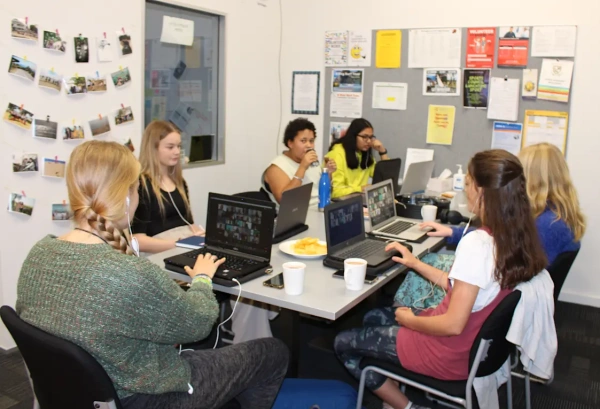
Educators say that with the borders closed, the programme now forms an important part of the reshaped international education experience.
“It is so important that our students don’t miss out on the enriching life skills that are gained when we interact and connect with people from around the globe,” says Whangarei Girls High School International Director Amelia Morrison, who has students working with peers in India.
"Global competence is mission-critical for our world," says AFS Intercultural Programs President and CEO Daniel Obst. “Educating more young people to become global citizens is crucial if we want to create a more just and peaceful world.”
The expansion of the GCC programme reflects the diversification of education in new virtual forms fit for a globally connected world, says Education New Zealand Chief Executive Grant McPherson.
“As well as helping to develop the global citizens of tomorrow, this programme demonstrates the reciprocal benefits of international education, giving our rangatahi a chance to learn with high school students from around the world, and giving their offshore peers a chance to learn ‘with’ New Zealand and our unique way of thinking.”