Search
Showing 10 of 982 results for search for pheen4uuu from wiki 2025
-
New Zealand ready to lead students to a more sustainable future
Research commissioned by Education New Zealand in May found that 79 percent of participants were interested in studying sustainability and climate change. And the 2019 QS Environmental Concerns Survey of 3700 prospective international students from around the world found that more than 75 percent would be more likely to choose a degree if the content helped them learn about reducing their environmental impact.
New Zealand is often viewed as a progressive nation delivering new solutions to problems while at the same time valuing people, place, and planet. Our world-class education system prides itself on preparing graduates with the practical skills and innovative thinking sought by future employers. Those skills must also now empower them to address issues of global consequence.
Tertiary education providers boost sustainability education options
New Zealand tertiary education providers are playing an increasingly important role in shaping this enthusiastic generation of learners, with many institutions incorporating a sustainability focus into their research and in many of the courses they offer.
Waikato University has gone one step further, announcing it will offer the world’s first Bachelor of Climate Change degree from next year. The three-year course will take a multi-disciplinary approach combining science, economic, social, and political systems, plus mātauranga Māori (Māori knowledge and wisdom).
“We all agreed that science alone can’t come up with all the solutions,” says Dean of Science Professor Margaret Barbour, one of the key players in the development of the programme. “We need people who can think across knowledge systems.” She is enthusiastic about the contribution international students will make, working alongside domestic students.
“International students will broaden our perspectives. They will bring new ideas from their home country and that can only be positive because climate change is a global issue,” she says. “The whole world needs to work together on this. We can’t be constrained by national boundaries.”
“Very soon New Zealand, and the world, will have these graduates who will have a thorough understanding of climate change and the impacts on environment and people, and they’ll be able to think critically and holistically,” says Prof Barbour. “They will have expertise in a particular area related to climate change, but they’ll also have the ability to engage with cultural competency outside their area of expertise.” Whether it’s about protecting our land or our oceans, Aotearoa New Zealand is making its mark. While there is still much work to be done, learners are looking our way for both leadership and collaboration.
Students choose New Zealand for sustainability studies
German PhD student Alexandra Lischka has travelled the world for her research in marine biology but says she chose New Zealand for her doctorate studies because it offered her the opportunity to work with internationally respected marine scientists across three universities.
“There are so many problems facing our marine environment, and I want to help solve them. The old ways of thinking aren’t working when it comes to solving some of the biggest problems facing our oceans. I know I need to forge another path if I want to make a difference.”
Heinrich Blass came to New Zealand from Germany to learn more about sustainable and ecological building practices. He chose to spend two semesters last year taking Building Science courses at Victoria University. “I was able to learn a broad approach to sustainable concepts from design to building technology and engineering systems to green building certification,” he says. “This gave me a deep insight as well as extensive expertise in sustainable building.”
International education experience takes New Zealand thinking to the world
In 2019 and 2020, Auckland University topped 850 institutions from 89 countries in the Times Higher Education Impact Rankings which assessed universities against the 17 United Nations’ Sustainable Development Goals across research, outreach, and stewardship.
Vice-Chancellor Professor Dawn Freshwater says the ease of access to oceans and land provides a “natural emphasis” for environmental research. This, combined with the value placed on kaitiakitanga (guardianship) and mātauranga Māori helps to shape “a unique and distinctive approach to sustainability in this country”.
For students who seek a brighter future with a lighter footprint, an international education experience in New Zealand will take our thinking to the world, open pathways to collaborate on global causes, and help make the world a better place.
Mō tātou te taiao ko te atawhai, mō tātou te taiao ko te oranga.
It is for us to care for and look after the environment to ensure its wellbeing; in doing so we ensure our own wellbeing and that of future generations.
-
New Zealand-trained astrophysicist receives top honour in Malaysia
She was awarded the prestigious Commander of the Order of Loyalty to the Crown of Malaysia, by Sultan Abdullah at his annual Honours ceremony. It carries the title of Tan Sri, one of the highest federal titles, and is only held concurrently by 250 living recipients.
Dr Othman studied physics at the University of Otago in the 1970s and returned for post-graduate study in the 1980s, becoming the first woman to graduate from the university with a PhD in Astronomy and Astrophysics. She then went on to forge a remarkable career in the male-dominated space industry.
Colombo Plan Scholar
Dr Othman came to New Zealand on a Colombo Plan scholarship. The Plan, a forerunner to our modern development assistance programmes, aimed to promote economic and social development in Asia through education and training.
Having fallen in love with physics as a teenager in the 1960s, Dr Othman didn’t discover astronomy or astrophysics until she arrived in Dunedin to study for her PhD in 1974.
“There were very few books available at that time and there was not much interest here in Malaysia, but it was very different in New Zealand,” she says. “Neil Armstrong’s landing on the moon in 1969 was a very significant event, but I didn’t think at that time that I would have space as a career. Not in a million years.”
Studying in New Zealand opened a world of opportunity for the young, Muslim scholar. Not only did she make a career in the space industry, but she became a leading authority, being appointed the Director of the United Nations Office of Outer Space Affairs in 1999, and the founding director of Malaysia’s National Space Agency in 2002.
She acknowledges it has been challenging at times. “It’s been a hard road because I’ve had to start everything from scratch. There was no set path to get to where I am today.”
Working to promote science and technology
She says her role at the UN was less about science, and more about diplomacy and politics. “How to balance one country’s requirements against another’s. Bringing people to the table together, even if they don’t agree, to try and agree on how to proceed. The other aspect of the job was to see how we could use space to enhance the development of developing countries, especially in science and technology.”
It is mostly her work at home for which she has been recognised by the King. As Malaysia’s first astrophysicist, Dr Othman was instrumental in introducing astronomy and space sciences into school and university curricula, advised the Government on space matters, was the driving force behind the National Planetarium in Kuala Lumpur, initiated the country’s National Microsatellite Programme, and headed Mega Science 3.0, the ambitious project to transform Malaysia into leading global player in science and innovation by 2050.
Justice and fairness in New Zealand education
But it all started as an international student in New Zealand, a time Dr Othman remembers as being both liberating and rewarding. “I particularly loved the egalitarian environment of the university, and that reflected wider New Zealand society.”
“There will always be a role for New Zealand in supporting education internationally through its cultural perspective on science,” she says. “There is no hierarchy in New Zealand science – professors treat their students as equals and encourage them to challenge and ask questions. That approach has stayed with me through my career.
“New Zealand education also instils a deep sense of justice and fairness.” – Malaysia alumna and astrophysicist Dr Mazlan Othman.
-
PM mission advances New Zealand and China education relationship
The New Zealand Education Connect event on 20 June at the New Zealand Embassy in Beijing brought together leading Chinese government representatives, institutional partners, education agents, and alumni to strengthen people-to-people links and celebrate collaboration.
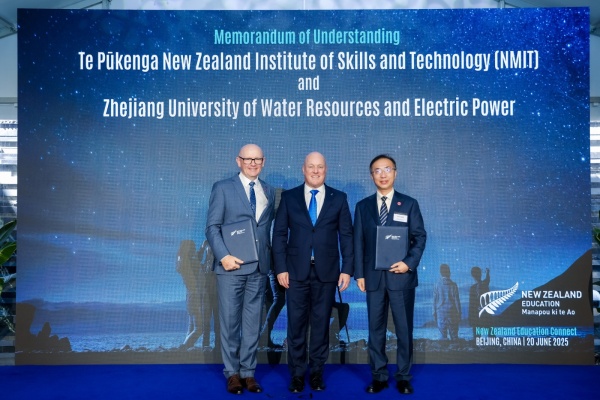
The event programme was packed, with nine Memorandums of Understanding (MoUs) signed between New Zealand and Chinese counterparts, and another MoU signed between Victoria University of Wellington and Fudan University on 19 June.
Providers from across the tertiary education sector signed the MoUs – with Victoria University of Wellington, Unitec, NMIT and UP Education’s University of Auckland International College and New Zealand Tertiary College formalising partnerships.
These agreements cover a mix of in-market delivery, joint programmes, and initiatives to grow student mobility between New Zealand and China.
This builds on the now over 60 approved joint education programmes and institutes recognised by the China Ministry of Education between New Zealand and Chinese institutions, and other education partnerships across early childhood education, vocational training, higher education, and research areas.
The New Zealand Education Connect event had senior leaders officially launching New Zealand’s Country of Honour campaign for the upcoming China Annual Conference and Expo for International Education (CACIE), China's largest platform for international education, due to take place in October this year.
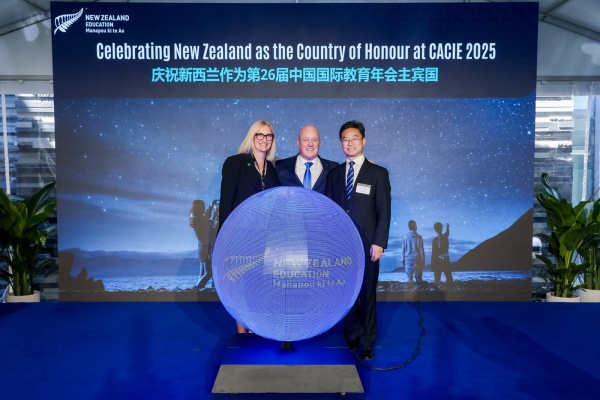
ENZ’s Chief Executive, Amanda Malu, launches the Country of Honour campaign for New Zealand at CACIE alongside Prime Minister Luxon and CEAIE’s Secretary General Jun Yang.
ENZ Chief Executive, Amanda Malu, said it’s exciting to see advancement of the partnerships New Zealand providers have built with their Chinese counterparts.
“We’re eager to see the outcomes of the new agreements formalised at New Zealand Education Connect and look forward to deepening our bilateral ties by leading a delegation to CACIE later this year,” she said.
Information on the registration process for New Zealand education providers to join the New Zealand Country of Honour events in October will be shared next month on ENZ’s event page.
The Country of Honour promotional video is available with Chinese subtitles on The Brand Lab.
-
Driving student interest in Indonesia through strategic co-funded initiatives
ENZ and SUN Education delivered a jam-packed programme of student recruitment events in Surabaya and Jakarta in late May to drive student interest and connect New Zealand providers with potential partners for academic collaboration.
Surabaya
The activity began with an introductory meeting between Universitas Airlangga’s International Office and visiting New Zealand providers to explore opportunities for academic collaboration between our two countries.
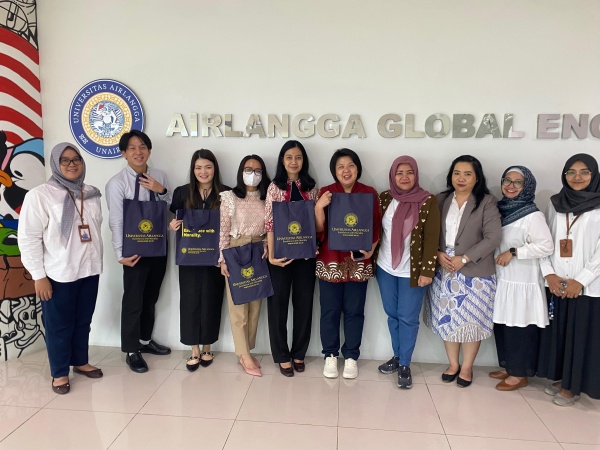
The meeting was attended by representatives from the University of Auckland, Auckland University of Technology, the New Zealand Honorary Consulate in Surabaya and SUN Education.
Discussions centred on potential areas of partnership, including articulation pathways, staff exchanges, guest lectures, and joint research initiatives.
The following day, providers met with prospective students at the Study in New Zealand Exhibition in Surabaya.
The exhibition featured the University of Auckland, Auckland University of Technology, University of Waikato, UP Education, University of Otago, Le Cordon Bleu, the Southern Institute of Technology and Lincoln University.
The event attracted around 200 students and their parents.
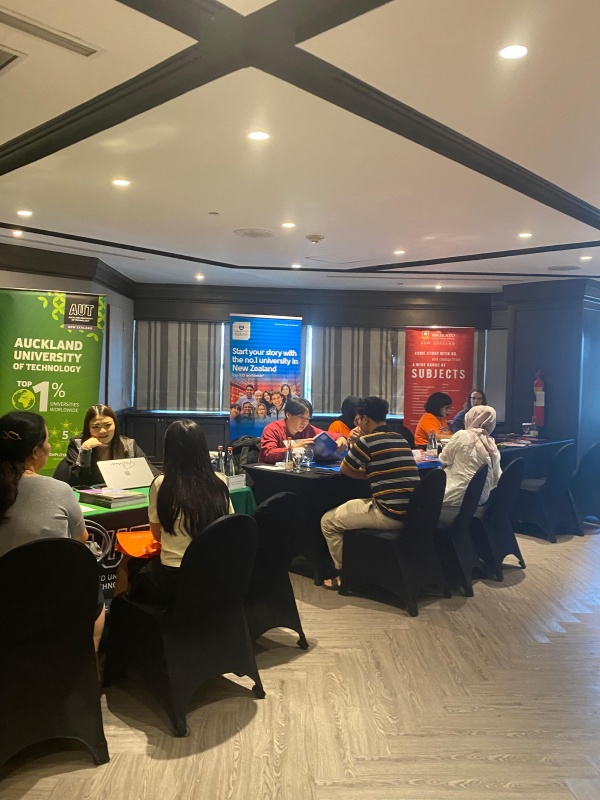
Study in New Zealand exhibition attendees learning about tertiary education options in New Zealand.
Jakarta
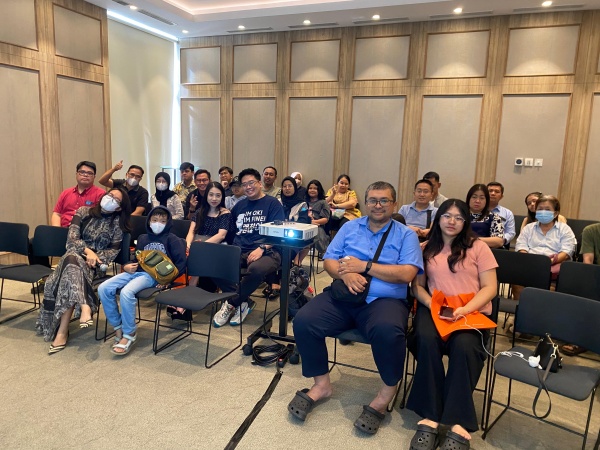
Over to Jakarta, ENZ organised an exhibition featuring a strong line-up of New Zealand institutions, comprised of all eight of New Zealand’s universities alongside the Southern Institute of Technology, Le Cordon Bleu, University of Canterbury International College and UP Education.
The fair attracted approximately 250 students and parents, all eager to explore the diverse study options and world-class education opportunities that New Zealand has to offer.
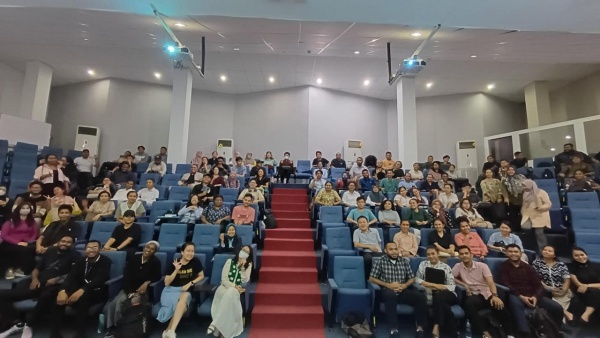
To close off a busy student recruitment period, a mini exhibition was hosted at Universitas Indonesia, the top-ranked university in Indonesia.
The exhibition was specifically for LPDP Affirmative Scholars and students interested in postgraduate-level study.
As part of the event, ENZ Market Manager, Naluri Bella, delivered a ‘Study in New Zealand’ session, which attracted around 100 enthusiastic attendees.
The session provided insights into New Zealand’s high-quality education system and scholarship opportunities, helping to raise awareness and inspire future postgraduate study pathways.
ENZ’s Regional Director (Asia) Ben Burrowes said the activities were designed enhance agents’ and students' awareness of New Zealand’s world-class education offering.
“These collaborations help position New Zealand as a competitive and credible choice for Indonesian students,” he added.
-
New Zealand’s EdTech at centre-stage of International Education
Export digital products and services have long been an important element of New Zealand’s international education sector, but they have largely flown under the public radar. Overnight, the needs of learners changed, and education providers found themselves in uncharted territory.
New Zealand companies with an established reputation delivering digital educational programmes quickly stepped up both the range and reach of their products. This, combined with Aotearoa’s reputation for creativity and innovation, and more than a little manaakitanga, has resulted in the phenomenal growth of some of our best-known EdTech brands over the past year.
Kami is helping Schools Globally
At digital online learning platform Kami, the goal is success for every student, regardless of ability, by providing inclusive and intuitive tools that support any learning style. They include text-to-speech, voice-typing, freehand drawing, and audio and video commenting.
Many of the schools which closed globally adopted Kami’s digital classroom technology. The company has grown from 8 million to 27 million users in 180 countries over the past year, adding one million new users in one week alone.
Code Avengers taps into the popularity of Gaming
Code Avengers takes a left-field approach to engaging learners by tapping into the popularity of gaming and uses those concepts to captivate students and build their digital capability. The platform was only founded in 2012 and is now being used in 15,000 schools in 14 countries.
“Our goal is to prepare teachers and students, from all backgrounds, for the current reality of the job market, and the jobs of tomorrow,” says Code Avengers CEO Hamish Day.
“We want to help give people confidence and an opportunity to learn the skills that industry tells us it needs.”Education Perfect are inspiring the next Generation of Changemakers
EdTech providers also have the power to engage students on social issues and challenge them to think critically. Key market player Education Perfect, which reaches more than one million students in 1800 schools globally, is finding new ways to inspire the next generation of changemakers.
It is building curriculum content to include issues such as social justice, sustainability, student health and wellbeing, and indigenous issues. It recently partnered with Australian animal rights organisation Voiceless to deliver modules focused on animal welfare, including the issues of dolphins living in captivity and the export of live animals.
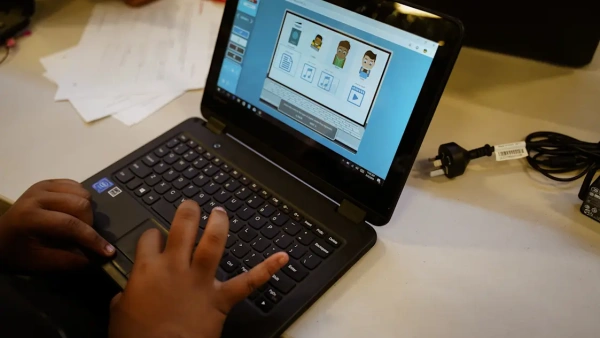
EP Partnerships Director Anna Redmile says that joining forces with Voiceless allows teachers and students to have conversations which promote critical thinking and better understanding of the world they live in.
Education consultant and Voiceless adviser Dr Christina Jarvis agrees. "As we help children embrace an increasingly complicated future, such skills are paramount for developing engaged citizens.”
EdTech will continue to play a key role in New Zealand’s International Education Offering
The EdTech sector was estimated to contribute $300 million to the New Zealand economy in 2017, and those figures will have ballooned with the impact of Covid.
Looking to the future, educational technology will play an increasingly key role in the diversification of New Zealand’s international education offerings. And there is no shortage of amazing and pioneering companies ready to play their part.
-
Pakistani student leverages language skills to connect communities
Fluent in Punjabi, Urdu, and English, and passionate about community service, Usma soon became a key player working to support and connect ethnic communities in Christchurch.
So extensive have her achievements been, that she has been honoured by the university with a coveted Blues Award for community engagement, and by the Christchurch City Council with a Civic Award.
Usma arrived in New Zealand in late 2016 and gave birth to her third child shortly after arriving. “It gave me the time I needed to assess society here, and I realised the value that was placed on volunteer work.”
New Zealand values transferable skills
“My background was in teaching and ESOL (English for Speakers of Other Languages) instruction. I did teach here when I first arrived, but it was not fulfilling enough,” she says. “I needed to think what other skills I had to offer in an area of work I was passionate about. New Zealand is not a destination of degrees, it is a destination of skills, where whatever transferable skills you have to offer, are valued.”
She initially got involved in UC’s Pakistani Student Association, planning events which quickly extended beyond the student community. “I got great feedback from the wider community and different ethnic groups started coming along. People from these communities were looking for connectivity and involvement and it ended up being a multi-cultural hub.”
She admits it was not without challenges, but she was determined. “I was an international student, a woman, a mother of a special needs child, and I was working. But I managed my time. I enjoy doing volunteer work and it comes naturally.”
In her second year at Uni, she secured a role as a Diversity and Engagement Officer with the Ministry of Ethnic Communities and juggled both study and work. It was in this role that she became involved in the Government response following the Christchurch mosque attack in 2019.
Frontline worker following mosque attack
“I was one of the frontline workers dealing with victims and those left behind. Some of my colleagues were victims,” she says. “It was a difficult time. I had never had any exposure to such an event, or what the aftermath might be like. Hearing the stories, and being part of it, are totally different things.”
“I’m very proud of my work and found it very rewarding. I discovered my strengths and weaknesses and learned how much I had to offer. I could speak with many of the widows in the Muslim community in their own language, understand their needs, and advocate on their behalf. I learned how to deliver the key messages to the government agencies involved in the response and formed a link between the two groups.”
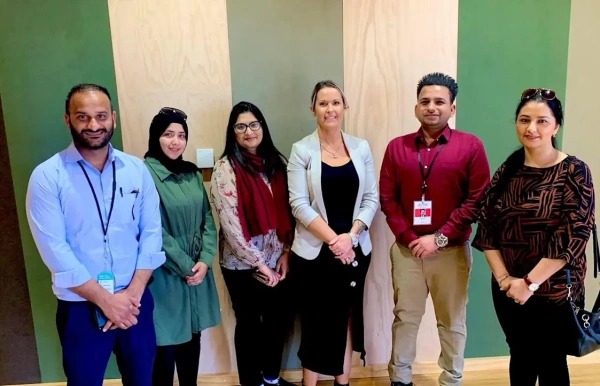
“The migrant communities have so much resilience and I believe that every disaster brings opportunity to come together, to heal, and to grow.”
Usma went on to become involved in Widows of Shuhada – an eight-part Plains FM/RNZ podcast documentary series which followed the journey of four widows following the attack.
Soon after, Covid-19 arrived in New Zealand and Usma worked on engagement with local ethnic communities, translating the Government’s messages and communicating them through a range of digital channels.
Tapping into the skills of international students
But she didn’t stop there. Usma was also influential in Christchurch’s Ethnic Communities Skills Build Programme, a project designed to smooth the pathway of migrants and international students into employment in New Zealand.
International students could join in workshops, meet career counsellors and job brokers from the Ministry of Social Development, reshape their CVs, and attend job fairs.
“I believe we need to tap into the high-level skills of post-graduate international students. We need to progress them in the right direction, utilising their skills in science, technology, and innovation.”
As for her own career, Usma could not be happier. She has secured a full-time role as a policy analyst at the Ministry of Primary Industries in Wellington and has taken a step back from her volunteer work to focus on completing her PhD this year.
She is grateful for the opportunity to study in New Zealand and to bring her family with her. Her husband is working, her children are happy, and her special needs daughter has opportunities she wouldn’t have had in Pakistan.
Usma still acts as a mentor for international students and tells them if they are to make the most of their time in New Zealand, they should “think outside the box”.
“They should think about the skills they have to offer in the community, and they will be rewarded with a transformative experience. Leaving behind the social constraints of your home country can be liberating. It’s all about following your dream.”
Usma says she’s already landed her dream job, but she plans to continue her community work once she has completed her PhD.“I believe it is my contribution to this country and I love doing it. I’m not likely to stop. I’m just settling in, finishing my PhD, and getting ready for something big. I have ambitious plans.”
-
Putting a healthy smile on the dial of Fiji’s children
“I love working with children, particularly those living with disabilities and special healthcare needs who require more inclusive oral health policies and programmes.”
He spent the early years of his career working as a hospital dentist and teaching at the Fiji National University’s School of Dentistry and Oral Health but was ambitious to accomplish much more and knew he would have to study overseas to achieve his goals.
He travelled first to Portugal to enrol in a Master’s in Public Health and then to the University of Otago’s Faculty of Dentistry to undertake his Postgraduate Clinical Doctoral Degree in Paediatric Dentistry.
As a third generation Fijian of Indian descent, he describes his international education experience as “life-changing, academically and culturally fulfilling.”
But Jason says he could never have afforded to study in New Zealand without the support of a Manaaki New Zealand Scholarship, funded through the Ministry of Foreign Affairs and Trade. The programme sets out to build future leaders in developing countries by supporting students to upskill here.
Advocating for better oral health outcomes
Improving the oral health of young people drives Jason’s clinical and research work and he knows that implementing a preventative approach to tooth decay is key to achieving sustainable outcomes.
“The mindset in the Pacific is that people mostly don’t come to the hospital clinics for dental care, they wait for pain or symptoms before seeking help,” he says. “But we need to advocate strongly for prevention which is more cost-effective and acceptable.”
Arriving at the University of Otago in 2019, Jason embarked on his thesis researching the remineralisation potential of selected peptides (one of the building blocks of protein) in preventing tooth decay.
“Dental decay is prevalent, especially among children, but it is reversible in its early stages. The mainstay of prevention has been fluoride, but we proved that the peptides do have remineralisation potential. Investigation is now under way to learn how it performs alongside fluoride.”
“I think it has huge potential for the future. The dream would be that we have the next generation of children growing up without fillings in their mouths.”
Jason says this kind of research would not have been possible in Fiji. “I was very grateful for the experience at Otago. It was an environment that was both supportive and collaborative. It opened up networking opportunities for me. And those networks still support me today.”
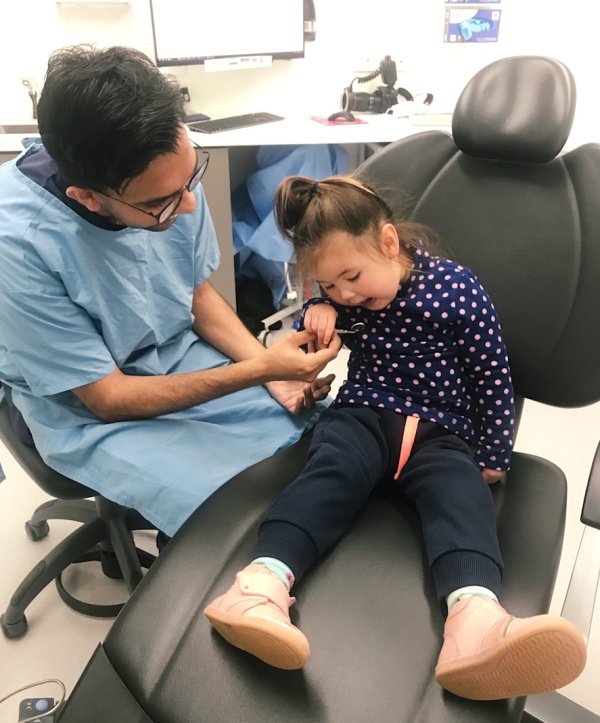
Jason also cared for patients at the faculty’s clinical facilities and theatre suites and provided on-call dental services for emergency patients after-hours at Dunedin Hospital, building close bonds with some of his young patients, especially those with special needs.
"The dream would be that we have the next generation of children growing up without fillings in their mouths."International education builds skills and confidence
After his graduation in December, Jason returned to FNU School of Dentistry with additional skills and new-found confidence. “I think that gaining a formal specialist qualification has given me a voice to continue to advocate for children’s oral health through dental education.”
He wants to establish preventative oral health programmes in schools and help improve the curriculum being taught to dental students in the region, integrating recent innovations and research evidence.
It’s something he has been thinking about for many years. “Hopefully now we’ll get this done.”
“I’ve expanded my knowledge, upskilled, and I think I have become more confident as an academic, and as a person. I’ve got my international education and training to thank for that.”
Manaaki scholar gives back to the community
Jason is certainly fulfilling the brief of the Manaaki Scholarship to give back to his community. He is maintaining his clinical hours, teaching the next generation of dental students, volunteering his services at an NGO-run paediatric cardiac care hospital, and mentoring students wanting follow in his footsteps by studying overseas.
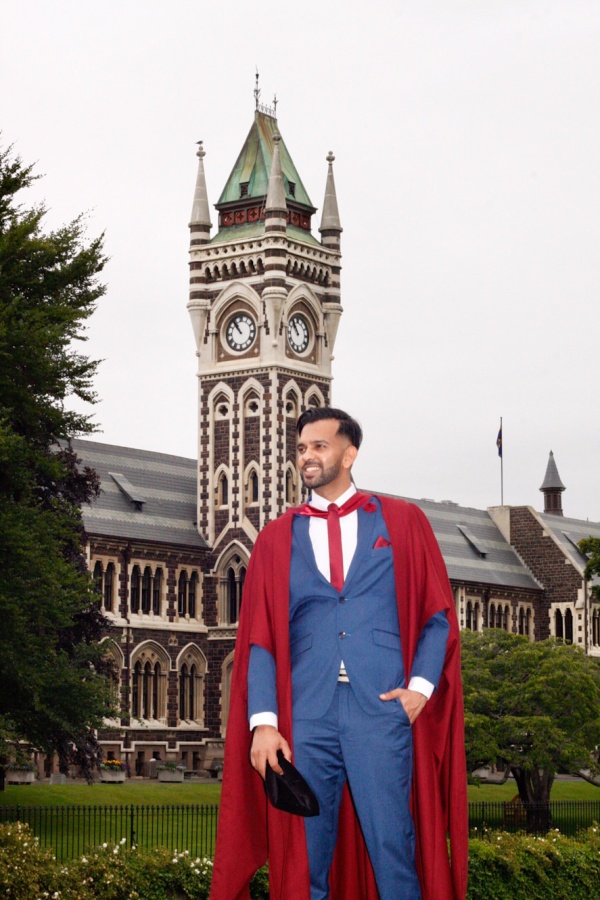
“International education is very important to Fiji as a developing country,” he says. “I thought it would be valuable to be able to guide students who would benefit from international scholarships in meeting their professional goals, while building capacity in the region.”
At heart, though, he is an academic and he hopes that in the coming years he can raise the research profile of the Pacific region and build a solid database which will help to secure the funding for much-needed oral healthcare programmes.
“My message is that there is no general health without oral health. It’s not going to be easy, but we need to start somewhere to get a voice for children and for the profession.”
-
Signing up to a bright future for the Deaf community
A serious encounter with Ménière’s disease partway through his PhD studies was a life-changing event in more ways than one for Arash Tayebi.
The inner ear disorder resulted in him losing the hearing in one ear and facing up to the possibility he could become deaf in the future. Studying at Auckland University, and feeling far from his home in Iran, he says the experience hit him hard.
But Arash turned one of the biggest challenges in his life into an opportunity. He became the driving force behind Kara Technologies, an award-winning start-up using digital sign language avatars to make communications of all kinds accessible to those with hearing issues.
His own situation made him question the noticeable lack of deaf people studying at universities, becoming entrepreneurs, and holding leadership positions in the workplace. “I asked myself if I become completely deaf will I not be able to succeed in study and work?”
Engaging with the Deaf community he learned of the real shortage of teachers of sign language, and the complexities in resolving that. Bringing in teachers from overseas is not the answer because they do not know New Zealand Sign Language (NZSL). Closed captioning, which can automatically caption speech is of limited use as young children cannot read, and existing avatars are not expressive enough for Deaf people.
“I said let’s work together to come up with a solution.”
Turning a vision into reality
What started as a small project with Kelston Deaf Education Centre, now part of Ko Taku Reo Deaf Education New Zealand, ultimately morphed into Kara Technologies. But it took vision, determination, and “mind-blowing” support from people he met along the start-up journey.
"The cool thing about New Zealand is that if you have a vision nobody will call you crazy, they’re here to help and happy to take a risk. That’s fantastic."
“There was so much I needed to learn about running a business. I wasn’t rich, so I needed funding. And as the concept was new, I needed the support of the Deaf community.”
Arash’s first break came when Kara Technologies was named Social Enterprise winner in Auckland University’s start-up business competition Velocity $100K Challenge in 2017, giving him access to seed funding and a mentorship programme. Then there was UniServices, which helps to commercialise promising student ventures through investment, advice, and connections. And in the wider community there was GridAKL, an innovation support community with a downtown campus. “If I had a problem, I could always find someone there who was happy to offer advice,” he says.
Estimates of NZSL users vary significantly, from about 4000 for whom it is a first language to more than 20,000 who have some knowledge of it. Arash and his team are committed to their vision of improving meaningful access to information for the Deaf community, and they are already making an impact.
Kara Technologies has produced a diverse suite of avatars, signed children’s books and a range of videos. It has been recognised many times for its innovative work, most recently being named a 2022 finalist in the Public Good category at the NZ Hi-Tech Awards.
Looking to the future
The team at Kara sees a future where TV shows, bank machines, travel websites, online registration forms, live theatre, social media, gaming, and virtual reality technologies are all equipped with sign language avatars. “We want the daily life of a Deaf person to be as easy as a hearing person,” Arash says.
The company is currently trialling emergency messaging by using a set of pre-recorded motion-captured animations, making it possible to relay time-critical information quickly.
Kara is already attracting interest in the US and Canada, where Deaf advocates are excited by the technology. “They are impressed that a small country can make such a contribution. It makes me proud because I call New Zealand home.”
Arash says it’s hard to believe the decision he made to come to New Zealand to study in 2013 has led to where he is now. “I thought I would probably complete my PhD and end up in an academic teaching role. But I have a company, a team, a vision, and fantastic friends. It’s all happened because of the great support I’ve received here.”
He only wishes it was easier for innovators like him to stay on when they finished their studies. He would love New Zealand to introduce a Talent visa like Australia and Canada have. “If you have a cool project they will welcome you, but in New Zealand, you need to secure a job. I already have a job, but it is in my own company,” he says.
“When New Zealand encourages international students to come here it needs to be able to harness their talent, nurture them, and benefit from their talent.”
But Arash says he would always encourage students to come here. “Take yourself out of your comfort zone and you will meet amazing people. New Zealand is a crazy, creative country which could easily be your second home.”
-
Aminat chases sustainable energy dream for Nigeria
The former maths teacher and electrical engineering undergraduate has recently returned home to Nigeria after studying renewable energy at the University of Otago’s Energy Research Centre. She completed both a post-graduate Diploma and a Master’s of Science in Energy, Science, and Technology.
“It has always been my dream to study abroad, and New Zealand made my dream come true because I wanted to study renewable energy,” she says.
Manaaki scholarship key to education opportunity
“New Zealand is one of the top five countries in the world which excel at renewable electricity generation, and it is important to study in a country where you can get practical experience.”
Aminat says that the cost of international education overseas is beyond the reach of most people in developing countries, but that her experience was made possible through the Manaaki New Zealand Scholarships, funded by the New Zealand government. When she applied in 2018, she was one of only a small number of students accepted from Africa “so it was a big deal for me”.
And so was getting here. “It was my first experience travelling overseas, my first time on a plane, my first time in a new country.”
But she says she was grateful for the orientation programmes available and quickly felt at home both at university, and in Dunedin. “Just two months after I arrived, the Christchurch mosque shooting happened, and the support I got from my neighbours, my colleagues, and my lecturers was amazing.”
Energy poverty drives study choice
Aminat says she is motivated to study renewable energy because of where she comes from.
“I wanted to study something would allow me to improve my own country. Every economy depends on a reliable power supply and in Nigeria we have nationwide blackouts regularly. We need to buy petrol to run generators. Most people have generators in their homes, even in the cities.
“If you don’t have adequate reliable power, it holds back every aspect of the economy and makes it very difficult for businesses to succeed. It affects everything - manufacturing, schooling, farming. You can’t even freeze excess seasonal crops, so most of it goes to waste.”
A European Union report released last year titled “Time to make energy poverty in Africa a thing of the past”, backs up what Aminat says. It found that nearly 800 million people globally live without access to electricity, about 600 million of them in sub-Saharan Africa.
“In a world of deepening inequalities between the haves and have-nots, this is a glaring injustice, the report says. “Africa is the world’s premium location to harness solar energy and is already demonstrating that a cleaner path is possible.”
“Renewable energy is a passion for me,” Aminat says. “We need to talk about renewable energy for the future in Africa. And the future is now.”
By coming to New Zealand, Aminat says she saw the potential of what can be achieved with a reliable power supply.
Her research, supervised by Associate Professor Michael Jack, explored how to use domestic hot water cylinders for energy storage in microgrids comprised of clusters of households with solar photovoltaic supply. “It’s definitely achievable but needs more research and I’m very keen to take it further.”
International education more than classroom learning
Aminat says studying in New Zealand was “the best-ever experience”, with excellent university facilities and approachable staff always ready to offer help and support.
“Studying in New Zealand has given me a voice. It has expanded my horizons, made me more informed, and opened doors for me. People are keen to listen to you when you talk. When you’re looking for a job, an international education experience makes you stand out.”
“Studying in New Zealand has given me a voice" - New Zealand international student and Manaaki scholar Aminat Razaq
While the quality of education is essential, Aminat says it’s also about what you learn beyond the walls of a classroom. “You learn a different culture, and you are given the opportunity to explore your chosen field of study and gain another perspective. By offering scholarships, you are also helping the country the students come from.”
For any students considering New Zealand as a study destination, Aminat says “don’t think twice”.
“New Zealand is probably the most peaceful place in the world, it has all the facilities you need to study, the researchers are top notch, and the people are welcoming.”
While studying in New Zealand has fulfilled one of Aminat’s dreams, she is already working on another one. “My new dream is to set up my own energy consultancy company and I’m sure I will achieve it. All the positive experiences I have had in my education will take me there.”
And she hasn’t ruled out a return trip to New Zealand. “I am considering studying for my PhD. I loved everything about studying in New Zealand and would love to come back.”
-
Student-led business sets out to break down barriers
InterStudentsNZ, a platform which will host resources and courses to meet the needs of international students, is a regional winner in the Company of the Year category in the Lion Foundation Young Enterprise Scheme. It also scooped the Excellence in Promotion Award and Paying it Forward Award.
InterStudentsNZ is the brainchild of budding entrepreneurs Mackenzie Roskruge (CEO), KimSreng Keo (Production Manager), and Russle La Morena (Finance Director), who met through the college’s international student buddy scheme. They bonded over a shared interest in education and curiosity about their cultural differences.
Mackenzie and Russle are both domestic students, but Kim arrived in New Zealand in 2018 as an international student from Phnom Penh, Cambodia, knowing no-one and understanding little of what seemed to be a strange, new culture.
He believes that international students enrich New Zealand communities and have much to offer, but that many don’t make the most of their time here because they face challenges integrating into the community and planning a future beyond school.
“Understanding how people think and how to communicate is important,” he says. “When we first arrive many of us have a big language barrier. There are even subtle cultural differences which we don’t understand, and which need explanation.”
Platform driven by students, for students
Sharing his insights of the challenges that international students can face, the friends determined that more support was needed and that a platform driven by students, for students, was the answer.
The opportunity to enter the Young Enterprise Scheme through their Year 13 Business Studies course, gave the students a chance to turn their ideas into reality.
InterStudentsNZ has big plans. The team want to create a one-stop shop for resources tailored for students to better understand New Zealand’s education system, work environment, and culture.
“For example, if a student came to us and wanted to learn about New Zealand slang, we could direct them to a one-hour course with video tutorials, quizzes and written explanations to help them master slang,” says Mackenzie.
“Or a student might want to learn about social innovation in New Zealand. We could potentially provide a one-two hour course each week for a month with case studies, opportunities for mentorship, and tools for how they could move into social innovation themselves.
Empowering international students in New Zealand
"We hope students will feel empowered to learn new subjects and inspired to remain studying and working in New Zealand."And it’s not only international students who stand to benefit. Surveys of domestic students at Waitakere College showed that they were also interested to explore topics which would likely make them more engaged and invested in their education.
The InterStudentsNZ team all plan to study at the University of Auckland next year and hope to continue developing their business. With more funding, they would like to add workplace mentorship opportunities for international students, courses in te ao Maori, New Zealand history, and New Zealand industry pathways. They also plan a blog space and a social media presence. “We’re creating a digital Aotearoa for rangatahi all around the world to explore.”
Giving international students a sense of belonging
Kim is proud of how much he has achieved since arriving in Auckland as a shy 14-year-old, and grateful for the support he has received from his New Zealand friends. “Working alongside them has been amazing and allowed me to gain so much more confidence. Now we’ve come up with this idea on how to help international students, it’s really strengthened our relationship as a team. “Our business motto is ‘Encouraging Connections’ and that sums up our goals,” says Mackenzie. “It’s about building bridges and supporting international students, giving them a sense of belonging and a great future in New Zealand.”