Search
Showing 10 of 982 results for search for pheen4uuu from wiki 2025
-
Education features at Mayoral Forum
Held at Te Papa in Wellington, the forum comprised business seminars, “matching” sessions and presentations from notable authorities including Sir Richard Taylor – all interwoven with banquets, cultural performances and a welcoming powhiri.
Ten Mayors and Vice Mayors from China and 38 New Zealand Mayors attended.
Charles Finny, Chair of the ENZ Board and moderator of the Education Exchanges, said the forum was a great way to put key insights in front of New Zealand regions seeking partnerships with China.
“This forum is now a well-established part of our New Zealand – Chinese partnership and provides a useful platform for regions to advance their education objectives in China,” he said.
“Chinese Mayors hold overall responsibility for education in their regions, so the forum was an opportunity to connect them with New Zealand regions, and to show them the strength and consistency across New Zealand’s education system.”
Education featured on both days of the forum. This included an ENZ-led breakout session for some 50 delegates, during which panellists Jason Cushen (University of Otago), Michael O’Shaughnessy (Massey University), Jan Fitz-Gerald (Institute of Global Engagement) and Dan Milward (Gamefroot) spoke about innovation in New Zealand education before an engaging Q&A session with the audience.
In addition, a number of New Zealand and Chinese Mayors and Vice Mayors engaged in formal exchanges, with New Zealand Mayors presenting on education partnerships, sustainability, innovation and entrepreneurialism in their respective regions.
Ross Fisher, ENZ’s International Market Manager – China, said the variety of presentations was impressive.
“The presentations provided a fascinating cross-section of the specific initiatives New Zealand regions were championing to prove New Zealand’s standing as a high-quality education provider,” he said.
“Nelson Mayor Rachel Reese stood out for her particularly insightful articulation of how her region offers ‘holistic education’ opportunities that fuse sustainability with innovation, science and technology, and investment.”
In turn, Chinese Mayoral representatives presented on their cities’ respective education priorities.
- Chen Zhiying, Vice Mayor of Guangzhou, highlighted his city’s interest in student exchange, sister-school relationships and vocational education.
- Gao Zimin, Vice Mayor of Shenzhen Municipal People’s Government, spoke to the city’s priorities for cooperation in higher education, bio and marine science, sister schools, vocational education and opportunities focused specifically on urban development.
- Pei Weidong, Mayor of the Municipal Government of Liaoyang City, emphasised Liaoyang’s interest in vocational education, adding that a specific area of interest is modern agricultural education cooperation.
After a busy two days of bilateral exchanges, a closing banquet at Shed 6 on the Wellington waterfront showcased the capital city.
The forum was organised by Local Government New Zealand in collaboration with the Chinese People’s Association for Friendship with Foreign Countries.
-
Around the world in five
EUROPE
32% of CEOs study abroad, according to research
A study has found that a third of the most prominent executives in the business world benefited from international education, spending at least one semester of their university-level education overseas.
INDIA
What India’s student exodus means
A report has found that 55 percent of the 8,500 Indian parents surveyed were considering overseas universities for their children, citing international work experience and learning foreign languages as the reason.
INDONESIA
Young Indonesians are highly motivated to study abroad
An AFS survey found that 81% of 13 to 18-year-old Indonesians have considered study abroad, with personal safety and affordability being important factors. Indonesia is the fourth most-populous country in the world, and half its citizens are under the age of 30.
CHINA
More international students return home for economic confidence
More than 70 percent of Chinese international students choose to return home for work after studying abroad. Confidence in the country's economy was cited as the main reason for their return.
SINGAPORE
The story of how Singapore became a research nation
Singapore has made great strides in higher education with the quality of its research, which has also seen the rise of its research universities in global rankings.
-
From the CE: SWNZ: The new platform for new ways of study
In June, ENZ launched our new initiative with FutureLearn, which offers online courses from a range of New Zealand education providers on a shared platform to more than 15 million learners worldwide. We also hosted the highly successful New Zealand Partners’ Workshop Week which brought together more than 2,700 stakeholders from across the Asian region to collaborate on building the future of the international education sector – to benefit New Zealand and our global partners.
I am more than happy to keep the good news momentum rolling into July with the launch of our Study with New Zealand learner platform - the official government site for advice on studying with New Zealand.
Study With New Zealand (SWNZ) is the evolution of the ENZ learner eco-system, transforming student experience to one that is intuitive and scalable.
Formerly Study in New Zealand, SWNZ merges our learner platforms to deliver a more personalised experience and to demonstrate that today there are more ways to access a New Zealand education. The new platform showcases our portfolio of study options including global pathways and online learning.
While we continue to navigate the impacts of COVID-19, it’s clear the world has changed, and so has the future of international education. Inviting students to study with New Zealand is more than just a subtle shift in language. SWNZ responds to the sector’s immediate needs in the current, rapidly changing landscape, and positions it for long-term success. It introduces our new ways of learning and encourages students to begin studying toward a New Zealand education, from just about anywhere in the world.
The industry’s ‘Think New’ brand has evolved and stretched to fulfil this promise in a way that makes sense and fits well with the challenges of right now.
The first release went live on 1 July, showcasing our new brand experience as well as introducing these new study modes. The team are working towards a full migration with the next milestone in September, where SWNZ will be ready to support the new brand campaign as well as the new student member centre.
Moving forward, SWNZ will empower ENZ to work with the sector to continue to deliver economic, social and cultural value to New Zealand and New Zealanders.
This initiative supports the Government's Recovery Plan for the international education sector. Part three of the Plan led by Education New Zealand, Transforming to a more sustainable future state, has accelerated the diversification of products and services - one of three goals set out in the New Zealand International Education Strategy.
Take a look at the new platform by visiting the following link: https://www.studywithnewzealand.govt.nz/
Nā tō rourou, nā taku rourou, ka ora ai te iwi
With your food-basket, and my food-basket, the people will be well.
Ngā mihi,
Grant McPherson
Chief Executive Education New Zealand Manapou ki te Ao
-
Norwegian health students head to Ara

Norwegian student Jorun Tømte
Ara formed the partnership for staff and students from New Zealand and Norway to study abroad as part of an internationalisation programme using International Education Growth Fund (IEGF) funding provided by ENZ.
Jorun Tømte was one of the first Norwegian nursing students to take up a semester-long study abroad experience at Ara during the second semester of 2017.
“I didn’t really know too much about New Zealand, but I knew that the sociocultural norms and the health sectors were somewhat similar,” she said.
“My teachers were amazing. The lectures were diverse, which gave us the opportunity to acquire information in multiple ways.”
Ara has developed relationships with more than 20 institutes in Asia and 14 institutes in Europe, including Molde University College and the Norwegian University of Science & Technology in Norway. Ara also has institutional relationships in North America, India and Australia.
In mid-2018, Ara’s nursing, midwifery and medical imaging students will move into the city’s new Te Papa Hauora/Health Precinct. The world-class hub contains the Health Research Education Facility, a $70 million building that will be home to more than 1,000 Ara students as well as Canterbury District Health Board staff and University of Canterbury researchers.
The quality of Ara’s graduates is impressive. Ara’s medical imaging students were the first in the world to train on virtual reality platforms, and its nursing students have one of the highest pass rates and employment rates in New Zealand.
Each year, Ara welcomes some 1,800 international students from 90 countries.
Click here to watch a video of Jorun discussing her time at Ara.
-
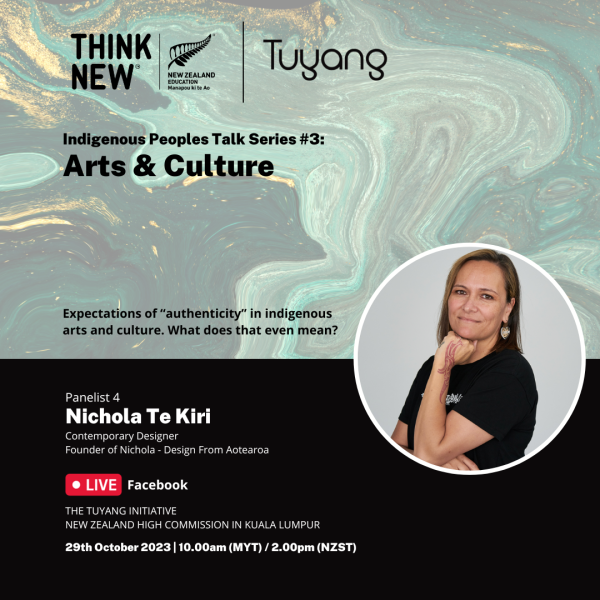
Indigenous Peoples Talk Series 2023: final event
The third and final event of the Indigenous Peoples Talk Series will be held online on 29 October 2023, at 10am in Kuala Lumpur, Malaysia (2pm NZDT).
This event, jointly organised by The Tuyang Initiative, a Malaysian Social Enterprise, and Education New Zealand Manapou ki te Ao, is focused on Arts and Culture, specifically the expectations of authenticity in indigenous arts and culture and what this means. Taking part in the discussion are several brilliant indigenous academics, artists, and cultural practitioners from Malaysia and Aotearoa New Zealand, including Nichola Te Kiri, contemporary designer and founder of Nichola – Design from Aotearoa.
Information on the Tuyang Initiative was shared in a previous E-News here. You can register for this free event via this form: https://forms.gle/5f3SW5iCteZTHyC98
-
Updated timeframe for the re-opening of New Zealand's borders
Note: The information in this story was correct at the time of publication, however, some steps in New Zealand's border reopening plan have now been brought forward. Click here to check the current border reopening steps.
“To slow the rapid spread we have seen overseas, we are pushing out the start of non-MIQ travel until the end of February 2022”, COVID-19 Response Minister Chris Hipkins said.
You can read the full announcement from the Government here.
The Government has not yet announced the date from which any specific group of foreign nationals, such as international students, will be able to travel to New Zealand or apply for visas to do so.
Until then, New Zealand’s current border settings will remain in place. Most people outside New Zealand cannot apply for a visa unless they have a border exception. There are limited border exceptions for international students.
New Zealand suspended most offshore visa applications from August 2020 and that suspension currently extends to August 2022. The Government may decide to lift the suspension, in whole or in part, before August 2022 – in line with its decisions on the stages of the border re-opening.
It is Education New Zealand’s view that it is better for international students, education providers and agents to wait for certainty on border entry conditions before making new plans or commitments to students.
At this stage, in most cases, if international students who are now in New Zealand leave, they will not be able to return to the country for the start of the 2022 academic year. They will need to wait to apply for visas and to travel to New Zealand until the dates the Government sets for them to do so.
At Education New Zealand we understand how much international students and education providers have been through during the COVID-19 pandemic. We will keep students and providers up to date with the Government’s decisions as they are announced.
We are looking forward to welcoming international students back to New Zealand.
More information
Find out more about visas from Immigration New Zealand if:
- You want to enter New Zealand
- You want to study in New Zealand
- You are a student visa holder already in New Zealand.
Find out more about New Zealand’s response to COVID-19:
- Official government Covid-19 website
- International travel and transit
- Information for international students on NauMai NZ
-
From the CE: Our focus for the next 12 months
Kia ora tātou,
"To help providers of international education to build back onshore offerings" is Focus Area One of the New Zealand International Education Strategy. There are nine key short-term actions in Focus Area One. Education New Zealand Manapou ki te Ao is the lead Government agency in four actions and has an important role to play in eight of the nine. It can be no surprise then that for the next 12 months, and our next financial year starting in June, that the majority of ENZ's energy, time and resources will be focused on attracting learners to study with New Zealand.
This is no small challenge. Our borders have been open now for just eight months. And while students are returning, the latest visa application numbers I've seen report in the order of 43,000 applications (offshore and onshore), the recovery is variable at best. Even within the university sector, that on the face of it looks to have recovered better than others, the experience is mixed. Within the PTEs and English Language schools we have a long way to go to reach the levels of 2019 and early 2020. In such a highly competitive market, it is going to take some time to regain awareness with learners and overcome the head start other countries gained.
All our budgets are tight. At the very time we need to be investing and getting offshore to renew partnerships and networks, we are all resource-constrained and having to watch every cent. ENZ is no exception.
This means that for the next 12 months, more than ever, we need to focus. We need to focus our limited resources to where they have the greatest impact, and we need to be aligned as one with the sector.
India is an excellent example of a partner market that is worthy of focus. I have just returned from leading an ENZ delegation to India. India is forecasting economic growth of 6-7% every year for the next three to five years. They know, and their national education strategy makes it clear, they need educated, skilled and talented people to realise this opportunity. I repeatedly heard, "They want their people back".
That five Deputy Vice Chancellors joined the 23 sector representatives tells you how important India is. As one of the five said to me, "India today is what China was 15 years ago".
To be successful we need to agree that India is important. It is. We need to go there together. We will. We also need to work with our colleagues in other Government agencies to ensure they are aligned. This is what success looks like for me. And this is the level of focus on building back, and the level of partnership with the sector, that I expect from my ENZ teams over the next 12 months.
I will also work with them to secure the many gains we have made in government-to-government relationships, scholarships, diversity, equity, and inclusion, social licence, and in building a sustainable future. All the good work of the past two years remains important for the long-term future, set out in Focus Area Two: Building a new future for international education.
We are all very passionate about international education and its ability to transform lives. In 2023/24 when the sector is stronger than today, all of us will be better placed to address the short term and the medium to long term. Today our focus must be the immediate needs.
He moana pukepuke e ekengia e te waka
A choppy sea can be navigated
This proverb acknowledges the changing and challenging environment that we currently find ourselves in and how it can be navigated by collaboration and innovation.
Ngā mihi nui,
Grant McPherson
-
Around the world in five
GLOBAL
University applicants turn away from US and UK
Canada has overtaken the UK as a preferred study destination for international university applicants, according to the 2018 QS Applicant Survey. The survey provides further evidence that international students are increasingly rejecting the UK in favour of other English-speaking destinations.
SOUTH EAST ASIA
South East and East Asia’s growing popularity with international students
South East Asia’s lower study and living costs, coupled with its offering of an ‘exciting study abroad experience not too far from home’, is attracting international students from the wider Asia-Pacific region.
UK
Take students out of migration stats, say policymakers and stakeholders
A forum about the UK’s future immigration policy included lengthy discussion about the inclusion of international students in the net migration target, with many arguing it creates the perception that the UK is unwelcoming to students.
BRAZIL
Brazil to get 'Singapore-style' education thanks to teacher training deal
More than 50,000 students in Brazil will soon be provided with a more Singaporean-style education, thanks to a memorandum of understanding with Singapore’s National Institute of Education to improve the education system in Brazil.
MALTA
Increasing international English language enrolments
More than 87,000 international students attended English language schools in Malta in 2017, seeking “a high quality of English teaching accompanied with the sun and the safety of the island.”
-
Education Minister opens ENZ Singapore office
The Minister’s visit included a market briefing from ENZ, the signing of an Education Co-operation Arrangement with the Singapore Government, and several visits to Singaporean education ministries and institutions.
John Laxon, ENZ Regional Director – South, South East Asia & the Middle East, said the office opening represents a significant milestone in ENZ’s strategy to increase the organisation’s presence across the region. The region includes five of ENZ’s priority markets (Viet Nam, Thailand, Indonesia, Malaysia and the Philippines).
“The Minister’s support of a stronger New Zealand education presence in the region is really appreciated, particularly as we’re seeing growth across South East Asia in the numbers of high-quality students choosing New Zealand,” said John.
“Our organisational strategy is to add value to our industry by providing better intelligence, connections and expertise in areas such as digital marketing and public relations.
“The SEA regional hub office will complement our in-market and global teams, and we look forward to connecting with our New Zealand education providers in the coming months.”
The opening follows several recruitment initiatives across ENZ’s South and South East Asia, Middle East team:
- The appointment of Ben Burrowes as ENZ’s South East Asia Regional Manager
- Recruitment of a South East Asia Regional Marketing and Communications Specialist, to be based in Singapore (recruitment closing 12 April)
- Expansion of the Viet Nam office through the appointment of Van Banh as Market Manager (Van.Banh@enz.govt.nz) and Tam Ngo as Programme Manager (Tam.Ngo@enz.govt.nz)
- Recruitment of a Market Manager responsible for Malaysia and the Philippines (short-listing underway).
-
Around the world in five
JAPAN
Japanese-language schools expand offerings overseas
Japanese education companies are expanding their language offerings overseas to meet the growing demand for Japanese-speaking foreign manpower as the nation opens its doors to workers from overseas.
THAILAND
Thailand eyes lifelong learning push
To address concerns that Thailand’s “outdated” education system can no longer offer "future-proof" degrees for students, there are calls to develop a lifelong learning approach comprised of online learning, in-line learning, beeline learning and frontline learning.
US
US Department of State endorses education agencies
In a historic move, the US Department of State has officially endorsed the usage of education agents, with a State Department representative expressing a desire to “work together to promote the United States as the destination choice for international students.”
INDIA
India needs better strategies to promote 'Study in India'
Earlier this year, the Indian Government launched a ‘Study in India’ website to help foreign students find Indian universities, but more needs to be done. There were only 46,144 foreign students in India in 2017, but higher numbers could significantly boost India’s soft power and university rankings.
FRANCE
French university fees for non-EU students set to rocket
University fees for students outside of the EU, which will include Brits after Brexit, are set to shoot up by as much as 16 times the current cost, the French prime minister has announced.