Search
Showing 10 of 982 results for search for pheen4uuu from wiki 2025
-
Rebuilding New Zealand education’s visibility in China
Last month, Lillian spent three weeks in New Zealand in what was her first visit to the country as part of her role at Education New Zealand Manapou ki te Ao.
The two-pronged purpose of her trip was to provide refreshed marketing insights to education providers in New Zealand and hear from providers on their expectations and the challenges they face when marketing their offering in China.
Here are Lillian’s takeaways from her visits and interactions in New Zealand –
Need for storytelling that better highlights New Zealand education’s points of difference
- Engaging with education providers and visiting campuses highlighted to me several points of difference for New Zealand education, particularly how it is innovative, how it develops work-ready graduates, as well as how international students are welcomed and valued in New Zealand. Seeing these points of difference in real time made me realise how underrated the New Zealand education story is overseas, and the need to tell that story better. We need to focus on telling a New Zealand education story that is authentic and has concrete examples. A more visual storytelling format would be ideal to deliver the story.
- Tip: Demonstrate the teaching and student engagement practices your institution delivers using visuals (images or videos).
- Example: Take photos/videos in the lab, with robotics machines, with the 3D printer, the hands-on experience and student engagement (student hub), self-learning and learning from their peers.
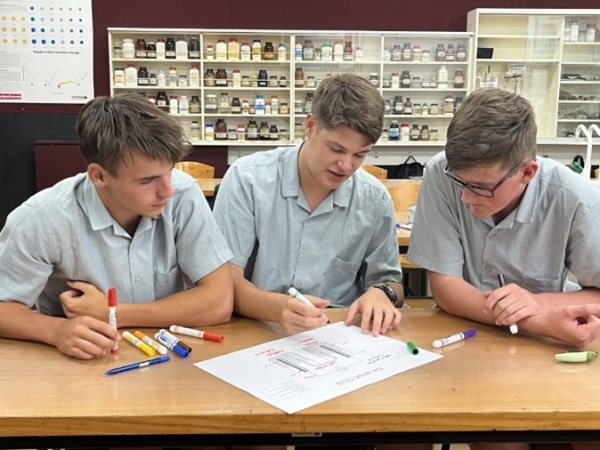
Visit to Middleton Grange Intermediate School to understand the differences between New Zealand and Chinese classrooms
Demonstrate outcomes of education programmes via successful alumni stories to promote offering
- Chinese parents and students are very outcome driven. Institution or programme rankings remain the key consideration, but other indicators and outcomes are becoming increasingly important, including employability, international recognition, and a life-changing experience.
Demonstrating the outcome of an education programme by leveraging successful student or alumni stories and testimonials can be a critical in activating ‘word-of-mouth’ promotion that influences the decision-making of prospective students and parents.
- Tip: Highlight successes or outcomes for students through stories. Degree + good experience = happy alumni story. Parents and students want to know if a qualification from a New Zealand institution will be recognised in China, the world or if it could be a pathway to further study.
- Example: A Chinese student studied a business degree with a New Zealand tertiary provider and then landed a job at a Fortune 500 company or became an industry leader. Or if a Chinese student studied virtual art in a New Zealand PTE, got a job in Weta Digital, which has worked on recent Chinese blockbuster films. We have seen Chinese media are very interested in interviewing and profiling such students in their publications.
Consider digital content in local language for marketing impact
- Research indicates that more Chinese students do their own research online and make their own decisions when choosing an overseas study destination and institution. So having a digital presence on China’s digital platforms is critical. Digital content in local languages also goes a long way in building brand awareness. If resources allow, exploring multiple channels and interacting with your audience in local languages will help you to gain a major advantage in optimising brand awareness and driving results in student recruitment.
- Tip: Host Chinese language and China specific channels such as an official WeChat account. We understand it isn’t easy to set one up. If you are unable to set up a WeChat account for any reason or don’t have Chinese-speaking staff, having a Chinese language website is the next best option. Having crucial information online in Chinese helps promote the institution as trustworthy. Parents and students will use the Chinese language website to confirm information, even if they rely heavily on agents or school counsellors.
- Example: ENZ has been working to optimise our digital presence in China, including with our Chinese language website: studywithnewzealand.cn. We recently revamped the storefront of SWNZ.cn to bolster its localisation, ensuring that from a Chinese user point of view, we can keep them interested and engaged in considering a New Zealand education provider. To ensure our digital presence continues to be fit for purpose, we undertake regular work to update and troubleshoot our platform and content.
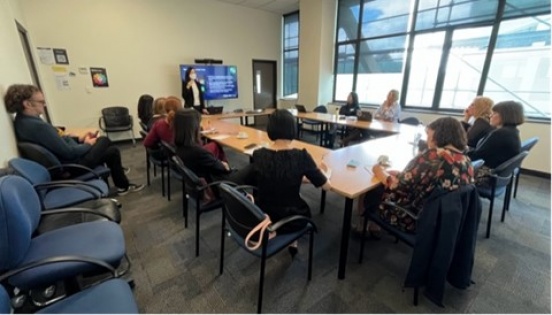
ENZ’s Lillian Zhang presents China Marketing Insights and Strategies session to members of Study Dunedin on 24 February
With China fully re-opening to the world in January, the tempo of in-person events in the country is at pace already.
ENZ’s Greater China team is looking forward to supporting New Zealand providers visiting the country for agent seminars in Guangzhou and Beijing in May and other events later in the year.
If you have any enquiries related to marketing in China, please contact: china@enz.govt.nz
- Engaging with education providers and visiting campuses highlighted to me several points of difference for New Zealand education, particularly how it is innovative, how it develops work-ready graduates, as well as how international students are welcomed and valued in New Zealand. Seeing these points of difference in real time made me realise how underrated the New Zealand education story is overseas, and the need to tell that story better. We need to focus on telling a New Zealand education story that is authentic and has concrete examples. A more visual storytelling format would be ideal to deliver the story.
-
From the CE: New Zealand education promotion continues at pace
I can assure you I have never seen as much interest in New Zealand as an education destination. Despite the challenges we’re all aware of and the activities of our competitor countries, the New Zealand education offering remains attractive. We all must continue to tell the New Zealand education story.
On Friday 17 March, Minister of Education Jan Tinetti announced new appointments to our Board. I want to acknowledge outgoing Board Chair, Steve Maharey, and welcome Tracey Bridges to the role. Steve has been a stalwart and tireless advocate for international education, both in the community and the corridors of power for over 30 years. In his time as our Chair, he has seen and contributed to enormous change within the sector and ENZ. Personally, I have appreciated his deep understanding, straight talking and clear direction.
Tracey Bridges has knowledge of regional economic development, expertise in strategy, risk and reputation management, and in social marketing. She is Chair of the Wellington Economic Development Agency Limited (WellingtonNZ), co-founder of The Good Registry and sits on the Boards of Sky Stadium, Whānau Āwhina Plunket, the Wellfed NZ Trust and the Digital Media Trust.
Tracey is joined by Dr Therese Arseneau. Dr Arseneau also has knowledge of economic development including international education’s contribution to regional economic development, and governance experience in the tertiary sector at the Ara Institute and the Open Polytechnic. She previously chaired Regenerate Christchurch and Enterprise North Canterbury.
We all know that the contribution of international education is far broader than just the direct and immediate economic impact of the students that come to New Zealand. For the first time, ENZ along with EY have sought to quantify the extent and the value of these wider benefits.
Research commissioned by ENZ that will be released before the end of March found that international education is not only a significant contributor to the New Zealand economy but also that international students living and working in the country bring in a raft of social, cultural, and international benefits. It goes on to explore the extent of the indirect longer-term contribution to New Zealand’s GDP from the small proportion of international students that remain in New Zealand on completion of their studies. The research also quantifies the impact of the pandemic.
Look out for the formal release and when it is available I urge you to download the report from Intellilab.
To complete your international education-related reading list, our Briefing to the Incoming Minister, Minister Tinetti is now available here on the ENZ website. The BIM, as it is known, is prepared when new Ministers are appointed to portfolios.
He maurea kai whiria! – Ignore small matters and direct effort toward important projects!
Ngā mihi nui,
Grant McPherson
-
Applications are open for the Europe and Latin America Engagement Fund
The aim of this funding is to support engagement activities with education agents from Europe, Brazil and Colombia. New Zealand institutions are welcome to submit proposals and apply for up to $3000 per project. We will fund up to 15 projects that focus on engaging with agents from Europe, Brazil and Colombia.
ENZ’s Market Development Manager – Europe, Adina Stoye, said ENZ has a strong and loyal network of agents in Europe, especially Germany and Italy.
“They are keen for support and engagement with New Zealand institutions, and welcome opportunities for events and promotional activities. This initiative is a wonderful opportunity for New Zealand education providers to promote their education offering through building education agent networks.”
Proposed activities should be completed during the second half of 2023 and have firm goals and outcomes in place. Examples of activities are a scholarship campaign, contribution to bringing an agent to New Zealand for a famil, or supporting a trip to attend an event organised by agents.
ENZ’s Director of Engagement – Latin America, Javiera Visedo said education agents in Latin America are keen to learn more about what a New Zealand education has to offer, with students excited at the prospect of studying here. Reconnecting with New Zealand education providers is a top priority for them.”
Applications are open to New Zealand institutions only. This includes New Zealand education providers such as universities, Private Training Establishments (PTEs), English Language Schools (ELS), regional economic development agencies, schools, and peak bodies. Some providers may wish to work together to submit their applications, for example high schools or ELS.
To apply, visit this page. Once applications close, they will be reviewed by a panel of ENZ staff according to the guidelines included on page 5 of the Request for Proposal document.
We will host an information session about the funding and how to apply on Thursday 27 April at 9 am. To register for the session, fill out the form here.
- Applications are open until Friday 12 May at 5pm and applicants will be notified of the outcome on Friday 9 June.
-
Report concludes international education can recover and grow
In 2019, international education’s direct financial contribution to New Zealand’s GDP was $3.7 billion using the Computable General Equilibrium (CGE) methodology. This contribution was reduced to an estimated $0.8 billion in 2020 by the pandemic. The CGE methodology applied by EY to determine the contribution was supported by MBIE and MoE and is more rigorous than previous analyses.
Having established the direct financial contribution, EY explored the extent of the indirect longer-term contribution to New Zealand’s GDP from the small proportion international students that remain in New Zealand after completion of their studies.
EY found that international students living and working in New Zealand in 2019 and 2022 contributed economic, social, cultural, and international benefits. Using NZ Statistics Department IDI data and CGE modelling, EY found that these students contributed in the order of $6 billion in the form of labour supply and productivity to New Zealand’s GDP in both 2019 and 2022.
Determining this contribution involved estimating the GDP output and wage impacts associated with New Zealand educated international students who remained in New Zealand and transitioned into the domestic workforce in the 10 years leading up to each year.
ENZ Chief Executive, Grant McPherson said, “This report confirms the tough time the sector has had over the past two years, highlights the contribution it made in the past, the contribution it makes beyond economic value, and tells us that it is possible to become a vibrant, sustainable and resilient sector in the future.”
The majority of international students, 62%, return to their country of origin after they have completed their studies. A further 13% leave New Zealand after their post-study work experience meaning that in total 75% have returned home after three years, according to the research.
More broadly, EY concluded there is evidence that international education can enable New Zealand students to develop global competence within a structured teaching environment, and contributes to soft power in diplomacy, trade and perceptions of New Zealand through a range of mechanisms. Broader impacts for Māori are potentially also present across each area of impact from international education. These impacts were not directly quantifiable.
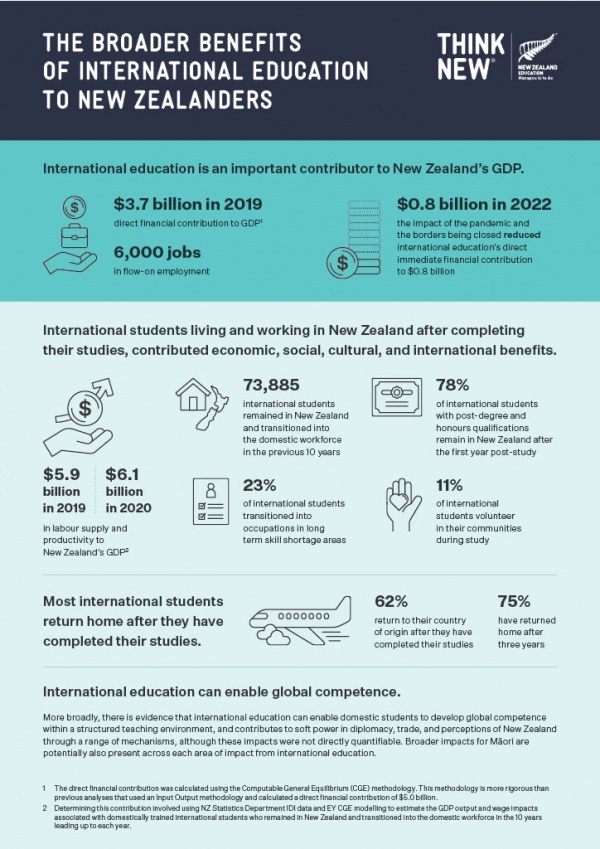
For a full-size image of the infographic, click here. For a full copy of the report, click here.
-
From the CE: India-New Zealand Education Week and release of the Broader Impact Valuation report
As you read this I will be about to get on to a plane to India. I’m leading a high-level University delegation to participate in the India-New Zealand Education Week from 16 - 22 April 2023. This is an important initiative which will further support the sector’s re-engagement with India, a market which remains critical to the recovery of international education.
The week features engagements with institution and Government partners, education agents, media and others involved in both student recruitment and internationalisation. We will also be re-launching the New Zealand Excellence Awards (NZEA), our flagship scholarships programme for India co-funded by Education New Zealand Manapou ki te Ao (ENZ) and all eight universities. The week will be bookended by two ENZ Recognised Agent Fairs in Delhi and Mumbai respectively. I expect it to be successful and enormously valuable.
This is a nice segue to the release of the Broader Impact Valuation report made public for the first time in this edition of E-News. Commissioned by ENZ from EY the valuation found that international education is a significant contributor to the New Zealand economy.
In 2019, international education’s direct financial contribution to New Zealand’s GDP was $3.7 billion using the Computable General Equilibrium (CGE) methodology. The CGE methodology applied by EY to determine the contribution was supported by the Ministry of Business, Innovation and Employment and Ministry of Education and is more rigorous than previous analyses.
Having established the direct financial contribution, EY explored the extent of the indirect longer-term contribution to New Zealand’s GDP from the small proportion of international students that remain in New Zealand after completion of their studies.
EY found that international students living and working in New Zealand in 2019 and 2022 contributed economic, social, cultural, and international benefits. Using Stats NZ Integrated Data Infrastructure (IDI) and CGE modelling, EY found that these students contributed in the order of $6 billion in the form of labour supply and productivity to New Zealand’s GDP in both 2019 and 2022.
Determining this contribution involved estimating the GDP output and wage impacts associated with New Zealand educated international students who remained in New Zealand and transitioned into the domestic workforce in the 10 years leading up to each year.
They also found that the pandemic significantly, and unsurprisingly, reduced the direct financial contribution to an estimated $0.8 billion in 2020. Truly tough times.
From my perspective the report is an important and long-awaited development. Using the most up to date valuation methodology it confirms the contribution the sector has made in the past, the contribution it makes beyond economic value, and tells us that it is possible to become a vibrant, sustainable and resilient sector in the future.
I urge you to download the full report, read it thoroughly and make use of its conclusions within your community.
सहनांशक्तिको वहुशक्ति्तिः
The power of many is greater than the power of one who stands alone.
Ngā mihi nui,
Grant McPherson
-
Re-building connections across the globe at APAIE
Moving forward into the post-COVID era, the theme was appropriately ‘Towards a sustainable future for international education in the Asia Pacific’.
New Zealand’s presence at the conference was strong with all eight New Zealand universities and Whitecliffe School of Fashion and Sustainability attending, along with representatives from Education New Zealand Manapou ki te Ao (ENZ) and Immigration New Zealand (INZ).
ENZ’s Chief Executive Grant McPherson travelled to the event.
“It is exciting to see the commitment of New Zealand institutions to attend these key regional events,” he said. “The APAIE conference is one of ENZ’s flagship events and supporting these events is a critical component of our broader strategy to rebuild connections across the globe while also rebuilding a more resilient and sustainable sector.”
Ben Burrowes, ENZ's Regional Director Asia said, "the New Zealand Pavilion was extremely busy across the three days of the conference. The event proved a great opportunity to meet kanohi ki te kanohi (face to face) to re-build our brand awareness as well as raising our profile with our key bilateral partners and potential new partners."
During the conference, ENZ's Director of Scholarships, Carla Rey Vasquez, and the Centres of Asia Pacific Excellence (CAPEs) Education Director, Libby Giles, delivered a presentation showcasing New Zealand's Global Citizenship journey. The session explored examples of how Global Citizenship Education (GCED) has been embedded across New Zealand schools, universities, and government entities as a way to innovate and transform education practices, including through the integration of Te Ao Māori views around this topic.
Carla said, "It was great to demonstrate to audiences how local and international students can come together as global citizens through a focus on intercultural exchange, as well as through understanding local culture and knowledge.”
Outside the conference, ENZ's Thailand team organised a series of meetings with key Thai government ministries and agencies including the Ministry of Education, Thailand's National Innovation Agency, the Office of Civil Service Commission, and the Ministry of Higher Education, Science, Research, and Innovation.
Next year’s APAIE conference will take place in Perth, Western Australia in March.
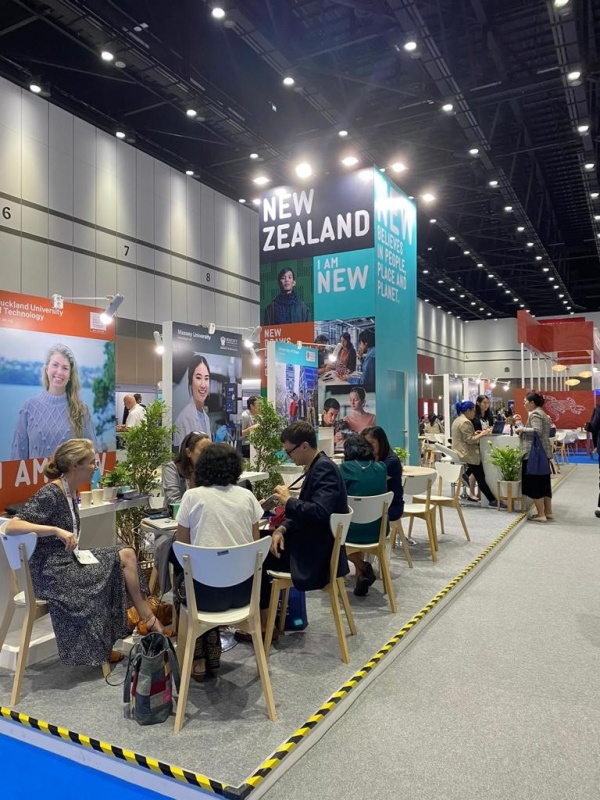
Meetings at the New Zealand Pavilion
-
Call for speakers for NZIEC KI TUA 2023
NZIEC KI TUA 2023 will be held in Ōtautahi Christchurch from 16 to 18 August 2023 at Te Pae Convention Centre. A welcome function will occur on Wednesday evening followed by two days of conference sessions on Thursday and Friday.
2023 marks the 30th time our conference will be held, and this year’s theme is Te Ara Ki Tua – the pathway ahead. As we celebrate this milestone, our theme encourages us to consider how our sector can thrive in the future.
We’re calling for speakers to help us explore the following sub-themes:
- Excellent Experiences – How can we foster excellent experiences for international students studying with Aotearoa New Zealand?
- Marketing Smarts – What are the most effective ways to market to and recruit international students?
- Growing Global – How can we grow our relationships with international partners?
- Authentically Aotearoa – How can our international education offerings tap into what makes our country special?
- Fresh Offerings – How can we develop fresh programmes, products, services and partnerships and take them to the world?
Please refer to the NZIEC KI TUA website here for detailed information on the theme and sub-themes, session formats, tips for your abstract and biography, and speaker terms and conditions.
You can submit your speaking proposal through the NZIEC KI TUA Speaker Portal. Submissions close on 22 May 2023.
If you have any questions, please contact us at nziec@enz.govt.nz.
We hope you will consider joining us at NZIEC KI TUA to discuss the key opportunities and challenges facing our sector as we discuss Te Ara Ki Tua.
An in-person format and early bird registration
Subject to pandemic settings, this year’s conference will be an in-person format. Sector feedback revealed a strong desire to return in-person, in part to facilitate kanohi-ki-te-kanohi connections after so many years apart.
We are not intending to offer a hybrid option (in-person and virtual format) this year as this requires additional resources to deliver and a hybrid approach results in inferior experiences for both audiences. To support attendance, and in recognition of the impact of Covid-19, a discounted early bird registration rate will be available this year.
- Excellent Experiences – How can we foster excellent experiences for international students studying with Aotearoa New Zealand?
-
Advertising opportunity for NZ education providers and regional groups in Japan
The publication is the only one of its kind supported by the New Zealand Embassy in Tokyo and Education New Zealand. KBUNSHA distributes 20,000 copies to Japanese schools, universities and education organisations as well as education fairs and seminars.
ENZ’s Business Development Manager – Japan, Tomomi Kontani says “New Zealand’s border is now fully open to students from Japan, and interests from students and their parents, schools, and education agents are shifting back from other options.
“This is a great opportunity for New Zealand education providers and regional groups to join forces with us to promote New Zealand education to the Japanese public. ENZ Japan is planning to host and participate in various students/business-to-business stakeholder focus events in 2023, and this guidebook will be the main information source we refer to and distribute at these events. Destination marketing plays a key role in student attraction for a market like Japan with a tourism focus and we hope regions can also participate in this special opportunity to introduce their regions and activities.”
Advertisement rates for individual providers range from $NZ2,400 to $NZ6,600 for guidebook and/or website listing. Individual providers can download the proposal here. Advertising copy can be provided in English.
For regional groups, download the proposal here for further details on the guidebook and pricing (approx. $NZ2,400 for a 2-page colour advertisement and $NZD3,600 for a 4-page colour advertisement).
Interested New Zealand education providers and regional groups should contact KBUNSHA directly for any questions (available in English). Advertisement bookings must be made by 30 June 2023.
KBUNSHA contact:
Minori Takahashi (Director)
Tel: +81-3-3234-1744
Email: minori@kbunsha.com
-
NauMai NZ and the NauMai NZ WeChat mini programme
‘Nau mai’ is a te reo Māori phrase of invitation and welcome and NauMai NZ is the NZ government's official student experience platform, designed to support international students living and studying in Aotearoa New Zealand
NauMai NZ is written in plain English and provides practical, trusted, peer-reviewed content, designed to support and improve students’ living and study experiences. This includes information and resources to support students before arriving in Aotearoa (including useful tips on moving to New Zealand and what they need to bring), though to information to help them navigate daily life once here, including on:
- Making friends and building social connections
- Exploring and experiencing Aotearoa – the culture and the country
- Getting advice to improve wellbeing, study and living experiences
- Managing money, finding accommodation, and understanding healthcare in New Zealand
- Balancing work and study and understanding workplace culture, and much more.
You can explore more via this link.
ENZ has also developed the NauMai NZ WeChat Mini Programme. This is a companion platform to the English platform, to better support Chinese students who prefer the WeChat ecosystem. Information from the English platform is available in Chinese on the mini programme, as well as specific features that provide peer-to-peer support, such as video sharing, livestreams, forum functionality and student stories.
The following QR codes can be shared with your international students. Printed flyers are also available and so if you would like these sent to you, or have any questions for our Student Experience team, please do not hesitate to contact Faymie Li, faymie.li@enz.govt.nz, and Ross Crosson, ross.crosson@enz.govt.nz.


Manaakitanga is at the heart of what we all do, and ENZ aims to support you and your mahi. He waka eke noa. We are all in this together.
-
ISANA - Enhancing international student experiences
The ISANA New Zealand Annual Conference held at AUT University in Tāmaki Makaurau last month provided the perfect forum to address the challenges of strengthening capability and ensuring sustainability as the sector addresses ways in which to grow international education.
A key feature of the conference was the presentation of a new online ‘Capability Toolkit’ - a collaboration between ISANA NZ and Education New Zealand Manapou ki te Ao (ENZ). Developed as a resource for education practitioners, the toolkit presents strategies, tools, tips, guidelines, case studies, scenarios and more to assist with every facet of engagement with international learners.
ENZ’s General Manager Sector Services, Sahinde Pala, said that the conference provided a great opportunity to reconnect face-to-face with professional colleagues.
“We all enjoyed the opportunity to exchange experiences and hear from frontline practitioners how the rebuild of the sector is going from their perspective. It was a great opportunity to connect with those relatively new to the sector and let them know the role of ENZ and the resources available to assist them in their role.”
“It was also encouraging to see our industry coming together to collectively focus on improving our services for students. The Capability Toolkit is an important, practical resource that will assist education practitioners provide even better support for our international learners.”
The Capability Toolkit provides links to resources in the following areas:
- Wraparound tailored support for international students
- Critical incident management for international students
- Innovative leadership in international education
- Intercultural competence in educational contexts
- Student experience information for agents.
ENZ is continuing to work with ISANA to further develop the Capability Toolkit and other content will be added over time. In the meantime, anyone who has not had a chance to look at the toolkit, can explore this further on ISANA NZ’s website here.
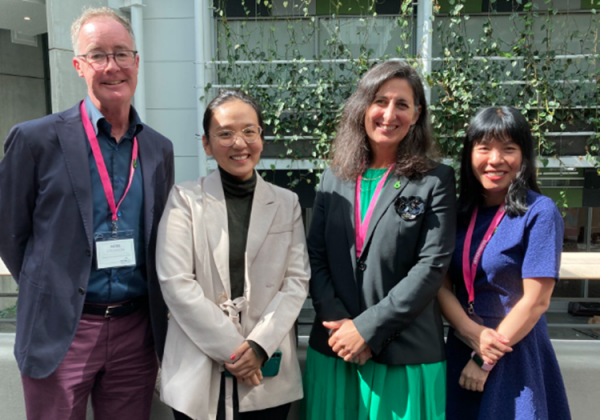
Vaelyn L, International Student Representative (second from left) with ENZ representatives at the ISANA conference Ross Crosson, Student Experience Manager, Sahinde Pala, General Manager Sector Services, and Faymie Li, Senior Advisor Student Experience