Search
Showing 10 of 982 results for search for pheen4uuu from wiki 2025
-
International education drives soft power in offshore markets
Former Ambassador to Brazil Caroline Bilkey knows this only too well. She says our strong reputation in international education is a “success story” which pays dividends down the line, as former students happily help to build our profile globally.
In her role progressing New Zealand interests offshore, Ms Bilkey has seen first-hand the benefits of working within networks of local people who studied in New Zealand.
“Not only is their experience in New Zealand a great conversation starter, but it also means you are more likely to be given the benefit of the doubt, and the person may be more willing to advocate your issue with their peers, because they know and like New Zealand, having studied there.”
Trade and business can benefit from link to international education
With more than 30 years’ experience with the Ministry of Foreign Affairs and Trade and multiple offshore postings, Ms Bilkey knows of countless instances where trade and business have benefited from a direct, or indirect, link to a former international student’s New Zealand education experience.
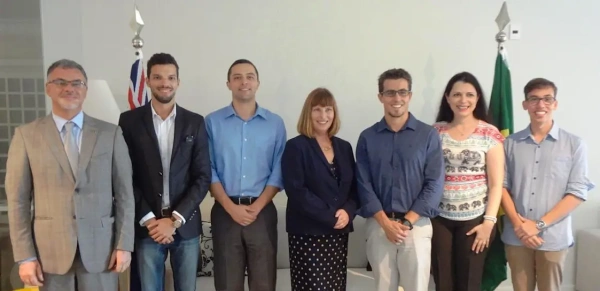
One such example is an Argentinian-Brazilian woman who returned to Brazil after studying in Auckland, to work for Fonterra and Zespri. Ms Bilkey describes the woman as “able to talk enthusiastically about the New Zealand story behind the products coming in”.
She believes there is something “quite special” about the links built through international education, largely because students are usually young, and their experiences are intense and formative.
Whether it is international students coming to study in New Zealand or Kiwis studying abroad, Ms Bilkey believes that there are many benefits associated with international education, beyond diplomacy, international trade, and the obvious economic benefits.
Positive international education experience opens hearts and minds
There are higher-level, public good benefits, she says. “A positive international education experience contributes to the global good, as it opens hearts and minds and encourages tolerance.”
Other benefits for all of us include the exposure to cutting-edge thinking and breakthroughs resulting from research collaboration between New Zealand and international students’ home countries. “The idea that if you get outside the box and have people coming in with a different approach, that can sometimes generate really positive, new and innovative ideas.”
Ms Bilkey is in no doubt that a positive international education experience in New Zealand boosts our connectivity with the rest of the world by building long-term relationships, enhancing business, opening doors to trade opportunities, and helping shape global citizens, all badly needed in a world facing unprecedented challenges.
-
International students provide Asia perspective for Canterbury businesses
The students had signed up to take part in the Business School’s first Global Virtual Micro-Internship Programme, providing them with real-world research and industry experience, while enabling local businesses to tap into the expertise and insights international students can offer of their home countries.
A total of 35 mostly Commerce students participated in the three-week programme, working in nine teams across six local businesses which were keen to be involved. They were divided into the three Chinese teams, three Malaysian teams, and one each from Thailand, Indonesia, and Sri Lanka.
The programme had a competitive element, with the teams competing for a prize pool of $1500. They were judged on a range of criteria, with the most important factor the extent to which the research was designed, undertaken, and presented in a way that met their client’s needs.
Programme meets needs of students and businesses
Programme lead Will Shannon, also UC Business School’s Internationalisation Director, was excited to be able to develop the programme with the local business community, saying it met an unfilled need for international students wanting practical business experience, and highlighted the skills they had to offer.
The catalyst for the programme was the release of a report by Asia New Zealand Foundation Te Whītau Tūhono in mid-October which found that South Island businesses were keen to expand trade and investment links with Asia, but often lacked the right skills and connections to make it happen.
Fifty-seven percent of businesses surveyed identified language skills as a barrier to business, and 51 percent said they lacked knowledge of target markets and relevant organisations in Asia.
“We consistently get requests from international students wanting practical experience where they can apply their knowledge to real world problems,” Dr Shannon says. “So, when the Asia New Zealand Foundation report came out, we had the perfect combination of companies needing what international students can provide.”
Opportunity for international students to be involved
New Zealand’s border restrictions mean that close to half of the Business School’s international students are studying remotely, while others were unable to travel home for summer. This added impetus to the programme.
“We’d been looking for ways to engage students here over the summer break,” Dr Shannon says. “And while the offshore students have been catered for with online lectures, it can feel a bit isolating for them, so we have actively sought opportunities to involve them and get them the extra-curricular experiences that they need.”
He says it worked out well for all the teams, many of which were a mix of onshore and offshore students, because there were students “on the ground” in Asia who could easily talk to people locally. This added value to the insights that they were able to provide their clients.
The businesses represented a range of industries and included a rental car company, a business working in the motorsport industry and specialising in engine modification, a research agency looking to set up an office in Asia, a high-end safety product for the hair and beauty industry, and a truffle company gearing up to export.
“The enthusiasm of local businesses to be involved exceeded our expectations, as it’s the first time we’ve done this.”
The students had to tailor their approach to meet the varying needs of the clients, with the university providing mentors, workshops, and regular meetings to ensure it was a learning experience and to keep everyone on track.
For the New Zealand Truffle Company, co-founders Catherine and Matthew Dwan already knew that they offered a high-end product. They were keen for the students to help them research previously un-targeted Asian markets, likely consumer demand and, importantly, whether Halal certification would be needed in predominantly Muslim markets, as truffles are traditionally searched out by dogs.
Assigned to the truffle business was a Malaysian team and an Indonesian team which provided cultural and religious insights in their findings. The Malaysian team even provided a list of guidelines when engaging with businesspeople in Malaysia.
The programme proved to be a valuable experience for both students and clients and, based on its success, the university is already considering running it again in 2022.
Programme was “experience of a lifetime”
"The Global Virtual Micro-Internship Programme was the experience of a lifetime,” says Nuranisa Nabila Binti Zainudin, a member of the winning Malaysian team. “It provided me with a remarkable opportunity to learn, grow, and unleash my skills both personally and professionally while working for the best New Zealand company with an incredible team.”
“We know that international students are crying out for practical experience and sometimes their knowledge and skills are overlooked,” Dr Shannon says. “There was a lot riding on this, but they did what we knew they were capable of, so I think it would be a shame not to build on the experience.”

As a bonus, the students have built invaluable contacts in the New Zealand business community.
“We know that many jobs come about through connections,” says Dr Shannon. “It is great that the students have had experience of working with local companies in a professional setting, got endorsements for their skills, and will have gained confidence to go out and build their networks.”
He believes the programme has highlighted the unique skillset that international students can offer the community.
“We have amazing people here ready to contribute.”
-
New Zealand education brand updated for greater global impact
ENZ developed an updated look for the New Zealand education brand, guided by research to assess the recognition and effectiveness of our brand elements.
The insights from this research have guided the development of an updated look that reflects the evolving story of New Zealand education and the values it represents on the world stage.
New logo for New Zealand education

ENZ’s research identified the FernMark as a highly distinctive and recognisable symbol, strongly associated with New Zealand by global audiences.
See the new brand in action
ENZ Brand Lead, Nick Sinclair, said this brand uplift is more than just a visual update.
“This is a strategic step forward for us, with the intention to align ENZ’s brand with the quality, ambition and impact of New Zealand’s international education offering.
“We want to build confidence amongst prospective students and their families with a brand that is trustworthy and unmistakably New Zealand,” Nick added.
What’s happening next
-
New visual identity: You’ll start to see updated branding across the Study with New Zealand digital and social media channels over the coming weeks.
-
Refreshed brand and marketing assets: We’re refreshing key marketing collateral and event assets to reflect the new look. These include resources you can use in the outreach and promotional activity for your education institution.
-
Videos and content: Several core videos and promotional materials have already been updated with new branding.
New brand collateral will be available for download on our BrandLab by the end of July this year.
-
-
Philippines roadshow showcases New Zealand’s premier ITP and PTE offering
The roadshow showcased the strength and diversity of New Zealand’s Institutes of Technology and Polytechnics (ITP) and Private Training Establishments (PTE) sub-sectors.
The roadshow brought together eleven New Zealand education providers: academyEX, NZSEG, Te Rito Maioha Early Childhood New Zealand, Ara Institute of Canterbury, Eastern Institute of Technology, NMIT, Southern Institute of Technology (SIT), Wintec, Future Skills, Auckland Institute of Studies and Otago Polytechnic.
A wide range of activities were held throughout the two-week programme, which included a media roundtable, agent seminars, school guidance counsellor workshops, and New Zealand Study Fairs.
These engagements helped to deepen education ties and raise awareness of New Zealand’s high-quality, hands-on tertiary education opportunities among Filipino students, parents, agents, and school representatives.
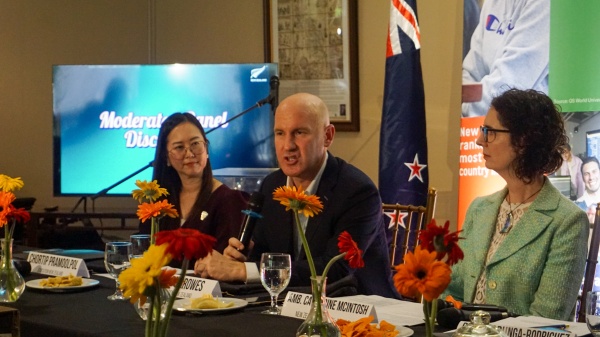
ENZ Market Manager Chortip Pramoolpol, ENZ Regional Director Asia Ben Burrowes and New Zealand Ambassador to the Philippines, H.E. Dr. Catherine McIntosh at the media roundtable in Manilla.
The media roundtable was held in collaboration with the New Zealand Embassy in Manilla and attracted 10 journalists.
The session highlighted the growing number of Filipino students choosing New Zealand and the shared values that underpin our education system – particularly in inclusive learning and vocational, work-ready training.
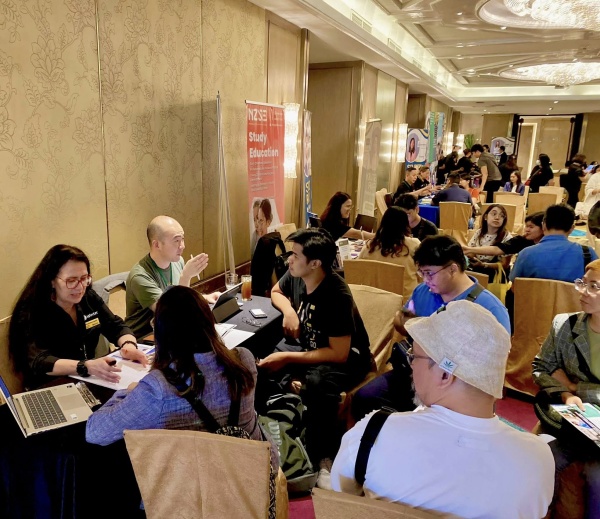
The New Zealand Study Fair in Manila.
The New Zealand Study Fairs across the three cities were buzzing, with 160 attendees in Manila, 165 in Bacolod, and 157 in Cebu.
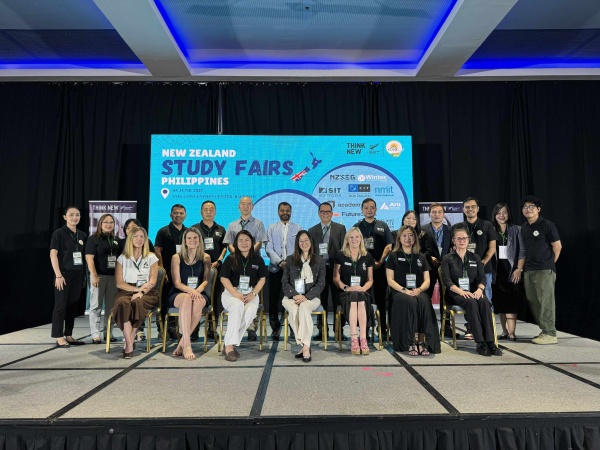
The New Zealand Study Fair in Baclod.

Providers talking to prospective students at the New Zealand Study Fair in Cebu.

Attendees of the Manila agent seminar.
The agent seminars in Manila and Chebu brought together agents who are eager to promote tertiary education in New Zealand to build connections with providers.
ENZ representatives provided a presentation on the latest official information on studying in New Zealand and resources for agents to promote New Zealand education. Immigration New Zealand (INZ) provided a recorded presentation on the latest visa information for the Philippines market.
In Manila, the education agent seminar attracted 37 attendees, while 11 agents participated in Cebu.
School engagement in the roadshow was also notable, with eight schools attending the school guidance counsellor workshop in Manila and 10 in Cebu.
ENZ Regional Director for Asia (excluding China), Ben Burrowes said this roadshow marks another exciting step in strengthening the education relationship between New Zealand and the Philippines.
“The strong turnout across all events and the enthusiastic engagement from agents, students, and school counsellors show there is a growing appetite for the quality education New Zealand offers,” he said.
“We’re proud to support our PTE and ITP partners in connecting with this key market, ENZ looks forward to building on this momentum in the coming months,” Ben added.
-
New Zealand Global Competence Certificate programme proves a hit
What is New Zealand’s Global Competence Certificate programme?
The customised cultural exchange programme, which started as a pilot partnership last year between New Zealand’s international education agency, Education New Zealand Manapou ki te Ao and AFS Intercultural Programs, Inc. has proved so successful it is now being extended and taken up by schools and tertiary institutions around the country, connecting them with students in Asia and Latin America.
The “Kiwi way” has much to offer the world, and international education has much to offer New Zealanders at a time the world needs people with cross-cultural competencies. The New Zealand Global Competence Certificate, delivered through Massey University, develops cultural self-awareness, emotional resilience, and build bridges across cultures. It also piques the interest of students offshore in coming to New Zealand in better times.
The programme delivers animated videos, quizzes, assignments, and weekly live facilitated dialogue sessions for learners to talk with each other online in real time and learn about life from perspectives other than their own.
What have students been saying about the NZGCC programme?
“Not only have I learned to become a better communicator, empathiser, and global citizen, but also how a group of like-minded individuals can come together to form something bigger,” says Jack Hittle, of Northland’s Springbank School.
“I found the programme life-changing,” says Vaagisha Kanwar, a Year 11 student at Indus International School in Bangalore, India, who connected with the Northland students. “We learned about conflict, empathy, inequality, different communication styles, how different people adapt to new situations, and about suspending judgement. I know that I’ll use the skills we’ve learned for the rest of my life, not just when I travel abroad but also in daily life.”
"You see the way a culture greets each other or the way they dress, but then there are things like relationships, gender roles, and health,” says Whanganui Girls College student Tilda Donson.
What have educators been saying about the NZGCC programme?
Whanganui Girls College Principal Sharon Steer is delighted with the NZGCC programme, which she says will help students build their understanding of global cultures, and other critical “soft” skills which will prepare them for life as they enter the workforce.
“An important part of our curriculum is developing strong communication skills and setting our students up for success in the workplace. The NZGCC programme will add another dimension to our lessons by teaching our students how to develop meaningful relationships with one another despite language and cultural differences.”
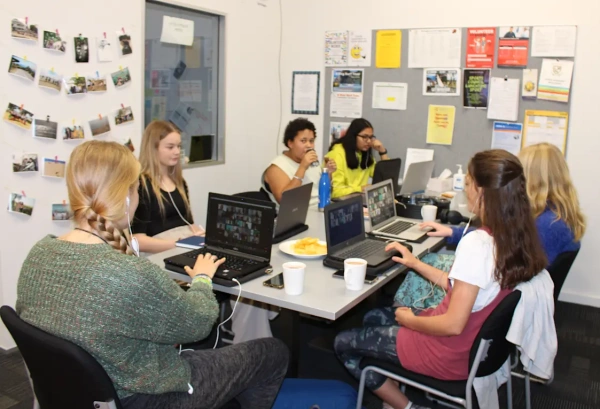
Educators say that with the borders closed, the programme now forms an important part of the reshaped international education experience.
“It is so important that our students don’t miss out on the enriching life skills that are gained when we interact and connect with people from around the globe,” says Whangarei Girls High School International Director Amelia Morrison, who has students working with peers in India.
"Global competence is mission-critical for our world," says AFS Intercultural Programs President and CEO Daniel Obst. “Educating more young people to become global citizens is crucial if we want to create a more just and peaceful world.”
The expansion of the GCC programme reflects the diversification of education in new virtual forms fit for a globally connected world, says Education New Zealand Chief Executive Grant McPherson.
“As well as helping to develop the global citizens of tomorrow, this programme demonstrates the reciprocal benefits of international education, giving our rangatahi a chance to learn with high school students from around the world, and giving their offshore peers a chance to learn ‘with’ New Zealand and our unique way of thinking.”
-
Massey student’s robotic gut capsule could be a game-changer
Millions of people globally die every year from gut-related illnesses, and many more live a life of suffering, yet diagnostic tools remain quite rudimentary.
Arriving from Pakistan as an international student in 2018, armed with a BSc and MSc in Electrical Engineering, Rehan was excited to join the Microbiotics Lab at Massey University. There he accelerated early work on a micro capsule which could be swallowed and was able to collect samples of the microbiome in specific parts of the gut.
Unlike the poop in a jar method, the capsule’s targeted sampling provides a much more detailed analysis, allowing for earlier diagnosis of killer diseases such as cancer and diabetes and easier treatment of inflammatory conditions like Crohn’s and coeliac diseases.
Early treatment of gut disease can save lives
Treating disease early reduces complications and saves lives. And with the capsule expected to be quite affordable to produce, developing countries could share in the benefits it would bring.
“It is a huge step forward. There are so many advantages and applications,” Rehan says. “The gut is still a bit of a mystery, but the micro-organisms that live there can tell us a lot about our health.”
While an endoscopy camera capsule can take images, it has limitations, and clinicians are excited by the prospect of having such a sophisticated but easy-to-use device to help with diagnosis, Rehan says.
Research project shows commercial promise
What started as a research-oriented project is showing commercial promise. And not just from doctors. Rehan has also had interest from the veterinary sector, and nutritionists keen to better understand nutritional absorption.
The next step is to hone the final details of the capsule design and apply for patents. Once he has ethical approval, he can begin testing in animals. He expects that to be within months.
Rehan is proud of what he has achieved since arriving in New Zealand with his young family three years ago. He says he could have gone to the UK or US, but chose New Zealand based on recommendations by friends already studying here, who described the research environment for international students as open and collaborative. He was also excited by the work being undertaken in microbiotics by his supervisor Ebu Avci and was keen to be involved.
Collaborative environment makes for impactful outcomes
“I’ve valued the network of like-minded people I’ve developed and know that I’ll have a supportive community to call on when I’m no longer in New Zealand,” he says. “The easy collaboration with other universities and organisations such as Callaghan Innovation and MacDiarmid Institute also makes the research and outcomes more impactful.”
Such is the life-saving potential of Rehan’s gut capsule, that he was selected to represent New Zealand last month at the International Falling Walls Lab competition in Berlin, Germany. The competition provides a platform for early-career innovators to present, in a three-minute pitch to a jury of experts from academia and business, how they might fix pressing global challenges. Rehan had to compete remotely and wasn’t the ultimate winner but says he it was a great opportunity to network and learn from other research developments going on around the world.
Rehan plans to spend next year writing his thesis before returning to Pakistan. Funded by his government to study internationally, he is conscious of the need to return home to share his skills and knowledge but has not ruled out returning to New Zealand to undertake further research in the future.
-
New Zealand and China share cultural connection through conservation
In many ways New Zealand’s management of protected lands is world-leading, but there is still much to learn from others. Collaboration is key to improving outcomes and shaping policy in the years ahead. Dr Mick Abbott, professor of Landscape Architecture at Lincoln University, has been collaborating with researchers in China since 2014, with support from Education New Zealand’s Tripartite Fund. The fund assists New Zealand universities to join in research partnerships as the “Third Brother” with two Chinese Universities - one “emerging” and the other “established”.
Dr Abbott has been working with Tsinghua University in Beijing and Kunming University of Science and Technology in Yunnan province on research projects, field trips, workshops, student courses, and the production of bilingual learning materials.
“While we achieve very good conservation outcomes in New Zealand, it is essential that we look beyond our borders for further research and understanding” - Dr Mick Abbott, WildAtlas project lead and Tripartite Fund recipient
Need to look beyond our borders
“Conservation underpins our value proposition to the world,” he says.
“While we achieve very good conservation outcomes in New Zealand, it is essential that we look beyond our borders for further research and understanding.”
While China looks to New Zealand for leadership on how to effectively protect pristine environments from the impacts of recreation and tourism, New Zealand stands to learn a lot from how China celebrates its cultural connections with nature, Dr Abbott says.
“Protected lands in China are associated with cultural value. In Chinese thinking ecological civilisation underpins wider civilisation. They take a holistic view and there are elements in common with Mātauranga Māori (Māori wisdom and world view).
Cross-cultural thinking important
Mātauranga Māori can enhance the cultural connection between Maori and Chinese and creates valuable synergies, he says. “Cross-cultural thinking is so important.”
Key to the success of the long-term relationship was an exhibition Lincoln University curated in Beijing in 2017, showcasing New Zealand’s protected areas and a range of eye-catching exhibits, alongside Lincoln’s research and that of Tsinghua University on the future direction of protected area management.
The exhibition attracted 50,000 visitors and kicked off the WildAtlas project which Dr Abbott has spent the past four years developing. WildAtlas is a collection of virtual tours that bring to life the stories of New Zealand’s National Parks and protected areas, both past and present.
Available in both English and Chinese, WildAtlas is principally used as an educational tool aimed at university students, but Dr Abbott would like to extend its reach to Year 12 and 13 students. “Land issues are really important in this country, and we must understand there are other ways to view the land. We need to broaden the horizons of our students.”
Conservation experiences a key attraction
Looking to the future, Dr Abbott says that New Zealand conservation managers will benefit from a better understanding of the type of National Park experiences that are attractive to Chinese visitors.
“Pre-Covid, China was New Zealand’s second largest inbound tourism market and largest long-haul market. Our conservation areas and national parks are a key attraction.”
He is using the latest round of Tripartite funding to create a corresponding Virtual Field Tour of the Protected Areas of Yunnan Province, home to Kunming University of Science and Technology.
Dr Abbott is hugely positive about the relationship which has been built with Tsinghua and Kunming universities through the Tripartite Fund and believes the collaboration will lead to business and investment opportunities in the future.
“We must foster goodwill and understanding first, share our values, and advocate for them.
Editor’s note: New Zealand’s involvement in the Tripartite Fund dates back to 2005, when the New Zealand and Chinese Ministries of Education agreed to formally support and promote tripartite relationships between New Zealand and China, in which a New Zealand university is joined as the ‘third brother’ to an existing ‘two brothers’ arrangement.
For more information on the NZ-China Tripartite Fund or to learn more about Professor Abbott’s research, please contact the ENZ team at china@enz.govt.nz
-
New Zealand Geothermal training expertise powers Indonesia's renewables journey
Indonesia has vast capability to generate geothermal power but has looked to New Zealand to provide targeted technical training in order to capitalise on its natural resources and support its renewables journey.
For the past three years, Waikato Institute of Technology (Wintec) has been providing that practical training through the Ministry of Foreign Affairs and Trade’s aid programme.
The programme builds on long-standing relationships with the Indonesian geothermal industry which date back to the 1980s.
New Zealand boasts an innovative and world-leading workforce
Geothermal New Zealand Executive Director Mike Allen says Aotearoa New Zealand boasts an innovative and world-leading workforce in geothermal science, engineering, and plant construction, and that there is obvious mutual benefit in sharing our skills and expertise.
“Students who have undertaken training in New Zealand always have a positive experience and when they return home, they are great ambassadors for us.”
“The geothermal industry is good at maintaining contact with those who have received New Zealand training, and many of them come back and work in the industry here.”
Mr Allen says the MFAT aid investment in the renewable energy space has also benefitted New Zealand in consultancy contracts, new business, research collaboration, and valuable long-term relationships. “The training we provide is very good for Brand New Zealand.”
How Wintec’s international education programme is helping Indonesia
What Indonesia specifically needed from Wintec’s international education programme was training in practical operational skills for their geothermal technicians and operators.
Since 2018, Wintec has been working with technical institutes and universities to incorporate practice-based learning into their courses and has also provided staff training directly to the geothermal operators.
“New Zealand has a strong history of apprenticeships and operator and technician training programmes,” says Jo Douglas, who manages the project for Wintec.
“We took the raw material from our curriculum and repackaged it to meet their needs. We have been involved in curriculum change, training the trainers, and changing their approach so inquiry-based learning and problem-solving is encouraged. We are delivering technical short courses on a range of subject matter in order to fill skills gaps.”
The programme has been hugely successful for Wintec. It has provided a range of technical training to over 700 participants. But Covid has forced changes to how the content is delivered.
Staff developed blended online modules which have seen students doing some online learning and then coming into digital classrooms to observe practical demonstrations by tutors. “We even had a tutor who built a model geothermal cooling tower in his living room and students had to interact with the demonstration online.”
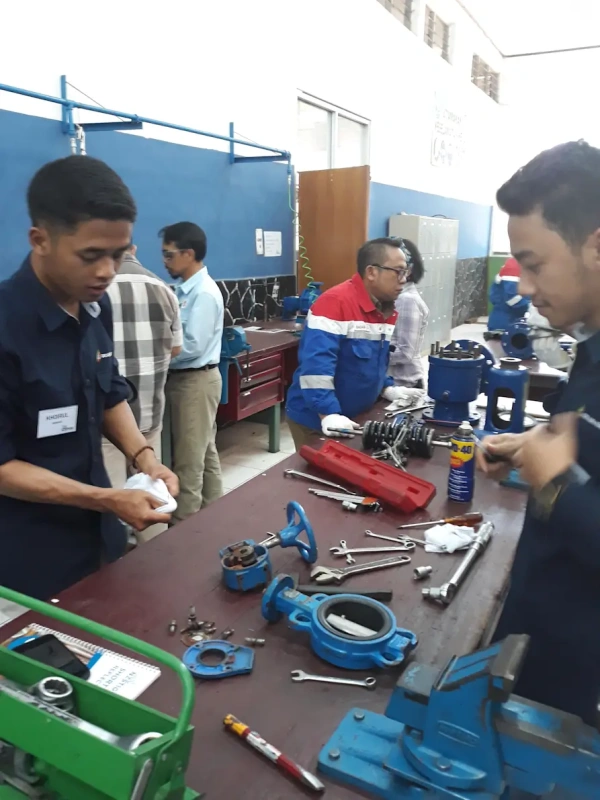
And it is not only the students who are benefiting. “It gives our tutors the chance to teach in entirely different situations, to take their core knowledge and adapt it to new circumstances and with different expectations. It challenges them and gives them the opportunity to see another perspective.”
This geothermal education story is one of many instances where New Zealand’s education providers are sharing their research, experience and education expertise with sectors or industries around the world. Facilitated by respective governments, a New Zealand education is helping other governments to help their people by addressing the country’s challenges or opportunities.
-
ICEF ANZA returns to New Zealand
We’re pleased to announce that Tākina Wellington Convention and Exhibition Centre will host ANZA from March 4-6, 2026. ICEF ANZA will showcase New Zealand as a study destination to 160+ agents from all over the world, and is open to education providers from both Australia and New Zealand. ICEF ANZA was last in New Zealand in April 2024, where global agents and New Zealand and Australian education providers came together in Christchurch.
ICEF ANZA is an Australasia-focused event that gives education providers from Australia and New Zealand the opportunity to meet with top international student recruitment agents from around the world who have a focus on these key study destinations.
ENZ Group General Manager International and Sector Engagement, Sahinde Pala, said ENZ is excited to welcome ICEF ANZA back to New Zealand at a time when we are well positioned to attract more international students.“We encourage institutions to participate, as well as to invite agents to visit their regions before and after the event, to experience more of our beautiful country first hand," she said.
For more information please visit: https://www.icef.com/events/icef-anza/
Click here to register: https://www.icef.com/provider-registration-form/
-
Stronger together: TNZ and ENZ support school sector growth through agent famil
The week-long programme brought eight agents from mainland China, Hong Kong, and Taiwan to Wellington, Marlborough and Canterbury.
The aim was to give agents first-hand experience of New Zealand’s short-term study offerings in schools, strengthen connections with regional education providers, and explore opportunities to develop tailored study tour programmes.
The famil was funded by TNZ, with ENZ collaborating with Schools International Education Business Association of New Zealand (SIEBA) to manage the itinerary and logistics.
ENZ Senior Market Development Manager (China), Felix Ye, and TNZ Trade Development Manager (Greater China), Sandy He, led the delegation of eight agents - providing on-the-ground support and sector insights.
In the year ended December 2024 New Zealand exported $1.29 billion of education related travel to China. This represented 35.8% of all exports of education related travel. For trade in education related travel China, People's Republic of ranked 1 of 140 for highest export value. [1] According to data from Stat NZ, 7.9k Chinese students holding visitor visas came to New Zealand for short-term programmes or study tours - the majority visiting during China’s school holidays in July. [2]
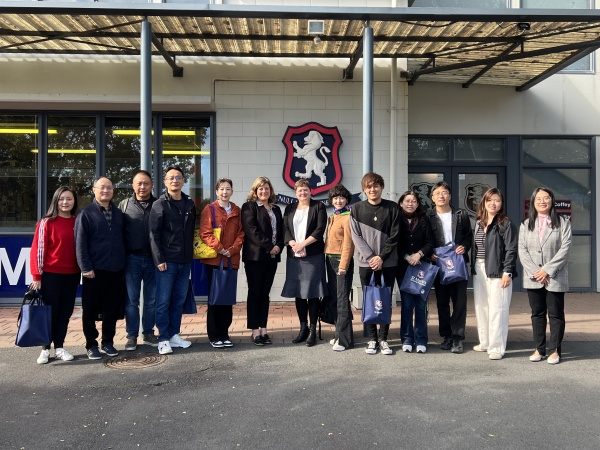
The agents visited St Mark’s School in Wellington, meeting with Erica Harrison, the Acting Principal, and her team.
The agents met with 15 schools across the three cities, including a mix of private, state-integrated, and single-sex schools. The journey began in Wellington with a warm welcome at Rāroa Normal Intermediate, where the group received a traditional mihi whakatau — a first-time experience for many.
Deputy Principal Dave Gillies said it was a great opportunity to showcase the school’s experiential learning focus.
“We’re excited about developing professional relationships with the agents and the opportunities that will grow from this visit,” he said.
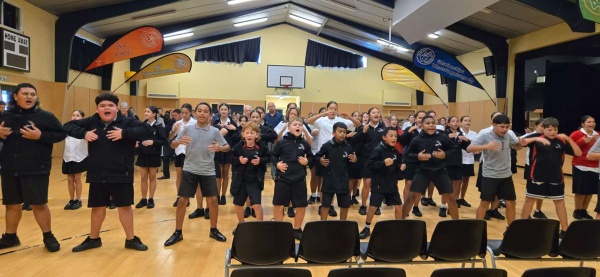
Students from Chisnallwood Intermediate School perform a haka to welcome the group to the school.
In the South Island, the group explored a range of school offerings and regional initiatives.
In Blenheim, agents gained insights into the unique characteristics of state-integrated education at Richmond View School, Marlborough Boys' College, and Marlborough Girls' College.
In Methven, Mt Hutt College showcased its tailored short-term programme, featuring sustainability-focused tourism at Ōpuke Thermal Pools and hands-on alpine and agricultural experiences – a creative integration of local resources into learning.
The famil concluded in Christchurch, where SIEBA and Christchurch Educated gave overviews of the New Zealand school system and introduced how their initiatives support the growth of international education across the sector.
ENZ Regional Director of Greater China, Dr Ron Xavier, said study tours are a growing area of interest among Chinese agents.
“This famil gave a genuine sense of what New Zealand schools can offer — from cultural experiences to hands-on learning — and helped connect agents with educators who are eager to host students,” he said.
ENZ and TNZ plan to work closely with participating partners to develop new study tours across different regions for 2026, helping raise awareness of New Zealand as an education destination for Chinese students.
SIEBA Executive Director, John van der Zwan, is looking forward to experiencing the benefits of the study tour famil.
“Study tours have significant potential, we look forward to the outcomes of this famil increasing the exposure of New Zealand’s regional schools in the China market,” he said.
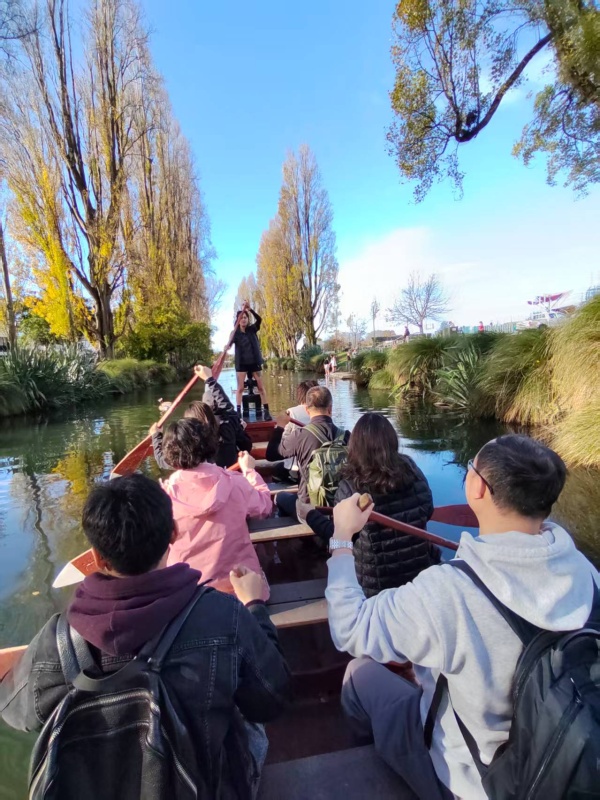
Paddling a waka on the Avon River. Beyond education, the famil also highlighted New Zealand’s unique culture and natural beauty. From visiting Te Papa and Wētā Workshop to paddling a waka on the Avon River in Ōtautahi Christchurch, agents experienced the blend of tradition and innovation that makes New Zealand a compelling destination.
[1] Tourism data | Corporate and Stats NZ
[2] https://tourismnewzealand.com/insights/tourism-data/