Search
Showing 10 of 982 results for search for pheen4uuu from wiki 2025
-
The global citizens helping connect New Zealand with the world
The future looks like arts and crafts. In a room at the TSB Arena in Wellington in August, the Festival for the Future expo floor is packed with things to paint and fold and stick and make. At a stall for the Sustainable Development Goals I pick up a wooden bead representing the 11th goal – sustainable cities and communities – and paint it carefully orange, ready to be strung into a bright pattern with everyone else’s. As a shameless eavesdropper, this is my natural habit. I listen to two people discuss 3D printing, while another group sip ethical soda on colourful beanbags and chat about responsible investment.
At the Education New Zealand Manapou ki te Ao (ENZ) stall people line up for coffee while filling out forms about their experience of “global citizenship”. ENZ is the crown entity responsible for international education in Aotearoa. In 2019, pre-Covid-19, there were over 100,000 international students in New Zealand, studying mostly at tertiary institutions, but also at primary and secondary schools. Since 2013, more than 2,400 New Zealanders have been awarded Prime Minister’s Scholarships to study in Asia or Latin America.
"Global citizenship is an essential part of New Zealand’s international education strategy, and these inbound and outbound students represent an opportunity to create global connections, research links and broad partnerships for New Zealand."
ENZ partnered with the Festival for the Future to discuss what international education and global citizenship looks like in the unique confines of 2021. For Carla Rey Vasquez, ENZ’s global citizenship manager, the strategy’s value in an era of limited travel is the gift of a dual perspective to complex problems. It is also an opportunity to help New Zealanders understand the nuanced and mutual benefits of international education and the long-term relationships it creates with people around the world.
“Our world is characterized by complex issues. Global citizenship offers an opportunity to find ways to navigate and respond to those issues through shared understanding,” she says. “It’s about realising the value and power of your identity and knowledge, but also acknowledging the potential of others’ experience and perspectives on the world.”
This is a worldview that Rey Vasquez says is built on a relationship of local belonging and responsibility to our people as well as people across the world. International education is an essential way New Zealand builds that bond with the rest of the world, bringing diverse people, organisations and countries together.
Vasquez, a former international student herself, knows how transformational international education can be for both the student and New Zealand.

“It brings the world to our home, if we can harness the cultural value that international students bring to New Zealand we will all grow as global learners,” she says.
ENZ sees global citizenship as a way to bring shared understanding and learning between countries and cultures. Marc Doesburg, senior innovation advisor at ENZ, believes it offers new perspectives on the world, and a chance to question one’s own understanding.
“We give young people an opportunity to critique [their cultures] by going overseas, to see that things are done differently here.”
International students are a significant source of income for education institutions and the New Zealand economy, contributing more than $5b in 2019. But for both ENZ and international students the benefits students bring New Zealand are far broader than a GDP injection.
“I don’t want us just to be seen as bringing money – we bring culture, we bring international values…we want to know local people,” says Claire Lu, a Taiwanese student studying politics and international relations at Victoria University of Wellington.
That works both ways – studying abroad was an “invaluable” experience for New Zealander Anna de Boer, who studied Mandarin in Shanghai as part of a Prime Minister’s Scholarship and has been back to China several times since. De Boer now works with international students at Victoria University of Wellington. She wants to reframe the narrative that international students “come here, take something, then go back to their home country.”
There’s a huge benefit in how international students can take a piece of New Zealand home with them, and leave an important part of their own story behind in Aotearoa too, says De Boer. This builds long term relationships that have value far beyond the years they spend studying.
This was originally published on The Spinoff as part of a content partnership between Education New Zealand and The Spinoff.
-
Vanessa builds digital skills to help drive change in PNG
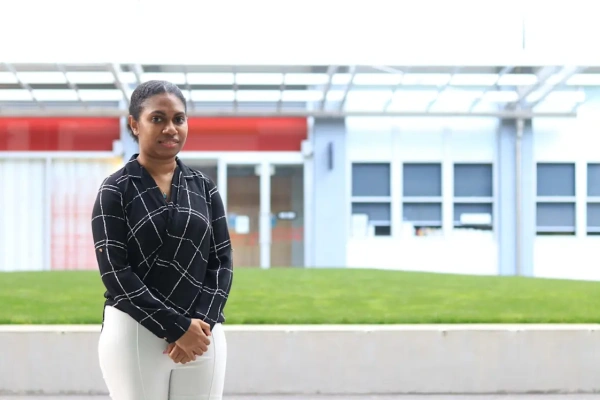
She had a diploma in computer technology and a good job with a major telecommunications company, but she also had big ambitions and knew that an international education experience in New Zealand would take her where she wanted to go.
“I saw that there were many areas where digital solutions could really make a difference. It was one of the driving forces which motivated me to study in New Zealand.”
As Vanessa was searching for a university where she could study computer science, her friend returned home from Auckland University of Technology. “She told me so many wonderful stories and I was just so inspired to go and experience New Zealand and AUT for myself.”
“She gave me an idea of what to expect and I knew I would be going into a supportive community. It was only when Covid arrived that I truly experienced how supportive it really was.”
Vanessa came to New Zealand on a Manaaki Scholarship, funded through the New Zealand Aid programme. “It was the reason I could come and I’m grateful for the opportunity.
The value of a Manaaki Scholarship
“The scholarships allow students who are passionate about creating a brighter future in their home countries to gain expertise in their field of our study,” she says. “It also provides exposure to new perspectives and the chance to build life-long relationships with like-minded professionals, which is something I really value.”
Although Vanessa’s father and brother both travelled overseas for education, not many of her friends have. “So now I’m trying to be the influence on my friends, encouraging them to take up that pathway.
“I tell them that in New Zealand you get a fantastic study environment and will meet people from many different backgrounds.”
Vanessa considers that a real bonus to her study experience was the opportunity to take up a summer internship.
“It was optional for my programme, but it was provided through the Pacific Cooperation Foundation for students who were part of the Manaaki scholarship programme. I applied so that I could gain experience working in a large multi-cultural organisation.”
Securing a role at Watercare in Auckland she not only gained valuable work experience, but also professional networking opportunities which have resulted in lasting connections with many of her former colleagues. “I had an amazing manager and I reach out to him from time to time. He has really helped me a lot and he’s one of the life-long contacts I’m going to be holding on to.”
Boosting confidence and career
With her Bachelor of Computer and Information Sciences completed last year, Vanessa is now back in Port Moresby working as a Digital Transformation Associate with PwC and loving her new role.
“Studying in New Zealand grew my confidence as a person and has allowed me to progress my professional career,” she says. “It broadened my horizons and gave me a different mindset.”
Deciding to become an international student takes drive and commitment, but the rewards are worth the effort, Vanessa says. “I spent months researching the options and needed to stay motivated during the year it took to secure my scholarship and place at AUT. It took a lot of planning, but it was something I had my heart set on.
“I knew a degree would give me better opportunities and New Zealand was just such an amazing place to study. It has had a very big impact on where I am now.”
If she had another opportunity, Vanessa says she would head offshore again to pursue a Master’s in Data Science, but for now she is busy convincing her peers of the value of a New Zealand education.
“I tell them this is an opportunity you don’t want to miss. Don’t only go to study, go to really experience New Zealand, the culture, and the people.
“They ask me, what if I don’t get the scholarship and I say you’ll never know if you don’t try, so just go for it. Expect to embark on an adventure of a lifetime.”
-
Winds of Change students team up to tackle shared climate challenges
While world leaders continue to discuss how to best tackle global warming, an inspiring group of students is stepping up collaboration between New Zealand and Chile to better understand the problems both countries face, share knowledge, and identify solutions.
The Winds of Change programme, funded by the Latin America Centre of Asia-Pacific Excellence (LatAm CAPE) and hosted by Otago University, is taking a broad approach by drawing in post-graduate students from a range of backgrounds including natural, physical or social science, business, finance, science communication, and humanities.
They are motivated to tackle climate change by developing sustainable strategies in land management, business, and policy-making. Supporting them is a team of talented academics from both countries whose insight and expertise are helping to create impact.
“The Winds of Change participants are extraordinary leaders from diverse backgrounds with a passion for making a difference,” says lead Otago academic Associate Professor Chris Moy.
“Their collaborative work will help inspire communities and drive change.”
Joining forces to reach common goals
Project manager Hélène Eunson says the multi-disciplinary approach is vital. “It is one of the key features and strengths of the programme. We need people who bring a range of perspectives in addressing climate change issues,” she says.
“We have come to realise that the scientists want to learn more about business and policy-making, and the policy-makers want to learn more about the science. We are trying to join forces to reach our common goals.”
Now in its second year, Ms Eunson says there has been huge interest in the six-month programme, which seeks to attract 30 students in each cohort - 10 New Zealanders based in New Zealand, 10 Chilean students based in New Zealand (“Chiwis”), and 10 Chileans based in Chile.
“These young leaders have a real drive to make a change. They volunteer their time and do not earn credits towards their degrees.”
The participants work in small groups on projects based on common interest, to investigate an aspect of climate change, its impact on the environment and communities, and to identify solutions. Their findings are presented at an annual symposium attended by key industry players, researchers, embassy representatives, and past participants.
The Winds of Change programme includes a series of workshops hosted by a range of expert speakers from both countries including business owners, industry experts, and academics studying climate change.
Pacific partners help shape future solutions
By studying the common climate change impacts that New Zealand and Chile are facing, the students are not only helping to shape future solutions, but also to build relationships with a key Pacific partner and enhance economic and social wellbeing in both countries.
Projects undertaken by the participants have tackled wide-ranging issues including wetland restoration, wildfires, water scarcity, rising sea levels, diversity in agriculture, and renewable energies.
Ms Eunson says the concept of global citizenship is a strong theme which runs through the programme. “The participants share experiences from their own countries and help to create bonds with each other by bringing their different perspectives to the table.”
Being involved in the programme has been a profound experience for many of the participants.
“Often, if you think as an individual about environmental issues, you don’t feel as though you can achieve much, but when you see all these people together with the same objective, you feel really powerful to make change,” says Julia Harvey, who grew up in Invercargill.
“Meeting people from different backgrounds with a common interest has provided a unique opportunity to learn about sustainability in both countries,” says Javiera Otero, originally from Villa Alemana, Chile, but currently living in Napier.
“This experience has given me hope for the future, as there are people out there who want to make changes to live a more compatible life with the planet.”
Winds of Change programme builds credibility and impact
Winds of Change is quickly building its network and outreach. “As we build the credibility of the programme, we will start to see long-term impacts,” Ms Eunson predicts.
This new generation of leaders is already anticipating a future of global collaboration. In last year’s first post-programme survey, participants identified the most important benefits as “building networks, connections, and relationships”, and “having confidence to work in a transnational team”.
LatAm CAPE Director Matthew O’Meagher says he looks forward to the ongoing expansion of the programme to include other partners, and ideally other nations in Latin America. “In this way we can continue to provide the best opportunities for our talented young New Zealanders to engage internationally on innovative scientific, sustainable business, and policy-focused, solutions to climate change.”
Dr Moy agrees. “Our future depends on culturally-aware young leaders that can think globally and work collaboratively to tackle climate change impacts.”
Learn more about the Winds of Change programme on the LatAm CAPE website.
-
Update from Immigration New Zealand
Student Visa Update: Apply early with our new online forms
Planning to study in New Zealand in 2026?
Immigration New Zealand’s peak visa processing period runs from October to March, so it’s important to apply early to avoid delays - ideally at least three months before you travel.
On 18 August, applications for the following student visa types transitioned to Immigration New Zealand’s enhanced Immigration Online system:
- English Language
- Exchange Student
- Fee Paying Student
- Pathway Student
- NZ Government Scholarship Student
- Foreign Government Supported Student
Applications submitted on the old form on or before 17 August will still be processed. Applicants can continue to upload documents and respond to requests until a decision is made. Draft applications on the old system must be submitted on or before 17 September, after that all applications must be submitted through enhanced Immigration Online. Paper applications will no longer be accepted from 18 September.
We’ve redesigned the application process to make applying faster, easier, and more transparent. Applicants will get real-time updates, email notifications, and clearer guidance throughout the process. The form itself is dynamic, only showing sections and asking questions relevant to their situation. It also includes guidance and prompts to support you through the process.
For help with the online form, visit our Applying Online help page, or contact Immigration New Zealand.
-
Viet Nam webinar series boosts interest in New Zealand ITPs and PTEs
The webinar series is part of a work programme to raise the profile of New Zealand’s subsectors in Viet Nam, while strengthening connections between New Zealand providers and Vietnamese education agents.
This initiative is key to ENZ’s ongoing efforts to diversify New Zealand’s international education offerings in Viet Nam, and ensuring prospective students are aware of the practical skills, industry connections, and post-study opportunities they can gain through New Zealand ITPs and PTEs.
The series featured three education agent-focused webinars, and one session for prospective students and their parents co-organised by ENZ and seven local education agencies.
The agent-focused webinars attracted an average of over 120 attendees per session, peaking at 131, demonstrating strong interest from Viet Nam’s agent network.
The student-facing webinar drew around 200 registrations and had 70 prospective students attend.
Participating New Zealand providers included Wintec, Nelson Marlborough Institute of Technology, Ara Institute of Canterbury, Eastern Institute of Technology, Toi Ohomai, Southern Institute of Technology, WelTec & Whitireia, New Zealand Skills and Education Group, Pacific International Hotel Management School, Le Cordon Bleu, and Up Education (NZTC, NZMA, Yoobee).
This wide sector presence ensured agents and prospective students received timely sector updates and insights first hand.
Immigration New Zealand contributed to the first agent-only session with updated details on in-study and post-study work rights for international students in vocational and degree programmes at ITPs and PTEs. They also shared policy updates, guidance, best practice on pathway visas, and practical tips to help agents prepare and submit strong visa applications for ITP/PTE students.
ENZ Market Manager Van Banh said the feedback was positive.
“New Zealand providers said they really valued the opportunity to connect with the Vietnamese market through these webinars, noting that the format allowed them to share tailored information and highlight the strengths of their programmes,” she said.
“Vietnamese agents also gave positive feedback, and said the sessions equipped them with practical knowledge about New Zealand’s study options with ITPs and PTEs, so they can be even more confident and effective in their conversations with prospective students,” Van added.
-
Meet Takako Tominaga – ENZ’s new Senior Market Manager for Japan
Based in Tokyo, Taki’s role focuses on strengthening New Zealand’s education brand in Japan and increasing student interest in studying in Aotearoa. Her career spans over a decade, including roles with the Victoria State Government, Airbnb during the Tokyo Olympics, and several education institutions in Melbourne.
Taki’s connection to New Zealand runs deep – her first overseas experience was studying in Hamilton and Rotorua. That formative time in New Zealand sparked a lifelong passion for international education.
“The wonderful experiences I had in New Zealand were the starting point of my journey. I’m excited to help others discover the beauty and strengths of studying there,” she said.
Taki has hit the ground running in her role and has already supported a visiting delegation from English New Zealand and represented ENZ at a variety of events.
Contact Taki via Takako.Tominaga@enz.govt.nz if you would like to learn more about the Japan market.
-
Raising the profile of New Zealand English language offerings in Japan
To maximise the visit’s opportunity, ENZ organised a New Zealand English Language event at the New Zealand Embassy in Tokyo. The event brought together over 40 local education agents, schoolteachers, and government partners face-to-face with the New Zealand providers to learn about their study offerings and explore future collaboration opportunities.

Prospective students and their parents exploring English Language study options at the New Zealand English Language Fair.
The following day, the New Zealand English Language Fair attracted 44 prospective students and families to speak with the English Language schools and gain a better understanding of their study offerings.

Prospective students and their parents exploring English Language study options at the New Zealand English Language Fair.
The wider programme included a series of targeted events, school visits, and stakeholder meetings, all aimed at reconnecting with the market and exploring new partnership opportunities.
English New Zealand Executive Director, Kim Renner, said they were pleased to be back in Japan, marketing as a group.
“Japan is a key market for the English Language School sector. Our member schools have strong connections formed over many years with Japanese education agencies and institutions, and meeting face-to-face in market is invaluable,” she said.
“The events were a great success profiling both the English language sector and New Zealand as a destination for a high-quality study travel experience,” Kim added.

ENZ Business Development Manager Tomomi Kontani giving an update from ENZ and sharing the benefits of studying in New Zealand.
Feedback from participating English Language Schools was also positive. One event participant said: “Agents and students asked focused questions, it was pleasing to see the high levels of interest studying at a New Zealand English Language School”.
The participating schools included: ABC College of English, Auckland Institute of Studies, Christchurch College of English, Languages International, Mount Maunganui Language Centre and Worldwide School of English.
-
New Zealand highlights global education links at major Indian conference
As the International Academic Partner, ENZ helped showcase New Zealand as a trusted education partner and destination. The event brought together education leaders, policymakers, and experts to discuss the future of learning, skills, and global collaboration.
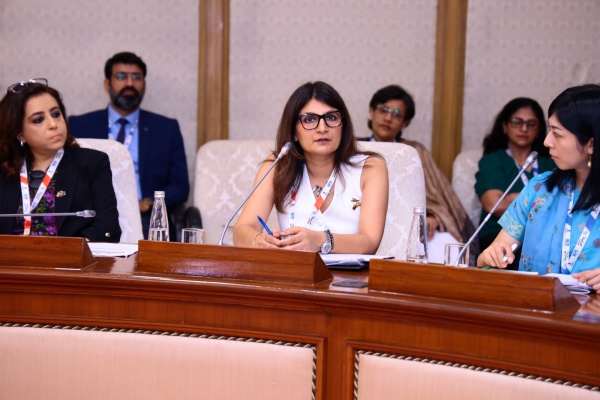
Jugnu Roy (pictured centre) representing ENZ at the SEPC roundtable on Global Academic Mobility.
ENZ’s Director of Engagement for India and East Asia, Jugnu Roy, joined panel discussions and roundtables on global academic mobility and faculty exchange. These sessions were a chance to share New Zealand’s approach to student-focused, future-ready education and explore new opportunities for partnerships with India.
Director of Engagement for India and East Asia, Jugnu Roy, said India is a key strategic partner for New Zealand’s international education sector, and that continued engagement is essential to strengthening that relationship.
“Participating in forums like this allows us to engage deeply on shared goals and support India’s ambitions through meaningful academic cooperation,” she said.
-
Tokyo fair sparks excitement around New Zealand study opportunities
Earlier this month, Education New Zealand Manapou ki te Ao (ENZ) delivered a two-day event in Tokyo that brought New Zealand education to the forefront for Japanese students, families, and education agents.
The ENZ Fair attracted around 600 prospective students and their parents, while more than 150 education agents attended the seminar. The strong turnout and enthusiastic engagement reflected growing interest in New Zealand as a study destination.
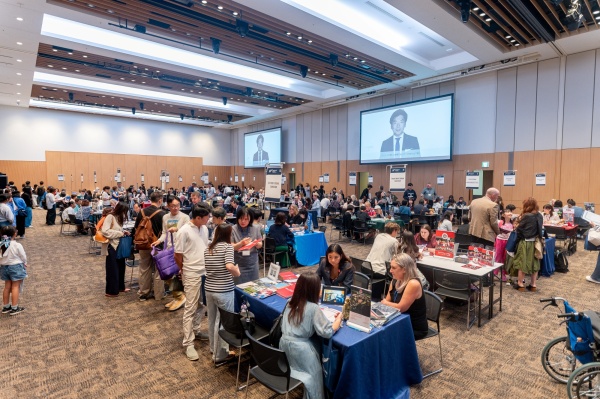
A total of 62 New Zealand education providers took part, representing schools, universities, English language institutions, private training establishments (PTEs), and New Te Pūkenga New Zealand Institute of Skills and Technology (Te Pūkenga) providers.
The school sector led the charge, with 52 providers represented, highlighting the increasing demand for secondary education pathways.
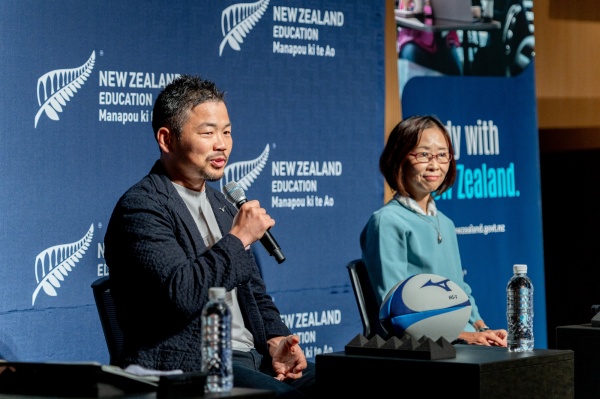
Fumiaki Tanaka sharing his personal experience studying in New Zealand.
Attendees heard from inspiring guest speakers who shared personal stories and connections to New Zealand. Fumiaki Tanaka, a former Japan national rugby player and the first Japanese athlete to play Super Rugby with New Zealand’s Highlanders, spoke about his journey as an international student. Yukiko Chiba, Executive Officer and Director at Sekai Bunka Publishing, offered a parent’s perspective, reflecting on her child’s life-changing experience studying at a New Zealand high school.
Agent seminar
At the agent seminar, ENZ provided a New Zealand market update with the latest information, guidance and promotional materials.
The seminar also included a session focused on building long-term relationships between New Zealand and Japanese institutions. Headon John Paul, who represents the Oceania region for Ritsumeikan Uji Junior and Senior High School, and Ritsu Hidume, a New Zealand alumni now studying at Ritsumeikan Uji, shared their insights and advice with New Zealand education providers.
A roundtable discussion with four education agents and members of the Japan Association of Overseas Studies (JAOS) explored how agents support New Zealand education, current trends in the study abroad market, and opportunities to strengthen collaboration.
ENZ Senior Market Develop Manager Takako Tominaga said the feedback from New Zealand providers was overwhelmingly positive.
“We were really pleased to hear that New Zealand providers were impressed by the quality of the agents who attended, and that Japanese families showed genuine enthusiasm and interest in learning more about studying in New Zealand.”
-
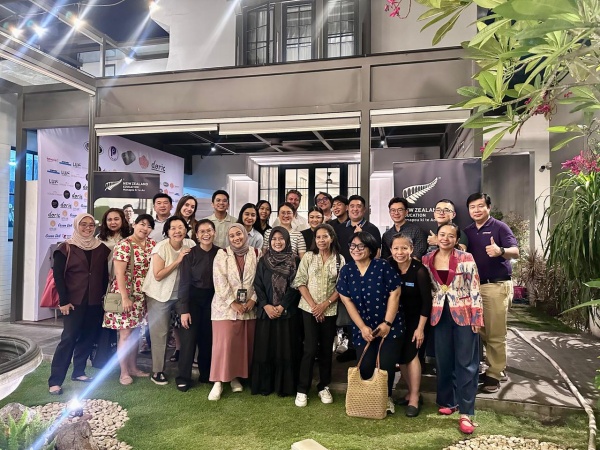
New Zealand universities connect with students and government partners in Indonesia
The programme began with a networking session for school counsellors and visiting New Zealand providers at the New Zealand Embassy in Jakarta, where attendees had the opportunity make connections and meet New Zealand Ambassador to Indonesia, His Excellency Philip Taula.
The following day, a mini fair at Global Jaya International School in Tangerang gave students and parents a chance to speak directly with university representatives about undergraduate study options in New Zealand.
To promote New Zealand postgraduate level study, the group then delivered information sessions at key government agencies including the Indonesian Ministry of Agriculture, the Indonesian Food Authority, and the Indonesian Quarantine Authority.
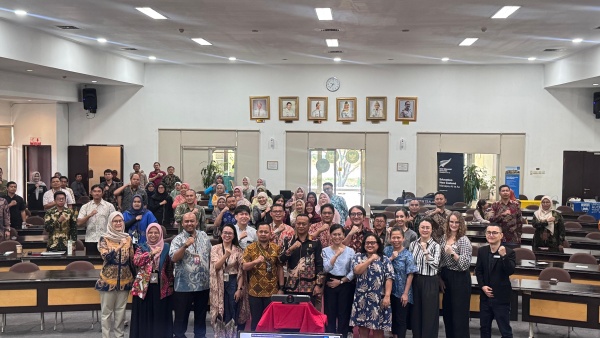
Attendees of the Indonesian Quarantine Authority information session.
These sessions, held in Jakarta and Bogor, were attended by officials and the Manaaki Scholarships team from the New Zealand Ministry of Foreign Affairs and Trade, and focused on postgraduate programmes and scholarship opportunities.
The roadshow concluded with participation in the Future Fest Expo in Jakarta and Surabaya, hosted by Mata Garuda – the alumni association of Indonesia’s government scholarship agency, LPDP.
Around 400 visitors visited the New Zealand booth to learn more about study and scholarship options.
While in Surabaya, New Zealand universities and ENZ also held a dedicated session with agent partners to share the latest updates on New Zealand’s education programmes, information resources and ENZ ‘New Zealand Taught Me’ campaign collateral to use in their promotions.
ENZ Market Manager Naluri Bella said the roadshow enabled New Zealand providers to engage with a broad range of stakeholders while in market.
“The roadshow helped connect the dots – linking student interest, agent capability, and government priorities in a way that supports long-term partnership between New Zealand providers and their partners in Indonesia,” she said.