Search
Showing 10 of 1236 results for Value-priced treatments https://simplemedrx.top
-
APAC TVET Forum registrations go live
Education New Zealand Manapou ki te Ao (ENZ) is excited to be hosting this virtual forum in partnership with Skills Consulting Group and Te Pūkenga – New Zealand Institute of Skills and Technology.
This year’s forum theme Reshape – Rethink – Reset reflects the need to ensure the sustainability of workforces through innovation and skill building. The world of work is changing rapidly, so the upskilling and retraining of workers throughout the Asia Pacific region is more important than ever.
APAC TVET provides an opportunity to share knowledge and insights on best practice across the region. Participants will hear from sector leaders and practitioners throughout government, business, and education. There will be opportunities for learning, discussion, and networking.
The wide-ranging programme features topics such as:
- Solving skills shortages in a global community
- Youth employment and lifelong learning
- Skills for tomorrow and the credentials required
- Reimagining work: Digital transformation
- Inclusive systems that bridge the gender gap and promote diversity
- Embedding sustainability in vocational education
Speakers are drawn from across the region, and include:
- Grant McPherson, Chief Executive – Education New Zealand
- Leon Fourie, Chair International Working Group – Te Pūkenga
- Khun Phornvit Phacharintanakul, Senior Vice President – CP Group (Thailand)
- Akustina Morni, Senior Advisor – International Organisation of Employers (Brunei)
- Dr Rohit Kishore, Director – Fiji Higher Education Commission
- Kameli Batiweti, Chief Executive Officer – Fiji Commerce & Employers Federation
- Dee Halil, Datacenter Region Expansion Skills Program Manager – Microsoft
- Frances Valintine, Founder/Chief Executive Officer - The Mind Lab Tech Futures Lab
- Professor Chan Lee, Seoul National University (South Korea)
- Afiq Redzuan, Group Chief Executive Officer – Multimedia Technology Enhancement Operations (Malaysia)
All main APAC TVET Forum sessions will offer synchronous translation in four languages: Mandarin, English, Bahasa Indonesia, and Vietnamese.
For more information and to register visit www.apactvetforum.com
-
Innovation at Festival for the Future
This annual event showcases leadership and innovation, and seeks to amplify rangatahi and minority voices, to demonstrate leadership around topics such as climate action, diversity and inclusion, and sustainable development.
More than 30 speakers took part, attracting more than 1,000 participants across New Zealand, as well as online participants around the world.
Education New Zealand Manapou ki te Ao (ENZ) promoted the Prime Minister's Scholarships for Asia and Latin America and ENZ's mahi in global citizenship more broadly.
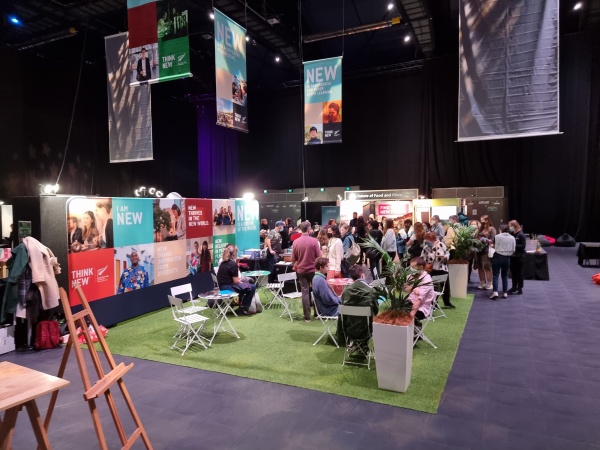
ENZ's space on the expo floor at Festival for the Future
Former Prime Minister’s Scholar for Asia, Young New Zealander of the Year, and co-founder of Aotearoa’s first Māori owned electricity company, Ezra Hirawani, was one of the opening keynote speakers. Ezra spoke about the importance of global citizenship, what it means for him as a Māori New Zealander and how it can be used to address the issues of our lifetime.
In addition to partnering with Inspiring Stories Trust as a sponsor of the Festival, ENZ supported the Global Impact Award. Courtney Davies, a young New Zealander leading environmental programmes for young people across New Zealand and Africa, with a focus on sustainable change and action, received this year’s award.
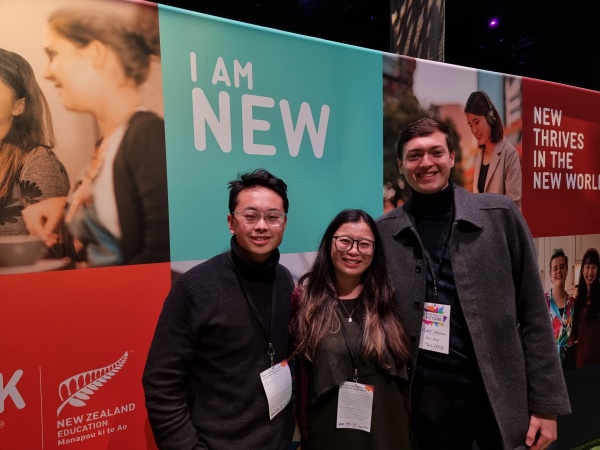
Left to right: Allan Chan, Michelle Chen and Kurt Weston - three of the Prime Minister's Scholarship alumni who joined us at Festival for the Future to share their scholarship experience with others.
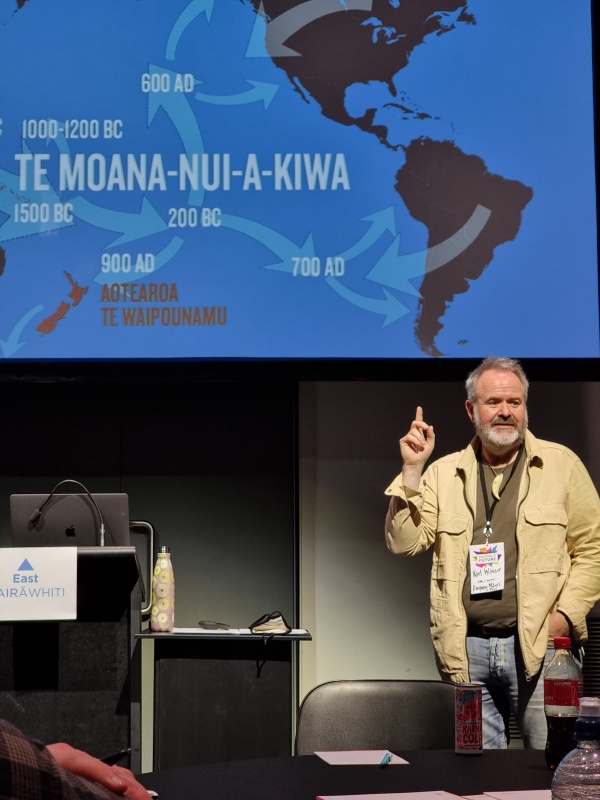
ENZ's Karl Wixon delivers Hono-ki-te-Ao - Global Citizenship from a te ao Māori perspective, ENZ's workshop at Festival for the Future. Throughout the Festival weekend, Karl ran the workshop four times to packed out audiences.
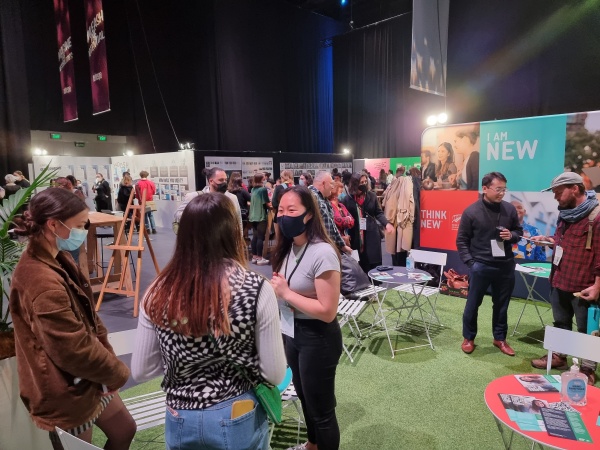
ENZ's Jordana Zhu (centre) and former Prime Minister's Scholar Allan Chan (centre right) engage with attendees at ENZ's expo space.
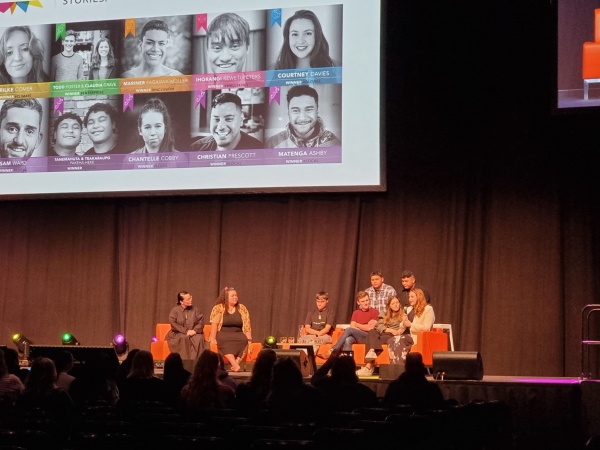
Courtney Davies (right), winner of the 2022 Global Impact Award, speaks on the main stage during a panel discussion on the final day of the Festival.
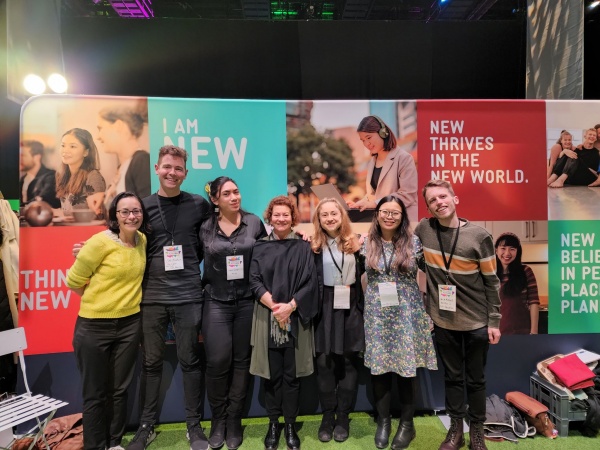
Some of ENZ's wider team at the Festival. Left to right: Carla Rey Vasquez, Seb Klinkum, Nera Leitupo, Tereska Thornton, Marina Wilmerstadt, Michelle Chen and Nick McNeil.
-
Building links in Malaysia
The college also formalised its collaboration with the University of Canterbury (UC) at the event, which was attended by the Chief Minister of Penang, Mr Chow Kon Yeow, and New Zealand’s High Commissioner to Malaysia, H.E Pam Dunn.
Mr Chow highlighted the importance of ensuring Malaysians have access to diverse education options that broaden their prospects as global citizens.
“The higher education sector plays an invaluable role in realising Malaysia’s targets of becoming a high-income nation,” he said.
Over the past two years, Education New Zealand Manapou ki te Ao has focused on sustaining New Zealand’s global reputation through education and research partnerships, as well as leveraging digital tools to maximise learning experiences.
In Malaysia, this includes a programme launched by DISTED College in collaboration with UC, which allows eligible students to apply for a one-year advanced standing into UC’s Bachelor of Commerce degree. Students can also enter other UC programmes, including in engineering and science, via a range of pathway programmes offered by the college.
Mr Chow said cross-border collaborations like these, which allow students to begin their studies closer to home before seamlessly transitioning to a higher degree in New Zealand, significantly lower the cost and broaden the range of opportunities for Malaysian students.
Brian Imrie, Chief Executive Officer at DISTED College, is himself a New Zealander, and places high value on this opportunity from UC, for international students to explore the world and help solve future global challenges. Previous students have returned to Malaysia enthusiastic about their experience and the career opportunities it provided, he said.
Malaysia is one of New Zealand’s oldest and closest diplomatic partners in Southeast Asia, and this year marks 65 years of diplomatic relations between the two countries.
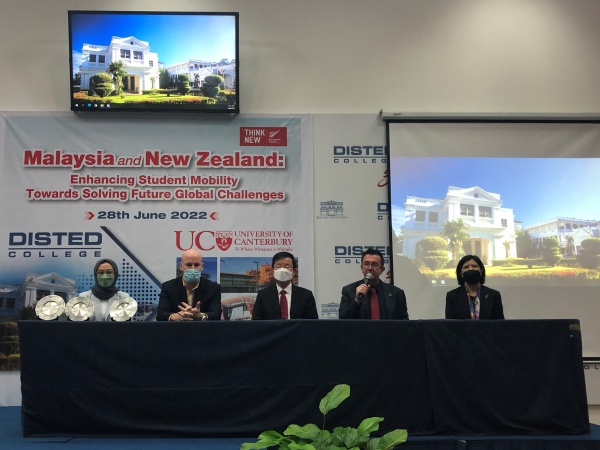
L to r: Siti Karina (University of Canterbury), Ben Burrowes (ENZ), Chow Kon Yeow (Chief Minister of Penang), Brian Imrie, Chief Executive Officer at DISTED College, H.E Pam Dunn (NZ High Commissioner to Malaysia)
-
New Zealand – Korea digital student exchange
Education New Zealand Manapou ki te Ao (ENZ) again worked in partnership with two education organisations in South Korea – Gangwon International Education Institute and Seoul Metropolitan Office of Education – as well as with NZ-based Learn English Live, to deliver the programme.
The programme offers opportunities for Korean 12–14-year-olds, and for New Zealand students, many from low-decile schools, to develop their language skills and engage in cross-cultural relationships with their international peers. This is done through Zoom sessions using quizzes and other interactive activities, where students can share aspects of their life. Facilitated, student-led discussions in small groups are another key feature of the programme.
In all, 654 students from 12 New Zealand schools and 16 South Korean schools participated in the programme, attending sessions once a week for seven weeks – 102 sessions in total.
Students who participated in the programme represented the following schools across New Zealand:
Sylvia Park School, Rotorua Intermediate, Raumati Beach School, Finlayson Park School, Tauranga Boys College, Taupo Intermediate, Cambridge High School, Waimea Intermediate, Tokoroa Intermediate, Solway College, Rowandale Intermediate, Auckland Grammar.
Each school assigned at least one of their classes to take part in this programme, with teachers recommending the initiative to their colleagues for future sessions.
Within the Seoul and Gangwon regions in South Korea the following schools took part:
Seoul Schools: Dongguk Middle School, Wonmyoung Elementary School, Nonhyun Elementary School, Sinseo Middle School, Soongeui Elementary School, Topsan Elementary School, Gajaeul Elementary School, Seoul Kyodong Elementary School, Hansan Elementary School, Seoul Anpyeong Elementary School, Singa Elementary School, Buksung Elementary School, Songwon Elementary School.
Gangwon Schools: Gangreung Haeram Middle School Buron Middle School Namchuncheon Girls' Middle School.
A total of 339 children from South Korea were digitally connected with children in New Zealand.
The 2022 programme has provided many positive benefits for schools, teachers, children, and the wider community both in New Zealand and South Korea. In a world where in-person exchange and cultural opportunities remain constrained, the programme has continued to enable school children to connect with their international peers and develop long-term connections.
Feedback from teachers in New Zealand highlighted the enthusiasm that children in the classroom showed towards the programme.
The incorporation of a hybrid STEM-based and cultural-based exchange model was especially welcomed and enabled the promotion of unique aspects of Māori culture, in a modern format, on the international education stage.
New Zealand teachers also gave the programme the thumbs up. Given their high workloads, they appreciated that they did not have to organise the content or facilitate the sessions, as this was taken care of by the Learn English Live (LEL) team.
The programme provided the opportunity to indirectly promote a New Zealand school education to a South Korean audience. Students there were reported to be highly engaged throughout the exchange. The ENZ team will give a presentation on the programme at the Australia International Education Conference (AIEC) in October 2022: The session will explain the programme evaluation and survey methodology and how the results are being used by ENZ and LEL to continue to enhance the digital exchange to benefit students. The presenters will also discuss how they overcame challenges relating to language barriers, as one of the main goals of the exchange is to support Korean students with learning and practising English.
Contacts for more information
New Zealand representatives attending AIEC can attend the ENZ session or contact our South Korea team to receive a copy of the presentation slides after the conference (Alanna Dick).
Know of a New Zealand school interested in the next round of NZ-Korea digital student exchange? Please contact Learn English Live (William Clarke).
-
Education Minister addresses first World Vocational and Technical Education Development Conference
The conference was jointly organised by Ministry of Education of the People’s Republic of China, the Chinese National Commission for UNESCO and the Tianjin Municipal People’s Government.
An audience comprising representatives from government departments, international organisations, trade associations, businesses, research groups and vocational education providers joined the hybrid event to discuss moving forward in the post pandemic era. Topics covered included digital empowerment, green technology, industry/education integration, skill development and poverty reduction, promotion of equity and lifelong learning.
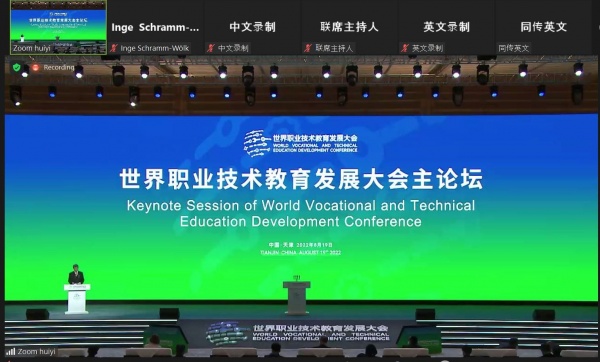
The Minister outlined New Zealand’s recent experience of vocational education reform, highlighting the importance of integrated provider and work-based training, with learners and employers at the centre of the reform process. COVID-19 had continued to cause disruption around the world, but this also provided opportunities for change as countries plan for recovery, he said.
The Minister’s involvement in the conference highlighted the 50th anniversary of bilateral diplomatic relations between the two countries this year, as well as the long standing and deep collaboration between New Zealand and China in vocational education.
-
Education ties with China
People’s Republic of China Education Minister Huai Jinpeng and New Zealand’s Education Minister Chris Hipkins met virtually on 23 August 2022. This was their first meeting since Minister Huai took up his appointment in August last year.
During the meeting, ministers and officials signed the renewal of the Education Cooperation Arrangement between the two Ministries of Education. Co-operation in higher education, vocational education as well as early childhood education were among the topics discussed. Both ministers expressed the importance they place upon our mutually beneficial education relationship and our people-to-people ties.
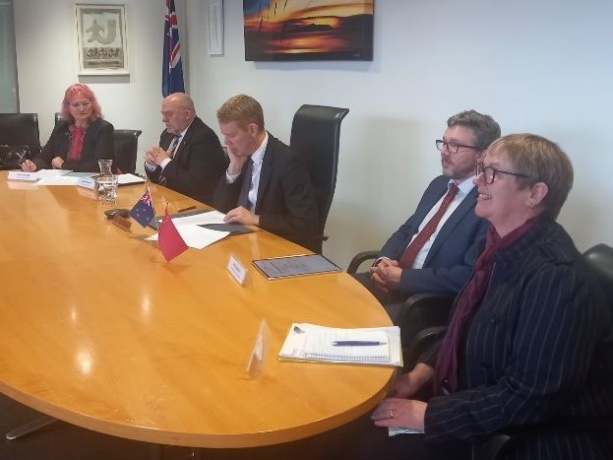
Left to right: Lisa Futschek, GM International at ENZ, Grant McPherson, Chief Executive at ENZ, Education Minister Chris Hipkins, Andy Jackson, Deputy Secretary Policy at Ministry of Education, Shelley Robertson, GM International Education Policy at Ministry of Education, attending the meeting in Wellington.
This year New Zealand and China are celebrating 50 years of diplomatic relations, and people – Tangata – is one of the key themes for the celebrations.
ENZ’s Director for Greater China, Miranda Herbert, say that the Covid-19 restrictions currently in place in China continue to affect people’s ability to move around or meet in person.
“We are constantly looking for ways to continue engaging with key people in China,” she said.
“Holding this meeting virtually was a way for us to maintain and build our government-to-government relationships, even though there has been a pause in mobility.
“The discussion between ministers highlighted the strong foundation of the education relationship and the continued collaboration across initiatives such as the Tripartite Partnership Programme, the Early Childhood Education Symposium and forums on vocational education and training.
Looking ahead there will be further events and initiatives to continue to build people-to-people links in the education sector.
-
New Zealand Dubai Expo Pavilion inspires international workshop in Whanganui
Ten students from five different regions of Italy travelled with their teachers under the leadership of Dr Alberta Pettoello of the Italian Ministry of Education to join another 40 local high school students. In a three-day workshop they worked together, shared concerns and experiences, and learnt from each other how to communicate their messages across different cultures, realities, and languages.
The Italian Ministry of Education proposed the workshop after Lorenzo Micheli, the coordinator of its Digital Exchange Programme, visited the New Zealand pavilion at the Dubai Expo. He was inspired by the pavilion’s focus on New Zealand’s relationship with nature and indigenous Māori principles such as kaitiakitanga. The Whanganui River and Te Awa Tupua settlement that gave the river its own legal identity, with the rights, duties and liabilities of a legal person, was of particular interest.
Education New Zealand Manapou ki te Ao liaised with the Italian Ministry of Education and facilitated an introduction to local development agency, Whanganui and Partners, who coordinated with Ngā Tāngata Tiaki and local schools, and also supported the trip by funding the activities and workshop in Whanganui.
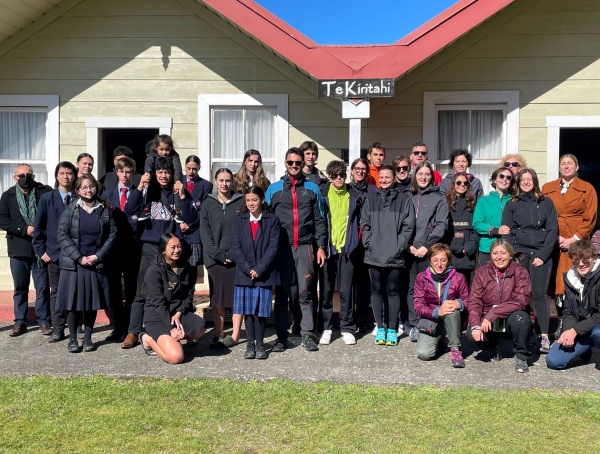
A highlight of the first day was the pōwhiri for the group at Kaiwhaiki Marae. For the Italian students and their teachers, this was their first introduction to Whanganui and Te Awa Tupua.
On arrival in Whanganui the group was welcomed by Ngā Tāngata Tiaki by powhiri at Kaiwhaiki Marae.
The topic of the workshop was “Humans as Nature”, in which the students were challenged to explore and develop “Rights for Nature”. The students were guided by Ngā Tāngata Tiaki trustee Tamahaia Skinner, who helped them start to define their rivers’ values and characteristics.
The Italian students brought an international perspective to the discussion by introducing their rivers and the challenges they face, encompassing the Ticino river, the Strona river, the Piave river, the Chienti river and the Sinni river.
Students were divided into five teams of 10, with two Italian students assigned to each group. What followed was a hive of discussion, activity and collaboration as each group developed presentations proposing strategies and activities necessary to implement the conservation and care of rivers, and most importantly give the rivers a voice.
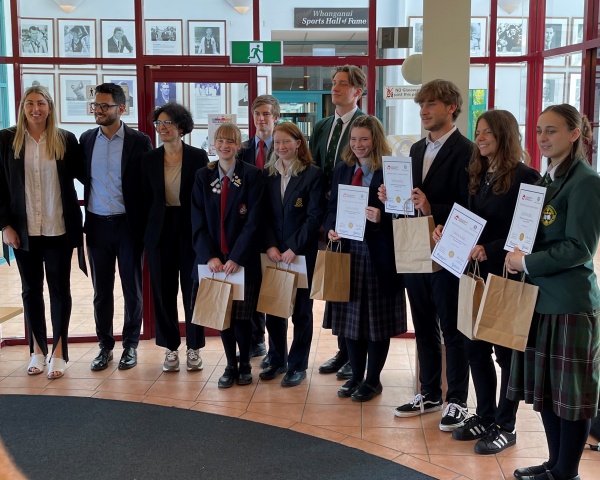
And the winners are….. Team Chienti/Whanganui won the overall team competition! Also pictured from left are: Hannah Middleton, Chief Executive of Whanganui and Partners; Lorenzo Micheli, coordinator of the Digital Exchange Programme for the Italian Ministry of Education, and Dr Alberta Pettoello of the Italian Ministry of Education who lead the delegation of students and teachers to New Zealand.
At the conclusion of the workshop the overall winner was the Chienti/Whanganui team. Strona/Whanganui were judged the most inclusive team; Sinni/Whanganui the best presented team; Ticino/Whanganui the best team spirit; and Piave/Whanganui the most creative team.
The organisation and thoughtfulness that went into the preparation and coordination of the workshop was first class. But it was the joy of the students who found new friends on the other side of the world, exchanging Instagram and FB accounts while sharing a wonderful week of discovery, that shone through as the workshop’s greatest outcome. It was this companionship and mindfulness of other lives and cultures that prompted the final defining group hug.
The week changed everyone involved, transforming perspectives and expectations of others. I’m sure they will meet up again as their travels as global citizens continue.
- Justin Barnett, Director Communications at Education New Zealand Manapou ki te Ao
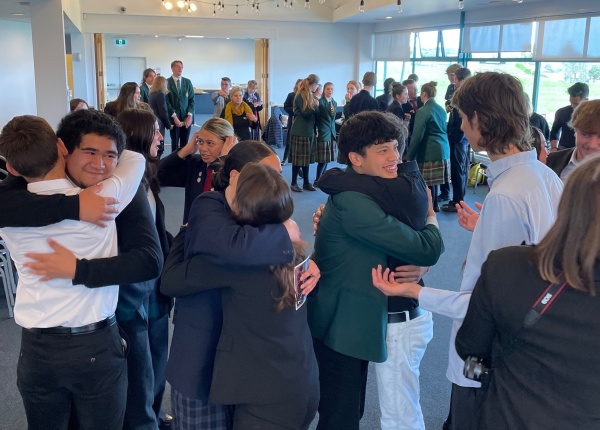
It was hugs all around at the completion of a three-day hackathon and workshop amongst Italian and New Zealand high school students. An uplifting outcome of the workshop was the strong bond that developed between the students as they learnt about each other while sharing cultures and experiences.
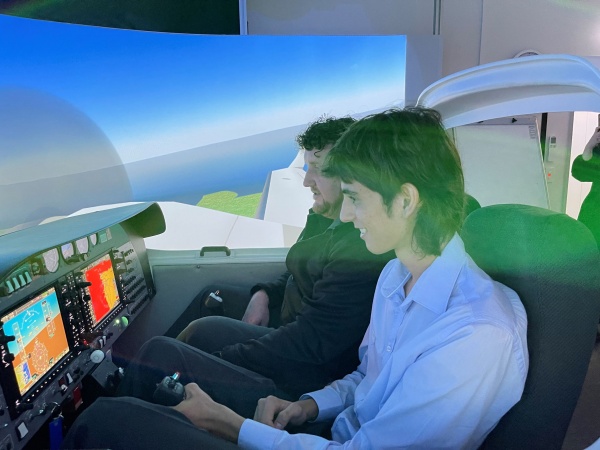
Filippo Chiodini from the Daniel Crespi school in Varese (in front) follows the instructor’s guidance as he manoeuvres his virtual plane from the cockpit simulator at the New Zealand International Commercial Pilot Academy in Whanganui.
-
Wide-ranging masterclasses in Vietnam
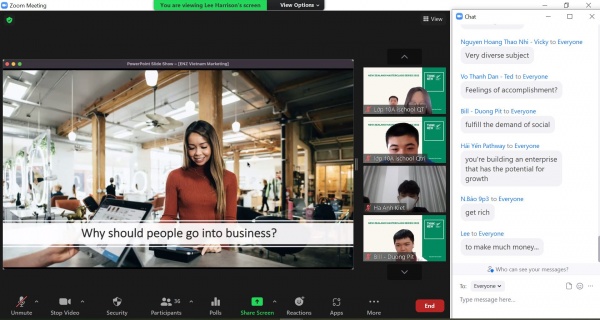
“We were very pleased at the interest shown by the Vietnamese students,” says Van Banh, Market Manager at Education New Zealand Manapou ki te Ao (ENZ).
“Some of the students had previously taken part in other events with us, which shows the level of interest they have in New Zealand.
“Each session included a Q&A session with the lecturers about undergraduate programmes at their institution, and an opportunity for us to highlight the upcoming New Zealand education fairs at the end of October.”
Artificial intelligence, chemical engineering, and sheep milk cheese were among the many and diverse topics covered by 19 academics across the 21 masterclasses, which were offered to students from nine different school chains across Vietnam.

-
High level of interest in vocational education forum
Organised by Skills Consulting Group and Education New Zealand Manapou ki te Ao (ENZ), together with Te Pūkenga, the forum provided an opportunity to share knowledge and insights on best practice in technical and vocational education and training, in an accessible format.
A key theme was the importance of close relationships with industry, particularly in terms of apprenticeships. For some participants, a longstanding perception that higher education is more important than vocational education remains a challenge. Student panel participants also talked about the confidence and support that their parents provided when they were making decisions about whether to enter vocational education programmes, and having no regrets about the career paths followed.
Topics covered included solving skills shortages, apprenticeships, youth employment, lifelong learning, digital transformation, sustainability, and promoting diversity. Senior government officials, major companies, international organisations, sector leaders and students from around the world spoke at the forum, which was opened with a speech from Education Minister Chris Hipkins.
Text-based chat and discussion tools in the virtual environment were multilingual, providing instant translation to enable communication and networking across 28 different languages.
The China – New Zealand Higher Vocational Education Summit was also part of the APAC TVET Forum and featured a dedicated virtual room for Chinese presenters and audience members. The Summit provided a platform to:
- discuss New Zealand’s recent experience of vocational education reform
- further develop cooperation in vocational education between New Zealand and China, building on the existing joint programmes between Te Pūkenga subsidiaries and vocational institutions in China.
Keynote speakers from China included Chen Dali, Deputy Director, General Department of International Cooperation and Exchanges from the China Ministry of Education, and presenters from industry including Wang Jinsheng from Qingdao Technical College.
ENZ Business Development Manager Richard Kyle says APAC TVET is the only forum of its type in the region.
“It was particularly encouraging to see double the number of registrations this year, building on the success of the first forum in 2021. There’s clearly a high level of interest in this event, and it’s a great opportunity to showcase New Zealand’s strengths in vocational and technical education.”
Positive comments were received from many attendees.
“Brilliant tech. Excellent management…and good content.”
“Amazing numbers... Very informative sessions and I’ve got people more interested in our upcoming activities.”
“It was well organised from the invitation to the closure of the forum – well done job!”
-
Haere rā to Brazilian students
Farewell events for the students have been held around the country, to demonstrate our appreciation of this opportunity, and contribute to the students’ memories of New Zealand. The events also provided an opportunity for diplomats from both countries, and local government representatives to demonstrate the value of international education in building global connections and long-term relationships.
Events included a sailing trip with Maritime New Zealand, Māori performances, outdoor experiences, and museum tours, organised by Education New Zealand Manapou ki te Ao (ENZ) alongside regional development agencies.
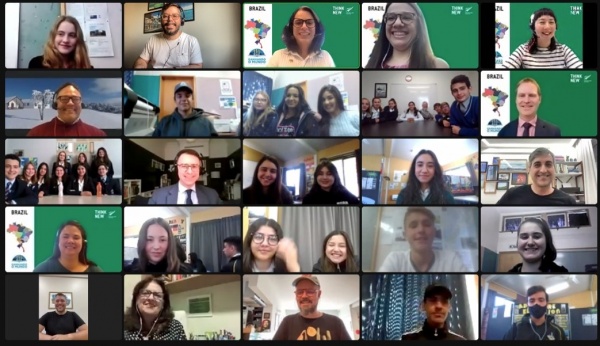
Final farewells from students and their supporters in New Zealand and Brazil.
The final farewell event was online, and included New Zealand Ambassador to Brazil Richard Prendergast, Henrique Choer Moraes, Minister-Counsellor at the Brazilian Embassy in Wellington, and Mr. Roni Miranda Vieira, Director of Education from the Education Secretariat of Paraná state speaking with the students and hearing about their experiences, alongside others involved with the trip.
‘The people were very welcoming – a wonderful experience.’
‘New Zealand is beautiful, this is the best experience of my life, I’m loving it here!’
‘We got to know so many places.’
‘A lovely country and a lovely experience – thank you so much.’
‘We did a boat cruise in Milford Sound.’
‘We went with the school to a lot of different places.’
‘I had a really great time with my host family. They were very kind to me. I’m very sad to leave them.’
‘I’m getting on very well with my host brother – I think I will miss him when I go back to Brazil.’
‘It has been an amazing experience – I am learning so many things.’
‘My host family owns a coffee shop in Rangiora where I go on weekends and have a chance to know different people, they also own a farm and have taught me how to shear a sheep. Another interesting thing I noticed is that depending on the city, I hear a different accent.’
ENZ’s Market Development Manager in Brazil, Bruna de Natale, says this was the first big group of students to come to New Zealand after our borders reopened.
“We had all been waiting eagerly for New Zealand’s borders to open again so this programme could get underway after almost two years, and I know the Kiwi schools involved were very excited to welcome these students. It was good to hear about the special memories the students will take home from their trip, including how much they learned. For most students, this was their first international experience and for many of them, being in a multi-cultural class in New Zealand was a very different experience from home.
“We hope that the students will stay connected to New Zealand and that this experience will be a good basis and incentive for them to explore further international study options in the future – who knows, we might welcome them back to New Zealand someday, that would be lovely!”
The study programme is fully funded by the Paraná Government, through Paraná’s Secretary of Education and Sport, and is expected to continue next year for around 2,000 students. We hope that some of them will be able to come to New Zealand.
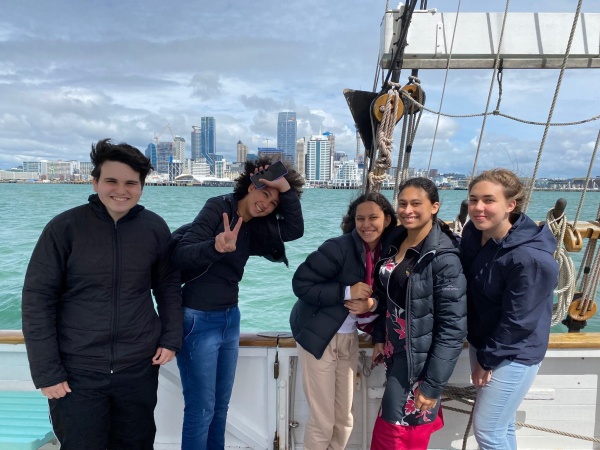
Auckland-based students took part in a sailing trip thanks to Maritime New Zealand and Auckland Unlimited
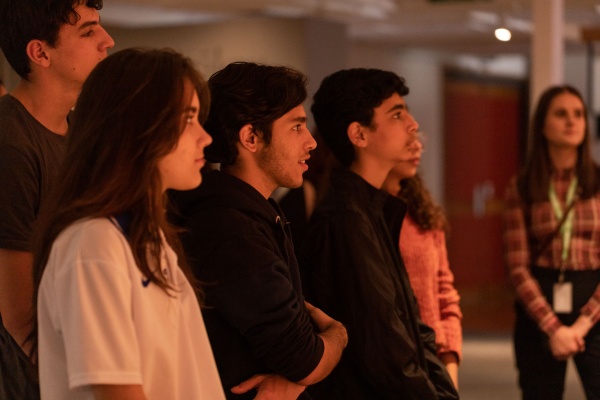
Students from Freyberg High School saw a presentation on the Iny͂ People of Central Brazil exhibition at Te Manawa Museum in Palmerston North
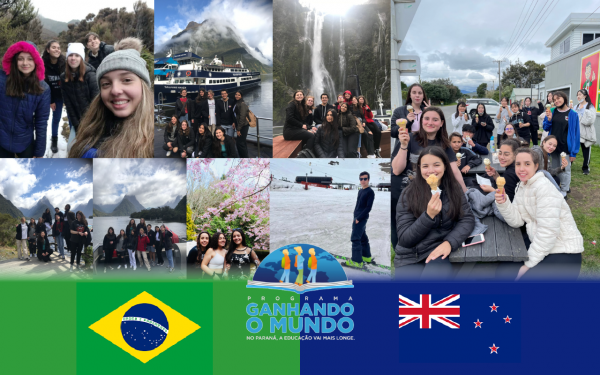
Visiting Milford Sound was one of the highlights for the Invercargill-based students
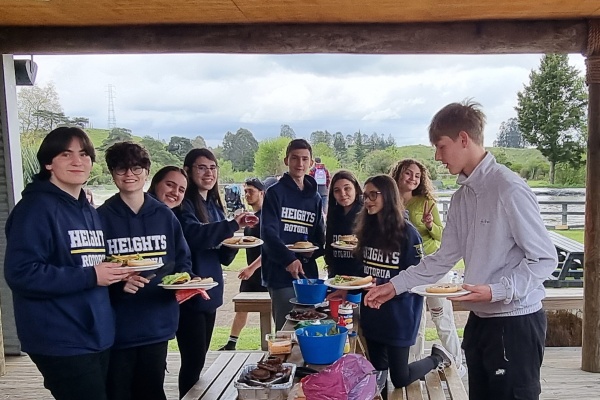
Students from Western Heights High School experienced a farewell special day out in Rotorua that included Velocity Valley, ZORB, and the Skyline Rotorua Gondola and Luge, as well as a BBQ lunch.