Search
Showing 10 of 1236 results for Value-priced treatments https://simplemedrx.top
-
Funding available to reimagine international education
Registrations of interest are open now for ENZ’s International Education Product Innovation Fund (PIF), closing on Wednesday 4 May 2022. Funding is available to all New Zealand-based organisations and individuals with fresh ideas for international education.
The PIF will support providers of education – whether established, new or emerging – to explore, develop and test pilot projects of new products and services that reimagine international education.
“New” could mean the mode of delivery, the configuration, the learner experience and learner outcomes, or the type of collaboration. The pilot projects developed through the PIF will help explore what could set New Zealand apart from its competitors, how students want to engage with New Zealand education, and how to increase the sector’s resilience to future shocks.
“We are extremely excited to now be receiving registrations of interest for the Product Innovation Fund”, says Euan Howden, ENZ’s Director of Innovation. “By encouraging and enabling the development of new, innovative products and services, we are seeking to position the sector for a more sustainable and resilient future and take advantage of trends such as alternative credentials, life-long learning and flexible learning.”
Underlying the PIF is the principle of tukutuku, or partnership. Each pilot project supported through the PIF will be a partnership based on mutual benefit and reciprocity between ENZ and the provider.
ENZ will offer funding of up to $300,000 per pilot (but is open to considering proposals that seek greater funding), as well as connections, support and credibility. In turn, ENZ is looking for applicants who can show a commitment of resource, a willingness to share lessons, reporting and insights for broader benefit, an openness to new thinking, and willingness to give best effect to Te Tiriti o Waitangi.
The PIF is one of ENZ’s initiatives underway to build a sustainable and diverse international education sector for New Zealand which is more resilient to future shocks such as COVID-19. The programme is funded by the Covid Response and Recovery Fund and is linked to the Government’s Strategic Recovery Plan for International Education.
The results of the pilots supported through the PIF will eventually inform recommendations to the Government in September 2023 on future investment in the development and diversification of international education.
-
From the Acting CE: Forward together
Tēnā koutou katoa
Last week we took time internally to reflect on our work over the 2023/24 financial year. So much excellent work has happened over the past twelve months – it was wonderful to come together virtually as an organisation to celebrate the achievements.
There are good reasons to celebrate. International students are returning to New Zealand. The latest enrolment figures show that there were 69,135 international student enrolments with New Zealand education providers in 2023. This represents a 67 per cent increase compared to the full year in 2022 and 60 per cent of annual enrolments in 2019.
This is positive news for our education sector and good for our communities.
A key part of our strategy is to partner and connect and to be an enabler of international education for New Zealand, so I thought I would share with you some recent engagements with that in mind.
This past month I had the pleasure of speaking at the opening plenary session of the annual SIEBA (Schools International Education Business Association) conference in Auckland. The theme of the hui was Global Threads Local Ties. The school sector is very important to New Zealand’s international education offering. It is the second largest sub sector after universities, representing about 20 percent of the value of our entire industry and it is where we find the highest economic value and the greatest opportunity to pathway through to other New Zealand providers.
Likewise, in early August I was pleased to welcome to our Wellington office a delegation of twenty indigenous students visiting from the University of Toronto. Canada is one of New Zealand’s closest and longstanding international partners and it is pleasing to see indigenous-to-indigenous cooperation between both countries increasing. We are really noticing growing interest in this overseas as you will read in this article here. - Indigenous Internationalisation a hot topic
Turning our attention to the next 12 months, in June the ENZ Board approved our business plan for this financial year (1 July 2024 to 30 June 2025). The plan has four clear priorities:
-
To grow and diversify the number and value of international students studying with New Zealand
-
Partner and connect to be the trusted voice and enabler of international education for New Zealand
-
To deliver sector growth through services that are valued by the sector, international students and New Zealand Inc partners, and
-
Optimise ENZ to be a more efficient and effective Crown Agency.
When it comes to delivering valued sector services, the upcoming New Zealand International Education Conference (NZIEC KI TUA) in August will be provide an excellent opportunity to come together as a sector to listen, learn, discuss, contribute, and network with specialists and colleagues.
If you haven’t yet registered, I encourage you to check out the conference website. This year it will be held from 6 to 8 August 2024 at Tākina Convention Centre in Wellington.
We have a stellar line up of speakers and it promises to be an engaging and informative event.
Whaowhia te kete mātauranga
Fill the basket of knowledge.
Ngā mihi nui,
Dr Linda Sissons
Acting Chief Executive
Education New Zealand Manapou ki te Ao
-
-
Insights Accelerator - 3 things for 30 minutes for PTE and ELS providers
The goal of the Insights Accelerator sessions is to offer concise information and insights to support our PTE and ELS providers. By focusing on three things within 30 minutes, Education New Zealand Manapou ki te Ao (ENZ) hopes to efficiently deliver useful takeaways while being mindful of busy schedules.
ENZ’s General Manager, Sector Engagement and Innovation, Wendy Kerr said that two Insights Accelerator sessions have been held so far and were well received by attendees.
“My team is constantly reviewing ways we can better engage with the sector and add greater value. With this platform, we hope that we can support providers in their strategic planning endeavours through the sharing of useful information about our services, as well as market insights.
“These sessions also provide an avenue for us to understand more about our customers. We will be hosting more of these sessions in the coming months so please keep an eye out for the invitation”, added Wendy.
For the launch session, Nick Sinclair, ENZ’s Global Brand Manager presented on the international advertising campaign: Learn New Every Day, and talked about the campaign rationale, channels and target markets, and campaign assets as well as where and how the sector can use these.
In the second Insights Accelerator, ENZ’s Director Insights Marie Clark presented information on ENZ Intellilab, including 2023 Ministry of Education Student Enrolment Data. Marie shared how providers can access Intellilab and the range of information available. The session also looked at the survey findings from the 2023 New Zealanders’ perceptions of the value of international education research and 2023 International Students Experience research.
If anyone missed the sessions, the slide pack and presentation can be accessed via the links below.
For further information, please contact Jane Yang, ENZ Business Development Manager – jane.yang@enz.govt.nz
-
US students win NZ study experience
The collaboration is part of Education New Zealand’s commitment to the Institute of International Education’s Generation Study Abroad initiative to double the number of students from the United States who study abroad by 2018,
Participating universities and ITPs funded US$500 tuition or living costs awards, and ENZ funded US$2,000 travel awards to help students pay for their flight to New Zealand.
Eleven students were offered the US$500 university or ITP excellence awards to study at the University of Auckland, AUT, Unitec, Massey University, the University of Waikato, Victoria University of Wellington, the University of Canterbury, Otago Polytechnic and the University of Otago, and four students (including one who also received an institute award) were offered the US$2,000 travel awards to study at the University of Auckland, the University of Waikato, Massey University Wellington, and the University of Otago.
As part of the application process, students were required to submit a blog or video explaining why they wanted to study in New Zealand. “The standard of applications received was very high, and their blogs and videos were inventive and entertaining,” said Amy Rutherford, International Market Manager, North America.
“I can’t wait to see what the students get up to during their time in New Zealand!”
You can view the application blogs and videos through the links below.
Phillomena Wong from the University of Southern California, recipient of an AUT University excellence award
Emily Garrett from Park University, recipient of a Massey University excellence award
Allison Cluett from Brown University, recipient of a University of Otago excellence award
Nicole Guinn from the University of Mary Washington, recipient of a University of Otago excellence award
Reese Sun from the University of Texas at Austin, recipient of ENZ travel award, studying at the University of Otago
Zoa Smalley from the Kansas City Art Institute, recipient of an Otago Polytechnic excellence award
Leo Valdez from the University of Central Missouri, recipient of a Unitec excellence award
Sara Lobdell from Franklin and Marshall College, recipient of a University of Auckland excellence award, and an ENZ travel award
Yasaman Sahba from Southern Methodist University, recipient of University of Canterbury excellence award
Abe Levitan from Olin College, recipient of a Victoria University of Wellington excellence award
Logan Coffman from the University of Colorado at Boulder, recipient of a Victoria University of Wellington excellence award
Annalisa Palmer from the University of Nevada, recipient of an ENZ travel award, studying at Massey University Wellington
Kora Nixon from Michigan State University, recipient of a University of Waikato excellence award
Dustin Flores from Utah State University, recipient of ENZ travel award, studying at the University of Waikato.
-
Latest Immigration New Zealand update: English translations will be required for visitor visa suppor
English translations will be required for visitor visa supporting documents
Immigration New Zealand (INZ) has announced that from 17 June 2024, all supporting documents submitted with visitor visa applications to INZ must be provided in English. This includes visitor visa applications from people wanting to study for less than three months.
For further information on what this means please see the announcement on the INZ website: English translations will be required for visitor visa supporting documents | Immigration New Zealand.
There are no plans at this stage for student visas to follow suit.
-
New Zealand teens rank among the best for creative thinking
New Zealand is the among highest-performing education systems for creative thinking, ranking fifth in the world out of 81 countries, with an average score of 36 points per student that is higher than the OECD average of 33 points.
Education New Zealand Manapou ki te Ao Acting Chief Executive, Dr Linda Sissons said she was delighted to see New Zealand students stand out globally for creative thinking.
“New Zealand classrooms adopt a hands-on, practical approach to learning that encourages students to express their ideas, and to think critically and collaboratively.
“Creative thinking is a valuable quality that also enriches the outputs of a wide range of tertiary and career fields, from arts, engineering, technology and biomedicine to infrastructure and mathematics.
“We are pleased to see this approach endorsed in the latest PISA tests,” Dr Sissons said.
The PISA 2022 creative thinking data provides insights into how well education systems are preparing students to think outside the box in different contexts. This was the first time that the PISA test measured the ability of students to demonstrate creativity, specifically their ability to come up with original and diverse ideas.
Between 60-70 percent of students across participating OECD countries also reported that their teachers value their creativity, that they encourage them to come up with original answers, and that they are given a chance to express their ideas in school.
For further information:
Sai Raje | Senior Communications Advisor, Education New Zealand Manapou ki te Ao+64 21 479 649
Notes to Editors:
About Education New Zealand Manapou ki te Ao (ENZ) https://www.enz.govt.nz/ENZ is the government agency dedicated to helping Aotearoa New Zealand realise the social, cultural, and economic benefits of international education. Our role is to promote New Zealand as a high-quality education destination offering excellent education and students experiences and to encourage New Zealand students to study overseas.
With approximately 110 staff in 16 locations around the world, ENZ works closely with New Zealand’s diverse education sector which includes schools, English language providers, Private Training Establishments, Institutes of Technology and Polytechnics (Te Pūkenga), and universities. Internationally, we work with a range of education stakeholders, including government agencies and education providers to identify and encourage sustainable growth opportunities for New Zealand’s education sector.
-
ENZ roadshow heading to South America in 2025!
The South American region has significant potential to grow international student numbers to New Zealand. ENZ is excited to help facilitate this growth with a series of agent-facing events in Bogota, Colombia, São Paulo, Brazil, and Santiago, Chile.
Representatives from all New Zealand's education subsectors are invited to participate, with New Zealand Private Training Establishments (PTEs) and English Language Schools (ELS) particularly encouraged, seeing as both subsectors have been identified as having significant opportunities for growth in this region in ENZ's 2024/25 Business Plan.
The events offer New Zealand providers the opportunity to deliver presentations to local education agents, meet with them one-on-one, and network at a closing function.
ENZ's Director of Engagement for Latin America, Javiera Visedo, said that these seminars will offer a great opportunity for New Zealand institutions to reconnect with high performing South American education agents.
“In 2023, we had 3,124 students from Latin America studying in New Zealand which is a 68% increase from 2022 but a long way off pre-Covid levels,” said Javiera.
She added “in organising this series of events for early next year, we want to to keep facilitating the ongoing connection of New Zealand’s providers with key agents in the region, putting New Zealand front of mind as they assist students in their international study decision making processes".
Any education providers who are interested in receiving more information about the events and register to attend, can do so here - https://enzevents.eventsair.com/EduNZ/2025-south-america-roadshow/info.
-
Special offer on ICEF Academy NZ Education Agent Course
ICEF Academy, the professional training arm of ICEF, has launched a new online course that is designed to equip education agents with the resources they need to provide the highest quality of guidance to students wishing to study in Aotearoa New Zealand.
The New Zealand Education Agent Course (NZEAC) has been developed in collaboration with Education New Zealand Manapou ki te Ao (ENZ) and adds to the ICEF Academy’s portfolio of destination training.
ICEF is now offering a promotional rate for readers of E-News. Education agents can use the code NZEAC30 during checkout to purchase the exam with a 30% discount. This offer is available until 31 December 2024.
Since its 27 June launch date, the course is already proving popular. As of 14 August, 618 education agents have enrolled in the course, 532 have started, 127 have completed the course, and 16 have graduated.
Commenting on the course’s uptake, Sahinde Pala, General Manager Sector Services at ENZ said it was encouraging to see that the course was proving popular amongst education agents.
About the course itself, she said “The course offers comprehensive insights for education agents to help them advise students on study in Aotearoa New Zealand. It will help them become better informed about the country’s policies, culture and education system so that their advice to students is current, accurate and helpful.”
In undertaking this course, education agents will have the opportunity to study modules which will encompass New Zealand’s culture and history, education system, work policies and legislation, as well as effective student recruitment and support. The course is self-paced and free, however those seeking to highlight their knowledge as a destination New Zealand specialist have the option to undertake a paid certification exam, for which the 30% discount applies.
Education Agents interested in learning more about the New Zealand Education Agent Course can learn more at: New Zealand Education Agent Course (NZEAC) | ICEF Academy. Education agents are also reminded to register with AgentLab to keep up-to-date with all agent-related news and information.
-
Māori and First Nations people connect during University of Toronto visit
18 indigenous students and two indigenous staff from the University of Toronto’s ‘First Nations House’ were invited to Aotearoa New Zealand for a week-long visit at Tirorangi Marae at the base of Mount Ruapehu in July.
The purpose of the visit was to enhance cross-cultural understanding between Māori and First Nations and Métis peoples and is significant as empowering iwi and hapū in the international education space is an important Te Tiriti obligation for ENZ, as an Aotearoa New Zealand government agency.
The visit took place during the time of ‘Puanga’ which is when the single star rises higher in the sky than the Matariki star cluster and is recognised by iwi and hapū that can’t see the Matariki cluster from their location.
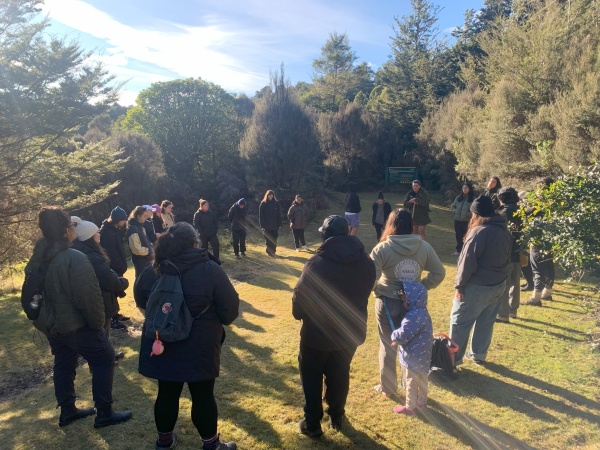
Māori and First Nations and Métis people have ’sharing circles’ as a common way to teach and learn.
The group participated in a wide range of activities in the area while staying at the marae. They were then welcomed to Te Whanganui-a-Tara by the ENZ Wellington office, visiting Te Tiriti o Waitangi at Archives New Zealand Te Rua Mahara o te Kāwanatanga and and Te Herenga Waka — Victoria University of Wellington, before finishing their trip in Whakatū (Nelson) with some adventure tourism activities.

Indigenous students Kieren and Bailey from the University of Toronto sampling Wellington’s outdoors with ENZ's Craig Rofe.
The First Nations and Métis members of the group experienced what living on a marae was like and were also immersed in how a tribe engages with the environment, and how iwi businesses, local council and government agencies such as the Department of Conservation (DOC) operate in the field with iwi partnership.
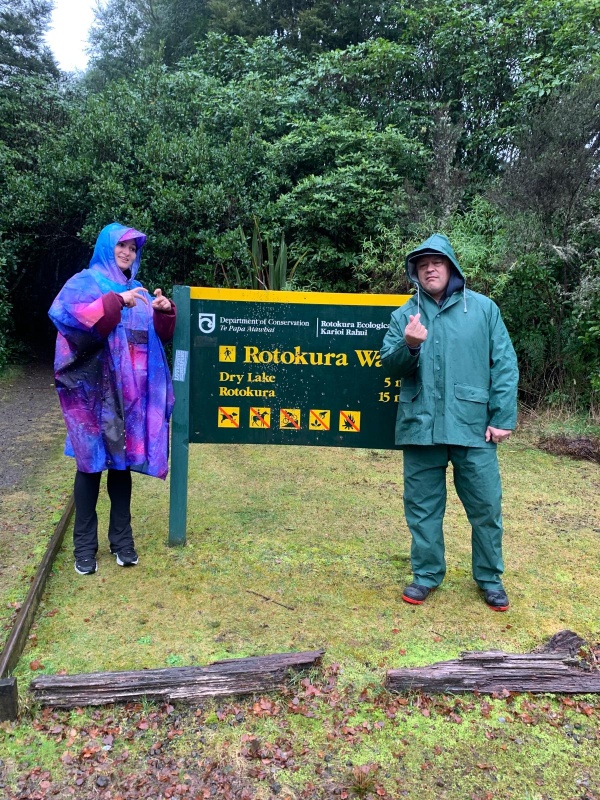
Iwi people sharing lake Rotokura’s healing power, a wāhi tapu (sacred place) for the local tribe.
Dr Craig Rofe, ENZ’s Kaitohutohu Matua Māori – Senior Advisor Māori, said that during the visit, Māori and First Nations and Métis people were able to compare the similarities and differences of their contexts to grow understand of their respective challenges and successes.
“The First Nations people’s struggles to overcome racism and prejudice resonated with tangata whenua, in particular the intentional elimination of language and the current mechanisms of revitalisation.
“Many stories shared with together showed the everyday trauma that resides in each of us and how, as indigenous people, we try to navigate these obstacles to make a better world for the next generation”, said Dr Rofe.
The trip motivated the students to connect more with their languages and culture upon their return.
Kenzie, from the Mohawk tribe said “when we meet again, I’ll be able to talk to you in my language, I’m declaring it!”.
Katherine from the Eskasoni First Nation tribe said “My experience connecting with the Ngāti Rangi revealed the transformative power of global Indigenous connections. Participating in ceremonies such as Hautapu and visiting Mount Ruapehu was particularly moving. Listening to their stories of ancestral ties to the land and taking part in traditional ceremonies that emphasized community and connection to the environment deepened my own personal understanding. This experience inspired me to initiate conversations with elders in my own community about our traditional land management practices.”
This experience also highlights the important offerings that Māori, and indeed indigenous knowledge, has to offer to international education. In particular, and not exclusively, the deep connection that indigenous peoples have with the environment and therefore natural obligation of care.

First Nation student, Alexis, discovers the origins, medicinal, spiritual and mechanical properties of harakeke (flax).
Sustainable practices and programmes can benefit from indigenous inclusion and perspectives, especially with the large-scale impacts of global warming and general pollution in many countries. The co-governance structure that Ngāti Rangi iwi and DOC work with as part of post Te Tiriti Settlement was used as an example of decolonised solutions within our New Zealand context.
There have been discussions between ENZ, Ngāti Rangi iwi, and the University of Toronto about an ongoing relationship and considering what a reciprocal engagement might look like moving forward.
Nāku te ika i hī, nāku anō i whakatau
Ki te haere, whāia i te Pare-i-te-taitonga, tērā taku ika.
This is a Ngāti Rangi iwi reference to the Ruapehu mountain being the ‘pillar post’ of the ‘Fish’ (North Island).
-
Message from Minister for Tertiary Education and Skills, Penny Simmonds
It’s good to reflect on ENZ’s New Zealand International Education Strategy (NZIES), “to enable a thriving and globally connected New Zealand through world-class international education.”
I am delighted to say that with the increase in the numbers of overseas students we are on track to deliver on that strategy.
There have been 59,306 international student enrolments for Jan - August 2023, a 43% increase compared to the full year in 2022.
And New Zealanders' understanding of the economic and social benefits of international students was reflected in a survey late in December 2023 by Ipsos which showed 75% percent of New Zealanders believe that overseas students benefit New Zealand. This is up from 47% in 2019.
An increase in the number of international students from all over the world is positive as it brings in vital revenue for institutions and the country, but it also has the spinoff of creating a wonderful cosmopolitan element to campus life.
New Zealand is a small country and for many students, rubbing shoulders with people from other cultures will give them a greater understanding of the issues facing our complex world. In this time of fragile geopolitics, the melting pot of campus life can help build greater understanding and tolerance.
In turn Kiwi students also can be champions for our own country as they share their knowledge, experience and friendship with the overseas students.
The quality education that our institutions provide also enhances our global society by upskilling and educating all students to take on international work opportunities which inevitably spreads New Zealand’s values and influence throughout our world.
Hon Penny Simmonds
Minister for Tertiary Education and Skills