Search
Showing 10 of 540 results for group registration
-
David Downs appointed Chief Executive of Education New Zealand Manapou ki te Ao
David Downs takes over following the recent departure of Amanda Malu, who was appointed Secretary for Children and Chief Executive of Oranga Tamariki – Ministry for Children.
ENZ Board Chair Tony Gray said Downs’ international and marketing experience, including his tenure as Chief Executive Officer of the New Zealand Story Group, makes him well placed to lead ENZ as it continues delivering the International Education Going for Growth Plan.
“David has an innate understanding of New Zealand and its competitive advantage in a rapidly changing world. Coupled with his leadership experience at New Zealand Story Group, he is well placed to lead ENZ at this time,” Tony said.
Downs is currently Chief Executive Officer of New Zealand Story Group, a role he has held since July 2021. Previously he has previously held a number of General Management roles at New Zealand Trade and Enterprise (NZTE), most recently working with the technology sector to help fast growing tech companies grow internationally and New Zealand companies adopt digital commerce channels to market. Prior to this he had an extensive career in leadership roles with Microsoft in New Zealand and Asia Pacific.
“David is a passionate New Zealander and storyteller by nature, and we are looking forward to his joining ENZ in June,” Tony said.
In the meantime, Dr Linda Sissons will continue as Acting Chief Executive and the Board will be working closely with her and the leadership team to ensure a seamless transition.
-
Prime Minister meets Kiwi students in Singapore
Last week the Prime Minister announced the 249 young New Zealanders who have been awarded prestigious Prime Minister’s Scholarships for Asia (PMSA) and Latin America (PMSLA) as part of the August 2018/19 round.
She congratulated the new round of awardees in Singapore, where she met a group of 11 current PMSA recipients and reflected on the value of young Kiwis having international education experiences.
The Singapore-based awardees at the event included Louis Martin (25) who is carrying out a four-month internship with Asia Internship Program (AIP), Nicolas Steyn (20) who is on a one semester exchange at the National University of Singapore, and Lucy Kenner (22) who is undertaking a 12-week legal internship at Providence Law Asia.
“Ongoing academic relationships and new business opportunities are two things we are seeing result from the scholarship programme,” Jacinda Arden said in the announcement release.
“Our awardees are welcomed and supported by diplomatic communities in New Zealand and offshore, which we also value.”
John Laxon, Regional Director – South and South East Asia, Middle East, said that Friday’s event during which the Prime Minister chatted and mingled with the group of Kiwi students showed how international education can be life changing.
“Our scholars gave great insights into how they have created lifelong connections through their PMSA experiences, which will enrich their lives and strengthen their careers,” said John.
“The Prime Minister enjoyed the discussions, which brought back memories of her own exchange student experience at Arizona State University.”
Applications for the next round of PMSA and PMSLA opens mid-January and must be submitted online by 30 March 2019. More information on the application process can be found here. Institutions are encouraged to contact ENZ to discuss potential group applications.
The PMSA recipients’ names from the August 2018/19 round can be found here. The PMSLA recipients’ names from the August 2018/19 round can be found here.


-
A new group of US Kiwi Ambassadors
Welcome Kiwi Ambassadors!
It was so difficult that ENZ decided the group of runners-up would be offered the chance to be ‘Honorary’ Kiwi Ambassadors. This meant they could still share their semester experience in New Zealand through the Study in New Zealand Instagram.
The #StudyinNZ page will therefore shortly welcome the next round of Kiwi Ambassadors, the 13 award recipients, and a further group of 29 Honorary Kiwi Ambassadors when they arrive in New Zealand in July.
The Instagram page has quickly become a hit with the US students and has already attracted almost 15,000 followers. Certainly, as you can see if you view the page, the current Kiwi Ambassadors have had no trouble finding picturesque opportunities during their semester in New Zealand! Images of nature, food, sunsets and wildlife predominate.
ENZ’s staff in the US, Amy Rutherford and Alanna Dick, have found the #StudyinNZ Instagram page a powerful tool in promoting New Zealand as an education destination.
“When I suggest students and study abroad advisors follow Study In New Zealand on Instagram, the conversation about studying abroad in New Zealand continues long after the study fair or campus visit is over,” says Alanna.
“It’s one thing me telling students what it’s like studying in New Zealand, it’s another when the students can see it in real time for themselves!”
More about the Awards
Education New Zealand partnered with the eight New Zealand universities and six institutes of technology and polytechnics to offer these awards as part of their support of the Institute of International Education’s Generation Study Abroad initiative, and its aim of doubling the number of US students who study abroad.
For Semester Two this year, ENZ awarded four US students the $2,000 Generation Study Abroad Travel Award to cover their airfare. The students are attending the University of Auckland, the University of Otago, and EcoQuest, a Private Training Establishment.
The universities awarded nine US students New Zealand Universities Excellence Awards (NZUEAs) which cover $500 of tuition fees and other associated costs. The students come from universities all over the US, from University of Florida to California Polytechnic State University.
-
First marae-led Prime Minister’s Scholarships for Asia recipients build indigenous connections in Japan
The first marae-led Prime Minister’s Scholarships for Asia recipients (members of Te Piruru Papakainga, Ngāti Maniapoto) visited Japan for a six-week visit that included a customised internship that connected them with indigenous Ainu organisations and villages in Hokkaido.
ENZ’s Manukura Chief Advisor Māori, Ed Tuari and Director of Education – Japan, Misa Kitaoka, welcomed the scholarship recipients in Tokyo in early January.
This is a great outcome for the Prime Minister’s Scholarship Programme, which has seen an increase in Māori participation. The latest round of applications for the scholarships saw an increase in Māori participation to 22 percent in 2022 from 5 percent from 2016 to 2019.
ENZ is eager to continue partnering with iwi, marae and whānau groups to raise Māori participation in the Prime Minister’s Scholarship programme, particularly in the current group round that opened for applications in March.
ENZ’s Manukura Chief Advisor Māori, Ed Tuari said it was a privilege to participate in what is an important milestone for building indigenous connections between Māori and the Ainu people of Japan.
“This is a significant achievement for ENZ Manapou ki te Ao. I want to acknowledge this collective achievement as we break new ground with this marae-led group of PMSA recipients.
“It’s hugely encouraging to see the increase of Māori participation in the latest round of the scholarships. This is a demonstration of ENZ ‘walking the talk’ to ensure Māori are better represented in opportunities to share and learn on the global stage, as well as promote indigenous to indigenous exchanges.”
ENZ’s Director Scholarships Carla Rey Vasquez said she was excited to see the growth and learnings that these programmes would bring to the wider whānau and iwi.
“Our scholarship recipients cherished the opportunity to connect with indigenous communities in Japan, and they particularly appreciated the value of reciprocity as well as the importance of generational knowledge being shared along.
“We look forward to continuing to raise Māori participation in the Prime Minister’s Scholarship programme.”
The latest visit by scholarship recipients has also been a good opportunity to enrich the existing education connections between New Zealand and Japan under a Memorandum of Understanding between New Zealand and the Hokkaido Government, which was renewed in 2022.
The customised internship that saw scholarship recipients visit Ainu villages and organisations, was organised by the Hokkaido Government and the Hokkaido Board of Education.
ENZ’s Director of Education – Japan, Misa Kitaoka, said the visit by scholarship recipients was timely as Japan starts to promote Ainu history, language and culture.
“The Ainu people received official recognition as ‘indigenous people of northern Japan’ from the Japanese government in 2019. As the government begins to promote Ainu history, language, and culture in Japan, Ngāti Maniapoto’s visit to Hokkaido was timely and appreciated by the Ainu community to learn about how New Zealand society has embraced Māori language and culture.”
Applications are open for the 2023 group round of the Prime Minister’s Scholarships for Asia and Latin America until 23 April 2023. More information on applications is available on ENZ's dedicated scholarship website here.
[updated 18 April 2023]
-
Around the world in five
GLOBAL
What institution rankings are most important to students?
An annual survey of prospective international students found that university rankings are an important decision factor for 25 percent of respondents. The survey also found that QS World University Rankings and The Times Higher Education World University Rankings are the most popular among prospective students, including those in China and India.
AUSTRALIA
Group of Eight university consortia propose special visa for Indian PhDs
Australia’s Group of Eight (Go8) university consortia pushed for a special visa for researchers and PhD graduates during the Australian Business Week 2017 in India. They also outlined action points to enhance both countries’ student and research collaboration.
ASIA
Asia rising in university rankings
US universities are struggling to maintain their dominance the latest World University Rankings 2018 by Times Higher Education (THE). US universities now face increasing competition from established institutions in the UK as well as those in Asia as their institutions provide more options to students worldwide.
GLOBAL
Governments are among game changers in global education
Among the finalists in the inaugural PIEoneer Awards are the Australian government’s outbound student mobility programme, the Malaysia Qualifications Agency, an international alumni jobs network in Hong Kong and Viet Nam, and an aptitude test from language learning app Duolingo.
UK
EU students will face tougher entry requirements post-Brexit
Students from EU countries coming to study in the UK could face a more arduous application process after Brexit, one that requires them to sit an English language test and prove they have enough money to support themselves.
-
Reflections from English Teachers in South Korea
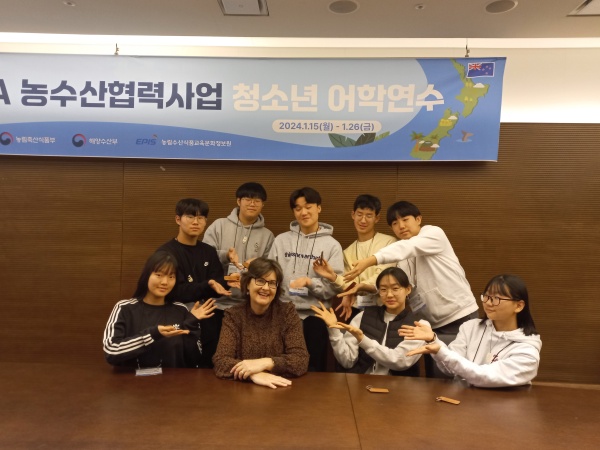
In January 2024, six New Zealand teachers were selected to spend part of their summer season teaching English in South Korea as part of the New Zealand Korea FTA Partnership English Language Training Programme.
This programme is supported by Education New Zealand Manapou ki te Ao (ENZ) who assists with the teacher recruitment process. This was one of the key KNZFTA programmes recently discussed during the South Korea Government delegation visit to New Zealand late last year.

The group of six New Zealand teachers selected to teach English in South Korea in January. From left, Jane Bassett, Food Technology Teacher from Havelock North Intermediate School, Sharon Powell, English Teacher from Long Bay College in Auckland, Kara Shortland, Acting Team Leader (Bilingual) from Whangārei Intermediate School Te Tai Tokerau. Glenn Cheyne, Head of Learning Area Social Sciences from Nayland College in Nelson, Gordon Sim, Social Science teacher from Hillcrest High School in Hamilton, and Dan Greer, Social Studies/Drama teacher from Logan Park High School in Dunedin.
Kay Lee, ENZ Senior Market Development Manager – Korea, said that it was an absolute pleasure to see New Zealand teachers continue to travel to South Korea to teach English during their summer break.
“There are so many positive outcomes from the running of this cross-cultural programme for both the Korean students and the New Zealand teachers participating.
"On one hand, the students get the opportunity to hone their English language skills while experiencing the New Zealand teaching style, learning more about New Zealand, including its culture and education system. Meanwhile, while teaching English and serving as ambassadors of a New Zealand education, the teachers can immerse themselves in Korean life for a few weeks, seeing new sights, trying new food and making new friends.

Gordon, Jane, and Dan, sampling Korean cuisine at the end of the teaching day.
"Our Korean government partner for educational programmes, EPIS, has acknowledged ENZ for its significant contribution to the programme’s success through effective teacher recruitment. These positive outcomes are testament to the strength of our NZ-Korea Government-to-Government partnership,” added Kay.
Upon their return to New Zealand, two of the teachers who are trained in teaching English as a Second Language (ESL), shared their experiences with ENZ. Read on to hear about the reflections from their two weeks abroad....
Jane Bassett (지안 (Jian) from Havelock North Intermediate School with her students.
Jane Bassett is a Food Technology teacher at Havelock North Intermediate School and said that the experience of exchanging cultures whilst teaching in an overseas classroom environment was an absolute privilege.
“Our students were aged 14 – 17 years old and came from all over South Korea with family backgrounds in the Agricultural and Fisheries industries. Each student had been awarded a scholarship from the Korean government to attend the two-week intensive English programme organised by the Hyundai Research Institute.
"The Institute went above and beyond in their efforts to ensure an incredible experience for both the students and our group of teachers.
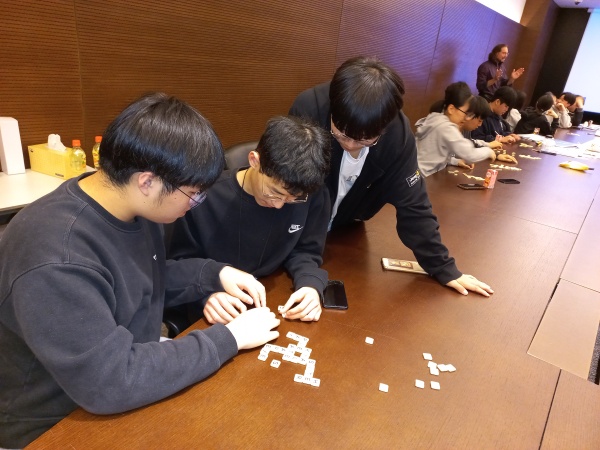
“The teaching programme included a wide range of modules and as well as English grammar, we covered lessons on New Zealand culture, history, tourism, agriculture, sports, famous New Zealanders, and school life. My class was also exposed to the New Zealand Technology curriculum and was tasked with developing a new snack product. As part of the project, I introduced them to several New Zealand snacks and Kiwi classics such as WeetBix, Marmite and Watties Baked Beans, to varying degrees of enjoyment!”
Students were encouraged to speak in English throughout the day via fun-games, readings, conversations and plays so that the teachers could fine-tune their English to help them become more fluent with more natural English phrasing.
"We also explained aspects of Māori culture and the significance of pepeha (way of introduction). The students, who were from agricultural and fisheries backgrounds, were quickly able to identify their own awa (river) and maunga (mountain), showing their own personal connection to their land.”
Jane said that a personal highlight was being able to spend her birthday in Seoul learning about Korean cuisine through a cooking class on kimchi making and tea ceremony in a traditional house. She admitted that this was an appropriate birthday experience for a New Zealand Food Technology teacher!
She summed up the experience by saying that the group of teachers gained a greater understanding of cultural diversity and appreciation of the challenges learning English poses for new learners, learnings which they will take home with them.
“We really hope that our students will remember their experience as fondly as we will and that they will look to study and visit New Zealand in the future.”

Drama and Social Studies teacher, Dan Greer, of Logan Park High School with three of his students.
Dan Greer, is a drama and social studies secondary school teacher from Logan Park School in Dunedin. He joined Jane as one of the six teachers selected to travel to South Korea, his second experience as an English language teacher in South Korea, having taught in Ulsan 12 years ago.
“I had such an amazing time participating in the Hyundai Research Institute’s programme. It was great to have other quality teachers on this experience with me and we were able to work together, mixing up the style of teaching and activities. I had the more beginner level class, and as a drama teacher we added games to my traditional English teaching. The students really enjoyed it, and it gave them more confidence to give things a go”.
Dan reflected on the fact that there was one practice of teaching English in Korea that he had often thought was a little unfair, that being the naming of Korean students with English names.
“As an English teacher in Korea, you are often asked to name Korean students with English names. Sometimes this is because they want them, sometimes it is because they ’have’ to, and for many it is because westerners find Korean names hard to pronounce. I have named nine children in my life, one being my daughter and the other eight have been my Korean students”.
Dan used this practice as a topic of discussion in class one day and shared his opinion that it had not always felt right to him as he felt that if Korean students were taking the time to learn the English language, that teachers should make an effort in return.
He then asked his students whether English teachers should have Korean names. This prompted them to ask many questions about Dan including who he is when he is not “Dan the teacher”, his whakapapa, and the meaning of his name in English.
Dan said “You can imagine my surprise when my students were all waiting for me when I arrived the next day. One wonderful student then stood up and using perfect English gifted me a Korean name. I was no longer just “Dan the Teacher,” but also now 도혁 (Dohyuk), which meant I was ‘leading them to a bright path’.
“This was such a humbling experience that I will cherish forever. For me, this is what makes teaching and life so special,” added 도혁 (Dan).
If the Korean organisers decide to run the NZ-Korea FTA Partnership English Language Training Programme in the future, ENZ will continue to share the applications with NZ school teachers through the Asia NZ Foundation and Schools International Education Business Association (SIEBA).
-
Auckland Agency Group progresses student well-being initiatives
AAG Chair Isabel Evans, Director of the Ministry of Education (MOE) in Auckland, says more than 60 per cent of international students currently study in Auckland.
“The AAG group was established to build cross-agency government leadership in the Auckland region,” she says.
“We also wanted to ensure that agencies on the ground in Auckland are collaborating effectively.”
Education members of the AAG include the MOE, Education New Zealand (ENZ), New Zealand Qualifications Authority (NZQA) and Tertiary Education Commission. Other government agencies include New Zealand Police, Ministry of Business, Innovation and Employment (MBIE), Immigration New Zealand, Ministry of Foreign Affairs and Trade, Ministry of Social Development and Office of Ethnic Communities, Waitemata and Auckland District Health Boards and the Human Rights Commission. Auckland economic growth agency ATEED also plays an important role.
Ms Evans said the AAG was involved in stakeholder engagement in August which contributed to a draft International Student Wellbeing Strategy.
“From this engagement, we identified a number of action areas. Since then, group members have been working on ways to improve the overall international student experience in Auckland, with the potential to roll these out nationally if successful.”
Below are some of the initiatives underway.
- ATEED and NZ Police are working on a refresh of a safety video for international students. While it will be filmed in Auckland, its messaging will apply to students nationally, and should be available from early 2017.
- ATEED is developing an International Student Experience programme in partnership with ENZ and industry partners.
- Several agencies are looking at ways to improve the information available to international students and their families. Students are seeking more information on such topics as the true cost of living, insurance and what it covers, employment rights, health services and New Zealand culture.
- Agencies are also looking at ways to provide more volunteer and internship opportunities for international students. ATEED and MBIE will also launch phase two of their job-ready graduate programme working with ICT grads specifically.
- Several agencies are looking at ways to better support international parents, particularly those accompanying children who are studying at primary school here. These parents can be isolated and lonely. This support can also extend to the homestay parents who host international students.
“These initiatives are a start, and the AAG members are enthusiastically collaborating to make sure that opportunities to enhance the international student experience are progressed,” says Ms Evans.
She says the AAG’s work is aimed to enhance the service that international students receive from their education provider, rather than replacing it.
For further information, please contact ENZ Acting Director, Student Experience, Sahinde Pala at Sahinde.pala@enz.govt.nz.
-
Student welcomes continue throughout the country
Timaru
In the Timaru District, a total of 83 students from America, China, Japan, Germany, South Korea, Hong Kong and Laos were officially welcomed by the Mayor at a function at the Caroline Bay Hall on March 20. It was the first time a mayoral welcome of students has been held in Timaru since Feb 2020.
The welcome featured performances from the Roncalli College kapa haka group and Mountainview high School’s jazz band. Guest speakers included district Mayor, Nigel Bowen and MP for Rangitata Jo Luxton.
Whanganui
Earlier this month 27 students from Japan, India, Germany, China, Thailand, and Scotland were treated to a rousing (and musical) welcome from the Cullinane College kapa haka group at the Cooks Gardens event centre in Whanganui.
Whanganui Deputy Mayor Helen Craig welcomed the students to “New Zealand’s only UNESCO City of Design” highlighting the importance of cultural interaction between international students and their New Zealand counterparts.
Cullinane College kapa haka group welcoming Whanganui’s international students. Click on the image to view the video. -
Japan and New Zealand celebrate education milestone
Last week, ENZ hosted a reception in Tokyo to celebrate the 20th and 30th anniversaries of three Japanese schools’ first New Zealand visits and to thank them for their continued support of New Zealand.
Over the last three decades, the three Japanese schools – Josogakuin Junior High School, Hikarigaokajoshi High School, Tokorozawa Kita High School – have sent more than 4,000 students to New Zealand for academic study and school excursion programmes.
Misa Kitaoka, ENZ’s Senior Market Development Manager – Japan, said the schools shared some fantastic feedback about New Zealand as a study destination.
“The principal of Tokorozawa High School said the importance that New Zealand education places on acquiring future skills and global competency was one of the reasons why it resonated with him as a destination for his school’s study abroad programme,” said Misa.
“His school has also had annual visits to the University of Canterbury and Lincoln University, which he felt was an excellent opportunity for Japanese students to experience New Zealand’s tertiary-level programme.”
The reception opened with a powerful kapa haka performance by local group Nga Hau E Wha, showcasing Māori language and culture.
The New Zealand Ambassador to Japan, Stephen Payton, presented the schools with certificates of appreciation, signed by ENZ Chief Executive Grant McPherson.
Air New Zealand was also on hand for the celebration, gifting plaques and airline tickets to New Zealand for teachers at the schools.
Misa said in the lead up to the 2020 Olympics and Paralympics, hosted by Japan, the Japanese government is accelerating its plans for internationalisation.
“I see a growing opportunity for ENZ to promote the quality of New Zealand’s universities, especially the direct pathway to the Bachelor’s degree programme available for Japanese high school students.”

The Nga Hau E Wha group performs a kapa haka.
-
Japan and New Zealand celebrate long education partnership
To acknowledge the 25th anniversary of the first school visits by four Japanese schools, ENZ partnered with Air New Zealand and Tourism New Zealand to host a reception in January, thanking the schools for their continued support of New Zealand. The event received positive media interest in Japan and resulted in almost 30 articles.
The event was opened by a powerful kapa haka performance by local group Nga Hau E Wha to showcase Māori language and culture.

Nga Hau E Wha performing a kapa haka
Misa Pitt, ENZ’s Senior Market Development Manager – Japan, said Māori language and culture has been a popular subject for school trips to New Zealand.The event was opened by a powerful kapa haka performance by local group Nga Hau E Wha to showcase Māori language and culture.
“I learned that Yokohama Senior High School has its own kapa haka group,” she said.
After the performance, Misa officially welcomed the guests before Stephen Payton, New Zealand Ambassador to Japan, and awarded the school representatives a certificate of appreciation, signed by ENZ CE Grant McPherson. They also received plaques and airline tickets from Clovis Peryer, General Manager of Air New Zealand Japan.
Both Ambassador Payton and Clovis emphasised that New Zealand is a safe and welcoming environment for international students, with Misa adding that support starts from a government level.
“I explained our code of practice for the care of international students, assuring them that New Zealand has a robust support system for the well-being of students,” said Misa.
Ambassador Payton also noted that both the upcoming Rugby World Cup and 2020 Tokyo Olympics are opportunities to further promote an education exchange between the two countries.
“We look forward to continue working closely with the awarded schools to promote New Zealand as a study destination,” said Misa.

Ambassador Payton awarding representatives of the Japanese schools.
The Japanese schools awarded were:
Osaka Kunei Senior High School – 25th anniversary
Have sent 3,800 students on an academic study programmeTama University Hijirigaoka High school and Junior High School – 25th anniversary
Have sent 2,770 students on an academic study programmeUrawa Reimei Senior High School – 20th anniversary
Have sent 5,000 students on a school excursionYokohama Senior High School – 25th anniversary
Have sent 690 students on an academic study programme