Search
Showing 10 of 1931 results for how to register international groups
-
Putting a healthy smile on the dial of Fiji’s children
“I love working with children, particularly those living with disabilities and special healthcare needs who require more inclusive oral health policies and programmes.”
He spent the early years of his career working as a hospital dentist and teaching at the Fiji National University’s School of Dentistry and Oral Health but was ambitious to accomplish much more and knew he would have to study overseas to achieve his goals.
He travelled first to Portugal to enrol in a Master’s in Public Health and then to the University of Otago’s Faculty of Dentistry to undertake his Postgraduate Clinical Doctoral Degree in Paediatric Dentistry.
As a third generation Fijian of Indian descent, he describes his international education experience as “life-changing, academically and culturally fulfilling.”
But Jason says he could never have afforded to study in New Zealand without the support of a Manaaki New Zealand Scholarship, funded through the Ministry of Foreign Affairs and Trade. The programme sets out to build future leaders in developing countries by supporting students to upskill here.
Advocating for better oral health outcomes
Improving the oral health of young people drives Jason’s clinical and research work and he knows that implementing a preventative approach to tooth decay is key to achieving sustainable outcomes.
“The mindset in the Pacific is that people mostly don’t come to the hospital clinics for dental care, they wait for pain or symptoms before seeking help,” he says. “But we need to advocate strongly for prevention which is more cost-effective and acceptable.”
Arriving at the University of Otago in 2019, Jason embarked on his thesis researching the remineralisation potential of selected peptides (one of the building blocks of protein) in preventing tooth decay.
“Dental decay is prevalent, especially among children, but it is reversible in its early stages. The mainstay of prevention has been fluoride, but we proved that the peptides do have remineralisation potential. Investigation is now under way to learn how it performs alongside fluoride.”
“I think it has huge potential for the future. The dream would be that we have the next generation of children growing up without fillings in their mouths.”
Jason says this kind of research would not have been possible in Fiji. “I was very grateful for the experience at Otago. It was an environment that was both supportive and collaborative. It opened up networking opportunities for me. And those networks still support me today.”
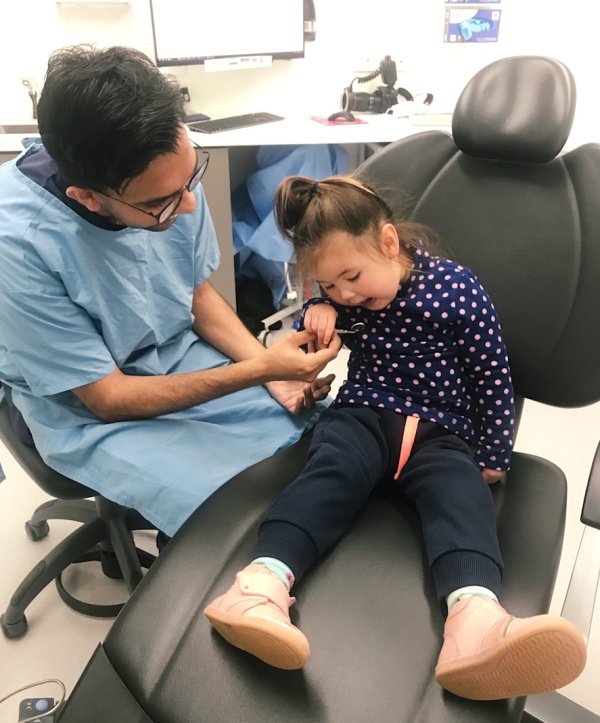
Jason also cared for patients at the faculty’s clinical facilities and theatre suites and provided on-call dental services for emergency patients after-hours at Dunedin Hospital, building close bonds with some of his young patients, especially those with special needs.
"The dream would be that we have the next generation of children growing up without fillings in their mouths."International education builds skills and confidence
After his graduation in December, Jason returned to FNU School of Dentistry with additional skills and new-found confidence. “I think that gaining a formal specialist qualification has given me a voice to continue to advocate for children’s oral health through dental education.”
He wants to establish preventative oral health programmes in schools and help improve the curriculum being taught to dental students in the region, integrating recent innovations and research evidence.
It’s something he has been thinking about for many years. “Hopefully now we’ll get this done.”
“I’ve expanded my knowledge, upskilled, and I think I have become more confident as an academic, and as a person. I’ve got my international education and training to thank for that.”
Manaaki scholar gives back to the community
Jason is certainly fulfilling the brief of the Manaaki Scholarship to give back to his community. He is maintaining his clinical hours, teaching the next generation of dental students, volunteering his services at an NGO-run paediatric cardiac care hospital, and mentoring students wanting follow in his footsteps by studying overseas.
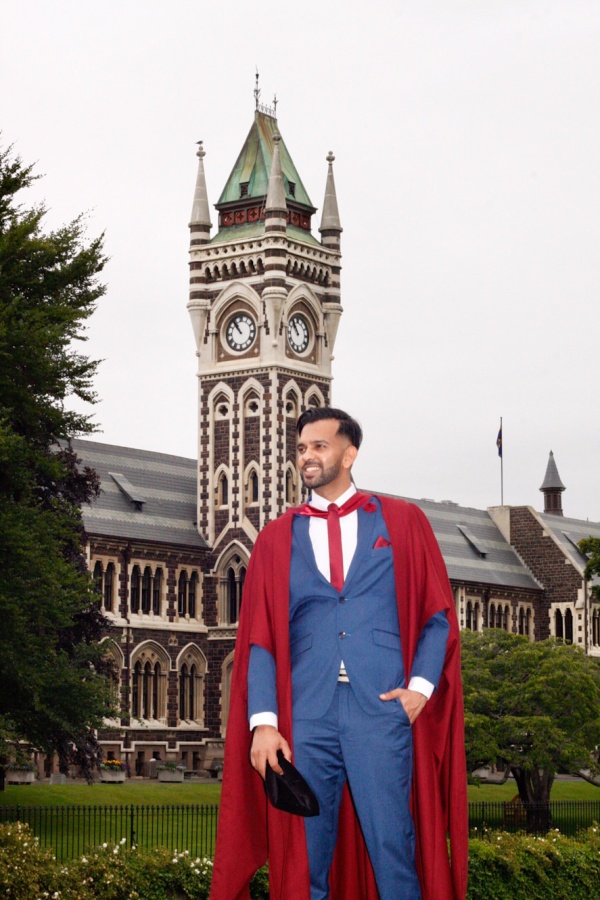
“International education is very important to Fiji as a developing country,” he says. “I thought it would be valuable to be able to guide students who would benefit from international scholarships in meeting their professional goals, while building capacity in the region.”
At heart, though, he is an academic and he hopes that in the coming years he can raise the research profile of the Pacific region and build a solid database which will help to secure the funding for much-needed oral healthcare programmes.
“My message is that there is no general health without oral health. It’s not going to be easy, but we need to start somewhere to get a voice for children and for the profession.”
-
Make the most of international student success stories
Richard Kyle, ENZ’s Industry Development Manager, said these stories are valuable assets for schools and should not be overlooked for marketing campaigns.
“Proof points are truly valuable assets for schools, and personalised ones such as student success stories are gold when working with agents and families who are considering study destinations,” he said.
“These success stories promote your school as well as the quality of New Zealand’s education in general, including the qualifications on offer such as NCEA.”
Here are just a few examples of international students succeeding in New Zealand:
Craighead Diocesan School, Timaru: Thirada (Yaya) Channawichote from Thailand is a talented artist and graphic designer and was awarded a New Zealand Scholarship in Design and Visual Communication. She received endorsements all through her NCEA studies, and was recently awarded scholarships to study Painting in the US at MICA University.
Pukekohe Christian School: Ren Monn Lee from Malaysia achieved a Top Achievement Award at the recent International Cambridge Awards Ceremony. Ren Monn received the top mark of any student in New Zealand in the June AS Geography exam, having completed the year-long course in just six months.
Marlborough Girls’ College: Minji Kim from South Korea gained Excellence at NCEA Level 2 and has been selected as the International Prefect for the school for 2017. Minji is now focussed on gaining excellence again in Year 13.
James Hargest College: Kawinwit Kittpalawattanapol was awarded a Scholarship in English and Tadsapon Wiwitawan was awarded a Scholarship in Photography (both students hail from Thailand).
Cambridge High School: International student Charles Zha was awarded in Mathematics with Calculus and received the highest number of NCEA Level 2 excellence credits in Year 12 at the school.
Congratulations to all students for their achievements, and we look forward to hearing many more success stories in 2017.
-
New Zealand ready to lead students to a more sustainable future
Research commissioned by Education New Zealand in May found that 79 percent of participants were interested in studying sustainability and climate change. And the 2019 QS Environmental Concerns Survey of 3700 prospective international students from around the world found that more than 75 percent would be more likely to choose a degree if the content helped them learn about reducing their environmental impact.
New Zealand is often viewed as a progressive nation delivering new solutions to problems while at the same time valuing people, place, and planet. Our world-class education system prides itself on preparing graduates with the practical skills and innovative thinking sought by future employers. Those skills must also now empower them to address issues of global consequence.
Tertiary education providers boost sustainability education options
New Zealand tertiary education providers are playing an increasingly important role in shaping this enthusiastic generation of learners, with many institutions incorporating a sustainability focus into their research and in many of the courses they offer.
Waikato University has gone one step further, announcing it will offer the world’s first Bachelor of Climate Change degree from next year. The three-year course will take a multi-disciplinary approach combining science, economic, social, and political systems, plus mātauranga Māori (Māori knowledge and wisdom).
“We all agreed that science alone can’t come up with all the solutions,” says Dean of Science Professor Margaret Barbour, one of the key players in the development of the programme. “We need people who can think across knowledge systems.” She is enthusiastic about the contribution international students will make, working alongside domestic students.
“International students will broaden our perspectives. They will bring new ideas from their home country and that can only be positive because climate change is a global issue,” she says. “The whole world needs to work together on this. We can’t be constrained by national boundaries.”
“Very soon New Zealand, and the world, will have these graduates who will have a thorough understanding of climate change and the impacts on environment and people, and they’ll be able to think critically and holistically,” says Prof Barbour. “They will have expertise in a particular area related to climate change, but they’ll also have the ability to engage with cultural competency outside their area of expertise.” Whether it’s about protecting our land or our oceans, Aotearoa New Zealand is making its mark. While there is still much work to be done, learners are looking our way for both leadership and collaboration.
Students choose New Zealand for sustainability studies
German PhD student Alexandra Lischka has travelled the world for her research in marine biology but says she chose New Zealand for her doctorate studies because it offered her the opportunity to work with internationally respected marine scientists across three universities.
“There are so many problems facing our marine environment, and I want to help solve them. The old ways of thinking aren’t working when it comes to solving some of the biggest problems facing our oceans. I know I need to forge another path if I want to make a difference.”
Heinrich Blass came to New Zealand from Germany to learn more about sustainable and ecological building practices. He chose to spend two semesters last year taking Building Science courses at Victoria University. “I was able to learn a broad approach to sustainable concepts from design to building technology and engineering systems to green building certification,” he says. “This gave me a deep insight as well as extensive expertise in sustainable building.”
International education experience takes New Zealand thinking to the world
In 2019 and 2020, Auckland University topped 850 institutions from 89 countries in the Times Higher Education Impact Rankings which assessed universities against the 17 United Nations’ Sustainable Development Goals across research, outreach, and stewardship.
Vice-Chancellor Professor Dawn Freshwater says the ease of access to oceans and land provides a “natural emphasis” for environmental research. This, combined with the value placed on kaitiakitanga (guardianship) and mātauranga Māori helps to shape “a unique and distinctive approach to sustainability in this country”.
For students who seek a brighter future with a lighter footprint, an international education experience in New Zealand will take our thinking to the world, open pathways to collaborate on global causes, and help make the world a better place.
Mō tātou te taiao ko te atawhai, mō tātou te taiao ko te oranga.
It is for us to care for and look after the environment to ensure its wellbeing; in doing so we ensure our own wellbeing and that of future generations.
-
New AgentLab platform launched to support education agents
Launched in early August, the new platform features a wide range of relevant information and updates to support education agents and consultants promoting study with Aotearoa New Zealand. This includes a calendar of agent-focused events and webinars, resources, and latest news and updates from across the Aotearoa New Zealand education landscape.
In 2022, Education New Zealand Manapou ki te Ao (ENZ) reviewed its agent engagement programme to ensure its offering for education agents is best placed to support the international education sector’s recovery.
ENZ commissioned Edified to research and evaluate its broad agent engagement programme as well as the ENZ Recognised Agency programme. Refreshing the AgentLab platform to offer agents a wider range of information about Aotearoa New Zealand education was among the recommendations of the Edified report.
ENZ’s Director – Sector Services, Laura Simpson, said the AgentLab platform’s refresh was guided by a need to better support all education agents, knowing the crucial role they play.
“We are developing the AgentLab platform with more tools and resources. We will continue to grow the platform to best serve all agents in their work to support students wanting to study with Aotearoa New Zealand. This helps us ensure that agents have access to accurate information, so they are best placed to drive international student recruitment and support the sector’s post-pandemic recovery.
“This is important work given our goal to grow onshore international student numbers. Rebuilding the sector to a thriving, resilient one is a major focus for Aotearoa New Zealand. We know that the relationship between education providers and agents is the primary one. So our job, set out clearly in Focus Area One of the International Education Strategy, is to make sure we support high-quality education agents in recruiting students to Aotearoa New Zealand and supporting the sector’s recovery,” Laura said.
The new AgentLab platform is hosted at the same address as the old site at agentlab.enz.govt.nz. It is easily accessed through the single sign-on, MaiENZ portal through which ENZ offers all its digital services to Aotearoa New Zealand’s international education sector. Existing AgentLab users will be able to seamlessly access the new site with their current MaiENZ logins.
The discontinuation of the ENZ Recognised Agencies (ENZRA) programme that was announced to the sector and education agents in July was also an outcome of the agent engagement review. All education agents – including former ENZRA agents – will be able to access the same level of information and resources via the AgentLab platform. The discontinuation of the ENZRA programme will not affect this.
-
Helping education agents understand the NCEA qualification and the pathways it opens to higher study
Education New Zealand and the New Zealand Qualifications Authority (NZQA) collaborated to organise a webinar for education agents in December on the National Certificates of Educational Achievement (NCEA), New Zealand’s school-leaver qualification.
The webinar was well received, with 241 attendees, and featured a robust question and answer session at the end.
The session helped education agents – and by extension the international students they support – in better understanding how NCEA works, the changes introduced to the qualification in recent years, and how learners can access higher education in New Zealand and internationally after achieving the NCEA qualification.
NZQA Deputy Chief Executive - Assessment, Jann Marshall, said the webinar was a valuable opportunity to build understanding of how the NCEA qualification works.
“It is important for everyone working with international secondary learners to have some understanding of how NCEA works, and the opportunities it creates for learners wanting to continue their study in New Zealand or internationally.
“It was great that we could engage with education agents on the topic and answer questions.”
NCEA is a well-recognised qualification in many countries. New Zealand is also a signatory to UNESCO qualifications recognition conventions (for example, Lisbon, Tokyo and Global Conventions), which support learners with NCEA to work or study internationally.
About NCEA
NCEA is offered at three levels – Level 1 is usually attempted by students in Year 11 of schooling, Level 2 at Year 12, and Level 3 at Year 13 (the final year of New Zealand secondary school). NCEA Level 2 is generally the minimum qualification needed for some jobs and tertiary education programmes, while Level 3, with the University Entrance award, is the minimum standard for entrance into a New Zealand university.
NCEA is standards-based, meaning each learner needs to show they have skills and knowledge at a specified level (a “standard”). Each standard a learner achieves gains them credits, and credits build toward an NCEA qualification.
Learners are also required to meet minimum requirements for literacy and numeracy. There are multiple opportunities in each school year for learners to attempt specific literacy and numeracy assessments, and there is also a list of other standards that can be used towards these requirements.
A recording of the webinar is available to view here on the Resources section of AgentLab
NCEA resources for education agents, students and parents
If you have any questions about NCEA, contact internationalunit@nzqa.govt.nz.
-
iStudent Complaints update
The iStudent Complaints scheme was set up by the Government to resolve contractual and financial disputes between international students and their education providers. It replaced the International Education Appeal Authority (IEAA).
All 16 complaints to date have involved Private Training Establishments (PTEs) with the majority referring to providers that are declining course fee refunds after the students withdrew from their study courses. Four cases have been settled, while another two were adjudicated in favour of the education provider. The remaining cases are still going through the resolution process.
iStudent Scheme Director, Derek Pullen, said the small number could indicate there is little cause for dispute or many students are not yet aware of the scheme.
He noted that the scheme has highlighted gaps in providers’ internal complaints processes.
“Under the Education (Pastoral Care of International Students) Code of Practice 2016, providers must ensure they have an effective internal process for addressing grievances, and that international students are informed about the process,” explained Pullen.
“Providers must also make students aware of the iStudent Complaints scheme and other relevant authorities if the student can't access the internal process or is dissatisfied with the outcome.
“Yet many of the providers we’ve dealt with don't have a documented complaints process. We urge all providers to ensure they have a clearly documented, up-to-date and easily accessible complaints process.”
For more information see www.istudent.org.nz.
-
NZ set to host Brazilian ‘Ganhando o Mundo’ programme scholars in 2025
Brazil is now the 6th largest source of international high school students for New Zealand, moving up from 11th place in 2023 (1). Contributing to this rise in popularity has been the strengthening of educational ties between education partners in Brazil and Education New Zealand Manapou ki te Ao (ENZ).
The ‘Ganhando o Mundo’ programme from Paraná, recently announced new high school student scholarship winners for 2025. Five countries have been chosen to host the students, with New Zealand being announced as one of the five. Approximately 200 scholarship winners are expected to spend two terms in New Zealand schools next year.
‘Ganhando o Mundo’ is an international education programme created by the state of Paraná which allows thousands of students from public high schools to study abroad for six months with all expenses subsidised. The goal is to provide academic training in foreign institutions, as well as cultural and pedagogical experiences that can later be shared in state schools in Paraná.
The announcement was made in Curitiba during a series of engagements that took place in October between a New Zealand delegation and Paraná state institutions, international education agencies and government authorities.

ENZ’s Bruna de Natale meets with ‘Ganhando o Mundo’ programme coordinators at the Paraná State Department of Education, Lucimar Gusmão and Marlon de Campos Mateus in October.
This was followed by a launch event hosted by the Paraná state government on 25 November in which the New Zealand Ambassador to Brazil, Richard Prendergast, attended alongside ENZ’s market development manager for Brazil, Bruna de Natale, state government officials, and hundreds of excited scholarship winners.
Ambassador Prendergast said that it was incredibly gratifying to participate in the Ganhando o Mundo programme launch event.,
New Zealand Ambassador to Brazil, Richard Prendergast, with Ganhando o Mundo scholarship recipients who will be heading to New Zealand in 2025.
“The two hundred students who will be going to New Zealand next year – and the 350 others who went in the two previous editions, in fact, all the Brazilians who studied in New Zealand, our alumni - are ‘informal ambassadors’ of New Zealand in Brazil,” said Ambassador Prendergast.
“They know and understand both countries and tend to work to expand our collaboration, to build bridges. People-to-people relationships are fundamental in our bilateral relationship, he added.”

Following the launch event, the Ambassador and Bruna de Natale, met with the Paraná state Secretary of Science, Technology and Higher Education, Aldo Bona, and the Secretary of Education Roni Miranda. They are pictured here with the Secretary of Education Roni Miranda.
Following the launch event, the Ambassador and Bruna de Natale, met with the Paraná state Secretary of Science, Technology and Higher Education, Aldo Bona, and the Secretary of Education Roni Miranda. They are pictured here with the Secretary of Education Roni Miranda.
ENZ’s Bruna de Natale said that this announcement is testament to the strong educational ties that are continually growing between New Zealand and not just the state of Paraná, but across the rest of Brazil too.
“A similar study abroad programme has also just been announced by the state government of São Paulo. ‘Prontos Pro Mundo’ (Ready for the World) will send approximately 100 Brazilian students to New Zealand high schools during term 1 next year,” said Bruna.
“We look forward to welcoming all of these Brazilian students to high schools and their local communities across the country in 2025 and building on this momentum to host more students in the future,” added Bruna.
1. Source: Ministry of Education interim international student enrolment data (January to August 2024).
-
Attracting PhD students to New Zealand
The PhD page highlights the initiatives that have given New Zealand an international marketing advantage in attracting PhD students from around the world.
The page promotes the five key benefits of studying for a PhD here. International PhD students:
- pay the same fees as domestic students
- can enrol their children as domestic students in our state schools
- can work full-time
- are able to apply for a 12-month post-study work visa after graduating
- entitle their partners to apply for an open work visa.
Students can check out the page to find out how our PhD programmes are structured, discover the career benefits of studying for a PhD in New Zealand, read case studies from current international students and learn how to apply – there are links to the PhD areas of each university’s website.
Vietnamese student Tan Duc Do, for instance, decided to study undertake a PhD in Mathematics at the University of Auckland because of the inspiring teaching of his supervisor.
“Most of the lecturers here are working mathematicians, so they can give insight and inspiration into the subject,” says Tan.
For Jeffery Garae, a student from Vanuatu, the major attraction of studying Cyber Security in New Zealand was that international PhD students pay the same fees as local students.
“I was looking at doing a Masters here and when I read about the PhD fees I thought, ‘Whoa – that’s an even better advantage,’” says Jeffery.
The new PhD page also shines a spotlight on the academic and research performance of New Zealand universities, and on the wide range of subjects available for doctoral research.
-
New Zealand to be Country of Honour at the China Annual Conference and Expo for International Education (CACIE) 2025
ENZ Chief Executive Amanda Malu was recently in Beijing attending the China Annual Conference and Expo for International Education (CACIE). There, as part of the announcement, Amanda gave a keynote speech at the CACIE Night gala dinner and highlighted the broad and important education links between New Zealand and China. New Zealand was previously Country of Honour at CACIE in 2015.
CACIE is the largest annual international education event for businesses and students in China. Over 20,000 visitors attended the expo, with an estimated 5,000 people in the audience at the opening plenary.
There are ample opportunities to showcase New Zealand at 2025 CACIE and leverage our COH status to raise awareness of New Zealand through a strong in-person presence, New Zealand-focused events, cultural performances and media engagements.
The ENZ team will work through peak bodies on feedback and input from the sector on the New Zealand presence and events at CACIE.
In the meantime, keep an eye on the CACIE website where the 2025 dates and conference theme will be announced soon, or reach out to your ENZ Business Development Manager if you have any questions or ideas to share.
Highlights from New Zealand’s presence at this year’s conference

Amanda met with LIU Limen, President of the China Education Association for International Exchange (CEAIE). The association is the host and organiser of the conference.

ENZ partnered with Tourism New Zealand to deliver the New Zealand Study Tours: Engaging in Quality Education and Success Pathways roundtable session which was opened with remarks by H.E. Grahame Morton, New Zealand Ambassador to People’s Republic of China. It was well attended; it became standing room only in the seminar room.


The New Zealand pavilion comprised of twelve New Zealand institutions. All eight universities, Te Pūkenga New Zealand Institute of Skills and Technology, ACG schools, Pacific International Hotel Management School, and New Zealand Tertiary College joined ENZ on the pavilion.
-
New travel rules for NZ coming soon

From 1 October, some international visitors and transit passengers must have an NZeTA (New Zealand Electronic Travel Authority) before travelling to New Zealand.
The NZeTA is a new border security measure. It is not a visa and does not guarantee entry to New Zealand.
From 1 October 2019, travellers must have authority to travel to New Zealand. This means they must hold one of the following:
- An NZeTA (or an NZeTA exemption)
- A visa
- Citizenship of New Zealand or Australia.
What does this mean for international students?
People who are planning to come to New Zealand to complete a short-term course will need to apply for an NZeTA if they are coming from a visa waiver country. Friends and family planning to visit students in New Zealand will also need one, as well as education agents visiting on business.
International students who require a visa to study will not need an NZeTA.
Travel agents, student agents and schools can assist international students with applying for the NZeTA by downloading the NZeTA mobile app or visiting the Immigration New Zealand website.
There is a small fee attached: NZD$9 for mobile app requests and NZD$12 for website requests.
The only official way to request an NZeTA is through Immigration New Zealand. Travellers should be advised not to request an NZeTA through any unauthorised third party.
Visit the Immigration New Zealand website here for more information.
See a factsheet on the NZeTA here.