Search
Showing 10 of 1931 results for how to register international groups
-
Letter from the CE: Celebrating our success
Following our terrific success at the New Zealand Direct Marketing Awards, we have now had some international award successes.
Our Director of Student Acquisition, Euan Howden, has won a Marketo Revvie Award for Fearless Marketerfor leading ENZ’s database marketing transformation, and our Communications team has won a prestigious Gold Quill Award for ENZ’s efforts to build a greater understanding of international education in New Zealand.
We’re in good company – being internationally benchmarked alongside global heavyweights.
But this work has not happened in isolation. We owe it in large part to our collaboration with many representatives from across New Zealand’s international education industry. These awards are also a result of your much-valued ongoing support and assistance.
We had a clear purpose behind our approach: to provide the best support we could to New Zealand's education sector. Importantly, this work is well-aligned with the goals of our International Education Strategy and is a great reflection of our commitment to achieving sustainable growth, delivering an excellent student experience and fostering global citizens.
We want to continue to deliver value to the sector, and always welcome your feedback. I encourage education providers and regional partners to attend ENZ’s ongoing industry engagement events and workshops. It’s a fantastic opportunity to connect with our talented team, pick their brains and find out how we can help you in your efforts, from recruitment through to advocacy.
I hope you’ll join me in congratulating our teams who led this work.
On behalf of ENZ, we look forward to continuing to work together to make New Zealand a special study destination for students from all around the world.
Grant McPherson
ENZ Chief Executive

-
Successful Brazil media famil
Media familiarisation trips are a great way for journalists from our key markets to develop a better understanding of New Zealand’s education system, possible study options, and the experiences of international students.
The journalists received a warm welcome from education providers in Wellington, Canterbury, Hawke's Bay and Auckland – thank you very much to everyone involved. Special thanks also to our regional education partners, especially Brook Pannell (Wellington), Bree Loverich (Canterbury), Steph Kennard (Hawke’s Bay) and Nick Arnott (Auckland).

Sylvia Santos, Maths Tutor at Ara, brought the journalists home-baked Pão de Queijo (Brazilian Cheese Bread)
There were around 3,000 Brazilian students in New Zealand in 2015, and on this trip the journalists met Brazilian students and staff everywhere they went – which was a great way to build relationships and showcase the opportunities for students here.
The famil is a long-term investment in promoting international education – but two very positive articles have already been published by Camila on Exame.com, the online content and news portal of Exame Magazine, which is the largest and most influential business and economy publication in Brazil:
Esta é a cidade da Nova Zelândia mais promissora para engenheiros (This is the most promising city for engineers)
A Nova Zelândia quer atrair mais profissionais de tecnologia (New Zealand wants to attract more technology professionals)

Lyn Garrett, Senior Lecturer and Major Coordinator for Industrial Design at Massey Wellington with Camila and Luiza in the workshop

The new Engineering Core at University of Canterbury displayed a special welcome sign for the group

Julia Kowalski, international student from Brazil, and Charlotte Taurima-Thomas, Head of Māori Students, showing the journalists how to hongi during a powhiri at Taradale High School.

Camila, Luiza, Steph Kennard and Tales prepare for a brief wine tasting at EIT

Luiza chats with Brazilian students Susana do Nascimento and Rene Souza, hosted by ATEED
-
Funding recipients announced
Projects include the development of science, maths and literacy resources; marketing in Germany, the United States and the Middle East; and a visit to New Zealand by bloggers from Colombia and Japan.
“Education publishers and ed-tech providers feature in the list of IEGF recipients which is a positive sign for businesses engaged in offshore delivery,” said Business Development Manager, Adele Bryant.
“There is a lot of potential for growth in this sector and we are excited to support New Zealand businesses to take their innovation to the world.”
The IEGF is designed to help New Zealand’s education providers achieve significant growth by making the most of international education opportunities.
Grants from the IEGF contestable fund aim to boost innovation in international education, including the development of new markets and new products to meet the needs of international students. Education providers and businesses can apply for matched funding up to $50,000.
Read Tertiary Education, Skills and Employment Minister Steven Joyce’s media release: http://beehive.govt.nz/release/funding-round-targets-ed-tech-expansion
Applications for the next round of International Education Growth Fund will open in March 2015.
-
Update from Immigration New Zealand
Immigration New Zealand is introducing a new Short Term Graduate Work Visa and extending Post Study Work Visa eligibility to better align graduate pathways with New Zealand’s skills needs.
These changes will support growth in international education, while ensuring graduates are well placed to move into work that meets New Zealand’s skills needs.
The changes include a new Short Term Graduate Work Visa and an extension of Post Study Work Visa eligibility to Graduate Diplomas at NZQCF level 7. The graduate must also hold a bachelor’s degree (completed in New Zealand or overseas).
These changes aim to attract and retain international graduates with valuable skills, while maintaining education quality and protecting New Zealand’s international reputation as a great place to live and work.
New Short Term Graduate Work Visa
Eligible international graduates who completed study in New Zealand will be able to apply for the new Short Term Graduate Work Visa from late 2026.
This visa provides up to six months of open work rights, allowing time to look for work and, where appropriate, transition to an Accredited Employer Work Visa.
Post Study Work Visa eligibility extending
From late 2026, eligibility for a Post Study Work Visa will be extended to graduates who:
- have completed a Graduate Diploma at NZQCF level 7
- studied fulltime in New Zealand for the full duration of the qualification
- have been enrolled in that qualification for the full duration (cross crediting or recognition of prior learning is not eligible)
- hold a bachelor's degree, completed in New Zealand or overseas (with no time limit on when it was awarded).
For more information and eligibility criteria for these visas, visit this link.
-
Around the world in five
IRELAND
Irish gov’t creates group to enhance student wellbeing
Ireland’s government has announced the creation of a new group, chaired by the Union of Students in Ireland, to examine how student wellbeing and engagement can be enhanced at the country’s higher education institutions.
GLOBAL
Why ethical internationalisation is no longer a choice
By catering mostly to rich kids from rich families in the developing world, we surely have to admit that international education in developed countries serves to reinforce the economic inequality and social stratification in students’ home societies.
NEW ZEALAND
Returning student happy with coffee and company
Hannah Mello (29) was the first Otago PhD student to return to complete their studies in New Zealand, under a Government scheme to allow up to 250 overseas PhD students to return the country.
AUSTRALASIA
Spotlight on Australia and New Zealand
ICEF Monitor featured a country spotlight on New Zealand (including the 1,000 cohort announcement and the global pathways initiative) to their e-subscriber base. Recent surveys among agents and students gave high marks – and top safety ratings – to Australia and New Zealand in the wake of the success that both countries have achieved in limiting the spread of the coronavirus.
UNITED STATES
US: first Biden policies will “restore” international student confidence
US education organisations have welcomed Joseph Biden as the 46th president of the US, whose administration shows “encouraging signs” towards a more favourable climate for international education, science, and engagement with the world.
-
ENZ staffing changes in Washington, D.C
On Friday 27 September Amy Rutherford, our Regional Director – Americas, the Middle East, and Europe and Counsellor (Education), will be finishing after eleven and a half years at ENZ.
Amy started at ENZ in 2013 as an International Market Manager for China. She has been in Washington, D.C. since 2018, having been in Los Angeles prior to that as ENZ’s Director of Education, North America. Prior to working for ENZ, Amy studied in the United States as an undergraduate student and worked for the University of Otago in the North American and European markets, as well as the New Zealand Resident Director for a US study abroad provider, the Institute for Study Abroad (IFSA).
“As a colleague of Amy’s in the International team, I’ve greatly appreciated Amy’s knowledge and expertise and I know she has built of wide network of trusted colleagues across New Zealand’s international education sector,” Acting General Manager Ben Burrowes said.
Ben added, “on behalf of ENZ, it is my privilege to congratulate Amy on an outstanding tenure at our organisation and we wish her well for the next step in her professional career”.

ENZ’s Regional Director - Americas, Middle East and Europe, Amy Rutherford (centre) will be finishing with ENZ on Friday 27 September. Associate Director of Engagement – North America, Natalie Lulia (left), will be acting in the role from Monday 30 November.
We are delighted that Natalie Lulia, currently Associate Director of Engagement – North America, will step into the role of Acting Regional Director - Americas, Middle East and Europe on Monday 30 September.
"Natalie has been a fantastic addition to ENZ and steps into the role at a particularly important time as we implement our 2024 – 2027 business strategy,” Mr Burrowes said.
Natalie first joined ENZ in October 2023. Prior to ENZ, she was Director – Māori for the Centres of Asia-Pacific Excellence (CAPE) and Strategic Advisor, International Indigenous Development at Te Whare Wānanga o Waikato - University of Waikato. There, she led a team passionate about Māori business capability, Global Citizenship Education and raising awareness to establish meaningful relationships in the Asia-Pacific, particularly with indigenous communities.
-
Victoria and ACG welcome international students to new pathway programme
The study pathway allows students to enrol in courses at Victoria at different times of the year, offering a range of options to suit students’ academic backgrounds and levels of English.
The programme kicked off last week in Wellington’s CBD near Victoria’s Pipitea campus – allowing the future Victoria students to engage with university services including libraries, health services, recreation centre and learning support systems.
The first intake welcomes some 50 students from Myanmar, China, Taiwan, Indonesia, Japan, Singapore, Nepal and Brazil.
Victoria’s Provost, Professor Wendy Larner said ACG is a highly regarded provider of pre-degree programmes, and Victoria is excited by the potential of the programme.
“International students bring variety and new perspectives to the university environment as well as the greater Wellington community,” she said.
“Approximately 20-30 percent of international students stay in New Zealand at the end of their studies, contributing significantly to the economy, while those who return home often maintain links to New Zealand, acting as influential ambassadors for our country.”
Bryce Pedersen, ACG’s Deputy Principal for the Victoria University programme, said ACG is pleased with the number for the first intake.
“It demonstrates international students’ demand for academic pathway programmes in Wellington,” he said.
Three more student intakes are scheduled in 2017.
-
Education links with China
Lisa Futschek, General Manager, International, at Education New Zealand Manapou ki te Ao (ENZ) says the Joint Working Group has become an important mechanism for supporting educational cooperation and exchange with China.
“It’s a valuable opportunity for government agencies and education sector representatives from both countries to exchange ideas and information and build relationships.”.
This is the second time the Joint Working Group has been held virtually. Senior officials and subject matter experts from both New Zealand and China’s education and government sectors came together to discuss topics of mutual interest including higher education, early childhood education, vocational education and applied learning, and quality assurance.
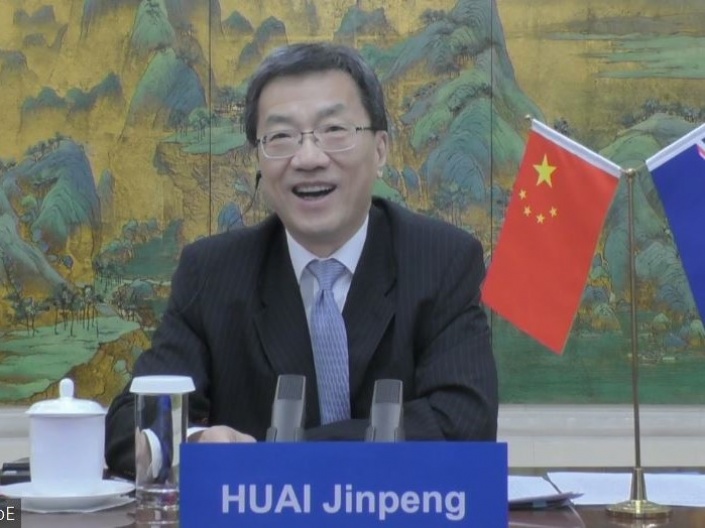
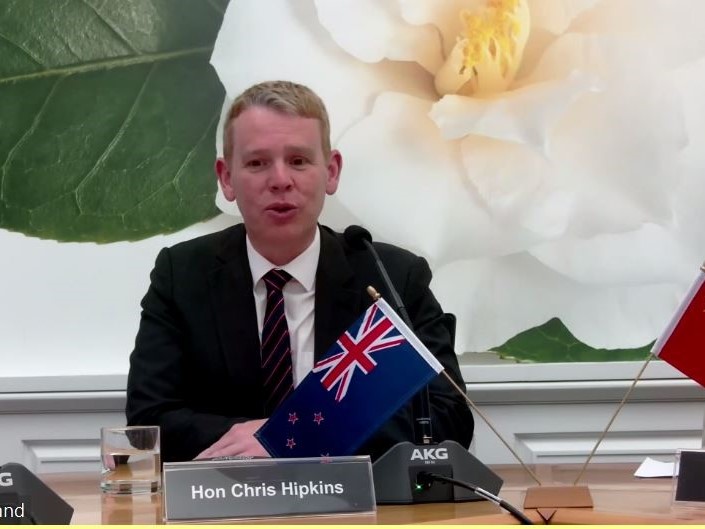
Jinpeng Huai, Minister of Education, People’s Republic of China and Hon Chris Hipkins, Minister of Education, New Zealand exchanged remarks at the Opening of the 10th Joint Working Group
The meeting saw the renewal of the Addendum to the New Zealand – China Arrangement on Cooperation in Education and Training, which covers a range of joint projects including the New Zealand-China Tripartite Partnership Programme. Note: the 2023 New Zealand-China Tripartite Fund is currently open for proposals from New Zealand university representatives.
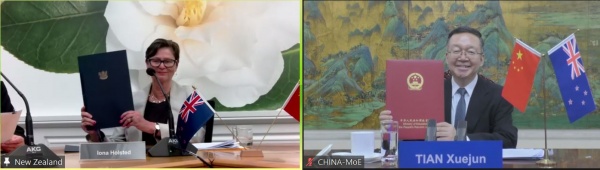
Secretary for Education and Chief Executive, Ministry of Education of New Zealand, Iona Holsted and Vice Minister, Ministry of Education of People’s Republic of China, Xuejun Tian, renewed the Addendum to the New Zealand – China Arrangement on Cooperation in Education and Training.
The meeting also provided an opportunity for New Zealand representatives to provide updates on collaboration with China in the areas of Vocational Education, Higher Education, and Quality Assurance.
David Christiansen, ITP Transition Lead, Te Pūkenga, shared the newly-launched International Strategy and the development of international collaboration and opportunities internationally and in particular with China.
“We wish to renew and strengthen our existing offshore collaborations and create new collaborations. New Zealand has many areas of strength, across a range of industries, where we believe we can offer value and strength to Chinese Industry,” Mr Christiansen said.
There are currently 41 degree or diploma joint programmes across more than 14 subjects from engineering and fashion to viticulture and winemaking, and agriculture. These partnerships cover 20-plus provinces and numerous cities throughout China.
The fifth New Zealand China Higher Education Forum, co-hosted by Universities New Zealand and China Education Association for International Exchange was held virtually on 10 November 2022 and was a discussion topic for the JWG during the Higher Education discussion. Chris Whelan, Chief Executive of Universities New Zealand, was present at the fourth New Zealand-China Higher Education Forum held in Beijing in 2015. He told participants that, back then, “the focus was on how to deepen collaboration between our institutions, how to grow mutual student mobility, and how to ensure high-quality education offerings.” It is evident the New Zealand-China education relationship in the higher education sector has developed over the years to envelop broader current topics such as “green and sustainable development of higher education,” building on the foundation established through years of cooperation.
The final discussion topic, Quality Assurance, saw Alex Bidois from New Zealand Qualifications Authority (NZQA) provide an update on the progress of the working group on the Recognition of Distance Learning Qualifications between NZQA and the China Service Centre for Scholarly Exchange. The working group was established at the ninth Joint Working Group and NZQA has been working with its partner agency to lay a foundation to build towards mutual recognition of distance learning qualifications.
-
Enrolments on the rise
“These are exciting times for our international education industry – a 12 percent increase in enrolments means just over 10,000 more students from all around the globe have come to New Zealand for a world-class education,” says John Goulter, Acting Chief Executive, Education New Zealand.
“International education is vital to strengthening New Zealand’s economic and social links with the world. Every student takes home a quality qualification and an unforgettable experience, raising the profile of New Zealand in communities in all corners of the world.”
International education brings in $2.85 billion a year which makes it the country’s fifth most valuable export industry.
The International Education Snapshot Report: January to August 2014 is available here.
-
Wanted: Good news stories
With ENZ teams in key locations around the world, we understand the local media and work with relevant media outlets to get New Zealand stories published, broadcast and onto computer screens.
And we’ve had some good success – last year ENZ’s integrated PR and marketing activity in India won the Public Affairs Asia Gold Standard Award for Country Promotion.
While we monitor New Zealand media for stories to highlight abroad, we are always looking for innovative and interesting story ideas that showcase high quality education.
Are you launching a new course, celebrating unique student success or releasing new research that would be of interest to international media? Or is your regional group planning a visit offshore? With early notice, we can help to tell your region’s education story to the media.
Have you got students or experts travelling in-market who are great representatives of the strengths of a New Zealand education? Give us the details and we’ll try and link them up with local media.
Do you have alumni stories of the connections created between countries and people in the years following graduation? We’d love shine a light on them.
Email us at media@enz.govt.nz if you have a great story to share.
Take a look at the kind of stories we have worked to profile in China:
-
Student success stories with relevance to China: Chinanews.com reported on a team of Auckland University students, including one Chinese national, which competed in an international robotics competition.
-
China-related education events held in New Zealand: People.com reported on the University of Auckland’s seminar session promoting study opportunities in Qingdao. Xinhuanet.com highlighted Victoria University of Wellington’s Confucius Institute sunrise ceremony to celebrate the 10th anniversary of the establishment of the global network of Confucius Institutes. China Daily reported on a Chinese Week which promoted Chinese language and culture through television, libraries and apps.
-
Institutional developments of relevance to China: Waikato University launched a scholarship scheme for international students from Asia, including China. Coverage was secured in a range of media, including Sohu.com. The article highlighted the $1 million Excellence Scholarships for nearly 200 students and noted Waikato’s strengths in education, economics, law and information technology.
-
Scientists and researchers visiting China who can be interviewed about New Zealand’s strengths in their fields: Sir Peter Gluckman, the Prime Minister’s Chief Science Advisor, visited China in September. Media interviews arranged by ENZ resulted in coverage highlighting New Zealand’s education strengths in science and research, including in agriculture, medicine and nanotechnology.
-
Regional cluster visits: The Shanghai Morning Post reported on Study Dunedin and Education Southland’s joint education fair in Shanghai. ENZ also helped secure coverage for Dunedin education institutions during the Dunedin Mayoral Delegation to Shanghai, resulting in a total of 74 media reports across TV, online and print media – equating to NZ$564,677 in PR value.
-
Collaboration with Chinese counterparts: Chengdu Evening Post reported on ties being developed by New Zealand schools with Chinese counterparts. The Daily Evening News reported on the 2014 Sino-New Zealand Modern Vocational Education Development Forum held in Tianjin.
-
Visiting scholars and institution leaders: Beijing Business Today interviewed Caroline Daley, Dean of Graduate Studies at the University of Auckland, highlighting the university’s job seeker support for international students.
-