Search
Showing 10 of 2262 results for read 2024 FRM Exam Part I - Quantitative Analysis online free
-
International student enrolments continue upward surge
“Enrolments are steadily rising to pre-pandemic levels, with 2024 enrolments (83,425) now at 72 percent of 2019 totals (115,705).
“New Zealand reaps a broad range of economic, social and cultural benefits from having international students in our midst. International education boosts our economy, creates business opportunities, fuels innovation, and delivers essential cross-cultural skills for a more connected world.
“This sustained growth highlights the international education sector’s progress towards achieving the Government’s Going for Growth Plan goal of doubling the export revenue from international education by 2034.
“Universities and government-funded private training establishments (PTEs) are close to matching 2019 enrolment numbers. We are seeing enrolments grow across universities, schools, Te Pūkenga/NZIST, government-funded PTEs, and English language schools subsectors. In 2024, the strongest year-on-year growth was seen at government-funded PTEs (+59%) along with primary (+53%) and intermediate (+32%) schools.
“Universities saw 33,485 total enrolments, schools had 18,350 enrolments, while Te Pūkenga/NZIST and government-funded PTEs each had 10,270 and 10,185 enrolments, respectively.
“More international students are now enrolled for master’s study programmes in New Zealand. Between 2023 and 2024, there has been a 68% increase in master’s enrolments, with 14,695 international students in 2024, up from 8,740 in 2023. This is an 85% increase compared to 2019 when we had 7,945 enrolments for master’s study.
“The overall rise in enrolments at the national level is underscored by a diversity of regions leading strong growth from 2023, including Waikato (+50%), Hawke’s Bay (+44%), West Coast (+185%) and Gisborne (+156%). The Waikato region is notable in that it has seen significant growth across multiple subsectors: universities, Te Pūkenga/NZIST, government-funded PTEs and schools.
“China and India remain the top two source markets for international student enrolments with 34% and 14% enrolments respectively, followed by Japan (9%), South Korea (4%), Thailand (3%), United States of America (3%), Germany (3%), the Philippines (3%) and Sri Lanka (3%),” Malu says.
More information on enrolment numbers can be found here.

Note: All numbers are current as at 1 April 2025. Full numbers have been rounded to the nearest five. One individual may enrol more than once.
Government-funded PTEs are PTEs that receive government student funding for learners who are defined as domestic students under the Education and Training Act 2020 (note that PhD and exchange students are defined as domestic students under the Act).
For further information:
Sai Raje | Senior Communications Advisor, Education New Zealand
+64 21 479 649
About Education New Zealand Manapou ki te Ao (ENZ)
Education New Zealand Manapou ki te Ao (ENZ) is the government agency dedicated to helping New Zealand realise the social, cultural, and economic benefits of international education. Our role is to promote New Zealand as a high-quality education destination offering excellent education and student experiences.
With approximately 82 staff in 14 locations around the world, ENZ works closely with New Zealand’s diverse education sector which includes schools, English language providers, Wānanga, private training establishments, New Zealand Institute of Technology/Te Pūkenga, and universities. Internationally, we work with a range of education stakeholders, including government agencies and education providers to identify and encourage sustainable growth opportunities for New Zealand’s education sector.
-
From the CE: Growth on the go
Kia ora koutou,
This month, the Government announced the International Education Going for Growth Plan – this is an exciting, positive step forward for international education as we chase a big growth target to double the value of New Zealand international education by 2034.
It’s an ambitious target. However, with the strong and steady growth we have seen in international student numbers in 2024, the Growth Plan will help us boost that growth track to make New Zealand the destination of choice for international students.
At its heart, the Growth Plan is about striking the right balance between achieving sustainable growth for the sector, while providing our international students with an excellent experience in New Zealand and enabling our communities to understand the broad benefits that international education brings.
I am pleased with the work that is underway to progress the plan’s implementation. Over July and early August, ENZ is holding a series of market focused, cross-sector sessions to share market plans for 2025-26. The sessions will provide sector representatives with a topline update on market plans, growth targets, the approach for subsectors, and market activity.
I believe these sessions will prove useful in clarifying how ENZ intends to engage with the sector to activate and deliver the plan.
And with the way our latest 2024 enrolment numbers have continued their upward surge, we are on the right track to advance towards our growth goals. Our enrolments are now at 72 percent of pre-pandemic levels seen in 2019, with most sub-sectors contributing to this growth.
We are also seeing interesting trends in these enrolment numbers across subsectors, level of study and source markets and we look forward to sharing these insights with the sector. So make sure you sign up for ENZ’s webinar on 2024 international student enrolments to learn more about emerging trends with students, and how you can use this information in your organisational planning.
Last week, we said farewell to two of ENZ’s long-serving Board members, Linda Sissons and Lyn Provost, who completed their terms, and welcomed new members Sara Brownlie and Prabha Ravi with a mihi whakatau.
Finally, this week, I will be attending The PIE Live Asia Pacific event, where I will be speaking at a ‘New Zealand: Country update and trends’ panel session alongside University of Canterbury Vice-Chancellor Cheryl de la Rey and Deputy Editor of The PIE News UK, Kimberley Martin.
The session will discuss how New Zealand is poised for sustainable growth in international education and will cover the New Zealand International Education Going for Growth Plan and its ambitious target to double the value of international education by 2034.
For those of you attending the event, I look forward to seeing you there.
Waiho i te toipoto, kaua i te toiroa
Let there be closeness, not distance
Ngā mihi nui,
Amanda Malu
Chief Executive
-
International students report high satisfaction as New Zealand sees steady recovery in enrolments
This year, 87 percent of students gave a positive rating of their overall experience, maintaining the upward trend seen in 2024 (86%). The proportion of students who rated their experience as ‘excellent’ rose to 43 percent, a two percent increase from the previous year.
These strong satisfaction results come as international student enrolments in New Zealand continue to grow. Between January and April 2025, 63,610 international students were enrolled with New Zealand education providers, a 16% increase compared to the same period in 2024 (54,690), and a 49% increase on 2023 (42,700).
All education subsectors saw growth, with Private Training Establishments (PTEs) showing the strongest increase at +41% compared to 2024.
China and India remained the top source markets, followed by Japan, South Korea, Sri Lanka, USA, Nepal, the Philippines, Thailand, and Germany. Notably, Sri Lanka rose to fifth place (from ninth), and Nepal to seventh (from eleventh), reflecting shifting dynamics in student mobility.
What students value most
Students were most positive about the people and connections they made in New Zealand (92%), the quality of their education (90%), their arrival and orientation experience (89%), the ease of making study arrangements (87%), and their overall living experience (87%).
International students’ experiences of making study arrangements have notably improved, with 80 percent of students rating their experience with the visa application process positively (up from 78% in 2024), and 74% positively rating the time taken to get their visa (up from 64%).
Education New Zealand and Immigration New Zealand will continue to collaborate on provision of information to students to ensure an enhanced student experience.
The survey also shows an increasing proportion of international students regard New Zealand as offering good value for money, with positive perceptions rising from 65% to 76%.
Education New Zealand's Chief Executive, Amanda Malu, said the results reflect New Zealand’s ability to provide a high-quality education within an environment that fosters meaningful connections and relationships.
“This is encouraging news for New Zealand. The fact that students continue to rate their experience here as excellent is a credit to our education providers and speaks to the warmth of the welcome our communities extend to international students,” she said.
“We’re seeing a steady and encouraging recovery in international education. It’s not a boom, but a sign that our collective efforts are making a difference. What matters most is that students are not just coming to New Zealand, they’re having a high-quality experience that supports wellbeing and a sense of belonging.”
“Under the International Education Going for Growth Plan, we’re focused on thoughtful, sustainable growth. These insights help us ensure that our progress is not just about numbers, but about delivering long-term value to students, communities, and the wider economy.”
Education New Zealand’s Director Insights and Performance, Marie Clark, said the survey continues to be a key piece of work for ENZ and a useful tool for the international education sector.
“It remains the only national survey focused on international student experience in all subsectors in New Zealand. With several years of data now collected, we’re building a meaningful picture of student experience over time,” she said.
“The ability to break down insights by variables like country, sector, and gender makes the dataset especially useful. We expect the report and Tableau dashboards will be very practical resources for anyone working in the sector,” Clark added.
For further information:
- Visit Tableau Public to access the data sets: International Student Experience Survey 2025 | Tableau Public
- Sai Raje | Senior Communications Advisor, Education New Zealand Manapou ki te Ao
sai.raje@enz.govt.nz | +64 21 479 649
Notes to Editors:
About the New Zealand International Student Experience Survey 2025
The survey aims to better understand the overall experience of international students enrolled with New Zealand education providers, as well as recent graduates. It also identifies areas for improvement to enhance the student journey.
Fieldwork was conducted from 28 April to 19 May 2025 with 5,420 respondents across all education subsectors and stages of study.
About Education New Zealand Manapou ki te Ao
Education New Zealand Manapou ki te Ao (ENZ) is the government agency dedicated to helping New Zealand realise the social, cultural, and economic benefits of international education. Our role is to promote New Zealand as a high-quality education destination offering excellent education and student experiences.
With approximately 85 staff in 13 locations around the world, ENZ works closely with New Zealand’s diverse education sector which includes schools, English language providers, Private Training Establishments, Institutes of Technology and Polytechnics (New Zealand Institute of Skills and Technology Te Pūkenga), and universities.
Internationally, we work with a range of education stakeholders, including government agencies and education providers to identify and encourage sustainable growth opportunities for New Zealand’s education sector.
-
Education opportunities feature in PM’s visit to India
The delegation included representatives from the University of Waikato, University of Auckland, University of Canterbury, Media Design School, Ara Institute of Canterbury, Wellington Institute of Technology and Whitireia Community Polytechnic as well as Wellington film company Park Road Post Production.
Education New Zealand Chief Executive, Grant McPherson, said the high quality of these providers made establishing partnerships very appealing to elite Indian institutions.
“New Zealand provides important, desirable and often specialist education opportunities for Indian students, and the Government of India wants to see more active engagement in this area.”
McPherson added that the agreements support a more focused approach to education promotion in India – the attraction of high quality Indian students to New Zealand. This was endorsed by Prime Minister Modi, who said he wants to see more Indian students studying in New Zealand.
“With in-market briefings confirming that the profile of Indian students applying to study New Zealand has changed significantly over the last 12 months, New Zealand is well placed to build progressively on these changes.
“The range of relationships and agreements announced support New Zealand’s repositioning in India, and this is what New Zealand needs for a successful and sustainable India student market.”

Ara Institute and Kumaraguru College of Technology’s agreement signing
Jenn Bestwick, Chair of Ara Institute of Canterbury (who made an agreement with India’s Kumaraguru College of Technology during the visit), said the institute was pleased with the education opportunities presented for both New Zealand and India.
“The mission offered up insights from India's educational leaders on how, and where, they see value in partnering with New Zealand educational institutions.
“We have an opportunity for Ara and other New Zealand institutions to ‘Think New’ in terms of how we approach this market for the mutual benefit of institutions and students in both New Zealand and India.”
Key delegate announcements included:
- A University of Otago agreement with the Bombay Stock Exchange Institute regarding collaboration in finance and related programmes, and the facilitation of student mobility
- A Media Design School partnership with the prestigious Pearl Academy, which will bring MDS’ expertise and programmes to the Indian market
- An Ara Institute of Canterbury and Kumaraguru College of Technology’s (KCT) agreement to bring more than 10 KCT students to Ara’s Christchurch campus to participate in an Engineering Systems Analysis programme
- ‘My New Zealand Future’ animation showcase winners will intern at Wellington Institute of Technology, Media Design School and Massey University, profiling New Zealand’s animation and design expertise
- A strategic education partnership agreement between Universities New Zealand and the Maharashtra State Government, and development of an engagement strategy to strengthen relationships with India and attract more university students to New Zealand (read more here).

The Bombay Stock Exchange Institute and University of Otago agreement signing
-
We want to hear from you!
This survey is important to gauge ENZ’s performance and importantly, let us know how we’re doing, what services you value and what you’d like to see more of.
In last year’s survey, you highlighted several themes that we’ve been working to address. We heard that you need more advance notice of our global events to allow you to plan better. In response, we published our event calendar in November, covering events to be held in the last half of 2024.
You also said you wanted to see closer alignment between government agencies and the sector. As a result, we have worked with peak bodies and key government agencies to refresh the purpose of the quarterly Peak Body Forum and built a closer working relationship with the Alliance of Peak Bodies.
Other important themes included improving our engagement and integrating views of the sector in our planning, while providing more clarity on our range of services and support. We have provided more webinars ranging from showcasing the regions to the global agent network, through to leveraging research, data and analysis to provide you with targeted market insights.
Peak body and sector representatives were involved early in our business planning, including market prioritisation, to ensure that we walk in step with the sector.
While we may not always get it right, you can rest assured that we are listening and continually striving to deliver the products and services that you value and help you to grow.
A survey link will be sent out in early May. We look forward to hearing your thoughts to enable us to improve our support to the New Zealand international education sector. Thank you in advance for your participation.
-
Reflections from English Teachers in South Korea
In January 2024, six New Zealand teachers were selected to spend part of their summer season teaching English in South Korea as part of the New Zealand Korea FTA Partnership English Language Training Programme.
This programme is supported by Education New Zealand Manapou ki te Ao (ENZ) who assists with the teacher recruitment process. This was one of the key KNZFTA programmes recently discussed during the South Korea Government delegation visit to New Zealand late last year.

The group of six New Zealand teachers selected to teach English in South Korea in January. From left, Jane Bassett, Food Technology Teacher from Havelock North Intermediate School, Sharon Powell, English Teacher from Long Bay College in Auckland, Kara Shortland, Acting Team Leader (Bilingual) from Whangārei Intermediate School Te Tai Tokerau. Glenn Cheyne, Head of Learning Area Social Sciences from Nayland College in Nelson, Gordon Sim, Social Science teacher from Hillcrest High School in Hamilton, and Dan Greer, Social Studies/Drama teacher from Logan Park High School in Dunedin.
Kay Lee, ENZ Senior Market Development Manager – Korea, said that it was an absolute pleasure to see New Zealand teachers continue to travel to South Korea to teach English during their summer break.
“There are so many positive outcomes from the running of this cross-cultural programme for both the Korean students and the New Zealand teachers participating.
"On one hand, the students get the opportunity to hone their English language skills while experiencing the New Zealand teaching style, learning more about New Zealand, including its culture and education system. Meanwhile, while teaching English and serving as ambassadors of a New Zealand education, the teachers can immerse themselves in Korean life for a few weeks, seeing new sights, trying new food and making new friends.

Gordon, Jane, and Dan, sampling Korean cuisine at the end of the teaching day.
"Our Korean government partner for educational programmes, EPIS, has acknowledged ENZ for its significant contribution to the programme’s success through effective teacher recruitment. These positive outcomes are testament to the strength of our NZ-Korea Government-to-Government partnership,” added Kay.
Upon their return to New Zealand, two of the teachers who are trained in teaching English as a Second Language (ESL), shared their experiences with ENZ. Read on to hear about the reflections from their two weeks abroad....
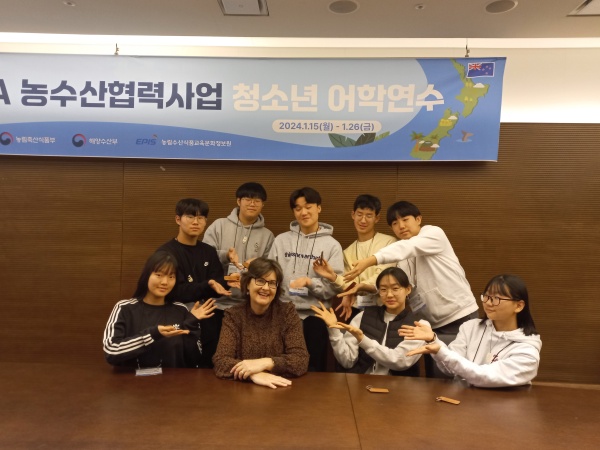
Jane Bassett (지안 (Jian) from Havelock North Intermediate School with her students.
Jane Bassett is a Food Technology teacher at Havelock North Intermediate School and said that the experience of exchanging cultures whilst teaching in an overseas classroom environment was an absolute privilege.
“Our students were aged 14 – 17 years old and came from all over South Korea with family backgrounds in the Agricultural and Fisheries industries. Each student had been awarded a scholarship from the Korean government to attend the two-week intensive English programme organised by the Hyundai Research Institute.
"The Institute went above and beyond in their efforts to ensure an incredible experience for both the students and our group of teachers.
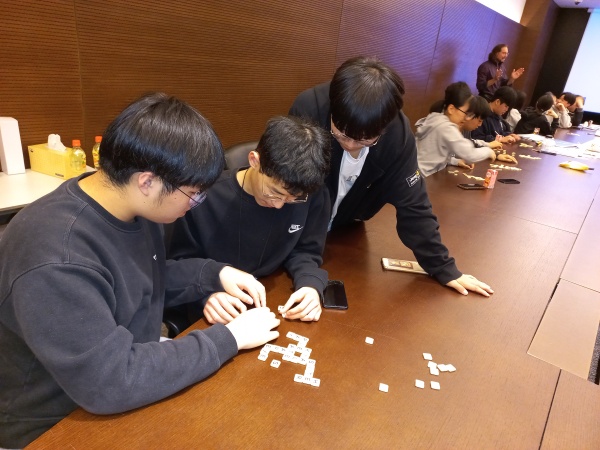
“The teaching programme included a wide range of modules and as well as English grammar, we covered lessons on New Zealand culture, history, tourism, agriculture, sports, famous New Zealanders, and school life. My class was also exposed to the New Zealand Technology curriculum and was tasked with developing a new snack product. As part of the project, I introduced them to several New Zealand snacks and Kiwi classics such as WeetBix, Marmite and Watties Baked Beans, to varying degrees of enjoyment!”
Students were encouraged to speak in English throughout the day via fun-games, readings, conversations and plays so that the teachers could fine-tune their English to help them become more fluent with more natural English phrasing.
"We also explained aspects of Māori culture and the significance of pepeha (way of introduction). The students, who were from agricultural and fisheries backgrounds, were quickly able to identify their own awa (river) and maunga (mountain), showing their own personal connection to their land.”
Jane said that a personal highlight was being able to spend her birthday in Seoul learning about Korean cuisine through a cooking class on kimchi making and tea ceremony in a traditional house. She admitted that this was an appropriate birthday experience for a New Zealand Food Technology teacher!
She summed up the experience by saying that the group of teachers gained a greater understanding of cultural diversity and appreciation of the challenges learning English poses for new learners, learnings which they will take home with them.
“We really hope that our students will remember their experience as fondly as we will and that they will look to study and visit New Zealand in the future.”

Drama and Social Studies teacher, Dan Greer, of Logan Park High School with three of his students.
Dan Greer, is a drama and social studies secondary school teacher from Logan Park School in Dunedin. He joined Jane as one of the six teachers selected to travel to South Korea, his second experience as an English language teacher in South Korea, having taught in Ulsan 12 years ago.
“I had such an amazing time participating in the Hyundai Research Institute’s programme. It was great to have other quality teachers on this experience with me and we were able to work together, mixing up the style of teaching and activities. I had the more beginner level class, and as a drama teacher we added games to my traditional English teaching. The students really enjoyed it, and it gave them more confidence to give things a go”.
Dan reflected on the fact that there was one practice of teaching English in Korea that he had often thought was a little unfair, that being the naming of Korean students with English names.
“As an English teacher in Korea, you are often asked to name Korean students with English names. Sometimes this is because they want them, sometimes it is because they ’have’ to, and for many it is because westerners find Korean names hard to pronounce. I have named nine children in my life, one being my daughter and the other eight have been my Korean students”.
Dan used this practice as a topic of discussion in class one day and shared his opinion that it had not always felt right to him as he felt that if Korean students were taking the time to learn the English language, that teachers should make an effort in return.
He then asked his students whether English teachers should have Korean names. This prompted them to ask many questions about Dan including who he is when he is not “Dan the teacher”, his whakapapa, and the meaning of his name in English.
Dan said “You can imagine my surprise when my students were all waiting for me when I arrived the next day. One wonderful student then stood up and using perfect English gifted me a Korean name. I was no longer just “Dan the Teacher,” but also now 도혁 (Dohyuk), which meant I was ‘leading them to a bright path’.
“This was such a humbling experience that I will cherish forever. For me, this is what makes teaching and life so special,” added 도혁 (Dan).
If the Korean organisers decide to run the NZ-Korea FTA Partnership English Language Training Programme in the future, ENZ will continue to share the applications with NZ school teachers through the Asia NZ Foundation and Schools International Education Business Association (SIEBA).
-
New brand identity of the Manaaki New Zealand Scholarship Programme launching next week
Education providers and suppliers who are part of the programme will be able to start using the new brand’s design assets from The ENZ BrandLab from 23 October.
The Manaaki New Zealand Scholarship website will also prominently showcase the refreshed brand from next week.

The new Manaaki logo consists of three parts. The tohu is on the left, the Manaaki wordmark is placed in the middle, with the Aotearoa New Zealand fernmark on the right-hand side.
New Zealand Ministry of Foreign Affairs and Trade - Manatū Aorere (MFAT) Scholarships Unit Manager, Alexandra Grace, said it was important for the new brand identity to reflect the transformational nature of Manaaki scholarships to build people’s skills and support them to contribute positively to their communities and countries.
“The new brand is an exciting step forward to unify the Manaaki New Zealand Scholarship Programme’s visual identity to appeal to prospective scholars who are most aligned with our Programme’s values,” Alexandra said.

He parirau is one of the key patterns of the new brand. It is inspired by the takarangi (spiral) and parirau (feathers).
The brand identity development and working group involved kaimahi Māori from MFAT, Education New Zealand Manapou ki te Ao and Indigenous Design Innovation Aotearoa (IDIA) who gifted a specially crafted whakatauākī* for the Manaaki New Zealand Scholarship Programme.
The whakatauākī ‘He Parirau Toro Ao’ translates to ‘stretch your wings to the world’.
ENZ’s Senior Advisor, Rautaki Māori, Craig Rofe, said the whakatauākī is a profound taonga and gift to the Manaaki New Zealand Scholarship Programme.
“It beautifully anchors the programme in āhua Māori (Māori ways of being).”
“We are also pleased with how the whole process of creating the new brand has been steeped in āhua Māori. The way everyone involved in the project used whakawhanaungatanga – the specific act of getting to know one another before we started our work – and wānanga, coming together to meet, discuss and deliberate, every step of the way, made all the difference,” Craig said.


Digital banners showing the application of the brand and whakatauākī.
The new brand was developed following research and interviews with 29 scholars and alumni, and a survey covering 627 people.
The research surfaced three compelling principles for the Manaaki New Zealand Scholarship Programme – manaakitanga, empowering people, communities and countries, and fostering enduring connections.
ENZ’s Manaaki Scholarships Manager, Nancy Linton, said the concept of manaakitanga is integral to the Manaaki New Zealand Scholarships Programme – not only by name, but also in the way that scholars are supported during their entire journey, from application and study to their return home.
“The manaaki we show our visitors by embracing them like part of our ‘whānau’ or family is visible in the way our educational providers extend that support to Manaaki scholars and alumni, who really value it as part of their study experience.
“I am pleased with the way we have incorporated this core element of the Programme, among others, into the new brand identity,” Nancy said.
A brand transition period is in place through 28 February 2025, to allow providers enough time to switch to new brand assets.
Visit The ENZ BrandLab to access new design assets for the Manaaki New Zealand Scholarship Programme after 24 October.
* Whakatauākī are proverbs where the person who said it first is known, as opposed to whakataukī, which are proverbs whose origin cannot be traced to a person.
-
NZIEC KI TUA commits to CANIE Accord
This will see the conference commit to taking urgent action to reduce greenhouse gas emissions and makes the conference part of a global network of international educators working toward that goal.
NZIEC KI TUA’s commitment to becoming a signatory to the CANIE Accord was announced at the closing plenary of NZIEC KI TUA 2023. Additionally, a piece of artwork created by the delegates during the two-day conference, demonstrating the sector’s commitment towards the United Nations Sustainable Development Goals, was presented to CANIE Oceania President Ainslie Moore and co-founder and a global board member of CANIE Dr Pii-Tuulia Nikula.
Signing the CANIE Accord means NZIEC KI TUA is committed to actions such as replacing printing and shipping marketing materials with digital marketing technologies, account for greenhouse gas emissions from attendees, and advocate for accelerated climate action within Signatory’s own organisation and with other stakeholders within their sphere of influence.
Learn more about New Zealand’s approach to sustainability and climate action in international education at NZIEC KI TUA 2024, register today: https://www.nziec.co.nz/registration
Check out the full programme here: https://www.nziec.co.nz/programme
You too, can become a signatory to the CANIE Accord, join the sector-wide initiative to commit to responsible stewardship of the planet and join the global network of international educators working toward that goal. It’s free to become a signatory, check this link.
-
ENZ expands annual agent co-investment initiative for 2020
Successful proposals have been selected, and co-investment activities are already underway in Latin America and Greater China. Activities include counsellor training, virtual campus tours and a new digital publication for prospective students.
In the coming months, the selection process will begin in the Malaysia, Indonesia, Viet Nam, Thailand and Philippines markets.
The selected education agencies will be running their co-investment activities between August and December, so that institutions are able to virtually attend activities or contribute information during what is usually the peak promotional season in-market.
The initiatives recognise that although students are not being recruited to begin study in New Zealand now, they are seeking information for study destination decisions which begin years before their international study experience commences.
ENZ’s agent co-investment initiatives promote a high quality student experience by supporting those agencies with proven high visa approval rates in our target markets, which is particularly important as students require transparent and reliable information on their study plans during COVID-19.
“These initiatives are a wonderful way to support ENZ recognised agencies (ENZRA), and the ENZ team is intending to continue offering them in various markets to keep the New Zealand story alive and nurture existing relationships,” says ENZ Manager Education Agents, Geneviève Rousseau Cung.
“They also supplement the global ENZ agent webinar updates being provided across all markets, and tailored ENZ workshops, seminars and training sessions for agents in priority markets.”
China
Education International Cooperation (EIC), one of the largest international education agencies in China, was one of the eight successful ENZRA agencies chosen by the selection panel as a partner in the Agent Co-Investment Initiative.
One of the deliverables is a press conference and promotional campaign for the 2020 Study in New Zealand Report that includes data from an EIC-conducted survey and an analysis of EIC’s internal application data.
The report is one of the first produced by a Chinese education agency and gives students and parents a clear guide to studying in New Zealand. EIC reported high praise from families and New Zealand institutions on the 2018 report, which is one of the motivations for continuing the research and press conference annually.
“I believe the data will provide some important information and thinking for ENZ and New Zealand institutions, and strengthen the in-depth understanding of the Chinese market,” EIC Director of Australia & New Zealand – Division of Student Recruitment, Celia Liu, says.
“To coincide with the release of this report, EIC will also invite New Zealand institutions to participate in promoting the virtual event on 12 September.”
Latin America
In Latin America, student interest in New Zealand has increased due to the excellent reputation gained since the beginning of the pandemic in March. In order to show our commitment to agents in-market, we’ve selected projects from 14 ENZRA agents:
- Five from Brazil (Australian Center, Information Planet, Up Study, Yazigi and YES)
- Three from Chile (Global student, Hain y Viaja Estudia)
- Six from Colombia (Babel Studies, Extudia, SEA, Student Connection and Viva en NZ)
The activities proposed range from the creation of a digital magazine for prospective students, online campaigns to virtual events, all of which began in July and will end in September. Some projects are also supported by a New Zealand institution, for example, YES Intercâmbio from Brazil is working with Massey University and Southern Institute of Technology (SIT), and Hain Chile working together with AIS and Western Springs High School.
At this time of uncertainty, other initiatives that are part of the ENZ Agent Co-Investment include contingency plans to account for the changing international education landscape. ENZ’s team in Latin America remains in close contact with our agency partners around any proposed changes to the submitted plans to allow flexibility and support while maintaining the integrity of the ENZ Agent Co-Investment Initiative.
“We are pleased to support and work with agents in these initiatives, which help to maintain the New Zealand education brand alive and relevant as we enter what is expected to be a hyper-competitive scenario in the next years,” ENZ Director of Education for Chile and Colombia, Javiera Visedo, says.
-
Online student visas save time
The Immigration New Zealand service allows students to apply for their student visa, pay application fees and upload documents online. The time savings are impressive – the very first completed online application was received at 10.41pm NZ time on 29 August from a PhD student in Italy. The application landed in the London branch 15 minutes later and received a successful decision roughly three hours after that.
Since launching Immigration ONLINE – Student, INZ has continued to develop its stability and usability and is seeking to shift more students from the manual to online application channel. While the ability to apply online is currently only available to individuals, the “Apply on Behalf” capability will be added from mid-2015, allowing agents and advisors to use the platform.
For more information, please see: http://www.immigration.govt.nz/migrant/stream/study/application/default.htm