Search
Showing 10 of 982 results for search for pheen4uuu from wiki 2025
- ENZRA Application Form 2019
-
From the CE: Manaakitanga in the time of coronavirus
New Zealand was the first country in the world to introduce the Code for the Pastoral Care of International Students. Regulated by NZQA, the code requires all signatories to ensure international students at their place of study are well-informed, safe and healthy.
New Zealand’s education providers have exceeded the expectations of this important responsibility in 2020. Everyone from teachers to international offices to homestay parents have done their bit to make sure our international students, so far away from home, were looked after during the COVID-19 lockdowns and beyond.
New Zealand has a well-deserved reputation for being a warm and welcoming destination. It is crucial that we continue this responsibility of care over the coming summer break when many students would have returned home, under normal circumstances.
To support this goal, ENZ has launched a new programme of activity: Tū Ngātahi, which calls for us to ‘stand together’. ENZ has created the programme to enable our international education community to express support for our international students.
The central imagery of Tū Ngātahi is the pounamu (greenstone) carved into a pikorua (twist). This design is a symbol of cultures joining in friendship and supporting one another.
You may have heard ENZ’s Paul Irwin, General Manager – Partnerships and Marketing, speaking with Radio New Zealand about Tū Ngātahi this week. The story also included perspectives from international students currently in New Zealand, who plan to make the most of their stay over summer.
We encourage New Zealand’s education providers, student associations and more to show their support for international students with the Tū Ngātahi resources (video, graphics, email footers and more), which you can find on the ENZ BrandLab.
Alongside Tū Ngātahi, ENZ is currently running the Summer in NZ campaign. Aimed at international students currently in New Zealand, this campaign will assist students who, given current border settings, must make tough decisions as the end of the academic year nears. You can explore this campaign on the new Summer in NZ NauMai NZ pages.
On Saturday, 31 October, the team will present the inaugural ‘Your Great Kiwi Summer’ virtual fair, where education providers and regional development agencies will share tips and information on how to make the most of the summer break. There is still time for students to register, so please encourage your students to sign up if they haven’t already.
Thank you again to everyone who has supported an international student this year. Our manaakitanga is what these students will remember in the years to come.
Ehara taku toa I te toa takitahi, engari he toa takitini
My strength is not that of a single warrior but that of many.
Ngā mihi,
Grant McPherson
Chief Executive
Education New Zealand Manapou ki te Ao
-
English New Zealand and Universities New Zealand sign MOU
The MOU was signed on 19 June between Universities New Zealand, the peak body representing all New Zealand universities, and English New Zealand, which represents 22 private and state-owned English language schools (all Category 1) in 12 destinations around New Zealand.
As part of the MOU, each of New Zealand’s eight universities will accept the Accredited Pathways Assessment ofan individual English New Zealand member as evidence of meeting their English language proficiency requirements.
The Accredited Pathways Assessment for English New Zealand members will be in addition to the quality assurance requirements that all member schools must meet, over and above NZQA requirements. Member schools with accredited assessments will show the Accredited Pathways Assessment quality mark in addition to the English New Zealand membership logo.
With approximately 20,000 students per year from over 75 countries studying at English New Zealand member schools, the memorandum will encourage a diverse range of students to consider a quality pathway to higher education in New Zealand, adding to the sector’s diversity and sustainability.
English New Zealand Chairman, Wayne Dyer, said English New Zealand and Universities New Zealand have been working together for some time to encourage and enable pathways to tertiary study in New Zealand.
“This agreement is a significant step forward and combines rigorous quality assurance with pragmatism for the benefit of individual students and for New Zealand’s international education sector as a whole,” Dyer said.
Universities New Zealand Chief Executive Chris Whelan agreed the university sector benefited enormously from these sorts of partnerships.
“But we enter them only when absolutely certain that they meet the rigorous quality standards expected of New Zealand university education and qualifications,” Whelan said.
“The fact that we have signed this MOU is a vote of confidence in the high quality of English New Zealand’s accredited providers.”
ENZ Chief Executive Grant McPherson said the agreement was a great example of the ongoing collaboration between the university and English language sectors.
“The MOU will go a long way to enabling the long-term growth of the international education sector.
“This is in perfect alignment with the New Zealand International Education Strategy, with its focus on the sector’s sustainable growth,” McPherson said.
-
Miriama Kamo returns to emcee NZIEC 2019
With such a steady pair of hands at the helm, ENZ is confident the 28th New Zealand International Education Conference and Expo will be another inspirational conference for everyone who attends.
Taking place at the SKYCITY Conference Centre, Auckland on Wednesday 7 and Thursday 8 August, the conference is shaping up to be another two days packed full of thought-provoking conversations.
“The NZIEC conference is always a calendar highlight,” says Miriama.
“It’s been a big year in education with a lot of challenges. So, I’m looking forward to another fascinating conference where the issues and opportunities for the sector will be debated, critiqued and celebrated. It’s always informative but also fun.”
After almost 17 years of gracing our screens, Miriama Kamo is one of New Zealand’s best-known faces. She is currently hosting TVNZ’s flagship current affairs programme Sunday, a role she has held since 2011. She also co-presents Māori current affairs show Marae.
Still not registered?
Places are filling up fast. Make sure you don’t miss out.
-
Around the world in five
GLOBAL
Four Worlds of Work: Preparing students for the global market
According to consulting firm PwC, students will need to prepare for four possible ‘worlds of work’ by 2030, including scenarios such as innovation outpaces regulation, big companies are king, and social responsibility trumps corporate agenda.
GERMANY
Germany’s foreign enrolment grew again in 2018
The number of international students in Germany has climbed once again, with 374,580 international students enrolled in German universities in 2018, up from 358,900 in 2017, according to an annual trends report from the German Academic Exchange Service.
UK
Chinese students’ applications to UK universities up by 30%
The numbers of Chinese students applying to UK universities exceed those from Northern Ireland for the first time, with UK higher education benefitting from tensions between US and China, according to experts.
GLOBAL
In the future, will acquiring relevant skills matter more than earning a degree?
There has been a lot of talk about the need for graduates to acquire certain ‘soft skills’ if they are to survive in a future fuelled by technologies such as automation and robotics.
INDIA
India allocates $86.1 million to create “world class institutions”
India’s finance minister Nirmala Sitharaman has proposed to allocate $86.1 million NZD to create “world-class institutions” in a bid to attract a greater number of international students. However, concerns have been raised over the “ambitious campaign”.
-
New Zealand Global Competence Certificate programme proves a hit
What is New Zealand’s Global Competence Certificate programme?
The customised cultural exchange programme, which started as a pilot partnership last year between New Zealand’s international education agency, Education New Zealand Manapou ki te Ao and AFS Intercultural Programs, Inc. has proved so successful it is now being extended and taken up by schools and tertiary institutions around the country, connecting them with students in Asia and Latin America.
The “Kiwi way” has much to offer the world, and international education has much to offer New Zealanders at a time the world needs people with cross-cultural competencies. The New Zealand Global Competence Certificate, delivered through Massey University, develops cultural self-awareness, emotional resilience, and build bridges across cultures. It also piques the interest of students offshore in coming to New Zealand in better times.
The programme delivers animated videos, quizzes, assignments, and weekly live facilitated dialogue sessions for learners to talk with each other online in real time and learn about life from perspectives other than their own.
What have students been saying about the NZGCC programme?
“Not only have I learned to become a better communicator, empathiser, and global citizen, but also how a group of like-minded individuals can come together to form something bigger,” says Jack Hittle, of Northland’s Springbank School.
“I found the programme life-changing,” says Vaagisha Kanwar, a Year 11 student at Indus International School in Bangalore, India, who connected with the Northland students. “We learned about conflict, empathy, inequality, different communication styles, how different people adapt to new situations, and about suspending judgement. I know that I’ll use the skills we’ve learned for the rest of my life, not just when I travel abroad but also in daily life.”
"You see the way a culture greets each other or the way they dress, but then there are things like relationships, gender roles, and health,” says Whanganui Girls College student Tilda Donson.
What have educators been saying about the NZGCC programme?
Whanganui Girls College Principal Sharon Steer is delighted with the NZGCC programme, which she says will help students build their understanding of global cultures, and other critical “soft” skills which will prepare them for life as they enter the workforce.
“An important part of our curriculum is developing strong communication skills and setting our students up for success in the workplace. The NZGCC programme will add another dimension to our lessons by teaching our students how to develop meaningful relationships with one another despite language and cultural differences.”
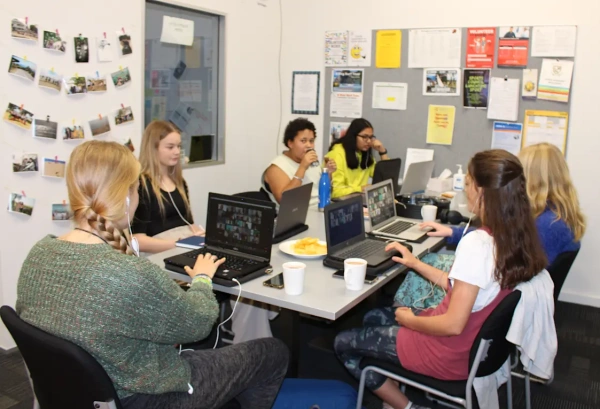
Educators say that with the borders closed, the programme now forms an important part of the reshaped international education experience.
“It is so important that our students don’t miss out on the enriching life skills that are gained when we interact and connect with people from around the globe,” says Whangarei Girls High School International Director Amelia Morrison, who has students working with peers in India.
"Global competence is mission-critical for our world," says AFS Intercultural Programs President and CEO Daniel Obst. “Educating more young people to become global citizens is crucial if we want to create a more just and peaceful world.”
The expansion of the GCC programme reflects the diversification of education in new virtual forms fit for a globally connected world, says Education New Zealand Chief Executive Grant McPherson.
“As well as helping to develop the global citizens of tomorrow, this programme demonstrates the reciprocal benefits of international education, giving our rangatahi a chance to learn with high school students from around the world, and giving their offshore peers a chance to learn ‘with’ New Zealand and our unique way of thinking.”
-
ENZ Chair optimistic for the future of international education sector
The New Zealand international education sector should be optimistic about its future.
This was the message the Chair of Education New Zealand Manapou ki te Ao (ENZ), Tracey Bridges, delivered to members of the sector attending the New Zealand International Education Conference Ki Tua in Christchurch (New Zealand) today.
The conference is the first in-person gathering of the sector since 2019 and attracted more than 590 guests and sector representatives.
Speaking at the opening plenary session of the conference, Ms Bridges said that just as the sector had much to celebrate in the shared endeavours and achievements of the past 30 years, there was also cause for optimism looking forward.
“I’m optimistic about the future of this sector, and the contribution it can make to all the people in Aotearoa (New Zealand) and beyond.”
Ms Bridges said this optimism was underpinned by the diversity and strength of the sector that spans schools, polytechnic institutions through Te Pūkenga, universities, private training establishments (PTEs), English language schools, Education products and services, and Wanaga.
Another key strength was the industry’s ability to adapt.
“In early 2020 our world changed forever, and in the three and a half years since, we have all had to – time and time again – prove our ability to adapt.
“I want to acknowledge the work that everyone has done in recent years, and to acknowledge the fact that you continue to adapt to meet these challenges.
“Your presence here today is testimony to your resilience and commitment to ongoing change. So I’m optimistic not because everything will now return to the old normal, but because I know that together we will find ways to forge a new approach that’s right for the time we are in: we will continue to seek our ‘pae tawhiti’(distant horizon)”.
Ms Bridges said ENZ had also refocused and confirmed its approach for the coming 12 months by concentrating on Focus Area One of the refreshed 2022 New Zealand International Education Strategy, “helping providers of international education build back their bases through inbound student mobility growth”.
While prioritising its resources and targeting its efforts, ENZ had not lost sight of the need to build long term resilience and stability, and had a number of initiatives in this area, consistent with Focus Area Two. This had involved hosting a visit earlier in August of Professor Martin Bean, and work through the COVID-19 Response and Recovery Fund (CRRF) to explore the diversification of products, services and modes of delivery.
ENZ was also looking forward to working alongside Ōtautahi, Christchurch to bring the ICEF Australia New Zealand Agent Conference to Christchurch in April next year.
Ms Bridges also acknowledged the importance of leveraging diplomatic engagement and Ministerial travel to enhance New Zealand’s reputation as a partner for international education.
“The value of these initiatives is shown in the response to recent promotional trips to India, the US and Canada. More recently, education was a significant part of the Prime Minister’s visit to China where its importance as part of our bilateral relationship was mentioned in almost every major engagement.”
This had continued with the conference welcoming the People’s Republic of China as the Country of Honour, with the Minister for Education, His Excellency, Huai Jinpeng joining the conference as a keynote speaker on Friday.
A full transcript of the speech can be found here.
For further information:
Justin Barnett | Director of Communications, Education New Zealand
+64 21 875 132
Notes to Editors:
About Education New Zealand (ENZ) https://www.enz.govt.nz/
Education New Zealand Manapou ki te Ao (ENZ) is the government agency responsible for taking New Zealand’s education experiences to the world. ENZ promotes a New Zealand education as one that teaches students to be critical thinkers, problem solvers and lifelong learners, which will help them succeed in their future careers and create a positive impact on the world.
With approximately 100 staff in 18 locations around the world, ENZ works closely with New Zealand’s diverse education sector including schools, English language providers, Private Training Establishments, Te Pūkenga (Institutes of Technology and Polytechnics), universities; and internationally with NZ Inc agencies, Government agencies and education providers to encourage sustainable growth and identify opportunities.
-
ENZ’s WeChat mini programme supports Chinese students
There are currently more than 12,000 Chinese international students studying in New Zealand, and over 2,000 studying in China with New Zealand providers. Together, these groups make up 36 percent of NZ’s overall international student population.
NauMai NZ was launched in May 2019. Since then, the digital platform has had more than 9,000 students sign up, and it continues to support our international students as a key source of timely information during the COVID-19 pandemic.
NauMai is a valuable tool for international students, but analysing usage over the past 12 months reveals most Chinese students are not engaging with the platform. These students instead prefer to interact within WeChat, a Chinese social media platform with over a billion daily users.
To better support our international Chinese students while they are in New Zealand, ENZ has launched an alternative “mini programme” within the WeChat environment.
ENZ Student Experience Advisor Faymie Li explains how it will make it easier for Chinese students to engage with NauMai’s content. “The NauMai NZ WeChat mini programme will better serve our Chinese student population in New Zealand for two simple reasons: it’s on a platform that they are more familiar with and frequently use, and it’s in their language."
As well as providing students with useful information, the mini programme will also provide a platform for students to engage with each other. Students will be able to share their New Zealand life and study experience and provide peer support to others.
ENZ is hosting our first mini programme livestream with the theme ‘how to spend your summer in New Zealand’ on 28 October.
Know students who use WeChat? They can sign up for our first livestream and start exploring the mini programme by searching ‘新西兰留学生活指南NauMai NZ’ or by scanning the QR code below.

-
Sustainable growth for schools
Industry experts shared their vision of sustainable school growth at NZIEC.
Why should students choose your school?
Dr Stephen Holmes, founder and Principal of The 5Rs Partnership, says the international school landscape is compelling for students.
He believes New Zealand schools will benefit from having clear, distinctive positioning.
“Find a cogent and compelling reason for your audiences to choose your school over others,” he says.
Stephen’s top tips include:
- Find your school’s intrinsic strengths rather than trying to be everything to everybody. “Don’t give me 50 reasons to choose you – give me three reasons to choose you.”
- Communicate substance – teaching, pedagogy, curriculum and staff.
- Back up your claims with evidence of the impact you have on students.
- Make sure staff are engaged with your messaging, so the rhetoric is backed up by the delivery.
- Focus on reputation and co-brands (affiliations, partnerships; who goes to your school).
- Word of mouth has more impact than traditional marketing. Parents, staff and former students are all important advocates.
How to promote internationalism
For John van der Zwan, Executive Director of SIEBA, internationalisation is a powerful driver for student recruitment and an essential element of future-focused education.
He says the aim of internationalisation is to help students become culturally competent and globally ready.
John believes internationalisation requires a commitment across all areas of the school, and should be embedded within teaching and learning.
The role of international staff in internationalisation, he says, is to:
- Support or coordinate cultural PLD (professional learning and development).
- Promote and lead cross-cultural activities.
- Write a paper for the board and school leaders.
- Be an advocate and make conversations happen.
-
Around the world in five
UNITED KINGDOM
UK government announces fast track visa plan for top researchers
New visa regulations designed to attract the world’s top scientific researchers will be announced later this year.
GLOBAL
Why more international students are attending Australian schools
The number of international students at Australia’s international schools is up 11 percent from 2016.
GLOBAL
Better than rankings: three more meaningful metrics for choosing a university
While university rankings play an influential role for any prospective student choosing a university, there are many other factors that contribute to a meaningful tertiary experience.
GLOBAL
The link between employment outcomes and recruiting
Employability is now a top priority among international students when planning for study abroad.
UNITED STATES
Eliminating achievement gaps in tertiary education
Taking a systems approach driven by data, Georgia State University (GSU) managed to eliminate achievement gaps based on ethnicity and income.