
Search
Showing 10 of 1236 results for Value-priced treatments https://simplemedrx.top
-
New global campaign invites students to discover what New Zealand can teach them
The ‘New Zealand Taught Me’ campaign was launched on 11 August and has started to roll out across key global markets, showcasing the unique value of a New Zealand education through the voices of its alumni.
Real stories with real impact
At the heart of the campaign is a 30-second hero video, backed by a suite of alumni stories that highlight the life lessons and experiences gained while studying in New Zealand.
Hero video
Alumni stories
These stories aim to connect emotionally with globally minded students and their families, showing that learning here goes far beyond the classroom.
Why now?
The campaign is a strategic move ahead of the full launch of a global brand platform for New Zealand international education.
It’s designed to deliver strong results in high-growth markets, replacing the previous ‘Learn New Every Day’ campaign in nine countries: China, India, Japan, South Korea, Sri Lanka, Thailand, the Philippines, the USA, and Vietnam.
A welcoming message
ENZ Brand Lead Nick Sinclair said the campaign is a major opportunity for us to present New Zealand as the living and breathing learning destination that is.
“We want to show students how in New Zealand knowledge comes from everywhere.”
“Given the shifting global climate that we are currently seeing with international education, it's a timely opportunity for New Zealand to strengthen its position as a welcoming and inclusive destination.
“The message to students is clear: we’re open, and you’re welcome,” Nick said.
A fresh direction
‘New Zealand Taught Me’ signals a shift toward a more emotionally resonant and globally competitive brand identity. It positions New Zealand as a vibrant, welcoming learning environment where knowledge comes from everywhere, not just the classroom.
Where to see it
The campaign has started to appear across paid digital media, the ENZ Study with New Zealand website, and all communications with prospective students.
ENZ encourages education agents and partners to use the market-specific materials in their promotions.
These assets are live on ENZ’s Brand Lab for you to make the most of:
- Translated hero videos
- Translated Alumni videos across education sectors
- Social media guidelines (coming soon)
- A sector engagement pack (coming soon)
Contact ENZ Brand Lead Nick Sinclair via Nick.Sinclair@enz.govt.nz if you have questions or ideas about leveraging the campaign assets. If you have a success story on how the campaign assets have supported your work, please also get in touch.
-
New resources for practitioners and international students from ISANA NZ
To achieve this work, ISANA NZ is delighted to be engaged in an International Student Wellbeing Strategy (ISWS) supported project with Studio C Design and Lift Education. Over the past few months, a series of resources has been developed to assist practitioners and promote a rich experience for international students in Aotearoa. These resources have been tailored to the needs of key sector stakeholders: international education practitioners and international students (primary, secondary and tertiary).
International education practitioners
Six micro-online learning modules have been developed to help international education staff provide the best possible support for their students. The modules build on the recently developed Capability Toolkit content that ISANA NZ produced with support from Education New Zealand Manapou ki te Ao in response to the impact of the prolonged border closure.
Micro-learning is an increasingly popular form of work-based learning, because it is delivered in more manageable chunks and enables learners to absorb and retain more information.
These interactive modules capture industry expertise and engage staff with six crucial topics:
- Intercultural tools for supporting international learner mental health
- Supporting the international learner transition
- Methods for reviewing and improving your international services and products
- Learning from critical incident case studies
- Effectively supporting international learners’ social connectedness
- Supporting international learner employability
To ISANA NZ’s knowledge, this is the first example of micro-learning for international education practitioners in Aotearoa, and it lays an important platform for sector-specific credentials development.
Primary and intermediate aged learners
An interactive activity sheet has been created for learners at primary/intermediate level to play with an adult. The game presents several activities for the student to participate in at home, in school, and in their local community. Learners can tick off each activity as they weave their way through the worksheet, and through their own community.
A series of tips for settling into New Zealand life can be found among the fun illustrations that cover the activity sheet. Both the primary learner resource and staff eLearning modules will be available on the ISANA NZ website at the end of this month.
Secondary school studentsFive documentary style videos highlight international students Alan (from Mexico) and Carren (from China) who currently attend Wellington High School. The videos follow their day-to-day lives as they navigate challenges such as understanding a new culture, settling in and coping with being far away from family back home.
Each of the videos will have subtitles in Mandarin, Hindi, Vietnamese, Korean, and Bahasa Malaysian.
Watch along as Alan and Carren get to know other students and people in their community:
YouTubeTertiary students
For tertiary students, three podcast episodes have been produced. The podcasts feature panel host Vaelyn, an international student graduate and business owner, as they engage with panelists:
- Ami from India, studying a Bachelor of Nursing at Universal College of Learning (UCOL) Te Pūkenga, Palmerston North
- Pulak from Bangladesh, studying a Masters in teaching English as a second language at the University of Auckland
- Melanie from Malaysia, studying on the Foundation Programme at Up Education
The students share stories, anecdotes, challenges and vulnerabilities while they kōrero about topics such as being part of local communities, coping with stress, dealing with racism, taking positive wellbeing steps, and making most of their time in Aotearoa.
Listen to the students kōrero about life in Aotearoa here: https://www.podbean.com/eas/pb-hh6zn-14464ea
Each video and podcast is accompanied by a downloadable PDF detailing tips and tricks for students. You can find all these materials under the Student Resources page on the ISANA NZ website.
-
Register now for ENZ’s East Asia/Japan/Korea market sentiment webinar series
For the past few months, Education New Zealand’s East Asia team has been conducting research to develop ‘Market Sentiment’ findings for each of the region’s seven focus markets.
The research has been developed through interviews and surveys with key in-market stakeholders such as agents, students/parents, local institutions and local government partners. We’ve also conducted desktop research and leveraged reports from external research agencies.
Based on the findings, ENZ has developed activities and identified opportunities in which we can now work collaboratively with industry and other government agencies to realise.
Some of the key insights have been distilled into individual one-page market updates which can be found on ENZ’s IntelliLab platform:
To deliver the full research insights, we will be hosting a series of webinars for our New Zealand industry colleagues (including Q&A sessions) on the following dates:
Tuesday, 28 July (3pm NZ time)
Vietnam/Philippines
Wednesday, 29 July (3pm NZ time)
Japan/Thailand/South Korea
Thursday, 30 July (3pm NZ time)
Indonesia/Malaysia
-
Around the world in five
NEW ZEALAND
While You Were Away: New Zealand’s Journey to a More Inclusive International Education Experience
This past year, issues of race and inequality have been thrust to the forefront of global consciousness amidst a pandemic that has made international travel – and education – more complex than ever. During this time, New Zealand has taken the chance to reflect on the role of international education in promoting equity, diversity, and inclusion.
GLOBAL
How will university campuses change post-pandemic?
In much the same way that the transition to work from home has caused corporations of all sizes to dig deep to understand the high value tasks that occur most successfully when teams gather in person, higher education may soon be shifting its campus model in response to the integration of virtual learning into its ongoing pedagogy.
GLOBAL
International student recruitment and online communications in the age of COVID
A round up of strategies and tips for adapting student communications for recruitment marketing during the pandemic.
AUSTRALIA
Australia launches International Education Strategy consultation
The Australian government is looking for input from students, educators and the higher education sector on a new strategy for international education in Australia.
CHINA
China to tighten grip on edtech industry and online learning
China’s Ministry of Education announced on March 31 that education departments should limit the times at which primary and secondary school students take part in online learning to ensure they are getting enough sleep.
-
Around the world in five
FINLAND
University World News: What makes international students want to stay on or go?
Three-quarters of bachelor degree graduates and two-thirds of masters and doctoral graduates live on in Finland for three or more years after their degree, according to new research.
NEW ZEALAND
Checkpoint: Education NZ chair details exemptions for foreign PhD students
Interview with Education New Zealand Chair Steve Maharey. "They can come from any country as long as they are involved in PhD study, or they are Masters students."
GLOBAL
University World News: Combating discrimination against international students
Our findings outline disturbing trends in discrimination and racism that must be dealt with urgently by universities in the immediate aftermath of COVID and in the longer term. While this list is certainly not exhaustive, we provide the following suggestions for ongoing social support for and inclusion of international students
UNITED STATES
The PIE News: “Perceived barriers” driving prospective students away from US
While the US higher education community has overcome many of the political and Covid-19 related challenges facing the international education sector, a great deal of “perceived” barriers remain for prospective students considering the US, which could be detrimental for recruitment efforts in the future.
JAPAN
Japan eases restrictions for international travellers, including students
Japan is opening its borders again to international students with visas for longer-term studies. The number of daily arrivals is limited for the time being with greater emphasis given to key sending markets in Asia.
-
Around the world in five
New Zealand
NZ public positive on overseas student benefits and return
The report was commissioned by Education New Zealand to gauge public opinion in the context of the Covid-19 pandemic, and was conducted by research company TRA, based on a survey of 560 people as well as qualitative co-creation sessions.
United States
US begins processing student visas for Chinese students
Visa processing for Chinese students would resume this month, with plans to handle 2,000 applications a day by mid-May.
Canada
International grad stream reaches 40,000 limit in one day
Canada’s new pathway to residency for international graduates has reached its 40,000 application limit, just over one day after going live.
Global
Survey confirms that vaccination rollouts are influencing student choice
New QS global research indicates that the introduction of COVID vaccines is strengthening prospective international students’ resolve to study abroad, and that many students now want to begin their studies sooner than they had planned because of vaccine availability.
Latin America
If you are from a university, join the virtual THE Latin America Universities Summit 2021 free of charge to examine how the higher education sector across the region can develop strategies to build capacity, adapt to digitisation, increase strategic impact and improve public appreciation of universities’ role in progressing society as we look towards a new era post-pandemic.
Hosted in partnership with the University of São Paulo, this online summit will bring together leaders from across the region and their institutional partners around the world to set the agenda for the future of higher education in Latin America.
-
How NauMai NZ helps us improve the international student experience
Background
NauMai NZ provides a digital home for international students who have chosen to study in New Zealand, and provide real-world information, support and expert resources to better enhance their student experience.
Since its launch in mid 2019, NauMai NZ has had over 220,000 users and 300,000 separate user sessions with an average bounce rate of 16 percent (very positive by industry standards). The NauMai NZ database has grown to over 8,700 students.
Our challenge this year has been to ensure NauMai NZ remains fit for purpose in the face of the extraordinary events of the COVID-19 pandemic.
The COVID-19 response
The COVID-19 crisis upended our personal and professional lives. International students, far from home had to grapple with a raft of new challenges.
In response, a dedicated NauMai NZ COVID-19 page was launched eight months ago. Written in plain English, it is regularly reviewed and pulls together government information directly relevant to international students in New Zealand.
To ensure reach to the large Chinese student cohort in the country, this page was also translated into simplified Chinese.
An associated Stay well, stay connected page was launched at the same time to support student wellbeing during lockdown and beyond. It provides context for likely emotional responses, provides proactive solutions and links to expert support resources. To date, these pages have been viewed over 60,000 times.
Throughout this challenging year, other content has continued to be developed and delivered, including:
- Dating, relationships and sex
- Sexual healthcare in New Zealand
- Managing your money (including information on gambling and where to find help)
- Help from your embassy or consulate
- Being LGBTQIA+ in New Zealand
Coming soon! Summer in NZ activities
New pages will support those international students remaining in New Zealand over the summer.
These pages will highlight a range of activity and opportunities, including:
- recreation activity across the country
- links to summer programmes that have been developed for international students, and
- information to support wellbeing and connection
On Saturday 31 October, ENZ will deliver a virtual fair (‘Your Great Kiwi Summer’) for students, providing tasters on a range of summer opportunities and signposting out to further information.
Subject experts, fellow international students and alumni from our Prime Minister’s Scholarships programmes will present on the day.
Being online will ensure equity of access to students across the country. Students will be able to register for the fair via the new Summer in NZ NauMai NZ pages.
-
Recovery plan for the international education sector
The Minister of Education has announced a long-term recovery plan for the international education sector.
It includes a $51.6 million investment from the COVID-19 recovery and response fund to help reset New Zealand’s international education sector.
The Plan consists of three concurrent workstreams that focus on stabilising the international education sector, strengthening the system, and accelerating the transformation of the sector as signalled in the 2018 International Education Strategy.
It includes:
- $20 million in support for state and state-integrated schools to continue to employ the specialist international workforce to provide teaching and pastoral care to international students in New Zealand this year.
- $10 million targeted and immediate funding to private training providers of strategic importance (including English language schools) to preserve the foundations of the sector. MOE is developing eligibility criteria which will be implemented by TEC; providers can apply to TEC from mid-August.
- $1.5 million for English Language Schools to deliver English language training to migrants to help them to succeed in our schools and communities.
- $6.6 million to continue pastoral care and other activities normally funded by the Export Education Levy.
- $500k for NZQA to ensure the quality of New Zealand education being delivered offshore, and continue strengthening ongoing quality assurance processes.
ENZ will administer:
- $3 million for marketing and brand protection activities to keep New Zealand’s education brand visible in key markets and to ensure we capitalise on the strong international reputation New Zealand has gained through its handling of the COVID-19 crisis.
- $10 million to develop new future-focused products and services to drive growth in our system onshore and offshore, to ensure a more resilient sector. This will include:
- An offshore pathways initiative to enable learners to begin their New Zealand education journey from their home country and to study programmes that pathway directly into bachelors and masters degrees in New Zealand, providing greater flexibility for learners and resilience to shocks.
- A New Zealand digital platform to provide a single strong New Zealand brand and presence to enable New Zealand providers to deliver their education products and study programmes to more people offshore, and to meet changing learner needs.
Education New Zealand will also support and drive the Recovery Plan through its annual activity. This will include brand positioning, maintaining engagement with students, partners and agents offshore, student retention and transitions, building the international reputation of New Zealand education, and working with the sector and regions on innovation and new modes of delivery.
The Ministry of Education has developed criteria for the allocation of funding for Private Training Establishments (PTEs) and English language schools, to be implemented by the Tertiary Education Commission (TEC).
Fund for PTEs in financial difficulty due to COVID-19
The Private Training Establishment (PTE) Targeted Assistance Fund (TAF) closed on 11 September 2020.
PTE ESOL Provision Fund
The PTE ESOL Provision Fund closed on 28 August 2020.
Further information
- Download the Recovery Plan outline here
- Read the Minister of Education's release
- Cabinet Paper - A Strategic Recovery Plan for the International Education Sector
-
Aotearoa sharpens Sherpa’s ambitions on conservation in Nepal
The Everest region of Nepal is his home, and he has seen first-hand the impact of climbers and climate change on the world’s most famous mountain environment.
The former international student to New Zealand is a columnist in the Kathmandu Post, readily highlighting successes and calling out failures on a range of environmental issues impacting Nepal. He is part of a generation determined to find solutions.
Tsewang recently completed his Master’s in Environmental Management at Lincoln University, an international education experience made possible by the Mingma Norbu Sherpa Memorial Scholarship. Mingma was an early graduate of Sir Edmund Hillary’s Khumjung School, an alumnus of Lincoln University, and one of the leading voices on conservation in Nepal and Bhutan through his work with World Wildlife Fund (WWF) before his untimely death in 2006.
His legacy is a scholarship jointly funded by WWF, Lincoln University, and the Greater Himalayas Foundation which supports students from remote regions of Nepal committed to careers in conservation to study at Lincoln.
Tsewang says the links with New Zealand which date back to the work of Sir Edmund Hillary, and his belief in the importance of education for future generations, are a driver for many Nepalese students seeking to improve their opportunities in life.
“The connection is very strong,” he says. “Sir Ed Hillary is such an icon and I feel that the students who come to New Zealand to study are continuing to strengthen the relationship established by Sir Ed and Mingma”.
Fulfilling the dream of a New Zealand education
“The scholarship allows you to fulfil a vision of having a higher education in New Zealand, but more than that, it connects many people already working in the conservation sector in New Zealand, Nepal, and other parts of the world.”
Tsewang spent two years in New Zealand, arriving just before the border closed in 2020 and is grateful that his studies were largely unaffected by the pandemic. He says he has learned much about New Zealand’s approach to conservation and gained a better understanding of te ao Māori and the concept of kaitiakitanga (guardianship and protection).
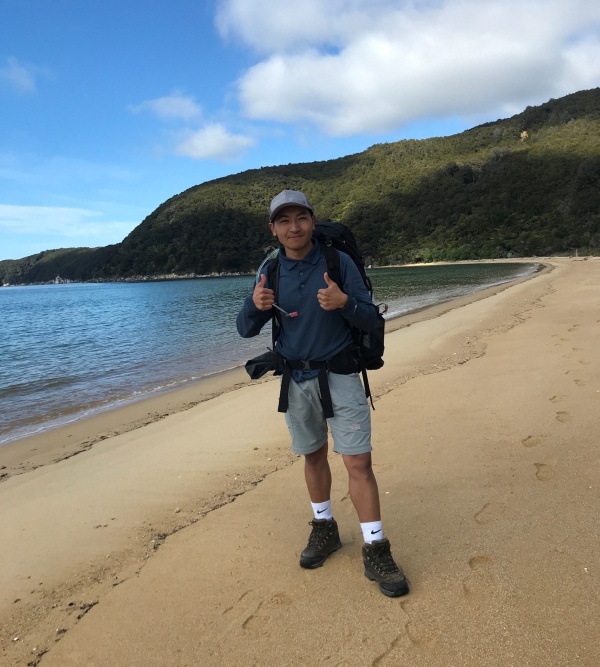
“I am a Sherpa. We are renowned as mountaineers, but we are also an ethnic tribe with a strong connection and respect for nature and a strong desire for environmental stewardship.
“Seeing Māori taking ownership of preserving and retaining their culture was an important learning for me. These are taonga (treasures) which we should be taking from one generation to another.
“Through my education I want to promote empowerment of local people on conservation issues,” Tsewang says. “Studying in New Zealand made me realise that this is already happening in Nepal, but we just need to find ways to make it more effective.”
Tsewang’s Master’s research was into the effectiveness of the Garbage Deposit Scheme (GDS) initiated by the Sherpa people, in which Everest climbers pay a US$4000 deposit that’s returned only if they bring back at least 8kg of rubbish produced during their expeditions. “Working in conjunction with the aims, aspirations, and opportunities of local communities is incredibly empowering.”
Making a positive impact in Nepal
The students who have come to Aotearoa have made a positive impact in Nepal, Tsewang says. “It’s all about learning from best practice and sharing knowledge.
As one person it’s hard to make change, but by sharing information and knowledge we can make incremental change.”
“We are seeing that governments globally are starting to overhaul their environmental protection policies. New Zealand has played a key role in the context of Nepal because people before me came to study and returned home to build crucial environmental education and awareness.”
Tsewang loved his time in Aotearoa, both inside and outside the classroom, having spent most of his free time hiking iconic tracks. “There’s so much learning that happens out in the field where you hear first-hand of the experiences of those working in conservation.
“This was an essential part of my education experience. You have unplanned conversations which are inspiring and hugely valuable,” he says.
“The last two years have been monumental in so many ways. It’s not just the academic learning, but also the personal growth. I have gained so much confidence to voice my opinion and share my knowledge.
“I will stay in touch with many of the people I have met and hopefully we will have the opportunity to collaborate in the future. Learning never stops.
“The international education opportunities with New Zealand only serve to strengthen the long-standing bond with Nepal. There’s a real legacy involved for both countries.”
-
Around the world in five
Australia
Scott Morrison prepares to let in over 200,000 students and skilled workers
Japan
Travel ban lifted but students could be a long time coming
United States
68% increase in new first-time international enrolments across the United States
Global
Agent views of Australia/New Zealand drop as United Kingdom, Canada and United States benefit
United Arab Emirates
