Search
Showing 10 of 7241 results
- Leon Fourie
- Francaustralia2
- mal202
-
Neuseeland still a popular destination for German High School students
Germany takes the number one spot in all of Europe for the number of international students it sends to New Zealand and the fourth largest in the world for sending high school students after China, Japan, and South Korea. In 2023, 1,417 German students were enrolled at high schools across New Zealand which represented 10% of the total number of school students in the country.
There are positive signs that this number will continue to increase in 2024. 82 high school students were recently farewelled by the New Zealand Ambassador to Germany, Craig Hawke, and Education New Zealand Manapou ki te Ao (ENZ’s) Associate Director of Engagement in Germany, Olga Elli at an event at Frankfurt Main Airport on Sunday 14 July.
The event was organised by Study Nelson, a Nelson-based education agency, that supports German students to find a high school in New Zealand, mainly in the Nelson-Marlborough area. The event was an opportunity for the students, aged between 14 and 19, to meet and engage with each other before they embark on their international study adventure. The students will spend between three and 18 months in New Zealand, depending on their programme and some plan to complete their NCEA Level 3 university entrance here.
One particularly excited member of the group included Emely Soffel, the I AM NEW scholarship winner from 2019, who due to the pandemic, had to wait five years to make her New Zealand study abroad dream come true.
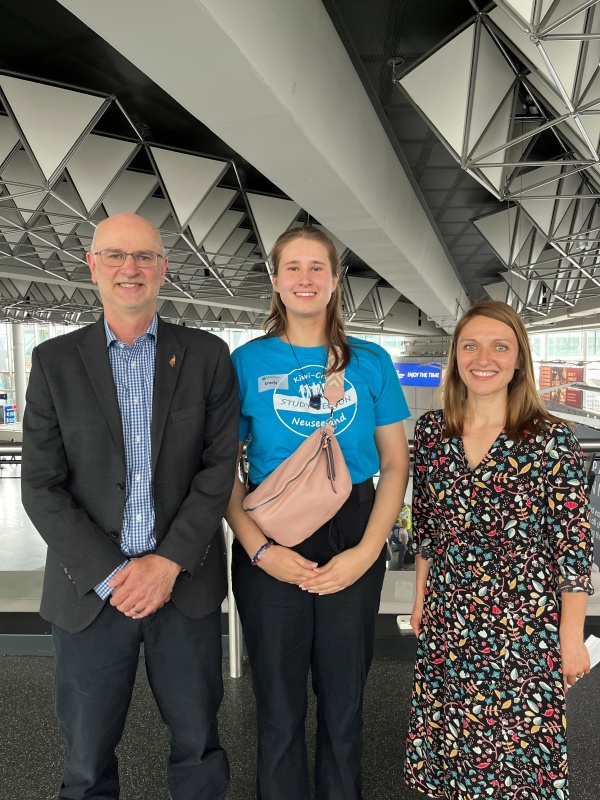
Ambassador Hawke with high school student Emely Soffel, the 2019 I AM NEW scholarship winner who was not able to travel during Covid. They are pictured here with ENZ’s Associate Director of Engagement in Germany, Olga Elli.
Olga said that Germany’s strong recovery in the high school subsector can be attributed to the experienced German agent network who have had long-standing and enduring relationships with high schools back in New Zealand.
“These agents have been building strong bridges between Germany and New Zealand for several years now, some for decades, and have made positive impacts for thousands of young people.
“They have such a deep understanding of the unique offerings that our high schools in New Zealand provide and are an invaluable service to students when trying to decide where to study,” said Olga
She added “German students love coming to New Zealand especially for the opportunity to try out subjects that aren’t typically offered at German high schools. Subjects like outdoor education, fashion design, marine biology, and food technology for example, are always really popular choices.
Ambassador Hawke mingled with the students and enjoyed hearing about their chosen schools in New Zealand. In his farewell speech to the group, he wished them a warm ‘Haere rā/farewell and said, “I invite you all to make the most of the excellent educational experience on offer in our country and also the opportunity to immerse yourself in our diverse culture. I hope you all become lifelong ambassadors for New Zealand.”
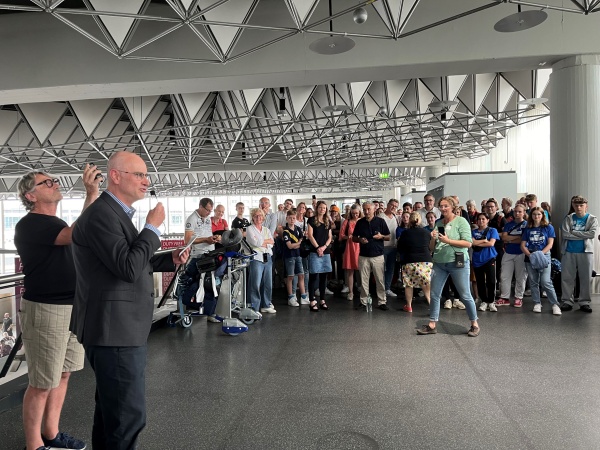
Ambassador Hawke farewells the students at Frankfurt Main Airport.
- Shanghai RSVN Form
-
International student employment: overcoming barriers
The panel, chaired by ENZ’s Director Student Experience, Hayley Shields, featured a diverse and informed range of views from
- Brett Berquist, Director International at the University of Auckland
- Dr Cate Gribble, Senior Research Analyst at the University of Auckland
- James Koo, former international student and founder and CEO of Niesh, a free student discounts app
- Paul Hickey, Managing Director at SpeakData
- Charan Mohan, former international student and now Business Intelligence Analyst at SpeakData.
Dr Cate Gribble talked about the need to raise awareness of the benefits to businesses of employing international students to counter employer concerns around the challenges of international student employees, including perceptions they won’t fit culturally, their English will be limited or that their visa situation will make paperwork too challenging. Students also find their international work experience in their home country is not always valued here, and employers often require New Zealand citizens or Permanent Residents.
Brett Berquist added that we need to counter the perception that international students will not stick around.
“The reality is that all students, both domestic and international, are equally mobile. Employers need to stop thinking Kiwis make employees for life, and that international students are a flight risk.”
James Koo said the lack of transparency around these concerns is a challenge for international students. As a result, many international students end up sending a generic CV and cover letter to any and all available jobs, too discouraged to spend time tailoring their CVs to each role.
James also noted that student expectations can sometimes be unrealistic, and some students expect to work in large, prestigious companies whereas most New Zealand companies are SMEs – which he noted can actually offer more opportunities and experiences for students and recent graduates.
SpeakData’s Paul Hickey then talked about his experience hiring international students, such as fellow panellist Charan Mohan. While Charan clearly had the hard skills required for his company, Paul needed to be convinced of his soft skills, which he calls being ‘Kiwi-ready.’
 “Often, international students come into interviews and talk solely about their studies and qualifications when actually, we’re just as interested in hearing about their interests outside of work.
“That social aspect plays a big part – sharing a story about kayaking in Taupo at the weekend or going to an All Blacks game is an easy way to connect with Kiwi employers.”
Paul also talked about the need to work with institutions to create a pipeline of talent.
“Employers often take a short-term view and hire people ‘just in time’ rather than looking ahead, whereas if you expect to have 10 new positions available in two years’ time, why not try to establish a pipeline for talent through local institutions who can connect you with new graduates with relevant skills?”
Panellists also agreed that having internships and work experience in education programmes will also help international students get into the job market when they graduate.
Brett concluded that while all these approaches can reduce barriers, ultimately, a strategy is required – supported by data that is already available in reports such as the Ministry of Education’s ‘Moving Places’, ENZ’s Beyond the Economic and Immigration New Zealand data.
It is an ongoing discussion that will continue to be in the spotlight in New Zealand as the industry works to meet international student expectations of global employability.
- ENZ Manaaki Digital Banners 1920x1080 8 1 v2
- Jamie
- Capture2
- Festival PMS alumni