Search
Showing 10 of 7245 results
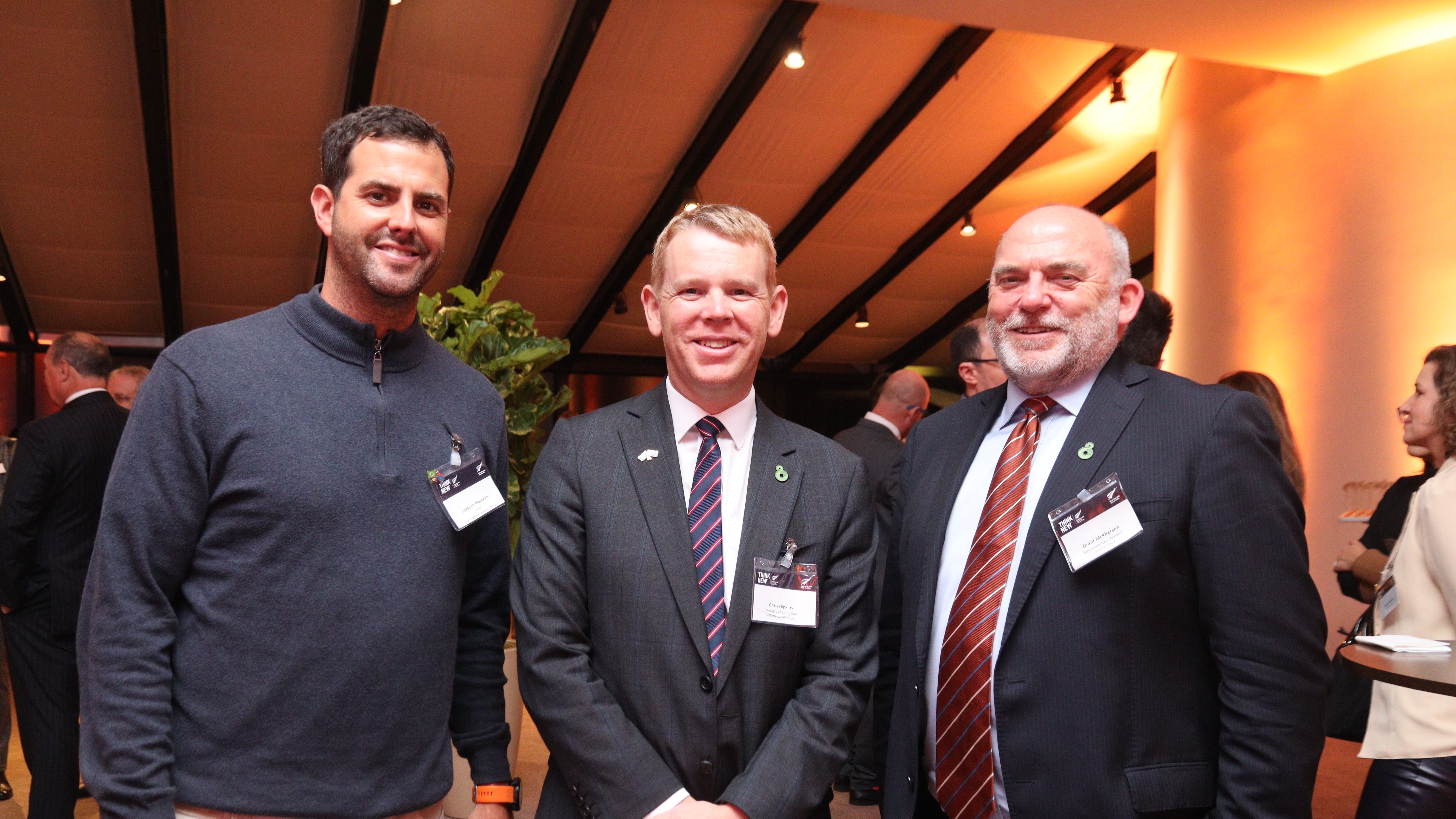
- From the CE image Brazil event
- Recovery Plan outline PDF
-
Support for Prime Minister’s Scholarships for Asia and Latin America recipients to continue to June 2026
The Prime Minister’s Scholarships programme was discontinued, and its funding reprioritised in the latest Government Budget 2025.
The decision to discontinue the programme is in line with the Government’s priority to deliver effective and fiscally sustainable public services and the need to focus on core activities in the current constrained fiscal environment.
The change takes effect from 1 July 2025. The decision will not impact any of the scholarships’ current recipients or recipients of the final group round, who were confirmed in June.
ENZ will continue to support current recipients, including those who are yet to travel overseas to 30 June 2026.
Since their inception in 2013 and 2016, respectively, the Prime Minister’s Scholarships for Asia and Latin America have been among ENZ’s significant, transformative and impactful programmes of work. To date, the programme has awarded 3,991 scholarships that have helped New Zealanders not only deepen their understanding of different cultures and languages but also enrich appreciation for their own culture and place in the world.
ENZ’s Group General Manager, International Marketing, Brand and Scholarships, Anna Gestro, said the Prime Minister’s Scholarships for Asia and Latin America have had a truly positive impact for building New Zealand’s connections in two key global regions.
“To date, the programme has awarded 3,991 scholarships that have helped New Zealanders deepen their understanding of new cultures and languages and enriched appreciation for their own culture and place in the world.
“The programme leaves a rich legacy through its rich and diverse alumni, who will continue to be global citizens in the way they nourish the connections and learnings picked up from their life-changing experiences from the scholarships,” Anna said.
-
Update from Immigration New Zealand
Visa processing update
- From 01 January to 31 March 2025, student visas have been processed in 12 days (two and a half weeks) on average, compared to 24 days (five weeks) for the same period in 2024.
- Currently, international student visas are being decided in 10 days (two weeks) on average.
- The tertiary sector’s mid-year intake is almost upon us, and students need to apply for their visas now.
- Latest visa processing times can be found on the INZ website: Student visa wait times | Immigration New Zealand.
Reminders from Immigration New Zealand
The conditions of a student visa state that the visa holder must attend the programme of study at all times, at the place of study endorsed on the visa (unless there are genuine reasons for absences), and that they must make satisfactory progress in the programme of study.
Immigration New Zealand (INZ) receive a number of applications from students in New Zealand, who have poor attendance and/or progress, without any explanation of why.
If students do have poor attendance or progress, it is recommended that an explanation for this is provided up front with the application to avoid the need for INZ to request further information. This will prevent any delays in processing.
- All terminations of enrolment (ToE) must be submitted to INZ. This can be done through the INZ website: https://www.immigration.govt.nz/assist-migrants-and-students/assist-students/student-enrolment-termination
If you are refunding an international student’s fees, then the ToE form should be filled out, regardless of whether or not the student’s visa has been sighted by the provider.
- From 01 January to 31 March 2025, student visas have been processed in 12 days (two and a half weeks) on average, compared to 24 days (five weeks) for the same period in 2024.
-
Aotearoa sharpens Sherpa’s ambitions on conservation in Nepal
The Everest region of Nepal is his home, and he has seen first-hand the impact of climbers and climate change on the world’s most famous mountain environment.
The former international student to New Zealand is a columnist in the Kathmandu Post, readily highlighting successes and calling out failures on a range of environmental issues impacting Nepal. He is part of a generation determined to find solutions.
Tsewang recently completed his Master’s in Environmental Management at Lincoln University, an international education experience made possible by the Mingma Norbu Sherpa Memorial Scholarship. Mingma was an early graduate of Sir Edmund Hillary’s Khumjung School, an alumnus of Lincoln University, and one of the leading voices on conservation in Nepal and Bhutan through his work with World Wildlife Fund (WWF) before his untimely death in 2006.
His legacy is a scholarship jointly funded by WWF, Lincoln University, and the Greater Himalayas Foundation which supports students from remote regions of Nepal committed to careers in conservation to study at Lincoln.
Tsewang says the links with New Zealand which date back to the work of Sir Edmund Hillary, and his belief in the importance of education for future generations, are a driver for many Nepalese students seeking to improve their opportunities in life.
“The connection is very strong,” he says. “Sir Ed Hillary is such an icon and I feel that the students who come to New Zealand to study are continuing to strengthen the relationship established by Sir Ed and Mingma”.
Fulfilling the dream of a New Zealand education
“The scholarship allows you to fulfil a vision of having a higher education in New Zealand, but more than that, it connects many people already working in the conservation sector in New Zealand, Nepal, and other parts of the world.”
Tsewang spent two years in New Zealand, arriving just before the border closed in 2020 and is grateful that his studies were largely unaffected by the pandemic. He says he has learned much about New Zealand’s approach to conservation and gained a better understanding of te ao Māori and the concept of kaitiakitanga (guardianship and protection).

“I am a Sherpa. We are renowned as mountaineers, but we are also an ethnic tribe with a strong connection and respect for nature and a strong desire for environmental stewardship.
“Seeing Māori taking ownership of preserving and retaining their culture was an important learning for me. These are taonga (treasures) which we should be taking from one generation to another.
“Through my education I want to promote empowerment of local people on conservation issues,” Tsewang says. “Studying in New Zealand made me realise that this is already happening in Nepal, but we just need to find ways to make it more effective.”
Tsewang’s Master’s research was into the effectiveness of the Garbage Deposit Scheme (GDS) initiated by the Sherpa people, in which Everest climbers pay a US$4000 deposit that’s returned only if they bring back at least 8kg of rubbish produced during their expeditions. “Working in conjunction with the aims, aspirations, and opportunities of local communities is incredibly empowering.”
Making a positive impact in Nepal
The students who have come to Aotearoa have made a positive impact in Nepal, Tsewang says. “It’s all about learning from best practice and sharing knowledge.
As one person it’s hard to make change, but by sharing information and knowledge we can make incremental change.”
“We are seeing that governments globally are starting to overhaul their environmental protection policies. New Zealand has played a key role in the context of Nepal because people before me came to study and returned home to build crucial environmental education and awareness.”
Tsewang loved his time in Aotearoa, both inside and outside the classroom, having spent most of his free time hiking iconic tracks. “There’s so much learning that happens out in the field where you hear first-hand of the experiences of those working in conservation.
“This was an essential part of my education experience. You have unplanned conversations which are inspiring and hugely valuable,” he says.
“The last two years have been monumental in so many ways. It’s not just the academic learning, but also the personal growth. I have gained so much confidence to voice my opinion and share my knowledge.
“I will stay in touch with many of the people I have met and hopefully we will have the opportunity to collaborate in the future. Learning never stops.
“The international education opportunities with New Zealand only serve to strengthen the long-standing bond with Nepal. There’s a real legacy involved for both countries.”
- AgentLab
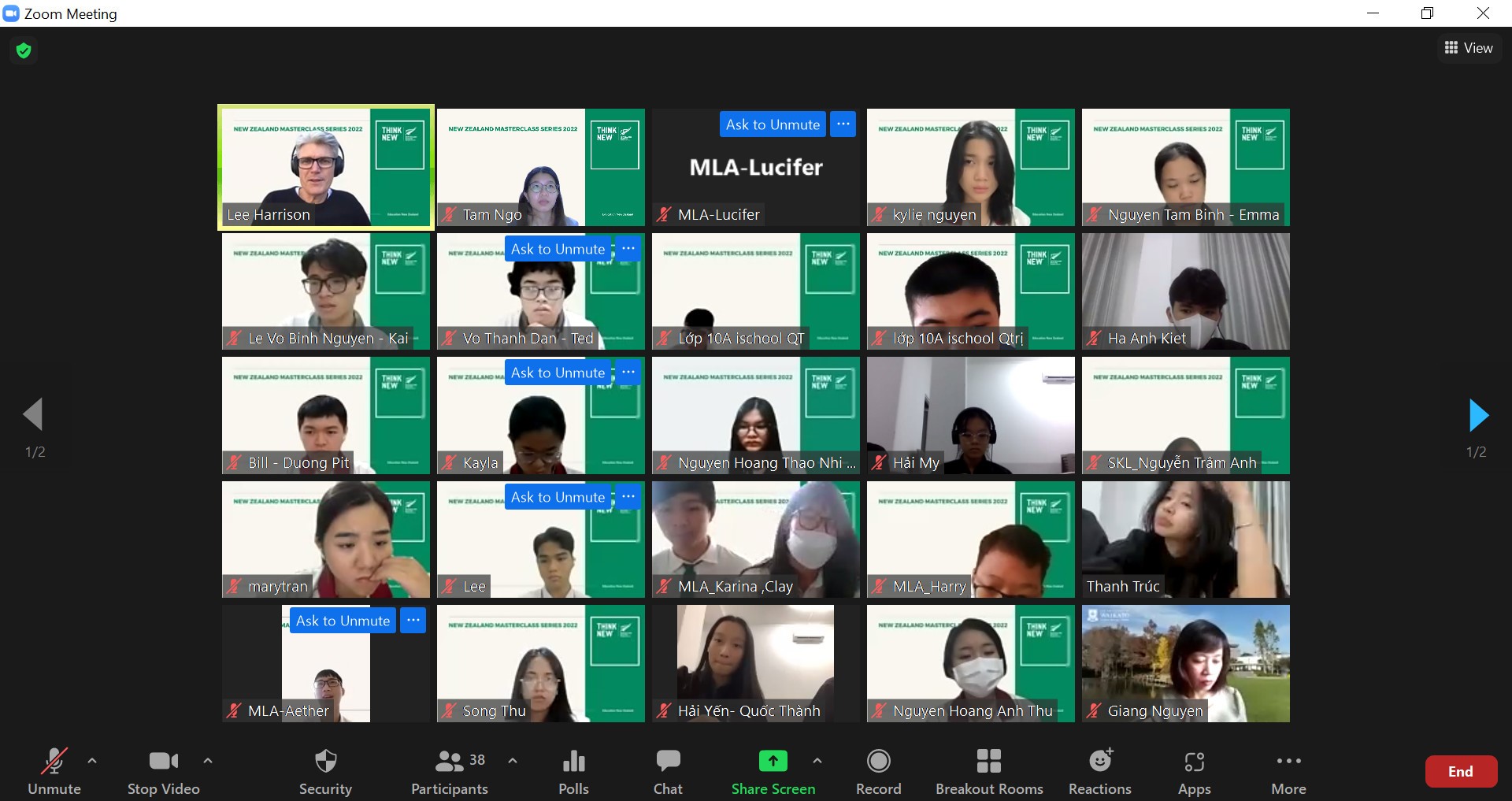
- Vietnam masterclasses 3
- Facebook insights2
- Attendee List Hanoi New Zealand Fair and Agent Seminar
- ENZ CE expenses January 2012