Search
Showing 10 of 2262 results for read 2024 FRM Exam Part I - Quantitative Analysis online free
-
From the CE: Purpose, Place and Partnership
Kia ora koutou,
I am pleased to report that the cross-agency work to develop an International Education Growth Plan for the Prime Minister and Ministers is progressing well.
In recent weeks, Education New Zealand has held a series of engagements with different parts of the international education sector to validate assumptions on supply and focus markets, and to better understand current system capacity and which interventions will enable quality, sustainable growth. This work continues at pace.
Last week, we were delighted to welcome to our Wellington office a visiting delegation of senior school leaders from the Incheon Metropolitan Office of Education - East Asia Global Education Institute. At the mihi whakatau, I explained the Māori phrase Nau mai and the New Zealand way of showing hospitality and care (Manaakitanga) to visitors.
The visit was a valuable opportunity to reinforce New Zealand and its education institutions as trusted partners for South Korea. I am certain their stay, which included visits to New Zealand schools and vocational training institutes, will contribute to raising awareness of the New Zealand education system in their hometowns and strengthen ties with education providers here.
Later this month I will be travelling abroad for NAFSA, the world’s largest international education conference, which will be taking place in San Diego, California. The theme this year is Purpose, Place and Partnership, and it is one that resonates in a time of global uncertainty. I am looking forward to engaging with our sector partners and team in market, as well as showcasing New Zealand’s unique education offering to the world.
He whenua auaha tātou, he whai tikanga, he whai whakaaro tonu ki te hapori.
We are a country that is creative, practical and community minded.
Ngā mihi nui,
Amanda Malu
Chief Executive
-
BizVenture winners tackle youth mental health with "It's Okay" clothing range
The innovative business entrepreneurship scheme is a pilot initiative led by Education New Zealand, Young Enterprise Scheme (YES), and Japanese partners to give students in both countries real-life experience in developing business solutions that address one of the United Nation’s 17 Sustainable Development Goals.
Forty students collaborated in a three-day virtual exchange, where they chose a challenge tackling some of Japan’s pressing social issues, before designing and presenting a business plan in a “Dragon’s Den” style pitch to judges.
The winning New Zealand team - Hamish Robinson (Taradale High School, Napier), Benjamin Young (Tauranga Boys’ College), Daniel Blight (Waimea College, Napier), Kaiah Sherriff (Southland Girls’ High School), and Abirami Kabilan (Pakuranga College, Auckland) - chose to come up with a strategy which would directly enhance the mental wellbeing of Japanese teenagers.
The UN SDGs are some of the biggest problems facing humanity today, so working on them was a pretty full-on task” – Pakuranga College student Abirami Kabilan
It is a topic which directly impacts young people in both countries, as UNICEF ranks Japan 37th among 41 OECD countries for the state of children’s mental health, and New Zealand one lower, at 38th place.
Insights into business and culture “eye-opening”
To succeed, the students had to gain a thorough insight into Japanese culture, youth behaviour, and business practice. Ahead of their pitches, the teams joined interactive workshops with New Zealand and Japanese guest speakers, cultural mentors, and language coaches.
Abirami Kabilan describes the exposure to Japanese business and societal culture as “eye-opening”.
“The UN SDGs are some of the biggest problems facing humanity today, so working on them was a pretty full-on task.”
“One of the most interesting things about this cross-cultural experience was seeing how the Japanese students approached the same problems. Young people around the world will have such different ways of approaching these problems too. Imagine the ideas we would come up with if we all worked together.”
The winning team successfully pitched a clothing brand called 大丈夫, which translates in English to “It’s Okay”, to get the conversation about mental health out in the open among Japanese youth, and hopefully gain the support of high-reach Japanese influencers to help push their critical wellbeing message.
They decided the best way to break into the Japanese market would be with “in your face” messaging using symbols of strength, such as dragons and samurai, to promote their message.
“This is something that has not been done in Japan before and we’re ecstatic to be winners,” Hamish Robinson says.
BizVenture promotes global competency
The BizVenture programme will allow students to understand the Japanese business context and increase their global competency, says Young Enterprise Scheme lead Elizabeth Pittman.
“New Zealand youth have such a strong interest in sustainability and improving social outcomes within their communities and abroad, and this challenge allows them to explore that interest in a business context.”
International education adapts to changing needs of learners
Education New Zealand is keen to build on the success of this year’s pilot BizVenture programme as international education adapts to meet the changing needs of learners. International research shows that students are increasingly seeking programmes and content that is relevant to real world problems and which will allow them to make a real difference.
The programme also builds on New Zealand’s diplomatic relationship with Japan while travel for international students remains limited.
“Over many decades Japan and New Zealand have benefitted from an enduring partnership,” says Hamish Cooper, New Zealand Ambassador to Japan. “Education has played a really important role in fostering people-to-people ties, and supporting the development of what are now, in 2021, very close connections between our two countries.”
“Before the pandemic, more than 10,000 students from Japan studied in New Zealand every year, making an important economic contribution, but also enriching our schools and communities, and helping New Zealand students become more globally connected.”
-
Homestay host grateful for her international student whānau
Over a six-year period, Anne hosted 20 homestay students from all corners of the world and says she has remained in contact with a number of them.
Anne started hosting students when her son Jonas was just a baby. Now seven, Jonas has picked up the basics of Mandarin, Japanese, and Portuguese, and is relaxed with new arrivals in his life.
“He’s great at welcoming people and he’s very interested in languages. He might even go on to study language when he’s older,” she says.
Instead of a life which could, at times, have felt isolating as a mum bringing up a child on her own, Anne says her house was always a busy place. She loved the involvement the students had in her son’s life and the excitement they shared in his achievements and milestones.
“It was really an amazing experience for all of us.”
Rewarding to share cultural experiences
“There were times we shared the cooking, and some of the students taught me how to prepare meals they enjoyed in their culture.
Anne says she would show the students around Auckland, often taking them for day trips to Piha and sometimes to her father’s place in Whitianga for a classic Kiwi BBQ.
“It was important to me to show them New Zealand and our culture. They joined in family events and felt a sense of belonging.”
Anne has hosted students from China, Japan, Korea, Vietnam, Taiwan, Brazil, Saudi Arabia, and Germany, and experienced the many surprising ways in which they were enriched by each other’s cultures.

“I remember sitting on the beach with King, who was from China. He asked why people were smiling at him. I said that in New Zealand we tend to smile at each other and chat to people we don’t necessarily know. He said that didn’t happen in China and it was something he really enjoyed about New Zealand.”
Homestay experience broadened horizons
Now able to afford her own home, Anne says her experience as a homestay host opened her mind to accepting flatmates from a range of nationalities.
“We love having the mix of cultures in the house. I don’t think this would have happened if we hadn’t had the homestay students. I just feel grateful to have hosted them and think of them as extended whānau.”
-
International education drives soft power in offshore markets
Former Ambassador to Brazil Caroline Bilkey knows this only too well. She says our strong reputation in international education is a “success story” which pays dividends down the line, as former students happily help to build our profile globally.
In her role progressing New Zealand interests offshore, Ms Bilkey has seen first-hand the benefits of working within networks of local people who studied in New Zealand.
“Not only is their experience in New Zealand a great conversation starter, but it also means you are more likely to be given the benefit of the doubt, and the person may be more willing to advocate your issue with their peers, because they know and like New Zealand, having studied there.”
Trade and business can benefit from link to international education
With more than 30 years’ experience with the Ministry of Foreign Affairs and Trade and multiple offshore postings, Ms Bilkey knows of countless instances where trade and business have benefited from a direct, or indirect, link to a former international student’s New Zealand education experience.
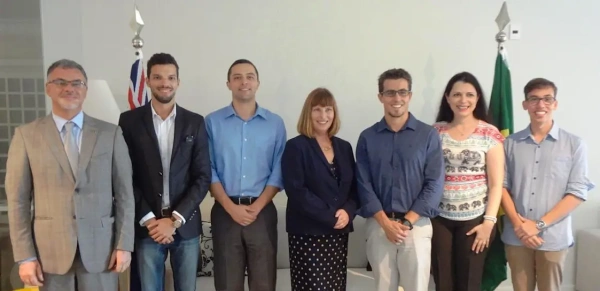
One such example is an Argentinian-Brazilian woman who returned to Brazil after studying in Auckland, to work for Fonterra and Zespri. Ms Bilkey describes the woman as “able to talk enthusiastically about the New Zealand story behind the products coming in”.
She believes there is something “quite special” about the links built through international education, largely because students are usually young, and their experiences are intense and formative.
Whether it is international students coming to study in New Zealand or Kiwis studying abroad, Ms Bilkey believes that there are many benefits associated with international education, beyond diplomacy, international trade, and the obvious economic benefits.
Positive international education experience opens hearts and minds
There are higher-level, public good benefits, she says. “A positive international education experience contributes to the global good, as it opens hearts and minds and encourages tolerance.”
Other benefits for all of us include the exposure to cutting-edge thinking and breakthroughs resulting from research collaboration between New Zealand and international students’ home countries. “The idea that if you get outside the box and have people coming in with a different approach, that can sometimes generate really positive, new and innovative ideas.”
Ms Bilkey is in no doubt that a positive international education experience in New Zealand boosts our connectivity with the rest of the world by building long-term relationships, enhancing business, opening doors to trade opportunities, and helping shape global citizens, all badly needed in a world facing unprecedented challenges.
-
New Zealand education brand updated for greater global impact
ENZ developed an updated look for the New Zealand education brand, guided by research to assess the recognition and effectiveness of our brand elements.
The insights from this research have guided the development of an updated look that reflects the evolving story of New Zealand education and the values it represents on the world stage.
New logo for New Zealand education

ENZ’s research identified the FernMark as a highly distinctive and recognisable symbol, strongly associated with New Zealand by global audiences.
See the new brand in action
ENZ Brand Lead, Nick Sinclair, said this brand uplift is more than just a visual update.
“This is a strategic step forward for us, with the intention to align ENZ’s brand with the quality, ambition and impact of New Zealand’s international education offering.
“We want to build confidence amongst prospective students and their families with a brand that is trustworthy and unmistakably New Zealand,” Nick added.
What’s happening next
-
New visual identity: You’ll start to see updated branding across the Study with New Zealand digital and social media channels over the coming weeks.
-
Refreshed brand and marketing assets: We’re refreshing key marketing collateral and event assets to reflect the new look. These include resources you can use in the outreach and promotional activity for your education institution.
-
Videos and content: Several core videos and promotional materials have already been updated with new branding.
New brand collateral will be available for download on our BrandLab by the end of July this year.
-
-
Auckland schools build relationships with education agents and schools in Japan
For the first time, a group of 16 Auckland-based high schools collectively visited Japan.
Their aim? Engaging with education agents and local schools to explore building long-term relationships, develop student exchanges and promote study at primary and secondary schools in Auckland.
ENZ supported the delegation by hosting an event at the New Zealand Embassy in Tokyo for the school’s delegation to make local connections. Over 50 local education agents, schools and the New Zealand delegation were brought together to connect, share and learn from each other.

Representatives from Massey Highschool and Waiuku College speaking to education agents at the New Zealand Embassy event.
Mount Roskill Grammar School International Director, Wendy Reid, said the visit showed what regions can achieve with a joined-up approach.
“It was a privilege to work with so many professional and knowledgeable Auckland schools, and continue to build relationships with our Japanese partners,” Wendy said.
Feedback from partners in Japan was also positive. Ritsumeikan Uji Junior and Senior High School English Head of Department, John Headon, said the regional approach to this engagement showcased New Zealand’s strength in community spirit.
“No matter which school you visit, there’s a strong sense of reassurance that the entire region will come together to support their students,” he said.
The participating schools were Auckland Grammar, Botany Downs Secondary College, Gulf Harbour School, Howick College, Maraetai Beach School, Massey High School, Mount Albert Grammar, Mount Roskill Grammar School, One Tree Hill College, Rosehill College, Sacred Heart College, St Mary’s College, St Peter’s College, Takapuna Grammar, Waitākere College and Waiuku College.
While in Japan, the Auckland school group maximised the opportunity by independently visiting other key regions, visiting partners and meeting with prospective families.
Since their return, the group of schools has been busy following up with the new and existing partnerships.
-
Philippines roadshow showcases New Zealand’s premier ITP and PTE offering
The roadshow showcased the strength and diversity of New Zealand’s Institutes of Technology and Polytechnics (ITP) and Private Training Establishments (PTE) sub-sectors.
The roadshow brought together eleven New Zealand education providers: academyEX, NZSEG, Te Rito Maioha Early Childhood New Zealand, Ara Institute of Canterbury, Eastern Institute of Technology, NMIT, Southern Institute of Technology (SIT), Wintec, Future Skills, Auckland Institute of Studies and Otago Polytechnic.
A wide range of activities were held throughout the two-week programme, which included a media roundtable, agent seminars, school guidance counsellor workshops, and New Zealand Study Fairs.
These engagements helped to deepen education ties and raise awareness of New Zealand’s high-quality, hands-on tertiary education opportunities among Filipino students, parents, agents, and school representatives.
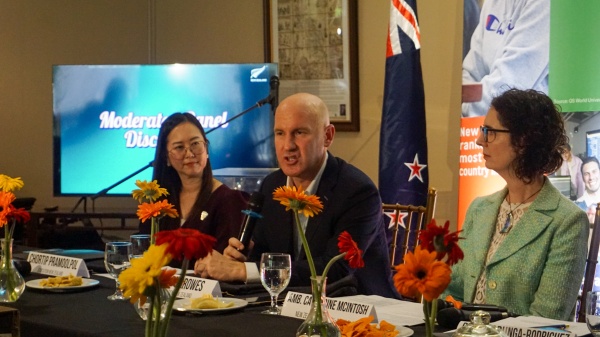
ENZ Market Manager Chortip Pramoolpol, ENZ Regional Director Asia Ben Burrowes and New Zealand Ambassador to the Philippines, H.E. Dr. Catherine McIntosh at the media roundtable in Manilla.
The media roundtable was held in collaboration with the New Zealand Embassy in Manilla and attracted 10 journalists.
The session highlighted the growing number of Filipino students choosing New Zealand and the shared values that underpin our education system – particularly in inclusive learning and vocational, work-ready training.
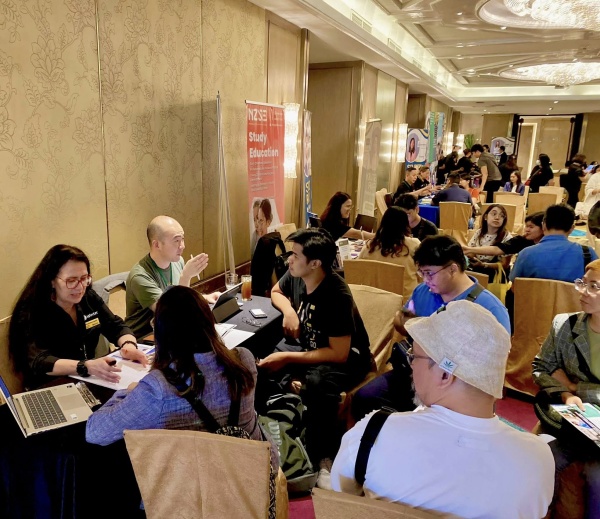
The New Zealand Study Fair in Manila.
The New Zealand Study Fairs across the three cities were buzzing, with 160 attendees in Manila, 165 in Bacolod, and 157 in Cebu.
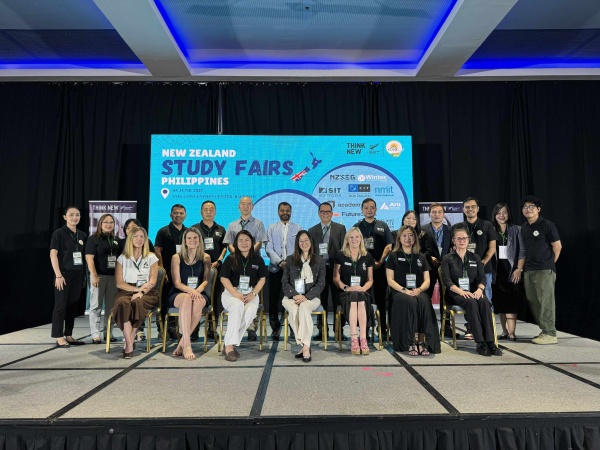
The New Zealand Study Fair in Baclod.

Providers talking to prospective students at the New Zealand Study Fair in Cebu.

Attendees of the Manila agent seminar.
The agent seminars in Manila and Chebu brought together agents who are eager to promote tertiary education in New Zealand to build connections with providers.
ENZ representatives provided a presentation on the latest official information on studying in New Zealand and resources for agents to promote New Zealand education. Immigration New Zealand (INZ) provided a recorded presentation on the latest visa information for the Philippines market.
In Manila, the education agent seminar attracted 37 attendees, while 11 agents participated in Cebu.
School engagement in the roadshow was also notable, with eight schools attending the school guidance counsellor workshop in Manila and 10 in Cebu.
ENZ Regional Director for Asia (excluding China), Ben Burrowes said this roadshow marks another exciting step in strengthening the education relationship between New Zealand and the Philippines.
“The strong turnout across all events and the enthusiastic engagement from agents, students, and school counsellors show there is a growing appetite for the quality education New Zealand offers,” he said.
“We’re proud to support our PTE and ITP partners in connecting with this key market, ENZ looks forward to building on this momentum in the coming months,” Ben added.
-
New Zealand providers show global leadership at NAFSA 2025
Education New Zealand Manapou ki te Ao (ENZ), alongside representatives from eight tertiary providers wrapped up a high-impact week at the NAFSA 2025 Annual Conference in San Diego at the end of May.
Under the conference theme ‘People, Place and Partnership,’ New Zealand’s delegation was in amongst over the 8,000+ global education leaders, strengthening institutional ties and driving new collaboration opportunities.

Representatives from the University of Auckland connecting with conference delegates in the New Zealand pavillion.
The New Zealand pavilion comprised of University of Auckland, Auckland University of Technology, University of Waikato, Massey University, Victoria University of Wellington, University of Canterbury, University of Otago and Whitecliffe College.
ENZ Chief Executive, Amanda Malu, said being present at the world’s largest international education conference is not just about visibility—it’s about leadership.
“New Zealand’s education providers have a unique perspective to offer the global education community, and NAFSA is where those voices can shape conversations, forge partnerships, and spark ideas that transcend borders,” she said.
ENZ worked with NAFSA to host two sessions in the New Zealand pavilion. Both sessions were well attended, sparking discussions among conference delegates about reimagining higher education.

The University of Waikato panel session. From L to R: ENZ Director of Engagement, DuBois Jennings; Unviersity of Waikato Deputy Vice-Chancellor Māori, Dr. Sarah-Jane Tiakiwai; University of Waikato Associate Director Global Experiences, Jaydene Meadows and ENZ Acting Regional Director, Natalie Lulia.
The first session moderated by ENZ Director of Engagement North America, DuBois Jennings, featured a panel discussion titled ‘Te Ao Hurihuri Indigenous Internationalisation: Perspectives from Te Whare Wānanga o Waikato – The University of Waikato’. The session explored the concept of indigenous internationalisation, focusing on the unique approaches and programmes delivered at The University of Waikato. On the panel was Deputy Vice-Chancellor Māori Dr. Sarah-Jane Tiakiwai, Associate Director, Global Experiences Jaydene Meadows from the University of Waikato, and ENZ Acting Regional Director, Natalie Lulia.
Associate Director of Global Experiences Jaydene Meadows said the outcomes for the University of Waikato well surpassed previous years at the conference.
“This year was significant for us, deepening the roots of current relationships, while promoting new programme offerings and working to develop new business opportunities.”
The University of Otago presented the second session titled 'Indigenising our university’s name and brandmark: Ōtākou Whakaihu Waka | University of Otago'. Deputy Vice-Chancellor, External Engagement Professor Jessica Palmer and Manager, Indigenous Internationalisation, Karamea Pēwhairangi reflected on a year since the global launch of their new brandmark, the journey to being gifted a Māori name, and how the University of Otago includes indigeneity in the University’s Internationalisation Strategy.
ENZ Acting Regional Director Natalie Lulia said both sessions showcased New Zealand’s unique approach to education that integrates indigenous knowledge, and she looks forward to building on the momentum of the conference.
“NAFSA certainly set the ball rolling for increased student mobility, enhanced research linkages, and stronger people-to-people connections between New Zealand and our international partners,” she said.
-
New Zealand and China share cultural connection through conservation
In many ways New Zealand’s management of protected lands is world-leading, but there is still much to learn from others. Collaboration is key to improving outcomes and shaping policy in the years ahead. Dr Mick Abbott, professor of Landscape Architecture at Lincoln University, has been collaborating with researchers in China since 2014, with support from Education New Zealand’s Tripartite Fund. The fund assists New Zealand universities to join in research partnerships as the “Third Brother” with two Chinese Universities - one “emerging” and the other “established”.
Dr Abbott has been working with Tsinghua University in Beijing and Kunming University of Science and Technology in Yunnan province on research projects, field trips, workshops, student courses, and the production of bilingual learning materials.
“While we achieve very good conservation outcomes in New Zealand, it is essential that we look beyond our borders for further research and understanding” - Dr Mick Abbott, WildAtlas project lead and Tripartite Fund recipient
Need to look beyond our borders
“Conservation underpins our value proposition to the world,” he says.
“While we achieve very good conservation outcomes in New Zealand, it is essential that we look beyond our borders for further research and understanding.”
While China looks to New Zealand for leadership on how to effectively protect pristine environments from the impacts of recreation and tourism, New Zealand stands to learn a lot from how China celebrates its cultural connections with nature, Dr Abbott says.
“Protected lands in China are associated with cultural value. In Chinese thinking ecological civilisation underpins wider civilisation. They take a holistic view and there are elements in common with Mātauranga Māori (Māori wisdom and world view).
Cross-cultural thinking important
Mātauranga Māori can enhance the cultural connection between Maori and Chinese and creates valuable synergies, he says. “Cross-cultural thinking is so important.”
Key to the success of the long-term relationship was an exhibition Lincoln University curated in Beijing in 2017, showcasing New Zealand’s protected areas and a range of eye-catching exhibits, alongside Lincoln’s research and that of Tsinghua University on the future direction of protected area management.
The exhibition attracted 50,000 visitors and kicked off the WildAtlas project which Dr Abbott has spent the past four years developing. WildAtlas is a collection of virtual tours that bring to life the stories of New Zealand’s National Parks and protected areas, both past and present.
Available in both English and Chinese, WildAtlas is principally used as an educational tool aimed at university students, but Dr Abbott would like to extend its reach to Year 12 and 13 students. “Land issues are really important in this country, and we must understand there are other ways to view the land. We need to broaden the horizons of our students.”
Conservation experiences a key attraction
Looking to the future, Dr Abbott says that New Zealand conservation managers will benefit from a better understanding of the type of National Park experiences that are attractive to Chinese visitors.
“Pre-Covid, China was New Zealand’s second largest inbound tourism market and largest long-haul market. Our conservation areas and national parks are a key attraction.”
He is using the latest round of Tripartite funding to create a corresponding Virtual Field Tour of the Protected Areas of Yunnan Province, home to Kunming University of Science and Technology.
Dr Abbott is hugely positive about the relationship which has been built with Tsinghua and Kunming universities through the Tripartite Fund and believes the collaboration will lead to business and investment opportunities in the future.
“We must foster goodwill and understanding first, share our values, and advocate for them.
Editor’s note: New Zealand’s involvement in the Tripartite Fund dates back to 2005, when the New Zealand and Chinese Ministries of Education agreed to formally support and promote tripartite relationships between New Zealand and China, in which a New Zealand university is joined as the ‘third brother’ to an existing ‘two brothers’ arrangement.
For more information on the NZ-China Tripartite Fund or to learn more about Professor Abbott’s research, please contact the ENZ team at china@enz.govt.nz
-
New Zealand universities’ academic reputation ranks first among English-speaking countries
Published annually, the QS rankings assess more than 1,500 universities globally across areas such as reputation, teaching, research and internationalisation.
New Zealand's overall average score of 51 among countries and territories with at least eight institutions featured in this year’s rankings puts it first in the English-speaking world and fifth in the world for the overall quality of its higher education.
The 2026 results see New Zealand universities improve across academic reputation, citation per faculty, and international student indicators. New Zealand also ranks the highest globally in terms of employment outcomes among key English-speaking study destinations.
Education New Zealand Manapou ki te Ao Chief Executive Amanda Malu said this is a fantastic result or New Zealand universities as they continue to grow in appeal among international students.
“It reinforces New Zealand’s position as a high-quality and welcoming international education destination.
“New Zealand universities are all highly regarded for sustainability research and programmes. We need to celebrate this wonderful result for New Zealand universities that highlights the high calibre of our teaching, research staff and students,” Amanda said.
On sustainability research and programmes, New Zealand comes second only to Sweden and has three universities in the top 100 globally for the sustainability indicator of the QS rankings.
Learn more about the latest QS World University Rankings 2026 here