Search
Showing 10 of 2262 results for read 2024 FRM Exam Part I - Quantitative Analysis online free
-
Continuing the discussion on the impact of AI on education
Since ChatGPT’s (Chat Generative Pretrained Transformer) launch in November last year, the Artificial Intelligence (AI) tool has featured heavily in headlines around the world, sparking conversations from boardrooms, to classrooms, and around the dining room table. Discussions on the significant impact this tool and future AI technology is having on how we teach, assess, and support our students here in New Zealand’s education system are happening in all areas of our sector, including here at Education New Zealand Manapou ki te Ao (ENZ),
A particular discussion during a recent EdTechNZ panel webinar on Artificial Intelligence and the impact on Education, looked at where educators may want to focus their valuable time now that generative AI platforms are available. For example, do educators want to spend their time researching topics, analysing data, and producing unique activities of work, or spend it on building meaningful relationships and place-based experiences with and for learners; gaining insights into learners’ interests, engaging in critical thinking activities and deepening learners experience of and outcomes in education?
Following EdTechNZ’s interesting and successful March webinar which can be viewed here; Artificial Intelligence and the impact on education, ENZ hosted an in-person seminar at our Tāmaki Makaurau offices in late April. This seminar's purpose was to look deeper at how this emerging technology is changing the way we learn, teach, and innovate.
Professor Ian Watson, recent past professor at the University of Auckland, spoke to a group from across the education spectrum including secondary schools, Private Training Establishments, EdTech founders, Education Publishers, Google, about AI and its impact on education.
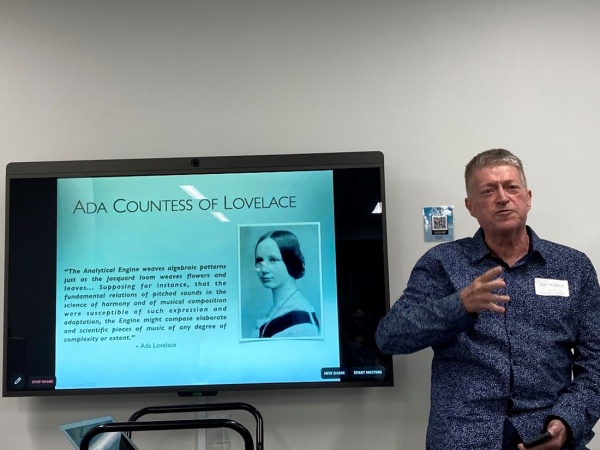
Professor Watson is considered an AI pioneer with 30+ years in the AI machine learning environment and reflected on the history of AI, including that it is not a new or sudden phenomenon, and its progress over time.
“AI imitates intelligence and is great at the specific but not so much the general. For example, aircraft use AI to be able to perform extremely specific flight tasks, but it will never be able to suggest a recipe and cook it!”, Professor Watson said.
“Within education, AI will certainly provide value in routine, mundane and repetitive tasks such as grading, lesson planning, report writing but in the hard and difficult tasks such as developing a universal design for learning and differentiated or targeted learning, it has its flaws. It is not always factually correct and still needs a human to educate it”.
Professor Watson also talked about how important it is, critical even, to teach learners how to use these tools, so they are empowered. Such tools include the likes of AI4K12 for K-12 learners.
Anyone looking for more insights and conversations about AI should check out the TechWeek23 programme with over 400 in person and online events to be hosted from 13 – 20 May.
Techweek AI focussed online events of note include:
- AI and education with AUT Monday 15 May
- AI is here to stay: Its impact on online, flexible, and distance learn with FLANZ (Flexible Learning Association) and EdTechNZ Thursday 18 May at 11:00am – 12:00pm.
- Education Agency Co funded Activity 2024 Request for Proposal India
- PPP Project description 2024 final
-
Digital skills and global citizenship at #NZAsiaTech Code Camp
A team of six students from Te Kura Māori o Porirua, a predominantly te reo Māori medium school in Porirua, interacted with school students in Japan, South Korea, Thailand, Viet Nam, Philippines, Malaysia, and Indonesia.
The overall theme was tourism, seen through the lens of the United Nations Sustainable Development Goals (SDG) - a theme that is highly relevant for the Asia-Pacific region. Students were given the task of profiling their home country’s SDG initiatives, with a focus on sustainable tourism.
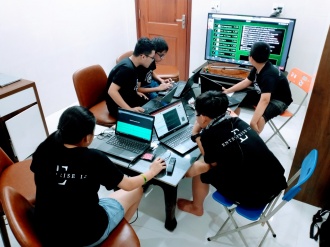
Team Enterprise 12 from Viet Nam work on building website project during #NZAsiaTech Code Camp
The North Asia Centre of Asia-Pacific Excellence partnered with educational coding programme Code Avengers and Education New Zealand Manapou ki te Ao to deliver the event.
“With New Zealand’s borders having been closed for more than two years, it’s crucial that the next generation of students still have opportunities to build cultural competencies and make connections across the globe,” says Education New Zealand’s Regional Director for Asia, Ben Burrowes.
“The #NZAsiaTech Code Camp was an opportunity for Kiwi students to re-establish connections with students in other countries, while gaining critical digital skills to prepare them for the future.
“It also also gave a taste of New Zealand’s education offering to prospective international students from the Asia region, who might consider enrolling in high school or tertiary study in New Zealand in the future.”
Code Camps can help to generate subsequent visits by interested students to New Zealand. For example, the Code Camp held at Waseda Jitsugyo School in 2021 and at Waseda University Junior and Senior High School in 2022 has led to Waseda’s group students’ programme sending around 50 students from three schools to New Zealand for three weeks in March 2023. Code Camp served as a great opportunity for students and teachers from Waseda University affiliated schools to experience our world-class digital education first-hand.
Honam Jeon, the Education Manager at Gangwon International Education Institute said the programme helped increase awareness of New Zealand:
“South Korea is very interested in international engagement and exchange programmes for school students. The #NZAsiaTech Code Camp was a perfect example we want to continue to join. Thanks so much again to ENZ for organising the well-structured programme.”
The online programme included team building exercises, English learning, HTML coding lessons, and the creation of a website by student teams, to demonstrate their understanding of the importance of sustainable tourism.
“As our students look to enter an increasingly globalised word, developing cultural connections and transferable skills is so important,” says Te Kura Māori o Porirua school principal, Whāea Evelyn Wharehinga.
“The Code Camp has been an exciting growth experience for our students, who have extended their digital literacy skills while having the chance to connect with students of different ethnicities and cultures across the Asia-Pacific region.”
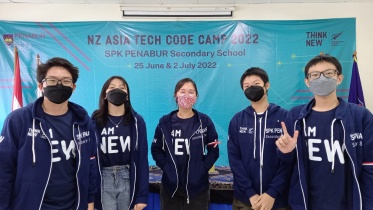
Team Indonesia was the winning team after presenting their newly developed website on Sustainable Tourism to a virtual panel of judges.
The students presented their sustainable tourism-themed websites to a panel of expert judges at the awards ceremony on 2 July 2022, with students from Indonesia winning the top prize.
Steve Budd of Code Avengers, a global edtech company based in New Zealand, said it was a great programme to participate in.
“It was a privilege to gift all participants a one-year free subscription to the Code Avengers site as part of our mission to build lasting digital capabilities for educators and young people, and bridge the digital divide,” says Budd.
-
Indigenous Peoples Talk Series 2023: final event
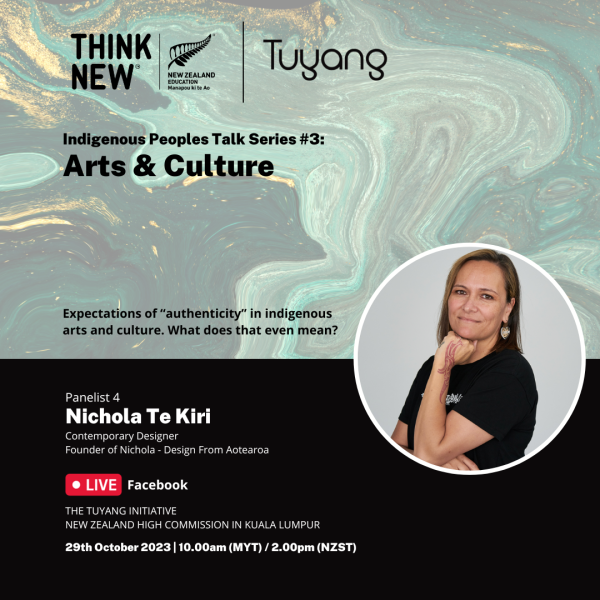
The third and final event of the Indigenous Peoples Talk Series will be held online on 29 October 2023, at 10am in Kuala Lumpur, Malaysia (2pm NZDT).
This event, jointly organised by The Tuyang Initiative, a Malaysian Social Enterprise, and Education New Zealand Manapou ki te Ao, is focused on Arts and Culture, specifically the expectations of authenticity in indigenous arts and culture and what this means. Taking part in the discussion are several brilliant indigenous academics, artists, and cultural practitioners from Malaysia and Aotearoa New Zealand, including Nichola Te Kiri, contemporary designer and founder of Nichola – Design from Aotearoa.
Information on the Tuyang Initiative was shared in a previous E-News here. You can register for this free event via this form: https://forms.gle/5f3SW5iCteZTHyC98
-
From the CE: An update on our response to COVID-19
COVID-19 continues to be a major focus for us, as it is for you.
The World Health Organisation declared COVID-19 a pandemic on 12 March. As Director-General of Health, Dr Ashley Bloomfield says, we have been planning for and acting as if COVID-19 was a pandemic since the beginning of the outbreak.
The New Zealand Government’s number one priority is the health of people in New Zealand and the Pacific Islands. International students are a valued part of New Zealand’s education system and of our community. New Zealand provides quality education to many thousands of international students each year, and we want that to continue.
The health and well-being of our international students is of uppermost importance – both the students whose travel to New Zealand has been delayed and those who are currently here, far from home, during a period of uncertainty. We are all working together to ensure they have the care, support and information they need.
The international situation around COVID-19 continues to evolve and the international education sector is working in an environment of rapid change and a lot of uncertainty, as things develop on a daily basis.
We are working with providers and agencies across government to map out the way forward. In the short-term, we wanted to give you an idea of some of the immediate steps that ENZ has in train. These include:
- Ongoing monitoring of global responses and flow-on impacts for the international education sector – which we will share with providers
- Tailored communication to and support of agents around the globe through AgentLab (March)
- Market intelligence soundings (ongoing)
- Testing market sentiment in China and other affected countries (March)
- Enhancing our content on WeChat (March)
- Continuing to develop NauMai NZ as a platform to get information to international students (March)
- Taking our regular pulse check of the health of the brand globally (from April)
- Exploring online delivery of ENZ events globally (March/April).
We are very keen to work collaboratively with the sector. We look forward to the discussion with provider representatives at the peak bodies’ forum on 18 March.
We are continuing to update ENZ’s COVID-19 webpage to provide links to the latest information for students and their families, agents and sector peak bodies.
Impacts on our work
Because of the COVID-19 outbreak and travel restrictions, ENZ has cancelled or postponed a range of events and initiatives. Our offshore activities in particular have been impacted by the responses of host countries to COVID-19. We will continue to communicate these developments directly to affected New Zealand industry and other stakeholders.
In addition, we have postponed the applications for the Prime Minister’s Scholarship for Asia (the Prime Minister’s Scholarships for Latin America are unaffected). We cannot support scholars to travel to the Asian region at this time. We will review the situation later in the year. Please check our webpage for further updates.
Similarly, ICEF Australia New Zealand (ANZA) has been postponed to 3-5 August 2020; APAIE 2020 (Asia Pacific Association for International Education) has been postponed until March next year; and the IALC 2020 Auckland Workshop (26-29 March) has been cancelled. Other postponements and cancellations continued to be advised and we expect this trend to continue.
Other measures
- Offshore or blended delivery
- We have been asked about alternative delivery for students not yet able to enter New Zealand.
- NZQA has advised it is enabling non-university tertiary education providers to temporarily support students who are affected by COVID-19 travel restrictions through online/blended learning options.
- If you have a programme that is approved for online/blended delivery, please contact NZQA on 0800 697 296 for more information.
- This temporary approval does not apply to training schemes
- 3% surplus not required this year
- The Tertiary Education Commission has advised tertiary education institutes (TEIs) this week that a 3% surplus on revenue is not expected this year, due to the impact of COVID-19.
Student eligibility for health care
Also in response to sector questions, the National Health Coordination Centre, which is part of the Ministry of Health, has confirmed that “people who have or who are suspected of having an infectious and/or quarantinable disease are eligible for publicly funded health services to address the risks to other people.” Further information is available on the Ministry’s website.
Further information
Here in New Zealand, the Ministry of Health is the key source of information on current entry restrictions and advice for people travelling to New Zealand, self-isolation and prevention measures. The Government has extended entry restrictions and entry requirements into New Zealand as a precautionary measure to protect against the spread of COVID-19.
Other key sources of information on COVID-19 are the: Ministry of Education and Immigration New Zealand, as well as ENZ’s webpage for students, agents and peak bodies.
-
Announcements to support industry growth
Here’s a round-up of recent news:
$2.7 million for international education in regions and new markets
An additional $2.76 million of funding is being invested through ENZ to strengthen key market relationships, support diversification into new markets and build on our Regional Partnership Programme.
The Regional Partnership Programme will receive $2 million to help grow international education. The investment is focused on growth in the regions, and will enable more regions to join the Programme and further regional development initiatives to be supported. For more information on the Regional Partnership Programme, contact Greg Scott, Business Development Manager.
Efforts to diversify growth across more markets continue, with an additional $700,000 invested in stepping up marketing and promotional activity in Colombia, the USA and Viet Nam, the Philippines and Indonesia.
Here’s a link to the press release.
School ties with China
Twenty-five schools across New Zealand received funding to build their sister school relationships with China. Recipients include Marlborough Girls’ College and Marlborough Boys’ College, which received funding of $5,000 to develop a sister school partnership in Ningxia Hui Autonomous Region, one of China’s leading wine-producing regions. The colleges are also working with the Nelson Marlborough Institute of Technology to encourage Chinese student enrolments into courses relevant to New Zealand’s wine industry.
Here’s a link to the press release.
Read the article in the Marlborough Express here.
Study Abroad growth
A new scholarship for European Union students will target Study Abroad growth at New Zealand universities.
Total funding of NZ$100,000 for scholarships, co-funded between ENZ and universities, will be offered as part of a marketing campaign being prepared to grow the number of Study Abroad student arrivals from Europe to New Zealand. The announcement came during Prime Minister John Key’s visit to Europe to advance the bilateral and trade relationship between EU and New Zealand.
Here’s a link to the press release.
Scholarships bring Korean students to New Zealand
New Zealand’s profile as a study destination was further raised in Korea during Minister Joyce’s recent visit. In Seoul on 19 October the Minister awarded four aspiring Korean golfers scholarships to spend a month in New Zealand receiving intensive English language teaching and top quality golf coaching, under the Game On English - Golf edu-sport programme.
Here’s a link to the press release.
And, for those of you who read Korean, here’s some of the coverage the event received in Korea:
Ilgan Sports ‘Education New Zealand provides golf training opportunity in New Zealand to four aspiring Korean golfers’
Business Korea ‘New Zealand Educates Korean Golfers’
Segye Ilbo ‘New Zealand ‘Game On English-Golf’ providing opportunity to four recipients’
-
ENZ Board members honoured
In its third year, the Women of Influence Programme is designed to identify, recognise and celebrate the 100 most influential women shaping New Zealand across 10 categories: Arts and Culture, Board and Management, Business Enterprise, Community and Not for Profit, Diversity, Global, Innovation, Public Policy and Rural.
Victoria won the Arts and Culture award for her role in injecting new life in to Bats Theatre and for her part in influencing, as Chief Executive of screen production company the Gibson Group, displays and exhibitions at a range of museums and public venues around the world. Eleven women were nominated for this award.
Frances won the Innovation award for being at the forefront of change in education, and for her vision and passion for learning, particularly in the areas of science, technology and discovery. You will all be familiar with Frances’ cutting edge learning facility, The Mind Lab by Unitec. Eight women were nominated in this category.
That we have leaders and influencers of such calibre on our board is something to be celebrated. The breadth and depth of experience Frances and Victoria bring to our organisation is invaluable, and the contribution they make to our international education industry is enormously beneficial.
Read the news story here, and read more about Frances and Victoria here.
-
Student wellbeing strategy launch
The new strategy aims to protect and enhance New Zealand’s reputation as a safe and welcoming study destination. It was officially launched at Ara on 13 June by Tertiary Education, Skills and Employment Minister Paul Goldsmith.
Hayley Shields, ENZ’s Director of Student Experience says the new strategy was the outcome of extensive consultation with the sector as well as with international students about what would make the most difference to them.
“Students that I spoke to at the launch were really pleased to see the new strategy, and to know that their wellbeing is considered so important for their student experience,” she said.
Ara Chief Executive Kay Giles together with Ara staff and international students, representatives of government agencies, Christchurch Educated, and the local community took part in the launch.
Development of the new strategy was led by the Ministry of Education.
Read the International Student Wellbeing Strategy.
Read Minister Goldsmith's announcement.
-
Ask New Anything: The campaign in China
Ask New Anything, ENZ’s latest global, digital campaign, was launched worldwide in early October and a week later in China – after national holiday Golden Week. In China, the campaign leveraged ENZ’s strategic platforms with the help of our digital partner UMS.
So far, nearly 37 million Chinese have engaged with the campaign and ENZ’s following on WeChat has almost doubled as a result.
To celebrate the success of Ask New Anything in China, we’ve broken down four of our key platforms and explained why they are important when it comes to having a presence in this part of the world.
1. Zhihu
ENZ is the first international education agency in the world to have an official account on Zhihu. This puts ENZ in the company of other well-known international brands such as Audi and Airbnb.
Zhihu is the latest platform to be added to ENZ’s Chinese social portfolio. Like Quora and Reddit, Zhihu is known in China as a space for Q&As, making it a great fit for the Ask New Anything campaign.
Visit our Zhihu account to watch a campaign video developed especially for this platform.
2.WeChat
It was a natural choice to promote Ask New Anything on WeChat.
ENZ is one of the first education agencies in the world to utilise a premium format of WeChat Interactive Ads, and has engaged with 24 million users in our target groups since Ask New Anything began.
WeChat is a mobile app that does almost everything in China. It currently has over one billion active monthly users worldwide and is growing. In China, our audiences use WeChat to connect with brands, with each other, to shop, to order taxis, the list goes on.
ENZ has had an account on WeChat since 2014, and currently has more than 58,500 followers – including prospective Chinese students and their parents. Almost half of these began following the channel in 2019 as a result of a more targeted approach to our campaigns. Through this channel, users can explore what interests them most about studying in New Zealand.
3. WeChat mini-programme: My StudyNZ
ENZ added My StudyNZ to our WeChat portfolio in October 2018. This is a bespoke application developed for the platform.
The mini-programme delivers the same course-matching experience as our global My StudyNZ platform to Chinese audiences, via WeChat.
- Read more about My StudyNZ on WeChat
- To visit My StudyNZ on WeChat, scan the QR code below from your WeChat account:

4. .cn website
Earlier this year, ENZ launched a China version of the student-facing Study in New Zealand website with a China domain (.cn).
This new website overcame issues with accessibility, performance and loading speed in China, and is optimised for Baidu (China’s largest search engine).

- Visit the China website at studyinnewzealand.cn
- Read more about the China website
5. Weibo and YouKu
The Ask New Anything campaign also has a presence on Weibo, which remains one of China’s largest social media platforms, and on YouKu, the China equivalent of YouTube.