Search
Showing 10 of 2262 results for read 2024 FRM Exam Part I - Quantitative Analysis online free
-
PIF Recipient: Te Whare Hukahuka
Ka Hao is one of the successful initiatives to receive funding through the International Education Product Innovation Fund, a New Zealand Government-funded initiative designed to reimagine what an education from Aotearoa New Zealand can look like and mean for global learners.
With Education New Zealand Manapou ki te Ao (ENZ) - New Zealand's government agency for international education and the kaitiaki of the Product Innovation Fund – onboard as a partner, Ka Hao is set to grow and create impact beyond our horizons, empowering and developing indigenous entrepreneurs across Australia and the South Pacific.
Te Whare Hukahuka (meaning the House of Innovation) is an Auckland-based indigenous social enterprise on a mission to improve the lives of 10 million indigenous peoples. Across a six-year-long track record, Te Whare Hukahuka has run programmes and delivered training in governance, business coaching, innovation, and rangatahi (youth) development.
Through indigenous leadership, Te Whare Hukahuka is proving that enterprises owned and managed by indigenous communities can be financially successful, create positive social outcomes, respect the environment, and uplift the culture of local communities.
That’s exactly what Ka Hao, Te Whare Hukahuka’s latest initiative, delivers on. Ka Hao is a ‘by indigenous, for indigenous’ e-commerce programme. Across 18 weeks learners design, build, launch and grow their own e-commerce system selling products and services to the world. Although the programme is delivered online, Ka Hao supports and engages its learners with a pastoral care team of more than 50 people – a unique point of difference which sets Ka Hao apart from other education offerings. By enhancing the support for learners, Te Whare Hukahuka aims to create an engaging learner experience and significantly boost programme competition rates and graduation results.
Well-resourced learner support is just part of what makes Ka Hao different from traditional education offerings. Everything about Ka Hao has been designed to create a learning environment that is culturally sensitive, safe, and respectful of the historical, social, cultural, geographic and economic factors that have left indigenous peoples in a disadvantaged position near the bottom of wellbeing indicators, both in New Zealand and other countries.
With more than 500 Māori learners already on the waiting list for this year’s Ka Hao programme, Te Whare Hukahuka is looking to bring the Ka Hao kaupapa to indigenous peoples beyond Aotearoa. The funding provided by ENZ through the Product Innovation Fund will enable Te Whare Hukahuka to research, pilot, test and evolve their first education offering across 16 Pacific countries. The target audience is new and existing indigenous business owners.
The International Education Product Innovation Fund is also supporting six other pilot projects from both established and emerging education providers around New Zealand. Together, the pilots reimagine what a New Zealand education offering can look like for global learners. In the case of Ka Hao, the pilot will explore how providers such as Te Whare Hukahuka can weave Māori knowledge and worldview into an education offering that is culturally relevant and responsive for indigenous learners in other countries.
As New Zealand’s dedicated agency for international education, ENZ is working with all the fund recipients in a partnership approach, building mutual benefit and reciprocity. The lessons learned through the pilot projects will be shared for the benefit of New Zealand’s whole international education sector, contributing to a broader and more diverse understanding of what international education can do for New Zealand, as well as the global learners who trust us.
More information:
Visit Ka Hao’s Youtube Channel to see over 4700 videos from their indigenous alumni
-
Brazilian champions Māori world view to design students globally
So transformative was the experience, that the former international student is determined that design leaders globally learn from AUT’s success embracing Māori knowledge in tertiary design studies.
Marcos came from Sao Paulo to study for his PhD in Design at AUT in 2015. He always felt that Aotearoa was “calling” him and was drawn to the concept of practice-led research, which allows students to be assessed by their creative work alongside a supportive piece of writing.
“This means that your practice is your contribution to knowledge,” he says. “I was fascinated by the idea.”
Practice-led research has been around for many years but is still not widely used. AUT, now considered a world-leader in its implementation, developed the approach under education “disruptor” Professor Welby Ings, who believes thinking outside the box can be the key to success for many learners.
Embracing the natural world from a Māori perspective
While Marcos enjoyed the early months focusing on his photography, it was an introduction to respected Māori scholars Professor Hinematau McNeill and Professor Robert Pouwhare late in his first year which really rocked his world.
“They shared their love and knowledge and introduced me to Māori views of the natural world. Their way of thinking and seeing the world completely resonated with me. I understood how ignorant I was in terms of expecting to be able to explain the world through a Western perspective. I learned from them that there is so much beyond it that we cannot see.”
“I learned how the world can be seen from an indigenous perspective, and I felt really bad that my own culture has more than 300 indigenous tribes and we never learn anything about them.”
He says he became really connected with Māori epistemology (theory of knowledge) and committed to understand and incorporate Māori elements in a substantial part of his thesis. “I try my best to captivate the complex Māori concept of mauri (life force or essence) in my work.”
Incorporating the Māori view of the natural world in practice-led research is attracting and retaining students who might not otherwise thrive in a university environment, Marcos says.
At AUT’s Manukau campus, the majority of students are Māori and Pasifika. “These students have natural storytelling talents, and they love graphic design, photography, street art, and all forms of contra-culture expression (outside mainstream media).
Māori and Pasifika students feel sense of belonging
“They feel a sense of belonging to the university with this approach. ”Last year saw the biggest increase in the number of students continuing from undergraduate to postgraduate study in Communication Design, using the practice-led approach.
Driven to promote this diversity of thought and boost the status of indigenous cultures and language elsewhere, Marcos is using his connections in Brazil to share Aotearoa’s success with South America and beyond.
A former colleague, Professor Sérgio Nesteriuk Gallo, is now head of a postgraduate programme in Art and Design at Anhembi Morumbi University (UAM) in Sao Paulo where students are increasingly using practice-led methodologies. “We agreed when I left for New Zealand that the knowledge I gained in practice-led research we would share and promote in Brazil,” Marcos says.
“We promised we would create an event every year to build a body of knowledge about practice-led research into the future. I know that many people, especially those from an indigenous background in Latin America are keen to take up this form of research.”
The first symposium was held in 2016 and attracted 10 exhibitors. Last year’s online symposium drew in 400 submissions from 13 universities around the world.
Planning is underway to take 10 of the most influential Māori practice-led researchers to Brazil for this year’s conference in December, called LINK2022 Moana Crossing, where they will run a series of workshops and launch a special edition of the journal incorporating original manuscripts from the Māori scholars and from collaborative partnerships with non-Māori practitioners.
Aotearoa New Zealand leading the way
“We have at least half the leading scholars in this field,” Marcos says. “Sharing this knowledge will hopefully influence the approach of those who teach elsewhere in the world.”
The new model of undertaking research and presenting knowledge must be more considerate of alternative approaches. “Māori traditions can enhance our understanding of research, practice, and the intricate connection with te taiao (the environment).”
He says he is committed to elevating the practice-led approach connected to Māori and first-nation knowledge, “taking our thinking to the world and giving a voice to indigenous cultures elsewhere”.

Piha at Sunset by Marcos Steagall.
-
Hong Kong student wins Wellington award for unstinting community service
The Year 12 student from Wellington Girls’ College has been named a winner at the annual Wellington International Student Excellence Awards for her contribution to the city’s international student community and her tireless community service.
She was among a group of 24 high-achieving secondary and tertiary international students recognised at the event for excelling academically, in the arts, sport, community, or online.
As the only child of a teacher and a primary school assistant, Jasmine came to New Zealand in November 2019 to complete her education. Leaving behind a competitive school environment, and a tense and complex political environment, she arrived in Wellington ready to embrace the open and culturally diverse environment she found herself in.
Jasmine says that she had always wanted to get involved in community activities, but until arriving in New Zealand she lacked both the confidence and the opportunities.
“As an international student here, I have been given so many opportunities. I want to treasure all of them and get involved.”
Jasmine quickly understood the value of participation and leadership.
“Arriving in a new country where you don’t know anyone can be a lonely experience, and it’s easy to just hang out with people from your own country, but I have made great friends, both from New Zealand and around the world, and gained support through the organisations I’m involved with.”
From helping to reinvigorate the International Club at school, Jasmine went on to be a key player in the establishment of the Wellington International Students’ Association, which not only connects international students across city schools, but also seeks to build relationships between domestic and international students.
Domestic and international students learn from each other
She believes there is much that domestic students stand to learn from international students.
“They get to see a perspective from another part of the world. Coming here to study has allowed me to immerse myself in New Zealand's culture and learn far more about the country than I would if I was a tourist.
“I’m sure the same applies to New Zealand students who haven’t had the opportunity for exchanges or travel. Through encouraging domestic students to get involved in our events we have built stronger connections.”
But Jasmine hasn’t stopped there. From Mary Potter Hospice to Conservation Volunteers New Zealand to the Student Volunteer Army (SVA), she has put in the mahi. She recently earned her SVA Silver Service Award pin for clocking up more than 250 volunteer hours working to meet the UN Sustainable Development Goals.
Taking her community service to the next level, Jasmine has been selected to represent Wellington Girls’ College in the National Ambassador programme. She will join other like-minded students from around the country working to connect, support, and empower international students.
All of this while juggling studies, sport, mentoring, and music. However, she insists that she has gained more from her community service than she has given.
Volunteering builds skills and network
“Volunteering gave me the opportunity to get out there and build a strong network with experienced people. I’ve gained important inter-personal skills like customer service and communications, and I’ve also learned a lot about New Zealand culture.”
Jasmine says being an international student in New Zealand has also allowed her to appreciate some of the important issues which other communities, such as the LGBTQIA, face.
“I appreciate the inclusiveness towards gender minorities here. In Asia, people are much more reserved about their beliefs and opinions but here we can have open discussions and everyone can be passionate about sharing their thoughts. It has had a powerful influence on me.”
Global citizen skills important
The global citizen skills acquired through international education are so important for the current generation of students heading off to Uni or into the workforce, Jasmine says.
“It’s important to know people from other parts of the world, understand some of the issues they face, and appreciate their culture and beliefs. Building relationships in-person is so much more valuable than learning from the internet.”
“The diversity of ethnicity and cultures, religious and political opinions here in New Zealand has really enhanced my worldview.”
Jasmine is delighted to have been recognised for her contribution to the community, and says her parents were thrilled when her name was announced at the awards ceremony. “Not only are they proud of my own achievements, but they feel that I am representing Hong Kong well in New Zealand.”
Jasmine’s parents were among 214 friends and family of recipients who joined the livestream of the awards ceremony from around the world.
As for the future, Jasmine is looking forward to completing Year 13 and being a member of the student executive next year, striving for the SVA Gold Award for volunteering, being a National Student Ambassador, and ultimately heading to the US to study Computer Science.
-
International students provide Asia perspective for Canterbury businesses
The students had signed up to take part in the Business School’s first Global Virtual Micro-Internship Programme, providing them with real-world research and industry experience, while enabling local businesses to tap into the expertise and insights international students can offer of their home countries.
A total of 35 mostly Commerce students participated in the three-week programme, working in nine teams across six local businesses which were keen to be involved. They were divided into the three Chinese teams, three Malaysian teams, and one each from Thailand, Indonesia, and Sri Lanka.
The programme had a competitive element, with the teams competing for a prize pool of $1500. They were judged on a range of criteria, with the most important factor the extent to which the research was designed, undertaken, and presented in a way that met their client’s needs.
Programme meets needs of students and businesses
Programme lead Will Shannon, also UC Business School’s Internationalisation Director, was excited to be able to develop the programme with the local business community, saying it met an unfilled need for international students wanting practical business experience, and highlighted the skills they had to offer.
The catalyst for the programme was the release of a report by Asia New Zealand Foundation Te Whītau Tūhono in mid-October which found that South Island businesses were keen to expand trade and investment links with Asia, but often lacked the right skills and connections to make it happen.
Fifty-seven percent of businesses surveyed identified language skills as a barrier to business, and 51 percent said they lacked knowledge of target markets and relevant organisations in Asia.
“We consistently get requests from international students wanting practical experience where they can apply their knowledge to real world problems,” Dr Shannon says. “So, when the Asia New Zealand Foundation report came out, we had the perfect combination of companies needing what international students can provide.”
Opportunity for international students to be involved
New Zealand’s border restrictions mean that close to half of the Business School’s international students are studying remotely, while others were unable to travel home for summer. This added impetus to the programme.
“We’d been looking for ways to engage students here over the summer break,” Dr Shannon says. “And while the offshore students have been catered for with online lectures, it can feel a bit isolating for them, so we have actively sought opportunities to involve them and get them the extra-curricular experiences that they need.”
He says it worked out well for all the teams, many of which were a mix of onshore and offshore students, because there were students “on the ground” in Asia who could easily talk to people locally. This added value to the insights that they were able to provide their clients.
The businesses represented a range of industries and included a rental car company, a business working in the motorsport industry and specialising in engine modification, a research agency looking to set up an office in Asia, a high-end safety product for the hair and beauty industry, and a truffle company gearing up to export.
“The enthusiasm of local businesses to be involved exceeded our expectations, as it’s the first time we’ve done this.”
The students had to tailor their approach to meet the varying needs of the clients, with the university providing mentors, workshops, and regular meetings to ensure it was a learning experience and to keep everyone on track.
For the New Zealand Truffle Company, co-founders Catherine and Matthew Dwan already knew that they offered a high-end product. They were keen for the students to help them research previously un-targeted Asian markets, likely consumer demand and, importantly, whether Halal certification would be needed in predominantly Muslim markets, as truffles are traditionally searched out by dogs.
Assigned to the truffle business was a Malaysian team and an Indonesian team which provided cultural and religious insights in their findings. The Malaysian team even provided a list of guidelines when engaging with businesspeople in Malaysia.
The programme proved to be a valuable experience for both students and clients and, based on its success, the university is already considering running it again in 2022.
Programme was “experience of a lifetime”
"The Global Virtual Micro-Internship Programme was the experience of a lifetime,” says Nuranisa Nabila Binti Zainudin, a member of the winning Malaysian team. “It provided me with a remarkable opportunity to learn, grow, and unleash my skills both personally and professionally while working for the best New Zealand company with an incredible team.”
“We know that international students are crying out for practical experience and sometimes their knowledge and skills are overlooked,” Dr Shannon says. “There was a lot riding on this, but they did what we knew they were capable of, so I think it would be a shame not to build on the experience.”

As a bonus, the students have built invaluable contacts in the New Zealand business community.
“We know that many jobs come about through connections,” says Dr Shannon. “It is great that the students have had experience of working with local companies in a professional setting, got endorsements for their skills, and will have gained confidence to go out and build their networks.”
He believes the programme has highlighted the unique skillset that international students can offer the community.
“We have amazing people here ready to contribute.”
-
New Zealand’s EdTech at centre-stage of International Education
Export digital products and services have long been an important element of New Zealand’s international education sector, but they have largely flown under the public radar. Overnight, the needs of learners changed, and education providers found themselves in uncharted territory.
New Zealand companies with an established reputation delivering digital educational programmes quickly stepped up both the range and reach of their products. This, combined with Aotearoa’s reputation for creativity and innovation, and more than a little manaakitanga, has resulted in the phenomenal growth of some of our best-known EdTech brands over the past year.
Kami is helping Schools Globally
At digital online learning platform Kami, the goal is success for every student, regardless of ability, by providing inclusive and intuitive tools that support any learning style. They include text-to-speech, voice-typing, freehand drawing, and audio and video commenting.
Many of the schools which closed globally adopted Kami’s digital classroom technology. The company has grown from 8 million to 27 million users in 180 countries over the past year, adding one million new users in one week alone.
Code Avengers taps into the popularity of Gaming
Code Avengers takes a left-field approach to engaging learners by tapping into the popularity of gaming and uses those concepts to captivate students and build their digital capability. The platform was only founded in 2012 and is now being used in 15,000 schools in 14 countries.
“Our goal is to prepare teachers and students, from all backgrounds, for the current reality of the job market, and the jobs of tomorrow,” says Code Avengers CEO Hamish Day.
“We want to help give people confidence and an opportunity to learn the skills that industry tells us it needs.”Education Perfect are inspiring the next Generation of Changemakers
EdTech providers also have the power to engage students on social issues and challenge them to think critically. Key market player Education Perfect, which reaches more than one million students in 1800 schools globally, is finding new ways to inspire the next generation of changemakers.
It is building curriculum content to include issues such as social justice, sustainability, student health and wellbeing, and indigenous issues. It recently partnered with Australian animal rights organisation Voiceless to deliver modules focused on animal welfare, including the issues of dolphins living in captivity and the export of live animals.
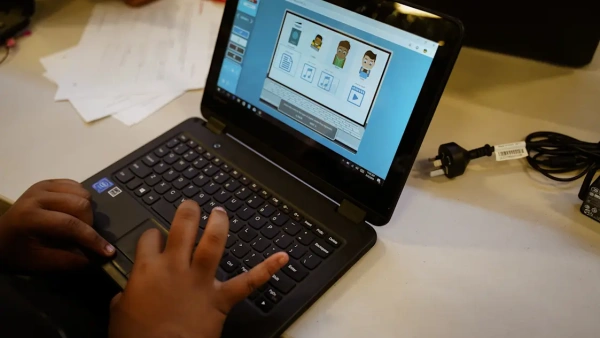
EP Partnerships Director Anna Redmile says that joining forces with Voiceless allows teachers and students to have conversations which promote critical thinking and better understanding of the world they live in.
Education consultant and Voiceless adviser Dr Christina Jarvis agrees. "As we help children embrace an increasingly complicated future, such skills are paramount for developing engaged citizens.”
EdTech will continue to play a key role in New Zealand’s International Education Offering
The EdTech sector was estimated to contribute $300 million to the New Zealand economy in 2017, and those figures will have ballooned with the impact of Covid.
Looking to the future, educational technology will play an increasingly key role in the diversification of New Zealand’s international education offerings. And there is no shortage of amazing and pioneering companies ready to play their part.
-
Southern Institute of Technology cultural education exchange introduces Aotearoa to Kansas
When Covid hit, the Southern Institute of Technology (SIT) knew that it was well placed to engage with its students digitally, as it already had a well-established distance learning faculty. The next move was to look at how that capability could be used for international education.
Using distance learning for cultural education internationally
Beyond widening its offering of fees-based online courses, SIT understood the value of establishing cultural exchanges which would engage current learners and potentially generate interest from future learners, says Study Abroad and Partnership Officer Whitney Irwin. She worked in collaboration with the School of Business faculty to set up the cultural exchange between SIT students and those at Johnson County Community College (JCCC) in Kansas, USA. “Being able to create buy-in and have a motivated faculty to get partnership projects across the line is the key to success. SIT has a wonderful culture, and we have all worked together to reorientate our international strategy for the greater good of SIT and our wider community.”
Experiencing New Zealand Life from afar
Twenty-five JCCC Economics students asked to be involved out of a class of sixty, reflecting a desire to learn about far-flung New Zealand, meet global peers and to try something new. From SIT, 23 Management students and 28 Communications students took part, with both groups of students using the interactions to produce assessed work.
“Our aim was to allow US students to see New Zealand life and get a taste of who we are, what we do, and how do we do it, with the bonus that it could also lead to the opening of doors for students to visit New Zealand, and vice versa,” says tutor Selena Coburn.
Using Zoom, Snapchat, and Instagram, students interviewed each other to learn about our different cultures, looking at differences in communication, lifestyle, politics, and making economic comparisons. Minimum wage, average house prices, and everyday living costs were compared, what the US and NZ dollar bought, and who was actually better off overall.
They learned about New Zealand’s response to the Covid-19 pandemic, rural life, Māori culture, the filming of the Lord of the Rings film trilogy, our outdoors lifestyle, and our connections with Australia. They also explored more personal subjects - relationships, music preferences, religious beliefs, parental expectations, and what they did in their spare time.
“The Kansas students now have a real sense of the kind of people we are,” Ms Coburn says.
Creating opportunities with a cultural education exchange
Digital collaboration also presents an opportunity for students, both in New Zealand and offshore, who could never afford to travel or would be uncomfortable leaving their home country, to still experience the cultural exchange which international education offers,” Ms Irwin says.
“It builds confidence and familiarity with a destination such as New Zealand which may encourage the students to travel here for study later on.”
And this has proved to be the case, with six Kansas students already saying they are keen to come to New Zealand.
“All going well, the intention is to host JCCC students here at SIT in 2023.” Ms Irwin says she expects the changes in the ways education is being delivered will continue well into the post-Covid environment.
“Virtual exchanges are a fantastic collaboration of ideas, which can lead on to the development of other educational products and services.”
-
Vanessa builds digital skills to help drive change in PNG
She had a diploma in computer technology and a good job with a major telecommunications company, but she also had big ambitions and knew that an international education experience in New Zealand would take her where she wanted to go.
“I saw that there were many areas where digital solutions could really make a difference. It was one of the driving forces which motivated me to study in New Zealand.”
As Vanessa was searching for a university where she could study computer science, her friend returned home from Auckland University of Technology. “She told me so many wonderful stories and I was just so inspired to go and experience New Zealand and AUT for myself.”
“She gave me an idea of what to expect and I knew I would be going into a supportive community. It was only when Covid arrived that I truly experienced how supportive it really was.”
Vanessa came to New Zealand on a Manaaki Scholarship, funded through the New Zealand Aid programme. “It was the reason I could come and I’m grateful for the opportunity.
The value of a Manaaki Scholarship
“The scholarships allow students who are passionate about creating a brighter future in their home countries to gain expertise in their field of our study,” she says. “It also provides exposure to new perspectives and the chance to build life-long relationships with like-minded professionals, which is something I really value.”
Although Vanessa’s father and brother both travelled overseas for education, not many of her friends have. “So now I’m trying to be the influence on my friends, encouraging them to take up that pathway.
“I tell them that in New Zealand you get a fantastic study environment and will meet people from many different backgrounds.”
Vanessa considers that a real bonus to her study experience was the opportunity to take up a summer internship.
“It was optional for my programme, but it was provided through the Pacific Cooperation Foundation for students who were part of the Manaaki scholarship programme. I applied so that I could gain experience working in a large multi-cultural organisation.”
Securing a role at Watercare in Auckland she not only gained valuable work experience, but also professional networking opportunities which have resulted in lasting connections with many of her former colleagues. “I had an amazing manager and I reach out to him from time to time. He has really helped me a lot and he’s one of the life-long contacts I’m going to be holding on to.”
Boosting confidence and career
With her Bachelor of Computer and Information Sciences completed last year, Vanessa is now back in Port Moresby working as a Digital Transformation Associate with PwC and loving her new role.
“Studying in New Zealand grew my confidence as a person and has allowed me to progress my professional career,” she says. “It broadened my horizons and gave me a different mindset.”
Deciding to become an international student takes drive and commitment, but the rewards are worth the effort, Vanessa says. “I spent months researching the options and needed to stay motivated during the year it took to secure my scholarship and place at AUT. It took a lot of planning, but it was something I had my heart set on.
“I knew a degree would give me better opportunities and New Zealand was just such an amazing place to study. It has had a very big impact on where I am now.”
If she had another opportunity, Vanessa says she would head offshore again to pursue a Master’s in Data Science, but for now she is busy convincing her peers of the value of a New Zealand education.
“I tell them this is an opportunity you don’t want to miss. Don’t only go to study, go to really experience New Zealand, the culture, and the people.
“They ask me, what if I don’t get the scholarship and I say you’ll never know if you don’t try, so just go for it. Expect to embark on an adventure of a lifetime.”
-
Crowds flock to New Zealand education fairs in Viet Nam
This marked the highest turnout ever for New Zealand education in the country, up from 1,055 visitors last year.
The events series included two agent seminars in Ho Chi Minh City that attracted 47 agents who met with over 50 New Zealand education providers.
The seminars had ENZ provided a New Zealand market update, and directed agents to marketing materials for the latest ENZ campaign ‘New Zealand Taught Me’, to use in their promotions.
Immigration New Zealand provided a separate online update, which was attended by 174 agents.
Media interest in the promotional events has been strong, with 24 news articles published on the events to date that promote New Zealand’s education offering.
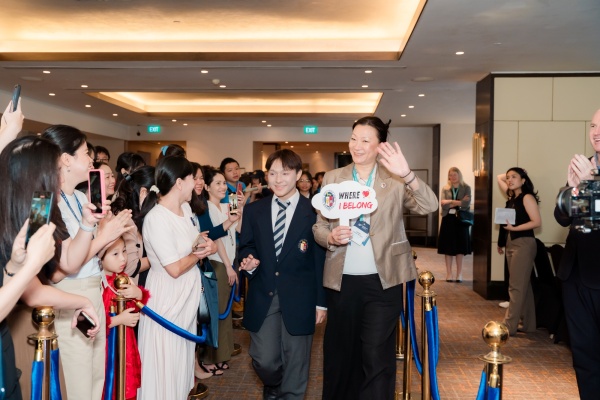
A New Zealand school uniform fashion show at the student fairs gave prospective students a fun and visual way to imagine themselves studying in Aotearoa.
ENZ Market Manager for Viet Nam, Van Banh, said the energy at this year’s fairs was inspiring.
“Seeing such strong turnout and engagement from students and agents reflects the growing interest in New Zealand’s world-class education,” she said.
“We’re proud to support our education providers in building meaningful connections in Viet Nam,” Van added.
Feedback from New Zealand providers who took part in the fairs was largely positive. Many noted the enthusiasm and interest shown by local agents, with one school representative commenting, “It was fantastic to hear how enthusiastic and positive agents were about New Zealand and our education sector — such encouraging feedback all around.”
-
Learning and development
At ENZ, we are committed to creating a working environment that inspires, motivates and provides opportunities for our people to grow. We want you to build new capabilities, enhance existing skills and realise your full potential, while contributing to the success of our organisation.
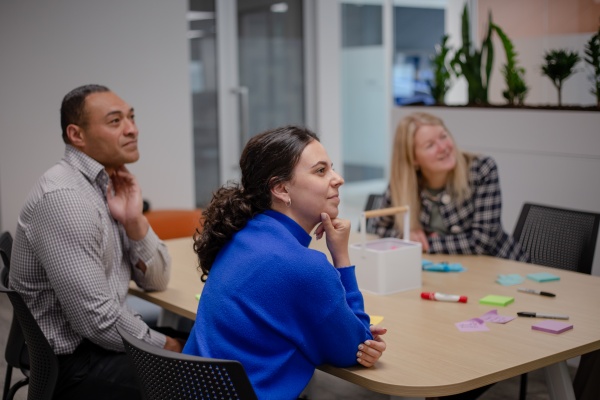
To support this, we provide access to a range of learning and development opportunities, including:
- Dedicated annual learning budget – so you can build your capabilities in ways that empower you to excel while contributing to our shared success.
- On-the-job learning – with small teams and a close-knit organisation, you’ll have plenty of opportunities to stretch your skills and build capability in real time.
- Online learning – explore a wide range of courses and resources that align with your role and support your ongoing growth.
- Cross-team collaboration – take part in projects across teams to broaden your perspective, gain diverse experience and develop new skills.
- Organisation-wide mini-masterclasses – an opportunity to learn and grow together.
-
Photo story – New Zealand education showcased in China
New Zealand speakers take the stage
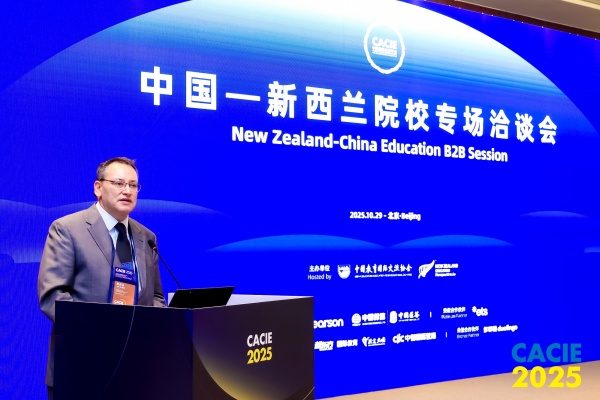
Minister for Universities and Minister of Science, Innovation and Technology, Hon Dr Shane Reti delivering welcome remarks at New Zealand-China Education B2B Session. As part of the China Annual Conference for International Education (CACIE), the B2B Session attracted over 117 visitors to engage in productive dialogues with participating New Zealand tertiary institutions aiming to build collegial partnership.
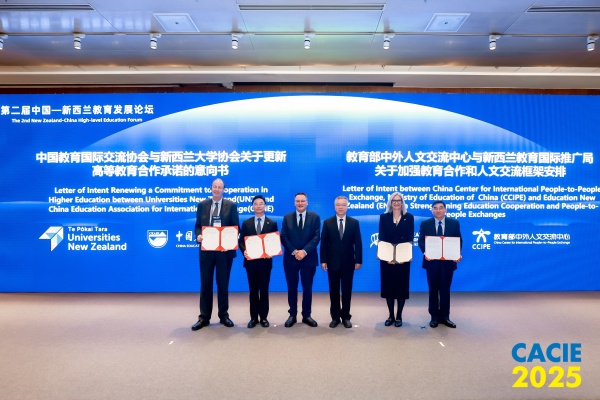
Minister for Universities and Minister of Science, Innovation and Technology, Hon Dr Shane Reti and REN Youqun, Vice Minister of Education of China witnessed the signing of Letter of Intent between Universities New Zealand and China Education Association for International Exchange (CEAIE) and Education New Zealand and China Centre for International People-to-People Exchange (CCIPE) at the 2nd New Zealand High-level Education Forum. The letters of intent between Chinese and New Zealand government agencies places existing collaboration within a more formal framework, allowing both sides to work more effectively together to advance shared education cooperation goals.

Minister for Universities and Minister of Science, Innovation and Technology, Hon Dr Shane Reti delivering remarks at CACIE Night, a key plenary event at the conference. In his remarks, he recognised New Zealand’s role as Country of Honour at CACIE and celebrated the deep and enduring education ties between New Zealand and China.

ENZ Chief Executive Amanda Malu speaking to a packed audience at CACIE Night, highlighting the strengths of New Zealand’s education system, the unique student experience, and the values that underpin our education brand.

Professor Damon Salesa, Vice-Chancellor, Auckland University of Technology (AUT) provided the Academic keynote address at the CACIE Plenary event.
During his address, Damon said: “This year, as New Zealand was recognised as the honour country, we were invited to share our story. It is a story of a small, agile education system that is responding to global challenges with creativity, care and collaboration.”
“It is a story of how we are preparing our learners for a future shaped by advancement in technology, while ensuring that innovation remains human-centred and culturally grounded,” he said.
China Education Expo
The New Zealand pavilion at the China Education Expo was front and centre, attracting many of the 15,000 attendees who attended the Expo in Beijing over two days.

Representatives from New Zealand and China cutting the ribbon to officially open the New Zealand pavilion at CEE.

Te Wehi Haka, the Haka Experience, provided a Māori cultural performance that attracted students, parents, agents and partners to the New Zealand pavilion.
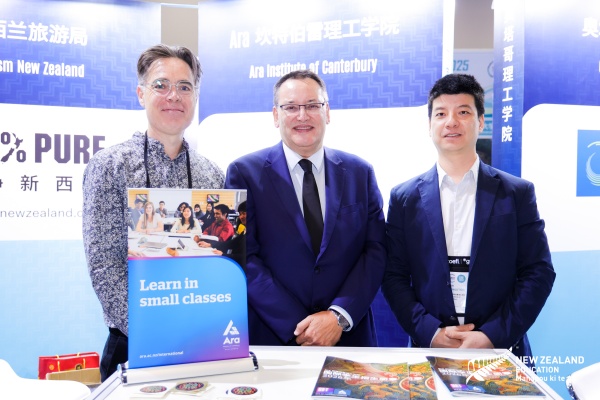
Ara Institute of Canterbury international department staff alongside Minister for Universities and Minister of Science, Technology & Innovation, Hon Dr Shane Reti (pictured centre).
Following the expo, 87% of those surveyed said their knowledge of New Zealand as a country to study in has improved after visiting the New Zealand pavilion
Additionally, 73% of those surveyed said they are more likely to consider New Zealand as a country to study in after visiting the New Zealand pavilion.
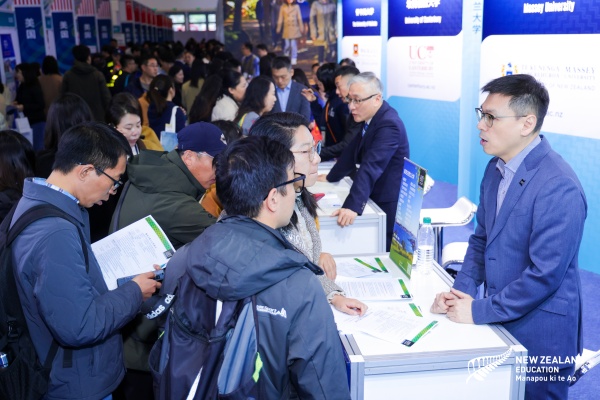
New Zealand education providers talking to crowds of prospective students and their parents at CEE.
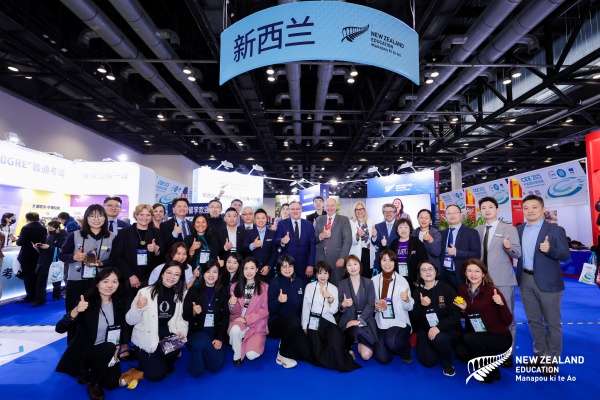
Representatives from the New Zealand government alongside New Zealand education providers at the CEE New Zealand pavillion.
ENZ Agent Seminars in Beijing, Chengdu and Wuhan
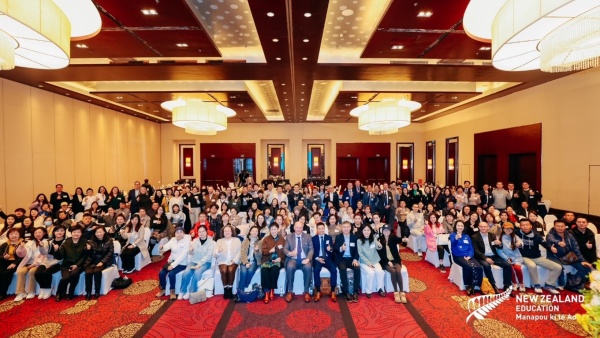
Attendees of the agent seminar in Beijing.
Building on the buzz of CACIE, ENZ hosted three Agent Seminars across Beijing, Chengdu and Wuhan.
The seminars connected over forty New Zealand education providers and around 320 visitors.
The seminars supported New Zealand providers to build connections with Chinese education agents
ENZ Director of Marketing, Adrian Hirst, said the personal connections made were a highlight of the event series.
“Sharing dinner at an agent’s home with parents and future students was a highlight, the informal setting sparked a lively Q&A session, which reinforced the trust families place in the process and the responsibility we all carry in our roles,” Adrian said.
Maximising the Country of Honour opportunity
Being named Country of Honour at CACIE and CEE was a prime opportunity for New Zealand to showcase its world-class education to Chinese audiences. ENZ delivered a strategic, multi-phase approach that built momentum before the events, maximised on-site impact through high-profile media coverage and Ministerial presence, and amplified engagement digitally with campaigns on platforms popular in China.
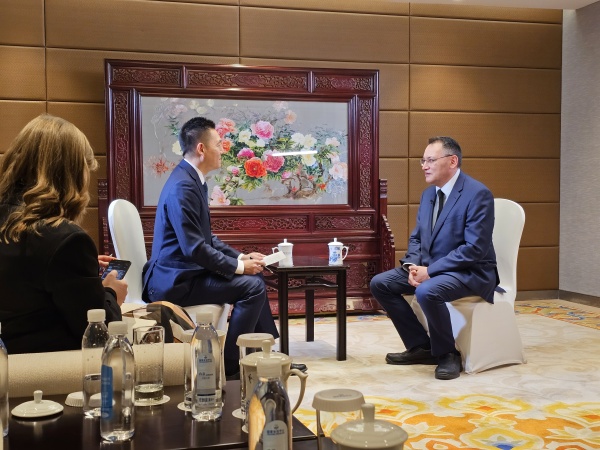
Minister for Universities and Minister of Science, Innovation and Technology, Hon Dr Shane Reti being interviewed by leading state media outlet, CGTN.
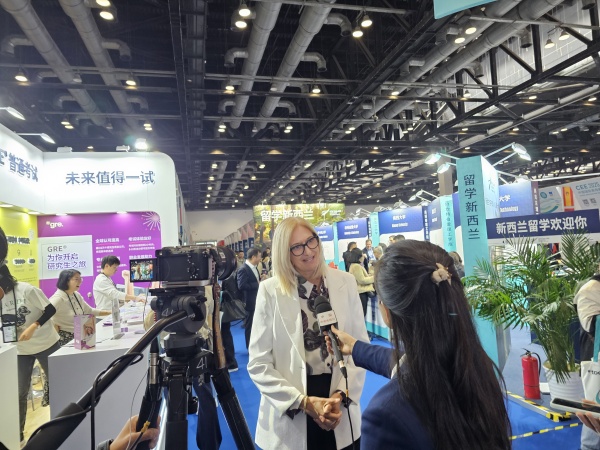
ENZ Chief Executive Amanda Malu speaking to China’s largest state TV network, CCTV at the CEE New Zealand pavilion.

ENZ Regional Director for China, Ron Xavier reporting in from CEE, speaking to Sina Education.