Search
Showing 10 of 7241 results
-
Update from Immigration New Zealand
Peak processing season in full swing
Immigration New Zealand (INZ) has seen an increase in applications submitted during September 2024, ahead of the 1 October visa fee and levy increase and because of our ‘apply early’ messaging.
In September 2023, approximately 3,104 international student visa applications were submitted and in September 2024, approximately 6,893 international student visa applications have been submitted, an increase of 122%.
Now that we are in our peak processing period, we expect these processing times to grow as we receive a higher volume of applications. Students should get their visa application in at least 3 months before they plan to travel to New Zealand for the first semester of 2025.
By now, most students should have received an offer of place from their chosen education provider. Anyone expecting to study in the first term of 2025 should apply now.
We acknowledge that some students who are waiting on key study documentation are unable to apply 3 months ahead. In these cases, they should apply as soon as they have all of their documents, but they need to be aware that late applications may not be processed in time for them to start studying.
Immigration New Zealand has three student processing sites in New Zealand, and has allocated more staff to processing student visas, compared to last year’s peak.
Ensure you submit a complete applicationTo avoid delays, we encourage students, agents and advisers to follow the advice in our student visa information sheets. If they do not include all the required documents when they submit their application, it may be declined.
Applications that have a statement of purpose letter written by the student, telling us about their personal circumstances and plans in New Zealand, help us assess their intent. If a student intends to apply for another visa after study, they should declare this. Students are allowed to apply for another visa after they finish studying.
- Grant waterfront
-
Indian students look to Kiwi universities
The third round of the New Zealand Excellence Awards (NZEA) was announced earlier this month at a student and media event, with John Laxon, ENZ Regional Director for SSEA and actress Kriti Sanon, ENZ’s Brand Ambassador for India, on hand to present.
This round of NZEA is the biggest yet, with 34 scholarships together valued at $215,000 NZD. The scholarships are jointly funded by ENZ and all eight New Zealand universities, offering deserving Indian students partial scholarships to study at New Zealand universities.
On the back of the awards, ENZ also partnered with Universities New Zealand to launch the New Zealand Master’s campaign in India, promoting industry-linked 18-month taught Master’s qualifications for Indian students, with flexible options to suit a student’s career trajectory.
A dedicated microsite to help students explore options is now live.
ENZ’s Country Manager for India, Jugnu Roy, says both initiatives show there’s a growing interest among Indian students for tertiary qualifications in New Zealand universities.
“In particular, they are drawn to the flexible nature of the way New Zealand courses are structured and the fact that all our universities rank in top 3% of the world globally (QS world rankings).
“That they can access these ‘Future-proof’ programmes that help prepare students to enter the global marketplace is what makes us stand out as a study destination compared to other countries.
“Both of our announcements were well received by students and media – ENZ’s scholarship team saw a surge of high quality applications coming in for the 2018/19 round of NZEA.”
To amplify both announcements, ENZ and some New Zealand universities are organising a Counsellor Training Webinar later in the month to equip agents to help promote these initiatives to prospective students.
- 2021 212 Education New Zealand release of the Insight Story
-
From the Chief Executive: Importance of international students to New Zealand
Just before Christmas, Education New Zealand Manapou ki te Ao filed its submission to the Productivity Commission Inquiry into immigration policy settings.
ENZ has taken a strong stand in the detailed 15-page submission, refuting some statements made about international students in the Commission’s preliminary report, and pointing out that international students are different to other temporary migrants included in the inquiry.
In the submission we say international students should not be characterised as coming to New Zealand to seek employment, invest or run a business. Rather, international students coming to New Zealand support the achievement of the Government’s broader goals and objectives, as well as contributing to NZ’s economic development. More than two thirds of international students fund their studies through their families and their own savings and most international tertiary students have left New Zealand within five years of completing their studies.
The submission also discusses the broad benefits international students deliver for New Zealand, including regional development, research output, and strengthened bilateral relationships with other countries.
The Productivity Commission aims to present its final report to the Government in April 2022.
In other recent news, our international teams have recently completed several partnership agreements that will continue to sustain international education while our borders are closed. These include a research exchange agreement with DAAD (a major German academic exchange organisation), a science research agreement with the Indian Institute of Technology Delhi, and digital classroom cultural exchanges with South Korea. We also highlight the growing success of the NZ Global Competence Certificate during 2021. These items are covered in more detail in this issue of E-News.
He rā ki tua – Better days are coming!
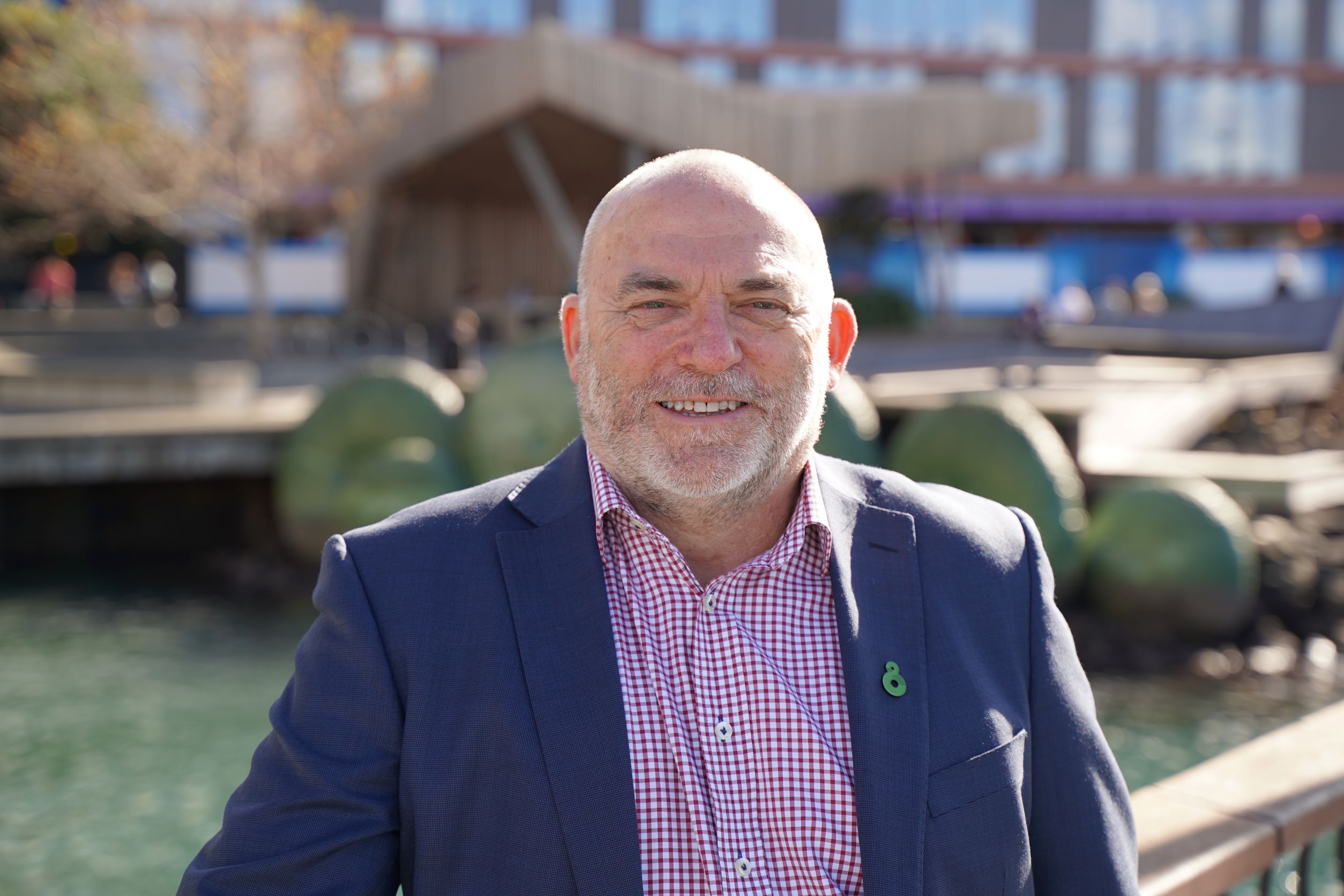
Grant McPherson
Chief Executive, Education New Zealand Manapou ki te Ao -
ISANA’s guide to pastoral care success
ISANA NZ President Lesley McDonald says the breakout sessions will equip attendees with strategies, tools and resources to enhance student support at their institutions.
“Our breakout stream takes an evidence-driven approach to help providers develop strategies and inform investment in student support services,” says Lesley.
“The sessions will help delegates achieve the outcomes of the Code of Practice, while keeping the student voice at the centre of everything we do.”
The breakout sessions span international student services, advocacy, teaching and learning, and policy development, and suggest ways in which New Zealand can improve support for international students while they live and study here.
Highlights include workshops on supporting international student transitions, developing effective pastoral care programmes with your local community, and preparing for critical incidents.
Other features include Distinguished Professor Paul Spoonley talking about the possible effects of international demographic trends on the flow of students to New Zealand. An ISANA panel will also explore how individuals can be agents of change in their institutions to effect internationalisation goals, including by promoting the adoption of intercultural competencies.
ENZ has partnered with ISANA New Zealand to deliver the breakout stream at conference, with a specific focus on student experience. Find out more at www.nziec.co.nz.
- New Zealand Viet Nam Strategic Engagement Plan on Education dated 20 February 2018
- logo for auth0
- Picture3
-
New Zealand experience grows global indigenous network
A special bond forged through a Study Abroad programme, involving Vermont’s Champlain College and Auckland University of Technology (AUT), was marked by the gifting of a unique pare whakairo (carved doorway mantel) to the US College in September.
Called Te Hononga (The Convergence), the pare whakairo was created by kaiwhakairo (Māori carver) Pahi O’Carroll over four weeks in residence on the Champlain campus.
The pare is unlike any other. It is carved from a wood native to the area – black walnut – and evokes values, beliefs and traditions common to both Māori and the indigenous people of Vermont, the Abenaki.
The relationship between Champlain and AUT dates back five years, when New Zealand Honorary Consul and trustee of Champlain College, Dr George Burrill, first established a study abroad exchange programme between the two institutions. To date, over 100 students have participated.
One of the highlights of American students’ time at AUT is the Noho Marae programme.
“Every year students tell us how the Noho Marae programme has profoundly impacted them,” ENZ General Manager – International, Lisa Futschek, says. “It turns them into lifelong advocates for New Zealand, its education system and Māori culture.”
Run by AUT Senior Lecturer in Māori and Indigenous Development, Jason King, the mini-course includes basic Te Reo Māori, Māori mythology, waiata (songs) and cultural customs. It includes with a noho marae (weekend-long marae experience).
King describes the course as “the base of a tree, from which branches and leaves grow”.
“The course puts indigenous goggles on students,” he says. “It opens them up to areas of discussion with their own indigenous people.
“My ultimate aim is to connect us not only globally, but indigenously.”
Thanks to their connection to Māori via AUT and the Noho Marae programme, Champlain College made a formal connection to their own indigenous people, the Abenaki tribe. A representative from the Abenaki was present at the unveiling of Te Hononga.
Many US students choose to keep in touch after they return home through the student-led Whānau Councils. These were first established in 2010 after students from Europe were so moved by their AUT marae experience that they set up their own group to maintain their connection to New Zealand and each other. There are now three Whānau Councils across Europe and the US actively supported by AUT.
For the European council’s 10-year anniversary, members of group are planning to return to New Zealand – this time with their partners and children.
“We tell them during the Noho Marae, after studying in New Zealand you are whānau for life,” King says.