Search
Showing 10 of 540 results for group registration
-
Recipients of the 2026 New Zealand – China Tripartite Partnership Fund
The recipients are:
- Lincoln University, with Beijing Forestry University and Yunnan Agricultural University, on national park landscape management
- Lincoln University, with China Agricultural University and Inner Mongolia Agricultural University, on research in carbon emissions
- University of Canterbury, with Shanghai Normal University and Qufu Normal University, on digital leadership in early childhood education.
For over 20 years, the New Zealand – China Tripartite Partnership Fund has supported researcher-led collaboration through a distinctive three-way structure, connecting New Zealand universities with multiple Chinese partners to build academic linkages and enable knowledge exchange.
The Tripartite Partnership Programme has delivered tangible education outcomes, including contributing to recently approved joint institutes and programmes involving the University of Canterbury and Lincoln University, and their Chinese university partners.
Lincoln University’s joint education programme on National Parks management with Beijing Forestry University was recently approved by China Ministry of Education.
Announcing new joint education programme focusing on national parks management | Lincoln University
University of Canterbury’s cooperation in the early childhood education field with Shanghai Normal University has evolved from a tripartite research collaboration into a joint education institute.
UC advances NZ-China education opportunities | UC
Outcomes from the 2025 Fund recipients
The 2025 Tripartite Partnership Fund recipients completed their projects in May 2026, reporting strong progress in academic collaboration and student mobility, along with joint publication submissions.
One project, led by Associate Professor Fiona Ell from the University of Auckland, focused on preparing future teachers in mathematics and science through comparative study and exchange between New Zealand and China.
The project delivered three key outcomes:
- completion of comparative policy analysis on mathematics and science teacher education policies in both countries
- examining the signature teacher education pedagogies in both countries to learn about new ways to prepare teachers
- delivery of reciprocal exchange visits, enabling in-person observation of school and university practice in both countries.
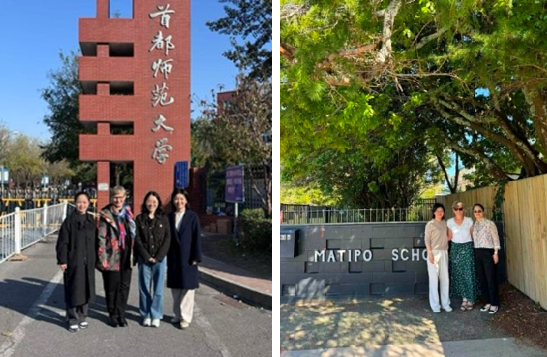
Left: Associate Professor Fiona Ell and Jingjing Liang from the University of Auckland visited research partners at Hangzhou Normal University and Capital Normal University in October to November 2025 as the first reciprocal exchange.
Right: During Associate Professor Yiling Yao and Dr Sisi Han’s visit to Auckland in February 2026, the group visited Matipo Primary School to observe a Year 3 mathematics class. -
Raising the profile of NZ’s PTEs with China education agents
In China, large education agencies play an important role in raising the awareness of a New Zealand education to prospective students and their families. For this reason, 10 director-level representatives from the largest Chinese agencies were invited to join a Famil tour by Education New Zealand Manapou ki te Ao (ENZ) to demonstrate in person how New Zealand offers a modern, high quality and sophisticated learning environment for Chinese students.
In early May, the group visited education providers in Dunedin, Invercargill, and Auckland with a full and varied programme including visits to high schools, a primary school, universities, institutes of skills and technology, and private training establishments. There were also several cultural and tourism activities planned as well as networking events with economic development agencies, private training establishments and English language schools.
A key part of the Famil was the networking function held at the end of the week of activities at Media Design School in Auckland, providing a platform for New Zealand’s Private Training Establishments (PTEs) and English Language Schools (ELS) to engage directly with the visiting agents. Representatives from 24 providers from Auckland, Christchurch and New Plymouth attended the event.

ENZ’s General Manager Māori, Ed Tuari, welcomes the guests to Media Design School with a mihi and welcome.
The event included opening remarks by ENZ’s General Manager Sector Engagement and Innovation, Wendy Kerr, who reiterated to the education agents that New Zealand’s PTEs and ELS play a vital role in New Zealand’s international education ecosystem.
“Our PTEs and ELS are renowned for their innovative programs, real world and practical approach and strong commitment to student success and employability.
These institutions equip students with the skills and knowledge needed to thrive as global citizens in today’s interconnected world.”
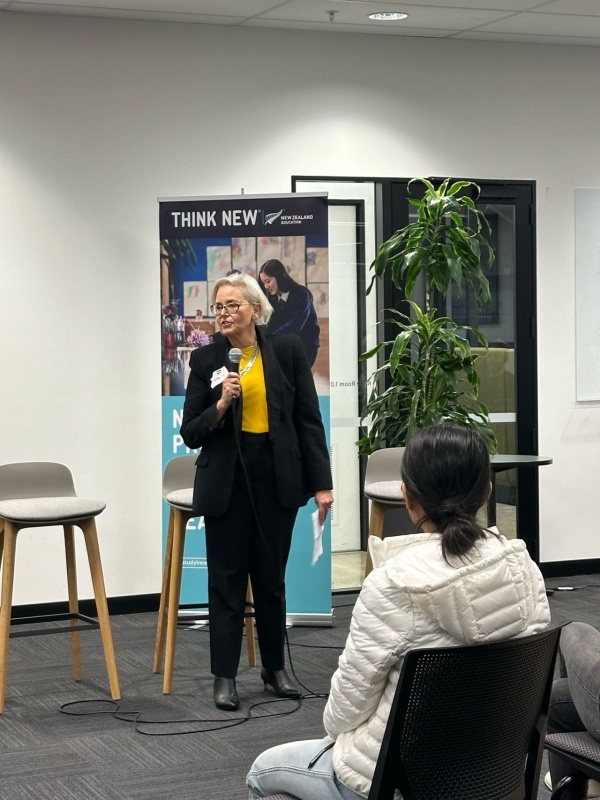
ENZ’S General Manager Sector Engagement and Innovation.
On behalf of ENZ, Wendy also expressed her appreciation to the agents for their ongoing collaboration and support, saying that the agents’ promotion of New Zealand PTEs and ELS opens doors for Chinese students to access world-class education and invaluable international experiences.
A panel discussion took place, focusing on the opportunities and challenges in the China market, featuring three directors moderated by Ruth Cooper, Country Director New Zealand of Media Design School and QTI co-Chair.
During the panel discussion, the agents suggested that providers could enhance their promotion efforts in China by highlighting employment opportunities and utilising Chinese social media to share the most up-to-date information.

Ruth Cooper, Country Director New Zealand of Media Design School and QTI co-Chair (left) facilitates a panel discussion on the opportunities and challenges in the China education market.

With the formalities out of the way, our education providers had the opportunity to mix and mingle with the education agents.
-
COVID-19: How ENZ is communicating to students, agents and providers
On our own channels, ENZ’s communications with students are focused on the following streams of work:
- Keeping students updated with official government information about the COVID-19 situation in New Zealand, and how this affects them
- Supporting international students who are in New Zealand through this difficult time, with content to keep them connected and support their wellbeing.
- Keeping New Zealand top of mind for prospective students and providing information about studying here, so we are well positioned to recruit new students when the crisis period is over and borders reopen.
Agents are a key audience for ENZ, as they are often a student’s first port of call when an issue comes up. Since February 2020, AgentLab has been our primary information channel for communicating with agents updates on COVID-19. The platform has 2,697 users, and has seen a surge in registrations (733 new) in the past three weeks alone.
We recognise that New Zealand education providers are also communicating with their international students regularly. ENZ hosts a dedicated COVID-19 page for education institutions and stakeholders, and has developed messaging for international students at both a tertiary and secondary school level that providers should feel free to recut for their own channels.
Finally, ENZ is communicating regularly with institutions and peak bodies through regular meetings and email updates.
What we’re doing on our student web platforms
NauMai NZ is our central information for hub for international students in New Zealand. Here, students can find out how to access healthcare, open a bank account, find a rental property, and more.
Since February, NauMai NZ has hosted a dedicated COVID-19 page that is regularly updated with key information relevant to international students.
Beyond immediate information updates, our content focus on NauMai NZ for the next few months will be on creating new content to support international students throughout their time in self-isolation and beyond. Wellbeing will be a key theme, as well as helping students stay connected through sharing their stories.
NauMai NZ COVID-19 information page
The Study in New Zealand website has a banner at the top and midway down the page that directs to the NauMai NZ COVID-19 info page.
Tohu the chatbot is available (who lives on the Study in New Zealand website, NauMai NZ and on Facebook Messenger) to answer a number of COVID-19 related queries.
What we’re doing on student-facing social media
Our strategy for our student social media pages is first and foremost to ensure COVID-19 information is easy to find for anyone who visits our social pages. Across our student-facing Facebook, Instagram, Twitter, Facebook Group and Weibo pages, we have ‘pinned’ informative posts and links directing to the NauMai NZ COVID-19 page, for up-to-date, relevant information. On WeChat, we have a site tab with regular updated COVID-19 information.
Over the coming weeks and months, our social media content will also focus primarily on supporting the wellbeing of current international students. We’ll be working with our Kiwi Ambassadors and other students to share their stories, experiences and tips, helping to keep students connected with each other.
Student emails
Most of the emails our marketing team sends out to students and prospective students are automated well in advance. It was therefore important for ENZ to review all of our emails to ensure they are relevant in the current national and international environment.
- We have paused all of our automated emails except enquiry emails that link prospective students through to institutions they are interested in.
- We have emailed our current student and prospective student databases to acknowledge the situation and link them through to the NauMai NZ COVID-19 page.
- Our key message here was that the safety and wellbeing of international students in New Zealand and New Zealand students who are overseas is our top priority at this time, and we look forward to welcoming new international students when borders reopen, and life starts getting back to normal.
- We will be considering our ongoing automated email stream options over the coming weeks, and re-assessing any necessary content changes.
-
MyStudy NZ WeChat mini programme gets a refresh
MyStudy NZ is our intelligent matching tool which matches prospective students to courses and institutions in New Zealand based on a set of questions and areas of interest. It can be found on www.studyinnewzealand.govt.nz for our western markets.
However, for our China market who predominantly use WeChat, we developed a mini programme for them in November 2018.
The new version of the mini programme continues the original smart matching, but is more user-friendly and personalised, making it easy for students to obtain official information about application.
How is 2.0 better than 1.0? We believe it’s better in eight different ways:
- Social sharing enabled – Prospective students who come across their dream school can now share it to a WeChat friend or group chat immediately. The recipient can open the mini programme and view the details of the school as well.
- One-click authorisation – Students won’t have to fill in all the details to become a member anymore. With one click, prospective students can authorise their WeChat accounts to become registered MyStudy NZ members.
- Clear living costs displayed – Once prospective students get a match, they can expand and view the annual living costs in a pop-up window.
- You can see the latest content with added filter – Without registering, students can view the latest OA articles and filter based on views or posting date.
- UX (user experience) optimisation – Users can now choose paths when entering the mini programme.
- Complete UI (user interface) update – To remain consistent with the refreshed ‘I am New’ brand.
- New notifications – Push notifications will be sent to remind students to register, do course matching, bookmark favourite schools and talk to them.
- Speed optimisation and no more errors – We have done some coding optimisations and upgraded our server so the mini programme will load faster and users shouldn’t receive any more error messages.
-
From the CE: Honouring our commitment to international students
The Government has announced today that a new border exception will allow 250 international PhD and postgraduate students to enter New Zealand and continue their studies.
Read Minister of Education Chris Hipkins’ official release.
This is a positive first step on the path to recovery and is consistent with the Recovery Plan for International Education.
It is recognition that international education is important to New Zealand and will play a vital role in the country’s rebuild and recovery from COVID-19. Prior to COVID, international education was New Zealand’s fifth-largest export earner, earning $5 billion a year and supporting around 45,000 jobs.
Moreover, the international students included in this group have had their postgraduate study or research disrupted by COVID-19, and cannot complete it due to the practical nature of their course. They have made a commitment to New Zealand, and that’s something we want to honour.
ENZ’s next step is to work with tertiary providers as they identify and select eligible students, and to continue to work with other government agencies to ensure a safe and considered process is developed for these students to enter the country.
ENZ is looking forward to further border exceptions that will benefit as many providers and students as possible, when it is safe to do so.
We will also have work underway to make sure the students entering New Zealand receive a warm welcome and have the information they need to succeed.
I am very proud of the manaakitanga that New Zealand education providers have been demonstrating throughout the COVID-19 crisis this year.
Please continue to encourage your students to sign up to NauMai NZ, our digital home for students who have chosen to study in New Zealand. Over the COVID-19 crisis, it has continually been updated and expanded with information international students need to know.
In the early hours of Saturday, 2 October, ENZ’s NauMai NZ was awarded a Highly Commended in the Student Support category at The PIEoneer Awards. We are delighted to be recognised for this work alongside such a varied list of international organisations.
You can read more about NauMai NZ in this issue of E-News.
He waka eke noa (we’re all in this together).
Grant McPherson
Chief Executive
Manapou ki te Ao
-
New initiatives to keep New Zealand education dream alive in Viet Nam
Earlier this year, ENZ asked study providers how we can support the visibility of New Zealand schools who usually operate in the Vietnamese market.
Two proposals have now been selected.
The first will fund Year 10 students from five Manawatū schools to undertake a customised version of AFS’ Global Competence Certificate (GCC).
AFS is partnering with Massey University to facilitate the programme and each New Zealand school will partner with a Vietnamese school from TTC Education, ENZ’s private school network partner with over 18,000 students.
Students from both countries will join weekly virtual workshops facilitated by Massey University – in the last four weeks of New Zealand’s school year – focused on developing the students’ lifelong global ‘power skills’ and providing them with an opportunity to interact and connect directly with their overseas student counterparts.
CEDA and Palmerston North City Council will offer scholarships for up to 25 Manawatū students to participate in the Vietnam GCC, while ENZ will fund the same number of students to participate in Viet Nam.
The second initiative will support the development and implementation of a digital marketing strategy for 14 New Zealand schools. This initiative, which is being delivered by Lightpath Consulting Group, will include dedicated in-market representation, market advice, agent engagement support and a customised Vietnamese website.
The activities will help build a strong, in-market sector presence while borders are closed. They will enable the schools and ENZ to engage through tailored digital marketing programmes to boost the reputation of New Zealand schools with Vietnamese audiences.
Viet Nam is an important market for New Zealand schools. In 2018, it was one of our only source markets to record student growth on the year before, with 39 percent more Vietnamese students choosing to study here.
“Education New Zealand remains committed to supporting New Zealand schools’ activity in Viet Nam and given the current challenges presented by COVID-19, we believe that supporting in-market representation models will maintain visibility in a market which has demonstrated continued growth for the sector,” ENZ Regional Director – Asia, John Laxon, says.
-
Digital skills and global citizenship at #NZAsiaTech Code Camp
A team of six students from Te Kura Māori o Porirua, a predominantly te reo Māori medium school in Porirua, interacted with school students in Japan, South Korea, Thailand, Viet Nam, Philippines, Malaysia, and Indonesia.
The overall theme was tourism, seen through the lens of the United Nations Sustainable Development Goals (SDG) - a theme that is highly relevant for the Asia-Pacific region. Students were given the task of profiling their home country’s SDG initiatives, with a focus on sustainable tourism.
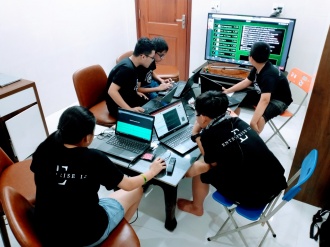
Team Enterprise 12 from Viet Nam work on building website project during #NZAsiaTech Code Camp
The North Asia Centre of Asia-Pacific Excellence partnered with educational coding programme Code Avengers and Education New Zealand Manapou ki te Ao to deliver the event.
“With New Zealand’s borders having been closed for more than two years, it’s crucial that the next generation of students still have opportunities to build cultural competencies and make connections across the globe,” says Education New Zealand’s Regional Director for Asia, Ben Burrowes.
“The #NZAsiaTech Code Camp was an opportunity for Kiwi students to re-establish connections with students in other countries, while gaining critical digital skills to prepare them for the future.
“It also also gave a taste of New Zealand’s education offering to prospective international students from the Asia region, who might consider enrolling in high school or tertiary study in New Zealand in the future.”
Code Camps can help to generate subsequent visits by interested students to New Zealand. For example, the Code Camp held at Waseda Jitsugyo School in 2021 and at Waseda University Junior and Senior High School in 2022 has led to Waseda’s group students’ programme sending around 50 students from three schools to New Zealand for three weeks in March 2023. Code Camp served as a great opportunity for students and teachers from Waseda University affiliated schools to experience our world-class digital education first-hand.
Honam Jeon, the Education Manager at Gangwon International Education Institute said the programme helped increase awareness of New Zealand:
“South Korea is very interested in international engagement and exchange programmes for school students. The #NZAsiaTech Code Camp was a perfect example we want to continue to join. Thanks so much again to ENZ for organising the well-structured programme.”
The online programme included team building exercises, English learning, HTML coding lessons, and the creation of a website by student teams, to demonstrate their understanding of the importance of sustainable tourism.
“As our students look to enter an increasingly globalised word, developing cultural connections and transferable skills is so important,” says Te Kura Māori o Porirua school principal, Whāea Evelyn Wharehinga.
“The Code Camp has been an exciting growth experience for our students, who have extended their digital literacy skills while having the chance to connect with students of different ethnicities and cultures across the Asia-Pacific region.”
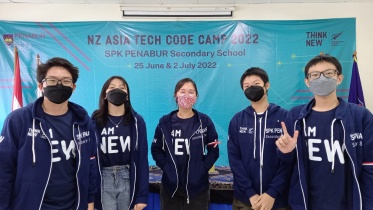
Team Indonesia was the winning team after presenting their newly developed website on Sustainable Tourism to a virtual panel of judges.
The students presented their sustainable tourism-themed websites to a panel of expert judges at the awards ceremony on 2 July 2022, with students from Indonesia winning the top prize.
Steve Budd of Code Avengers, a global edtech company based in New Zealand, said it was a great programme to participate in.
“It was a privilege to gift all participants a one-year free subscription to the Code Avengers site as part of our mission to build lasting digital capabilities for educators and young people, and bridge the digital divide,” says Budd.
-
Survey shows that New Zealand is among top destinations for Brazilians who study abroad
Belta’s annual survey, sponsored by Education New Zealand Manapou ki te Ao (ENZ), was conducted between December 2022 and April 2023 with 763 students and 317 international education agents from all regions of Brazil surveyed to assess their perceptions of international education. The survey results were shared at a recent event in Sao Paolo with dozens of agents and media attending, in person and virtually, to hear about the survey’s latest findings.
ENZ’s Market Development Manager in Brazil, Bruna de Natale, delivered a short speech ahead of the results release. She said it was positive to see so much interest in the release of the survey results, especially when the results revealed that New Zealand continues to rank strongly as an international education destination amongst Brazilian students.
“In this most recent survey, New Zealand moved to seventh position on the list of top education destinations sought by Brazilians who studied abroad, compared to before the Covid-19 pandemic when it was in eighth place. The main reason driving country choice for the students surveyed is the quality of life – New Zealand ranks very well for the quality of life, education, and the protection of civil rights.
“The quality of teaching is another reason given by those surveyed when choosing New Zealand and 60% of participants rated the quality of our English schools and language programmes as good or excellent. It is fantastic to see that New Zealand continues to attract attention as a quality international education destination and it is certainly on the radar as a desired destination for future exchange students,” said Bruna.
Of the international education agents who were surveyed, 52.9% reported that the demand for students interested in New Zealand has remained stable since the borders reopened, while 20.6% recorded growth in interest. This group projects that the numbers of Brazilian students travelling to New Zealand will return to pre-pandemic levels in 2023 and 2024, with the highest flows expected for the first (35.3%) and second quarters of 2024 (32.4%), with demand increasing gradually from the first quarter of 2023.
For a copy of the full survey in English, please email belta@belta.org.br.
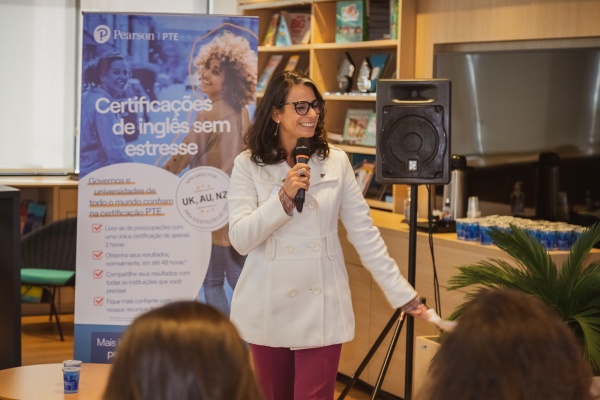
Bruna delivering an introductory speech at an event which released the results from Belta’s survey on international education.
-
ENZ launches Korean Student Reporters Programme
Throughout 2021, this group of student reporters will share everything from their personal experiences to advice for Korean students about to embark on their New Zealand study.
ENZ Senior Market Development Manager – South Korea, Kay Lee, said that the ENZ Korea blog is an invaluable resource for prospective international students there.
“All the student reporters are very keen to help future international students avoid mistakes and make better decisions. Their vivid and inspiring stories will help potential international students from Korea to prepare for their study in New Zealand post-COVID.
“We’re encouraging them to write in an honest and informative way, as their insights as a student are priceless to someone thinking about studying in New Zealand in the future.”
The student reporters consist of 10 tertiary students (from University of Auckland, University of Otago, University of Canterbury, Unitec, WelTec and Up International College) and 10 secondary school students (from Nelson College for girls, Sacred Heart Girls’ Collage, Bethlehem College, St Peter's Cambridge, Takapuna Grammar School, St Margaret College and Auckland International College).
The first batch of stories in January included headlines like ‘My first summer break in New Zealand’, ‘Life in New Zealand during COVID-19’, and ‘University entrance preparation in New Zealand’.
The student reporters programme is the first time ENZ has asked international students from Korea to contribute to our digital content platform in the local language. It is part of ENZ’s Korea team’s efforts to keep the New Zealand education brand alive in-market under the New Zealand Government’s Recovery Plan for International Education.
-
Inviting expressions of interest for the Tokyo Global Friendship programme
For the fourth year in a row, Education New Zealand Manapou ki te Ao (ENZ) is pleased to invite expressions of interest (EOI) for the opportunity for eight students (ages 14-18) and one teacher to join the Tokyo Global Friendship programme hosted by Tokyo Metropolitan Board of Education from 4-11 July 2026.
Tokyo Global Friendship Programme | 4 – 11 July 2026
Teachers are invited to submit a group EOI (one application per school) by Friday 6 March.
Note:
Schools must be signatory to Code of Pastoral Care.
The accompanying teacher must be from the same school as the students and will need at least conversational Japanese.
Students and the accompanying teacher must be New Zealand Citizens and have a valid passport, with a minimum of six months available from the date of travel, before expiry.When will teachers be notified on the status of their school’s EOI
Teachers who submit a completed EOI for their school by Friday 6 March will be notified by Wednesday 11 March if successful. They will have until Thursday 2 April to submit their full application form which will be sent on to the Tokyo Metropolitan Board of Education.
Visit this link to read FAQs before submitting an EOI
Visit this link for an overview of the programme and to submit your EOI