Search
Showing 10 of 538 results for group registration
-
Tauranga education delegation travels to Korea and Japan
Two successful education fairs were held in Korea, with more than 100 Korean students committing to study in Tauranga from Term 1, 2023 onwards. 400 people attended the events overall.
Relationship-building was also a key focus of the trip, making many new connections and strengthening long-term ones in both countries.
Korea
The trip to Korea was coordinated by Education Tauranga and TKT agency. The two organisations held education fairs together in Korea for 12 years prior to COVID-19. This trip was especially important as 2022 marks 60 years of diplomatic relationships between New Zealand and Korea.
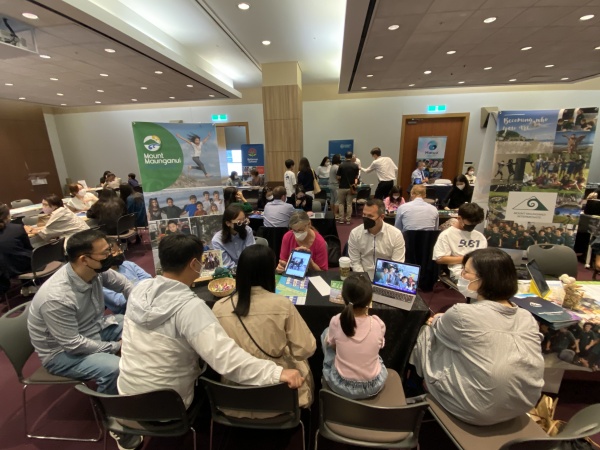
Regional marketing at the Seoul education fair
“It was exciting to travel offshore again to promote the Tauranga region. Korean families contribute so much to our city and our community - socially, culturally, and economically,” says Education Tauranga Regional Manager Melissa Gillingham.
The trip provided an insight into Korean culture and helped school representatives understand the support families need as they settle into life and school in Tauranga.
On average, Korean families stay in Tauranga for two to three years and contribute about $20 million per year to the local economy. A single family will spend about $100,000 per year on various costs related to establishing a home and participating in tourism activities.
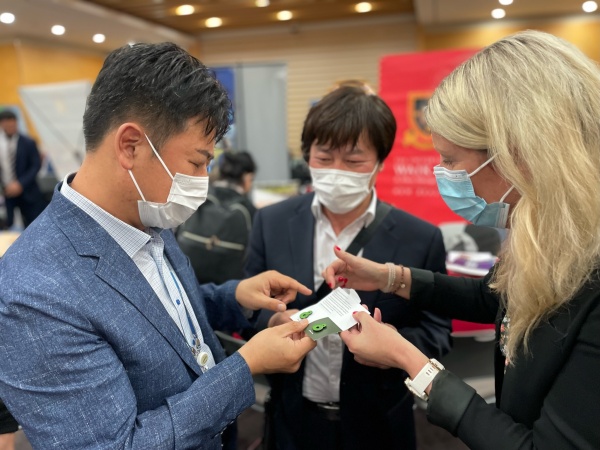
Anne Young from The University of Waikato explains the Tu Ngatahi pin to a prospective parent at the Seoul education fair
Because the group was the largest New Zealand delegation to visit South Korea since the end of 2019, Education Tauranga organised a special Alumni Event with support from Education New Zealand. Hosted by New Zealand’s Ambassador to South Korea, Philip Turner, the event attracted 70 alumni Korean families.
The families were eager to reconnect and relive the positive experiences they had living and studying in Tauranga.
“It was fantastic to have the opportunity to connect with them again face-to-face and see what they've been up to since returning to Korea,” says Anne Young, International Manager of the University of Waikato Tauranga Campus.
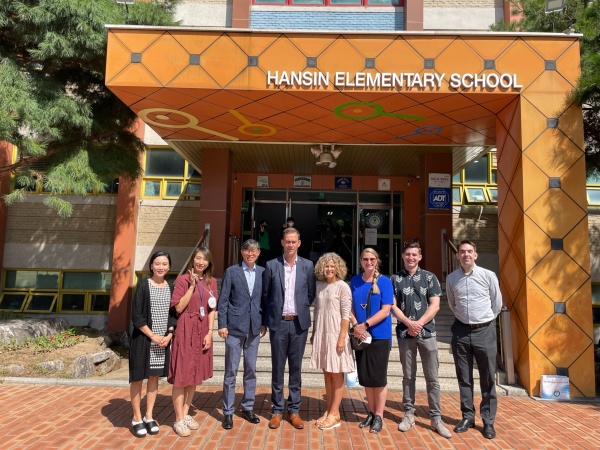
Greenpark Primary School reconnecting with the sister-school they have had reciprocal exchanges with for 18 years, Hansin Elementary
Visits to sister schools were next, with representatives from the delegation calling on Sanui Primary School and Hansin Elementary. They were treated to full school tours and discussed next steps in strengthening their relationships and the potential for restarting international exchanges once again.
In addition to the education fairs, this was an opportunity to reconnect with Tauranga’s ‘friendship city’ in Korea; Ansan. Situated on the outskirts of Seoul, Ansan is a planned city that grew from a population of 120,000 to over 750,000 in the past 35 years. With a wide scope of primary and secondary industries, and a strong focus on sustainable growth, there are similarities connecting Tauranga and Ansan city.
Japan
After the success of the events in Korea, Tauranga city representatives Dean Prendergast and Melissa Gillingham travelled on to Japan to continue reconnecting with their international contacts.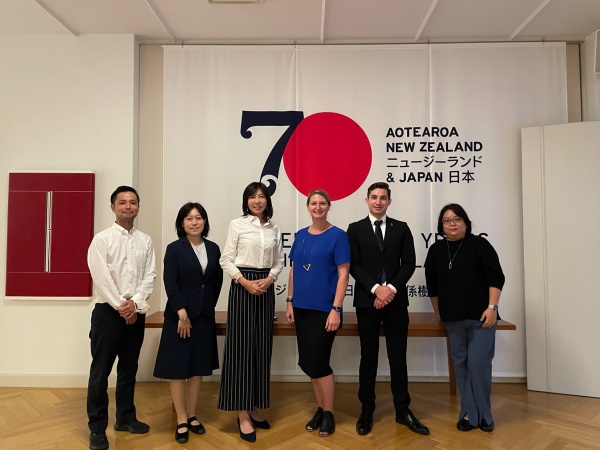
Meeting with Waseda University and Japanese Women’s University at the New Zealand Embassy, hosted by ENZ representative, Misa Kitaoka
This year marks 70 years of diplomatic relations between New Zealand and Japan. Mr Prendergast and Ms Gillingham visited the New Zealand Embassy to celebrate this milestone. There they met with representatives from top Japanese universities, Waseda University and Japan Woman’s University, to discuss studying abroad and online exchange activities.
High interest in the United Nations’ 17 Sustainable Development Goals is shared between the two schools.
“It’s important to discuss ways for youth to connect over common goals that will continue to unite our two countries for future generations,” Ms Gillingham says.
The final stop on the trip was Tauranga’s sister-city, Hitachi, in the Ibaraki prefecture. Next year the two cities will be celebrating the 35-year anniversary of the sister-city relationship, a significant and long-term connection that has seen many exchanges on an educational, economic, and personal level.
The representatives had an opportunity to meet with Hitachi Mayor, Haruki Ogawa and exchange stories. Mr Ogawa was delighted to meet with the delegates and is waiting eagerly for the next mayoral delegation to visit Hitachi.
-
From the Chief Executive: Strengthening our global education brand and New Zealand’s diversity
Kia ora koutou,
On Monday, we were delighted to see the signing of the India New Zealand Free Trade Agreement taking place in New Delhi. This is a positive development and signals a new era in the relationship between New Zealand and India.
Earlier this month, Sahinde Pala, our Group General Manager – International and Sector Engagement, and I were pleased to meet with the Chair, CEO and Board of the India New Zealand Business Council (INZBC). With India a priority market and our second‑largest for international students, the meeting was a valuable opportunity to discuss collaboration, including market research and alumni storytelling.
Indian students are thriving in New Zealand. Results from the International Student Experience Survey continue to show that Indian students report a highly positive overall experience, underpinned by strong ratings for education quality, people and community connections, and arrival and orientation. These findings reinforce New Zealand’s reputation as a welcoming, supportive study destination where Indian students feel connected and well supported across their study journey.
In turn, the Indian student community continues to make a significant social, cultural and economic contribution to Aotearoa. This contribution was recently acknowledged by the Prime Minister, who highlighted the Indian community as an outstanding role model, noting their ambition, aspiration and strong work ethic.
Alongside engagement with India, our work across priority markets continues more broadly. Our China team is preparing to attend the World Digital Education Conference, hosted by China’s Ministry of Education, focused on how digital and AI technologies can enhance education quality and equity globally.
In case you missed it, last week I was pleased to share new ENZ research showing New Zealand’s international education brand continues to strengthen.
Our Global Brand Health and Awareness Survey found that 22 percent of prospective international students now rank New Zealand in their top three study destinations – reaching the Government’s 2034 Going for Growth target nearly a decade early.
Given ENZ’s focus on bringing New Zealand’s education brand to life internationally, it’s encouraging to see that prospective students are not only aware of New Zealand, but are seriously considering it as a study destination. I encourage you to read more in our media release.
Closer to home, I’m looking forward to supporting the school sector at the annual SIEBA Hui – New Zealand’s largest international education conference for schools, in Christchurch next month. ENZ values its relationship with SIEBA as we work together to support high‑quality, sustainable growth.
He whenua auaha tātou, he whai tikanga, he whai whakaaro tonu ki te hapori.
We are a creative, practical and community‑minded country.Ngā mihi nui,
Linda Sissons
Acting Chief Executive -
Teaching English in Korea
The temperature drop of over 30 degrees, didn’t deter Christine Black, teacher from James Hargest School in Invercargill from enjoying a unique opportunity to teach a week-long English programme sponsored by the South Korean government.
Black and two other teachers from New Zealand, Elizabeth Henry from Kowhai Intermediate School, in Auckland and Patsy Richardson, from Te Puke School, in the Bay of Plenty were selected to teach the English programme in South Korea.
The teachers were selected through an application process facilitated by ENZ to teach 15 students from throughout South Korea about New Zealand culture and history at the JEI education centre in Cheonan from 19-23 December 2022.
Through the English Language programme funded by the Korean government, New Zealand teachers were invited to Korea to support Korean school students from rural agricultural backgrounds to extend their conversational and speaking skills. The students also engaged in hands-on classroom activities that included mini science experiments.
The one-off 2022 Korea-New Zealand English Language Training Program was sponsored by EPIS, an agency tasked by the Korean government to support English language training for Korean students and facilitated by Korea FAO Association.
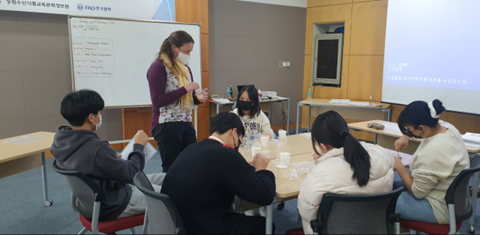
Teacher Christine Black leads the students in an experiment making slime. Photo credit: Korea FAO Association
Yoon Cho, Senior Manager of Korea FAO Association, said it was an experience the students will never forget.
“Well before the teachers arrived, they could feel their passion and enthusiasm for meeting students from rural areas in Korea. I would like to thank the New Zealand teachers who took time to visit Korea at the end of December, especially Christmas week, and made meaningful memories for middle and high school students in Korean rural areas,” Cho said.
School teacher Christine Black was excited for how her first visit to South Korea broadened her understanding of Korean culture.
“It was exciting to travel there to broaden my understanding of this culture as my high school has international students from South Korea. This definitely was a win-win situation to be able to travel somewhere new to me and also share our New Zealand culture.”
As part of the programme, each teacher was responsible for a couple of aspects of New Zealand. Black was responsible for sharing the life of a New Zealand high school student and introduce the different regions of New Zealand and their unique characteristics.
For Patsy Richardson, a teacher at Te Puke School, it was her first time in South Korea, and she introduced waiata to her homeroom group.
“I chose to teach the waiata ‘Tutira mai ngā iwi,’ with actions. We had three 30-minute slots in which to learn it and they had it perfected. Now whether that is because they are willing and diligent students, or I am such a fantastic teacher, is to be debated. The students also performed the waiata at the closing ceremony [for the programme] and it was a great display of cross-cultural connections,” Richardson said.
Despite the short time spent together, it was a great opportunity for the students and teachers to build relationships and cultural understanding between the two countries. The students in Korea were enthusiastic about speaking in English and enjoyed learning some Kiwi slang.
An intermediate school student, Kyungdon Joo, said he studied English and made new friends during the training which gave him a new perspective. “Now I have another goal: To go to New Zealand and learn more about New Zealand.”
For Elizabeth Henry, a teacher from the Auckland region, the English teaching programme was more than the opportunity to enhance language skills. Henry recognised the importance of being a cultural ambassador as she was one of the first New Zealanders the students had ever met.
“I was prepared to bring my best teaching practice to this opportunity prior to the trip not realising that once in Korea, the picture of my purpose there was so much bigger than I had anticipated. Not only did I bring my very best teaching practice to all the students I taught, my mindset changed, thinking one day these children will share this experience with their family and friends.”
Final reflections
Black reflected on the opportunity it provided for the New Zealand teachers as well as students.
“I think it is really important for teachers to grab opportunities like this, especially as there is more and more diversity in our classrooms, and it is important to get first-hand experience of other cultures.”
Henry summed up the English language teaching experience well. She hopes that whenever the students think of New Zealand “a happy memory pops into their mind from this experience.”
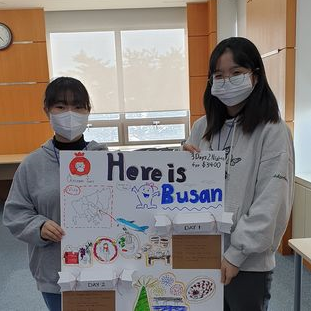
Students present their destination marketing posters Photo credit: Patsy Richardson
Education New Zealand Manapou ki te Ao would like to thank North Asia CAPE and regional education bodies for sharing the opportunity with contacts. This was a one-off overseas short-term teaching programme organised by the South Korean government. ENZ will continue to share these opportunities as they arise with education cooperation partners through the CAPE and regional education channels.
-
High level of interest in vocational education forum
Organised by Skills Consulting Group and Education New Zealand Manapou ki te Ao (ENZ), together with Te Pūkenga, the forum provided an opportunity to share knowledge and insights on best practice in technical and vocational education and training, in an accessible format.
A key theme was the importance of close relationships with industry, particularly in terms of apprenticeships. For some participants, a longstanding perception that higher education is more important than vocational education remains a challenge. Student panel participants also talked about the confidence and support that their parents provided when they were making decisions about whether to enter vocational education programmes, and having no regrets about the career paths followed.
Topics covered included solving skills shortages, apprenticeships, youth employment, lifelong learning, digital transformation, sustainability, and promoting diversity. Senior government officials, major companies, international organisations, sector leaders and students from around the world spoke at the forum, which was opened with a speech from Education Minister Chris Hipkins.
Text-based chat and discussion tools in the virtual environment were multilingual, providing instant translation to enable communication and networking across 28 different languages.
The China – New Zealand Higher Vocational Education Summit was also part of the APAC TVET Forum and featured a dedicated virtual room for Chinese presenters and audience members. The Summit provided a platform to:
- discuss New Zealand’s recent experience of vocational education reform
- further develop cooperation in vocational education between New Zealand and China, building on the existing joint programmes between Te Pūkenga subsidiaries and vocational institutions in China.
Keynote speakers from China included Chen Dali, Deputy Director, General Department of International Cooperation and Exchanges from the China Ministry of Education, and presenters from industry including Wang Jinsheng from Qingdao Technical College.
ENZ Business Development Manager Richard Kyle says APAC TVET is the only forum of its type in the region.
“It was particularly encouraging to see double the number of registrations this year, building on the success of the first forum in 2021. There’s clearly a high level of interest in this event, and it’s a great opportunity to showcase New Zealand’s strengths in vocational and technical education.”
Positive comments were received from many attendees.
“Brilliant tech. Excellent management…and good content.”
“Amazing numbers... Very informative sessions and I’ve got people more interested in our upcoming activities.”
“It was well organised from the invitation to the closure of the forum – well done job!”
-
Haere rā to Brazilian students
Farewell events for the students have been held around the country, to demonstrate our appreciation of this opportunity, and contribute to the students’ memories of New Zealand. The events also provided an opportunity for diplomats from both countries, and local government representatives to demonstrate the value of international education in building global connections and long-term relationships.
Events included a sailing trip with Maritime New Zealand, Māori performances, outdoor experiences, and museum tours, organised by Education New Zealand Manapou ki te Ao (ENZ) alongside regional development agencies.
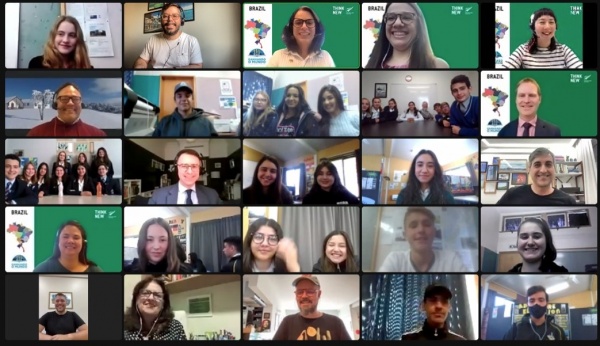
Final farewells from students and their supporters in New Zealand and Brazil.
The final farewell event was online, and included New Zealand Ambassador to Brazil Richard Prendergast, Henrique Choer Moraes, Minister-Counsellor at the Brazilian Embassy in Wellington, and Mr. Roni Miranda Vieira, Director of Education from the Education Secretariat of Paraná state speaking with the students and hearing about their experiences, alongside others involved with the trip.
‘The people were very welcoming – a wonderful experience.’
‘New Zealand is beautiful, this is the best experience of my life, I’m loving it here!’
‘We got to know so many places.’
‘A lovely country and a lovely experience – thank you so much.’
‘We did a boat cruise in Milford Sound.’
‘We went with the school to a lot of different places.’
‘I had a really great time with my host family. They were very kind to me. I’m very sad to leave them.’
‘I’m getting on very well with my host brother – I think I will miss him when I go back to Brazil.’
‘It has been an amazing experience – I am learning so many things.’
‘My host family owns a coffee shop in Rangiora where I go on weekends and have a chance to know different people, they also own a farm and have taught me how to shear a sheep. Another interesting thing I noticed is that depending on the city, I hear a different accent.’
ENZ’s Market Development Manager in Brazil, Bruna de Natale, says this was the first big group of students to come to New Zealand after our borders reopened.
“We had all been waiting eagerly for New Zealand’s borders to open again so this programme could get underway after almost two years, and I know the Kiwi schools involved were very excited to welcome these students. It was good to hear about the special memories the students will take home from their trip, including how much they learned. For most students, this was their first international experience and for many of them, being in a multi-cultural class in New Zealand was a very different experience from home.
“We hope that the students will stay connected to New Zealand and that this experience will be a good basis and incentive for them to explore further international study options in the future – who knows, we might welcome them back to New Zealand someday, that would be lovely!”
The study programme is fully funded by the Paraná Government, through Paraná’s Secretary of Education and Sport, and is expected to continue next year for around 2,000 students. We hope that some of them will be able to come to New Zealand.
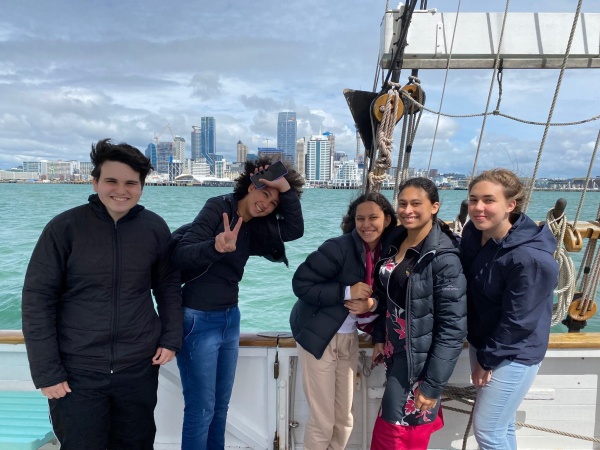
Auckland-based students took part in a sailing trip thanks to Maritime New Zealand and Auckland Unlimited
Students from Freyberg High School saw a presentation on the Iny͂ People of Central Brazil exhibition at Te Manawa Museum in Palmerston North
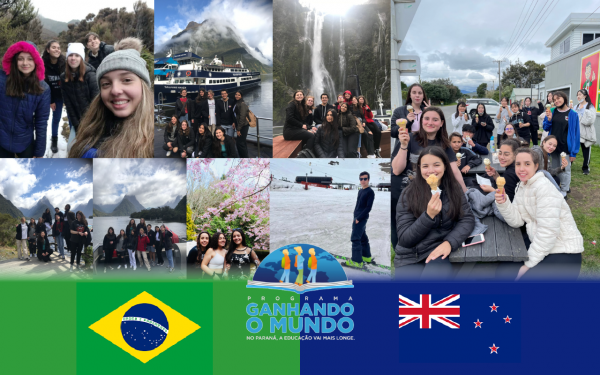
Visiting Milford Sound was one of the highlights for the Invercargill-based students

Students from Western Heights High School experienced a farewell special day out in Rotorua that included Velocity Valley, ZORB, and the Skyline Rotorua Gondola and Luge, as well as a BBQ lunch.
-
Getting to know the Chinese government education agencies
To introduce Michael Zhang, incoming Regional Director Greater China and to farewell outgoing director Miranda Herbert, the China team at Education New Zealand Manapou ki te Ao (ENZ) met with key education agencies in Beijing in October 2022.
“The meetings were an opportunity to reaffirm the long-term good relationship between New Zealand and Chinese government education agencies,” Michael Zhang says.
“We were able to share updates about recent work, hear from each agency about their plans, and discuss possible opportunities for future collaboration with New Zealand institutions.”
Ministry of Education, People’s Republic of China (MoE)
The Ministry of Education is the key government body responsible for the development of China’s education system, from early childhood education through to higher education. Key focus areas include the development of national strategies, policies and plans for education reform and development.
The Department of International Cooperation and Exchange coordinates the Ministry’s engagement with foreign countries. The Department’s key functions include:
- Managing and guiding international education cooperation and exchanges
- Drafting guidance and policies for the management of Chinese students studying abroad, international students studying in China, Chinese-foreign cooperative joint ventures and schools for foreign children
- Supervising international cooperation and exchanges in the education sector
- Guiding the work of education departments/divisions in Chinese embassies/consulates
- Planning, coordinating and guiding the teaching of Chinese as a foreign language
- Conducting educational cooperation and exchanges with the Hong Kong Special Administrative Region, the Macao Special Administrative Region and Taiwan Region of China.
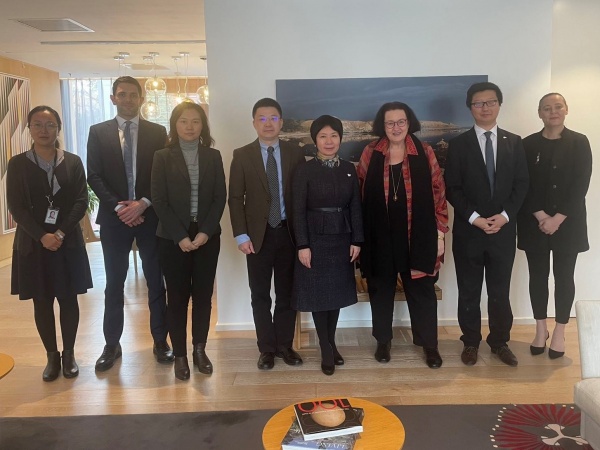
L to r: Rosemary An (ENZ), Kieran Knight (MFAT) Director You Jia (China MoE), Deputy Director-General Chen Dali (China MoE), Director-General Liu Jin (China MoE), H.E. Clare Fearnley (NZ Ambassador to China), Michael Zhang (ENZ), Miranda Herbert (ENZ)
New Zealand’s Ambassador to China, Clare Fearnley, hosted a lunch on 27 October 2022, for China Ministry of Education Director-General Liu Jin and his team, in partnership with ENZ.
Both sides emphasised the value and warmth of the bilateral education relationship, underpinned by a long history of cooperation and several recent milestones despite the challenges of COVID.
There was strong interest to build on the positive ministerial engagement in August and the upcoming 10th Joint Working Group in late November, including hopes for high-level visits next year in both directions. Opportunities to engage with China MoE include high-level visits, and policy advice through ENZ’s China team.
Chinese Service Centre for Scholarly Exchange (CSCSE)
Initially founded in 1989, CSCSE is a public organization under China Ministry of Education (MOE). CSCSE specialises in offering professional services for international scholarly exchanges, including Chinese students and scholars studying abroad, returnees from overseas, and international students and scholars coming to study in China.
CSCSE is also dedicated to promoting the internationalisation and capacity-building of Chinese higher education institutions, as well as improving education resources through international exchanges and collaboration.
CSCSE is the only official organisation that provides overseas credential evaluation and recognition services in China. The statement of comparability of overseas qualifications issued by CSCSE is widely recognised by Chinese employers and institutions from various sectors. CSCSE is an active member in the international education community, facilitates global talent mobility and improves international recognition of qualifications. CSCSE has long-term partnership with foreign qualifications authorities, including NZQA.
CSCSE manages and executes the China International Education Exhibition Tour (CIEET), which New Zealand has regularly attended in past years. CSCSE also organises the China Study Abroad Forum in March each year, in which ENZ is a regular speaker and participant.
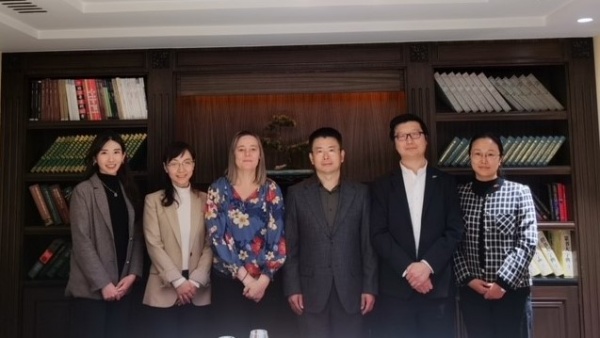
L to r: Xu Chenxing (CSCSE), Director Yu Haiying (CSCSE), Miranda Herbert (ENZ), Deputy Director-General XIA Jianhui (CSCSE), Michael Zhang (ENZ), Rosemary An (ENZ)
Opportunities to engage with CSCSE include student recruitment fairs, study in China, international conferences, verification of foreign credentials, and transnational education programmes.
China Education Association for International Exchange (CEAIE)
CEAIE was founded in 1981 as a not-for-profit organisation to encourage international exchange and cooperation. It is a key organisation in facilitating foreign engagement with the Chinese education system.
Headquartered in Beijing, it has provincial associations for international exchange in 31 provinces, autonomous regions and municipalities in China, as well as local chapters in 16 major cities. It has relationships with more than 170 education organisations in more than 50 countries (including Universities New Zealand). CEAIE has been granted Special Consultative Status with the Economic and Social Council of the United Nations and has established official relations with UNESCO.
Every year in October, CEAIE organizes the China Annual Conference for International Education (CACIE), and the China Education Expo (CEE) both of which ENZ attends. New Zealand was designated Country of Honour at the 2015 conference and expo, which has provided remarkable marketing exposure for New Zealand education. Miranda Herbert from ENZ attended CACIE in October 2020 as a VIP guest and delivered a keynote speech, and in 2021 received a prestigious award recognising ENZ as an ‘outstanding international partner’. Among its activities, CEAIE supports major people-to-people dialogue and exchange mechanisms with partner countries and provides quality assurance services for China-Foreign cooperative transnational education programmes.
Currently, there is strong collaboration between the New Zealand education sector and CEAIE, and their initiatives across various sectors. The university sector held the 5th NZ-China Higher Education Forum with the support of Universities New Zealand and CEAIE on 10 November 2022. CEAIE also expressed interest in collaborating with the New Zealand school sector around Sister School Programmes and exploring opportunities to facilitate Leadership and Capacity building. ENZ is following up with CEAIE on the leadership opportunities and plans to run an Expressions of Interest process once more details are available.
Opportunities to engage with CEAIE include student recruitment fairs, conferences, school cooperation, training, and Quality Assurance for joint programmes.
Positive meetings were also held with other agencies affiliated to China MoE, including the China Center for People-to-People International Exchange (CCIPE) and China Scholarship Council (CSC).
CCIPE highlighted the growing strength and success of our Early Childhood Education Symposium, while CSC emphasised their desire to see increased numbers of Chinese scholarship students choose New Zealand for their studies, particularly at PhD level. All eight New Zealand universities have signed MOUs with CSC. New Zealand students can also study in China on fully-funded scholarships, by applying directly through CSC. There are programmes in English and Chinese: CSC Scholarships | China Scholarship Council | Chinese Government Scholarships (chinesescholarshipcouncil.com)
-
Prime Minister’s Scholarships to study in Asia and Latin America announced
Education New Zealand Manapou ki te Ao (ENZ) Chief Executive Grant McPherson, today announced the names of 111 New Zealanders who will travel to destinations in Latin America and Asia for an international education experience on a Prime Minister’s Scholarship for Asia (PMSA) or Latin America (PMSLA).
Funds awarded for individuals in this scholarship round total $1.5 million.
The individual recipients are the second round of scholarships to be announced this year. The earlier round of scholarships was awarded to groups.The recipients will undertake study, research and internship programmes in fields such as business, language, indigenous rights, sustainable development and architecture for a minimum period of four weeks (Latin America) and six weeks (Asia) up to two years. The top Latin America study destinations for this round are Chile and Colombia, with Japan and the Republic of Korea most popular destinations in Asia among scholars.
“The merit of our scholarship applicants continues to be impressive – we are proud to offer this opportunity for people to develop their inter-cultural skills, build networks and enjoy experiences abroad,” said McPherson. “We know they will make us proud to have them representing New Zealand in this important time of rebuilding and reconnecting with overseas partners.”
“Interest for this programme continues to grow, building collective skills and understanding of different cultures helps our country show leadership in matters of significance for Asia and Latin America regions.”
Māori Participation lifts significantly
A group of Māori Prime Minister’s Scholarship alumni, Te Kāhui Kaupapa, have been working to raise access and participation for Māori. Participation in this round increased to 22% for PMSA and 17% of PMSLA recipients, compared to an average of 5% for PMSA and 8% for PMSLA rounds in 2016 to 2019. This is part of a wider programme of work to ensure the scholarship programme is more accessible to all New Zealanders over the age of 18, and that it delivers on our Te Tiriti obligations.
The Prime Minister’s Scholarship programme aims to strengthen New Zealand’s ability to engage with key Asian and Latin American trading partners, improving the internationalisation of indigenous communities, New Zealand tertiary institutions, showcasing the strength and quality of New Zealand's education system and enhancing inter-cultural awareness and connections between New Zealand and other countries. The scholarship offers flexible funding to support both short and long-term programmes including study abroad / exchange, internships, postgraduate study, and language programmes.
The scholarships programme is funded by the New Zealand Government and administered by ENZ.
The PMSA was launched in 2013 and extended to Latin America in 2016. To date, there have been 2,879 PMSA and PMSLA scholarships awarded.
There are two scholarship rounds each year, and applications for the next individual round will be held in August 2023. Many of the awardees are enrolled in universities across New Zealand, but this is not a requirement for the scholarship. Any New Zealand citizen or permanent resident over 18 can apply for a PMSA or PMSLA.
More information on the application process can be found here.
A full list of this round of scholars can be found here.
-
Reconnecting with stakeholders in Japan
Across the two days, 68 representatives from education and travel agencies, schools, universities and ENZ’s education partners in Japan networked with 19 New Zealand education providers, regional representatives and edtech company, Chasing Time English, and heard updates from ENZ. Networking opportunities included one-on-one meetings, and a reception at iki, a newly opened New Zealand-themed roastery and eatery in Tokyo. Key Japanese partners including ENZRA agents, Ministry of Education, Culture, Sports, Science and Technology, and ENZ’s Education Cooperation Partners: Tokyo Metropolitan Board of Education, Japan Women’s University and Waseda University attended the event.
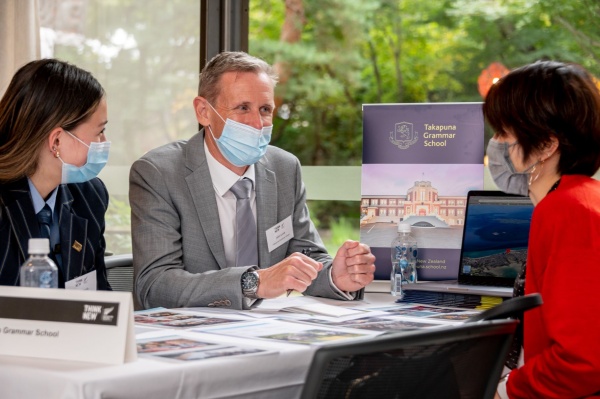
In terms of market trends, Misa Kitaoka, ENZ’s Director of Education in Japan, noted the increasing demand for “one term school study” in New Zealand, which can be attributed to changes made in admission requirements by the Japanese universities.
“With the Japanese government’s internationalisation efforts, more and more universities in Japan are now adopting a holistic assessment of applicants, based on their high school grades, English language skills, extracurricular activities, and essays, in addition to the traditional written exams,” Ms Kitaoka says.
“Students who study abroad have a competitive advantage in these assessments – their English and communication skills improve, and they gain a wide range of life experiences overseas. With this new trend, we are expecting to see more secondary schools sending their students for one term or longer to New Zealand, to help them prepare for admission to university.”
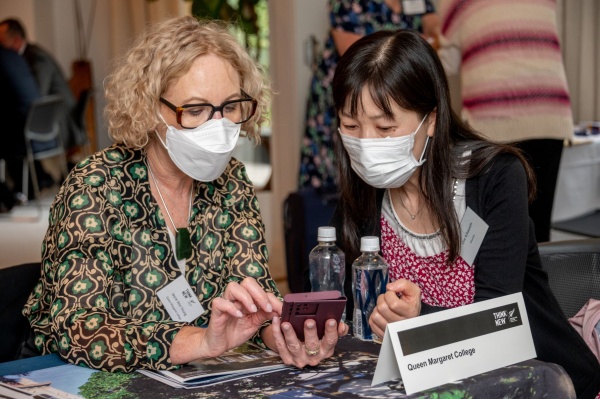
Japanese agents and educators are also interested in New Zealand’s full Bachelor’s degree programmes, given the increasing number of bilingual Japanese/English students in Japan. With more International Baccalaureate (IB) schools (the Japanese government’s current target is 200 IB schools) and the improvement of English language education in Japan, more students in Japan are prepared to apply directly to New Zealand tertiary institutions after finishing high school.
“We are excited to work with ENZ to start an annual, outbound group study programme for our affiliated schools,” Ryohei Matsuoka from the International Office at Waseda University said. “We are planning to send more than 70 Waseda high school students to Manawatu and Hawke’s Bay in March 2023. With Waseda’s increasing interest in New Zealand’s tertiary education, the programme will incorporate visits to tertiary institutions in addition to study at secondary schools.”
ENZ and Air New Zealand are co-hosting and co-funding a “famil” for the executive members of Waseda University and its affiliated schools in late November, visiting schools and tertiary institutions in the two regions mentioned above.
Due to Japan’s border restrictions which were in place until October, and the ongoing Covid-19 restrictions, ENZ did not undertake a student-facing event this year, and is planning to restart student fairs in 2023.
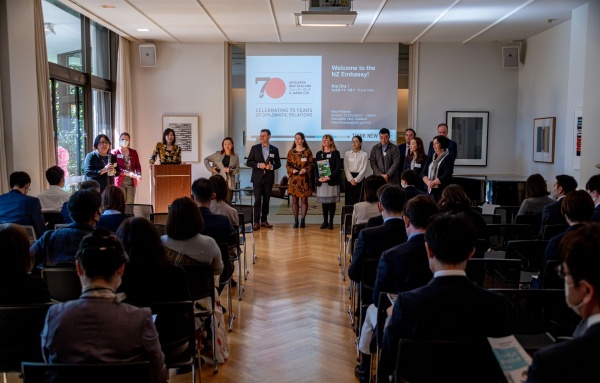
Social media coverage of the stakeholder events was well received and generated a high level of engagement.
-
Manaaki Scholarships operations transferred to ENZ
Operational responsibility for the Manaaki New Zealand Scholarships programme was formally transferred to Education New Zealand Manapou ki te Ao (ENZ) on 1 November 2022, the result of almost two years of sustained effort from both sides.
The team transferring from the Ministry of Foreign Affairs and Trade (MFAT), along with other new staff working on the scholarships programme, were welcomed to ENZ with a mihi whakatau by a group that included ENZ Board Chair Steve Maharey and Chief Executive Grant McPherson.
Manaaki Scholarships represent the government’s single largest investment in international scholarships and have been awarded for more than 70 years. ENZ is taking over operational management from MFAT, which will remain responsible for setting the strategic direction, alumni relationships and funding the programme.

On the symbolic handing over of MFAT's ‘living taonga’ to ENZ, Divisional Manager Joanna Kempkers noted, “if our Policy Team are the head, giving strategic direction, and the Alumni Team is the arms, reaching out to embrace scholars on completion, then the Operations Team is the beating heart of the Manaaki Scholarships Programme. We are confident that ENZ will take good care of our team, of the Manaaki Scholarships Programme, and deliver enhanced ‘mana through manaaki’ to our individual scholars.”
ENZ and MFAT have worked together on an improvement programme that will get underway early in 2023. This will include a technology upgrade as well as operational policy shifts to strengthen student experience.
“This partnership is one of those rare events where logic and virtue combine to provide a stronger and better outcome,” said ENZ Chief Executive Grant McPherson. “It is not just a good idea for our two agencies, but it’s a great idea for NZ Inc and will bring broader benefits beyond our immediate goals.”
“We know our own in-country teams already work closely with MFAT on matters concerning the Manaaki Scholars,” says GM Sector Services Sahinde Pala.
“This is an exciting opportunity for us to become more closely involved in the scholarships programme and the work on continuous improvements. Our aim is to ensure scholars have an excellent experience and become lifelong ambassadors for Aotearoa New Zealand.”
Manaaki Scholarships are a key pillar of Aotearoa New Zealand’s International Development Co-operation, offering more than 1,100 scholarships annually to students from 112 eligible countries to study in Aotearoa New Zealand, in the Pacific, or online.
For information on opening dates to apply for Manaaki Scholarships, go to: Application opening and closing dates for your country | MANAAKI | Education New Zealand (nzscholarships.govt.nz)
Programmes of study can be found here: Types of Manaaki Scholarships | MANAAKI | Education New Zealand (nzscholarships.govt.nz)
Eligible countries can be found here: 1.Check eligible countries | MANAAKI | Education New Zealand (nzscholarships.govt.nz)
To contact ENZ’s Manaaki Scholarship team, please email manaaki@enz.govt.nz
-
Mayoral events provide vibrant welcomes to students in their regions
Last month we shared some of the wonderful images that New Zealand schools, universities, PTEs, Te Pūkenga and English Language Schools shared with ENZ as they welcomed their new students for 2024. This month we are sharing details and images from the Mayoral welcomes that some of our regions have held for their visiting international students.
Thank you for adding to our diversity and vibrancy!
More than 40 international students were greeted by Whanganui District Council Mayor, Andrew Tripe, at a special Mayoral welcome to the community on Monday 8 April.
Speaking to the students from countries including Brazil, South Korea, Japan, Germany, China, India Indonesia, Thailand, and Viet Nam, the Mayor thanked them for choosing Whanganui and adding to the “diversity and vibrancy of our community”.
The students attending had enrolled in both secondary schools and tertiary institutions in the district such as Whanganui High School, UCOL Whanganui and the New Zealand International Commercial Pilot Academy.
Formal greeting over, the Mayor was rushed by students seeking a special ‘selfie moment’ to share with families and social media.
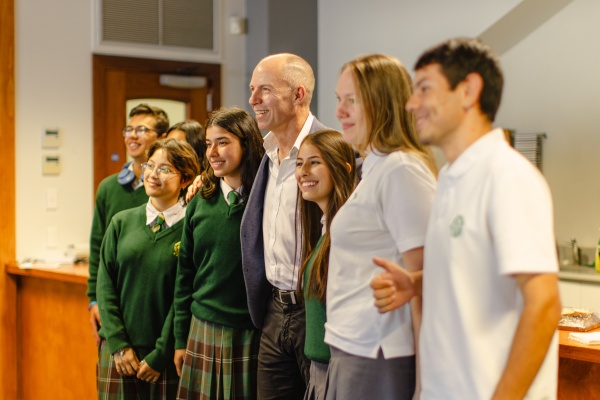
A group of Brazilian international students attending Whanganui High School take up the opportunity of a photo with the Whanganui District Council Mayor, Andrew Tripe.
Similar levels of excitement were seen in Hamilton where the Mayor of Hamilton, Paula Southgate and local performance groups welcomed approximately 250 new international students to the Waikato region. The welcome event was held at the Pā, University of Waikato and is the first welcome since the Covid-19 pandemic put these events on hold.
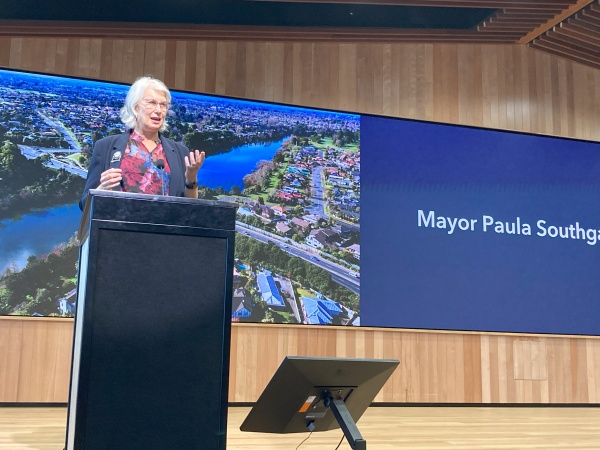
Mayor Paula Southgate providing the official welcome to the Waikato’s approximately 250 international students.
Faymie Li, Education New Zealand Manapou ki te Ao’s Senior Advisor Student Experience said, “I was deeply honoured to witness this significant event and see how we demonstrate manaakitanga to our international students.
“The diverse cultures we embrace in Aotearoa is truly something to cherish and celebrate. It was wonderful to see so many school students attending the ceremony, offering them a unique student experience they don't typically encounter.”
Jiabao Zhao (Boa), a former international student who completed a Bachelor of Management Studies with First Class Honours at the University of Waikato, shared a message of encouragement with the students. Boa’s advice for new students was: to study hard but also “talk to and meet students from outside your country. It’s easy to remain in your comfort zone but that is not the point of studying abroad. Network and build your presence”.
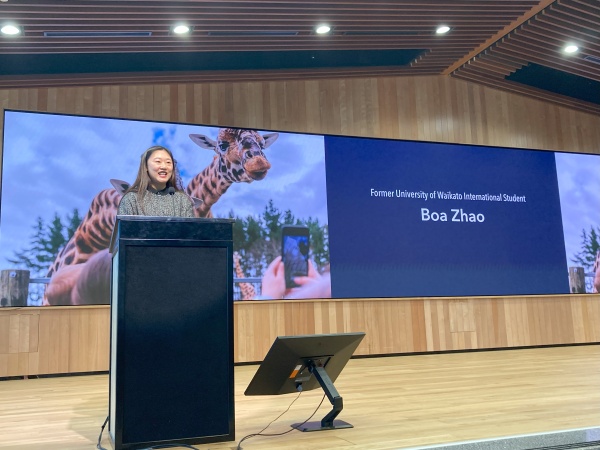
Former University of Waikato International Student sharing a message of encouragement to the new international students.
She also reminded students to take care of both their physical and mental health. There will be challenges but also great opportunities, and her own study and career journey is testament to that. She now works as an International Sales Operation Executive at Prolife Foods Ltd in Hamilton.
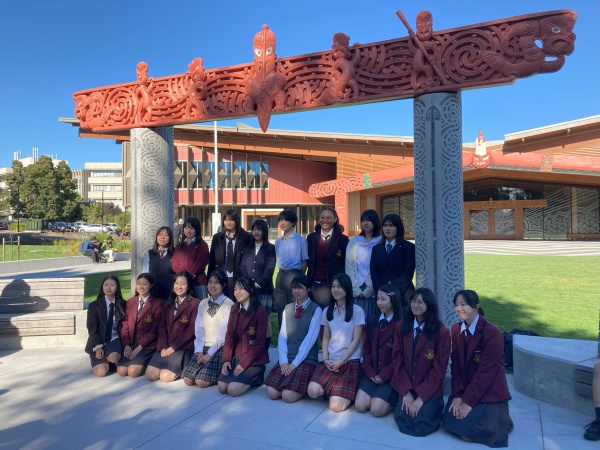
A handful of the 250 students who travelled to the Pā at the University of Waikato, for the international student welcome.
Also in March, nearly 100 international students received a fine welcome centered on the theme of connection, by Timaru District Mayor, Nigel Bowen. The Timaru District will be home to students from Japan, China, Germany, Thailand, South Korean, Hong Kong, Macau, Fiji, Philippines, Brazil and Poland, and more over the course of this year. You can read about this welcome in the Stuff article here - Nearly 100 international students welcomed to Timaru | Stuff.