
Search
Showing 10 of 540 results for group registration
-
Strong interest in NZ from Filipino students at the Te Pūkenga Agent Workshop and NZ Study Workshop 2023
55 education agents representing 27 agencies from across the Philippines attended the one-day workshop on 27 October. The workshop provided a valuable opportunity for the four Te Pūkenga representatives, including Bipul Das, Kerry Clarke, Prashanth Nallur Puttaswamy and Richard Cao, to share their most recent updates and developments, including information on Te Pūkenga’s vocational education offerings.
ENZ’s Market Manager – Philippines & Thailand, Chortip Pramoolpol, supplied an update on ENZ’s activities and showcased the array of tools and resources available to empower education agents in promoting New Zealand as a study destination. Joining the workshop remotely were key figures from Immigration New Zealand. Celia Coombes, Manager of International Education, Dolores Hyde, Senior Advisor for International Education, and Philippa Lee, Immigration Officer, Visa Operations, delivered a comprehensive briefing on student visa applications and post-study work rights. If any education agents would like a copy of the slides delivered by ENZ, they are available on IntelliLab here - ENZ Philippines.
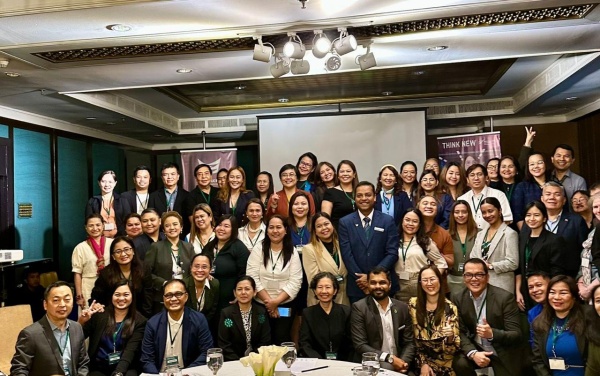
Bipul Das from Te Pūkenga’s International Team said that it was incredibly valuable to be able to meet face to face with education agents and prospective students in the Philippines.
“It was wonderful to see the education agencies are excited to promote New Zealand as the preferred study destination for vocational education and we are grateful for the support from ENZ, our Education Agents and INZ on the work being done in the Philippines market. We will continue to focus on growing our international student population from the Philippines, " said Bipul.
Following on from the workshop, ENZ and Te Pūkenga welcomed over 170 visitors to the NZ Study Expo 2023. The event provided a unique platform for attendees to explore the breadth of opportunities in New Zealand including specific courses, scholarships, and post-study opportunities and discuss these personally with the NZ representatives on-hand.
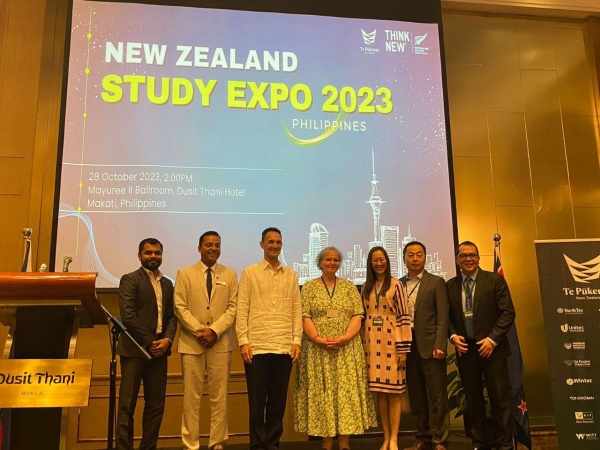
From left to right: Prashanth Nallur Puttaswamy, Bipul Das, His Excellency Peter Kell, New Zealand Ambassador to the Phillippines, Kerry Clarke, Chortip Pramoolpol, Richard Cao and Joel Miranda Angon.
New Zealand Ambassador His Excellency Peter Kell presided the event and shared his remarks, encouraging Filipinos and their families, to choose New Zealand as a destination to continue their education journey.
Ambassador Kell told the audience “This event is more than just a fair; it is a bridge that connects aspirations with opportunities. It is a platform for our Filipino students to explore and embrace new horizons, to acquire skills and knowledge that will empower you to become leaders in your chosen fields.
“New Zealand’s education system is often highly regarded and ranked in the world for preparing students for the future. Our education providers often have strong connections to industry and the business community. This facilitates internships, work placements, and real-world experiences for students, preparing them for the workforce,’ he added.
ENZ Market Manager – Philippines & Thailand, Chortip Pramoolpol, was excited to have had the opportunity to speak face to face with interested students and their families following the pandemic.
“There is certainly a lot to be said for being able to explain in-person to prospective students and their families, why they must consider New Zealand as a destination for future study and we were so pleased to see such genuine interest.
These events generated dozens of leads which has helped drive a significant increase in in visits and enquiries from Filipino students to the Study with New Zealand website,” added Chortip.
If any education providers or agents would like any additional information on marketing to students in the Philippines, please contact Chortip Pramoolpol – chortip.pramoolpol@enz.govt.nz
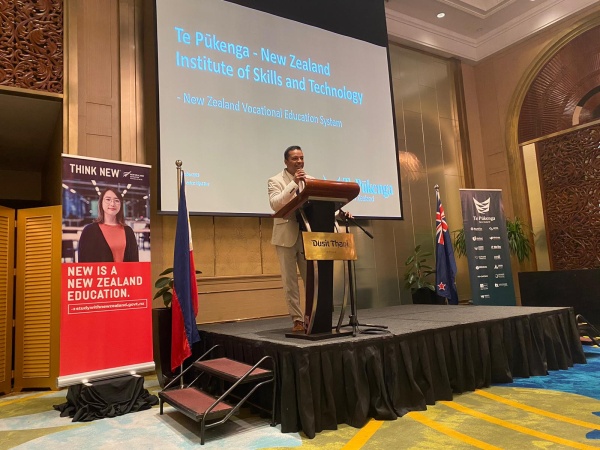
Bipul Das from Te Pukenga International Team presented on their programme offerings.
-
AUT international students connect with senior citizens
A uniquely engaging initiative supported by New Zealand Police and AUT recently brought together international students and local senior citizens to connect in Tāmaki Makaurau Auckland.
The initiative was an outcome of a meeting of the Auckland Agency Group, of which Education New Zealand Manapou ki te Ao is a member and enabled international students to understand and start to integrate into local culture guided by senior residents and members of the wider Auckland community.
As the last 12 months have seen the welcome return of international students to our campuses and communities, New Zealand Police Ethnic Services teams around the country, including in Tāmaki Makaurau Auckland, have been busy engaging with international students in a number of ways.
Around 18 students met with 10 senior citizens at the Northbridge Residential Village.
The event helped international students engage with their local community, establishing intergenerational bonds, helped them access support networks, engage in cultural exchange, and actively participating in community affairs.
The event included a panel discussion involving members of Northbridge Residential Village, AUT international students, and New Zealand Police. The panel discussion unfolded in two key segments: the initial part addressed the dynamics of culture shock, while the subsequent portion revolved around the overarching themes of diversity and inclusion.
AUT Students Association, International Affairs Officer, Yun Ke, said that the AUT international student interaction with local senior citizens event was a great success.
“We have received immensely positive feedback from students about the event, which is exciting.
“This interaction saw double the participation by international students, as compared to a previously held event in September,” Ke said.
San Winkyi, an international student from Myanmar, was grateful to New Zealand Police for the way they supported the event.
“The police’s presence and assistance contributed significantly to the event's success, and we deeply appreciate their commitment to international student safety and wellbeing,” San said.
For Huabiao Xiao, an international student from China, the interaction was a wonderful opportunity to appreciate cultural differences while enjoying communicating with an open and inclusive local community of senior citizens.
“Spending time with local seniors and police officers was an amazing experience, far beyond anything I could have imagined. These elders are simply the epitome of local cultures and society, and I deeply appreciate their differences and uniqueness. At the same time, I appreciated how New Zealand police officers are committed to promoting a community culture,” Huabiao said.
Education providers with international students who are interested in organising a similar event are welcome to contact Faymie Li, faymieli@enz.govt.nz or Ross Crosson, ross.crosson@enz.govt.nz.
-
EdTech famil programme provides eyes on New Zealand for innovation
The programme included visits to Singapore, Viet Nam and Indonesia by a New Zealand delegation that included nine companies. The nine companies had a diverse range of education expertise, products and services from cutting edge Neuroscience for early childhood education to delivering TV-style drama series for English language education young adults. Six core companies participated across the three counties - Language fuel, Neurofrog, Chasing time English, StepsWeb, Jix Reality, and PipiLearning, while three additional companies already in the regions Writers' toolbox,Komodo wellbeing and Kami, joined the Singapore programme for specific elements.
The programme included meetings with the Ministries of Education of all three countries, specifically to understand the digital adoption and education roadmaps of each. Singapore shared their Transformation of education technology masterplan 2030 as a capability multiplier for educators and learners, and Viet Nam shared their focus on and investment in technology and management systems and using education technology to build the human potential of their citizens. Indonesia shared their Super App which allows for their 646.2 thousand schools, 4.2 million teachers and lecturers and 71 million students to all benefit from the large-scale acceleration of an economy moving at pace with a firm policy that ‘no one is left behind’.
Alana Pellow, ENZ’s Business Development Manager, led the delegation and said that the programme was carefully put together to ensure the visit was as much about showcasing New Zealand’s expertise and innovation in EdTech as it was to learn about what other countries and leaders in this space are doing.
“Across the three countries, the EdTech companies had the opportunity to meet and visit education providers from schoolteachers and leaders, vocational education providers and universities to education enrichment centers. They also heard from New Zealand business leaders and government agencies in each region, as well as had briefings and networking with local EdTech owners to gain a deep understanding of the economic and EdTech landscapes in each country.
“The public, private and enrichment education landscapes, which offer significant opportunity for EdTech’s, was a great eye opener particularly in Early Childhood Education (ECE), English language, literacy and English language teacher’s space.
“For example, in Viet Nam it is not uncommon for parents to spend 30% of their income on education – including after school enrichment education such is the ambition of parents for their children,” said Alana.
The private school market across all three markets is viewed as particularly significant for New Zealand. During the visit, it was noted by a number of diverse education related professionals how the New Zealand EdTech group were subject matter experts with education specific capabilities and expertise across many areas from linguistics, literacy, English language, teaching, academic R&D and collaboration with recognised and respected global experts such as – Oxford University Press, Oxford University, Royal Melbourne Institute of Technology, National University of Singapore, Institute of Technolgy Education and the University of Auckland.
Interest in New Zealand’s Education Technology was picked up by the local press in Indonesia and Viet Nam, with Viet Nam in particular seeing 17 stories feature across its various media channels. This has provided valuable visibility of New Zealand’s innovation and expertise in digital education across a wide education subsector value base from ECE and K-14 to R&D at tertiary level. Positive leads have followed and the founder and CEO of SIS and Inspirasi schools, which has schools across Indonesia, South Korea, Myanmar, and India, has already been in touch with two of the NZ EdTech companies to explore future collaboration.
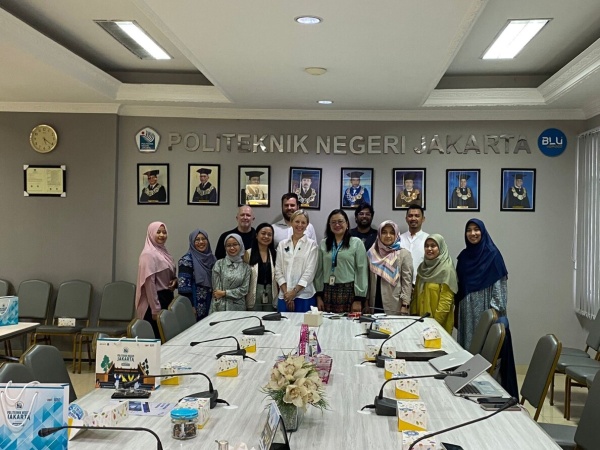
Meeting with Politeknik Negeri Jakarta (VET) Indonesia.
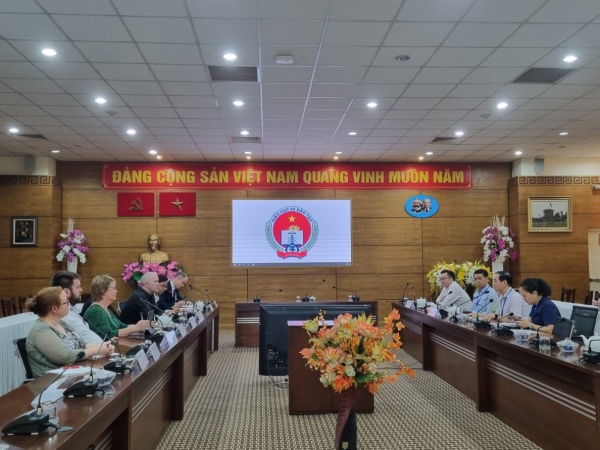
ENZ’s EdTech delegation meeting with Mr. Nguyen Bao Quoc, Deputy Director (Digital Transformation), and colleagues at the HCMC Department of Education & Training, Ho Chi Mihn City, Viet Nam.
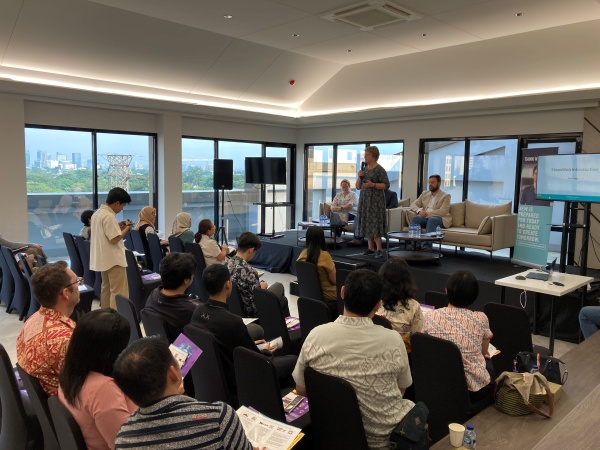
The delegation also attended the EDUtech Asia Policy Summit in Singapore where education, education policy makers and education technology solution providers came together from across Southeast Asia. Highlights included:
- The pace and scale at which many SEA countries are upskilling and shifting their policy and philosophy to equip their educators, citizens and systems to be meaningfully productive.
- That digital literacy training is not just the domain of learners. Educators also need high quality digital training, materials and resources.
- Artificial Intelligence is forcing a rethink on everything and in assessments, what do we care about assessing? Knowledge attainment or the deep skills for being human?
- Partnership is hard but offers competitive advantage and ‘’success’’ when human skills are done well, and many global universities are doing partnership well and reaping the rewards.
Any New Zealand EdTech and Education publisher companies interested in finding out more about the SEA market can contact Alana Pellow - alana.pellow@enz.govt.nz
ENZ’s EdTech delegation meeting with Mr. Nguyen Bao Quoc, Deputy Director (Digital Transformation), and colleagues at the HCMC Department of Education & Training, Ho Chi Mihn City, Viet Nam.
-
Incheon Metropolitan Office of Education deepens links in New Zealand
The delegation from Incheon Metropolitan Office of Education East Asia Global Education Institute (Incheon MOE) travelled to Ngatea, Wellington, Canterbury and Otago – visiting providers from the schools, university and vocational education sectors.
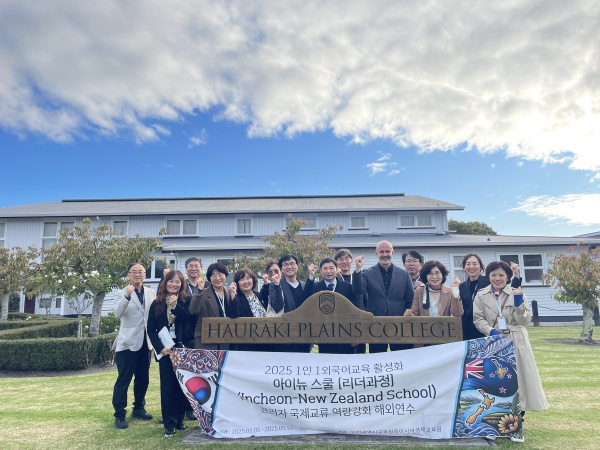
The visit began with a visit to Ngatea to connect with Hauraki Plains College and Ngatea Primary School.
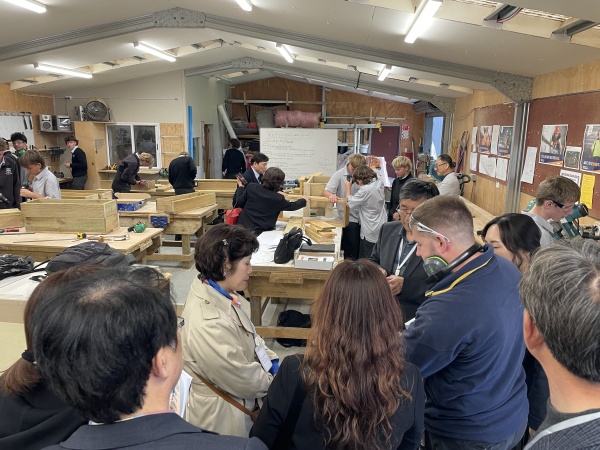
Observing the Agriculture Academy and trades-based courses at Hauraki Plains College.
A key aspect of the delegation’s time in Ngatea was the signing of a Memorandum of Understanding (MoU) between Hauraki Plains College and four schools from Incheon: Sunin High School, Shinsong High School, Geomdan High School and Youngwha International Tourism High School.
The intent of the MoU is to strengthen educational ties between the schools, which includes a reciprocal exchange program.
The first of these exchanges will see 28 students from across the four Incheon schools visit Hauraki Plains College in October 2025, 28 students from Hauraki Plains College will then travel to Incheon in April 2026.
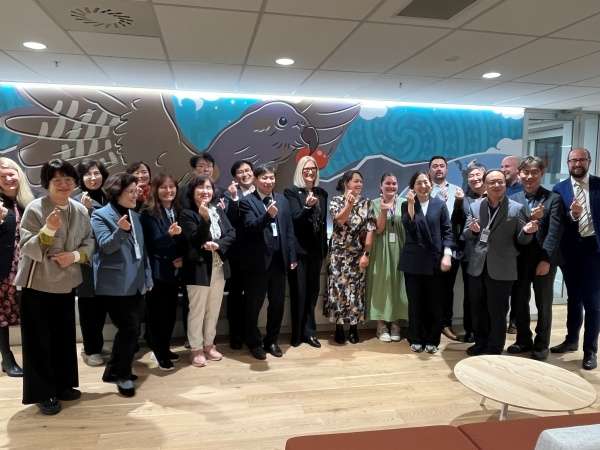
The delegation was formally welcomed to the Wellington with a Mihi Whakatau hosted by ENZ Chief Executive Amanda Malu, local staff and the Ministry of Education (MOE).
In Wellington, the delegation received a detailed briefing from the Ministry of Education and visited Scots College to observe the school in action.
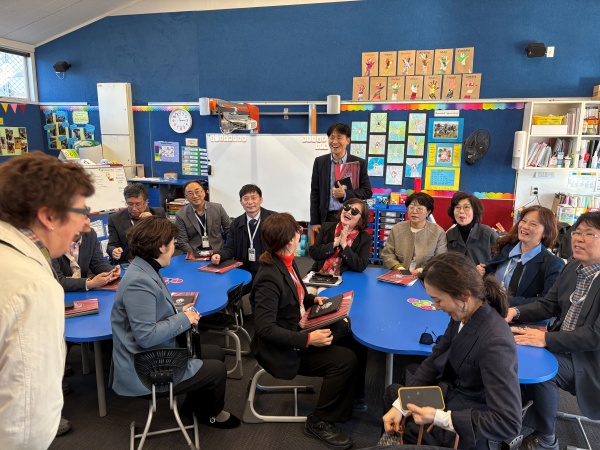
Scots College Junior School Principal, Rachael Huggins, showing the Incheon delegation around a primary-level classroom.
Down to Christchurch, the Incheon delegation visited Lincoln University to fine-tune the details of an MoU signed in January this year. The partnership arrangement will support five Incheon students to study at Lincoln University each year.
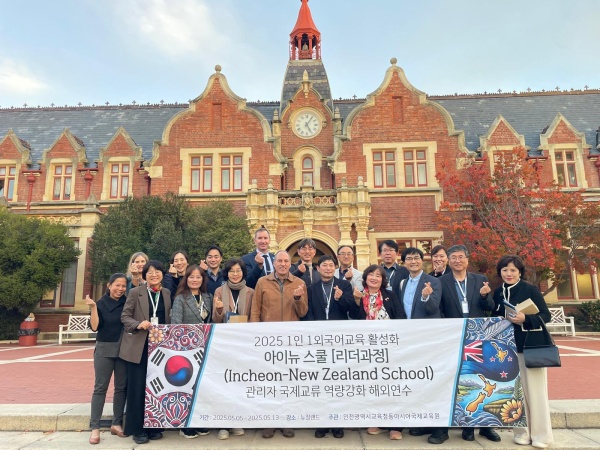
Incheon delegate members with Lincoln University staff from the Faculty of Agriculture and Life Sciences, Faculty of Agribusiness and Commerce, Academic Preparation and Pathways and International Operations.

Waitākiri Primary School Principal Mr. Andrew Barker introduces a Year 6 long-term international student from Korea to the delegates. She shared how much she has enjoyed her time at Waitākiri Primary School and expressed her sadness that her year at the school is coming to an end.
The group visited Shirley Boy’s High School and Avonside Girls High School in Christchurch, with a side-visit organised with Waitākiri Primary School.
Further South, a visit was arranged with Otago Polytechnic in Cromwell to understand the pathways to vocational education in New Zealand.
Director of Incheon Metropolitan Office of Education East Asia Global Education Institute, Jooyong Kim, said visiting New Zealand schools was a truly meaningful and deepened delegates understanding of the education system.
“We hope this visit will help strengthen the relationship between schools in New Zealand and Incheon”.
“We look forward to future collaborative projects with New Zealand institutions,” he added.
Several of the schools visited have expressed interest in deepening these new relationships, with planning underway to keep up the momentum and connect again at ENZ-led fairs and agent seminars in Korea later this year.
-
PIF Recipient: Connect2NZ
Connect2NZ aims to show that tertiary education providers can work with government agencies to build a framework for international learners that is innovative, future focused, and learner-centric.
Connect2NZ’s target audience is professionals, living outside New Zealand, who are seeking skills development in emerging sectors. Work has been undertaken to determine learner needs and match those with areas where New Zealand is strong. The project will design and deliver micro-learning and short courses which have pathways, allowing these learners to study from a group of courses to achieve their desired career outcomes. Potential topics include technology, leadership, health and wellness, food and agritech, energy, tourism, design and natural hazards. Our goal is to eventually extend our offerings to degree qualifications.
"What excites me the most about the Connect2NZ project is the exploration of potential new offshore/online markets. In particular, the global lifelong learner market which is huge and to date not well served by some of the fantastic educational offerings available from the New Zealand Higher Education sector, "
Professor Mick Grimley, Dean of Future Learning and Development, University of Canterbury
Some of these courses will be delivered by one provider partner, while others will be jointly designed and delivered. The number of tertiary education providers is expected to grow following consultation with government agencies and community outreach.
The pilot project is supported by Education New Zealand Manapou ki te Ao (ENZ). Through its International Education Product Innovation Fund, ENZ is supporting a range of pilot projects that reimagine how a New Zealand education can engage and inspire international learners and create impact through new delivery modes, approaches and partnerships.
"Connect2NZ breaks the mold by uniting our organizational strengths in solving a challenging problem. When we prove success, the value add is a model other institutions can follow".
Dr David Dannenberg, Director of Learning, Teaching and Library, Lincoln University.
-
PIF Recipient: Te Kaihau Ltd
Te Kaihau Ltd, based in the Hutt Valley, is the organisation behind the Global Enterprise Experience (GEE), a well-known social enterprise proposal competition. For years, GEE has brought together eight-person virtual teams from around the world. Their challenge: to work together on a six-page business case for a profitable, self-funding business venture that addresses a United Nations (UN) Sustainable Development Goal (SDG) and can get off the ground with limited capital.
In 2022 alone, GEE placed 1,100 participants from 131 universities and 98 other organisations across 72 countries onto global teams. Although many participants are tertiary students studying business or other courses, GEE teams are open to anyone, anywhere in the world, looking for a cross-cultural challenge.
From a highly successful foundation, Te Kaihau Ltd is planning to upgrade the Global Enterprise Experience into an even more impactful programme that builds lifelong links between Kiwis and emerging global learners, while making a real contribution to sustainable development. Thanks to an award of funding from the International Education Product Innovation Fund, managed by Education New Zealand Manapou ki te Ao (ENZ), the upgraded GEE programme is on the way to becoming a reality.
The new ‘GEE Peer-Leader Plus’ programme is designed to supercharge the impact of the existing programme, which already develops an impressive set of skills in its participants: cross-cultural communication, teamwork, entrepreneurship and innovation to name a few.
Future GEE learners who opt into GEE Peer-Leader Plus will benefit from one-on-one leadership coaching, peer-group interactive webinars, online learning modules, and a microcredential in peer-leadership which will be assessed on performance.
As Te Kaihau Ltd explains, the upgraded programme aims to transform learners into peer-leaders. Instead of being passive recipients of knowledge, peer-leaders step up to make a difference where they can, no matter their ‘designated role’ in a workplace or other organisation. Peer-leaders are confident, can influence others, are action oriented, and can support designated leaders to make change.
A deeper, more immersive learning experience through the GEE Peer-Leader Plus programme will also leave learners in a better position to bring their sustainable business concept to life, or take other meaningful action on the UN SDGs.
Woven throughout the new learning experience is a uniquely New Zealand theme, which draws attention to New Zealand’s efforts on sustainable development and positions New Zealand as a leader in ‘manaaki leadership’, which uplifts and supports the mana of others.
To complement the upgraded GEE experience, a microcredential will be developed and offered to universities and other education providers. A microcredential – a short course that offers certification on completion – recognises achievement in a specific set of skills, competencies, and knowledge. The GEE Peer-Leader Plus microcredential will provide a way for education providers to incorporate peer-leadership into their international-focussed course offerings.
Over time, and using the GEE Peer-Leader Plus microcredential as a stepping stone, Te Kaihau Ltd hopes to build a full qualification in global leadership and innovation by 2025, with the GEE Peer-Leader Plus experience serving as one module. With GEE participants coming from 800 universities around the world, Te Kaihau Ltd has built a valuable network of learners and education providers. Now, with support from ENZ and the International Education Product Innovation Fund, the stage is set for the New Zealand-led GEE programme to supercharge its impacts, building peer-leaders around the world with the skills and capability to take action for a better future.
More information:
-
ENZ Agent Seminars in China make a strong impact for rebuilding connections
China is the largest source of international students for New Zealand with agents being the leading channel for student recruitment in this market. Building strong connections between providers and agents in China is critical to recovering student mobility, improving awareness of New Zealand as a study destination and strengthening New Zealand's market position. ENZ's Agent Seminars in China are a well-recognised and impactful way of building relationships with a range of key agents.
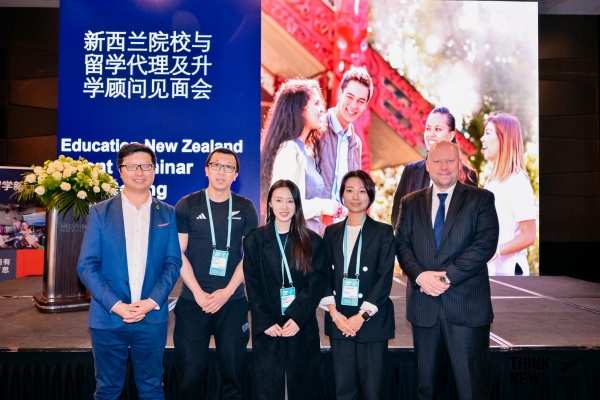
Education Counsellor and ENZ’s Regional Director Greater China, Michael Zhang, (far left) at the Beijing Agent Seminar with representatives from New Oriental Education Agency and H.E. Grahame Morton, New Zealand Ambassador to People’s Republic of China.
In addition, Agent Seminars also help to keep agents informed with the latest official information and is an important tool that Education New Zealand Manapou ki te Ao (ENZ) and other NZ Inc agencies use to share such information. According to recent Immigration New Zealand (INZ) data, agents in China have a high approval rate for student visa processing.
Currently, ENZ runs its Agent Seminar series twice a year in this region and this latest series of events held in Chengdu, Shanghai, Hong Kong and Beijing were supported by the New Zealand Ministry of Foreign Affairs and Trade (MFAT) and INZ. INZ’s China-based representatives gave in-person presentations, an initiative which was well received with 88% of agents reporting its inclusion as “very or extremely important to their attendance” in a post-event survey.
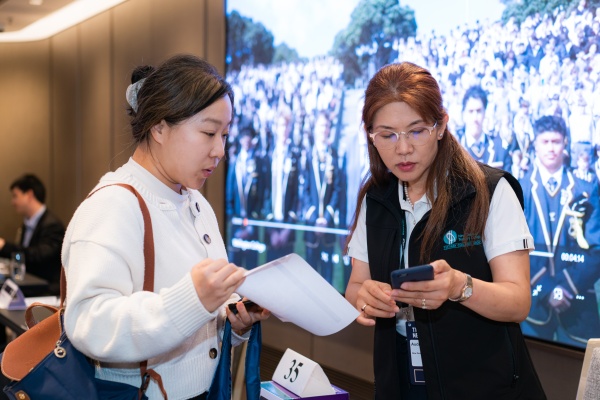
Participants at the Hong Kong Agent Seminar discuss New Zealand education offerings.
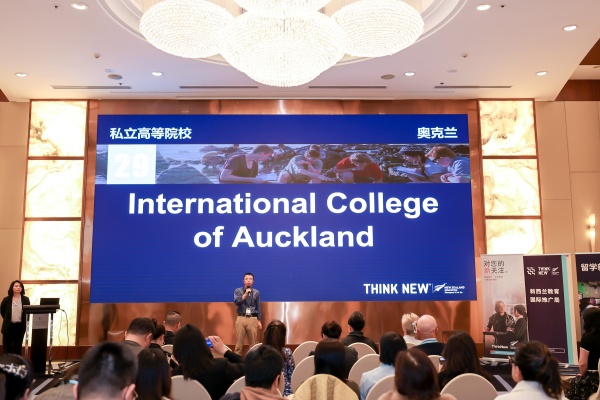
Kevin Wang from the International College of Auckland presenting at the Shanghai Agent Seminar.
To leverage the visibility of New Zealand education providers in the China market, ENZ facilitated media interviews and social media recordings for participants at the Shanghai and Chendgu Seminars. New Zealand providers and ENZ representatives in Chengdu conducted interviews with 13 journalists, the highest response rate for media attending Agent Seminars to date. As a result, three million views were achieved from 58 stories published by 27 local media outlets, with New Zealand university representatives quoted in a media story and an exclusive interview and story for Te Pūkenga on the uniqueness of New Zealand's vocational education in a separate article.
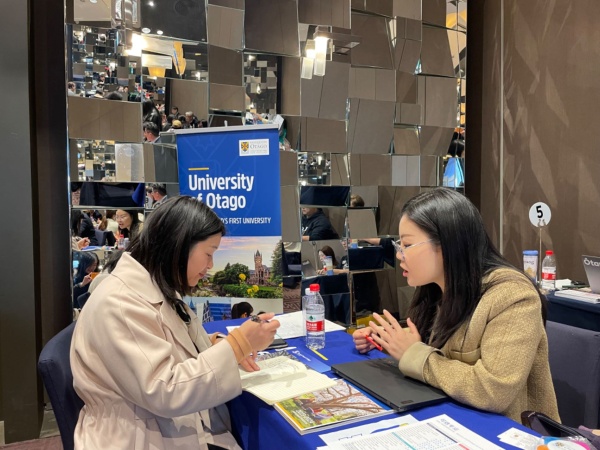
Joyce Zhang, University of Otago, is interviewed by a journalist from local media in Chengdu at the ENZ Agent Seminar.
In Shanghai, the ENZ Shanghai team delivered a China marketing insights session for sector representatives. The presentation titled “Unlocking China’s Education Market: Insights and tools for success” covered:
-
The key drivers of the consumer
-
China’s media/digital/social media landscape
-
The big four – WeChat, Little Red Book, Douyin and Bilibili (case studies included)
-
ENZ’s China local marketing plan.
Anyone interested in receiving a copy of the Marketing Presentation can access this here on ENZ’s Intellilab.
ENZ collaborated with Shinyway, the largest agent in the eastern region of China to produce short videos for the agency to promote online. The online promotion aimed to leverage brand awareness of a New Zealand education showcasing New Zealand providers attending the Shanghai event. A big kudos goes to the 18 brave New Zealand representatives who accepted the invitation to participate in the filming. Education Counsellor and Regional Director Greater China, Michael Zhang, was also interviewed to present the advantages of a New Zealand education and our institutions across all sectors.
Shinyway has published all the videos on their consumer-facing social media platforms, including WeChat, Little Red Book, and Weibo. The collaboration enhances New Zealand providers’ market exposure by leveraging Shinyway's influence across their digital platforms and reaching prospective audiences in China elevating our brand profile within a highly targeted audience group.
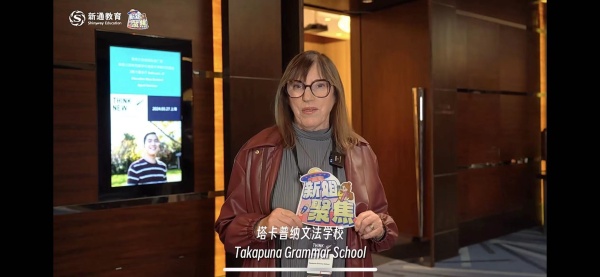
Mary Nixon, Principal of Takapuna Grammar School participating in the recording for sharing on social media. The first trial video published on Shinyway's WeChat received over 300 engagements including likes, shares, favorites and comments.
87.5% of New Zealand education providers also said that “attendance at the seminars was either “very valuable” or “valuable” for their organisation.”
The dates and locations for the next round of Agent Seminars in China will be announced soon. These details will be posted on the ENZ Events page along with the link for registering.
-
-
Growing offshore interest in NZ through onshore ‘Famils’
‘Famil’, short for ‘Familiarisation’, are visits organised to literally familiarise invited groups of people with a product, or in our case, New Zealand as an international education destination. The intended purpose is that those who attend famils will become valuable advocates for a New Zealand education and therefore drive preference for New Zealand in market.
During Covid-19 these visits were stopped due to border closures. Now that borders have been fully open for some time and our international education sector is recovering, this summer provided the perfect opportunity to show off New Zealand, including our regions and unique culture, and the wide range of educational and experiential offerings to representatives from various international markets.
The summer of showcasing New Zealand started in November with two media famil groups from India and Viet Nam. This was followed by three groups of education agents from Brazil, Germany and South Korea visiting in March and most recently, a famil co-hosted by ENZ and Air NZ bringing Japanese school teachers to regions in the North Island. ENZ subsidises these programmes with other costs covered by participants, regional economic development agencies, and education providers.
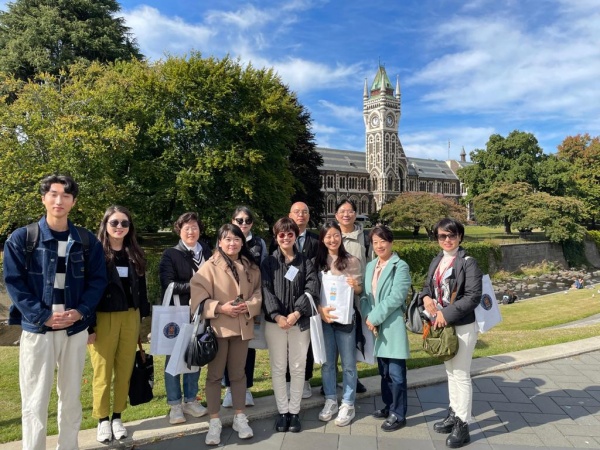
The University of Otago provided a campus tour with a Korean student and didn't miss the opportunity for a classic picture with its famous Clock Tower.
ENZ’s General Manager International, Lisa Futschek said that careful planning goes into facilitating these visits to ensure the famil groups are exposed to a range of subsectors that are relevant to the visiting country while also leveraging the visits to benefit as many providers as possible.
“While we’d love to showcase every New Zealand provider, this is obviously not possible. Much consideration is given to the source market and to the subsectors that we know are popular with that country.
“This ensures we are targeted in our approach and our visitors go back to their countries equipped with the most relevant information that helps build that pipeline of future students," said Lisa.
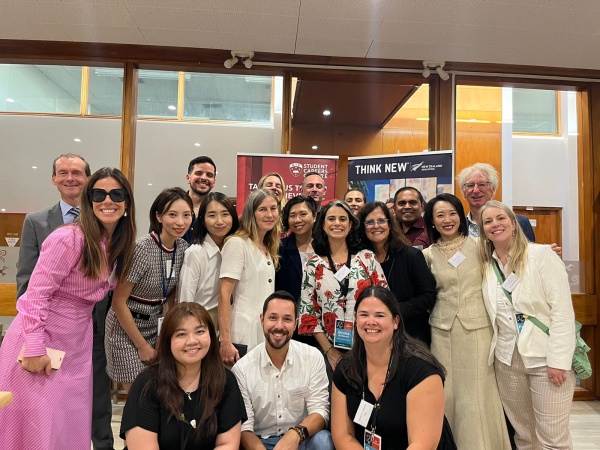
The Brazilian agents attended a networking event hosted by AIS for Auckland-based English Language providers.
“We also look for opportunities in which we can make introductions to several providers in one go. For example, a networking function was held at Auckland Institute of Studies (AIS) with Auckland-based English Language Schools invited to meet the agents from Brazil, cultivating many new connections while strengthening existing ones,” added Lisa.
As well as showcasing the various subsectors, promoting the destination is also hugely important and famil itineraries also include time spent seeing what the regions have to offer international students. This is often organised with the help of the regional economic development agencies.
A perfect example of cross sector collaboration was seen in Ōtautahi Christchurch where Christchurch Educated, an international education organisation based in the region, hosted a networking dinner with the regional economic development agency, ChristchurchNZ. They hosted the Brazilian and German agent famil groups and education providers from various sectors in the Canterbury region.

The German agents are pictured here at the Christchurch Educated networking event with a group of Christchurch based education providers (mainly high schools). The event was hosted at Ara’s Visions on campus restaurant with the Brazilian agents in attendance too.
Stefi Porter, International Education Partnership Manager for Christchurch Educated said that bringing everyone together to mutually share the benefits of studying in Ōtautahi Christchurch was a wonderful thing.
“There is certainly strength in numbers and a perfect example of where collaboration between providers and regional economic development agencies can really deliver greater bang.
“Instead of competing against one another, we are sharing resources, time and energy to show the best of our region and the breadth of study options we can offer international students.”
A key outcome of the various famil groups visiting New Zealand is that they become advocates for New Zealand as a place to study, ensuring a steady pipeline of students for years to come. In the post-famil survey, all attendees reported they were either much more likely (87.5%) or somewhat more likely (12.5%) to recommend New Zealand as a place to study for prospective students.
Other positive outcomes, include the positive media articles and social media posts produced by visiting journalists and individuals to their networks in their home countries. This positive coverage not only showcases the quality of New Zealand's education system but also shares the New Zealand education experience with prospective students in their home countries through stories featuring students and alumni.
The India media famil has achieved five in-depth stories to date in Education Times, India's largest newspaper supplement (circulation 500,000). The stories showcase the research prowess at New Zealand universities, including in biotechnology, managing climate change related disruptions, and feature the New Zealand education experiences of a range of students from India.
In Viet Nam 10 articles and four social media posts have been published so far, reaching an audience of 557,000, with more coverage expected in the coming months. Of note is HHT, the top teen magazine in Viet Nam has created a column “letters to New Zealand”, which shares weekly articles about New Zealand written about alumni.
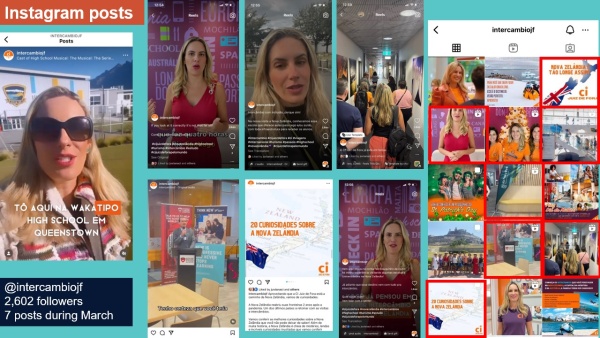
An example of some of the coverage these visits receive. Featured is a compilation of posts that Brazilian agent, Juliana Viana Silveira, owner of CI Intercambio in Juiz de Fora, made on Instagram to her followers during March while in New Zealand. The role of agents in Brazil in international student recruitment is becoming increasingly more important as reported by StudyTravelNetwork here -https://studytravel.network/magazine/news/0/30492
ENZ would like to extend a huge thanks to the education providers and regional representatives for hosting our international visitors and leaving them with a strong sense of New Zealand’s education offerings. The way in which ENZ is able to work collectively with providers and the regional economic development agencies to collaboratively plan the famil is ideal to ensure a good mix of experiences and a balance of activities. This approach helps regions feature strongly in any future famil plans and also helps develop the regional international education ecosystem.
We look forward to hearing about more connections with education representatives at the ICEF ANZA conference in Christchurch.
Check out our image gallery of the famils which shares further details of each of the groups including who attended, where they went and who they met with.
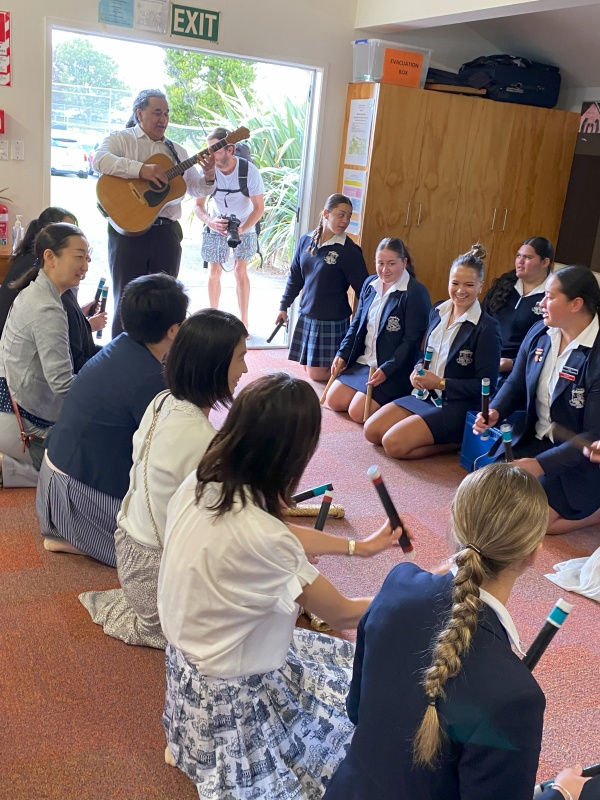
The Japanese All Girls School Teachers participated in a kapa haka class at New Plymouth Girls High School in New Plymouth. Here they are pictured playing the Tītī tōrea Māori Stick game, a traditional New Zealand game which has been played for generations.
-
Mayoral events provide vibrant welcomes to students in their regions
Last month we shared some of the wonderful images that New Zealand schools, universities, PTEs, Te Pūkenga and English Language Schools shared with ENZ as they welcomed their new students for 2024. This month we are sharing details and images from the Mayoral welcomes that some of our regions have held for their visiting international students.
Thank you for adding to our diversity and vibrancy!
More than 40 international students were greeted by Whanganui District Council Mayor, Andrew Tripe, at a special Mayoral welcome to the community on Monday 8 April.
Speaking to the students from countries including Brazil, South Korea, Japan, Germany, China, India Indonesia, Thailand, and Viet Nam, the Mayor thanked them for choosing Whanganui and adding to the “diversity and vibrancy of our community”.
The students attending had enrolled in both secondary schools and tertiary institutions in the district such as Whanganui High School, UCOL Whanganui and the New Zealand International Commercial Pilot Academy.
Formal greeting over, the Mayor was rushed by students seeking a special ‘selfie moment’ to share with families and social media.
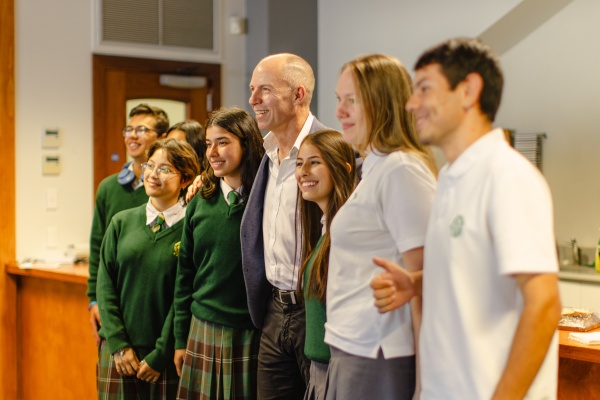
A group of Brazilian international students attending Whanganui High School take up the opportunity of a photo with the Whanganui District Council Mayor, Andrew Tripe.
Similar levels of excitement were seen in Hamilton where the Mayor of Hamilton, Paula Southgate and local performance groups welcomed approximately 250 new international students to the Waikato region. The welcome event was held at the Pā, University of Waikato and is the first welcome since the Covid-19 pandemic put these events on hold.
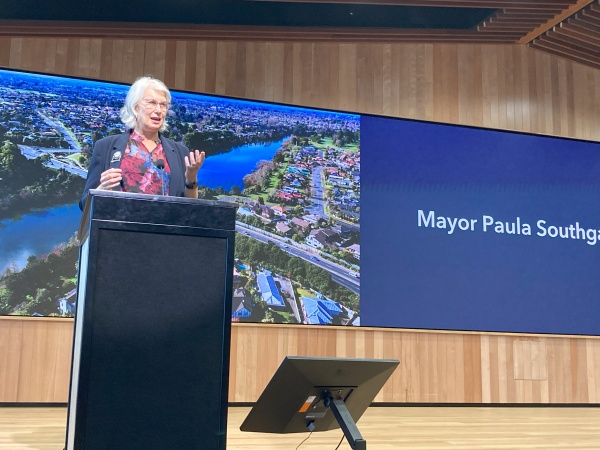
Mayor Paula Southgate providing the official welcome to the Waikato’s approximately 250 international students.
Faymie Li, Education New Zealand Manapou ki te Ao’s Senior Advisor Student Experience said, “I was deeply honoured to witness this significant event and see how we demonstrate manaakitanga to our international students.
“The diverse cultures we embrace in Aotearoa is truly something to cherish and celebrate. It was wonderful to see so many school students attending the ceremony, offering them a unique student experience they don't typically encounter.”
Jiabao Zhao (Boa), a former international student who completed a Bachelor of Management Studies with First Class Honours at the University of Waikato, shared a message of encouragement with the students. Boa’s advice for new students was: to study hard but also “talk to and meet students from outside your country. It’s easy to remain in your comfort zone but that is not the point of studying abroad. Network and build your presence”.
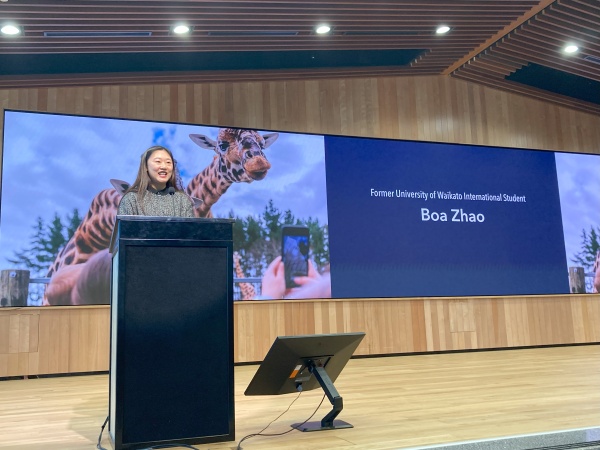
Former University of Waikato International Student sharing a message of encouragement to the new international students.
She also reminded students to take care of both their physical and mental health. There will be challenges but also great opportunities, and her own study and career journey is testament to that. She now works as an International Sales Operation Executive at Prolife Foods Ltd in Hamilton.
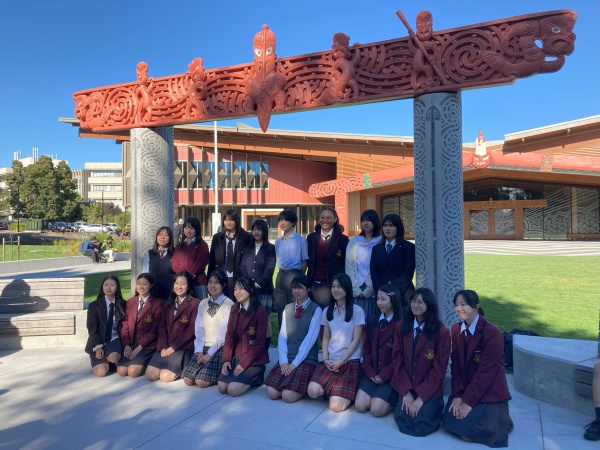
A handful of the 250 students who travelled to the Pā at the University of Waikato, for the international student welcome.
Also in March, nearly 100 international students received a fine welcome centered on the theme of connection, by Timaru District Mayor, Nigel Bowen. The Timaru District will be home to students from Japan, China, Germany, Thailand, South Korean, Hong Kong, Macau, Fiji, Philippines, Brazil and Poland, and more over the course of this year. You can read about this welcome in the Stuff article here - Nearly 100 international students welcomed to Timaru | Stuff.
-
International education front and centre during Prime Minister’s trade mission to SEA
From 14 to 20 April, New Zealand Prime Minister Rt Hon Christopher Luxon led a delegation of New Zealand business and government leaders to Singapore, Thailand, and the Philippines. Included in the delegation was Tracey Bridges, Board Chair of Education New Zealand Manapou ki te Ao (ENZ), who joined a small group of education sector representatives, as well as other New Zealand Inc partners, including New Zealand Trade and Enterprise and New Zealand Story.
ENZ’s offshore teams based in Singapore and Thailand played a pivotal role in organising and supporting the international education events, ensuring international education was front and centre throughout the visit.
Tracey said that it was pleasing to see that our sector received significant attention throughout the visit and that it played an important part in the New Zealand export story.
“Being part of this delegation gave ENZ the opportunity to reinforce the significant economic, social, cultural, and diplomatic value that international education brings to New Zealand.
“It was also a wonderful opportunity to underscore the importance of people-to-people links in strengthening bilateral relations. The delegation particularly enjoyed meeting so many New Zealand alumni and hearing how their New Zealand education has had a profound impact on their personal and professional success,” added Tracey.
Positive attention on our sector was achieved from the start when Massey University’s Vice-Chancellor Professor Jan Thomas signed an Enhanced Collaboration Agreement with Singapore’s PSB Academy’s Executive Chairman Viva Sinniah. This collaboration is a first for a New Zealand university and marks a significant expansion beyond traditional offshore teaching partnerships.
From Singapore, the delegation moved on to Thailand, where ENZ facilitated further international education events. Massey University signed a Memorandum of Understanding (MoU) with the Office of the Basic Education Commission (OBEC) under the Thai Ministry of Education. Under the MoU, Massey University in collaboration with ENZ will host in-market English training workshops for more than 100 Thai teachers under the supervision of OBEC in June 2023. This took place during a joint press conference at the Thai Government House, witnessed by the Rt Hon Christopher Luxon and Thai Prime Minister Srettha Thavisin.
ENZ Thailand, in partnership with Rajamagala University of Technology Phra Nakhon (RMUTP), then hosted New Zealand Member of Parliament Mr. Paulo Garcia, along with 27 delegates at the RMUTP campus for several cultural performances and tours. Later that afternoon, the ENZ Thailand team hosted a New Zealand Alumni Network event inviting the education representatives on the delegation, media representatives and 25 alumni who have all made substantial contributions to the bilateral relationship between New Zealand and Thailand.
ENZ’s Regional Director Asia (excluding China), Ben Burrowes said that Prime Minister Luxon engaged enthusiastically with the alumni and was able to see first-hand the role that international education plays in strengthening people-to-people connections around the world.
“During this event Prime Minister Luxon presented the Distinguished Service Awards to acknowledge the New Zealand Alumni Association in Thailand and the invaluable support it gives to international education.
“In addition to this Award, the Prime Minister presented an Eminent Alumni Award to a graduate who has made outstanding contributions to furthering bilateral ties between our two countries,” said Ben.
The Thai leg of the itinerary finished with a cocktail reception commemorating the Prime Minister’s visit. Over 400 guests representing various New Zealand Inc agencies, key local stakeholders from government agencies, educational institutions, private corporations, and education agents attended the event, reinforcing the close education ties between New Zealand and Thailand.
Lastly, the delegation travelled to the Philippines which for many members was their first visit. The time was effectively used here to engage with a number of ENZ’s key stakeholders invited to New Zealand Inc engagements across the programme.
At the close of the trip, Prime Minister Luxon said "the commercial announcements and deals between the delegation on the trip and counterparts in Singapore, Thailand, and the Philippines represent the growth of long-term, strategic partnerships.
"These relationships bind our countries closer together and deliver increased prosperity for all those involved."
