Search
Showing 10 of 2262 results for read 2024 FRM Exam Part I - Quantitative Analysis online free
-
International education during the pandemic – what we’ve learned
Education New Zealand held a webinar in its Kōrerorero: Conversations that Matter series at the Conference of the Americas on International Education – drawing academics and decision-makers from around the world.
Leading academics from Victoria University of Wellington, Auckland University of Technology, Massey University and Lincoln University explained the New Zealand approach to the challenges of distance learning and the innovations they discovered during the toughest moments.
Associate Professor Arun Elias, Associate Dean of International and Accreditation at Victoria University’s Wellington School of Business and Government, said while student-to-student interactions had fallen, digital platforms were opening up new ways of doing things.
“We had two PhD examinations which were completely online. We had one PhD student from Victoria being examined in an oral examination by an examiner in Colombia. Also, I was an examiner for a PhD student in the University of Sao Paulo, so that was something which we usually don't do which was a very unique experience.”
Dr Elias quoted a famous Māori proverb: “What is the most important thing in the world? It’s the people, it's the people, it's the people.”
Professor Guy Littlefair, Pro Vice-Chancellor International and Dean of Faculty at Auckland University of Technology, said lockdowns demanded change on many fronts.
“We've all had to learn how to be much more innovative around how we deliver programmes, but also how we conduct research and particularly how we engage with our partners right across the world.
“So, coming out of the pandemic I actually think we have more things in common than we've ever done before.”
Associate Professor Kerry Taylor, Head of School of Humanities, Media and Creative Communication at Massey University, said the difficulties had the potential to deepen relationships.
“There are a lot of lessons that we can share, but also learn from our partners, in terms of the importance of agreements and things like that.
“But I think one of the important things we need to make sure (of) is that we don't treat the relationship simply as an economic one. It's got to be about cultural understanding; it's got to be about shared values and sharing values and aspirations to bring people into the conversation.”
Professor Hugh Bigsby, Dean of the Faculty of Agribusiness and Commerce at Lincoln University, said the pandemic was a chance to find new ways to make human connections.
“One of the wonderful things about international connections and the importance of it is that you learn other institutions’ cultures.
People use the same fundamental skills and ideas a little bit differently and by mixing with other people’s understanding – why they're doing what they're doing – it actually helps inform things that you do back home.”
Watch the full webinar – Kōrerorero: Internationalisation for growing partnerships, a New Zealand perspective.
Education New Zealand was a platinum sponsor at the Conference of the Americas on International Education (CAEI). This continental forum brings together the main actors and decision-makers on the internationalisation of higher education in the Americas to chart the future of academic cooperation in the region.
-
STEM and higher education in Thailand
More than 600 visitors, along with our eight universities, Te Pūkenga and English New Zealand, attended ENZ’s online New Zealand Higher Education Showcase in early November. Instead of only showcasing institutions, we decided this year to have a Gradvocate live session as the main feature of the event.
Graduate students discussed their experience of higher education in New Zealand, and enabled Thai students and parents to see how successful our alumni are. Asia’s 2019 Breakout Musician and NZ alumni Phum Viphurit performed a mini-concert, and ENZ’s Lisa Futschek granted the 2021 Alumni Hall of Fame Award to three outstanding alumni: Dr. Chakrit Tiebtienrat, Mr. Narun Wiwattanakrai, and Ms. Wipapat Somumchan.
The increase in registrations and visitors for this year’s event demonstrates growing interest in New Zealand’s higher education. There were 620 unique visitors from 1,260 registrations, an increase of 59% in visitors and 3.6% in registration numbers since last year.
Later in November, the Thailand team successfully launched a NZ STEM Webinar series for teachers and students from Princess Chulabhorn Science High School (PCSHS) network, which comprises 12 schools for gifted students in four regions of Thailand.
The five webinars were offered in partnership with the University of Otago. Presentations on topics such as augmented reality gave gifted young students the opportunity to see some of the pathways into STEM tertiary education in New Zealand. Dr. Khunying Kalaya Sophonpanich, Deputy Minister of Education Thailand, also spoke at one of the webinars.
See Otago Daily Times article: Uni webinar series showcases offerings to Thai pupils
-
Masterclasses for German audience to launch Sustainability Guide
Organised by Education New Zealand Manapou ki te Ao, the online masterclasses gave students a taste of New Zealand education from two high-calibre speakers, Prof Krushil Watene from Massey University and Dr Regina Eisert from Victoria University of Wellington.
Prof Watene outlined a Māori perspective on sustainability and explained how indigenous viewpoints help to solve global problems. Dr Eisert shared insights about life and research in Antarctica, and photos and videos of her up-close experiences with Antarctica’s wildlife.
The Masterclasses were promoted through a tailored social media campaign. Our in-market team worked closely with our German PR agency and leveraged their wide networks in both Germany and New Zealand.
“The Masterclasses were a great initiative to raise awareness of New Zealand’s education system and its long-standing expertise in many sustainability-related areas. The strong engagement in the Q&A sessions showed how interesting New Zealand’s perspectives are to a German audience,’’ says Olga Elli.
For every participant ENZ has donated a native tree in New Zealand by partnering with Trees that Count, a New Zealand conservation charity.
For more information on the Masterclasses and the Sustainability Guide please contact Olga Elli, Market Development Manager Europe, olga.elli@enz.govt.nz.
-
New Zealand Global Competence Certificate
The cultural exchange programme started as a pilot partnership between Education New Zealand Manapou ki te Ao, AFS Intercultural Programs Inc. and Massey University in 2020. Initially set up to support international students remaining in New Zealand due to COVID-19, the programme has expanded rapidly, enabling us to maintain and grow relationships with key international partners. With limited travel opportunities, we can still build global citizenship by connecting students and teachers with peers across the world.
The NZGCC, delivered by Massey University, develops cultural self-awareness, emotional resilience, and builds bridges across cultures. It also piques people’s interest in visiting each other in better times. Participants in the programme have described it as ‘life-changing’.
The programme delivers animated videos, quizzes, assignments, and weekly live sessions for learners to talk with each other online in a virtual classroom in real time and learn about life from perspectives other than their own.
Watch a short video clip about the GCC in 2021.
-
New Zealand progressively reopens borders for international students in 2022 with new start in 2023
Note: The information in this story was correct at the time of publication, however, some steps in New Zealand's border reopening plan have now been brought forward. Click here to check the current border reopening steps.
Education New Zealand Manapou ki te Ao (ENZ) welcomes the Government’s announcement to reopen New Zealand’s borders. This is a positive step for international education.
The announcement outlined a five-step process for reopening borders from 28 February 2022, initially for New Zealanders to return from Australia and then from the rest of the world.
The Government also announced a fourth border class exception for up to 5,000 international students to enter New Zealand for study from mid-2022, in addition to the earlier cohorts approved in 2020 and 2021.
From October 2022 normal visa processing will resume, enabling international students to enroll for study in New Zealand in 2023.
ENZ Chief Executive Grant McPherson says today’s announcement is an important step towards rebuilding a strengthened and sustainable international education sector. “The border reopening steps outlined today enable the international education sector to progressively open through 2022 for the existing cohorts, with a new much larger cohort able to enter New Zealand for study before semester two. More details of the new student cohort will be determined by the Ministers of Education and Immigration and advised in due course.
“There's also an opportunity for students from Visa Waiver countries such as Japan and South Korea to enter New Zealand from July for short visits of up to three months.
“The Government has demonstrated their commitment to international students and educational institutions in 2023, with normal visa processing resuming in October 2022. This means international students can plan towards being in New Zealand for courses starting in 2023.”
Mr. McPherson said education providers could now plan with greater certainty for the year ahead.
“It has been an incredibly challenging period for New Zealand education providers, international students, and those who support them. The sector has shown considerable patience as the borders were carefully managed to minimize the threat posed by COVID-19. Today’s announcement is an opportunity to rebuild and reshape the sector to meet the challenges ahead.”
Mr. McPherson said the innovation and diversification into online learning and delivery of courses offshore, including pathway programmes over the last few years, would remain a feature in the industry as it moved forward. Today's announcement also prepares the way for New Zealand students to resume international studies abroad in the future.
“All New Zealand education providers know the value of building international partnerships, and developing new ways of meeting student needs. These are important building blocks for future resilience and quality education outcomes.
“In addition, from 14 March 2022 students entering New Zealand through the border exception cohorts will have the opportunity to self-isolate, rather than going through Managed Isolation and Quarantine facilities - subject to complying with all the required health and border requirements.”
Mr McPherson stressed the importance of seeking advice before moving forward with applications for enrolment. Students who have questions about this border class exception should contact their agent or preferred education provider in the first instance.
Students can also visit NauMai NZ, which provides useful information for international students in New Zealand or preparing to travel to New Zealand.
He rā ki tua – Better days are coming!
-
Publishing Association NZ launch international education website
Supported by funding from Education New Zealand Manpou ki te Ao (ENZ) under the Future Focus Programme (FFP), the new website profiles New Zealand education publishers for key export markets and customers. Earlier FFP research highlighted that being visible online was one of the key challenges facing New Zealand education publishers seeking to grow their exports.
The website enables education publishers to showcase New Zealand’s pioneering work in Reading Recovery, Big Book shared reading, and resources for the revitalisation of New Zealand’s indigenous Māori language and culture.
It aims to support marketing efforts in the key markets of Australia, China, the United States, and the United Kingdom. It will also be used to support New Zealand’s presence at major education publishing events, such as Bologna Children’s Book Fair and the Frankfurt Book Fair, in 2022 and beyond.
The website allows for a quick and easy search including by publisher, category, and publishing rights and demonstrates the quality of education products and services developed in New Zealand.
Alana Pellow, Business Development Manager at ENZ, says Catriona Ferguson, Association Director of PANZ and her team worked hard to bring this website to life, with the help of education publishers who provided great content.
“The outcome is a user-friendly, appealing and comprehensive website that will showcase the unique products and services of our education publishers to the world,” says Alana.
-
Tokyo Online School Forum
Education New Zealand Manapou ki te Ao signed a Memorandum of Understanding with the BoE in 2017 to promote educational and cultural exchange between Tokyo and New Zealand. The result has been a series of continuously successful exchanges between the two countries, including this latest forum.
For many students, this was their first time interacting with so many high school students from outside their own country, in a virtual forum.
Japanese neuroscientist Kenichiro Mogi, a visiting professor at Tokyo Institute of Technology, spoke about AI and the human brain, and the importance of eating well to maintain a healthy mindset. Following his lecture, students were given several topics to discuss in breakout sessions. They chose specific English words which they felt connected to the 17 SDGs, such as ‘humanity’, ‘compassion’, ‘education’, ‘resonance’ and ‘power’.
Students had a range of positive responses when asked what they had enjoyed most about the experience:
“The chance to connect with other students from across the world.” – Nandana
“I enjoyed listening and interacting with students from different countries. I also enjoyed learning about foods and ways to make food I’ve never seen before.” – Tammy
“Learning new things and what other people thought” – Eliza
“The speeches were very interesting, and the hosts were entertaining. I loved the information I learnt in this forum!” – Rio
“It was great to see such a large New Zealand presence at the Tokyo Forum, which supports the ‘Creating Global Citizens’ pillar of the New Zealand International Education Strategy,” says Misa Kitaoka, ENZ’s Director of Education – Japan.
“We look forward to bringing more opportunities to connect Japanese and New Zealand students through our shared commitment to progress towards UN SDGs.”
Other projects that ENZ and Tokyo BoE have been working on together include the development of an SDG lecture series, featured on their Tokyo English Channel.
Get a flavour of the event by checking out the promotional flyer here (Japanese language).
-
New international education strategy for Te Pūkenga
Chief Executive Stephen Town says the strategy supports a high-quality, sustainable education offering focused on ākonga (learner) experience and wellbeing.
“We have a unique opportunity to move from a model of competition to an integrated and collaborative approach, with a single brand, tailored to international markets and a single strategy aligned with the Government’s International Education Strategy,” Mr Town says.
The strategy aims to create more pathways to global citizenship, diversifying markets and creating high value for learners, employers and community.
The strategy is aligned with the New Zealand International Education Strategy and has five key areas of focus:
- creating and supporting skilled and culturally competent global ākonga
- adding significant value to the Aotearoa New Zealand community
- aligning learning outcomes to the needs of employers
- creating valuable strategic partnerships within and outside of Aotearoa New Zealand
- giving expression to our Te Tiriti o Waitangi relationship that exists between the Crown and Māori to improve outcomes for Māori through delivering partnership, protection, participation, and equity.
Te Pūkenga - New Zealand Institute of Skills and Technology - is Aotearoa New Zealand’s largest tertiary institution and one of the largest providers of tertiary education in the world. Established in 2020, Te Pūkenga is bringing together the country’s Institutes of Technology and Polytechnics (ITPs) and Industry Training Organisations (ITOs) to create a network of on-the-job, on campus, online, and offshore learning opportunities through a unified network.
-
New Zealand Global Competence Certificate Named Finalist for Two PIEoneer Awards
The PIEoneer Awards recognise innovation and achievement in global education each year. The New Zealand Global Competence Certificate is a finalist in two categories:
- Public / private partnership of the year
- Progressive education delivery award.
A model for delivering global competence education virtually and at scale
ENZ, AFS, and Massey University joined forces to deliver global competence education virtually, at a time when students were unable to travel and schools were unable to host international visitors due to the Covid-19 pandemic.
The Global Competence Certificate was ideal in this situation, as it develops self-awareness, empathy, critical thinking, cross-cultural communication and flexibility—global skills essential to live, work, and make a real impact around the world.
ENZ provided full scholarships to increase access; AFS developed a customised version of their Global Competence Certificate and trained a cadre of qualified facilitators in New Zealand; and Massey educators delivered the New Zealand programme so participants got a taste of the New Zealand teaching style.
1,000 learners in 13 countries reached
Mixed classes with learners from different countries, provided a rich cultural experience and a chance to connect with peers offshore in a virtual exchange, despite travel restrictions.
The nearly 1,000 students and teachers in New Zealand and 13 other countries developed global competence skills they described as “life-changing” and “the best thing in the pandemic.” Ninety-eight percent of the programme attendees said they were ‘very satisfied’ or ‘satisfied’ with the Global Competence Certificate, and 95 percent rated their experience as ‘excellent’ or ‘very good.’
Thanks to the overwhelming success of this programme, the partnership will continue as borders reopen and international travel is back on the agenda, with more than 400 learners benefitting from the New Zealand Global Competence Certificate in 2022.
Supporting a nationwide international education strategy
This collaborative project directly supports the Government’s International Education Strategy and helps students and teachers develop their cross-cultural skills together with their global peers.
“As well as helping to develop the global citizens of tomorrow, this programme demonstrates the reciprocal benefits of international education, giving our rangatahi a chance to learn with high school students from around the world, and giving their offshore peers a chance to learn ‘with’ New Zealand and our unique way of thinking,” says Grant McPherson, ENZ Chief Executive.
“Interacting and communicating effectively with people around the world is an important skill. Massey University’s significant experience teaching online, utilising the excellent customised content from AFS and the ongoing support of ENZ, provides a great opportunity for students to gain the knowledge and capabilities they need to live, work and learn in a connected world,” says Tere McGonagle-Daly, Students and Global Engagement, Massey University.
The award-winning Global Competence Certificate, developed by AFS Intercultural Programs, is used far beyond New Zealand. As of 2022, it’s used in more than 60 countries with 15,000 learners of different ages and backgrounds.
“Educating more young people to become global citizens is mission-critical for our world. At AFS we are committed to ensuring that everyone has access to intercultural learning and can gain skills such as cross-cultural communication, empathy, and conflict resolution to effectively bridge differences,” concludes Daniel Obst, President and CEO of AFS Intercultural Programs.
Learn more about the PIEoneer awards and see other finalists here. Winners will be announced on Friday 9 September 2022.
-
Engaging personally in Viet Nam
People generally seem tired of online meetings and webinars, preferring to meet and attend events in person. In recognition of this trend, Education New Zealand Manapou ki te Ao (ENZ) has actively engaged with different stakeholders in recent months, to maintain our in-market promotion and explore new opportunities for New Zealand providers.
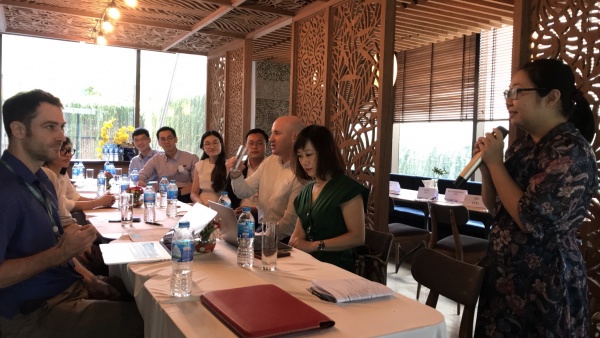
A workshop for counsellors from private and international schools to connect with recruitment representatives from NZ universities.
In late June, ENZ organised workshops to help connect recruitment representatives from New Zealand universities with selected counsellors from private and international schools in Ho Chi Minh City and Ha Noi. At the workshops, we asked about Vietnamese students’ current attitudes towards a New Zealand education, discussed the opportunities and challenges for each New Zealand provider, and identified any topics they wanted to explore further.
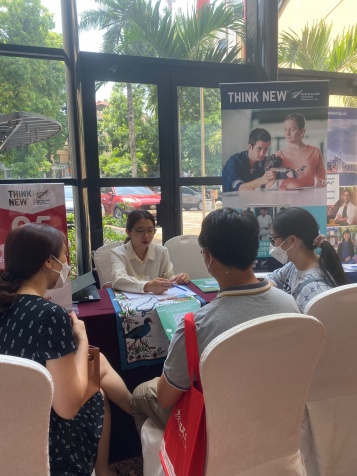 ENZ and in-market representatives of some New Zealand providers have also participated recently in commercial fairs, organised by key education agencies in Viet Nam. These fairs look and feel just like they did in the past, with multiple booths for institutions from various countries, and high numbers of students and parents coming to talk directly with recruitment staff.
 As New Zealand reopens the border for international students, it is critical we communicate directly with students and partners that we welcome students coming to study here. We are looking forward to the Hanoi and Ho Chi Minh City - Agent Seminar and New Zealand Fair in late October.
- Van Banh, ENZ’s market manager based in Ho Chi Minh City