Search
Showing 10 of 1236 results for Value-priced treatments https://simplemedrx.top
-
Continuing the discussion on the impact of AI on education
Since ChatGPT’s (Chat Generative Pretrained Transformer) launch in November last year, the Artificial Intelligence (AI) tool has featured heavily in headlines around the world, sparking conversations from boardrooms, to classrooms, and around the dining room table. Discussions on the significant impact this tool and future AI technology is having on how we teach, assess, and support our students here in New Zealand’s education system are happening in all areas of our sector, including here at Education New Zealand Manapou ki te Ao (ENZ),
A particular discussion during a recent EdTechNZ panel webinar on Artificial Intelligence and the impact on Education, looked at where educators may want to focus their valuable time now that generative AI platforms are available. For example, do educators want to spend their time researching topics, analysing data, and producing unique activities of work, or spend it on building meaningful relationships and place-based experiences with and for learners; gaining insights into learners’ interests, engaging in critical thinking activities and deepening learners experience of and outcomes in education?
Following EdTechNZ’s interesting and successful March webinar which can be viewed here; Artificial Intelligence and the impact on education, ENZ hosted an in-person seminar at our Tāmaki Makaurau offices in late April. This seminar's purpose was to look deeper at how this emerging technology is changing the way we learn, teach, and innovate.
Professor Ian Watson, recent past professor at the University of Auckland, spoke to a group from across the education spectrum including secondary schools, Private Training Establishments, EdTech founders, Education Publishers, Google, about AI and its impact on education.
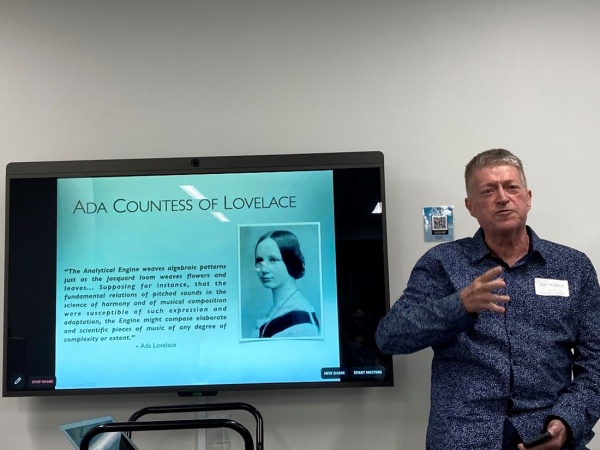
Professor Watson is considered an AI pioneer with 30+ years in the AI machine learning environment and reflected on the history of AI, including that it is not a new or sudden phenomenon, and its progress over time.
“AI imitates intelligence and is great at the specific but not so much the general. For example, aircraft use AI to be able to perform extremely specific flight tasks, but it will never be able to suggest a recipe and cook it!”, Professor Watson said.
“Within education, AI will certainly provide value in routine, mundane and repetitive tasks such as grading, lesson planning, report writing but in the hard and difficult tasks such as developing a universal design for learning and differentiated or targeted learning, it has its flaws. It is not always factually correct and still needs a human to educate it”.
Professor Watson also talked about how important it is, critical even, to teach learners how to use these tools, so they are empowered. Such tools include the likes of AI4K12 for K-12 learners.
Anyone looking for more insights and conversations about AI should check out the TechWeek23 programme with over 400 in person and online events to be hosted from 13 – 20 May.
Techweek AI focussed online events of note include:
- AI and education with AUT Monday 15 May
- AI is here to stay: Its impact on online, flexible, and distance learn with FLANZ (Flexible Learning Association) and EdTechNZ Thursday 18 May at 11:00am – 12:00pm.
-
Caroline plays her part in Christchurch rebuild
But she is now a qualified quantity surveyor as comfortable working on building sites as she is back in the office crunching the numbers.
Caroline says it is not a profession she would have contemplated in China, where she grew up, but Christchurch’s rebuild inspired her to pursue a career in the construction industry and she is grateful for the freedom to be able to achieve her ambitions.
“It has been very rewarding to be part of the rebuild and to see the changes in the city. Bettabuilt, the company I work for, specialises in school rebuilds. When we finish a new school, you feel like you’ve done something you should be really proud of.”
And her parents are proud too. They have backed her career choice and know that the bold decision they made to send their only child to New Zealand for education was the right one.

New Zealand a safe place to study
Caroline says they had travelled widely as a family before making the decision that she would come to Burnside High School Te Kura o Waimairi-iri in Year 11. “They wanted me to be open-minded and take on new experiences and cultures,” she says. “They decided it would be good for me to study in another country with a different culture and chose New Zealand because it was a peaceful and safe country.”
Before she arrived, Caroline was set up with a “buddy”, a student from her school in Beijing who was already studying here and helped provide insights into life in New Zealand. She also took an online course prepared for international students.
“This made me feel more confident and familiar with what I was coming to which was important, because the culture and environment is quite different from my home country.”
But there were still some big adjustments to be made when it came to schooling. “All courses in China are set by the Education Department. In New Zealand, you have freedom to choose your own courses,” she says. “At first, I was a bit overwhelmed by the options available to me because I didn’t know exactly what I should take. But it was good that I had the opportunity to try courses that I was interested in.”
She also had to get used to a self-directed approach to learning. “It allows you to study in a way which suits you best, which was positive for me. And it means when you start work you have the ability and discipline to study by yourself. I have used methods I learned in high school and university to build my knowledge in the workplace.”
With more free time in her life, Caroline had the opportunity to play sport and even take on a part-time job which she says would not have been possible in Beijing. “That job really helped me because I got to practice English and gain more confidence talking to local people.”
New career opportunities
It was all part of an international education experience which Caroline believes is about much more than study.
“When you’re an international student, you quickly acquire life skills and become much more independent.
You also learn about other cultures because you are mixing with people from many different backgrounds. It was quite an eye-opener for me, but I enjoyed it.”

Once she determined her career choice, Caroline chose Ara Institute of Canterbury as the next step on her education pathway. Starting with a Diploma in Quantity Surveying, she followed it up with a Bachelor of Construction. Job and internship opportunities were regularly shared by their programme leader, illustrating the close ties with business.
The decision to study in New Zealand has taken Caroline on a journey she couldn’t have imagined when she arrived. “In China I would not be working in construction. I would probably have been working in finance or management,” she says. “The environment here changed me and gave me career options I would not have considered at home.”
In the past few months Caroline has secured residency and bought her first house, giving her a real sense of belonging. “I enjoy my work and my life in New Zealand. I love Christchurch and I’m proud to be contributing to the rebuild of the city.”
“I feel really happy that I came here.”
-
October update from Immigration New Zealand
Update on student visa processing*
Since the borders reopened on 1 August 2022, we have received 7,710 student visa applications from international students outside New Zealand. We have decided 4,885 of these applications with over half of these decisions being made in less than 4 weeks and 95% being made within 7 weeks.
*Figures current as at 17 October 2022.
Submit your student visa application for early 2023 study now
Thank you to everyone who has followed our guidance around waiting to submit applications for a student visa for 2023 study. We now encourage students who are intending to begin their studies in New Zealand in early 2023 (up to the end of March) to submit their applications. If you have all your documents ready (including your offer of place and up to date financial evidence) then apply now to give enough time for your application to be processed before your intended travel date. Follow the checklists on the INZ website Student visa information | Immigration New Zealand for guidance on what to provide with your application.
Sending your passport to INZ
We have changed the rules for when you need to send us your passport. Now, if you are applying for a student visa you only need to send us a high-quality scan of your passport, you will not usually need to send your actual passport to be scanned at a Visa Application Centre (VAC) or an Immigration New Zealand office. This is a temporary measure to help with visa processing. Please note applicants may still receive an automated letter asking for a passport to be submitted. This is not required. We are updating the letter to address this issue.
More information: Sending your passport | Immigration New Zealand
Post-study work visa eligibility
Changes have been made to the Post-Study Work Visa eligibility requirements and visa conditions, to reflect the government decisions announced on 11 May 2022. For more information check the INZ website: New Post Study Work Visa requirements announced | Immigration New Zealand
-
Next webinar for the schools’ sector – 20 March 2024
Join Mary Camp on Wednesday March 20th 11:00 – 12:15 for discussion on the theme:
Growing Positive Public Perceptions of International Education.
Session highlights:
-
Marie Clark, ENZ Director Insights, will present recent research on New Zealanders’ perceptions of international education
-
Sai Raje, ENZ Senior Advisor Communications, will show us a toolkit for communicating the benefits of international education in your communities
-
We’d love to hear your tips of what you’ve seen work well in harnessing community support for your international programmes.
Next webinars (topics TBC):
-
Wednesday 17 April
-
Wednesday 15 May
-
Wednesday 19 June.
Register in advance for these webinars: https://enz.zoom.us/meeting/register/tZ0od-Cprj0iHdYcue0gGAXPY04bC7cMjPps
You can register once and attend any or all sessions. After registering, you will receive a confirmation email containing information about joining the meeting.
Please note these sessions are for NZ schools only – agents should check out https://agentlab.enz.govt.nz/
-
-
Discount for AIEC 2024 Melbourne – E-News special!
AIEC 2024 are offering New Zealand delegates a special rate for their upcoming conference in Melbourne from 22 to 25 October. This year’s theme, ‘the human element’, invites educators, researchers, policymakers and thought leaders to explore the multifaceted dimensions of human interactions across the international education landscape in this rapidly evolving digital era.
In amongst an action-packed programme, there are several New Zealand speakers presenting this year on topics relevant to New Zealand delegates that include:
-
Brett Berquist from the University of Canterbury will speak in the session on: Diversifying Asian student cohorts: navigating constraints and maximising opportunities
-
Hayley Shields from Edified NZ will be presenting in the session on: Expectations versus reality: insights into the international student journey
-
Catherine Dunphy, Martin Hookham-Simms, from the University of Auckland, and Hayley Shields, Edified NZ are speaking in the session on: Designing an internationalisation framework through Indigenous values
-
Monique van Veen and Elizabeth Zou, from the University of Canterbury will speak about: Engaging with the next generation: surprised and inspired by them
Anyone registering by the 30th of September will lock in the early bird rate (a saving of $150 off the standard rate).
Use code ENZ150@AIEC24 at the checkout to receive the rate. This is limited to the first 50 registrants and is applicable to Non-Client/Member Standard rate only.
Find out more, including the full programme of keynotes, workshops, sessions, plus social events and exhibition activations on AIEC's event website here - Australian International Education Conference | AIEC (idp.com)
-
-
Making global citizenship education a national priority
The webinar – a collaboration between Education New Zealand and AFS Intercultural Programs – canvassed the concrete steps that policymakers and educators can take to put global citizenship front and centre in curricula, teacher education and daily practice.
Daniel Obst, President and CEO of AFS Intercultural Programs, said the essence of global citizenship is being able to understand how we are connected, listen to other perspectives and take collective action.
“Global citizenship is not about stamps in passports, it’s about understanding our interdependence and our shared responsibility for our local communities and the world,” said Mr Obst.
It is mission-critical that governments invest in global citizenship education and expand access to global competence if we are to tackle the challenges of the 21st century, he said.
Around 130 experts tuned in for the ‘Making global citizenship education a national priority’ webinar – timed to follow the Asia-Pacific Economic Cooperation (APEC) summit hosted by New Zealand in mid-November.
Carla Rey Vasquez, ENZ’s Global Citizens Manager, said the New Zealand International Education Strategy 2018 - 2030 is an example of best practice in signalling clear government support for global citizenship and giving government agencies a roadmap to work with.
“Fostering global citizenship is the glue that connects; is pivotal for raising the educational outcomes for both international and domestic students and helping us grow global connections,” said Ms Rey Vasquez.
Other nations could follow the New Zealand example and broaden the focus of the international student experience from academic education alone to cultural and social values, she said.
Romina Kasman, Head of Education Sector at UNESCO’s Multicountry Office, said global citizenship must be part of a holistic ecosystem.
“Global citizenship education must not be left to chance if we want to ensure equitable and inclusive access to it worldwide,” she said.
Lit Wei Chin, APEC youth representative and Auckland Unlimited’s Climate Change and Sustainability Executive, said the voices of young people were important to global citizenship.
Young people cannot be just a tick-box – they must be heard on the issues of the global economy, quality education, climate action, equity and empowerment of marginalized communities, he said.
Watch the full webinar – Making global citizenship education a national priority.
ENZ’s webinar partner – AFS Intercultural Programs – is an international, voluntary, non-governmental, non-profit organisation that provides intercultural learning opportunities to help people develop the knowledge, skills and understanding needed to create a more just and peaceful world.
-
Recognising Manaaki and Prime Minister Scholarship Programme milestones
ENZ took over operational management of the Manaaki New Zealand Scholarships Programme (MNZSP) from the Ministry of Foreign Affairs and Trade on 1 November 2022. The MNZSP is a key pillar of New Zealand’s International Development Cooperation commitments (formerly New Zealand Aid) and is the Government’s single-largest investment in international scholarships. The programme has a 70-year history and approximately 1,100 scholarships are awarded each year, to scholars from 112 developing nations.
Manaaki Scholarships Manager Julia Moore says the first 12 months has had a dual focus on bringing enhancements to the programme and ensuring it has a seamless transition into ENZ for scholars and providers.
“ENZ is working closely with tertiary education providers to understand their needs, build relationships and identify areas for improvement. As part of this mahi, we recently brought together providers for the first ENZ run Tertiary Education Providers workshop. It was a great opportunity for all parties to come together, track progress in the past year and plan for the future” she says.
ENZ is also working jointly with providers to bring the programme forward after disruptions that took place as a result of COVID-19 border closures, including clearing a pipeline of scholars who had been selected pre or during the pandemic and had been unable to start their programmes in New Zealand.
A suite of branded digital collateral and assets has also been developed for partners in the Manaaki Programme with easy-to-use tools and assets for their marketing efforts, which they can find on ENZ’s BrandLab.
Find out more about Manaaki New Zealand Scholarships Programme by visiting the website.
Prime Minister’s Scholarships
In April 2022 ENZ was delighted to award group Prime Minister’s Scholarships for Asia and Latin America (PMSA/PMSLA) to Māori whānau trusts for the first time in the 10-year history of the scheme. This is part of a wider programme of work to ensure the scholarship programme delivers on our Te Tiriti obligations and is more accessible to all New Zealanders over the age of 18.
The Prime Minister’s Scholarship programme aims to strengthen New Zealand’s ability to engage with key Asian and Latin American trading partners, improving the internationalisation of indigenous communities, New Zealand tertiary institutions, showcasing the strength and quality of New Zealand's education system and enhancing inter-cultural awareness and connections between New Zealand and other countries. The scholarship offers flexible funding to support both short and long-term programmes including study exchange, internships, postgraduate study, and language programmes.
The Erana Kaunga Tuhura Whānau Trust was one of the 2022 group scholarship recipients. The group travelled to Indonesia to learn about sustainable living systems and building techniques, they produced a video to capture their time there.
Director Scholarships Carla Rey Vasquez says she’s humbled to see the video the trust put together.
“It is a great demonstration of how ENZ is effectively partnering with whānau Māori to achieve global citizenship outcomes and transform the way that international education delivers with and for Māori” she says.
ENZ is eager to continue partnering with iwi, marae and whānau groups to raise Māori participation in the Prime Minister’s Scholarship programme. The next round of Prime Minister’s Scholarships will open for group applications at the start of next year.
Find out more about the programme and sign up for updates by visiting the Prime Minister’s Scholarships website.
-
Exploring a vision for the ‘Future of International Education’ in Aotearoa
It was an action-packed week in Wellington for Emeritus Professor Bean and his business partner Helen Souness. They were invited to Wellington by Education New Zealand Manapou ki te Ao (ENZ) to facilitate discussions on what the future may look like for Aotearoa New Zealand’s international education sector.
Professor Bean is former Vice Chancellor of The Open University in the United Kingdom and RMIT University in Australia, and is now CEO of the Bean Centre. Along with his business partner Helen Souness, former CEO of RMIT Online, they partner with education experts, education providers and technology companies to shape an education future that works for the rapidly evolving needs of learners, and the evolving landscape of work they will eventually be part of.
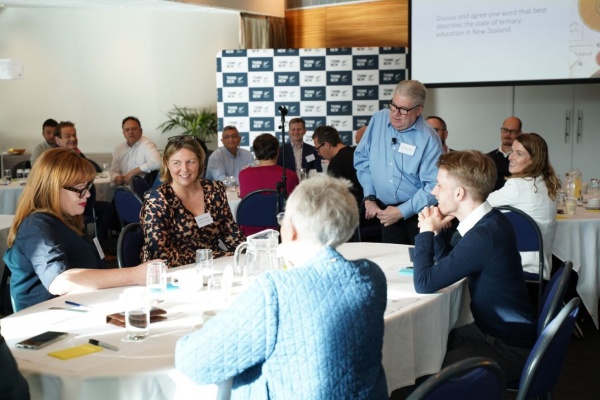
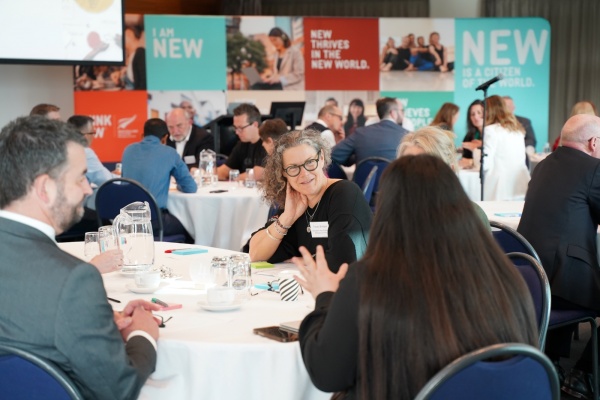
On Tuesday 1 August, ENZ hosted a cross-section of representatives from our international education partners in government, industry and tertiary education institutions at a full-day workshop. The aim of the workshop was to bring together our sector and collectively explore a vision for the future of international education in Aotearoa New Zealand. This work is a key part of Focus Area 2 of the New Zealand International Education Strategy 2022-2030 (NZIES) and how we can diversify our educational products and services and modes of delivery to create a more sustainable and resilient future.
ENZ’s Chief Executive Grant McPherson opened the event and said that it was a privilege to host experts in the field of international education and have them share their knowledge and experience on what is disrupting the world of tertiary and international education globally and what other countries are doing in the face of these challenges.
''I would like to thank everyone that came along with such energy and great ideas. It was a fantastic day and the collaboration between government, industry, and the education sector served to generate some inspiring ideas on how, as a country, we can innovate and differentiate our international education sector to remain competitive on the world stage.
''This is especially important work given the challenges that the international education sector is facing not just in Aotearoa but also around the globe. Professor Bean and Helen Souness really inspired us to think about the future of our sector from the point of view those around us including learners, communities, and industry, in the face of these challenges’’, said Grant.
Professor Martin Bean and Helen Souness had this to say about the 1 August workshop.
YouTube YouTubeProfessor Bean also said “I was delighted to participate in a week of deep thinking as we collectively imagined a brighter future for New Zealand’s international education sector.
“It’s clear that the world of work and tertiary education is changing rapidly and it’s great to see that colleagues in New Zealand are determined to meet the challenges and build a strategy to thrive in turbulent times”.
Another highlight of the day included a presentation from social innovators Hinepounamu Apanui-Barr and Briana Te Haara-Barr on the work that Tokona te Raki: Māori Futures Collective is doing in finding indigenous solutions to global challenges. Their case study and discussion provided valuable input to the day as we then discussed Aotearoa’s unique value proposition.
ENZ’s Sector Engagement General Manager Wendy Kerr, whose team is leading the work involved with Focus Area 2 of the NZIES, said that in the days following the workshop, the ENZ innovation team met with our international education agency partners to reflect on the discussions and wonderful ideas that were brought to the table during the day’s workshop.
“It’s not often we get a chance to shape the future and this week has proved a valuable foundation for many in our sector to contribute to the course of the future of international education for Aotearoa. And what an exciting privilege that is.
She added, ''Now the hard work really begins, and ENZ will be leading the development of a green paper that will be the basis for consultation with our international education partners including government, education providers, industry, iwi, the wider community, and of course, our learners. Watch this space for the exciting developments to come!’’
-
Indigenous Malyasian students learn about Te Ao Māori
Scholastica Philip, who is of Kadazan descent, together with Diana Bah Said and Norazah Din, both of Semai ethnicity, have been studying the Te Ao Māori and Sustainability course on the Mission New Zealand online platform.
All three say they gained a great deal from the short course, which included an introduction to biculturalism, and the five stages of the design thinking process.
“Biculturalism in Aotearoa New Zealand is fascinating,” Norazah said. “We learned about Māori settling in New Zealand, and I really want to experience their culture and daily life if I have the chance in the future.”
Scholastica noticed some common themes around sustainability in Te Ao Māori, and the importance of nature and food in her Kadazan culture, which is from East Malaysia.
“We take care of nature as we take care of humans - we need to take care of all living things.
“There is an ancient story for Kadazan people about Huminodun, a very beautiful woman who sacrificed herself to create food and bring rain to stop the cursed drought season for her people. This story is about how closely we are connected with nature.
“We learned on the course that Māori and non-Māori are working together in New Zealand to achieve a sustainable ecological system – I love the concept,” Scholastica said.
Norazah and Diana also noted how important trees and rivers are in their distinctive Semai culture, which is based in North Malaysia.
“We have a very strong connection with nature - as much as we respect each other,” Diana said.
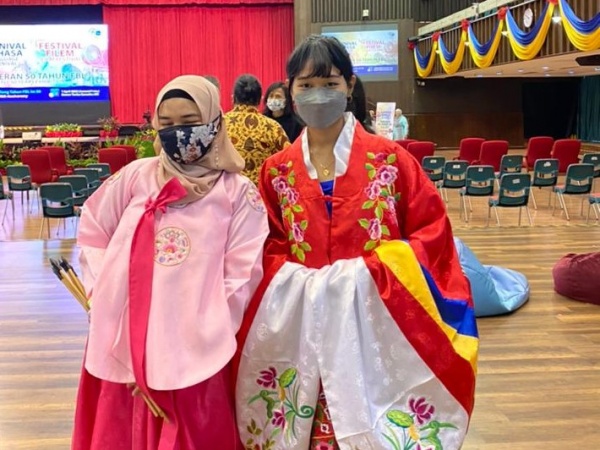
Norazah with a friend at the Festival of Langauge
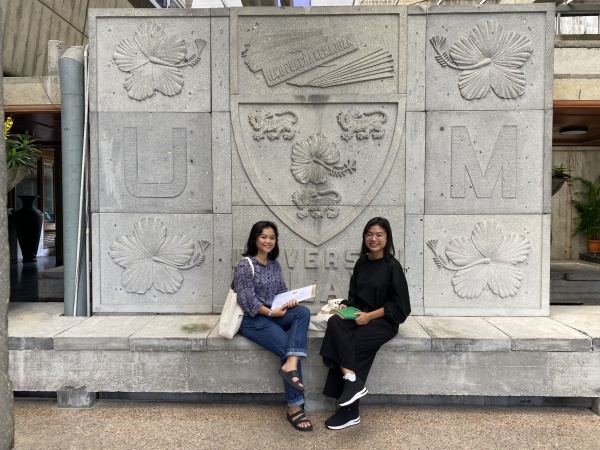
Scholastica and Diana at university in Kuala Lumpur
Norazah and Diana are in their second year of study at Universiti Malaya, and Scholastica is in her third year.
Scholastica has also completed an introductory course in te Reo Māori, and you can hear her pepeha here.
Ben Burrowes, Regional Director Asia for Education New Zealand Manapou ki te Ao (ENZ) says the Whakatipu Scholarships are funded by ENZ and Universiti Malaya.
“We are aiming to empower talented young indigenous students, support them with learning and exchange opportunities, and encourage knowledge sharing.
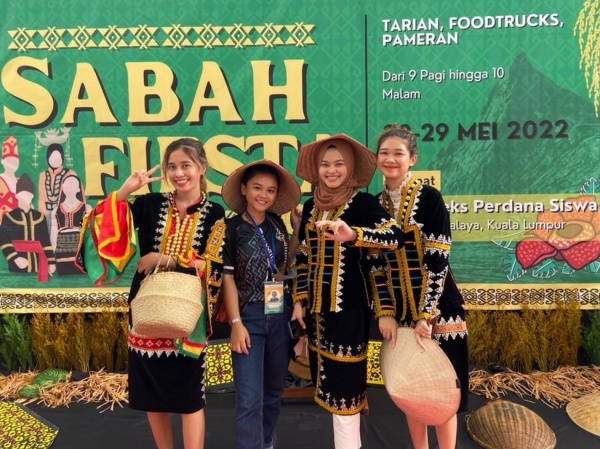
Scholastica at the Sabah Fiesta with a group of Thai buddies
“This is the first year of the scholarship, and it’s great to see these students making the most of this opportunity.”
Read more about the Whakatipu Scholarships on the ENZ website here.
Read more about Mission New Zealand on ENZ’s New Products and Services website here
-
Lifeswap premiere celebrates friendship between New Zealand and Germany
The final two episodes of the cult-hit webseries Lifeswap, ‘Laughing Matters’ and ‘Die Brücke’, concluded the animated adventures of Duncan and Jörg – the German and Kiwi friends who helped one another understand a new culture.
‘Laughing Matters’ tells the story of Jörg, who had an excellent experience in New Zealand, and (due to his preparedness for the future) was accepted into one of New Zealand’s most innovative and technologically advanced companies ‘Rockets R Us’.
The episodes were commissioned by ENZ and the Germany Embassy respectively.
“We were very fortunate to be able to celebrate Lifeswap with its creators Steffen Kreft – who was himself an international student at Massey University in Wellington – and William Connor, and their many fans at a live event at Wellington’s Embassy Theatre,” ENZ Chief Executive Grant McPherson said.
“After a year of restricted international travel and very few in-person events, it was a reminder that global education connection and cooperation has not stopped.
“The Lifeswap series highlights how the longstanding friendship between New Zealand and Germany transcends the situation we find ourselves in. It is a very powerful example of international education relationships keeping New Zealand globally connected while travel is limited.”
Following the launch of Laughing Matters – which built on the success of the first joint ENZ Lifeswap episode Group Effort in which Prime Minister Jacinda Ardern had a cameo appearance – the partnership is also being shared with key partners and audiences in Germany as part of ENZ's Americas, Middle East and Europe Education Week.
To leverage the popularity of the new episode and the wealth of the important topics it deals with, ENZ is working with a PR agency in Germany to tell this positive story more widely.
The PR engagement will involve a mix of approaches, including traditional media, social media and partnering with influencers, to ensure we reach a wide audience on all relevant channels.ENZ General Manager – International, Lisa Futschekworked with Kreft and Connor for months on ‘Laughing Matters’.
“It’s a great fit for Education New Zealand to be working with such creative people who are telling a fantastic story about the friendship between New Zealand and Germany.”
Also in attendance was the German Ambassador to New Zealand, his Excellency Stefan Krawielicki.
In his speech to the audience, the Ambassador noted how the humour of Lifeswap allows New Zealanders and Germans to laugh at themselves, and understand our differences.
“It’s such an enriching experience for young people to go to New Zealand – or for young people to go to Germany – and learn about different approaches and shared values,” he said.
“Education is a bridge builder and makes young people [become] lifelong ambassadors.”
Lifeswap dates back to 2013, when creators and partners Kreft and Connor began to work together, pooling their considerable skills in language, animation, and cultural competency.
The pair said at the premiere that while they’re sad to leave Duncan and Jörg behind, their story is complete.
“It’s probably a little bit like what parents feel like when their kids are going to study overseas,” Kreft says.