Search
Showing 10 of 7245 results
- NZIEC2023439of404
- Regional NZ
-
Huge education potential with Viet Nam
“It was a great privilege to be part of this visit. We were warmly welcomed everywhere, and there was a lot of interest in New Zealand education,” says Grant McPherson, Chief Executive at Education New Zealand Manapou ki te Ao (ENZ).
“An education forum in Ha Noi was a late addition to the programme, in response to a request from Viet Nam’s Ministry of Education and Training - this shows the high level of enthusiasm and energy for this relationship.”
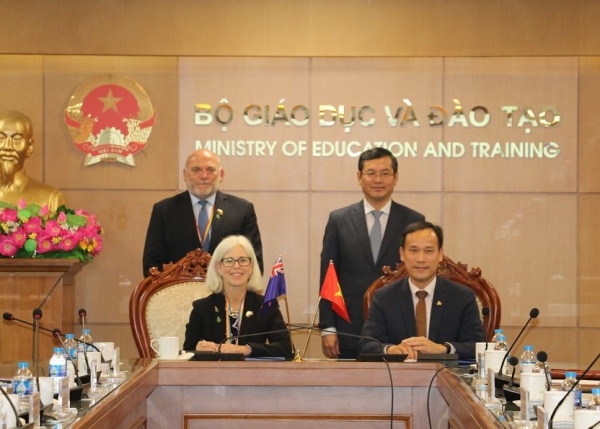
Eleven representatives formed the New Zealand delegation for the education forum. Key officials and education sector representatives from Viet Nam joined the event, which was hosted by Vice Minister Nguyen Van Phuc. Institutional autonomy, scholarships, and foreign investment in education were the three main topics on the agenda, generating animated questions and discussion.
Three education arrangements were signed during the Prime Minister’s visit. The Education Cooperation Arrangement between the Ministries of Education in both countries was renewed, with the signing witnessed by the two Prime Ministers.
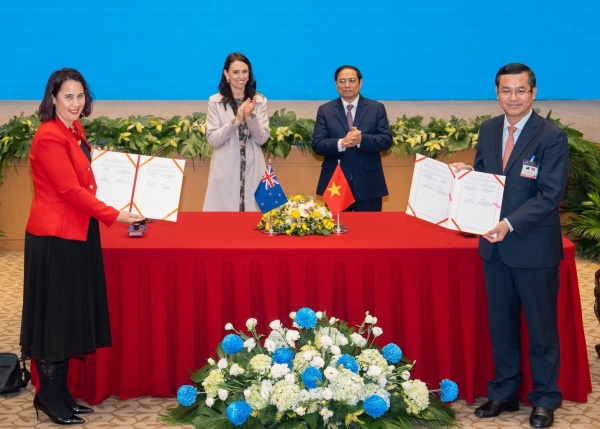
University of Auckland Vice Chancellor Dawn Freshwater also signed two arrangements with Ho Chi Minh City University of Technology (HCM-UT), relating to qualifications in computer and data science.
The visit also included an opportunity for the Prime Minister and the delegation to meet with around 70 Vietnamese alumni.

“Over the years, many Vietnamese students have studied in New Zealand, and they have become part of a network of influential alumni. These relationships span every sector of Viet Nam business and government,” Mr McPherson said.
“Five alumni showcased their businesses and social projects at the event and had the opportunity to discuss their work with Prime Minister Ardern Dave Quach, Hoa Pham, Nhien Le, Van Nguyen, and Ngan Le. Their work spanned sustainable textile manufacturing; a kindergarten that applies values of New Zealand’s early childhood education curriculum, Te Whāriki; mindfulness photography for social development; a tech-enabled platform that supports young people to pursue their study abroad dream; and an innovative agribusiness model for women of ethnic minorities in northern Vietnam.”
In recognition of the achievements of alumni and to support them as a community, Prime Minister Ardern launched a digital badge for Vietnamese alumni, I AM NEW, at the event.
Education was on the agenda at a business dialogue on 15 November and a business breakfast on 17 November provided a valuable opportunity to catch up with local institutional partners and agents.
The Prime Minister’s visit generated significant media and social media coverage in Viet Nam, and built on an earlier series of targeted events to promote New Zealand education in Viet Nam:
- Viet Nam Agent Seminars that enabled numerous New Zealand institutions to connect with education agents in Ha Noi and Ho Chi Minh City on 28 and 31 October, and where agents heard directly from Immigration New Zealand about student visa requirements
- ENZ’s Viet Nam Education Fairs on 29 and 30 October in Ha Noi and Ho Chi Minh City, enabling New Zealand providers to connect directly with prospective students and their families. These fairs generated similar levels of interest to events pre-Covid, and again included an opportunity for students to hear directly from Immigration New Zealand about student visa requirements
- Viet Nam School Leaders and Counsellors Meet-ups on 28 and 31 October in Ha Noi and Ho Chi Minh City, which enabled New Zealand tertiary providers to connect with representatives from international and private schools
- Launch of Te Pūkenga at an event that was well attended by education agents in Ho Chi Minh City on 31 October
- Education Workshop on Micro-Credentials in Future-focused Education on 1 November, in association with The MindLab and NZQA.
The sector has recognised the opportunities in education with Vietnam. Sector and government agencies’ work so far is helping to raise the profile of New Zealand and the quality of an education delivered by New Zealand.
- Viet Nam Agent Seminars that enabled numerous New Zealand institutions to connect with education agents in Ha Noi and Ho Chi Minh City on 28 and 31 October, and where agents heard directly from Immigration New Zealand about student visa requirements
-
Around the world in five
ASIA
APAIE: International education critical for Asia’s diplomacy, ambitions
International education in Asia Pacific has been a critical diplomacy tool for the region – one that is becoming all the more essential given the tempestuous global political landscape. Fostering a global outlook among students and facilitating people-to-people exchange is crucial, and international education can achieve what politicians are unable to, building positive relations between people and even countries, where relations are poor.
JAPAN
Push for foreign students to stay on to work in Japan
It is now a top priority that international students attending Japanese universities stay on in the country, with the government offering new incentives such as subsidised company internships, help with finding jobs on graduation, stepped-up Japanese language courses and more streamlined processes for work visas after graduation.
GERMANY
Germany is 'best country for international students', above UK
When students think about studying in a foreign country, their destination of choice tends to be either the United Kingdom or the United States, but a new study argues that Germany is now the best option for international students in Europe. The study ranked 30 European countries according to education, costs, life and career. Germany came on top with a total score of 83.2 out of 100 – far ahead of the UK, which scored 69.8.
CANADA, AUSTRALIA
Canada, Australia woo international students
Canada and Australia have goals to attract more international students to their universities, with policies that include more relaxed visa procedures, work rules and paths to citizenship. Given the current unsettled political climate in the U.S. and the United Kingdom, Canada and Australia are emerging as attractive education destinations for prospective international students.
CHINA
China sees 11% growth of international student enrolments
The number of international students in China continues to climb, reaching 442,773 last year, and putting it on track to reach its target of hosting half a million international students by 2020. Korea was the top source country, sending just under 16% of all international enrolments. The US, accounting for 5.4% of all students, was the second-highest sending country, followed closely by Thailand.
- Santiago High School Career Counsellors
- Vikram
- IMG 2703
- NZIECGaladinner307of70
- iitd signing
- Overall August 2015 visa dashboard