Search
Showing 10 of 7328 results
- PMSLA U. Tecnologica de Bolivar
- AG photo 2
-
Around the world in five
Asia
Australian TNE looks to India as countries recognise qualifications
Australia and India have signed a qualifications recognition agreement, which comes after Deakin University's announcement of plans to open a campus in India. The recognition agreement is expected to support transnational education and allow students with Indian qualifications to pursue further education in Australia and vice versa.
North America
US educators concerned over new rules on 'third-party' relationships
International educators in the USA are concerned that new Department of Education guidance and oversight of third-party relationships could have negative impact on international student recruitment.
South America
These are the best universities in Latin America in 2023
Latin America and the Caribbean (LAC) has seen a record 140 universities from 12 countries ranked in the Times Higher Education (THE) university rankings 2023, with many of the top region’s universities situated in Brazil.
Europe
New poll reveals public support for international students in the UK
Results from a new poll show that the UK public is positive about the contribution that international students make to the economy, institutions and academic research.
Africa
Visa crisis is jeopardising internationalisation efforts
South African universities face challenges in their internationalisation efforts due to a visa crisis that is affecting international students and staff.
- H.E. Neeta Bhushan
-
Making global citizenship education a national priority
The webinar – a collaboration between Education New Zealand and AFS Intercultural Programs – canvassed the concrete steps that policymakers and educators can take to put global citizenship front and centre in curricula, teacher education and daily practice.
Daniel Obst, President and CEO of AFS Intercultural Programs, said the essence of global citizenship is being able to understand how we are connected, listen to other perspectives and take collective action.
“Global citizenship is not about stamps in passports, it’s about understanding our interdependence and our shared responsibility for our local communities and the world,” said Mr Obst.
It is mission-critical that governments invest in global citizenship education and expand access to global competence if we are to tackle the challenges of the 21st century, he said.
Around 130 experts tuned in for the ‘Making global citizenship education a national priority’ webinar – timed to follow the Asia-Pacific Economic Cooperation (APEC) summit hosted by New Zealand in mid-November.
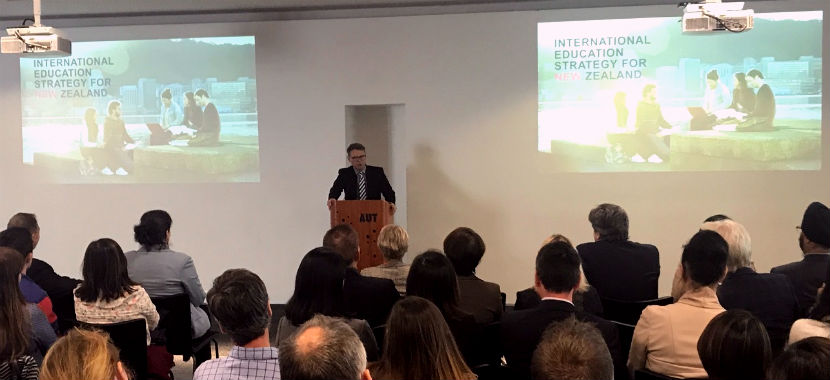
Carla Rey Vasquez, ENZ’s Global Citizens Manager, said the New Zealand International Education Strategy 2018 - 2030 is an example of best practice in signalling clear government support for global citizenship and giving government agencies a roadmap to work with.
“Fostering global citizenship is the glue that connects; is pivotal for raising the educational outcomes for both international and domestic students and helping us grow global connections,” said Ms Rey Vasquez.
Other nations could follow the New Zealand example and broaden the focus of the international student experience from academic education alone to cultural and social values, she said.
Romina Kasman, Head of Education Sector at UNESCO’s Multicountry Office, said global citizenship must be part of a holistic ecosystem.
“Global citizenship education must not be left to chance if we want to ensure equitable and inclusive access to it worldwide,” she said.
Lit Wei Chin, APEC youth representative and Auckland Unlimited’s Climate Change and Sustainability Executive, said the voices of young people were important to global citizenship.
Young people cannot be just a tick-box – they must be heard on the issues of the global economy, quality education, climate action, equity and empowerment of marginalized communities, he said.
Watch the full webinar – Making global citizenship education a national priority.
ENZ’s webinar partner – AFS Intercultural Programs – is an international, voluntary, non-governmental, non-profit organisation that provides intercultural learning opportunities to help people develop the knowledge, skills and understanding needed to create a more just and peaceful world.
- BrandLab screenshot
-
High numbers of student and visitor visa applications
Jeannie Melville, INZ’s Assistant General Manager, Visa Services says this is typical for this time of year and will likely continue until March 2019.
“Due to the high application volumes currently being received, we strongly recommend that visitor and student visa applications are submitted as early as possible.
“Student visas should be submitted at least eight weeks ahead of their intended travel date, while visitor visas should be submitted as soon as possible in advance of travel. This gives INZ time to assess the application and gather more information from the applicant if needed.”
The fastest and easiest way to apply for a visa is to use the Immigration Online system via the INZ website, where applicants can upload supporting documents, photographs and pay for their application.
While INZ makes every effort to streamline assessment of applications, applicants may experience longer timeframes if they do not supply all required information (including translations) when they submit their application. If they do not supply the correct information this could hold up the processing of their visa.
INZ does not advise purchase of travel before an application is completed as the grant of a visa is not guaranteed. In particular, assessment of visitor visa applications will not be prioritised if the sole reason is that the applicant has pre-purchased travel.
Education providers can refer students to the INZ website for visa processing timeframes, which applicants should take into account when applying for their visa and planning their travel.
- Japan story2
- Startegy edit
- CHCH welcome 2