Search

Showing 10 of 7308 results

  • japanmasterclass

  • lifeswap berlin 6

  • KakaoTalk 20170513 210415829

  • Get involved in the next Korea–New Zealand Digital School Exchange Programme

    Programme information 

    • Number of New Zealand schools selected: Up to 10. 

    • Who can apply: Schools with students in Year 7-9. 

    • Number of participating students per session: 20-25 (Korean schools typically involve a full class of 20-25 students per exchange session. If a New Zealand school wishes to include more than 25 students, they can form multiple groups of around 20 students each to participate separately.) 

    • Exchange period: Four, one-hour Zoom sessions held weekly from Monday 11 May 2026 to Monday 8 June 2026. 

    • Exchange times: To accommodate both time zones, exchange sessions will be scheduled between 12:00-3:00pm NZT. 

    • Participation fee: Free of charge. 

    Why join? 

    • Promote your school to a South Korean audience for free 

    • Showcase New Zealand’s unique education environment and culture 

    • Engage your students in a hybrid STEM and cultural exchange 

    • No added work to your teaching load - LEL takes care of all the admin and logistics, allowing you to simply show up with your classroom and enjoy the global learning experience 

    Teachers in previous rounds praised the programme for its smooth delivery and the enthusiasm it sparked in their classrooms.  

    Check out the story from the previous programme:  New Zealand – Korea digital student exchange » Education NZ 

    How it works 

    ENZ and Seoul MOE work closely with Learn English Live (LEL), who will: 

    • Coordinate all communication with New Zealand schools. 

    • Match exchange times with Korean schools and New Zealand schools. 

    • Provide pre-training for New Zealand teachers and students. 

    • Facilitate sessions using topics tailored for digital exchanges ranging from culture & language sharing, United Nation SDG projects, STEM learning, global citizenship and much more. 

    In previous programmes, NZ teachers appreciated not having to prepare or run the sessions themselves—LEL takes care of everything. 

    Is this right for your school? 

    This programme is a great fit for schools that:  

    • Are looking to build long-term sister-school relationships with Korean schools, especially through social studies, cultural/global studies, languages or global citizenship education. 

    • See value in soft marketing opportunities, promoting their school in Korea in a meaningful, low-pressure and no cost way, and are interested in attracting potential international students over the long term. 

    Application timeline 

    • Applications close: Friday 12 December 2025 11:59pm 

    • Selection process: 15 – 16 December  

    • Notification of outcome: Wednesday 17 December 

    • Next steps: From April 2026, selected schools will be contacted by LEL with a detailed guide 

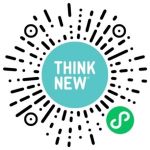
    If you wish to apply for this programme, please fill out the Expression of Interest (EOI) here or scan the QRCode below. 

    If you have any questions, please contact ENZ (Alana Pellow ) or Learn English Live (William Clarke ). 

    Background 

    ENZ has partnered with the Seoul Metropolitan Office of Education (Seoul MOE) to run digital classroom exchanges since 2021 with ENZ education technology partner Learn English Live (LEL) . These exchanges have created meaningful connections between students, teachers, and schools in both countries. NZ students have had the opportunity to connect with their Korean peers, build global friendships, and experience cross-cultural learning—all from their own classrooms. 

  • MFAT24 103 Manaaki Scholarships 2024 signature final 2

  • Adrian and daughter

  • PMs Scholarship 101

  • New Zealand experience grows global indigenous network

    A special bond forged through a Study Abroad programme, involving Vermont’s Champlain College and Auckland University of Technology (AUT), was marked by the gifting of a unique pare whakairo (carved doorway mantel) to the US College in September.

    Called Te Hononga (The Convergence), the pare whakairo was created by kaiwhakairo (Māori carver) Pahi O’Carroll over four weeks in residence on the Champlain campus. 

    The pare is unlike any other. It is carved from a wood native to the area – black walnut – and evokes values, beliefs and traditions common to both Māori and the indigenous people of Vermont, the Abenaki.

    The relationship between Champlain and AUT dates back five years, when New Zealand Honorary Consul and trustee of Champlain College, Dr George Burrill, first established a study abroad exchange programme between the two institutions. To date, over 100 students have participated.

    One of the highlights of American students’ time at AUT is the Noho Marae programme.

    “Every year students tell us how the Noho Marae programme has profoundly impacted them,” ENZ General Manager – International, Lisa Futschek, says. “It turns them into lifelong advocates for New Zealand, its education system and Māori culture.”

    Run by AUT Senior Lecturer in Māori and Indigenous Development, Jason King, the mini-course includes basic Te Reo Māori, Māori mythology, waiata (songs) and cultural customs. It includes with a noho marae (weekend-long marae experience). 

    King describes the course as “the base of a tree, from which branches and leaves grow”. 

    “The course puts indigenous goggles on students,” he says. “It opens them up to areas of discussion with their own indigenous people.

    “My ultimate aim is to connect us not only globally, but indigenously.”

    Thanks to their connection to Māori via AUT and the Noho Marae programme, Champlain College made a formal connection to their own indigenous people, the Abenaki tribe. A representative from the Abenaki was present at the unveiling of Te Hononga. 

    Many US students choose to keep in touch after they return home through the student-led Whānau Councils. These were first established in 2010 after students from Europe were so moved by their AUT marae experience that they set up their own group to maintain their connection to New Zealand and each other. There are now three Whānau Councils across Europe and the US actively supported by AUT.

    For the European council’s 10-year anniversary, members of group are planning to return to New Zealand – this time with their partners and children.

    “We tell them during the Noho Marae, after studying in New Zealand you are whānau for life,” King says.

  • TRA

  • 18222456 1306214609486741 6591937241734795619 n

What's in it for me?