Search
Showing 10 of 7241 results
- NZIEC2023310of404
-
Government delegation from South Korea visits New Zealand to reconnect with several of our education providers
New Zealand and South Korea have strong education links and one unique partnership is the education cooperation under the Korea-New Zealand Free Trade Agreement (KNZFTA) which has historically included education programmes for Korean school and tertiary students.
The visiting delegation included representatives from the Korea Ministry of Food, Agriculture and Rural Affairs (MAFRA), the Korea Ministry of Oceans and Fisheries (MOF), the Korea Agency of Education, Promotion and Information Service in Food, Agriculture, Forestry and Fisheries (EPIS) and Korea Fisheries Resources Agency (FIRA), the implementing agency for the MOF-funded project.
The delegation was welcomed to the ENZ Wellington office with a mihi whakatau on their first day. ENZ, Ministry of Education (MoE) and Ministry of Foreign Affairs and Trade (MFAT) colleagues joined together for waiata and kai with our Korean guests.
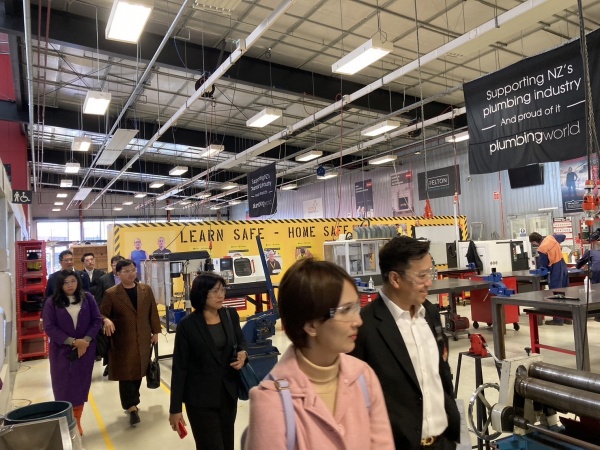
Following a welcome and mihi whakatau in Wellington, the group travelled on to Nelson where they visited Te Pūkenga Nelson Marlborough Institute of Technology (NMIT) and Nayland College. The visit to Nayland College was an opportunity for the Korean representatives to gain a better understanding of the pastoral care for school students and the unique offerings such as outdoor education and horticulture programmes.
Kay Lee, ENZ Senior Market Development Manager – Korea, said it was important for the Korean delegation to experience firsthand the welcoming and safe environment of New Zealand schools to regain confidence in the Schools Visits Programme.
“After the COVID-19 pandemic, the Korean Government was concerned about sending students, especially younger students, overseas to study particularly on scholarship programmes because parents wanted assurance their children will be well looked after. In the debrief with the Korean representatives, it was clear they gained confidence from speaking to the New Zealand institution representatives around the procedures and systems in place to support students.”
“We hope that this renewed confidence will mean that we start seeing Korean government scholarship school students studying in New Zealand again in the near future”.
High on the agenda during the delegation’s visit were the School Visits and Tertiary Training Programmes, both of which were affected significantly during the pandemic.
From 2016 –2019, the School Visits Programme provided 150 high school scholarships per year for South Korean students from rural areas to attend New Zealand schools for eight weeks. The Korean Government planned to continue the Schools Visits Programme with its own funding in 2020, however, the programme was cancelled due to travel restrictions during the pandemic.
An alternative programme was run by MAFRA and MOF from December 2022 which involved short-term English Language Training for school students in Korea with three New Zealand teachers travelling to Korea to teach English (Read about their experience here).The Korean organisers have decided to run the English language programme in Korea again with six New Zealand teachers traveling to Korea to teach English in January 2024.
Nayland College demonstrated manaakitanga by welcoming the group to rainy Nelson but provided an Asia Kiwi lunch complete with meat pies and sushi!
Like the Schools Visits Programme, the pandemic interrupted tertiary programmes and the revised programme ran in January 2023 with short term group programmes. The site visits in November to Te Pūkenga NMIT and Lincoln University provided an opportunity to discuss the institutions’ proposals to host Korean tertiary students in January 2024.
Also discussed was the importance of reciprocity and it was noted that Korea is a popular destination for New Zealanders under the Prime Minister’s Scholarship for Asia (PMSA) scheme. Since 2016, the scheme has awarded scholarships to 196 individuals or groups for study, intern or research programmes in Korea. Lincoln University, in particular, has been successful in facilitating group PMSA programmes focused on agriculture to Korea.
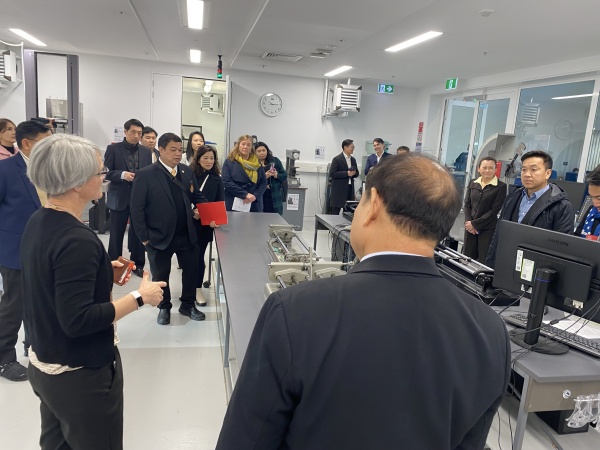
Dr Mark Burdass, Aquaculture Programme Coordinator and Tutor, introduces the hands on learning in the aquaculture programme at Te Pūkenga NMIT.
At the conclusion of their visit, the Korean delegation expressed their gratitude to the institution hosts for making their time in New Zealand memorable and valuable through fruitful discussions. The delegation emphasised the importance of conducting these meetings in person and visiting the campuses to meet with institution staff and academics. The ENZ Manapou ki te Ao team is pleased to continue close cooperation with our Korean education partners to facilitate connections with New Zealand education providers for the education programmes.
If you are interested in finding out more about the education initiatives originally outlined in the KNZFTA, you can read about this in a 2016 E-News article here - New opportunities for New Zealand and Korea.
- SIEBA 4
- CHCH BlueHijab GoldDress website 624
- Ambassador and team v2
-
On the ‘road’ again
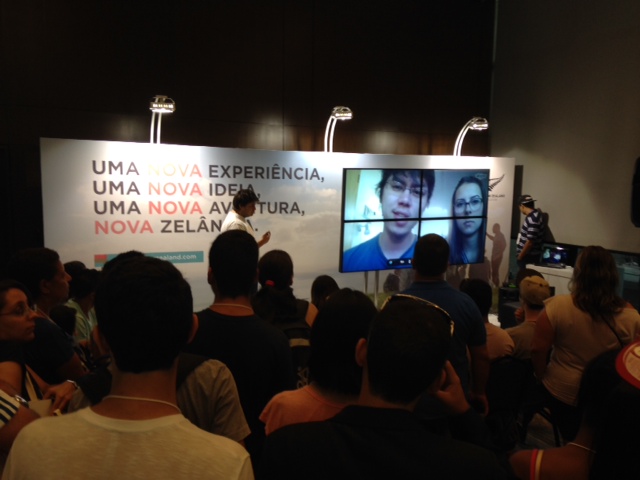
ENZ’s team in South Korea, in partnership with the Seoul Board of Education, held their first-ever online school roadshow this October. It aimed to give Korean students a better idea of New Zealand and inspire them to study here in the future.
Virtual webinars were delivered to over 500 students at 13 Korean high schools. Before each webinar, students were asked to send in their questions about New Zealand education, so their presentation could be tailored to reflect their interests.
New Zealand Ambassador to Korea, Philip Turner, supported the roadshow with a pre-recorded video.
“This strategic engagement with the Seoul Board of Education is an example of how we’re working with key in-market stakeholders to keep the dream of New Zealand education alive in the hearts and minds of our future international students,” ENZ Regional Manager – East Asia, Ben Burrowes says.
Maintaining the New Zealand brand in our offshore markets is a key part of the third workstream of the Recovery Plan for international education, ‘Transforming to a more sustainable future state’.
Elsewhere in Korea, ENZ working on connecting NZ schools with Korean schools for virtual language exchanges. In September, Team Korea launched a digital platform for a local Korean audience that shares positive stories about New Zealand’s COVID-19 response, institution updates, and inspiring stories of Korean international students.
“Before COVID, Korea was the fourth-largest student source country for New Zealand’s international education sector,” Ben says. “In 2018, nearly 2,500 Korean students studied at New Zealand schools, a five percent increase on 2017, and our market research indicates that the interest in a New Zealand education certainly still remains. It’s therefore vital that we maintain our brand presence and help to build a pipeline of Korean students for our institutions.”
-
February update from Immigration New Zealand
Update on Student visa processing*
Since New Zealand’s international borders reopened in August 2022, Immigration New Zealand (INZ) has received 25,471 student visa applications from international students outside of New Zealand. We have decided 17,601 of these applications, with more than half of our decisions made in under four weeks.
*Figures current as at 10pm on 30 January 2023.
We have updated our reporting
INZ is improving the way we publicly report on processing times for different visa categories. We now publish the processing times for applications decided in the previous month, instead of the previous three months.
The website illustrates the median number of days, along with the actual number of days it takes to process 90% of applications. These new metrics give a good indication of what customers can expect, regardless of the complexity of their application.
Check out our updated processing times here: How long it takes to process a visa application | Immigration New Zealand
Apply for visas at least 8 weeks ahead of intended travel date
New Zealand is in the middle of our student processing peak period. You can apply up to three or four months ahead of intended travel if you wish, however please ensure that applications are applied for at a minimum of 8 weeks ahead of intended travel date.
INZ generally processes applications in date order and the course start date is also taken into consideration.
We appreciate that students are keen to have their travel bookings confirmed given the cost of flights and flight route limitations, however INZ recommends that students do not confirm travel bookings until a visa has been granted. If students still wish to book travel ahead of a visa decision, we recommend that they explore flexi travel dates or refundable tickets.
Student visa checklists
The student visa checklist is key to submitting a complete student visa application that has the information we need to make a decision. We update the visa checklists regularly, so be sure to use the web link rather than download the checklist. The first time international students visa checklist was last updated in December 2022.
- 2425 254 MO Briefing Quarter Three (5) Redacted
- Sahinde Pala 6 of 1 v2
- ENZ Fern Fronds