Search
Showing 10 of 7395 results
- pic2
- Thailand20campaign 0
-
International students provide Asia perspective for Canterbury businesses
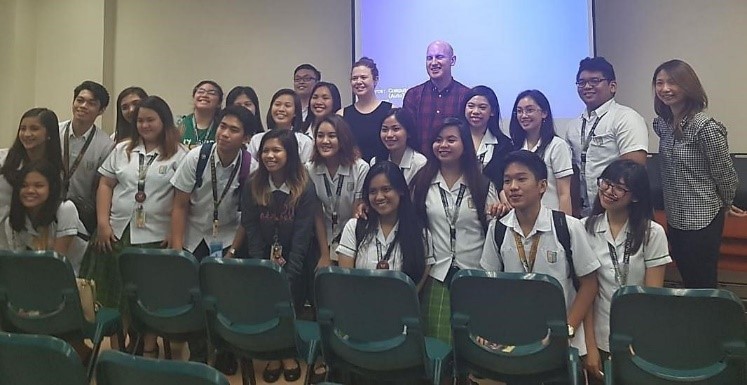
The students had signed up to take part in the Business School’s first Global Virtual Micro-Internship Programme, providing them with real-world research and industry experience, while enabling local businesses to tap into the expertise and insights international students can offer of their home countries.
A total of 35 mostly Commerce students participated in the three-week programme, working in nine teams across six local businesses which were keen to be involved. They were divided into the three Chinese teams, three Malaysian teams, and one each from Thailand, Indonesia, and Sri Lanka.
The programme had a competitive element, with the teams competing for a prize pool of $1500. They were judged on a range of criteria, with the most important factor the extent to which the research was designed, undertaken, and presented in a way that met their client’s needs.
Programme meets needs of students and businesses
Programme lead Will Shannon, also UC Business School’s Internationalisation Director, was excited to be able to develop the programme with the local business community, saying it met an unfilled need for international students wanting practical business experience, and highlighted the skills they had to offer.
The catalyst for the programme was the release of a report by Asia New Zealand Foundation Te Whītau Tūhono in mid-October which found that South Island businesses were keen to expand trade and investment links with Asia, but often lacked the right skills and connections to make it happen.
Fifty-seven percent of businesses surveyed identified language skills as a barrier to business, and 51 percent said they lacked knowledge of target markets and relevant organisations in Asia.
“We consistently get requests from international students wanting practical experience where they can apply their knowledge to real world problems,” Dr Shannon says. “So, when the Asia New Zealand Foundation report came out, we had the perfect combination of companies needing what international students can provide.”
Opportunity for international students to be involved
New Zealand’s border restrictions mean that close to half of the Business School’s international students are studying remotely, while others were unable to travel home for summer. This added impetus to the programme.
“We’d been looking for ways to engage students here over the summer break,” Dr Shannon says. “And while the offshore students have been catered for with online lectures, it can feel a bit isolating for them, so we have actively sought opportunities to involve them and get them the extra-curricular experiences that they need.”
He says it worked out well for all the teams, many of which were a mix of onshore and offshore students, because there were students “on the ground” in Asia who could easily talk to people locally. This added value to the insights that they were able to provide their clients.
The businesses represented a range of industries and included a rental car company, a business working in the motorsport industry and specialising in engine modification, a research agency looking to set up an office in Asia, a high-end safety product for the hair and beauty industry, and a truffle company gearing up to export.
“The enthusiasm of local businesses to be involved exceeded our expectations, as it’s the first time we’ve done this.”
The students had to tailor their approach to meet the varying needs of the clients, with the university providing mentors, workshops, and regular meetings to ensure it was a learning experience and to keep everyone on track.
For the New Zealand Truffle Company, co-founders Catherine and Matthew Dwan already knew that they offered a high-end product. They were keen for the students to help them research previously un-targeted Asian markets, likely consumer demand and, importantly, whether Halal certification would be needed in predominantly Muslim markets, as truffles are traditionally searched out by dogs.
Assigned to the truffle business was a Malaysian team and an Indonesian team which provided cultural and religious insights in their findings. The Malaysian team even provided a list of guidelines when engaging with businesspeople in Malaysia.
The programme proved to be a valuable experience for both students and clients and, based on its success, the university is already considering running it again in 2022.
Programme was “experience of a lifetime”
"The Global Virtual Micro-Internship Programme was the experience of a lifetime,” says Nuranisa Nabila Binti Zainudin, a member of the winning Malaysian team. “It provided me with a remarkable opportunity to learn, grow, and unleash my skills both personally and professionally while working for the best New Zealand company with an incredible team.”
“We know that international students are crying out for practical experience and sometimes their knowledge and skills are overlooked,” Dr Shannon says. “There was a lot riding on this, but they did what we knew they were capable of, so I think it would be a shame not to build on the experience.”

As a bonus, the students have built invaluable contacts in the New Zealand business community.
“We know that many jobs come about through connections,” says Dr Shannon. “It is great that the students have had experience of working with local companies in a professional setting, got endorsements for their skills, and will have gained confidence to go out and build their networks.”
He believes the programme has highlighted the unique skillset that international students can offer the community.
“We have amazing people here ready to contribute.”
- Korea graph
- Ed Tauranga 4
- Regional NZ
-
Keynote speakers pose challenges
Unconscious bias, new models of collaboration and poetry readings in fish and chip shops are just some of the subjects examined by NZIEC’s three dynamic keynote speakers.
Guy Ryan
Imagine if every New Zealander unleashed their potential to change the world.
That’s the bold vision of Guy Ryan, founder and CEO of the charity Inspiring Stories.
Guy called on the audience to reimagine education by:
- Discovering new models of learning and collaboration.
- Creating powerful experiences and building degrees and qualifications around them.
- Harnessing technology and having content delivered by world-class people here and overseas.
- Fostering connectivity and partnerships, and thinking more about global opportunities.
New Zealand is capable of meeting challenges, says Guy, because we are “the tiny nation that can”.
Dr Lisa Coleman
Dr Coleman is Senior Vice President for Global Inclusion and Strategic Innovation and Chief Diversity Officer of New York University.
She challenged the audience’s thinking with questions such as:
- How are Millennials and Generation Z students asking us to think differently about inclusion, diversity and belonging?
- How might unconscious bias manifest itself the same or differently in individuals and organisations? (Take a test to determine your individual unconscious bias at Project Implicit)
- When trying to change an organisation on an issue such as diversity, people at the top and the bottom are often supportive but messages may get lost in the middle. How do we engage the “messy middle”?
- How we do ensure both partners in global partnerships are on an equal footing, rather than having one leading the other?
Professor Chris Gallavin
Soon to embark on a poetry tour of the nation’s fish and chip shops, Professor Chris Gallavin is both a poet and Deputy Pro Vice-Chancellor of the College of Humanities and Social Sciences at Massey University.
He told the audience that education should not be about passing on information, but about “learning how to do things with the stuff we know”.
Professor Gallavin called for a more collaborative future, with education providers engaging with industry, politics and broader society to help solve the world’s problems.
“The revolution is coming, whether we like it or not, and it will be driven by young people,” he says.
“Universities need to change our view of how we see ourselves in the world, from bastions of knowledge to centres of collaboration.”
- DSC 9572 opq771109478
- Japan story 15
- excellence awards