Search

Showing 10 of 7284 results

  • 1 v2

  • Hero image Events

  • International education matters

    These values are at the core of international education and they are more important now than ever.

    Over the past five days, these values have been clearly demonstrated by our Prime Minister Jacinda Ardern who describes New Zealand as a proud nation of more than 200 ethnicities and 160 languages.

    “We were not chosen for this act of violence because we condone racism… (or) are an enclave for extremism. We were chosen for the very fact that we are none of these things; because we represent diversity, kindness, compassion, a home for those that share our values, a refuge for those who need it.”

    These values are embedded in our education system.

    The New Zealand International Education Strategy 2018-2030 also reflects these principles.  A key goal is to grow global citizens – to ensure both domestic and international students have the skills and capabilities to live, learn and work globally.

    While our country grieves, we have been heartened by the outpouring of love and support within New Zealand and from around the world. It has been encouraging to see student-led compassion at work – Campus Watch initiatives, social media engagement and practical help with transport and food.

    Last year, the University of Canterbury’s Student Volunteer Army (SVA) welcomed student leaders from Marjory Stoneman Douglas High School in the US, scene of a deadly school shooting, to discuss student-led mobilisation in the face of extreme challenge. When Friday’s attack happened, the US students were quick to reach out to their Christchurch peers. This is a testament to international education’s ability to foster meaningful and life-long connections.

    ENZ will continue to promote New Zealand internationally as an inclusive and welcoming study destination – why? Because international education changes hearts and minds.

    Kia kaha, Kia maia, Kia manawanui – be strong, be steadfast, be willing.


    Grant McPherson, Chief Executive of Education New Zealand

    Grant McPherson


  • ENZ strengthens applied education connections in Viet Nam through targeted engagement

    Education New Zealand Manapou ki te Ao (ENZ) has successfully delivered a targeted engagement programme in Viet Nam for New Zealand’s ITP and PTE sector, supporting providers to build connections, raise profile and position applied education as a strong pathway for Vietnamese students.

    Delivered from 29 March to 5 April 2026, the eight‑day programme spanned four key cities and marked the first sector‑specific, ENZ‑led initiative focused on applied and work‑integrated education in Viet Nam.

    Strengthening sector visibility and connections

    The programme was strategically designed to lift awareness of New Zealand’s applied education offering and to support providers to engage more deeply with the local education system. ENZ led a structured programme of in‑market activity, including:

    • networking sessions with education agents and applied education partners
    • targeted school visits, reaching around 350 students through career‑focused engagement
    • student‑facing outreach activities
    • a country briefing and a high‑level meeting with the Department of Vocational Education under Viet Nam’s Ministry of Education and Training.

    ENZ also worked closely with selected market partners to amplify reach and impact, with partner‑led activity including additional agent meetings, student engagement events and education workshops.

    Above: Representatives from New Zealand education institutions provided career guidance to students at various high schools

    Strong market response and growing awareness outcomes

    Market response throughout the programme was consistently positive, with strong interest from education agents, schools and students in applied and work‑integrated programmes. Key areas of interest included scholarships, tuition affordability, updated entry requirements for Vietnamese students, and post‑study work opportunities that support longer‑term career outcomes.

    The programme also delivered strong media results that significantly strengthened awareness of New Zealand’s applied education offering and reinforced positive perceptions of its education quality and experience in Viet Nam.

    Building momentum in Viet Nam

    ENZ’s Market Manager – Viet Nam, Van Banh, said the programme is helping build momentum and setting New Zealand’s vocational education sector up for sustainable growth in Viet Nam.

    “The response we have seen in Viet Nam has been very encouraging. Education agents, schools and students are showing strong interest in New Zealand’s applied and work‑integrated education, particularly around scholarships, affordability and clear pathways to employment,” Van said.

    “The strong media coverage from this programme has also helped lift awareness of what New Zealand offers, reinforcing its positive attributes around quality, employability and accessibility. We’re looking forward to building on this through targeted digital activity and local storytelling.”

    Building on this momentum, ENZ will deliver a follow‑up digital campaign featuring local influencers and stories from alumni and current students to further amplify the visibility and impact of New Zealand’s ITP and PTE sectors.

  • logoPrint4

  • Mapping emerging trends in education

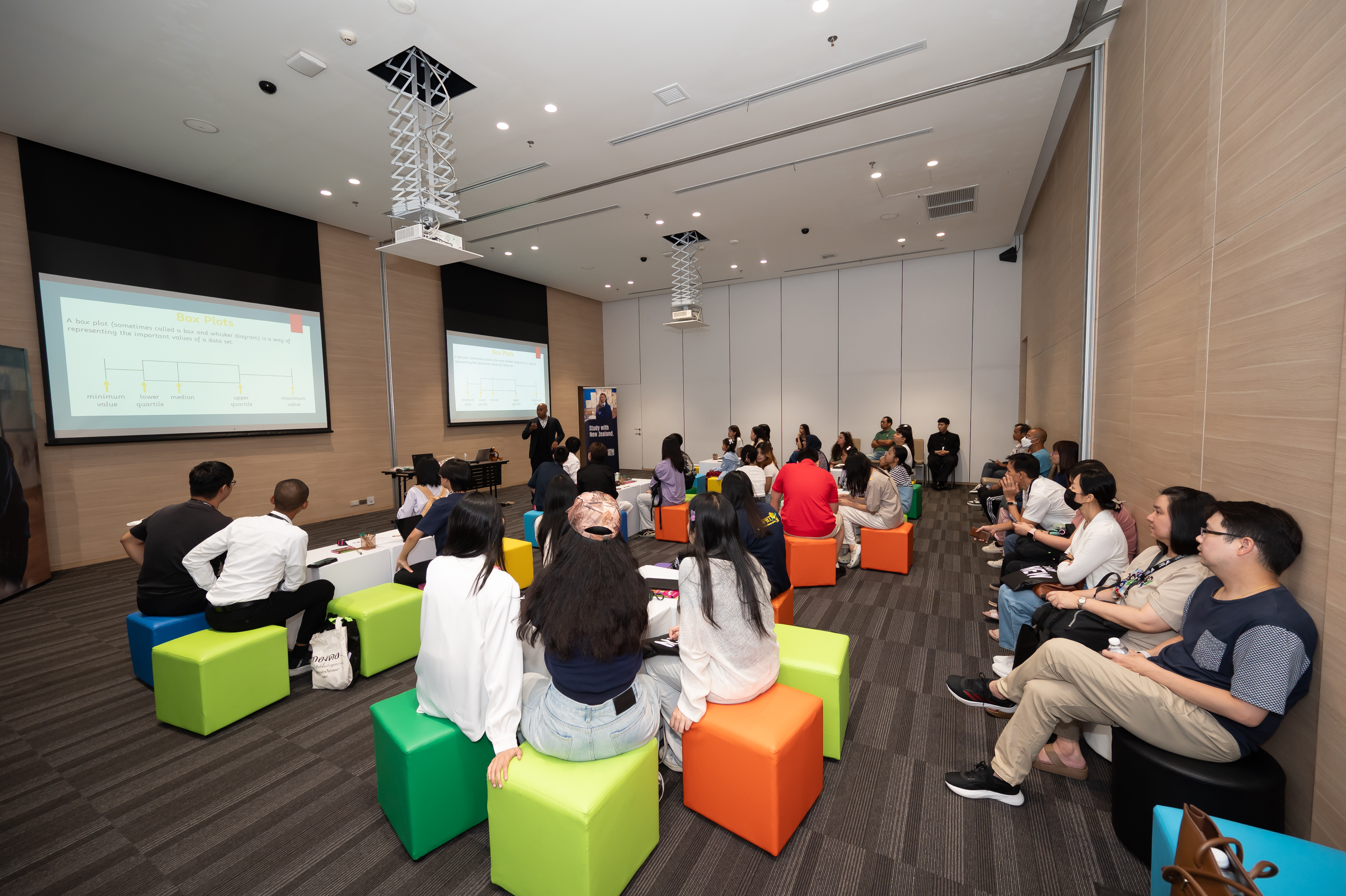
    ENZ General Manager – Student Marketing, Paul Irwin, said attendees really enjoyed tackling these big issues during the Crowdsource Café session. 

    “Our audience uncovered some really interesting themes and thoughts for us all to reflect on. Ideas included focusing less on competition and more on collaboration, for example the opportunity to build your own degree across New Zealand.

    “We also talked about how everyone is the student of the future.  There will be more opportunities for lifelong learning and there will be a greater need to upskill due to automation,” Paul said.

    ENZ Regional Director – South Asia, South East Asia and Middle East, John Laxon said participants also agreed that the learner of the future will prefer personalised, flexible learning.

    “The modes of delivery will change as we move towards students being able to learn anywhere, anytime. 

    “Another theme that came through was a move towards offering shorter programmes, targeting life-long learners.”

    John said there was great discussion about moving towards diversified, individualised learning programmes that are globally recognised.

    “It’s definitely an exciting time to be involved in international education,” he said.

  • Future Skills SiNZ facbook post

  • 190913 Chris Cairns2

  • Letter from the CE

  • ANZA image

What's in it for me?