Search
Showing 10 of 7355 results
-
Solar-powered street lamp wins Unitec solar sustainability challenge
Zheng’s winning design was a dual-facing street light which looks like a sturdy bamboo stalk.
Originally from the Hebei Province in China, Zheng is currently in his second year of a NZ Diploma of Engineering at Unitec.
Unitec lecturer Anthony Lai described Zheng’s design as being fascinating, with clean lines and great aesthetics.
“I was very impressed, and in my own thinking, he was in for a chance,” he said.
Zheng recently spent his summer break working for a solar-power company in China.
After graduating from Unitec, he would like to work as either an engineer or a teacher.
Zheng won $3000 towards his course costs.

Zheng Sibo’s top prize-winning 3D design of a solar-powered street lamp.
-
ENZ workshops in September

Workshop 1: Students’ view from their window travelling along the digital freeway
Technology is changing the way education providers engage with potential students. Placing you in the driver’s seat on the digital freeway, you will experience first-hand what international students see as they race toward their destination. As with any road trip, there are detours, attractions and temptations that can change the direction.
This workshop will use a segmentation model to identify what tools are available and what skills are required, and give examples of how education providers, at various stages of digital maturity, can leverage them for success.
Target audience: Participants involved in international strategy, marketing, recruitment and admissions.
Outcomes:
- Identify how your organisation is segmented and what tools are appropriate
- Gain exposure to example initiatives that best-practice providers have used to improve their student recruitment efficiency
- Connect with other practitioners about their experiences and identify opportunities for further exploration.

Workshop 2: Beyond the great firewall: social media in China
Coming to grips with digital and social media in China is no easy task. Between VPNs, firewalls and the influx of local alternative platforms, it can be a difficult market to gain cut-through.
This workshop will empower participants to get beyond the great firewall and embrace digital and social media platforms in China. It will showcase best practice case studies and how best to engage prospective students.
Target audience: Marketing and recruitment professionals and student services staff. It is best suited to those who already have some knowledge of Chinese social media.
Outcomes:
- Learn how to incorporate Chinese social media into your wider recruitment strategy
- Gain an understanding of the financial input required
- Learn how to integrate your campaigns with agents.
These workshops will be available in:
Christchurch – 11 September 2018
Venue: ChristchurchNZ, Level 3, 101 Cashel StreetWellington – 12 September 2018
Venue: ENZ, Level 5 Lambton House, 160 Lambton QuayAuckland – 13 September 2018
Venue: ATEED, Level 8, 139 Quay St, AucklandWorkshop 1 will run in the mornings from 9am-12:30pm, followed by Workshop 2 from 1:30pm- 5:00pm.
The registration fee for a single workshop is $375, or you can register for both workshops for $500.
These workshops follow a series of well-reviewed workshops delivered by HECG across New Zealand earlier this year.
Feedback from previous HECG workshops:
"This is the most useful workshop I have attended in a long time. I will be able to take back a lot of ideas that can be applied at my institution. Very keen to delve deeper into some of the topics further. Great presenters!"
Register now by clicking here.
If you have any questions, please contact alan.johnston@enz.govt.nz
-
Updated UIP system gives better user experience
The UIP system is an automated data collection system that will collect individual learner and provider data from UIPs. These providers are private training establishments that enrol international students and do not receive government funding.
Additional improvements were made to make the system more user-friendly. This work was completed on 1 May 2018 in time for submission of trimester 1 data this year. The updated UIP system is easier to use and features a new online portal - an additional option for providers to submit data.
The UIP system is a cross-agency project by the Ministry of Education, New Zealand Qualifications Authority and Education New Zealand and will help provide a more comprehensive picture of international student enrolments for this sector. Over time, this information will also help improve market analysis and inform decisions to support the international education industry.
Tour groups or group study tour operators will submit aggregate data through the Tour Group portal, which is also now live.
More information about the UIP system including the data requirements, the options to submit data and the Tour Group portal can be found at the STEO website.
For any questions, please contact UIP.DataCollection@education.govt.nz.
-
Students ‘tell the story’ about international education
Tips:
-
Involve international and local students in your promotional events. Their personal experiences and insights help to ‘tell the story’ in an authentic way.
The two students spoke confidently to an audience that included Associate Minister for Tertiary Education, Skills and Employment Louise Upston, who launched the new strategy.
Yufei described how it felt to come to New Zealand, not knowing what it would be like or how he would be treated. He also spoke about his homestay family, and taking up soccer and surfing. Hannah described some of the benefits of having international students in her class, and what she has learned from them.
Education Tauranga Manager Anne Young, who organised the event, said she was delighted with the students’ contribution.
“Listening to Yufei brought home to everyone just how big a deal it is for a young student to come here from another country, and how important it is for us to look after them well,” Anne said.
“It was great to hear from Hannah too, about how much international students contribute to learning, in the classroom and outside.”
If you would like to find out more about the new education strategy for Tauranga, please email Anne Young at anne.young@educationtauranga.co.nz
-
-
Chilean students and teachers tour New Zealand
The programme aims to broaden access to intercultural learning opportunities for Chilean students from disadvantaged backgrounds. It is fully funded by the Chilean Government and administered by AFS Chile and AFS New Zealand.
The students – from Cerro Navia, Lo Prado, and Pudahuel, three of the lowest income territories in Chile – had never travelled before. In New Zealand, they participated in English language lessons as well as cultural activities in Auckland and Whitianga. This included visiting a Marae and living with local host families to experience family life in New Zealand.
AFS National Director, Doris Cuthell, said it was a privilege to welcome the students to New Zealand.
“The Chilean Government is committed to increasing access to cultural and educational experiences for young people, to help equip them for a more interconnected world,” said Ms Cuthell.
“Our Global Choice programme was a perfect fit for these students, and the experience life-changing.”
The students and their teachers finished their trip at a reception in Wellington on 12 December with Wellington Mayor Justin Lester, the Chilean Ambassador to New Zealand Rodrigo Espinosa and AFS New Zealand. Mr Lester spoke to the students about his own life-changing AFS experience during an exchange to Germany.
“Immersion allows students to experience other cultures and learn English in a way you can’t at home in the classroom,” said Ms Cuthell.
“From Barrancas to New Zealand is a fantastic initiative – we’re very proud to be involved in a programme that is increasing our capacity to broaden access to intercultural learning for more diverse communities.”
The Chilean Government is committed to working with AFS New Zealand through the Global Choice programme and will provide From Barrancas to New Zealand scholarships for the next three years.
-
Digital skills and global citizenship at #NZAsiaTech Code Camp
A team of six students from Te Kura Māori o Porirua, a predominantly te reo Māori medium school in Porirua, interacted with school students in Japan, South Korea, Thailand, Viet Nam, Philippines, Malaysia, and Indonesia.
The overall theme was tourism, seen through the lens of the United Nations Sustainable Development Goals (SDG) - a theme that is highly relevant for the Asia-Pacific region. Students were given the task of profiling their home country’s SDG initiatives, with a focus on sustainable tourism.
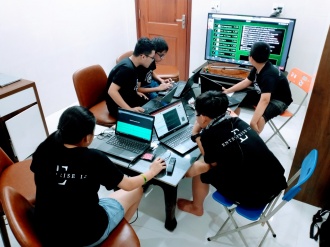
Team Enterprise 12 from Viet Nam work on building website project during #NZAsiaTech Code Camp
The North Asia Centre of Asia-Pacific Excellence partnered with educational coding programme Code Avengers and Education New Zealand Manapou ki te Ao to deliver the event.
“With New Zealand’s borders having been closed for more than two years, it’s crucial that the next generation of students still have opportunities to build cultural competencies and make connections across the globe,” says Education New Zealand’s Regional Director for Asia, Ben Burrowes.
“The #NZAsiaTech Code Camp was an opportunity for Kiwi students to re-establish connections with students in other countries, while gaining critical digital skills to prepare them for the future.
“It also also gave a taste of New Zealand’s education offering to prospective international students from the Asia region, who might consider enrolling in high school or tertiary study in New Zealand in the future.”
Code Camps can help to generate subsequent visits by interested students to New Zealand. For example, the Code Camp held at Waseda Jitsugyo School in 2021 and at Waseda University Junior and Senior High School in 2022 has led to Waseda’s group students’ programme sending around 50 students from three schools to New Zealand for three weeks in March 2023. Code Camp served as a great opportunity for students and teachers from Waseda University affiliated schools to experience our world-class digital education first-hand.
Honam Jeon, the Education Manager at Gangwon International Education Institute said the programme helped increase awareness of New Zealand:
“South Korea is very interested in international engagement and exchange programmes for school students. The #NZAsiaTech Code Camp was a perfect example we want to continue to join. Thanks so much again to ENZ for organising the well-structured programme.”
The online programme included team building exercises, English learning, HTML coding lessons, and the creation of a website by student teams, to demonstrate their understanding of the importance of sustainable tourism.
“As our students look to enter an increasingly globalised word, developing cultural connections and transferable skills is so important,” says Te Kura Māori o Porirua school principal, Whāea Evelyn Wharehinga.
“The Code Camp has been an exciting growth experience for our students, who have extended their digital literacy skills while having the chance to connect with students of different ethnicities and cultures across the Asia-Pacific region.”
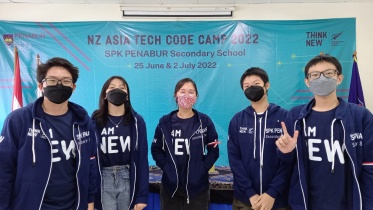
Team Indonesia was the winning team after presenting their newly developed website on Sustainable Tourism to a virtual panel of judges.
The students presented their sustainable tourism-themed websites to a panel of expert judges at the awards ceremony on 2 July 2022, with students from Indonesia winning the top prize.
Steve Budd of Code Avengers, a global edtech company based in New Zealand, said it was a great programme to participate in.
“It was a privilege to gift all participants a one-year free subscription to the Code Avengers site as part of our mission to build lasting digital capabilities for educators and young people, and bridge the digital divide,” says Budd.
-
NZIEC 2018 to be held in Wellington
That’s right, we’re heading to the Coolest Little Capital in the World, Wellington!
NZIEC 2018 will be held at our national museum, Te Papa Tongarewa, on Thursday 9 and Friday 10 August next year. We hope to see you there.
The nature of our venue next year means we’ll be changing our standard programme structure to allow more time for delegate movement around the venue between sessions. This affords us the opportunity to Think New about how we structure our conference.
If you have any suggestions for what you’d like to see at NZIEC 2018, please email Sam Mackay, ENZ Strategic Projects Manager, at sam.mackay@enz.govt.nz. We warmly welcome suggestions for speakers, topics, session formats – and more!
We’ll be announcing the theme of next year’s conference in November when we launch our Call for Presenters. If you’re interested in presenting at next year’s conference, please don’t hesitate to drop Sam a line and we’ll add you to the mailing list.
-
New travel rules for NZ coming soon

From 1 October, some international visitors and transit passengers must have an NZeTA (New Zealand Electronic Travel Authority) before travelling to New Zealand.
The NZeTA is a new border security measure. It is not a visa and does not guarantee entry to New Zealand.
From 1 October 2019, travellers must have authority to travel to New Zealand. This means they must hold one of the following:
- An NZeTA (or an NZeTA exemption)
- A visa
- Citizenship of New Zealand or Australia.
What does this mean for international students?
People who are planning to come to New Zealand to complete a short-term course will need to apply for an NZeTA if they are coming from a visa waiver country. Friends and family planning to visit students in New Zealand will also need one, as well as education agents visiting on business.
International students who require a visa to study will not need an NZeTA.
Travel agents, student agents and schools can assist international students with applying for the NZeTA by downloading the NZeTA mobile app or visiting the Immigration New Zealand website.
There is a small fee attached: NZD$9 for mobile app requests and NZD$12 for website requests.
The only official way to request an NZeTA is through Immigration New Zealand. Travellers should be advised not to request an NZeTA through any unauthorised third party.
Visit the Immigration New Zealand website here for more information.
See a factsheet on the NZeTA here.
-
New Future Proof campaign to showcase Kiwi teachers
The eight-week Future Proof campaign earlier this year achieved incredible results, including reaching over 33 million potential international students and achieving more than 14 million social media engagements.
To continue the conversation, ENZ will evolve the campaign to focus on the role that high-quality teachers play in New Zealand’s ranking as best in the world for educating students for the future. We will share inspiring stories about our teaching talent with the world through videos and other web content.
Patrick Holden, ENZ’s Digital Media Project Manager, says the upcoming campaign aims to raise awareness of the quality of our education, which research suggests isn’t fully appreciated in many of our markets.
“In line with the newly-launched International Education Strategy 2018 – 2030, we’re aiming to reach students interested in studying high-value programmes in New Zealand by showcasing the world-leading Kiwi teachers and academics that will be available to them.
“This second Future Proof campaign will run across October – November which is a key decision-making period for international students.”
Students who engage with the campaign will be “nurtured through” to My StudyNZ to connect with New Zealand institutions and agents. Institutions can make sure they’re getting the most out of this recruitment opportunity by updating their profile on the Study in New Zealand website.
“We’ll be putting a briefing pack together to help institutions leverage the campaign in their own recruitment activities. Keep an eye on future editions of E-News for this and further updates,” said Patrick.
Share your story
Do you have a great story idea about a world-leading academic or inspiring teacher? If so, please email philippa.brown@enz.govt.nz and tell us why you think they’d be perfect for this campaign.
-
Preferred name and inaugural CE for the IST released by Establishment Board
These conversations provide providers and their stakeholders updates on the progress being made by the Unit and an opportunity to ask questions. These latest conversations will have a focus on the name and brand including the Board’s preferred name for the new national Institute. To support the conversation, a video has been shared that captures the essence of the journey to date. It outlines a vision for the Institute, along with presenting the preferred name.
Once the Regional Kōrero have been completed, the public online consultation will open, allowing everyone to provide feedback on the preferred name being suggested.
The online consultation is open from 14 February until 8 March. Once complete, the IST Establishment Board will consider public feedback on their preferred name and finalise their recommendation to the Minister.
You can watch the video here and the online consultation will be available on the IST Establishment Unit’s website.
Stephen Town has also been named as the inaugural Chief Executive of the New Zealand Institute of Skills and Technology. Stephen is currently in his final year leading Auckland Council and will formally take up his role on 6 July 2020.
You can find out more about Stephen’s appointment on the IST Establishment Unit’s website.