Search
Showing 10 of 7395 results
- Alert Level 4 info tertiary international students
-
May update from Immigration New Zealand
Update on Student visa processing*
Since New Zealand’s international borders reopened in August 2022, Immigration New Zealand (INZ) has received 35,069 student visa applications from international students outside of New Zealand. We have completed 30,936 of these applications.
Our recent processing times for international student visa applications are published on our website. These are updated each month: Visa processing times for international students | Immigration New Zealand
*Figures current as at 10pm on 8 May 2023.
Visitor visas and short-term study
A holder of a visitor visa is permitted to attend a programme or programmes of study which are not more than a total of 3 calendar months in duration per 12-month period.
Recently we have received several queries regarding students intending to undertake a programme of study of more than 3 months duration (for example, a diploma) who wish to begin their studies while holding a visitor visa. This is not permitted as the intended programme is more than 3 months duration. Students must hold a student visa for the full duration of their intended programme of study (or hold an interim visa with open study conditions) if the programme of study is longer than 3 months duration.
Tuition fees
We would like to remind you that changes to the requirements for tuition fee payment evidence for students were introduced last year as part of the Immigration Rebalance.
Students need to pay tuition fees for the first year, or first programme of study (whichever is the shorter), and they will have to prove personal/maintenance funds for the same period. We do not accept payment of tuition fees by instalment; the only exception is for some aviation students.
- Final photo symposium
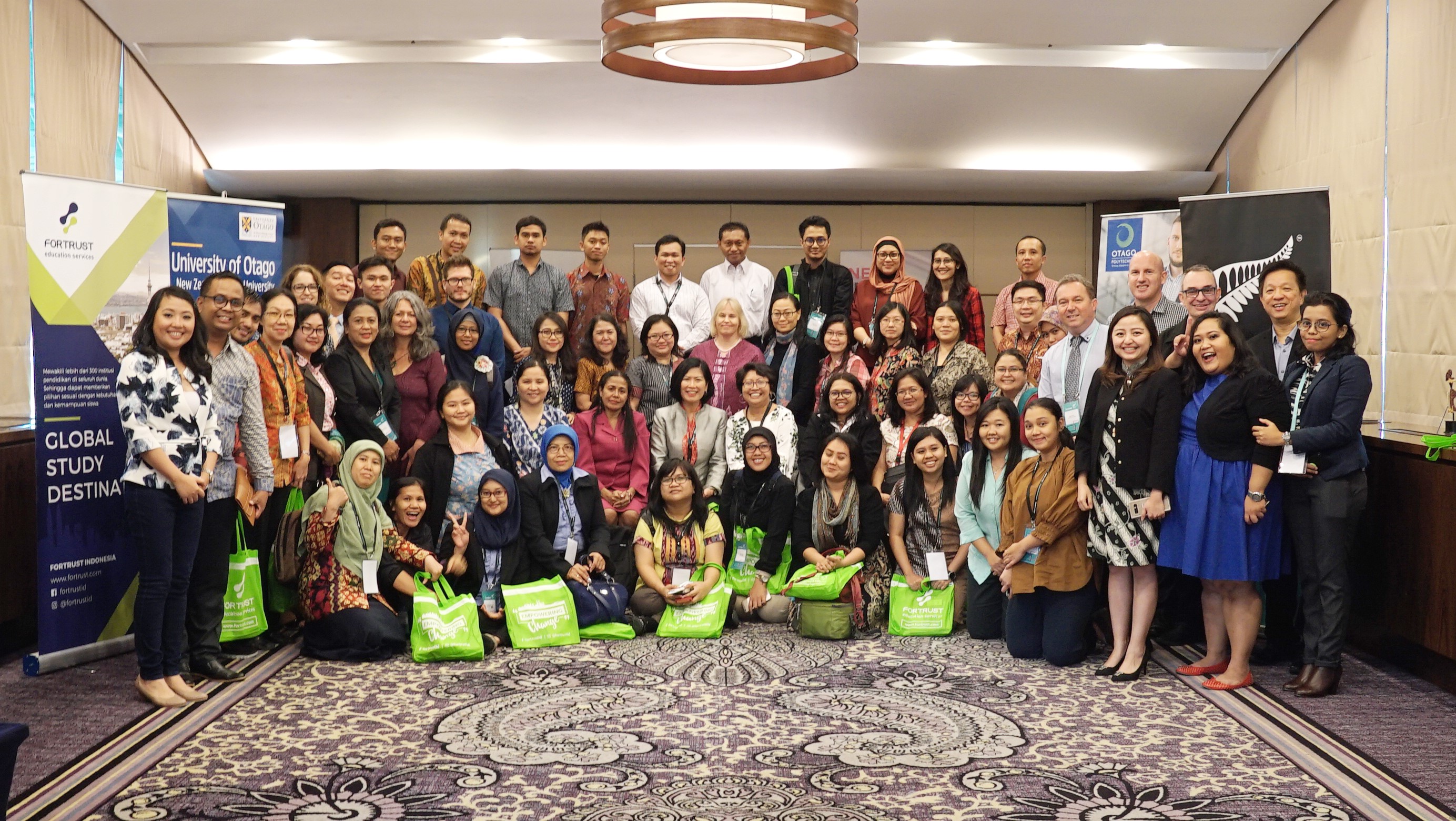
- Group photo Indonesia
- Graduate Semester abroad Universidad de Antioquia
- dunedin1
- SWIS2
-
New undergraduate scholarship programme for Vietnamese students
The Awards are designed for Vietnamese students pursuing undergraduate studies in New Zealand.
With the announcement of the new scholarship scheme, New Zealand now provides a full suite of support for Vietnamese students at all study levels with its government-supported scholarship programmes. In addition to the new programme, the New Zealand Schools Scholarships are specifically on offer for Vietnamese students in grades 8, 9, and 10 to study at New Zealand high schools, as well as Manaaki Scholarships for Vietnamese candidates pursuing postgraduate study programmes in New Zealand.

Caroline Beresford (3rd from right), NZ Ambassador to Vietnam, supported the launch by hosting a media briefing to promote the new scholarship programme on 15 November
Commenting on the initiative, Ben Burrowes, Acting General Manager – International at ENZ said, “New Zealand’s tertiary education system is highly regarded globally for its positive impacts on students and communities. The inclusion of all New Zealand universities in the new programme underscores our strong commitment to expanding learning and development opportunities for Vietnamese students at our world leading institutions. The initiative also demonstrates New Zealand’s dedication to fostering our bilateral educational ties as we approach the 50th anniversary of our longstanding partnership with Vietnam next year.”
The 2025 programme offers 14 scholarships, worth NZD 15,000 each, for students enrolling at one of New Zealand's eight universities: University of Auckland, Auckland University of Technology, University of Waikato, Massey University, Victoria University of Wellington, University of Canterbury, Lincoln University, and University of Otago ed. Applications are expected to open in May 2025 for the February 2026 intake.
- my study nz card
-
Introducing Sharon-May McCrostie, ENZ’s new Director Sector Engagement
Can you tell us about your professional background including the role you had prior to joining ENZ?
After graduating from the University of Waikato with a Bachelor of Management Studies specialising in Japanese and International Business, I joined the primary export sector. I held a range of sales, marketing and business development roles in the seafood and horticultural sectors with a focus on Asian markets, including with ENZA (the NZ Apple and Pear Marketing Board) in Singapore. My first job was in Bluff, exporting live lobster!
Prior to joining ENZ, I spent 20 years with New Zealand Trade and Enterprise in a range of roles supporting NZ exporters to realise their international growth ambitions. In my last role there, I was Customer Director where I led a team of customer managers supporting digital technology and services exporters across the central New Zealand region.
What are your thoughts on your new role so far?
I feel I have joined ENZ at the perfect time as the team here comes together to co-create next year’s business plan. Early in the role, I was catapulted into focus groups with sub-sectors to understand their priorities and ensure we focus on the right opportunities and challenges to enable the international education sector to flourish. Providers were generous in sharing insights and setting expectations for ENZ, providing important input into the business planning process.
As we work through the process, I have been incredibly impressed with the knowledge of my team and the wider ENZ team, and admire the depth of passion and ambition to ensure we make a difference to the sector.
What do you see as the challenges and potential opportunities for our sector?
The market for international learners is hyper competitive, and our main competitors are driving hard to win market share in the face of ongoing global uncertainty. New Zealand has an excellent reputation for education, but we must be smarter and nimbler to maintain an edge over our competitors and attract quality learners to NZ.
We must continue to build brand awareness and enable agents and providers to provide a compelling case for choosing a NZ education. As the sector shifts from recovery to rebuild, it is an opportunity to think differently about how we partner with the sector to co-create a robust, resilient, and innovative sector that meets the needs of the future learner: I am excited to be part of that conversation.
Outside of work, what do you like to do?
Wellington is blessed with rolling hills that embrace the harbour, and I love running its trails and taking in the soaring views. I also love to swim – mostly in a pool, with the occasional plunge in the ocean. Otherwise, I love to read, rummage through op shops for vintage china and linen, and hang out with my daughters who are my biggest teachers.