Search
Showing 10 of 7355 results
-
High level of interest in PM's Scholarships
“We’re particularly pleased in the level of interest, given outbound mobility has been paused since March 2020,” says ENZ’s Global Citizenship Manager Carla Rey Vasquez.
“Since the Prime Minister’s Scholarships reopened earlier this year, we’ve also tried hard to reach a wider range of people than previously.
“In this latest round, 17 percent of applicants are Māori while the age range is from 18 to 66 years old. We want to continue achieving greater diversity and inclusion, so that a wider range of people can have an international education experience, and the opportunity to develop their global citizenship skills and learn more about the language and culture of partner countries.”
The majority of applications (110) were for Prime Minister’s Scholarships to Asia, with South Korea the most popular destination country. Prime Minister’s Scholarships to Latin America received 55 applications, and the top destination country is Colombia.
An extra step in selecting the final recipients has been introduced this year. If they are shortlisted, applicants will be given 10 days to respond to four additional questions seeking more detailed information about their proposed programme.
Completed applications will then be considered by the selection panel, which is due to meet in late October.
The current Prime Minister’s Scholarships round is for individual applicants, following the first round that awarded scholarships to 30 groups in July.
For more information about the Prime Minister’s Scholarships, please visit the scholarships website.
-
Prime Minister welcomes international students
One of many welcome events around the country since our borders reopened at the end of July, the ceremony was attended by more than 70 students, as well as representatives of UoA and Education New Zealand Manapou ki te Ao (ENZ). It was an emotional moment for some of the students, who had been waiting a long time for the opportunity to study here.

Minister Hipkins presenting a Tū Ngātahi pin to international student Kyeongmin Kang from English Language Academy
Tū Ngātahi pins were presented to international students Petchpiangpor Sueasuwan from Western Springs College; Kyeongmin Kang from English Language Academy; and Ankeeta Karmakar from UoA by the Prime Minister, Minister Hipkins and UoA Vice-Chancellor, Professor Dawn Freshwater respectively.
ENZ Chief Executive Grant McPherson explained the significance of the Tū Ngātahi pins, which you can read more about here.
The formal welcome was followed by morning tea, with further exchanges of Tū Ngātahi pins and opportunities for photographs.

Professor Dawn Freshwater, Vice-Chancellor at University of Auckland, with university student Ankeeta Karmakar.

International student Malina Grube from the University of Auckland spoke about her experiences here, and her involvement in the kākahu project.

Michael Steedman, Kaiarataki at the University of Auckland, demonstrated a 3D-printed conch shell as part of his welcome to guests – a metaphor for new arrivals and new opportunities.
- Intellilab homepage
- Paytonsmaller
- JJL services launch China
-
2026 New Zealand School Scholarships launched in Viet Nam
Education New Zealand Manapou ki te Ao (ENZ) launched the New Zealand Schools Scholarships (NZSS) 2026 programme, recording the highest level of participation since the programme’s inception in 2019.
A total of 56 New Zealand secondary schools and 55 Vietnamese education agents have participated in NZSS 2026, reflecting strong education provider and market confidence in the programme.
Launched on 5 January, the programme will have applications close on 22 March 2026, with 56 scholarships available across a diverse range of state, private, single-sex and co-educational schools, offering NCEA, Cambridge or IB curricula.
To grow awareness and interest in the scholarships and New Zealand’s school study options, ENZ delivered a series of New Zealand School Scholarships information sessions in collaboration with six education agencies and one partner school in Viet Nam. This was in addition to two public webinars livestreamed on a partner media fanpage.
ENZ also strengthened agent capability through a dedicated six-part webinar series for Vietnamese agents, delivered from 3-18 December 2025. The series featured 36 speakers from New Zealand secondary schools, NZQA and SIEBA, and focused on building agent knowledge of the New Zealand school system, regional school offerings, and NZSS promotion guidelines.
The agent webinar series attracted over 160 registrations, with 60-98 agents attending each session, indicating strong engagement across the market. The sessions were designed to equip agents with practical tools to confidently advise parents and students and to support consistent, accurate promotion of NZSS.
ENZ’s Market Manager – Viet Nam, Van Banh said these activities aim to provide prospective school students and their parents clear, consistent information about the NZSS programme and application process.
“With the programme’s record school participation this year, expanded market outreach, and a strong focus on education agent capability-building, NZSS 2026 is a significant step forward to strengthen awareness of New Zealand’s secondary education offering in Viet Nam and support its long-term, sustainable growth.
“It’s fantastic to see a sustained level of commitment and contribution from education providers for this programme, it really highlights the strategic value of the NZSS as a pathway programme to study in New Zealand and underlines the sector’s continued confidence in Viet Nam’s secondary school market,” Van said.
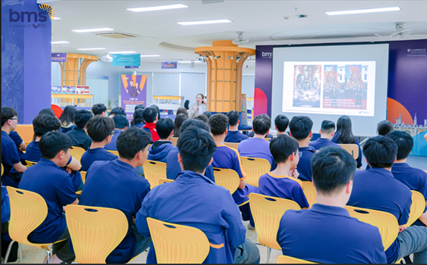
Above: Students from Ban Mai School (Ha Noi) attend a workshop about New Zealand education and opportunity with NZSS
Collectively, participating New Zealand schools have committed an estimated $441,702 NZD in scholarship investment, with each school offering a scholarship valued at 50 percent of the first-year tuition fee.
Since its first launch in 2019, NZSS has awarded nearly 80 scholarships, enabling Vietnamese students to access high-quality secondary education in New Zealand and progress to positive academic and career outcomes. Alumni achievements continue to reinforce NZSS’ reputation as one of the most established and impactful government-backed secondary school scholarship programmes in Viet Nam.
-
ENZ responds to international education commentary on NBR
ENZ Acting Chief Executive Dr Linda Sissons rebuts an economics commentary published on National Business Review (NBR) on Monday 25 March 2024. The rebuttal is published here on NBR and is reproduced below.
 In response to your piece “International education: wrong horse to back for export growth?” my answer to the question is a hard “no”. Here’s why.
 Students are returning to New Zealand. In the first eight months of 2023 international student enrolments topped 59,000 with all sectors experiencing growth except wānanga. Accepting that it is from a low base, comparing 2023 to 2022, Universities have bounced back strongly reporting a 15% increase from 24,040 to 27,535.
It is true that we have not yet returned to 2019 numbers. In my opinion, this is not a bad thing. During the pandemic years the sector lost people and capability. The recent moves of some of our competitors tell you what a sudden return to those numbers of students brings.
I want to address your correspondent’s concerns about the lack of a plan and competition within amongst universities. There is a plan. The New Zealand International Education Strategy, revised in 2022 in discussion with the sector and across Government, sets out the plan to develop a high-value, resilient and innovative education sector for both international and domestic students.
I can also assure you that the sector is working together to achieve its goals, that all eight universities participated in a recent ENZ-led delegation to India, is just one example of the co-operation.
International education is more than universities. In the first eight months of 2023 English Language Schools saw the greatest percentage increase in international enrolments, increasing by 347% from 1,565 to 7,001. Schools reported a 114% increase from 5,925 to 12,662. NZIST Te Pūkenga, a 32% increase from 4,955 to 6,560 and Private Training Establishments (funded and unfunded), a 13% increase from 5,000 to 5,671.
Immigration New Zealand tell us that international student visa applications for all forms of study have increased by about 20 per cent in the peak application period. Between 1 October 2023 and 8 March 2024, they received over 31,800 applications for an international student visa.
Today we have a base of international students in the country and the pipeline for the coming academic year has strong growth.
Our own research shows that the experience international students have while studying in New Zealand is a good one. In our Student Experience survey of 4,755 international students from more than 70 nationalities, 84 percent rated their overall experience positively, while another 83 percent said they would recommend New Zealand as a study destination.
When these students return to their home, and 75% of international students return home after three years, they will be our word-of-mouth advocates – an advocacy we didn’t have during the COVID years.
New Zealanders also appreciate the benefits of international students. In an ENZ survey of 1,100 New Zealanders conducted in December last year, 75 percent of respondents believe that international students benefit New Zealand. The Ipsos Fast Facts survey, which drew responses from all regions of the country, saw 80 percent of respondents highlighting economic benefits, particularly in local communities, as a key reason for their positive view.
The results of the 2023 survey highlighted the continuing growth in support for international students and their positive impact on New Zealand since 2016 when only 57 percent believed international students helped the New Zealand economy and economic growth.
We have students in New Zealand; a strong pipeline; students having a positive experience and advocating for New Zealand; and New Zealanders appreciating the benefits having of them in our communities.
International education is highly competitive. Your correspondent rightly recognises that there are new competitors emerging and Singapore is a good example. We’ve also seen countries like South Korea, a core market for New Zealand, become competitors.
This is not new. We have, and will always have, to compete to attract international students to New Zealand – that they are returning tells me our reputation is good and we remain an attractive option.
Globally the number of international students has grown significantly over the past two decades from around two million in 1998 to over 6.4 million in 2020, according to UNESCO data. New Zealand only needs a very small proportion of what is effectively a supply-driven market to return to pre-pandemic levels of economic contribution and value.
While I am confident that international education is not the “wrong horse”, achieving double the export earnings is going to require a lot of hard work and there is much to do. My point is, that in less than two years since the borders reopened in August 2022, the recovery has well and truly commenced, the progress made to date is significant, and as a sector we can be rightly proud of what we have achieved together.
Linda Sissons
Acting Chief Executive, Education New Zealand
- 2223 059 ENZ Quarterly Report for 1 April to 30 June 2022 cover briefing
-
Showcasing New Zealand education at EAIE 2022
Held from 13-16 September in Barcelona, Spain, the 32nd Annual EAIE Conference and Exhibition attracted more than 200 exhibitors and 6,300 participants for a packed programme of sessions, networking events and plenaries. This was an ideal platform for New Zealand institutions and the ENZ team to meet with key stakeholders, including government and university partners, education agents, and study abroad and pathway providers.
New Zealand’s branded pavilion featured the kākahu (garment) created for German student Malina Grube from the I AM NEW campaign, and attracted attention from European and global education professionals.
Alongside their busy schedule of meetings and appointments, the New Zealand representatives also attended a networking event organised by ENZ, which brought together more than 100 key education partners.
Speaking at the event, ENZ Chief Executive Grant McPherson said the value of New Zealand's education relationships in Europe lies in student mobility, and in the quality of the academic relationships between New Zealand and European partners, the strong research and innovation links between us, and the ties these build beyond the education sector.
“I am proud of the many educational partnerships and connections New Zealand’s institutions have with European counterparts and globally,” he said.

LtoR: Richard Witts, Regional Manager – Africa, Middle East & Europe, Sharon Calvert, Director, International, and Alister Jones, Senior Deputy Vice-Chancellor, the University of Waikato

Ainslie Moore, Interim Director International, the University of Auckland, meets with key contacts

The New Zealand pavilion, with Brett Armstrong, Study Abroad Manager, Auckland University of Technology, in the foreground and the kākahu on display beside the welcome desk.
-
Important update: passport requirements for temporary visa applicants offshore
Immigration New Zealand has announced a change to passport requirements that affect a number of temporary visa applicants offshore. This change is in effect now.
The change means that people applying from offshore for a student, visitor or work temporary visa only need to send Immigration New Zealand a high-quality scan of their passport, not a physical copy.
An Immigration Officer may still ask for a physical passport if they consider it necessary for the application. This will be on a case-by-case basis.
This is a temporary measure to help with visa processing. People applying for a student visa or group visitor visa through the Immigration Online form will currently receive an automated letter asking for a physical passport to be submitted. This is not required, and Immigration New Zealand is working to update the letter to reflect the change in requirements.
Visit Immigration New Zealand to learn more about passport requirements.