Search
Showing 10 of 7347 results
-
New Zealand and Korea: new opportunities
When the Korea New Zealand Free Trade Agreement (KNZFTA) came into force on 20 December it included three education and training-related programmes of interest to New Zealand’s international education industry.
The agreement included three education and training related programmes:
-
The Korea New Zealand Agricultural Cooperation Scholarships (KNZACS) – six postgraduate scholarships, two each in the areas of agriculture, forestry and fisheries.
-
A schools visit programme – 150 short-term high school scholarships each year for three years.
-
Primary Sector Training Visas (PSTV) - 50 visas allocated each year.
The first two opportunities are scholarship programmes jointly funded by the New Zealand and Korean governments and a Memorandum of Agreement has been signed between ENZ and the Korean Agency of Education, Promotion and Information Service in Food, Agriculture, Forestry and Fisheries (EPIS) to implement the arrangements.
Agricultural cooperation scholarships
This postgraduate scholarships programme will provide for six scholarships to be awarded to Korean students to study in New Zealand. Four PhD scholarships will be awarded in 2016 in the fields of forestry and agriculture. Two further scholarships in fisheries will be awarded in 2017 and are open to both PhD and Master’s programmes.
An independent expert panel has been established to select applicants for the first round of the scholarship, with advertising of the scheme to commence in Korea in April. Applications will close on 8 July.
For further information on the scholarships, please contact Christine Roberts at ENZ.
Schools visits programme
The schools visits programme will see 150 high school students from rural regions of South Korea selected to come to a rural or semi-rural areas of New Zealand for an eight week period from July this year.
Canterbury, Waikato and Nelson-Marlborough have been chosen to participate in this programme. Ten schools in each region will host five students each.
The Schools International Education Business Association (SIEBA) will operationalise the programme on behalf of ENZ. If you are a school in the above regions, a Code signatory, a member of SIEBA, and wish to be involved in this initiative we encourage you to contact SIEBA.
Primary sector training visa (PSTV)
The New Zealand government has established an annual quota of 50 primary sector training visas which allow the Korean government to place students with New Zealand training providers in the areas of agriculture and fisheries.
The training programme will involve three months’ English language and vocational training in relevant courses, followed by up to nine months’ paid internship placement in a New Zealand work place.
ENZ is not involved in the implementation of this programme, however we are able to introduce interested and experienced providers to EPIS for programme development and implementation.
The Korean Agency of Education, Promotion and Information Service in Food, Agriculture, Forestry and Fisheries (EPIS) is currently seeking interested providers for the fisheries programme. Eight students are allocated for this stream. If your institution is able to offer a three month English and fisheries training programme, and have established relationship with fisheries workplaces for a minimum of six months’ paid internship placement, please get in touch with Cecily Lin who can connect you with EPIS.
Preliminary information is provided below:
1. What are the academic backgrounds of these students?
The students will be either current students in fisheries high schools or universities, or recent graduates from these institutions within the last two years. The students’ majors will be directly relevant to fishery studies.
All students will be aged 18 or over.
2. What are their levels of English proficiency?
The applicants will be required to demonstrate an appropriate level of English to communicate with their local employer and teacher. EPIS will grant scholarships to students via international certified English tests e.g. TOEIC, TOEIC SPEAKING, OPIC.
3. What is the intended outcome of the three months’ training programme?
To achieve an appropriate level of job performance skills in their work and improved English language skills.
4. What is the intended length and level of internship?
At least six months immediately after the training.
5. What is the expected level of payment to the students during the internship?
The payment must be at the New Zealand minimum wage or above.
6. What are the requirements for participating education providers?
Providers must be Category One.

Above: The EPIS and ENZ teams.
-
-
Education Southland: The power of collaboration
Over the last five years they have achieved a 250 percent increase in international student enrolments and in 2012 there was a 16 percent increase in international students enrolments in Southland.
Read more here.
- 2526 016 OIA Request Details of restructures in the last 12 months
-
Schools invited to join the Korea-New Zealand Digital School Exchange Programme
The programme, delivered in partnership with the Seoul Metropolitan Office of Education (Seoul MOE) and Learn English Live (LEL), connects New Zealand students in Years 7-9 with their peers in South Korea through a series of interactive online exchanges.
Up to 10 New Zealand schools will be selected to take part. Each participating group will join four one‑hour Zoom sessions held weekly from 11 May to 8 June 2026. Sessions will be scheduled between 12pm and 3pm NZT to accommodate both time zones. Participation is free of charge.
The exchanges typically involve 20-25 students per school, matching the standard class size of Korean partner schools. New Zealand schools wishing to involve more students may form additional groups of around 20 students each.
ENZ and Seoul MOE work closely with LEL, which coordinates communication with participating schools, schedules exchange times, prepares teachers and students, and facilitates each session. Topics covered range from language and cultural sharing to UN Sustainable Development Goals projects, STEM activities and global citizenship themes. New Zealand teachers have consistently noted the benefit of not needing to prepare or deliver session content themselves.
Why join?
- Promote your school to a South Korean audience for free
- Showcase New Zealand’s unique education environment and culture
- Engage your students in a hybrid STEM and cultural exchange
- No added work to your teaching load – LEL takes care of all the admin and logistics, allowing you to simply show up with your classroom and enjoy the global learning experience
Teachers in previous rounds praised the programme for its smooth delivery and the enthusiasm it sparked in their classrooms, and the programme’s blend of STEM learning and cultural exchange has been highlighted as a key strength.
Check out the story from the previous programme here
Is this right for your school?
The programme is a great fit for schools looking to build long-term relationships with Korean partner schools, particularly those with strengths in social studies, cultural or global studies, languages or global citizenship education.
It also offers a valuable opportunity to promote your school in Korea in a meaningful, low-pressure and no-cost way that can attract potential international students over the long term.
Timeframes
Applications close: Friday, 20 March 2026, 11:59pm
Selection process: 23-25 March 2026
Notification of outcome: Wednesday, 25 March 2026
Next steps: Selected schools will receive a detailed guide from LEL from April 2026
Schools interested in joining the programme can submit an Expression of Interest (EOI) via the link provided or by scanning the accompanying QR code.
Submit your EOI here or scan the QR Code below.
If you have any questions, please contact ENZ’s Alana Pellow at alana.pellow@enz.govt.nz or Learn English Live’s William Clarke at info@learnenglish-live.com.

- NACAC Conference
-
Education New Zealand hosts successful Kia Ora India events in New Delhi and Pune
The Kia Ora India series was designed to spark meaningful conversations about global pathways, future-ready learning, and cross-border collaboration, while also attracting students to New Zealand’s world-class education opportunities.
The series was a mix of events, dialogues, and outreach initiatives that showcased New Zealand’s student-centred approach to education and highlighted the wide range of higher education opportunities available to learners.
A range of universities, private training establishments (PTEs) and institutes of skills and technology featured in the series, including Le Cordon Bleu New Zealand, Massey University, Auckland University of Technology, University of Otago, University of Waikato, Wintec, NMIT, University of Auckland, International College of Auckland, University of Canterbury, Whitcliffe, Up Education, Victoria University of Wellington, NZSEG, Whitireia and Weltec.
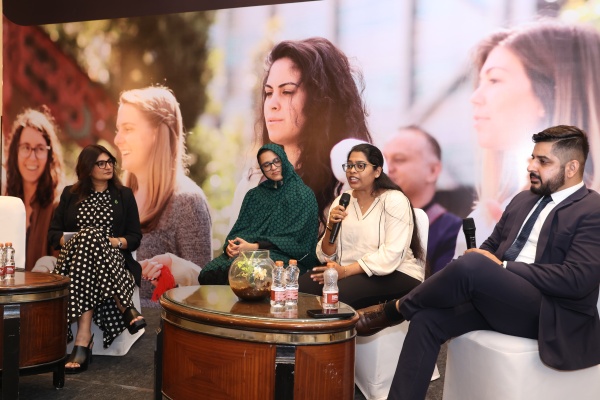
Panel session at Kia Ora India Pune featuring Jugnu Roy from Education New Zealand, Zainab Amin from Le Cordon Bleu, Grace Boppanna from University of Waikato and Kshitij Bhatia from Auckland University of Technology.
As part of the series, ENZ hosted three Mini EdTalks panels with visiting providers that explored key themes shaping the education sector: innovation and research, safe and inclusive student experiences, and career outcomes with pathways to success.
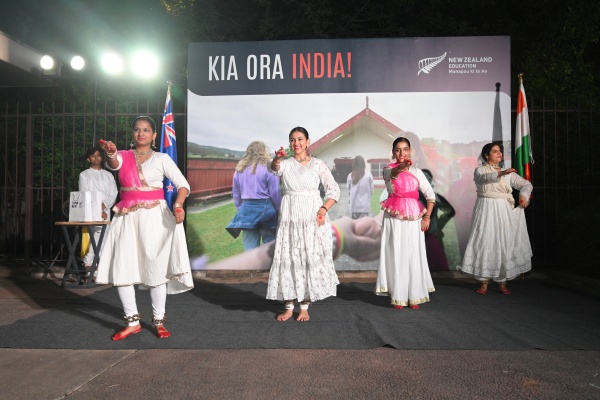
Hindu College students showcase a cultural performance at Kia Ora India, Delhi.
Following the successful launch in New Delhi, the Pune edition continued the momentum, featuring the offerings of 15 New Zealand higher-education institutions.
ENZ Director of Engagement, Jugnu Roy, said Kia Ora India reflects ENZ’s commitment to enabling strong education connections between New Zealand and India.
“By creating spaces for meaningful conversations, we are helping students and families explore global pathways and understand how a New Zealand education can prepare them for future success,” Jugnu said.
- December 2014 Scanning Report
-
Update from Immigration NZ
Improving how Immigration New Zealand processes Student Visa applications
You may be aware that Immigration New Zealand (INZ) will move student visa applications onto its enhanced Immigration Online platform in the second half of 2025.
As part of this work, INZ is designing ways to improve the experience of applicants by:
- making it clearer which type of student visa to apply for
- improving information on the evidence requirements (especially financial evidence and demonstrating genuine, or bona fide intentions) and
- improving visibility of the progress of applications.
After initial designs are developed, INZ will test these with a group of students and nominees from education provider peak bodies that include:
- Universities New Zealand
- Te Pūkenga
- Schools International Education Business Association (SIEBA)
- Independent Schools NZ (ISNZ)
- Independent Tertiary Education New Zealand (ITENZ)
- Quality Tertiary Institutions (QTI)
- English New Zealand (Private and University English Language Colleges)
This work is centred around ways customers apply for student visas, and how INZ processes these. Substantive policy change is not part of this work.
INZ's focus is on implementing key improvements for students and the sector and ensuring a successful transition to its enhanced Immigration Online platform.
-
Scholarships open for students from Europe
A new scholarship programme designed to increase awareness of New Zealand as a study destination to students in Europe is open.
The “Dream NEW” scholarships target confident, adventurous European university students who are competent enough in English to undertake study at a New Zealand university. The scholarships will appeal to students who like to travel and experience different cultures, while improving their English language skills.
Jointly funded by Education New Zealand and Universities New Zealand, “Dream NEW” offers eight scholarship places – one at each New Zealand university.
The scholarships are valued at up to NZD$ 12,500 (approx. 7,500 €) and will cover tuition fees for eight students undertaking a Study Abroad programme in Semester One, in February and March 2017.
More information on the scholarships can be found on the Study in New Zealand site here.
Information and application details are available in English, French, Italian, Spanish and German.
-
Employers embrace influence of international students
These employers know that, along with their skills, the international graduates bring rich cultural context, a fresh perspective, an innovative mindset, and a solid work ethic to the office each day.
Assurity Consulting, a New Zealand-owned digital delivery services consultancy, has been hiring international students for their graduate programme almost since the company’s inception 17 years ago. Last year it won the International Student Workplace category at the Wellington International Student Excellence Awards.
“From very early on we took an approach of inclusive selection,” says Aron Chantelau, General Manager, People and Capability. “We wanted to find people whose values aligned with ours instead of simply trying to select based on people’s background and whether or not they went to Uni.”
Assurity has also partnered with Wellington NZ’s Employer Connect programme, established to provide insights into the business environment and networking opportunities for graduating international students; and the Work Ready programme, offering support on CV writing, cover letters, and what to expect from the hiring process.
“For the students, it is an opportunity to build their own network in a place where that might not otherwise be easy. For our staff, they get to connect with new people outside the industry and learn about the challenges the international students face, which gives them greater perspective.”
Aron says the students who attend both programmes are engaged, good at taking feedback, and highly motivated to start their careers.
Learning from each other
For Assurity, employing international graduates is about much more than filling jobs in the tech sector. “Our international graduates bring diversity of thought to our teams, which benefits our clients,” Aron says. “They also bring innovation, introducing new ideas and fresh perspectives which has led us over the years to try new things. And, culturally, it makes for an enjoyable workplace because there’s lots to learn from each other.”
He acknowledges there can be challenges, especially for students with English as a second or third language but says it’s all about providing the right structure and level of support. “We have a People Lead in all our teams. That role can be about supporting career progression, but it can also involve pastoral care - understanding what challenges that person is facing and helping to mitigate them.”
In Southland, Blue River Dairy is another company which recognises the value which international student graduates bring to their business. Since 2018, Blue River has hired more than 30 international students from the Southland Institute of Technology (SIT) and other institutions.
“The culture within an organisation is so important. Hiring only for skills is short-sighted,” says People and Capability Manager Abbigail Surridge. “With many of the international students that we have hired, we’ve been able to harness their life experience, dynamic exposure, and untapped potential as they have grown in their roles.”
“Diversity adds value to our organisation, by introducing different ways of thinking and problem-solving. When we collaborate, those differences help to create success.”

Jacky Shen arrived at SIT from Beijing in 2017 to study for his graduate diploma in Information Technology (IT). He already had a Master’s degree in Communication and Information Systems but wanted to better understand the New Zealand tech environment. He is now a software engineer at Blue River, leading a team of three.
Not only does the company benefit from Jacky’s technical skills, but also his language skills. “We have a number of Chinese suppliers, so I can speak to them easily and provide quick solutions for them,” he says. “Many companies want applicants to have local experience, but Blue Dairy allowed me to gain that experience on the job. It’s been a great opportunity.”
Economic and cultural influence
He believes that international students bring real value to the workplace. “We come with good technical skills, but we also contribute to the economy and to the cultural diversity of the country. It’s a win-win.”
Aron Chantelau says the international students who work in New Zealand have a bright future, whether here or overseas.
“They make a huge difference to our economy, both in terms of digital outcomes for New Zealand but also improving the quality of life here through the work they do,” he says. “Some of them will move overseas but if they’ve had a good experience here, they will become ambassadors for New Zealand.
“It’s great to be part of their journeys.”