Search
Showing 10 of 7395 results
-
Alumni promote PhD study in NZ
Fourteen Vietnamese PhD students or alumni from our eight universities took part in the campaign, which generated extensive social media and other coverage.
The original plan to feature Facebook posts about outstanding PhD alumni and candidates was extended to include a webinar on 22 January 2022, “Ask NEW Anything: The PhD Journey”, involving five speakers from different areas of study: education, finance, food science, construction engineering and computer science.
The webinar generated a great deal of interest from participants, with numerous questions during the webinar and requests to connect with the speakers, as well as follow-up articles being published in the media.
One of the students was Phan Ngoc Quynh Anh, a PhD candidate at University of Auckland. Having worked as a lecturer at the University of Foreign Languages, Hanoi National University, and then completed post-graduate studies in Europe, Quynh Anh now has a scholarship from the University of Auckland where she is a third-year PhD student in education.
Quynh Anh is living in New Zealand with her husband and two young children, and says that studying in a country with good health, education and welfare systems for children was very important to her.

“I love the peace that New Zealand has to offer,” she says.
“The academic space at the University of Auckland is very open and free, and research materials are always abundant. I have two instructors who couldn't be better in the learning process.”
Van Banh, ENZ’s Market Manager, based in Ho Chi Minh City, says there is genuine interest from Vietnamese students in pursuing higher education in New Zealand.
“The New Zealand tertiary education setting is renowned world-wide for high academic standards, an excellent teaching community and a vigorous research network,” Van Banh says.
"Real-life opportunities, and a welcoming environment where innovation is encouraged have made New Zealand very appealing to Vietnamese students.
“Vietnamese students have access to a range of funding support, including some fully funded scholarships from the Vietnamese government, as part of a project to enhance the capacity of the Vietnamese university sector, improve research output and meet the increasing demands of students and industry.”
- 1722842025994
- scott brown
- ITP sector
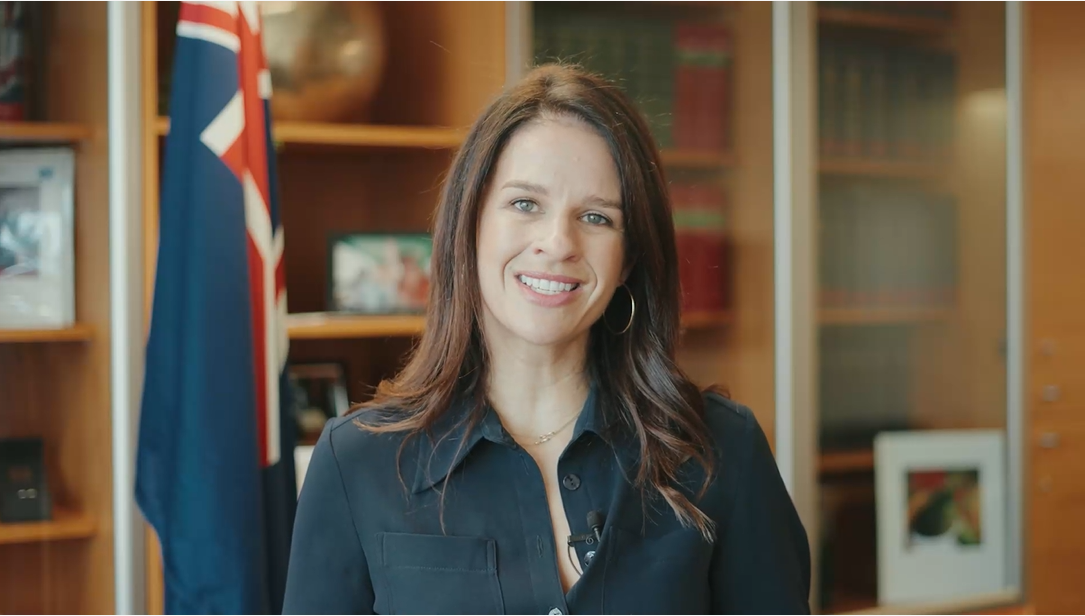
- Minister Stanford Recorded Address for WDEC
-
Brazilian champions Māori world view to design students globally
So transformative was the experience, that the former international student is determined that design leaders globally learn from AUT’s success embracing Māori knowledge in tertiary design studies.
Marcos came from Sao Paulo to study for his PhD in Design at AUT in 2015. He always felt that Aotearoa was “calling” him and was drawn to the concept of practice-led research, which allows students to be assessed by their creative work alongside a supportive piece of writing.
“This means that your practice is your contribution to knowledge,” he says. “I was fascinated by the idea.”
Practice-led research has been around for many years but is still not widely used. AUT, now considered a world-leader in its implementation, developed the approach under education “disruptor” Professor Welby Ings, who believes thinking outside the box can be the key to success for many learners.
Embracing the natural world from a Māori perspective
While Marcos enjoyed the early months focusing on his photography, it was an introduction to respected Māori scholars Professor Hinematau McNeill and Professor Robert Pouwhare late in his first year which really rocked his world.
“They shared their love and knowledge and introduced me to Māori views of the natural world. Their way of thinking and seeing the world completely resonated with me. I understood how ignorant I was in terms of expecting to be able to explain the world through a Western perspective. I learned from them that there is so much beyond it that we cannot see.”
“I learned how the world can be seen from an indigenous perspective, and I felt really bad that my own culture has more than 300 indigenous tribes and we never learn anything about them.”
He says he became really connected with Māori epistemology (theory of knowledge) and committed to understand and incorporate Māori elements in a substantial part of his thesis. “I try my best to captivate the complex Māori concept of mauri (life force or essence) in my work.”
Incorporating the Māori view of the natural world in practice-led research is attracting and retaining students who might not otherwise thrive in a university environment, Marcos says.
At AUT’s Manukau campus, the majority of students are Māori and Pasifika. “These students have natural storytelling talents, and they love graphic design, photography, street art, and all forms of contra-culture expression (outside mainstream media).
Māori and Pasifika students feel sense of belonging
“They feel a sense of belonging to the university with this approach. ”Last year saw the biggest increase in the number of students continuing from undergraduate to postgraduate study in Communication Design, using the practice-led approach.
Driven to promote this diversity of thought and boost the status of indigenous cultures and language elsewhere, Marcos is using his connections in Brazil to share Aotearoa’s success with South America and beyond.
A former colleague, Professor Sérgio Nesteriuk Gallo, is now head of a postgraduate programme in Art and Design at Anhembi Morumbi University (UAM) in Sao Paulo where students are increasingly using practice-led methodologies. “We agreed when I left for New Zealand that the knowledge I gained in practice-led research we would share and promote in Brazil,” Marcos says.
“We promised we would create an event every year to build a body of knowledge about practice-led research into the future. I know that many people, especially those from an indigenous background in Latin America are keen to take up this form of research.”
The first symposium was held in 2016 and attracted 10 exhibitors. Last year’s online symposium drew in 400 submissions from 13 universities around the world.
Planning is underway to take 10 of the most influential Māori practice-led researchers to Brazil for this year’s conference in December, called LINK2022 Moana Crossing, where they will run a series of workshops and launch a special edition of the journal incorporating original manuscripts from the Māori scholars and from collaborative partnerships with non-Māori practitioners.
Aotearoa New Zealand leading the way
“We have at least half the leading scholars in this field,” Marcos says. “Sharing this knowledge will hopefully influence the approach of those who teach elsewhere in the world.”
The new model of undertaking research and presenting knowledge must be more considerate of alternative approaches. “Māori traditions can enhance our understanding of research, practice, and the intricate connection with te taiao (the environment).”
He says he is committed to elevating the practice-led approach connected to Māori and first-nation knowledge, “taking our thinking to the world and giving a voice to indigenous cultures elsewhere”.

Piha at Sunset by Marcos Steagall.
- Around the world in 5
- 165963 new zealand astronomy exploration outdoors primary school students web version 1024px
-
Celebrating Women of the Future with India
Women leaders from New Zealand and India shared inspiring stories at the event, discussing equity and the inclusion of women in society.
ENZ announced a range of initiatives to inspire young women and enable them to experience cross-cultural values and learning:
- Virtual India Immersion programme for New Zealand-based tertiary students, focussed on enhancing knowledge of Indian culture and business environment. Students interested in taking up this programme can apply here by 30 April. Find out more here.
- 10 virtual micro-internships, in partnership with the University of Auckland, for female undergraduate students from India. Interested Indian students can apply here by Saturday, 16 April.
- A virtual exchange programme involving a cohort of 40 high school girl students from India and New Zealand offering the Global Competence Certificate. Details of the programme for Indian students are available here. Applications close on 22 April.
Hon Priyanca Radhakrishnan, Minister for Diversity, Inclusion and Ethnic Communities opened the summit and encouraged all women to challenge stereotypes and break barriers. The Minister mentioned that she herself had previously come to New Zealand as an international student.
Other speakers included women leaders in education from both countries, as well as Tashi Malik and Nungshi Malik, the twin mountaineering sisters who are winners of New Zealand Prime Minister Sports scholarships and Sir Edmund Hillary Global Impact Visa Awardees, and Miss Malini, a well-known Indian digital influencer.
- Masterclasses 4