Search
Showing 10 of 7355 results
-
Celebrating the 28 Pasifika graduates of the He Manawa Tītī Programme
He Manawa Tītī was a 13-week bespoke training course for emerging Pacific leaders delivered between February and May 2023 under the Manaaki New Zealand Scholarship Programme (MNZSP). The name He Manawa Tītī stems from a Māori Whakataukī (proverb) meaning ‘stout of heart’ and the course formed part of the Ministry of Foreign Affairs and Trade (MFAT) contribution to the suite of reparations for Pacific peoples announced in 2021 by the New Zealand Government. The press release announcing these scholarships is available here).
Emerging leaders (aged 25 – 35) from public, private, and voluntary sectors took part in the course combining academic and experiential training. Scholars participated in several weeks of online learning from their home countries and spent nine weeks of the programme based in Te Whanganui-a-Tara Wellington. He Manawa Tītī included modules on good governance and public sector leadership, trade policy in the context of the Pacific, and explored Pasifika values as key tenets of modern leadership.
Education New Zealand Manapou ki te Ao (ENZ) was involved in this kaupapa (programme of work) through its partnership with MFAT on the operational management of the MNZSP.
“It was fantastic to be able to celebrate these 28 inspiring young leaders as they completed this programme in Wellington last month. In true Pacific style, there was plenty of laughter, fun and colour, and it was a fitting celebration for all that these graduates have already achieved throughout their education and early careers,” said ENZ’s General Manager International, Lisa Futschek.
“The programme was designed by MFAT in collaboration with key Pasifika stakeholders and community members, highlighting Pasifika ways of learning and recognising the knowledge that is already held by Pasifika peoples. This collaboration also ensured opportunities for the scholars to build networks with Pasifika communities here in Aotearoa New Zealand, which connects them to our country now that they have returned home,” Lisa added.
The Manaaki New Zealand Scholarship Programme is part of the International Development Cooperation support that MFAT provides for developing partner countries across the globe. Manaaki alumni are well-known to be integral contributors to the development of their home countries.
“These Pacific emerging leaders are enthusiastic about returning home and putting into practice the leadership skills they have gained in Aotearoa,” said MFAT Lead Adviser, Alexandra Grace.
“While they have successfully completed this bespoke cohort course, real success will be demonstrated over coming years through what they achieve for their communities and countries. Scholars told me they won’t miss the weather (!) but will take with them enduring memories of the manaakitanga they experienced in our country.”
-
Victoria University MOOCs a global success
The VUW edX team is about to release its fourth MOOC following the success of its previous online courses – more than 11,000 learners have enrolled to date, ranging in age from 10 to 90-years-old. The programmes have been very well received and have even been endorsed by edX as particularly high quality and accessible.
Steven Warburton, Assistant Vice-Chancellor (Digital Futures) and director of VictoriaX, said the university’s MOOC platform is attracting a significant number of international learners.
“The majority of these learners hail from the US, UK, Canada and Australia, though learners from Brazil, India and a variety of Western European countries are also among those taking advantage of the university’s research and teaching on offer through the MOOCs.
“The global reach of this online platform means that world-class New Zealand research is disseminated to a broad international audience, and promotes the country and its cultures, as well as the quality of New Zealand education.”
Ranging from a virtual field trip to Antarctica, to learning about the theory and practice of restorative justice and exploring the idea of landscape as an expression of culture, VictoriaX’s MOOCs aim to appeal to a broad audience.
The latest MOOC to be offered, New Zealand Landscape as Culture: Maunga (Mountains) starts in August and is the second in a series of bicultural MOOCs looking at the New Zealand landscape through the lens of Māori and European cultures.
“Although New Zealand is the focus in this series, thinking about landscape as an expression of culture is transferable to learners in all parts of the world – particularly indigenous peoples who have similar connections to the land as Māori.”
VUW is the first New Zealand university to partner with edX and is using the global reach of this platform to increase awareness about the institution by offering learners abroad the flexibility to study for free from wherever they are.
Victoria’s MOOC programme fits into the university’s wider internationalisation goals by raising the profile of the university internationally through learner participation and organisational and institutional connections created in their development.
-
Around the world in five
UK
ELT sector concerns over rising agent costs
English language training institutions have voiced concerns that the rising commission rates of education agents are making it unsustainable for schools to pay.
GLOBAL
Bilingual education – a competitive advantage
Offering students a bilingual education could be key to improving access to higher education, provide opportunities to study abroad and improve future job prospects in an increasingly globalised world.
SOUTH KOREA
Fourth straight year of strong international student growth
Enrolments from Viet Nam are a strong factor in South Korea’s overall international student growth of nearly 70 percent since 2014.
BRAZIL
EMI courses in Brazil grow to more than 1,000
A growing number of higher education institutions in Brazil are recognising the importance of offering English as Medium of Instruction courses, with the number of EMI courses rising from 671 in 2016 to over 1,000 in 2018.
CHINA
The consolidation of private higher education
With more than 740 private higher education institutions in China, and thousands of private vocational schools, China’s fragmented private higher education industry is expected to undergo a wave of consolidation over the next decade.
-
You’re invited! Find out about Brazil international education trends in upcoming webinar
Join us to dive into the results of the 10th edition of the Brazilian Educational & Language Travel Association (Belta) Seal Survey, the most comprehensive study on international education trends in Brazil.
The study surveyed 586 education agencies and 1,780 students from across Brazil to understand trends, behaviours, and preferences in the international education sector, showcasing Aotearoa New Zealand as one of the fastest-growing destinations among Brazilians seeking an international education.
Hosted by ENZ, hear from Belta President, Alexandre Argenta, who will share the survey’s results and the main factors driving the choice of New Zealand as a destination for students from Brazil.
Date: Thursday 7 August
Time: 8:45am – 10:00am (NZT)
Registration link: https://enz.zoom.us/webinar/register/WN_Bt7353-iTJ2Ru5rj8Rqv-w
-
Student visa processing update
A very large number of applications have been submitted to INZ in January for courses beginning within four weeks of the application submission date.
Jeannie Melville, INZ’s Assistant General Manager, Visa Services reminds applicants to apply for their student visa at least eight weeks before their course start date.
“For those with an application in progress, we ask that they first check the recent student visa processing times published on the INZ website before contacting INZ to seek an update on their application. Those who submitted their visa application online should also check their online account regularly to ensure they haven’t missed any communications from INZ. If INZ needs more information to decide an application, it will take longer to assess.”
During this peak student visa application period, INZ is processing applications in some additional sites in an effort to ensure applications are decided as quickly as possible.
To ensure the sector is well informed, INZ is developing improved reporting on application processing, including the volume of work in progress and expected processing times. INZ will provide this information in regular email updates to education peak bodies.
ENZ is working closely with INZ on student visa processing matters, to help providers, students and agents understand the current situation. While INZ continues to experience high volumes of student visa applications, ENZ continues to monitor market reactions and engage constructively with INZ.
Current fee paying student visa application volumes (as at 27 January 2019)
Status
Application volumes
Assessment ongoing
7430
Approved in principle
1109
Total on hand
8539
Recent processing timeframes (calculated based on fee paying student visa applications decided 28 Oct 2018-28 Jan 2019)
Provider Type
80% decided within:
90% decided within:
Institutes of Technology and Polytechnics
38 days
50 days
Private Training Establishments
36 days
47 days
Schools
15 days
25 days
Universities
21 days
31 days
-
Auckland schools build relationships with education agents and schools in Japan
For the first time, a group of 16 Auckland-based high schools collectively visited Japan.
Their aim? Engaging with education agents and local schools to explore building long-term relationships, develop student exchanges and promote study at primary and secondary schools in Auckland.
ENZ supported the delegation by hosting an event at the New Zealand Embassy in Tokyo for the school’s delegation to make local connections. Over 50 local education agents, schools and the New Zealand delegation were brought together to connect, share and learn from each other.

Representatives from Massey Highschool and Waiuku College speaking to education agents at the New Zealand Embassy event.
Mount Roskill Grammar School International Director, Wendy Reid, said the visit showed what regions can achieve with a joined-up approach.
“It was a privilege to work with so many professional and knowledgeable Auckland schools, and continue to build relationships with our Japanese partners,” Wendy said.
Feedback from partners in Japan was also positive. Ritsumeikan Uji Junior and Senior High School English Head of Department, John Headon, said the regional approach to this engagement showcased New Zealand’s strength in community spirit.
“No matter which school you visit, there’s a strong sense of reassurance that the entire region will come together to support their students,” he said.
The participating schools were Auckland Grammar, Botany Downs Secondary College, Gulf Harbour School, Howick College, Maraetai Beach School, Massey High School, Mount Albert Grammar, Mount Roskill Grammar School, One Tree Hill College, Rosehill College, Sacred Heart College, St Mary’s College, St Peter’s College, Takapuna Grammar, Waitākere College and Waiuku College.
While in Japan, the Auckland school group maximised the opportunity by independently visiting other key regions, visiting partners and meeting with prospective families.
Since their return, the group of schools has been busy following up with the new and existing partnerships.
-
Introducing Monika Chaudhary, ENZ’s new Market Manager – Sri Lanka
Tell us about your professional background
I am based at the New Zealand High Commission in New Delhi, India, and work closely with education providers, key education sector and government stakeholders to grow New Zealand’s education presence in Sri Lanka.
I completed my Master of Arts in Social Work from the Tata Institute of Social Sciences (TISS), Mumbai, and worked in Project Manager roles across various community and not-for-profit organisations before transitioning into the international education space.
I joined New Zealand Trade and Enterprise (NZTE) in 2003 as an Education Marketing Executive based in New Delhi, a role that began what is now over 22 years of close and enduring involvement with New Zealand’s higher education sector. These two decades have shaped me deeply as both a professional and a person, and I’ve had the privilege of witnessing the sector evolve significantly.
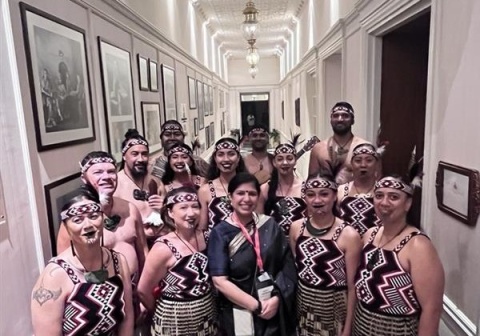
Monika (centre) with the kapa haka group that supported the Prime Minister’s trade mission to India in 2025I joined ENZ in 2015 as Market Development Manager for India, playing a key role in growing the New Zealand university sub sector through targeted strategic initiatives. Over a decade working across India, I have also supported education agents and contributed to the development of other education sub sectors.
How has the new role been so far?
I’m really enjoying the opportunity to help grow a new market for New Zealand in Sri Lanka. The recent Study with New Zealand Roadshow was a fantastic way to kick start our work in market. Across four days and seven events, we brought together 19 New Zealand education providers and connected with Sri Lankan universities, education agents, schools, and students.
It was a huge effort, but a very rewarding start to our market-building journey.
What opportunities and challenges do you see in Sri Lanka?
Beyond student mobility, there is strong potential for Transnational Education (TNE) partnerships. Sri Lankan education institutions are increasingly interested in offering New Zealand programmes locally while creating pathways for students to continue their studies in New Zealand.
While Australia and the UK already have a strong presence in this space, New Zealand has a great opportunity to build visibility, showcase the quality of its education, and develop accessible pathway models for Sri Lankan students. Upskilling education agents will also be key to supporting sustainable growth in the market.
What will the new Project Advisor – Sri Lanka role focus on?
I am delighted that Madonna Phillip has joined us as Project Advisor on a fixed-term basis. She hit the ground running, starting in the same week as the Sri Lanka Roadshow. She will support the expansion of ENZ’s promotional activities in Sri Lanka and work closely with New Zealand government agency partners on cross-agency initiatives, including the development of an alumni network and broader collaborative programmes.
Outside of work, what do you like to do?
I enjoy challenging myself beyond my comfort zone. While I like to travel within and outside India, the pandemic had me discover new interests, including baking, painting and photography. More recently, I have also taken up gardening. But above all, dancing is something that comes naturally to me – and it’s what I enjoy the most!
-
New Zealand tops English-speaking countries in Educating for the Future ranking
 There were just 1.6 points between top-ranked Finland (80.9), second place-getter Switzerland (80.3) and New Zealand on 79.3 points.
The overall ranking was a small drop for New Zealand, which ranked first out of 35 economies in the first EIU report which came out in September 2017. However, the 2018 ranking involves 50 economies and additional indicators on which countries were evaluated.
"This is a very good result for New Zealand," said ENZ Chief Executive Grant McPherson.
"New Zealand retains its position as the number one English-speaking country in the ranking as well as its top ranking in the Asia-Pacific region.
"Along with Finland, New Zealand is the only country that has been in the top 3 two years in a row."
The index evaluates the way that countries approach future-focused education to encompass problem-based learning, innovative teaching methods and broader themes of global citizenship.
It has a focus on young people aged 15 to 24 in 50 economies, and measures three pillars of education systems – policy approaches, teaching conditions and broader gauges of societal freedom and openness – as a means of preparing young people to meet the challenges of work and society in future.
You can read the full report here.
The top 10 country rankings were:
Rank
Economy
Score
1
Finland
80.9
2
Switzerland
80.3
3
New Zealand
79.3
4
Sweden
78.1
5
Canada
77.9
6
Netherlands
76
7 =
Germany
74.8
7 =
Singapore
74.8
9
France
74.2
10
UK
74.1
-
Alumni events in China build ties with NZ
More than 100 past, current and future students, as well as representatives from China’s Ministry of Education and six other key government agencies, attended an event in Beijing on 8 July 2022, organised by Education New Zealand Manapou ki te Ao.
Two former international students played a major role in the success of this event.
Chinese author Ma Boyong gave a keynote speech. Ma Boyong was a student at Waikato University, and today he is a well-known novelist, columnist and blogger, whose work has been adapted into successful TV drama series. His achievements have been recognised with the People's Literature Prize, one of China's most prestigious honours. He told guests how his New Zealand study inspired his creativity, his desire to be a writer, and led to love – he met his wife in New Zealand!
Reggie Li, who trained at the New Zealand School of Travel and Tourism and later worked extensively at top restaurants and hotels in New Zealand as a chef, is the New Zealand Embassy’s executive chef. Reggie gave salmon cooking demonstrations to the assembled guests. The demo was interactive and put a spotlight on searing/cooking salmon with a blowtorch. The salmon was then enjoyed by the guests. New Zealand-imported Aoraki salmon is often served at embassy events as it has a strong reputation in China, promotes sustainability and is, of course, loved by Chinese.
In Guangzhou on 10 July 2022, a similar number of guests gathered to celebrate the 50th anniversary of the establishment of diplomatic relations between New Zealand and China, and the festival of Matariki, the Māori New Year.
Organised by ENZ with support from other government agencies (Ministry of Foreign Affairs and Trade, New Zealand Trade and Enterprise, and Tourism New Zealand), the 2022 NZ Guangzhou Community Mid-Year Event brought together close to 100 agents, past, present and future students and New Zealand expats. The event included a screening of the award-winning film Whale Rider.
“Events like this help us maintain relationships with our alumni students, connect new students with alumni, and strengthen people’s connections with New Zealand,” says Miranda Herbert, ENZ’s Director based in China.
“It is also very rewarding to showcase the benefits of a New Zealand education and hear about its impact on the lives and careers of former students.”
Interested in other upcoming events with Greater China?
The 2022 New Zealand – China Early Childhood Education Symposium will be held on 23 September and New Zealand-based participants can register here to join virtually.
In October New Zealand will have a national pavilion at the China Education Expo 2022. For more information on these events, please refer to the ENZ Events Page.
-
ENZ reflections on NZIEC KI TUA 2024
ENZ’s Acting Director International, Ben Burrowes summed his experience up succinctly and said....

“As always, I found the conference to be an awesome opportunity to connect face-to-face with my colleagues and friends across the sector. It was hugely helpful to discuss (in-person) their areas of focus and how we can continue to align ENZ’s International team’s work alongside them”.
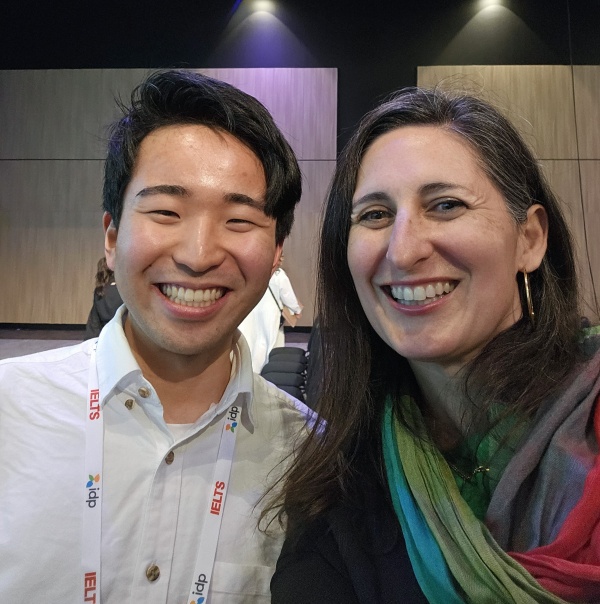
General Manager Sector Services Sahinde Pala with international student Ibuki Nishida.
General Manager Sector Services, Sahinde Pala, said....
“It was wonderful to see so many colleagues from across the global international education sector connecting with each other over the 2 ½ days of NZIEC KI TUA. Attendees and speakers brought a global approach to thoughts and reflections and was a reminder of the environment within which we’re working. The extended networking breaks saw much cross-sector collaboration and sharing of good practice.
“The attendance and speech by the President of India, Smt. Droupadi Murmu, was a great honour – the President reflected on the importance of international education for communities as well as the individual, how transformative education has been for her during her life, and the value of Indian international students in NZ,” said Sahinde.
“Dr Fanta Aw was a crowd favourite, with her reflections on the complimentary nature of international education alongside domestic education and the opportunity for us to collaborate globally given the societal value it brings to our communities and countries.
“My absolute highlight is always the student speakers, who threw down the wero (challenge) to delegates to keep focused on the importance of striving to deliver an excellent student experience,” Sahinde added.
I’m really proud of the whole ENZ whānau who collaborated to put on yet another successful NZIEC KI TUA”.
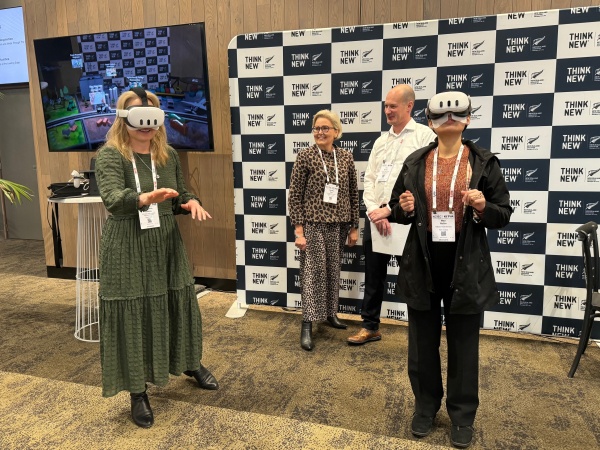
ENZ’s General Manager Sector Engagement, Innovation and Growth, Wendy Kerr (pictured second from left) said that attending NZIEC was incredibly energising.
“I was impressed by our teams combined approach to developing new areas for high value growth. Adrian Hirst, ENZ’s Director of Marketing, spoke passionately about the challenge of standing out in the competitive international education market. His words resonated with me: “In a sea of competing destinations, it’s increasingly difficult to stand out.” It really made me think about the importance of creating a unique identity that speaks to prospective students and their families," said Wendy.
"Christina Gomes, our Director of Innovation and Growth, shared an exciting framework that aligns global demand with New Zealand’s strengths. I was particularly drawn to her insights on the agri-food sector, which highlighted New Zealand's expertise and global reputation. This provides an anchor to develop our unique identity and secure additional learners by targeting a new segment".
Wendy added, "Tim Brown introduced a new “mixed reality” tool designed to immerse prospective students in the New Zealand agri-food systems career opportunities and study experience".
"I left the conference feeling energised and hopeful about these initiatives, knowing they could accelerate how we attract additional international students and showcase the incredible opportunities that New Zealand offers. It was a reminder of the exciting future ahead for our education sector!"