Search
Showing 10 of 7355 results
-
New Zealand universities showcased to global education leaders at QS India Summit 2025
The initiative was well aligned with ENZ’s goal to build global connections for New Zealand education and explore solid opportunities that will help New Zealand thrive through world-class international education.
Education New Zealand Manapou ki te Ao (ENZ), along with the University of Canterbury, University of Waikato and Massey University made an impactful presence across a range of sessions and workshops.
The summit had the New Zealand contingent showcase the quality of our universities and engage in discussions focused on university-industry collaborations, workforce development, global research leadership, while discussing the importance of building resilient, education institutions that can adapt to a rapidly changing world.

Prof. Neil Quigley, Vice-Chancellor of the University of Waikato, exploring India’s leadership in cost-efficient R&D and its role in supporting global partnerships to address pressing challenges at the QS India Summit 2025.
ENZ’s Director of Engagement, East Asia & India, Jugnu Roy, led a discussion on aligning curricula with emerging job market demands to better prepare students for global careers.
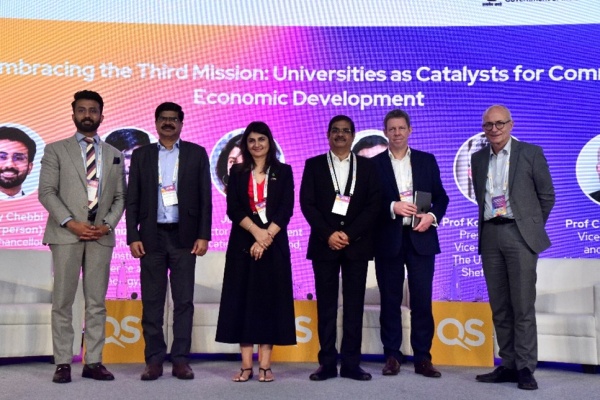
ENZ’s Jugnu Roy discussed how universities could drive social and economic impact beyond their primary roles of teaching and research at the QS India Summit 2025.
Considering how well recognised New Zealand universities are globally, with all eight ranked in the top 2 percent in the 2025 QS World University Rankings, the QS Summit was an opportunity for New Zealand education to strengthen its relationships with key global and Indian education leaders, Jugnu said.
“New Zealand universities are also known for their sustainability stewardship, with our universities ranking first for sustainability stewardship and second for sustainability outreach in the Times Higher Education Impact Rankings 2024.
“Within this context, the summit was a strong platform for us to share best practices and explore new avenues for collaboration between New Zealand and India.
“We look forward to collaborating with global and Indian leaders in education to shape a brighter future together.”
-
NZIEC 2018 to be held in Wellington
That’s right, we’re heading to the Coolest Little Capital in the World, Wellington!
NZIEC 2018 will be held at our national museum, Te Papa Tongarewa, on Thursday 9 and Friday 10 August next year. We hope to see you there.
The nature of our venue next year means we’ll be changing our standard programme structure to allow more time for delegate movement around the venue between sessions. This affords us the opportunity to Think New about how we structure our conference.
If you have any suggestions for what you’d like to see at NZIEC 2018, please email Sam Mackay, ENZ Strategic Projects Manager, at sam.mackay@enz.govt.nz. We warmly welcome suggestions for speakers, topics, session formats – and more!
We’ll be announcing the theme of next year’s conference in November when we launch our Call for Presenters. If you’re interested in presenting at next year’s conference, please don’t hesitate to drop Sam a line and we’ll add you to the mailing list.
- Ninna Granucci Green Spot Technologies.jpg resize
- University sector
- AIMS games 2
- NZIEC day1 659
-
New Zealand top of the world in university sustainability stewardship
New Zealand universities have come out on top of the world for sustainability stewardship in the Times Higher Education Impact Rankings 2024.
New Zealand universities’ approach to sustainability and equality has been announced as world-leading by Times Higher Education (THE) in its most recent Impact Rankings (2024). The stewardship rankings saw New Zealand score an average of 85.3 to come out ahead of Australia (84.4) and Hong Kong (81.9). All eight New Zealand universities participated in the rankings.
Now in its sixth year, the Impact Rankings is the only ranking system in the world that measures universities’ contributions to the United Nations’ Sustainability Goals (UN SDG’s). The Rankings assess the commitment made by universities to sustainability across four broad areas: research, stewardship, outreach, and teaching.
In topping the table for sustainability stewardship, New Zealand’s universities have scored well against indicators such as tracking food waste and having sustainable food choices on campus (SDG 2), the proportion of senior female academics (SDG 5), having water reuse policies and measurements (SDG 6), ensuring energy efficiency with renovations of buildings (SDG 7), and guaranteeing a living wage (SDG 8).
New Zealand universities also came second equal in the world against sustainability outreach, meaning high scores were achieved for contributing to policies addressing poverty (SDG 1), collaborating with health institutions (SDG 3), providing programmes for the local community to learn about energy efficiency (SDG 7), participating in cooperative planning for climate change disasters (SDG 13), and providing expert advice to government (SDG 16).
ENZ’s Acting Chief Executive Dr Linda Sissons welcomed the results and said the global recognition for New Zealand’s universities working hard to make a positive impact in the face of pressing environmental and social challenges world-wide was significant.
“New Zealand’s education system is guided by Kaitiakitanga (the Māori concept of guardianship). This principle instils a deep sense of connection to our land and a commitment to ensuring its health and vitality for future generations.
"Kaitiakitanga informs the approach taken by our universities to resource management, conservation, and sustainable development that all contribute to the UN’s SDGs particularly in the areas of food security, bioenergy, sustainable urban development, and climate change,” said Dr Sissons.
Dr Sissons added “It is incredibly positive to have our approach to sustainability stewardship and outreach recognised as world leading. This is particularly important to us as we know that students around the globe are increasingly prioritising environmental and social responsibility and choosing to study at institutions that align with their personal values.”
In this year's Impact Rankings, a record 2,152 universities from 125 countries/regions were assessed. Progress is measured for each of the individual 17 SDGs, and across the goals as a whole. View the full Impact Rankings 2024 results here.
Top countries/regions for sustainability stewardship in THE’s Impact Rankings 2024
Country/region
Number of ranked universities
Average stewardship score
New Zealand
8
85.3
Australia
21
84.4
Hong Kong
5
81.9
Ireland
8
81.4
Canada
24
80.5
United Kingdom
68
79.7
United States
46
69.1
South Korea
24
67.9
Belgium
5
65.2
Netherlands
6
64.5
Note: Table only includes nations with five or more ranked universities. Credit: Times Higer Education Rankings 2024
Top countries/regions for sustainability outreach in THE’s Impact Rankings 2024
Country/region
Number of ranked universities
Average stewardship score
Hong Kong
5
81.4
New Zealand
8
80.4
Canada
24
80.4
Australia
21
80
Ireland
8
76.4
United Kingdom
68
75.6
Belgium
5
71.9
Germany
8
68.1
South Korea
24
67.9
Netherlands
6
66.2
Note: Table only includes nations with five or more ranked universities. Credit: Times Higer Education Rankings 2024
For further information
Stephanie Morison, Senior Communications Advisor,
Education New Zealand Manapou ki te Ao
Stephanie.Morison@enz.govt.nz | +64223020104
Notes to Editors:
About Education New Zealand (ENZ) https://www.enz.govt.nz/
Education New Zealand Manapou ki te Ao (ENZ) is the government agency dedicated to helping Aotearoa New Zealand realise the social, cultural, and economic benefits of international education. Our role is to promote New Zealand as a high-quality education destination offering excellent education and students experiences and to encourage New Zealand students to study overseas.
With approximately 110 staff in 16 locations around the world, ENZ works closely with New Zealand’s diverse education sector which includes schools, English language providers, Private Training Establishments, Institutes of Technology and Polytechnics (Te Pūkenga), and universities. Internationally, we work with a range of education stakeholders, including government agencies and education providers to identify and encourage sustainable growth opportunities for New Zealand’s education sector.
-
Fourth cohort of 5,000 international students as a border exception
The students will be able to enter New Zealand from mid-2022 as a border exception, through a centrally managed process.
Student places will be allocated across the sector, based on the proportion of international students who were attending each type of education provider pre-COVID in 2019:
- University 1,450
- Te Pūkenga 700
- School (year 9 and above) 1,000
- PTE (including pilot training) 850
- English Language School 1,000
ENZ and the Ministry of Education are currently consulting with the peak bodies for universities, Te Pūkenga, PTEs, ELS and schools, on a draft implementation framework. The framework will include information on the allocation of places to providers, criteria for nomination of students to these places and all related processes. If you are an education provider who is not aligned to a peak body, you can request a copy of the draft framework by emailing c4@enz.govt.nz.
The implementation framework is expected to be finalised by 14 March 2022, and more information will then be made available for prospective students and the wider education sector.
Education providers will be responsible for determining eligible students to fill their allocation of places, and submitting information on these students to education agencies. Education agencies will confirm with providers that the students meet the criteria, and nominate these students to Immigration New Zealand.
As with previous border exceptions, students who are interested should talk to their prospective education providers and indicate their interest.
Expected timings are as follows:
- Mid-March 2022 – decisions begin to be communicated about the allocation of places to individual education providers
- Mid-late March 2022 – education providers begin nominating students
- 13 April 2022 – the border exception visa application process opens for cohort 4 students
- From mid-2022 – students are in New Zealand ready to begin their study.
We appreciate that the timings are tight, and everyone involved will need to work closely together so we can make the most of this opportunity.
Students will need to meet the same living cost requirements as the previous cohort, namely funds of $15,000pa for school students and $20,000pa for other students.
Students will also need to comply with the vaccination and other health requirements that apply at their time of travel. Read more about travel to New Zealand on the Unite against COVID-19 website: Travel to New Zealand
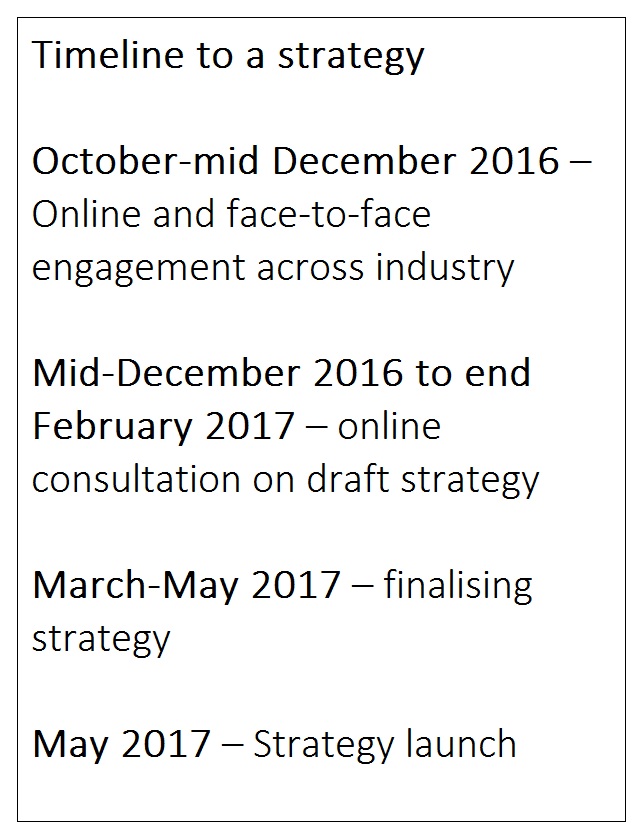
- Timeline to a strategy
-
Marketing tips for schools
These topics and more were discussed during The Crowdsource Café session, led by ENZ Business Development Managers Mary Camp and Richard Kyle. The session tapped in on the wealth of experience in the audience by pooling together practical ideas for improved marketing of schools.
Working in groups, participants shared key tactics they use to nurture meaningful relationships with students, school staff, agents, the local community and alumni.
“Participants all agreed that our industry is built on relationships. They left the session with the challenge of taking away one thing they could action in the next week. No better time than now to get that action going!” Richard said
“It’s also great to remember that the ENZ Skills Lab is a rich resource that schools can use, with many tools that take you step-by-step through marketing projects (including digital marketing and PR),” he said.