Search
Showing 10 of 7355 results
-
Asia comes to Marsden School
With funding from the Asia New Zealand Foundation, Marsden Head of Humanities, Fiona Crawford, organised a full day of activities for students, with the aim to increase their cultural awareness and educate them on a region with increasing ties to New Zealand.
"We want our students to thrive and contribute towards putting New Zealand on the map, so it is our responsibility to equip them for their future relationships with Asia," Crawford said.

Marsden students dressed up for Experience Asia Day.
The day included a range of activities and sessions that represented 11 Asian countries, starting off with a Tai Chi session in the gym, and ending with an inter-house KPop (Korean Pop) dance competition. In between, students broke into groups to take part in Judo, Kung Fu and Bollywood dance classes, sushi, dumpling and curry making, language learning and haiku writing, as well as origami, henna painting, sari dressing, lantern making, calligraphy, kite making – and much more.
“The students really enjoyed themselves, but also gained valuable insights into the many Asian cultures on show. Many commented on how fun it was, and hope to do it again next year,” Crawford said.
Amanda Cundy, a former Marsden student who went on the school’s first exchange to China back in 2010, stopped by Asia Day to share her experience with students. She spoke about the impact that Chinese studies had on her life, and the importance of understanding other cultures in an increasingly globalised world.

Marsden students tried their hand at sushi making, Diwali art and calligraphy.
- 5
-
International education drives soft power in offshore markets
Former Ambassador to Brazil Caroline Bilkey knows this only too well. She says our strong reputation in international education is a “success story” which pays dividends down the line, as former students happily help to build our profile globally.
In her role progressing New Zealand interests offshore, Ms Bilkey has seen first-hand the benefits of working within networks of local people who studied in New Zealand.
“Not only is their experience in New Zealand a great conversation starter, but it also means you are more likely to be given the benefit of the doubt, and the person may be more willing to advocate your issue with their peers, because they know and like New Zealand, having studied there.”
Trade and business can benefit from link to international education
With more than 30 years’ experience with the Ministry of Foreign Affairs and Trade and multiple offshore postings, Ms Bilkey knows of countless instances where trade and business have benefited from a direct, or indirect, link to a former international student’s New Zealand education experience.
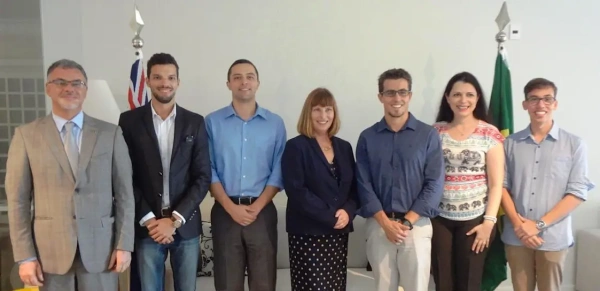
One such example is an Argentinian-Brazilian woman who returned to Brazil after studying in Auckland, to work for Fonterra and Zespri. Ms Bilkey describes the woman as “able to talk enthusiastically about the New Zealand story behind the products coming in”.
She believes there is something “quite special” about the links built through international education, largely because students are usually young, and their experiences are intense and formative.
Whether it is international students coming to study in New Zealand or Kiwis studying abroad, Ms Bilkey believes that there are many benefits associated with international education, beyond diplomacy, international trade, and the obvious economic benefits.
Positive international education experience opens hearts and minds
There are higher-level, public good benefits, she says. “A positive international education experience contributes to the global good, as it opens hearts and minds and encourages tolerance.”
Other benefits for all of us include the exposure to cutting-edge thinking and breakthroughs resulting from research collaboration between New Zealand and international students’ home countries. “The idea that if you get outside the box and have people coming in with a different approach, that can sometimes generate really positive, new and innovative ideas.”
Ms Bilkey is in no doubt that a positive international education experience in New Zealand boosts our connectivity with the rest of the world by building long-term relationships, enhancing business, opening doors to trade opportunities, and helping shape global citizens, all badly needed in a world facing unprecedented challenges.
- IMG 1334 copy4
-
High level of interest in vocational education forum
Organised by Skills Consulting Group and Education New Zealand Manapou ki te Ao (ENZ), together with Te Pūkenga, the forum provided an opportunity to share knowledge and insights on best practice in technical and vocational education and training, in an accessible format.
A key theme was the importance of close relationships with industry, particularly in terms of apprenticeships. For some participants, a longstanding perception that higher education is more important than vocational education remains a challenge. Student panel participants also talked about the confidence and support that their parents provided when they were making decisions about whether to enter vocational education programmes, and having no regrets about the career paths followed.
Topics covered included solving skills shortages, apprenticeships, youth employment, lifelong learning, digital transformation, sustainability, and promoting diversity. Senior government officials, major companies, international organisations, sector leaders and students from around the world spoke at the forum, which was opened with a speech from Education Minister Chris Hipkins.
Text-based chat and discussion tools in the virtual environment were multilingual, providing instant translation to enable communication and networking across 28 different languages.
The China – New Zealand Higher Vocational Education Summit was also part of the APAC TVET Forum and featured a dedicated virtual room for Chinese presenters and audience members. The Summit provided a platform to:
- discuss New Zealand’s recent experience of vocational education reform
- further develop cooperation in vocational education between New Zealand and China, building on the existing joint programmes between Te Pūkenga subsidiaries and vocational institutions in China.
Keynote speakers from China included Chen Dali, Deputy Director, General Department of International Cooperation and Exchanges from the China Ministry of Education, and presenters from industry including Wang Jinsheng from Qingdao Technical College.
ENZ Business Development Manager Richard Kyle says APAC TVET is the only forum of its type in the region.
“It was particularly encouraging to see double the number of registrations this year, building on the success of the first forum in 2021. There’s clearly a high level of interest in this event, and it’s a great opportunity to showcase New Zealand’s strengths in vocational and technical education.”
Positive comments were received from many attendees.
“Brilliant tech. Excellent management…and good content.”
“Amazing numbers... Very informative sessions and I’ve got people more interested in our upcoming activities.”
“It was well organised from the invitation to the closure of the forum – well done job!”
- September 2014 Scanning Report2
-
Stronger together: TNZ and ENZ support school sector growth through agent famil
The week-long programme brought eight agents from mainland China, Hong Kong, and Taiwan to Wellington, Marlborough and Canterbury.
The aim was to give agents first-hand experience of New Zealand’s short-term study offerings in schools, strengthen connections with regional education providers, and explore opportunities to develop tailored study tour programmes.
The famil was funded by TNZ, with ENZ collaborating with Schools International Education Business Association of New Zealand (SIEBA) to manage the itinerary and logistics.
ENZ Senior Market Development Manager (China), Felix Ye, and TNZ Trade Development Manager (Greater China), Sandy He, led the delegation of eight agents - providing on-the-ground support and sector insights.
In the year ended December 2024 New Zealand exported $1.29 billion of education related travel to China. This represented 35.8% of all exports of education related travel. For trade in education related travel China, People's Republic of ranked 1 of 140 for highest export value. [1] According to data from Stat NZ, 7.9k Chinese students holding visitor visas came to New Zealand for short-term programmes or study tours - the majority visiting during China’s school holidays in July. [2]
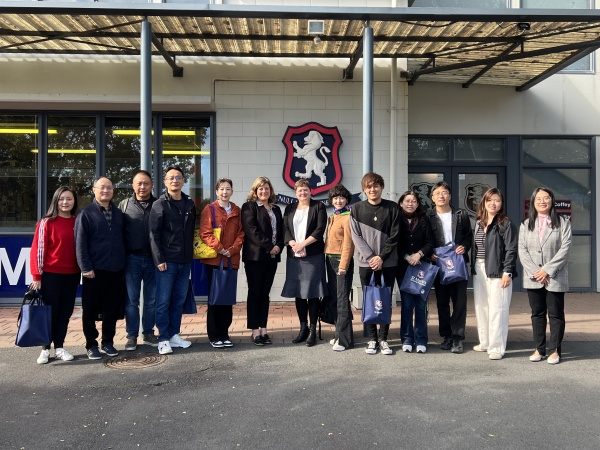
The agents visited St Mark’s School in Wellington, meeting with Erica Harrison, the Acting Principal, and her team.
The agents met with 15 schools across the three cities, including a mix of private, state-integrated, and single-sex schools. The journey began in Wellington with a warm welcome at Rāroa Normal Intermediate, where the group received a traditional mihi whakatau — a first-time experience for many.
Deputy Principal Dave Gillies said it was a great opportunity to showcase the school’s experiential learning focus.
“We’re excited about developing professional relationships with the agents and the opportunities that will grow from this visit,” he said.
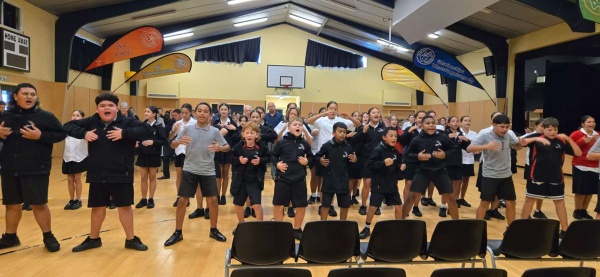
Students from Chisnallwood Intermediate School perform a haka to welcome the group to the school.
In the South Island, the group explored a range of school offerings and regional initiatives.
In Blenheim, agents gained insights into the unique characteristics of state-integrated education at Richmond View School, Marlborough Boys' College, and Marlborough Girls' College.
In Methven, Mt Hutt College showcased its tailored short-term programme, featuring sustainability-focused tourism at Ōpuke Thermal Pools and hands-on alpine and agricultural experiences – a creative integration of local resources into learning.
The famil concluded in Christchurch, where SIEBA and Christchurch Educated gave overviews of the New Zealand school system and introduced how their initiatives support the growth of international education across the sector.
ENZ Regional Director of Greater China, Dr Ron Xavier, said study tours are a growing area of interest among Chinese agents.
“This famil gave a genuine sense of what New Zealand schools can offer — from cultural experiences to hands-on learning — and helped connect agents with educators who are eager to host students,” he said.
ENZ and TNZ plan to work closely with participating partners to develop new study tours across different regions for 2026, helping raise awareness of New Zealand as an education destination for Chinese students.
SIEBA Executive Director, John van der Zwan, is looking forward to experiencing the benefits of the study tour famil.
“Study tours have significant potential, we look forward to the outcomes of this famil increasing the exposure of New Zealand’s regional schools in the China market,” he said.
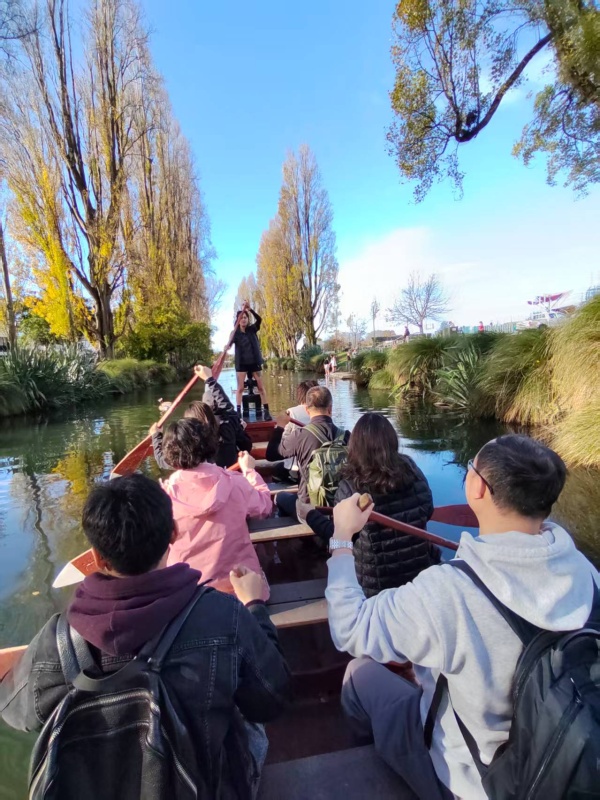
Paddling a waka on the Avon River. Beyond education, the famil also highlighted New Zealand’s unique culture and natural beauty. From visiting Te Papa and Wētā Workshop to paddling a waka on the Avon River in Ōtautahi Christchurch, agents experienced the blend of tradition and innovation that makes New Zealand a compelling destination.
[1] Tourism data | Corporate and Stats NZ
[2] https://tourismnewzealand.com/insights/tourism-data/
-
From the CE: Honouring our commitment to international students
The Government has announced today that a new border exception will allow 250 international PhD and postgraduate students to enter New Zealand and continue their studies.
Read Minister of Education Chris Hipkins’ official release.
This is a positive first step on the path to recovery and is consistent with the Recovery Plan for International Education.
It is recognition that international education is important to New Zealand and will play a vital role in the country’s rebuild and recovery from COVID-19. Prior to COVID, international education was New Zealand’s fifth-largest export earner, earning $5 billion a year and supporting around 45,000 jobs.
Moreover, the international students included in this group have had their postgraduate study or research disrupted by COVID-19, and cannot complete it due to the practical nature of their course. They have made a commitment to New Zealand, and that’s something we want to honour.
ENZ’s next step is to work with tertiary providers as they identify and select eligible students, and to continue to work with other government agencies to ensure a safe and considered process is developed for these students to enter the country.
ENZ is looking forward to further border exceptions that will benefit as many providers and students as possible, when it is safe to do so.
We will also have work underway to make sure the students entering New Zealand receive a warm welcome and have the information they need to succeed.
I am very proud of the manaakitanga that New Zealand education providers have been demonstrating throughout the COVID-19 crisis this year.
Please continue to encourage your students to sign up to NauMai NZ, our digital home for students who have chosen to study in New Zealand. Over the COVID-19 crisis, it has continually been updated and expanded with information international students need to know.
In the early hours of Saturday, 2 October, ENZ’s NauMai NZ was awarded a Highly Commended in the Student Support category at The PIEoneer Awards. We are delighted to be recognised for this work alongside such a varied list of international organisations.
You can read more about NauMai NZ in this issue of E-News.
He waka eke noa (we’re all in this together).
Grant McPherson
Chief Executive
Manapou ki te Ao
-
Iran trade visit seals breakthrough deal for New Zealand universities
The visit secured several major education outcomes, including a ministerial announcement that the University of Canterbury, Victoria University of Wellington and Massey University would be reclassified as ‘excellent’ by the Iranian Ministry of Science, Research and Technology. These universities will join the University of Auckland and University of Otago, who have already been given the top ranking. These classifications play a significant role in guiding Iranian students in choosing where to study abroad. All of New Zealand’s universities are now classified in the top two categories.

Above: signing the Education Cooperation Agreement
A higher education co-operation agreement was also signed between Ministers, which provides a platform for increased academic and research co-operation between the two countries.
ENZ arranged several university recruitment events as part of the visit programme. Some 80 per cent of Iranian students in New Zealand are studying at PhD level. ENZ Chair Charles Finny, who led the education delegates on the visit, said this is a key area to build on.
“These initiatives will significantly boost our universities’ recruitment of Iranian students, particularly at the PhD level,” said Mr Finny.
“I look forward to New Zealand universities making the most of this opportunity in the coming years, and commend the University of Auckland, University of Canterbury and Auckland University of Technology for participating in this ground-breaking visit.”
- Singapore1