Search
Showing 10 of 7355 results
-
Felix Loh: kūwaha a symbol of enduring ties to New Zealand
Now chief executive of the stunning and expansive botanical attraction that is Singapore’s Gardens by the Bay, Felix is delighted that it was selected as the site for a Māori kūwaha, or carved doorway, which feels personally symbolic to him.
Recently unveiled by Prime Minister Jacinda Ardern, the kūwaha celebrates the long-standing friendship between Aotearoa New Zealand and Singapore. “New Zealand has a special place in my heart, and I am honoured to host this precious Māori artefact. I hope the kūwaha will be a symbol of our friendship for many years to come.”
New Zealand now feels like a second home to Felix, but he shocked his parents and perplexed the scholarship selection committee back in 1988 when he told them he wanted to study horticulture at Massey University.
“I knew that Massey was well-known as an agricultural centre of excellence, and that horticulture was a very popular course,” he says. “But they were puzzled and asked me why I wanted to be a farmer in an urban city state like Singapore.
“My Dad did not speak to me for a few years, because Asians all want their kids to be lawyers, engineers, and doctors, and I chose to be a plant doctor instead. But I never regretted that decision.”
Felix says he felt welcome from the moment he arrived in New Zealand and enjoyed his four years as an international student so much he would have stayed on if he could. But the terms of his scholarship meant he needed to return to Singapore.
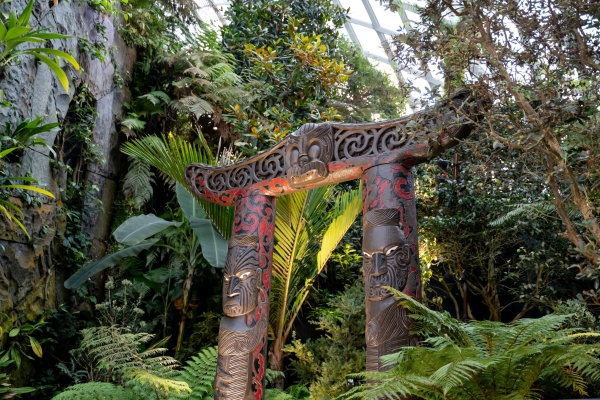
The Māori kūwaha recently unveiled at Gardens by the Bay.
No such thing as a stupid question
A less formal approach to education, with an emphasis on inquiry and collaborative learning, proved an initial challenge for Felix but ended up being one of the reasons he rates his New Zealand education experience so highly.
“At my first class we were told that we were expected to ask questions. This was the first time that I heard the phrase ‘there’s no such thing as a stupid question’,” he says. “That shook me, because in Singapore in those days nobody answered a question in class unless they were sure they had the right answer. For the first time, someone was willing to explore an alternative point of view.”
He turned up to English classes thinking it would simply be language tuition but discovered it was all about writing for your audience, with essays to be critiqued by classmates. “I initially questioned why fellow students would judge my work, but I quickly understood the value in taking on board a diversity of views to refine an idea or get a better product.”
And group project work certainly provided a life lesson for Felix, who had been conditioned to individual success based on exam results. “Not only did we have to work in groups, but we couldn’t choose our project partners,” he says.
“I’ll never forget the lecturer telling us that when we get to the workplace, we cannot choose our boss or even our colleagues, so we need to be able to work with different people. I learned that New Zealanders place people at the centre of what they do, and that we need to learn to appreciate the input of others.”
“I learned that New Zealanders place people at the centre of what they do”
Felix says his New Zealand education set him up for life-long learning which has helped to drive his career success. “You’ve got to learn and unlearn throughout your whole lifetime. It’s not so much about the content, but about being curious and knowing where to go for the answers.”
Friendships lead to enduring ties
It is through the people he met that he has forged an enduring relationship with New Zealand. Fellow churchgoers and schoolmates became life-long friends and “a moral and emotional support base” over the years. He has returned to New Zealand many times and stays in touch with former lecturers and teaching staff, some of whom are now plant suppliers for him in his role at Gardens by the Bay.
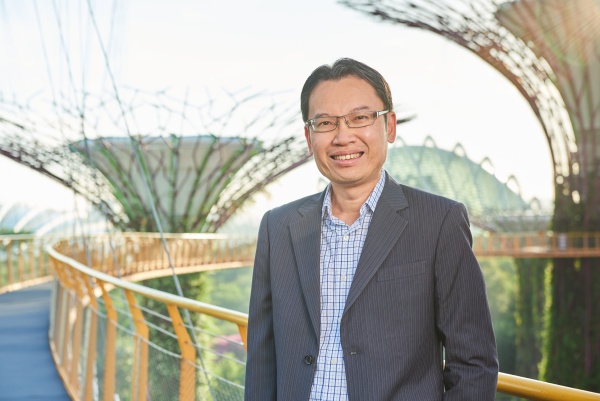
Felix at Gardens by the Bay.
“When I took on this job, one of my first trips was to go back to New Zealand to source new plants for our temperate Flower Dome. I visited a number of nurseries, just knocking on their doors, and I was made to feel so welcome. It just felt like I was at home.”
The world is a very different place from what it was in the 1990s, but Felix says the value of international education remains as important as ever.
“International education helps us to understand other perspectives better and demystify misconceptions we have about each other.
“In today’s uncertain world it is always good to have friends in other places. You discover that we have more things in common than set us apart.”
-
Fermented flour a food waste breakthrough
Ninna Granucci, a former University of Auckland international student, is part of a new generation of thinkers contributing solutions with out-of-the-box thinking.
Ninna grew up in Brazil and saw for herself the amount of food waste primary producers there generated. Learning about the scale of the problem globally, she resolved to apply her skills to help bring about change.
“I wanted to use science in an area which fascinates me –microbiology and specifically, fermentation – to try and find a solution to this huge problem.”
University of Auckland a great place for new ideas
Ninna chose to study for her PhD in Biological Sciences under Dr Silas Villas-Boas at the University of Auckland in 2014. “The university environment was a great place for new ideas, to promote the spark to find solutions to problems, with the scientific approach to support it.”
It clearly worked. After only 18 months, she had a breakthrough in the lab which she knew could make a real difference. She refined a fermentation process to successfully convert waste pulp and peel from selected fruit and vegetables into a nutritious flour. Widening the range of ingredients in her trial, she proved she was on to something.
Data from the UN’s Food and Agriculture Organisation (FAO)shows that almost 32 percent of plant-based product is wasted annually. Ninna’s technology has the potential to make substantial progress on this.
It turned out that the ingredients also tick all the boxes for health and sustainability-conscious consumers: high protein, high fibre, low calorie, gluten free, rich in vitamins, minerals and natural antioxidants. And the bonus is that they also have lowest CO2 footprint compared with other ingredients in the market today.
Entering her prototype into the University’s Velocity 100K Business Idea Challenge sparked media interest and a flurry of inquiries from supermarkets and other businesses wanting to buy the product. “That was when we realised it was not only an academic project but also something which could be much bigger and could help to address the problem of food waste,” Ninna says.
Green Spot Technologies has global plans
With support from Velocity, she and Silas co-founded sustainable food innovation company Green Spot Technologies, which has ambitious plans to go global. Ninna is now CEO and based in Toulouse, France, where the business is established in a start-up accelerator environment and employs 15 people.
But back in the early days, it was pretty nerve-wracking. “My plan was to complete my PhD first and then set up a company based around the project. But after the success in the Velocity Challenge, we decided the time was right to forge ahead with the start-up. It was quite challenging. My background is all scientific, I didn’t have any experience in business, and I had a lot to learn.”
She is grateful for the support she got at the University of Auckland and believes that her career path would never have progressed as quickly if she hadn’t chosen New Zealand as a study destination.
“I give a lot of credit to New Zealand for how things worked out”
“New Zealand was the catalyst,” she says. “I managed to secure a scholarship through Callaghan Innovation available to students looking to add value to waste streams. It allowed me to focus on the work and find opportunity. I give a lot of credit to New Zealand for how things worked out.”
Ninna worked in Auckland with other international students from around the world and says that, too, helped contribute to her success. “When you are in the same situation you can support each other and that was super important during my PhD.”
New Zealand education the right decision
Ninna remains passionate about sustainability and reducing food waste. It is at the heart of her business and is important to her personally. The mission of Green Spot Technologies is “challenging the food waste paradigm to feed the future”. The company has won multiple awards, both in New Zealand and in Europe, highlighting the unique nature of its technology and products.
With food insecurity spreading to hundreds of millions of people around the world, the UN has set a Sustainable Development Goal (SDG) to halve food waste by 2030. It is an ambitious target and needs innovative thinkers like Ninna to make it achievable.
“I think it is incredible that we waste so much food, knowing that we need more food in the world. It doesn’t make any sense, but it motivates me to work on solutions,” she says.
The decision to study in New Zealand was a critical part of Ninna’s journey from international student to international businesswoman and innovator. “I could not have imagined that it would lead to such huge changes in my life in such a short time,” she says.
“A New Zealand education provides a truly enriching experience. I really think I made the right decision.”
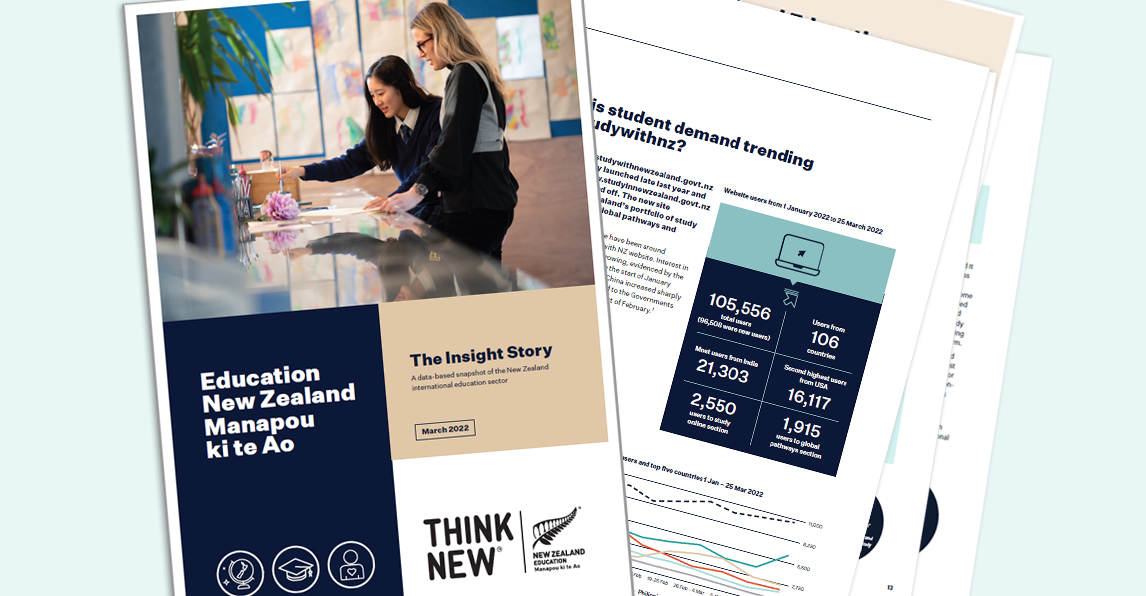
- The Insight Story March 2022
- madi 12
- 14884533 921567087987289 283778664255654261 o
- Bellmont20collage 0
- Peter Bull
- afsscreenshot
-
International education drives soft power in offshore markets
Former Ambassador to Brazil Caroline Bilkey knows this only too well. She says our strong reputation in international education is a “success story” which pays dividends down the line, as former students happily help to build our profile globally.
In her role progressing New Zealand interests offshore, Ms Bilkey has seen first-hand the benefits of working within networks of local people who studied in New Zealand.
“Not only is their experience in New Zealand a great conversation starter, but it also means you are more likely to be given the benefit of the doubt, and the person may be more willing to advocate your issue with their peers, because they know and like New Zealand, having studied there.”
Trade and business can benefit from link to international education
With more than 30 years’ experience with the Ministry of Foreign Affairs and Trade and multiple offshore postings, Ms Bilkey knows of countless instances where trade and business have benefited from a direct, or indirect, link to a former international student’s New Zealand education experience.
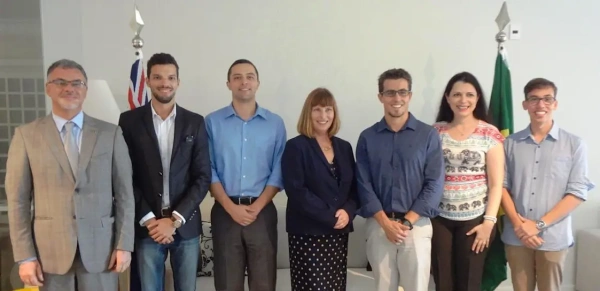
One such example is an Argentinian-Brazilian woman who returned to Brazil after studying in Auckland, to work for Fonterra and Zespri. Ms Bilkey describes the woman as “able to talk enthusiastically about the New Zealand story behind the products coming in”.
She believes there is something “quite special” about the links built through international education, largely because students are usually young, and their experiences are intense and formative.
Whether it is international students coming to study in New Zealand or Kiwis studying abroad, Ms Bilkey believes that there are many benefits associated with international education, beyond diplomacy, international trade, and the obvious economic benefits.
Positive international education experience opens hearts and minds
There are higher-level, public good benefits, she says. “A positive international education experience contributes to the global good, as it opens hearts and minds and encourages tolerance.”
Other benefits for all of us include the exposure to cutting-edge thinking and breakthroughs resulting from research collaboration between New Zealand and international students’ home countries. “The idea that if you get outside the box and have people coming in with a different approach, that can sometimes generate really positive, new and innovative ideas.”
Ms Bilkey is in no doubt that a positive international education experience in New Zealand boosts our connectivity with the rest of the world by building long-term relationships, enhancing business, opening doors to trade opportunities, and helping shape global citizens, all badly needed in a world facing unprecedented challenges.
-
International graduate helps strengthen New Zealand’s cyber-security
Qualified with a Bachelor of Business Administration from Taiwan and a Master of Science from the United States, Eric saw further international postgraduate study as a good opportunity to enhance his overseas life experience.
So, having spent many years working in the IT industry in Taiwan across a range of roles including systems engineering, information security, and personal data protection, he decided to move his family to New Zealand in 2018 to pursue a Master of Cyber Security at the University of Waikato.
“The University of Waikato is recognised among the world’s best in computer science and has the country’s first Master of Cyber Security focusing on malware analysis, penetration tests, cloud computing and legal compliance,” he says.
Master’s programme “challenging and complex”
Eric says he enjoyed the challenge of the master’s programme.
“Security in the IT field is challenging and complex, and covers many technical and non-technical aspects. Being a trusted IT security player is an intellectually and financially rewarding job, which can make our lives, communities and society better by ensuring IT is applied and managed securely.”
While at Waikato, Eric spent much of his time working on assignments in one of the computer labs. “I have many unforgettable memories that took place in the 24-hour computer areas where classmates and I would have countless discussions, exchanges of ideas, and even arguments.”
Since graduating in 2019,he has been working as a professional consultant at an audit firm in Auckland, putting his cybersecurity skills to good use implementing adequate security controls and incident management procedures to protect his clients.
Eric credits his international education experience at Waikato for putting him on a pathway to success. “The new literacy of cybersecurity risks, cloud computing technologies and legal compliance requirements I received from studying at Waikato has equipped me to make professional judgements on each security assessment, which has been extremely beneficial for my clients.”
New Zealand a great study destination
Based on his experience, Eric is keen to encourage any aspiring international student to seriously consider New Zealand as a study destination.
“Studying abroad is an exciting journey,” he says. “If you want to earn a qualification from a prestigious university, study new things in a multi-cultural environment, and have a laid-back and affordable lifestyle then New Zealand is the place for you.”