Search
Showing 10 of 7351 results
-
From the Chief Executive: Celebrating 2025 – A year of growth for international education
Kia ora koutou,
As we wind down the year and get ready for a well-deserved Christmas and end-of-year break, I am reflecting on a year that has been transformative for international education in New Zealand.
This year, we moved from recovery to a focus on sustainable growth. The launch of the International Education Going for Growth Plan, set a bold vision for the next decade. On the back of this plan, we strengthened education partnerships across borders, showcased New Zealand’s unique education offering on the global stage, and saw international student enrolments and student satisfaction climb steadily. These achievements belong to all of us, education providers, education agents, educators, and the communities who make this sector vibrant and resilient.
What stands out most for me is the spirit of collaboration. From prime ministerial trade missions in Viet Nam, India and China, to global conferences, from regional engagement to innovative campaigns, the sector has shown what’s possible when we work together with purpose and ambition. International education is not just an export, it’s a bridge between cultures, ideas, and opportunities, and that bridge is stronger than ever.
Last week, it was with mixed emotions that that I shared my decision to step down as ENZ Chief Executive on 6 February 2026 to take up the role of Secretary for Children and Chief Executive of Oranga Tamariki. This decision comes from a deeply personal commitment to improving outcomes for tamariki and young people, a passion that has guided much of my career. While I am excited for this next chapter, leaving ENZ is bittersweet. Leading Manapou ki te Ao has been a privilege and a highlight of my professional life.
I want to reassure you: ENZ is in a strong position. The organisational reset we’ve achieved, the clarity of our strategy, and the capability of our people mean the sector is well placed to continue its upward trajectory. The Board has already begun the process to appoint a new Chief Executive, and I have every confidence that the transition will be seamless.
Thank you for your partnership, your trust, and your unwavering commitment to international education – here’s wishing you have a wonderful time with your whanau and friends over the holidays.
I leave knowing that the future of this sector, and its contribution to New Zealand, is bright.
Kei ōu ringaringa te ao
The world is yours.
Ngā mihi nui,
Amanda Malu
Chief Executive -
International education delivers for New Zealand communities and visiting students
These are the key findings of two ENZ research projects to measure the student experience and the views New Zealanders hold towards international education.
Student experience in New Zealand
In the 2023 International Student Experience survey of 4,755 international students from more than 70 nationalities, 84 percent rated their overall experience positively, while another 83 percent said they would recommend New Zealand as a study destination.
Students were most positive about their personal development and outcomes, with 87 percent saying the experience helped encourage their curiosity and develop new ideas. Students were also very positive (88 percent) about the people and connections they made in New Zealand.
New Zealand was the first choice of study destination of 78 percent of respondents and 64 percent said their New Zealand experience had met or exceeded their expectations, which is consistent with previous research.
Commenting on the results, ENZ Student Experience Manager, Ross Crosson, said the results showed that New Zealand’s ability to deliver a quality education to international students had remained strong through the recent pandemic, and boded well for further recovery of the sector.
“The strong preference of students for New Zealand as a place where they can obtain a high-quality education while enjoying unique personal development really shone through in the student experience survey. It was heartening to hear about students growing their confidence because of their study experience in the country.
“We now want to make sure we’re using insights from the survey to inform our work – to ensure New Zealand continues to be the open, inclusive, and welcoming study destination it is known to be.”
ENZ’s Director Insights, Marie Clark, says the survey is a significant undertaking for ENZ and is an important resource for the international education sector.
"For one, it’s the only national survey of international students or indeed even students. We now have the beginnings of a valuable timeseries of data going back to 2019.
"It's important to be able to surface international student insights based on all sorts of variables, including country, sector or gender or a combination of these. We hope people working in the sector will find the sub-sector deep dives and Tableau dashboards particularly insightful resources,” she says.
The International Student Experience Survey 2023 Report is available here on IntelliLab.
Local benefits
In an ENZ survey of 1,100 New Zealanders conducted in December last year, 75 percent of respondents believe that international students benefit New Zealand.
The Ipsos Fast Facts survey, which drew responses from all regions of the country, saw 80 percent of respondents highlighting economic benefits, particularly in local communities, as a key reason for their positive view. Local and cultural contributions were also noted with 81 percent saying international students help local students learn about other cultures and ways of living, and contribute to New Zealand’s cultural diversity.
The results of the 2023 survey highlighted the continuing growth in support for international students and their positive impact on New Zealand since 2016 when only 57 percent believed international students helped the New Zealand economy and economic growth.
The proportion of New Zealanders who feel that international students make it harder for New Zealanders to get jobs also decreased from 34 percent in 2018 to 24 percent in 2023.
However, some respondents expressed concern that some international students use the New Zealand education system as a means to residency, while 32 percent felt New Zealand’s infrastructure in housing, transport and medical services is not well equipped to allow for international students.
Marie said the positive result from the domestic survey was also good news.
“International students have always been a significant contributor to regional economies. It is particularly pleasing that there is strong awareness and support of the cultural exchanges that happen when international students learn alongside New Zealand students and participate in our communities. While the research identified some challenges, the definite trend in awareness of the benefits international students bring to New Zealand is very positive for the future.”
-
Wanted: Good news stories
With ENZ teams in key locations around the world, we understand the local media and work with relevant media outlets to get New Zealand stories published, broadcast and onto computer screens.
And we’ve had some good success – last year ENZ’s integrated PR and marketing activity in India won the Public Affairs Asia Gold Standard Award for Country Promotion.
While we monitor New Zealand media for stories to highlight abroad, we are always looking for innovative and interesting story ideas that showcase high quality education.
Are you launching a new course, celebrating unique student success or releasing new research that would be of interest to international media? Or is your regional group planning a visit offshore? With early notice, we can help to tell your region’s education story to the media.
Have you got students or experts travelling in-market who are great representatives of the strengths of a New Zealand education? Give us the details and we’ll try and link them up with local media.
Do you have alumni stories of the connections created between countries and people in the years following graduation? We’d love shine a light on them.
Email us at media@enz.govt.nz if you have a great story to share.
Take a look at the kind of stories we have worked to profile in China:
-
Student success stories with relevance to China: Chinanews.com reported on a team of Auckland University students, including one Chinese national, which competed in an international robotics competition.
-
China-related education events held in New Zealand: People.com reported on the University of Auckland’s seminar session promoting study opportunities in Qingdao. Xinhuanet.com highlighted Victoria University of Wellington’s Confucius Institute sunrise ceremony to celebrate the 10th anniversary of the establishment of the global network of Confucius Institutes. China Daily reported on a Chinese Week which promoted Chinese language and culture through television, libraries and apps.
-
Institutional developments of relevance to China: Waikato University launched a scholarship scheme for international students from Asia, including China. Coverage was secured in a range of media, including Sohu.com. The article highlighted the $1 million Excellence Scholarships for nearly 200 students and noted Waikato’s strengths in education, economics, law and information technology.
-
Scientists and researchers visiting China who can be interviewed about New Zealand’s strengths in their fields: Sir Peter Gluckman, the Prime Minister’s Chief Science Advisor, visited China in September. Media interviews arranged by ENZ resulted in coverage highlighting New Zealand’s education strengths in science and research, including in agriculture, medicine and nanotechnology.
-
Regional cluster visits: The Shanghai Morning Post reported on Study Dunedin and Education Southland’s joint education fair in Shanghai. ENZ also helped secure coverage for Dunedin education institutions during the Dunedin Mayoral Delegation to Shanghai, resulting in a total of 74 media reports across TV, online and print media – equating to NZ$564,677 in PR value.
-
Collaboration with Chinese counterparts: Chengdu Evening Post reported on ties being developed by New Zealand schools with Chinese counterparts. The Daily Evening News reported on the 2014 Sino-New Zealand Modern Vocational Education Development Forum held in Tianjin.
-
Visiting scholars and institution leaders: Beijing Business Today interviewed Caroline Daley, Dean of Graduate Studies at the University of Auckland, highlighting the university’s job seeker support for international students.
-
-
We’re Always On
Having a continual in-market presence that actively promotes New Zealand’s attributes as a study destination boosts our chances of prospective students including New Zealand in their consideration set.
The objective of the 'Always On' activity is to drive prospective students (and parents of students) to targeted content landing pages on studyinnewzealand.com. The goal of the landing pages is for these students to register their details to find out more about studying in New Zealand either through an Education New Zealand Recognised Agency (ENZRA) or directly with an institution. The other objective of the activity is to deliver the New Zealand education brand proposition, ‘Think New’, in a way that will resonate with our target audience and see them consider New Zealand as a valid study option.
We’re currently live in India, China, Malaysia and Viet Nam, and will go live very soon in Thailand and Indonesia. For each country we’re creating ‘’home’’ pages
(e.g. India), sector-specific pages (e.g. universities) and, coming soon, programme-specific pages (e.g. engineering).
All pages will be in the local language.

-
Funding recipients announced
Projects include the development of science, maths and literacy resources; marketing in Germany, the United States and the Middle East; and a visit to New Zealand by bloggers from Colombia and Japan.
“Education publishers and ed-tech providers feature in the list of IEGF recipients which is a positive sign for businesses engaged in offshore delivery,” said Business Development Manager, Adele Bryant.
“There is a lot of potential for growth in this sector and we are excited to support New Zealand businesses to take their innovation to the world.”
The IEGF is designed to help New Zealand’s education providers achieve significant growth by making the most of international education opportunities.
Grants from the IEGF contestable fund aim to boost innovation in international education, including the development of new markets and new products to meet the needs of international students. Education providers and businesses can apply for matched funding up to $50,000.
Read Tertiary Education, Skills and Employment Minister Steven Joyce’s media release: http://beehive.govt.nz/release/funding-round-targets-ed-tech-expansion
Applications for the next round of International Education Growth Fund will open in March 2015.
- Regional Student Visa Dashboard October 2015
-
Brazilian bloggers to report the Dunedin study experience
While Caio Komatsu (25) from Sao Paulo studies Outdoor Adventure Leadership at Otago Polytechnic, and Luana Mazotti (24) also from Sao Paulo studies English at the University of Otago Language Centre, they will also both produce video diaries and blogs offering insights into local lifestyle, culture and attractions.
Together the influential bloggers reach almost five million people through their popular culture blogs Fail Wars and Puro Veneno. They’ve been brought to New Zealand following successful similar social media campaigns into the Brazilian market, also featuring bloggers. The cooperative venture between Education New Zealand and the two Dunedin institutions is again supported by education social media consultancy Conversa.
ENZ General Manager, Marketing and Channel Development, Kathryn McCarrison says the pair will make excellent ambassadors for New Zealand’s international education programme. "It’s great to be able to use the networks and social media skills of admired and connected social media personalities like Caio and Luana. This is an innovative approach that we hope to roll out and replicate in other target markets across the world."
The blogging pair will also provide advice on ways to better engage with Brazilian youth.
-
Chilean university’s shared interest in innovation
Nicolás Olguín Aguilera and Arturo David Quezada from UDP’s Department of Online Education managed to pack a great deal into their few days in Auckland, on a visit funded by the Chilean Ministry of Education. They saw innovation centres and labs at AUT and at the University of Auckland, while a site visit to VR Voom in Newmarket enabled the pair to explore New Zealand-developed virtual reality and interactive experiences. They also met with Virtual Medical Coaching from Christchurch, who demonstrated the radiography and childbirth simulations they developed, which are used by Ara.
Education New Zealand Manapou ki te Ao (ENZ) was involved in supporting the visit to UDP by an international education delegation earlier this year, led by Education Minister Chris Hipkins, says Market Development Manager Alana Pellow.
“This visit has been a good opportunity to further strengthen the relationship and showcase New Zealand’s use of innovative technologies in learning and curriculum development in our universities and ed tech companies.”
“Our time in Auckland has been fantastic for so many reasons I wouldn't dare to count them,” Nicolás Olguín Aguilera said.
“Every place, every person we've met means a deep experience of discovery and learning. We came here to explore spaces that teach with technology and to meet the people behind them. The results are above and beyond our expectations. We take a great deal of knowledge back to Chile and look forward to keeping an active bond with our New Zealand peers.”

(l to r): Dr Nasser Giacaman of Byte Ed, Kenneth Holt, Thomas Male of Byte Ed, Arturo, Nicolas, and Peter Dong Founder and CEO of Byte Ed, at VR Voom
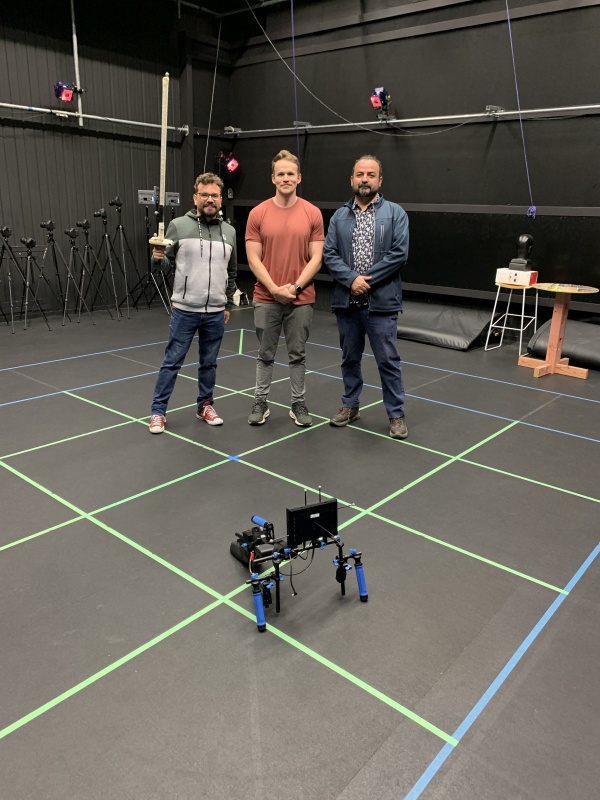
(l to r) Nicolas Olguín Aguilera, Lee Jackson, Senior Technician at AUT, and Arturo David Quezada at AUT’s Motion Capture Lab
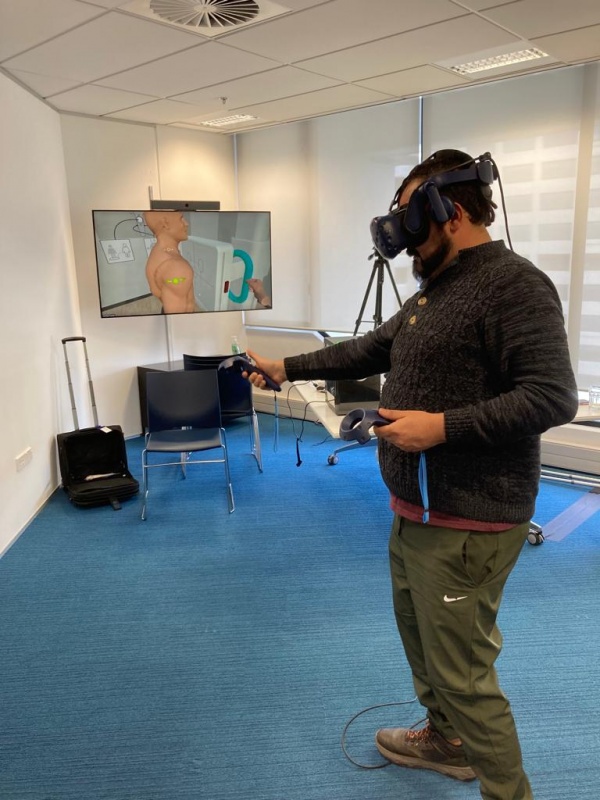
Arturo testing Virtual Medical Coaching’s radiography simulation at ENZ’s Auckland office
-
Allocation priorities for student visa applications
Immigration New Zealand (INZ) has changed the way they allocate international student visa applications from students in New Zealand, so they have more flexibility and can process these applications more efficiently during the summer processing peak.
INZ’s allocation priorities change from time to time to reflect current demands and will be posted on their website. You can view these allocation priorities here.
Tuition fee receipt reminder
When a student is in New Zealand (onshore) and submits an application for a student visa, it is a requirement to provide a tuition fee receipt with the application at the time of submission.
The approval in principle process is not available for students who are in New Zealand. Any onshore application should include evidence a student:
- has paid their tuition fees in full for one year or one programme (whichever is shorter); or
- that they are exempt from paying tuition fees and their education provider has confirmed this.
If the receipt is not provided with the application, then it has an impact on the processing and the application takes longer to be processed. For more information, you can find INZ's Student visa application information sheet for continuing international students here.
International education data
Every year, INZ publish data on the offshore student visa approval rates and application volumes for education agents by market. They also publish the overseas student visa application decision data broken down by country.
Updated data for 2024 has now been published: View this data here
-
New postgraduate course in international education launched
The first course starts on 16 November 2015, and finishes on 12 February 2016.
E-News caught up with course co-lecturer, Chris Beard, on the development of the course.
What students did you have in mind when developing the course?
This course will assist international programme managers, principals, directors of study, ministry officials, teachers and lecturers who deal with significant numbers of international students and student support professionals. It provides an introduction to international developments in international education, key concepts with application to local contexts, fundamentals of intercultural communication and critical reflection on practice.
How is the course the structured?
International Education is an online 15 point course that can be taken as part of VUW’s Masters in Education (180 points) with options to complete a Postgraduate Certificate (60 points) and Postgraduate Diploma (120 points).
VUW’s School of Education has excellent online courses which can be taken alongside International Education to complete these qualifications. Such courses include: Educational Leadership, Research Methods, Teaching Linguistically Diverse Students and Effective Mentoring and Coaching. More information can be found on our website here.
Is the course delivered solely online?
The course is delivered online and it is possible to complete a postgraduate qualification online. Other blended, on-campus courses are also available to those who prefer a face-to-face style of learning.
What are your expectations for enrolments this year?
Our surveying suggests there’s good demand for a course of this kind, and we’re hoping for around a dozen enrolments in the first cohort. A component of the course includes discussion on an online blog, which enables participants to draw on their professional experience and explore theory-to-practice.
When do you expect your first graduate?
The first graduates (postgraduate diploma and certificate) will potentially finish at the end of 2016 depending on whether students are full time or part time.
Are there similar courses in other parts of the world that have been useful models for the development of this course?
Points of reference have included Lesley University’s Master of International Higher Education and Intercultural Relations (US), University of Sydney’s MEd (International Education) and SIT Graduate Institute’s (US) MA (International Education).
What are this course’s points of difference to others around the world?
The uniqueness of this course is that it is tailored for educators, officials and professionals whose work depends on or is shaped by international education. It is designed to aid critical enquiry and evidence-based practice in an emerging field that is of increasing relevance to schools and tertiary education providers.
A copy of the flyer for the International Education course can be found here.
More information on the course can be found on the VUW website here.
If you have any enquiries about the course please contact:
Chris Beard Chris.Beard@vuw.ac.nz
or
Dr Stephanie Doyle Stephanie.Doyle@vuw.ac.nz