Search
Showing 10 of 7351 results
-
Winners of KIWI Challenge announced
This year was the first where university students were able to enter a new category alongside the schools' challenge.
The winning teams from Petra Christian University and USG Education headed off strong competition from eight other finalists, drawing praise from the judges for their solutions to support youth-led Small and Medium Enterprises (SMEs).
Finalists presented to a panel of judges from University of Otago – Ōtākou Whakaihu Waka and Education New Zealand Manapou ki te Ao (ENZ), who were cohosting the initiative.
Both winning teams received a voucher valued at 10,000,000 Indonesian Rupiah (approximately 1,000NZD) as well as virtual internships from the University of Otago – Ōtākou Whakaihu Waka commencing in semester one, 2025.
Tech-led solutions
A team from Petra Christian University developed an app ‘Partify’ which connects emerging small businesses and keen part-time workers. Businesses post part-time jobs, and workers swipe to find flexible gigs nearby, with AI matching candidates based on skills, location, and availability.

Partify university winner – ENZ market manager Naluri Bella and University of Otago Regional Market Manager Sarah Ewing present the award for First Place in the University category to team members from Petra Christian University for their app ‘Partify’.
In the high school category, a team from USG Education took the top prize with ‘LAW4MSME’, a platform allowing small businesses to access legal information and advice.
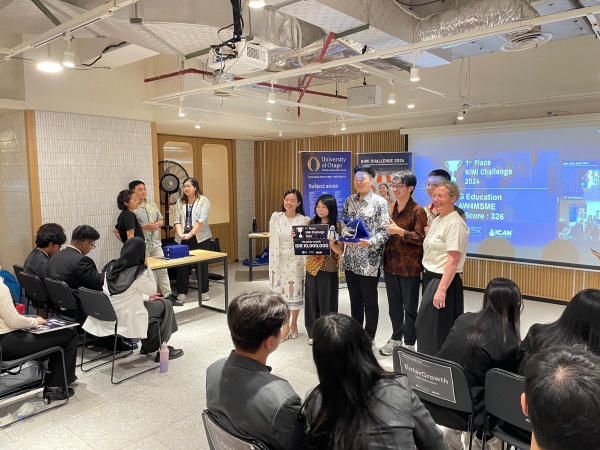
LAW4MSME High school winner - ENZ market manager Naluri Bella and University of Otago Regional Market Manager Sarah Ewing present the award for First Place in the University category to team members from USG Education for their platform “LAW4MSME’.
Explaining the group’s business idea, team leader for LAW4MSME, David Francis said the students found that Indonesian youth-led SMEs lack knowledge of the laws and regulations needed to run their businesses.
“To address this, we developed an AI bot that educates SME owners on these regulations, helping them navigate legal requirements more effectively,” David said.
The KIWI Challenge competition aims to inspire youth across Indonesia to engage in entrepreneurial activities and help resolve societal issues. Over the five years the competition has run, 1000 Indonesian youth have participated. This year, Education New Zealand Manapou ki te Ao (ENZ) partnered with University of Otago to co-host the initiative.
This year’s competition included 49 teams with a total of 221 student participants.
Mentorship key
Mentorship is a key element of the competition. The finalists attended a workshop run by Associate Professor Dr Conor O’Kane, Head of the Bachelor of Entrepreneurship programme at Otago Business School. This assisted entrants to develop their ideas and refine business plans.
ENZ Acting General Manager International Ben Burrowes said he’s delighted to see the continued development of the KIWI Challenge.
“Inviting university students for the first time has given us the opportunity to include a whole new cohort of talented young entrepreneurs, and we have been very impressed with the quality and creativity of their submissions,” Ben said.
“The competition has also benefitted from the enthusiasm and expertise of our colleagues at the University of Otago, and we are grateful for their willingness to partner with us for the KIWI challenge’s fifth year.”
Dr O’Kane said it was inspiring to witness the quality of entrepreneurial thinking among Indonesian students.
“These students have very bright futures. The concepts and programmes the finalists presented were remarkable and captured the impressive ability of the teams to identify tangible business problems and visualise and communicate a solution to these challenges,” Dr O’Kane said.
-
Around the world in five
UK
ELT sector concerns over rising agent costs
English language training institutions have voiced concerns that the rising commission rates of education agents are making it unsustainable for schools to pay.
GLOBAL
Bilingual education – a competitive advantage
Offering students a bilingual education could be key to improving access to higher education, provide opportunities to study abroad and improve future job prospects in an increasingly globalised world.
SOUTH KOREA
Fourth straight year of strong international student growth
Enrolments from Viet Nam are a strong factor in South Korea’s overall international student growth of nearly 70 percent since 2014.
BRAZIL
EMI courses in Brazil grow to more than 1,000
A growing number of higher education institutions in Brazil are recognising the importance of offering English as Medium of Instruction courses, with the number of EMI courses rising from 671 in 2016 to over 1,000 in 2018.
CHINA
The consolidation of private higher education
With more than 740 private higher education institutions in China, and thousands of private vocational schools, China’s fragmented private higher education industry is expected to undergo a wave of consolidation over the next decade.
-
Online student visas save time
The Immigration New Zealand service allows students to apply for their student visa, pay application fees and upload documents online. The time savings are impressive – the very first completed online application was received at 10.41pm NZ time on 29 August from a PhD student in Italy. The application landed in the London branch 15 minutes later and received a successful decision roughly three hours after that.
Since launching Immigration ONLINE – Student, INZ has continued to develop its stability and usability and is seeking to shift more students from the manual to online application channel. While the ability to apply online is currently only available to individuals, the “Apply on Behalf” capability will be added from mid-2015, allowing agents and advisors to use the platform.
For more information, please see: http://www.immigration.govt.nz/migrant/stream/study/application/default.htm
-
Student Ambassadors build global citizenship skills
Since it was set up in 2021, the programme has involved around 85 secondary and 50 tertiary students in six participating regions – Northland, Auckland, Tauranga and Western Bay of Plenty, Hawkes Bay, Whanganui and Wellington. Northland acted as national coordinator.
“International students can sometimes find it difficult to connect with locals, make friends or venture outside their campus,” says Sahinde Pala, GM Sector Services at Education New Zealand Manapou ki te Ao (ENZ).
“Language and cultural barriers, hesitation to meet new people, lack of knowledge of opportunities off campus, or budget constraints – many factors can play a part. The emergence of Covid-19 and lockdowns made it even more important to address these challenges, and so we worked with a range of people, including regional partners and Welcoming Communities, to develop the student ambassador programme.”
The programme has developed differently in each region, but with the same shared goals. Another common factor has been the training provided for student ambassadors – the opportunity to complete a New Zealand Global Competence certificate, training in social media, and specially tailored training provided by ISANA NZ.
“Student ambassadors are bridgebuilders and leaders, who create opportunities for students from different cultures to form relationships and learn about each other,” Ms Pala says.
“The ambassadors themselves also gain from the programme, by developing their understanding of cultural differences and learning new skills and strategies that are valued by employers. And regional communities benefit when international students feel valued and connected – they are more likely to remain in the area or recommend it to others.”
The ISANA NZ Student Ambassador Training explores intercultural concepts in an interactive and engaging format that can be run online or in-person. Participants are then able to apply their learning to develop activities and events that help students to connect with the wider community. Debrief sessions towards the close of a programme cycle support students to reflect on what they have learned from being a student ambassador.
“I enjoyed learning about how communication works between different cultures, going over cultural values and how some are visible and invisible and learning top tips to help me improve as an ambassador” – student feedback.
“Our Northland student ambassadors joined the ISANA workshop as a group of excited students interested in global citizenship and finished as a tight knit group of inter-cultural leaders in the school community. They learnt to work together, giving everyone a chance to contribute and respecting each other’s perspectives. The communication and planning skills honed in the workshop, enabled them to run a large-scale ‘Matariki Kai Festival’ event, introducing a range of food from cultures across the school to the students.” – Jo Lees, National Ambassador Coordinator and Project Manager at Study Northland.
Other activities sparked by the programme in different parts of New Zealand have included a Kiwi Cooking Class, an Auckland Weekly video series, international languages week events and Matariki events organised and run by the ambassadors, diplomatic events attended by ambassadors from other countries and an International Students Issues Panel Discussion.
One of the student ambassadors was recently profiled by ENZ: Michael Ren – Award-winning app designer eyes a future in tech | Education New Zealand (enz.govt.nz)
Several regions have indicated they hope to continue their student ambassador programme beyond 2022: Northland, Tauranga and Hawke’s Bay.
“This student ambassador training is much needed, not only for the international education sector but also across wider communities in New Zealand. In fact, I think everyone could benefit from this training if they have not received similar training before in intercultural communications and leadership,” says Wenhua Yang, Regional Manager at Learning Hawkes Bay.
To learn more about the ISANA NZ Student Ambassador Training, please contact: caroline.stevenson@isana.nz
- Manager Agents Position Description
-
New Zealand highlights global education links at major Indian conference
As the International Academic Partner, ENZ helped showcase New Zealand as a trusted education partner and destination. The event brought together education leaders, policymakers, and experts to discuss the future of learning, skills, and global collaboration.
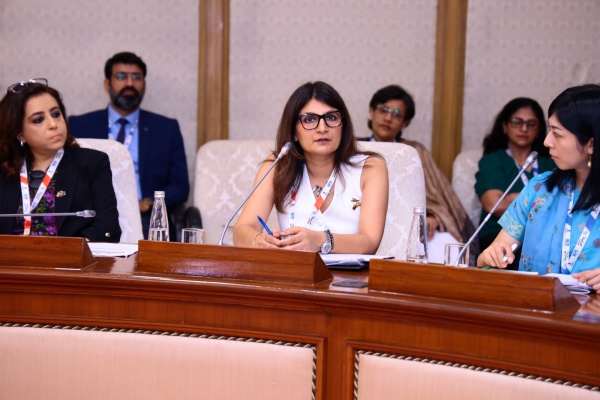
Jugnu Roy (pictured centre) representing ENZ at the SEPC roundtable on Global Academic Mobility.
ENZ’s Director of Engagement for India and East Asia, Jugnu Roy, joined panel discussions and roundtables on global academic mobility and faculty exchange. These sessions were a chance to share New Zealand’s approach to student-focused, future-ready education and explore new opportunities for partnerships with India.
Director of Engagement for India and East Asia, Jugnu Roy, said India is a key strategic partner for New Zealand’s international education sector, and that continued engagement is essential to strengthening that relationship.
“Participating in forums like this allows us to engage deeply on shared goals and support India’s ambitions through meaningful academic cooperation,” she said.
-
Proposed changes to Export Education Levy
Currently, international education providers pay a flat fee of $185 per provider and 0.45 per cent of international tuition fee revenues.
The Ministry of Education proposes to reduce the percentage rate and remove the flat fee component, so providers pay less. The Ministry also proposes to allocate some funds from the EEL on a variety of additional activities over the next few years – with an initial focus on initiatives to improve the wellbeing and safety of international students in New Zealand.
You can find more information as well as the full version of the EEL consultation discussion document on the Ministry’s website.
The Ministry welcomes any input on the proposed changes by 8 September by email, post or via its EEL online survey.
-
From the CE: Rebuilding and reshaping our sector
The Recovery Plan for International Education, released in late July, is a plan to support the rebuild, recovery and reset of the international education sector with an eye on the future. It’s made up of three concurrent workstreams to stabilise, strengthen and transform international education.
Since its release, Education New Zealand, with other government agencies, has been carrying out a short, focused engagement on the plan with our peak bodies and providers.
So far, we’ve met with representatives from groups, including schools, some PTEs, parts of the university sector, ITPs and English language sectors, as well as the New Zealand International Students’ Association and EdTech NZ. And further meetings are scheduled.
We have heard from you on a variety of topics. Naturally, the most common concern is around student re-entry. Other topics focused on encouraging cross-sector collaboration and hearing student voices as we rebuild our sector. We also know that each part of the sector has its own unique challenges and needs.
These conversations are only the beginning of our engagement with you. There will be many more opportunities to discuss and collaborate as part of the strengthening and transforming workstreams of the Plan, and on the Government’s vision for international education.
Next, the Ministry of Education and ENZ will co-host deep-dive workshops with sub-sectors on both the Recovery Plan and issues particular to them.
You can read more on the overall Recovery Plan on ENZ’s website: Recovery Plan for International Education. This page will continue to be updated as our work develops.
Here at ENZ, we have realigned our activities and resources to implement the Recovery Plan. We have launched our new business plan for 2020/2021, called Building a New Future.
There are major areas for us to focus on, including the retention of as many students already in New Zealand as possible, early re-entry of students, renewing and reshaping future options (such as different modes of delivery and student decision-making), and creating deeper understanding of the benefits of international education, both in New Zealand and globally.
I’d like to reinforce that throughout this change, the goals of New Zealand’s International Education Strategy – an excellent education and student experience, sustainable growth, and global citizens – remain our beacon on the hill.
Finally, I’d like to thank you for meeting with us over what continues to be an incredibly difficult time. We value your honest feedback and look forward to continuing to work with you to rebuild and reshape international education,
Ehara taku toa I te toa takitahi, engari he toa takitini
My strength is not that of a single warrior but that of many.
Ngā mihi,
Grant McPherson
Chief Executive Education New Zealand Manapou ki te Ao
- Schools
-
ENZ reflections on NZIEC KI TUA 2024
ENZ’s Acting Director International, Ben Burrowes summed his experience up succinctly and said....

“As always, I found the conference to be an awesome opportunity to connect face-to-face with my colleagues and friends across the sector. It was hugely helpful to discuss (in-person) their areas of focus and how we can continue to align ENZ’s International team’s work alongside them”.
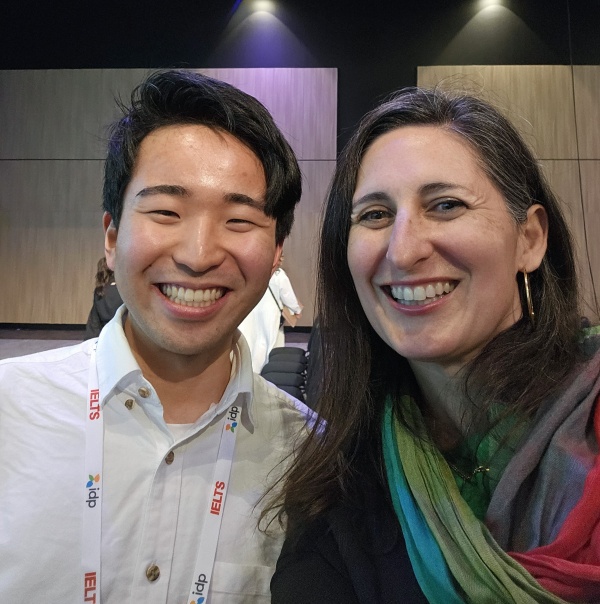
General Manager Sector Services Sahinde Pala with international student Ibuki Nishida.
General Manager Sector Services, Sahinde Pala, said....
“It was wonderful to see so many colleagues from across the global international education sector connecting with each other over the 2 ½ days of NZIEC KI TUA. Attendees and speakers brought a global approach to thoughts and reflections and was a reminder of the environment within which we’re working. The extended networking breaks saw much cross-sector collaboration and sharing of good practice.
“The attendance and speech by the President of India, Smt. Droupadi Murmu, was a great honour – the President reflected on the importance of international education for communities as well as the individual, how transformative education has been for her during her life, and the value of Indian international students in NZ,” said Sahinde.
“Dr Fanta Aw was a crowd favourite, with her reflections on the complimentary nature of international education alongside domestic education and the opportunity for us to collaborate globally given the societal value it brings to our communities and countries.
“My absolute highlight is always the student speakers, who threw down the wero (challenge) to delegates to keep focused on the importance of striving to deliver an excellent student experience,” Sahinde added.
I’m really proud of the whole ENZ whānau who collaborated to put on yet another successful NZIEC KI TUA”.
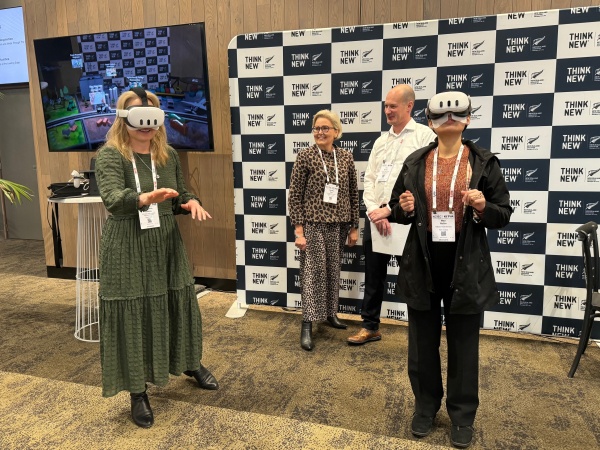
ENZ’s General Manager Sector Engagement, Innovation and Growth, Wendy Kerr (pictured second from left) said that attending NZIEC was incredibly energising.
“I was impressed by our teams combined approach to developing new areas for high value growth. Adrian Hirst, ENZ’s Director of Marketing, spoke passionately about the challenge of standing out in the competitive international education market. His words resonated with me: “In a sea of competing destinations, it’s increasingly difficult to stand out.” It really made me think about the importance of creating a unique identity that speaks to prospective students and their families," said Wendy.
"Christina Gomes, our Director of Innovation and Growth, shared an exciting framework that aligns global demand with New Zealand’s strengths. I was particularly drawn to her insights on the agri-food sector, which highlighted New Zealand's expertise and global reputation. This provides an anchor to develop our unique identity and secure additional learners by targeting a new segment".
Wendy added, "Tim Brown introduced a new “mixed reality” tool designed to immerse prospective students in the New Zealand agri-food systems career opportunities and study experience".
"I left the conference feeling energised and hopeful about these initiatives, knowing they could accelerate how we attract additional international students and showcase the incredible opportunities that New Zealand offers. It was a reminder of the exciting future ahead for our education sector!"