Search
Showing 10 of 7351 results
- NAFSA 1
- Card 3
- PMSLA Programs final
- 2020 Edified Energiser Grants Promo Tile v2
- Studyinnewzealand ThinkNEW
- Blog
-
Mayoral events provide vibrant welcomes to students in their regions
Last month we shared some of the wonderful images that New Zealand schools, universities, PTEs, Te Pūkenga and English Language Schools shared with ENZ as they welcomed their new students for 2024. This month we are sharing details and images from the Mayoral welcomes that some of our regions have held for their visiting international students.
Thank you for adding to our diversity and vibrancy!
More than 40 international students were greeted by Whanganui District Council Mayor, Andrew Tripe, at a special Mayoral welcome to the community on Monday 8 April.
Speaking to the students from countries including Brazil, South Korea, Japan, Germany, China, India Indonesia, Thailand, and Viet Nam, the Mayor thanked them for choosing Whanganui and adding to the “diversity and vibrancy of our community”.
The students attending had enrolled in both secondary schools and tertiary institutions in the district such as Whanganui High School, UCOL Whanganui and the New Zealand International Commercial Pilot Academy.
Formal greeting over, the Mayor was rushed by students seeking a special ‘selfie moment’ to share with families and social media.
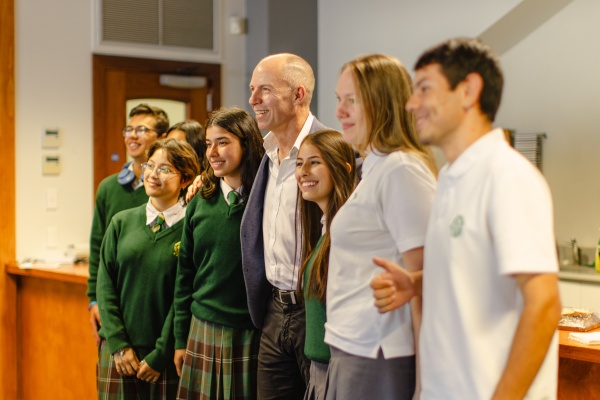
A group of Brazilian international students attending Whanganui High School take up the opportunity of a photo with the Whanganui District Council Mayor, Andrew Tripe.
Similar levels of excitement were seen in Hamilton where the Mayor of Hamilton, Paula Southgate and local performance groups welcomed approximately 250 new international students to the Waikato region. The welcome event was held at the Pā, University of Waikato and is the first welcome since the Covid-19 pandemic put these events on hold.
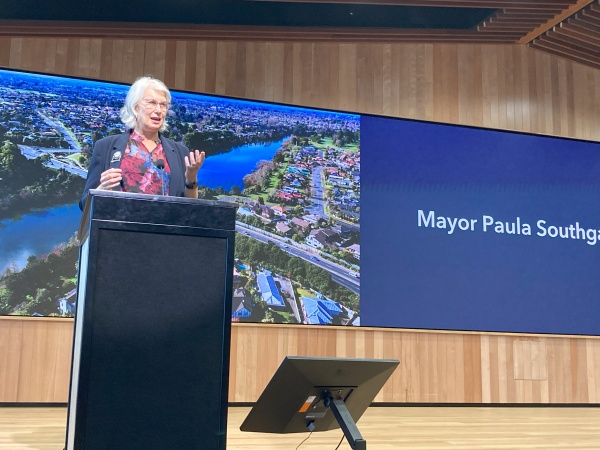
Mayor Paula Southgate providing the official welcome to the Waikato’s approximately 250 international students.
Faymie Li, Education New Zealand Manapou ki te Ao’s Senior Advisor Student Experience said, “I was deeply honoured to witness this significant event and see how we demonstrate manaakitanga to our international students.
“The diverse cultures we embrace in Aotearoa is truly something to cherish and celebrate. It was wonderful to see so many school students attending the ceremony, offering them a unique student experience they don't typically encounter.”
Jiabao Zhao (Boa), a former international student who completed a Bachelor of Management Studies with First Class Honours at the University of Waikato, shared a message of encouragement with the students. Boa’s advice for new students was: to study hard but also “talk to and meet students from outside your country. It’s easy to remain in your comfort zone but that is not the point of studying abroad. Network and build your presence”.
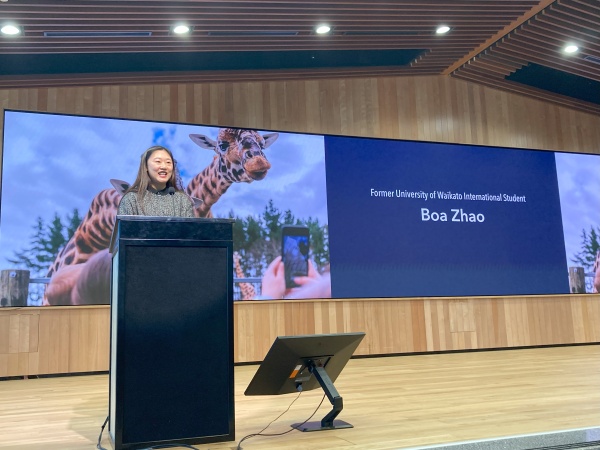
Former University of Waikato International Student sharing a message of encouragement to the new international students.
She also reminded students to take care of both their physical and mental health. There will be challenges but also great opportunities, and her own study and career journey is testament to that. She now works as an International Sales Operation Executive at Prolife Foods Ltd in Hamilton.
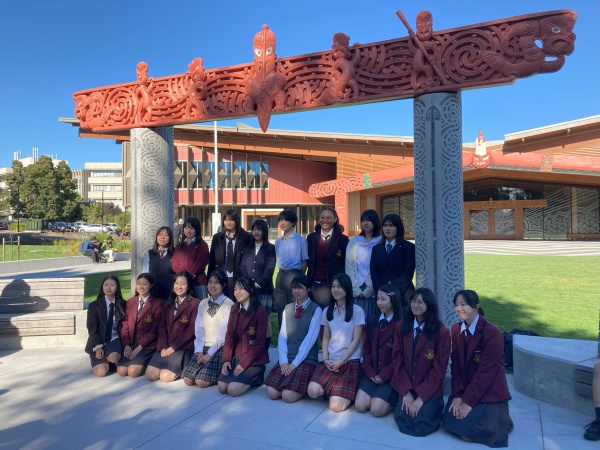
A handful of the 250 students who travelled to the Pā at the University of Waikato, for the international student welcome.
Also in March, nearly 100 international students received a fine welcome centered on the theme of connection, by Timaru District Mayor, Nigel Bowen. The Timaru District will be home to students from Japan, China, Germany, Thailand, South Korean, Hong Kong, Macau, Fiji, Philippines, Brazil and Poland, and more over the course of this year. You can read about this welcome in the Stuff article here - Nearly 100 international students welcomed to Timaru | Stuff.
-
From the Acting Chief Executive: A lot to be proud of
Tēnā koutou katoa
Earlier this month a New Zealand business publication ran a column that challenged the role of international education in delivering our Government’s objective of double the export earnings. As you might expect, I could not let the challenge go unanswered. You can read the full response on the ENZ website, but I thought there was merit in highlighting a couple of the key points along with some of the excerpts as they provide a good summary of the state of international education in New Zealand today.
The first point I made in my response confirmed that students are returning. We recently published the Ministry of Education’s enrolment data for 2023 (part-year) which firmly backed this up.
“Students are returning to New Zealand. In the first eight months of 2023 international student enrolments topped 59,000 with all sectors experiencing growth except wānanga. Accepting that it is from a low base, comparing 2023 to 2022, Universities have bounced back strongly reporting a 15% increase from 24,040 to 27,535.“
“In the first eight months of 2023 English Language Schools saw the greatest percentage increase in international enrolments, increasing by 347% from 1,565 to 7,001. Schools reported a 114% increase from 5,925 to 12,662. NZIST Te Pūkenga, a 32% increase from 4,955 to 6,560 and Private Training Establishments (funded and unfunded), a 13% increase from 5,000 to 5,671.”
Of these enrolments, students from India continue to provide the second highest number of enrolments in New Zealand. In recognition of our valued partnership, I am delighted to announce that the Republic of India will headline as Country of Honour at NZIEC KI TUA 2024.
The designation of Country of Honour at NZIEC KI TUA celebrates our international education connections with partner countries and I am pleased that we can celebrate the growing education connections between our two countries in this way. You can read more about this announcement along with a call for speakers in our E-News story here.
The second point from my response that I would like to reiterate is that: We have a plan and the sector is working together to deliver.
I highlighted that “The New Zealand International Education Strategy, revised in 2022, sets out a multi-year action plan to develop a high-value, resilient and innovative education sector for both international and domestic students. Further the new Government’s manifesto made clear their vision and priorities for international education. “
“I can also assure you that the sector is working together to achieve its goals, that all eight universities participated in a recent ENZ-led delegation to India, is just one example of the co-operation.”
It was very timely that I then received a wonderful note of appreciation from a Dunedin City Councillor this week for the work of the many people within ENZ and the sector involved with the recent Korean agent famil. This was further evidence that we are working collaboratively as a sector and delivering benefits to the international education ecosystem and our regions.
Councillor Christine Garey said “The input from ENZ has helped over the years to establish and maintain an international education ecosystem in the city. It’s encouraged transitions between school and tertiary education and supported a strong growth agenda with increased higher quality students staying longer.
However, of particular benefit has been access to inbound/outbound famils and delegations. ENZ’s support in bringing agents to our city has been especially valuable and allowed us to showcase what Ōtepoti, Dunedin has to offer. There is no replacement for this in person experience and we look forward to these visits continuing to rebuild relationships globally.
Study Dunedin and the international education ecosystem are in good heart here in Ōtepoti Dunedin, working collaboratively and effectively. We look forward to ENZ’s continuing support and especially, we warmly look forward to welcoming future famils to our city.”
Keep up the great work, everyone.
He manawa tītī
Endurance is a virtue that cannot be understated.
Dr Linda Sissons
Acting Chief Executive
- Whanganui
- PMSA 18 19 R1 Awardee list website