Search
Showing 10 of 7351 results
-
Innovation at Festival for the Future
This annual event showcases leadership and innovation, and seeks to amplify rangatahi and minority voices, to demonstrate leadership around topics such as climate action, diversity and inclusion, and sustainable development.
More than 30 speakers took part, attracting more than 1,000 participants across New Zealand, as well as online participants around the world.
Education New Zealand Manapou ki te Ao (ENZ) promoted the Prime Minister's Scholarships for Asia and Latin America and ENZ's mahi in global citizenship more broadly.
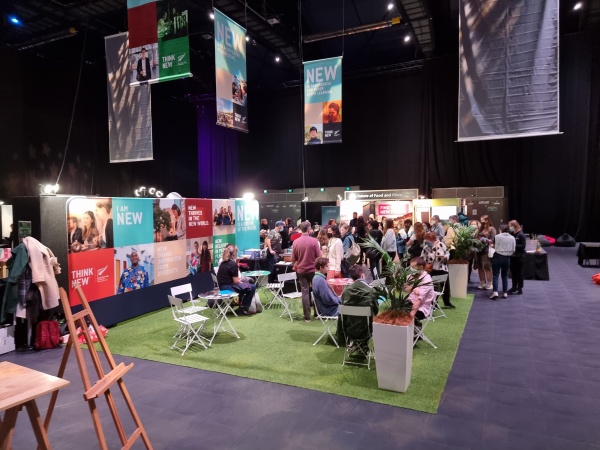
ENZ's space on the expo floor at Festival for the Future
Former Prime Minister’s Scholar for Asia, Young New Zealander of the Year, and co-founder of Aotearoa’s first Māori owned electricity company, Ezra Hirawani, was one of the opening keynote speakers. Ezra spoke about the importance of global citizenship, what it means for him as a Māori New Zealander and how it can be used to address the issues of our lifetime.
In addition to partnering with Inspiring Stories Trust as a sponsor of the Festival, ENZ supported the Global Impact Award. Courtney Davies, a young New Zealander leading environmental programmes for young people across New Zealand and Africa, with a focus on sustainable change and action, received this year’s award.
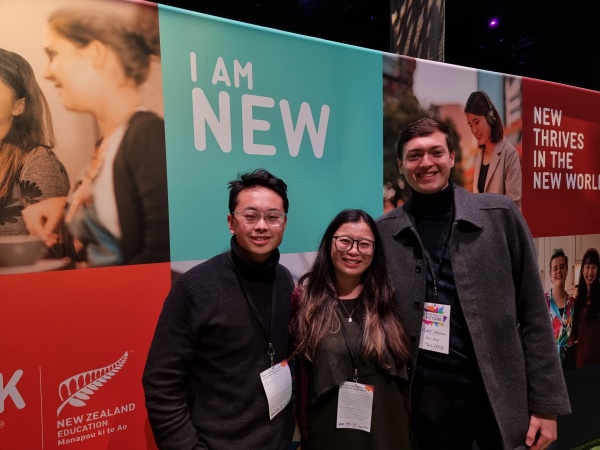
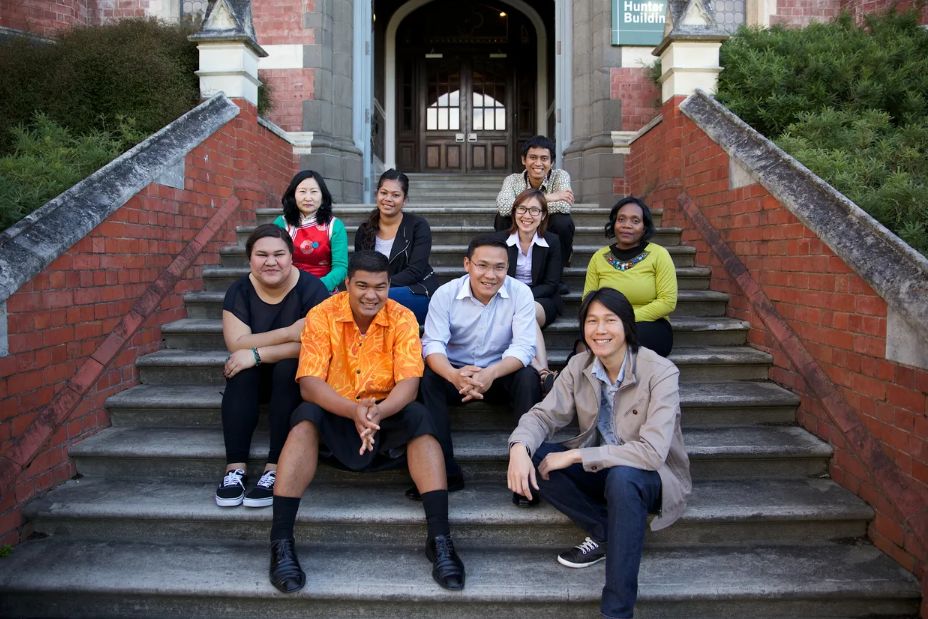
Left to right: Allan Chan, Michelle Chen and Kurt Weston - three of the Prime Minister's Scholarship alumni who joined us at Festival for the Future to share their scholarship experience with others.
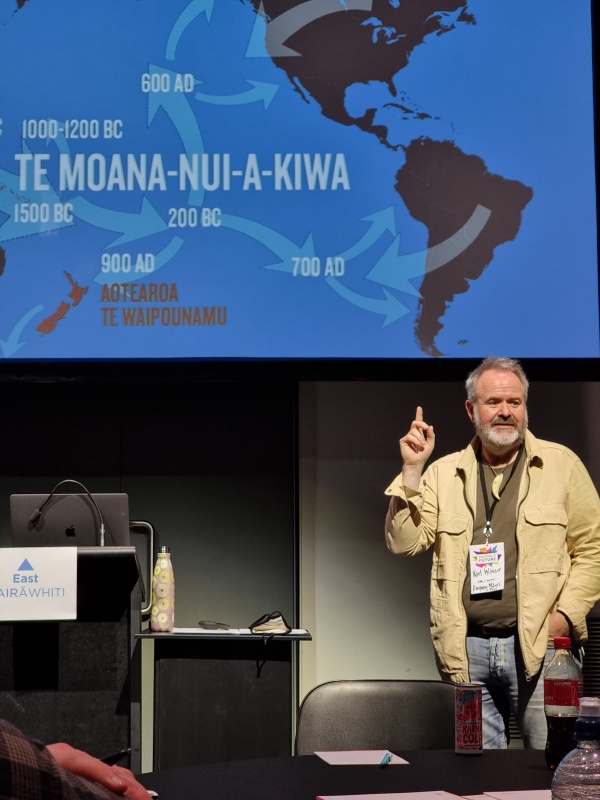
ENZ's Karl Wixon delivers Hono-ki-te-Ao - Global Citizenship from a te ao Māori perspective, ENZ's workshop at Festival for the Future. Throughout the Festival weekend, Karl ran the workshop four times to packed out audiences.
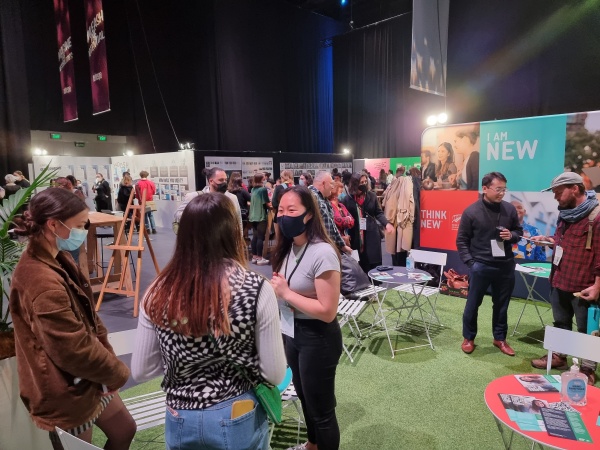
ENZ's Jordana Zhu (centre) and former Prime Minister's Scholar Allan Chan (centre right) engage with attendees at ENZ's expo space.
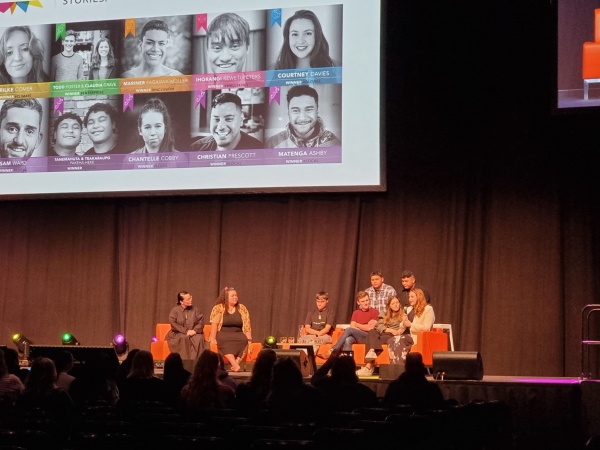
Courtney Davies (right), winner of the 2022 Global Impact Award, speaks on the main stage during a panel discussion on the final day of the Festival.
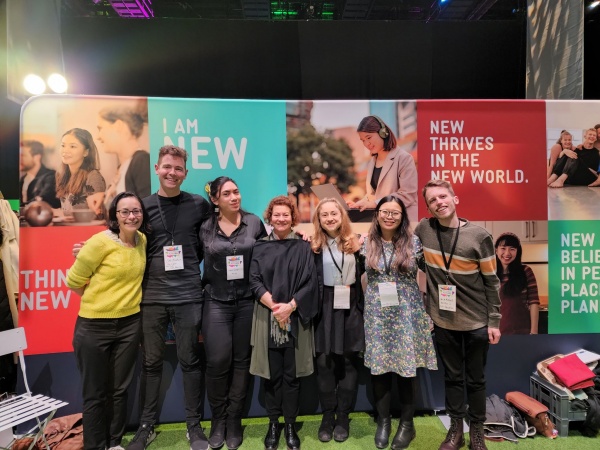
Some of ENZ's wider team at the Festival. Left to right: Carla Rey Vasquez, Seb Klinkum, Nera Leitupo, Tereska Thornton, Marina Wilmerstadt, Michelle Chen and Nick McNeil.
- 2526 041 OIA Request Documents related to the International Education Growth Plan
- PMSLA 2018 19 Round 2 Website list of awardees Latin America2
- Rachael Tuwhangai photo 1 1
- GOE
- Image 3
- MyMahi
-
Education New Zealand Manapou ki te Ao welcomes new Board Chair
The Minister of Education, Jan Tinetti, confirmed two new appointments to the Board of Education New Zealand Manapou ki te Ao on 17 March.
Tracey Bridges has been appointed Chair for a three-year term from 1 April 2023. She succeeds Steve Maharey who will finish his term at the end of this month.
Read the Minister’s announcement here.
In addition, two existing Board members have been reappointed. Dr Linda Sissons for a third term until 15 March 2024 and Daniel Wilson to a three-year term.
Tracey Bridges has knowledge of regional economic development, and expertise in strategy, risk, and reputation management, and in social marketing. She is Chair of the Wellington Regional Economic Development Agency Limited (WellingtonNZ), co-founder of The Good Registry and sets on the Boards of Sky Stadium, Whānau Āwhina Plunket, the Wellfed NZ Trust and the Digital Media Trust.
Dr Dona (Therese) Arseneau has been appointed as a member for a three-year term from 1 April 2023. Dr Arseneau also has knowledge of economic development including international education’s contribution to regional economic development, and governance experience in the tertiary sector at the Ara Institute and the Open Polytechnic. She previously chaired Regenerate Christchurch and Enterprise North Canterbury.
-
New Zealand – Korea digital student exchange
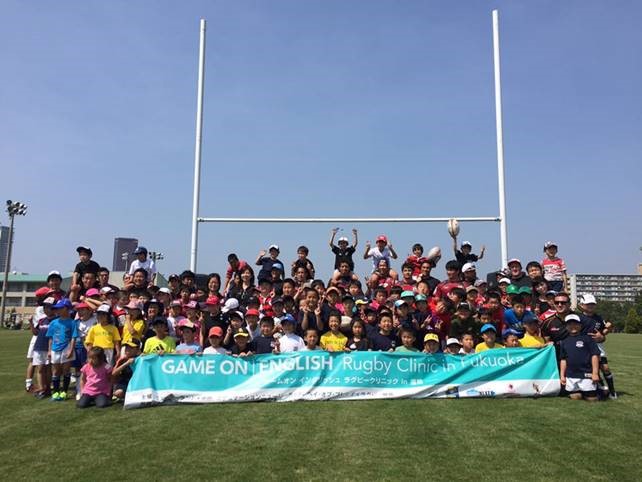
Education New Zealand Manapou ki te Ao (ENZ) again worked in partnership with two education organisations in South Korea – Gangwon International Education Institute and Seoul Metropolitan Office of Education – as well as with NZ-based Learn English Live, to deliver the programme.
The programme offers opportunities for Korean 12–14-year-olds, and for New Zealand students, many from low-decile schools, to develop their language skills and engage in cross-cultural relationships with their international peers. This is done through Zoom sessions using quizzes and other interactive activities, where students can share aspects of their life. Facilitated, student-led discussions in small groups are another key feature of the programme.
In all, 654 students from 12 New Zealand schools and 16 South Korean schools participated in the programme, attending sessions once a week for seven weeks – 102 sessions in total.
Students who participated in the programme represented the following schools across New Zealand:
Sylvia Park School, Rotorua Intermediate, Raumati Beach School, Finlayson Park School, Tauranga Boys College, Taupo Intermediate, Cambridge High School, Waimea Intermediate, Tokoroa Intermediate, Solway College, Rowandale Intermediate, Auckland Grammar.
Each school assigned at least one of their classes to take part in this programme, with teachers recommending the initiative to their colleagues for future sessions.
Within the Seoul and Gangwon regions in South Korea the following schools took part:
Seoul Schools: Dongguk Middle School, Wonmyoung Elementary School, Nonhyun Elementary School, Sinseo Middle School, Soongeui Elementary School, Topsan Elementary School, Gajaeul Elementary School, Seoul Kyodong Elementary School, Hansan Elementary School, Seoul Anpyeong Elementary School, Singa Elementary School, Buksung Elementary School, Songwon Elementary School.
Gangwon Schools: Gangreung Haeram Middle School Buron Middle School Namchuncheon Girls' Middle School.
A total of 339 children from South Korea were digitally connected with children in New Zealand.
The 2022 programme has provided many positive benefits for schools, teachers, children, and the wider community both in New Zealand and South Korea. In a world where in-person exchange and cultural opportunities remain constrained, the programme has continued to enable school children to connect with their international peers and develop long-term connections.
Feedback from teachers in New Zealand highlighted the enthusiasm that children in the classroom showed towards the programme.
The incorporation of a hybrid STEM-based and cultural-based exchange model was especially welcomed and enabled the promotion of unique aspects of Māori culture, in a modern format, on the international education stage.
New Zealand teachers also gave the programme the thumbs up. Given their high workloads, they appreciated that they did not have to organise the content or facilitate the sessions, as this was taken care of by the Learn English Live (LEL) team.
The programme provided the opportunity to indirectly promote a New Zealand school education to a South Korean audience. Students there were reported to be highly engaged throughout the exchange. The ENZ team will give a presentation on the programme at the Australia International Education Conference (AIEC) in October 2022: The session will explain the programme evaluation and survey methodology and how the results are being used by ENZ and LEL to continue to enhance the digital exchange to benefit students. The presenters will also discuss how they overcame challenges relating to language barriers, as one of the main goals of the exchange is to support Korean students with learning and practising English.
Contacts for more information
New Zealand representatives attending AIEC can attend the ENZ session or contact our South Korea team to receive a copy of the presentation slides after the conference (Alanna Dick).
Know of a New Zealand school interested in the next round of NZ-Korea digital student exchange? Please contact Learn English Live (William Clarke).
- Screenshot 2026 06 09 123343