Search
Showing 10 of 7351 results
-
From the Chief Executive: Building on strong foundations
I'd like to start this pānui, my first as Chief Executive of Education New Zealand Manapou ki te Ao (ENZ), with a whakataukī: ka mua, ka muri – walking backwards into the future. It's an important reminder that we can't move forward without acknowledging our past.
I'd like to thank former Chief Executive Amanda Malu and Acting Chief Executive Dr Linda Sissons, who have helped create the strong foundations ENZ and the sector continue to build on.
I feel privileged and excited to step into the role of Chief Executive alongside such a dedicated team. We have a big mission, and I feel energised and ready to take on the challenge set out in the Government's International Education Going for Growth plan: increasing the economic value of international education for New Zealand.
ENZ exists to grow international education for New Zealand and create opportunities in partnership with the sector. We share New Zealand's story with the world and support it with teams on the ground in 15 markets who build relationships, identify emerging trends, and help connect New Zealand with prospective students. We provide market insights that help inform decision making and identify opportunities for growth. When we succeed together, the benefits flow back to providers, communities and New Zealand’s economy – more students, stronger enrolments, and international learners that increasingly choose New Zealand.
We have a clear roadmap and strong momentum behind us. In the year ended March 2026, international education made its largest contribution yet to New Zealand's economy, generating $4.85 billion in spending by international students. It's heartening to see New Zealand remain a top choice for international learners, and 87 percent of international students rate their experience here positively. I look forward to building on that success as we focus on our priority and emerging markets.
Another key focus is supporting sustainable growth across our markets. Earlier this month, we shared our updated go-to-market plans with the sector, outlining opportunities to strengthen New Zealand's position in established markets while identifying areas for growth in emerging ones. This work is critical for continuing to attract high-quality learners and building long-term success for the sector.
I was also privileged to attend a special lunch during Prime Minister Narendra Modi's recent visit to New Zealand. It was a wonderful opportunity to celebrate the growing relationship between our two countries and the cultural connections that underpin it. India remains one of New Zealand's most important international education markets, with more than 12,000 Indian students choosing to study here in 2025. The visit highlighted the strong momentum in our bilateral relationship and the exciting opportunities ahead to deepen education, research and people-to-people connections.
As we reflect on the recent Matariki season, I'm reminded how closely its themes align with the whakataukī I opened with. Matariki is a time to reflect on those who have shaped our journey, celebrate where we are today, and look ahead with intention and hope. For ENZ, it’s also a reminder of the power of international education to connect people, cultures and communities. The same stars that hold meaning here in Aotearoa are recognised by cultures around the world, reflecting the shared values of learning, connection and belonging that underpin our work. As we continue growing the sector, those connections remain at the heart of what we do.
My thanks again for the warm welcome into my new role. I'm looking forward to meeting as many of you as I can over the coming weeks and months.
Ko te manu e kai ana i te miro, nōna te ngahere; ko te manu e kai ana i te mātauranga, nōna te ao.
The bird that feeds on the miro berry owns the forest; the bird that feeds on knowledge owns the world.
Ngā mihi nui,
David Downs
Chief Executive - 1742997302031
-
Prime Minister's Scholarships for Asia help students from New Zealand and India to showcase a unique cross-cultural collaboration
The students travelled to India and for five weeks, worked with local students from Indian fashion powerhouse Pearl Academy and artisans from Kala Raksha, an NGO in Kutch, Western India. Collectively they produced a collection of garments, which reflected a philosophy from the past to everyday life. The work helped students and artisans to develop an understanding of different cultural values and ability to think creatively and collaboratively.
“We are thrilled to have 15 Prime Minister’s Scholarship recipients from Whitecliffe College visit India and take this opportunity to collaborate with Pearl Academy students in fashion and sustainability.” said David Pine, New Zealand High Commissioner to India.
“New Zealand and India hold strong education ties and the Prime Minister’s Scholarship for Asia symbolises the New Zealand government’s commitment to further strengthen bilateral ties between both countries.”
Administered by Education New Zealand | Manapou ki te Ao, the Prime Minister's Scholarships for Asia is a unique scholarship programme that enables the rich exchange of language, culture, skills and opportunities. It not only highlights New Zealand government’s commitment to help grow strong connections between young New Zealanders and Indians but fosters global citizens by inspiring students to take action on pressing issues affecting the world.
Since 2013, the Prime Minister’s Scholarship for Asia and Latin America have enabled more than 2,400 New Zealanders to broaden their horizons through life-changing learning experiences in Asia and Latin America. Applications are open until 23 April for the 2023 group scholarship round. To find out more about the Prime Minister's Scholarships for Asia and Latin America, visit our website here.
-
Around the world in five
Asia
Recruitment fairs resume at China schools
China is resuming in-person recruitment fairs for international universities, with international representatives invited to attend events in person again following the lifting of border restrictions. School education professionals highlight the importance of face-to-face interactions for Chinese families.
North America
Canada: Ontario colleges adopt new standards for programmes and supports for international students
Ontario's colleges have established a new set of standards of practice for international students, including guidelines for marketing and recruitment, education agents, and programme and service delivery, to ensure that international students have access to accurate information and support to succeed in their programmes.
South America
Brazilian outbound market booming in 2023, agents report
Brazilian agents are optimistic for the future with expectations for 2023 to be a record year in outbound travel. Strong demand for teen courses, higher-value sales, shifting requirements from parents, and emerging trends in products and destinations were noted at the ST Alphe Brazil 2023 conference.
Europe
Drastic policy changes ‘could damage’ UK sector
Stakeholders have expressed their concern that if the UK government implements significant policy changes related to post-study work and allowing students to bring their dependants, it could lead to a decrease in the number of international students in the country.
Africa
Regional framework for microcredentials to be developed
Southern African countries are developing a framework for the recognition of learning through micro credentials, with the aim of informing and guiding individual countries and institutions to develop their own country-specific frameworks.
- MAY 2023 Ed Tuari bio picture
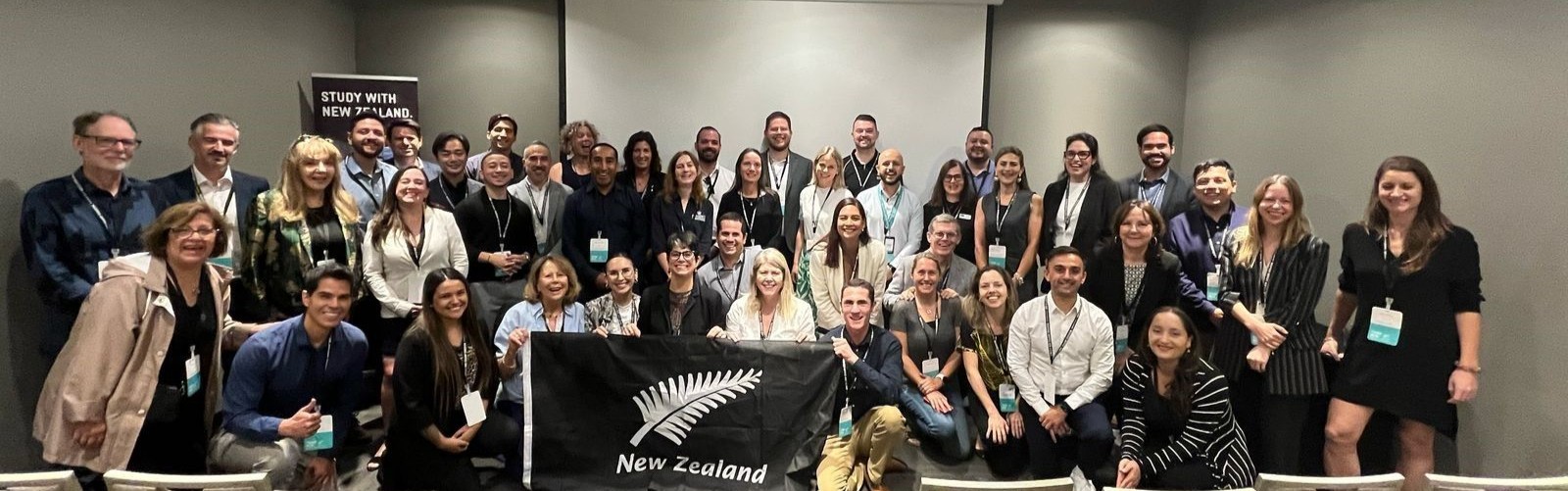
- Attendee List Santiago Agent Seminar
- WellingtonStaff 44
- Hargest
-
Matariki mā Puanga: Connecting people through learning
For many iwi, Matariki is a time to remember people who have died, celebrate the present, and look to the future with hope. For others, Puanga marks the season. Together, they show the depth and diversity of Māori knowledge and traditions.
Matariki and Puanga are special to Aotearoa New Zealand, but the stars also connect us with people around the world. The same star cluster is known as Subaru in Japan, Makaliʻi in Hawaiʻi, Mataliʻi in parts of the Pacific, and the Pleiades or Seven Sisters elsewhere. For many cultures it is linked to renewal, connection, and our relationship with the natural world.
Across our international markets, these connections continue to be celebrated. From Matariki events hosted by New Zealand embassies and partners to conversations about similar cultural traditions in countries such as Japan, India, Korea and Thailand, Matariki provides an opportunity to strengthen relationships and share stories about renewal, community and learning.
These shared values reflect the purpose of international education. Every learner who chooses Aotearoa New Zealand begins more than an academic journey. They get to know our people, places and unique bicultural identity. They also enrich our communities by sharing their own cultures, languages and perspectives. Education is a two-way exchange that builds understanding, strengthens relationships and creates lasting connections.
For Education New Zealand Manapou ki te Ao, this is the spirit of Matariki mā Puanga. Our role is not only to connect students with study opportunities. It is also to connect people, cultures and communities. Whether we celebrate in Aotearoa New Zealand or with partners overseas, we share a uniquely New Zealand story that people from many cultures can connect with.
As we celebrate Matariki mā Puanga, we are reminded that cultures may tell different stories about the stars, but many share the same hopes: to learn, to belong, to care for one another, and to build a better future together.
Mānawatia a Matariki mā Puanga — let us celebrate Matariki and Puanga, embracing the connections that unite us across cultures, communities and the world.
- Around the world in 17