Search
Showing 10 of 7351 results
- 164834 library 0156 web version 1024px
- Kiwi cup 830
- Japan story 1
- INZ Flyer Student print May16
- ENZ Agents London Statement
-
New Zealand Global Competence Certificate programme proves a hit
What is New Zealand’s Global Competence Certificate programme?
The customised cultural exchange programme, which started as a pilot partnership last year between New Zealand’s international education agency, Education New Zealand Manapou ki te Ao and AFS Intercultural Programs, Inc. has proved so successful it is now being extended and taken up by schools and tertiary institutions around the country, connecting them with students in Asia and Latin America.
The “Kiwi way” has much to offer the world, and international education has much to offer New Zealanders at a time the world needs people with cross-cultural competencies. The New Zealand Global Competence Certificate, delivered through Massey University, develops cultural self-awareness, emotional resilience, and build bridges across cultures. It also piques the interest of students offshore in coming to New Zealand in better times.
The programme delivers animated videos, quizzes, assignments, and weekly live facilitated dialogue sessions for learners to talk with each other online in real time and learn about life from perspectives other than their own.
What have students been saying about the NZGCC programme?
“Not only have I learned to become a better communicator, empathiser, and global citizen, but also how a group of like-minded individuals can come together to form something bigger,” says Jack Hittle, of Northland’s Springbank School.
“I found the programme life-changing,” says Vaagisha Kanwar, a Year 11 student at Indus International School in Bangalore, India, who connected with the Northland students. “We learned about conflict, empathy, inequality, different communication styles, how different people adapt to new situations, and about suspending judgement. I know that I’ll use the skills we’ve learned for the rest of my life, not just when I travel abroad but also in daily life.”
"You see the way a culture greets each other or the way they dress, but then there are things like relationships, gender roles, and health,” says Whanganui Girls College student Tilda Donson.
What have educators been saying about the NZGCC programme?
Whanganui Girls College Principal Sharon Steer is delighted with the NZGCC programme, which she says will help students build their understanding of global cultures, and other critical “soft” skills which will prepare them for life as they enter the workforce.
“An important part of our curriculum is developing strong communication skills and setting our students up for success in the workplace. The NZGCC programme will add another dimension to our lessons by teaching our students how to develop meaningful relationships with one another despite language and cultural differences.”
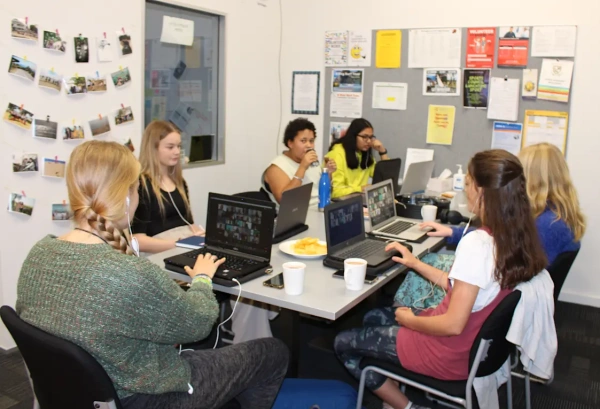
Educators say that with the borders closed, the programme now forms an important part of the reshaped international education experience.
“It is so important that our students don’t miss out on the enriching life skills that are gained when we interact and connect with people from around the globe,” says Whangarei Girls High School International Director Amelia Morrison, who has students working with peers in India.
"Global competence is mission-critical for our world," says AFS Intercultural Programs President and CEO Daniel Obst. “Educating more young people to become global citizens is crucial if we want to create a more just and peaceful world.”
The expansion of the GCC programme reflects the diversification of education in new virtual forms fit for a globally connected world, says Education New Zealand Chief Executive Grant McPherson.
“As well as helping to develop the global citizens of tomorrow, this programme demonstrates the reciprocal benefits of international education, giving our rangatahi a chance to learn with high school students from around the world, and giving their offshore peers a chance to learn ‘with’ New Zealand and our unique way of thinking.”
-
International student enrolments top 59,000 for the first eight months of 2023
The Minister for Tertiary Education and Skills, Hon Penny Simmonds, today released international student enrolment data for the first eight months of 2023. From January to August 2023 there were 59,306 international student enrolments* with New Zealand education providers, a 43% increase compared to the full year in 2022.
Minister Simmonds said, “Over 59,000 enrolments, in just eight months, confirms that international students continue to find New Zealand an attractive education destination. And for the university sector with 27,535 students enrolled, where a proportion of learners may study for a number of years, there is a solid base of students from which to grow.”
International student enrolments have grown in all subsectors except wānanga. Comparing 2023 to 2022, English Language Schools have seen the greatest percentage increase in international enrolments, increasing by 347% from 1,565 to 7,001. Schools reported a 114% increase from 5,925 to 12,662. Te Pūkenga, a 32% increase from 4,955 to 6,560. Universities, a 15% increase from 24,040 to 27,535 and Private Training Establishments (funded and unfunded), a 13% increase from 5,000 to 5,671.
Universities and schools remained New Zealand’s two largest subsectors for international students.
As with all New Zealand’s competitors, China is the largest source market for international students. In the reporting period, China was 36% of enrolments, with India (10%), Japan (10%), South Korea (5%), and Thailand (4%) in the top five.
Minister Simmonds said, “It is a Government priority to diversify our recruitment efforts for international students with the aim of reaching a broader spectrum of countries.”
Final enrolment numbers for 2023 will be available shortly.
To access the latest data provided by the Ministry of Education, please use the public access link to Tableau here.
* One individual may enrol more than once
For further information:
Justin Barnett | Director of Communications, Education New Zealand
+64 21 875 132
-
PIF Recipient: Financial education platform for secondary schools
Founded in 2015, Banqer set out to tackle the global challenge of financial illiteracy. The team knew that school students were missing out on practical and engaging financial education, partly from a lack of curriculum-aligned resources, and partly from time-poor schools and teachers struggling to deliver financial education on top of everything else.
Research shows that 75% of us believe schools aren’t doing enough to combat financial illiteracy, and with financial education widely seen as a ‘circuit breaker’ for intergenerational inequality, something needed to change. That’s where Banqer’s award-winning platform came in. Through an online simulation, Banqer introduces students – from primary school through to secondary – to financial concepts like budgeting, savings, careers, insurance, renting, home ownership and investment.
"We've seen firsthand the engagement and impact that Banqer creates in New Zealand secondary school classes, and are excited to take this to the world with the support of Education New Zealand,' said Kendall Flutey, Co-Founder and CEO of Banqer
A step-change from textbooks or written resources of the past, Banqer helps students learn by doing. Learners explore their own simulative economy where they create fictitious bank accounts, earn income, pay expenses, invest, insure, budget and more.
Banqer is one of the recipients of the International Education Product Innovation Fund – an initiative funded by the New Zealand Government’s Covid Response and Recovery Fund and managed by ENZ, New Zealand’s dedicated agency for international education.
With Banqer’s platform already widely used by schools across New Zealand, the company is looking to scale up its impact and innovation to create financial empowerment for more learners around the world.
Support from the Product Innovation Fund will help the company scale Banqer High (its platform for secondary school learners) across Australia and validate new markets, including in North America. The funding will also help develop Banqer Beyond, a new product which aims to bring Banqer’s financial education to a broader audience beyond schools, which could include workplaces, community settings, or direct to consumers.
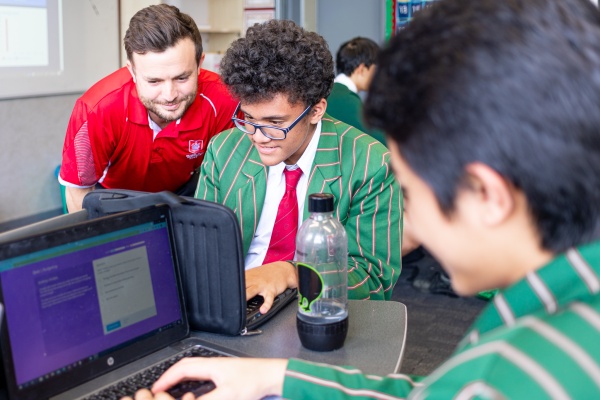
Banqer was a natural fit for the Product Innovation Fund, which is supporting seven pilot projects that deliver new, meaningful and unique learning experiences from New Zealand to the world. These pilots reimagine what a New Zealand education experience can look like and mean for global learners.
From New Zealand to the world, Banqer’s technology is setting learners on track for better financial futures. And thanks to the partnership between Banqer and ENZ, the stage is set for this New Zealand-built product to have an even greater impact around the world, delivering financial education and empowerment to learners wherever they are.
More information:
Learn more about Banqer.
- Japan Teachers at ENZ AKL office for ELS session
- ENZ quarterly report for 1 April to 30 June 2018