Search
Showing 10 of 7357 results
-
From the Chief Executive: Importance of international students to New Zealand
Just before Christmas, Education New Zealand Manapou ki te Ao filed its submission to the Productivity Commission Inquiry into immigration policy settings.
ENZ has taken a strong stand in the detailed 15-page submission, refuting some statements made about international students in the Commission’s preliminary report, and pointing out that international students are different to other temporary migrants included in the inquiry.
In the submission we say international students should not be characterised as coming to New Zealand to seek employment, invest or run a business. Rather, international students coming to New Zealand support the achievement of the Government’s broader goals and objectives, as well as contributing to NZ’s economic development. More than two thirds of international students fund their studies through their families and their own savings and most international tertiary students have left New Zealand within five years of completing their studies.
The submission also discusses the broad benefits international students deliver for New Zealand, including regional development, research output, and strengthened bilateral relationships with other countries.
The Productivity Commission aims to present its final report to the Government in April 2022.
In other recent news, our international teams have recently completed several partnership agreements that will continue to sustain international education while our borders are closed. These include a research exchange agreement with DAAD (a major German academic exchange organisation), a science research agreement with the Indian Institute of Technology Delhi, and digital classroom cultural exchanges with South Korea. We also highlight the growing success of the NZ Global Competence Certificate during 2021. These items are covered in more detail in this issue of E-News.
He rā ki tua – Better days are coming!
Grant McPherson
Chief Executive, Education New Zealand Manapou ki te Ao -
Japan-New Zealand education ties strengthen with growing collaboration
Signed on 28 June, ENZ’s memorandum of understanding with Waseda University and its affiliate schools will be influential in developing international education exchanges that benefit institutions in Japan and New Zealand at school and tertiary level.
Under the MOU, the first cohort of 12 students from Waseda Jitsugyo School will visit New Zealand schools in mid-July. This will be followed by an ENZ and Air New Zealand-led familiarisation visit to New Zealand schools involving 10 schoolteachers from Japan, including a Waseda University staff member in charge of overseas programmes for its affiliate schools.
ENZ’s Senior Market Development Manager – Japan, Misa Kitaoka, said the MOU is a significant one as it helps develop a strong relationship between a prestigious Japanese university, its affiliate schools and New Zealand schools.
“By partnering with one of the top universities in the world, the MOU will not only promote student mobility from Japan but also boost New Zealand’s reputation and credibility in Japan,” Misa said.
“We are keen to replicate this strategic partnership with universities and affiliate schools in Japan’s regions.”
It was also fitting to see this MOU achieved in the lead up to NZIEC 2019 where Japan will feature as Country of Honour, Misa said.
“With the Rugby World Cup about to be held in Asia for the first time in the tournament’s history, it is fantastic to see Japan feature as the Country of Honour at NZIEC.”
The Country of Honour designation celebrates and showcases New Zealand’s international education connections with partner countries. Japan is New Zealand’s third-largest source country with more than 10,000 Japanese students enrolled here every year.
“We look forward to sharing the latest Japan market updates and opportunities with NZIEC delegates in three sessions involving guest speakers from Japan, whose unique insights will present new opportunities for partnerships and collaboration.”
Attendees will learn more about doing business with Japan, what the protocols are and the expectations of Japanese agents, education providers and government agencies. These insights will provide delegates with an overview of Japan’s internationalisation agenda and how it could be relevant to their international relations and marketing.
The conference dinner will celebrate Japan’s fascinating culture. Japanese Ambassador, His Excellency Hiroyasu Kobayashi, will be guest of honour.
Find out more in the NZIEC 2019 programme.
-
More than 1,000 delegates attend NZIEC KI TUA 2022
NZIEC at a glance
- 1,065: Registered delegates, making this the biggest NZIEC ever
- 105: Sessions delivered across the week
- 101: Speakers
- 11: MCs and facilitators
- 8: Time zones that ENZ’s international team members joined sessions from
- 3: Studios in operation, in Pōneke Wellington, Tāmaki Makaurau Auckland and Ōtautahi Christchurch
- 88%: Delegate satisfaction for keynote and plenary sessions (rated good or very good).
“This was the largest NZIEC ever held, which shows the high level of interest in rebuilding the international education sector within Aotearoa New Zealand,” says Education New Zealand Manapou ki te Ao (ENZ) Chief Executive Grant McPherson.
“I’d like to thank our line-up of keynote, plenary and breakout speakers, as well as everyone who took the time to attend. I hope all of our delegates were encouraged and inspired and gained a gem or two for the rebuild journey ahead.”
Prime Minister and Minister address conference delegates
Prime Minister Jacinda Ardern recorded a special message for our sector. If you missed it during the conference closing session, take a moment to view it now.
YouTubeEducation Minister Chris Hipkins also addressed conference delegates and answered questions. Conference delegates can view this session on the event portal.
New ingoa Māori
This year, to celebrate its 29th birthday, NZIEC was gifted a new ingoa Māori (te reo Māori name): NZIEC KI TUA. The name was inspired by the following whakataukī:
He rā ki tua.
Look positively toward the future, Better times are coming.
Ki Tua is not about returning to the ‘status quo’. It’s about reconnecting to the world, finding a fresh perspective, and taking a new approach.
“The adoption of NZIEC KI TUA reflects our commitment to Te Tiriti o Waitangi and the Maihi Karauna, the Crown’s Strategy for Māori Language Revitalisation,” Mr McPherson says.
“NZIEC’s new name also reflects Aotearoa New Zealand’s distinct cultural identity and the importance of continuing to develop our sector’s annual conference.”
Sessions are still available
Registered delegates can watch or re-watch conference sessions from the event portal until Friday 16 September.
Conference highlights
Recognising the challenge facing the international education sector, the conference explored the theme of Towards Recovery: Reflect, Reconnect and Renew.
The programme started by reflecting on the sector’s pandemic experience, including moving reflections from international students and international education practitioners. Delegates explored student experience through the pandemic.
The programme then shifted to reconnecting with the world. Delegates heard from Minister of Education, Hon Chris Hipkins, and New Zealand’s leading trade negotiator, Vangelis Vitalis.
Mid-week we turned our attention to renewal, and how our industry can seize the big opportunities and overcome the big challenges it faces. We explored the intersection of te ao Māori and international education, how we can develop global citizenship, approaches to innovation and diversification, and tackling the climate challenge.
Quotes that struck a chord
- “I learned a lot about love, I think. Love and care during this pandemic”
- Veena TK, Masters student from Malaysia, reflects on an unexpected aspect of her pandemic experience in Aotearoa.
- “I love my school canteen. You know especially butter chicken pie, they’re $4 each. Pretty good.”
– Year 13 student Chad (Min-Hyeok) Kang’s favourite go-to food spot in New Zealand is close to home.
- "I do want to thank everybody for their ongoing feedback and support and for the huge amount of resilience and persistence that we have seen across the international education sector. I do think there are some very, very exciting things ahead for us."
– Hon Chris Hipkins, Minister of Education, in his remarks to the international education sector.
- “Let me start first with the international context… we have war, we have plague, we have the famine and of course we have climate change as well”
– Vangelis Vitalis discusses contemporary challenges in the international arena.
- “Knowledge wasn’t retained for status, it wasn’t a choice. Often it was associated to the wellbeing and betterment of our people”
– Sharlene Maoate-Davis talks about how education is conceived and valued from a te ao Māori perspective.
- “Six months in a leaky boat has a whole new meaning to me”
– Abbas Nazari on his experience prior to being rescued by the MV Tampa. More seriously, he offered these remarks: “The essence of my talk is very simple… in life there are obstacles and challenges that fall across your path. Despite all these challenges, there is always light at the end of the tunnel.”
- “The weight of the past is constantly fighting with the pull of the future and the push of the present to try and kill innovation”
– Melissa Clarke-Reynolds on organisational immune systems’ reactions to innovation.
- “Changing your world is your critical contribution to changing the world”
– Dr Kennedy Graham on how you can contribute to the climate challenge.
Stay tuned to next month’s E-News for more details on NZIEC KI TUA 2023.
-
New Zealand successes at PIEoneer Awards 2022
Congratulations to the University of Auckland’s India Support Programme, which won Marketing Campaign of the Year against some strong competition. Congratulations also to Ngā Hononga-ā-Kiwa (University of Waikato), for being highly commended in the Championing Diversity category, and to Intern Abroad HQ, which was highly commended in both the Real Life Learning and the Sustainability International Impact categories.
These awards are highly sought after as they recognise innovation and achievement in global education. Around 550 people from around the world attended the event in person, with hundreds more online.
The University of Auckland, New Zealand: As India is the university’s second-largest source market, the India Support Programme was the perfect opportunity for Auckland to promote its support options to students, to provide them with a better experience and to build and maintain brand presence in the market. It created a short, simple, and effective basis for its campaign: ‘We are with you, until you can be with us in New Zealand.’
Ngā Hononga-ā-Kiwa: In 2021, Ngā Hononga-ā-Kiwa (University of Waikato) had the highest Māori student population out of all New Zealand universities. It used two work streams to fill knowledge and opportunity gaps including the newly-created Māori Education stream, which created a tangible resource that informs educators and youth on how global citizenship is defined from a Māori/indigenous perspective, and Māori Business for which 24 students received full scholarships.
Intern Abroad HQ, New Zealand: Intern Abroad HQ continues to evolve its internship portfolio, even in a hard year like 2021. It expanded its range of placements and made sure remote and overseas internships aligned to at least one of the UN’s Sustainable Development Goals. It also launched the exclusive Experiential Learning Curriculum, a guided reflection course incorporated into all its internships, bridging the gap between interns’ studies and careers.
The New Zealand Global Competence Certificate, which is a collaboration between Education New Zealand Manapou ki te Ao, AFS Intercultural Programs and Massey University Te Kunenga ki Pūrehuroa, was also a finalist in two categories of the awards.
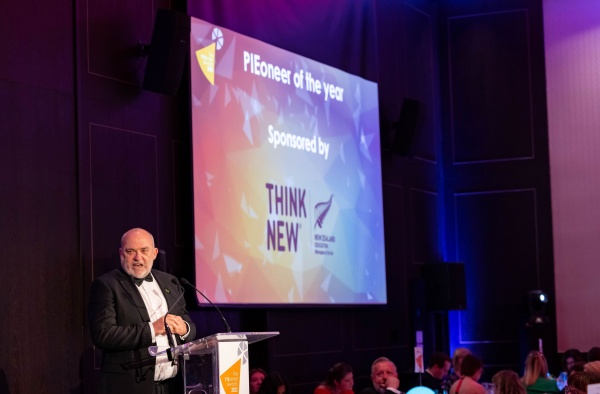
Grant McPherson presented the PIEoneer of the Year award sponsored by ENZ to AMOpportunities from the United States.
ENZ sponsored the PIEoneer of the Year Award, for the organisation or individual who can demonstrate their commitment to improving the global education industry and show how their entry has genuinely changed the landscape we operate in. Grant McPherson presented this year’s award to AMOpportunities from the United States, which aims to provide clinical training for schools, hospitals, and students globally. To date, more than 3,600 students have gone through the platform and completed rotations at 250+ clinical sites. With partners such as UChicago Medicine, MedStar Georgetown University hospital and more across the US, numbers look set to keep rising.
-
A word from the Minister
It has been, and continues to be, an extremely challenging time for many of New Zealand’s universities, schools, polytechnics and institutes of technology, as well as private providers and English language schools with our border closed.
But I think we are starting to see the light at the end of the tunnel. I anticipate we will have a further 12-18 months of disruption before we see a future where much of that will start to fade. The recent news of promising vaccines against COVID-19 is very encouraging. It’s difficult to share an exact timeline with you all as we need to consider vaccination around the rest of the world and international supply chains.
Over the next 12 months, I expect to see a series of progressive changes. That could look like a risk tolerance map of the world for countries that we have safe travel zones with, or for countries we have lower isolation requirements for when they arrive, for example.
While we are looking to move as quickly as possible on the border, it is very unlikely that there will be one magic day where we cut a ribbon at the airport and all travellers will be welcomed in.
We have made a start and granted an exemption for a cohort of 250 postgraduate (largely PhD) students to enter New Zealand from early next year to continue their study. And we’ll consider further cohorts in the future, based on capacity.
This government will continue to support the sector through our Recovery Plan for international education.
The recent New Zealand Global Pathways initiative that New Zealand universities, ENZ and NCUK have entered into is a very welcome development. It’s the first time that ENZ and all the universities have been involved in such a partnership. It’s encouraging and it’s the sort of innovation that we are looking for during this period of difficulty.
International education has been good for New Zealand – not just economically, but culturally and socially too. I look forward to waving the flag for New Zealand internationally and at home too. New Zealand has such an incredible, high-value education to offer to the rest of the world.
Meri Kirihimete,
Chris Hipkins
Minister of Education
-
Haere rā to Brazilian students
Farewell events for the students have been held around the country, to demonstrate our appreciation of this opportunity, and contribute to the students’ memories of New Zealand. The events also provided an opportunity for diplomats from both countries, and local government representatives to demonstrate the value of international education in building global connections and long-term relationships.
Events included a sailing trip with Maritime New Zealand, Māori performances, outdoor experiences, and museum tours, organised by Education New Zealand Manapou ki te Ao (ENZ) alongside regional development agencies.
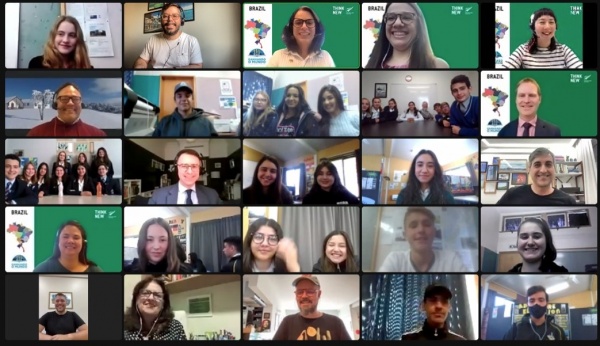
Final farewells from students and their supporters in New Zealand and Brazil.
The final farewell event was online, and included New Zealand Ambassador to Brazil Richard Prendergast, Henrique Choer Moraes, Minister-Counsellor at the Brazilian Embassy in Wellington, and Mr. Roni Miranda Vieira, Director of Education from the Education Secretariat of Paraná state speaking with the students and hearing about their experiences, alongside others involved with the trip.
‘The people were very welcoming – a wonderful experience.’
‘New Zealand is beautiful, this is the best experience of my life, I’m loving it here!’
‘We got to know so many places.’
‘A lovely country and a lovely experience – thank you so much.’
‘We did a boat cruise in Milford Sound.’
‘We went with the school to a lot of different places.’
‘I had a really great time with my host family. They were very kind to me. I’m very sad to leave them.’
‘I’m getting on very well with my host brother – I think I will miss him when I go back to Brazil.’
‘It has been an amazing experience – I am learning so many things.’
‘My host family owns a coffee shop in Rangiora where I go on weekends and have a chance to know different people, they also own a farm and have taught me how to shear a sheep. Another interesting thing I noticed is that depending on the city, I hear a different accent.’
ENZ’s Market Development Manager in Brazil, Bruna de Natale, says this was the first big group of students to come to New Zealand after our borders reopened.
“We had all been waiting eagerly for New Zealand’s borders to open again so this programme could get underway after almost two years, and I know the Kiwi schools involved were very excited to welcome these students. It was good to hear about the special memories the students will take home from their trip, including how much they learned. For most students, this was their first international experience and for many of them, being in a multi-cultural class in New Zealand was a very different experience from home.
“We hope that the students will stay connected to New Zealand and that this experience will be a good basis and incentive for them to explore further international study options in the future – who knows, we might welcome them back to New Zealand someday, that would be lovely!”
The study programme is fully funded by the Paraná Government, through Paraná’s Secretary of Education and Sport, and is expected to continue next year for around 2,000 students. We hope that some of them will be able to come to New Zealand.
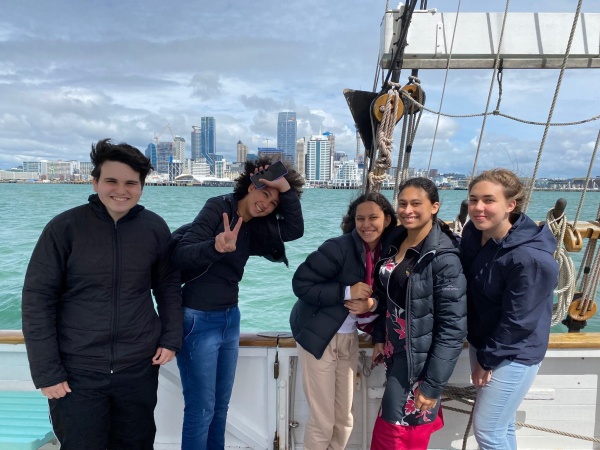
Auckland-based students took part in a sailing trip thanks to Maritime New Zealand and Auckland Unlimited
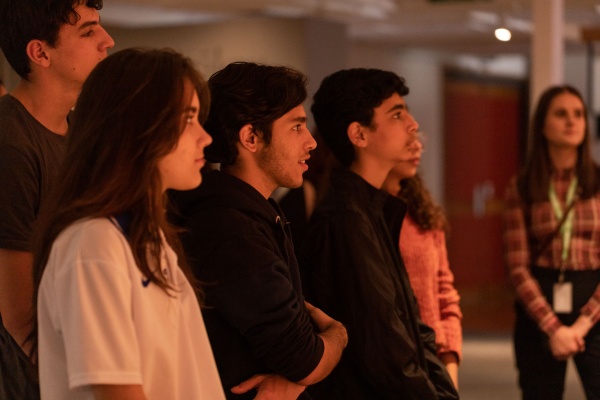
Students from Freyberg High School saw a presentation on the Iny͂ People of Central Brazil exhibition at Te Manawa Museum in Palmerston North
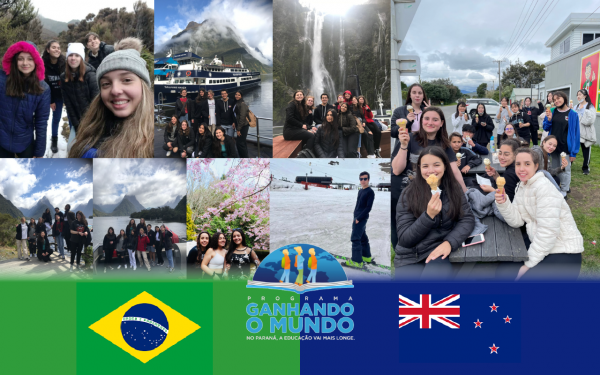
Visiting Milford Sound was one of the highlights for the Invercargill-based students

Students from Western Heights High School experienced a farewell special day out in Rotorua that included Velocity Valley, ZORB, and the Skyline Rotorua Gondola and Luge, as well as a BBQ lunch.
-
JJL Overseas Education opens New Zealand office
JJL’s new branch office is part of its new service strategy to upgrade its services to Chinese international students.
Hayley Shields, ENZ’s Director Student Experience, spoke and cut the ribbon at the opening ceremony in Auckland, welcoming JJL to New Zealand and affirming the importance of the New Zealand-China education relationship.
“JJL has had long-standing relationships with many quality New Zealand education providers for over 15 years, most of whom were represented at the opening. People had travelled from all over New Zealand to show their support for JJL’s investment in a local office,” said Hayley.
The JJL team will be focussed on advising and supporting the positive student experience of their students currently in New Zealand education institutions.
The organisation’s team of three is led by Janet Wang, who has been working in international education in New Zealand for many years.
JJL’s new premises can be found on Level 6, 115 Queen Street, Auckland.
-
New Zealand experience grows global indigenous network
A special bond forged through a Study Abroad programme, involving Vermont’s Champlain College and Auckland University of Technology (AUT), was marked by the gifting of a unique pare whakairo (carved doorway mantel) to the US College in September.
Called Te Hononga (The Convergence), the pare whakairo was created by kaiwhakairo (Māori carver) Pahi O’Carroll over four weeks in residence on the Champlain campus.
The pare is unlike any other. It is carved from a wood native to the area – black walnut – and evokes values, beliefs and traditions common to both Māori and the indigenous people of Vermont, the Abenaki.
The relationship between Champlain and AUT dates back five years, when New Zealand Honorary Consul and trustee of Champlain College, Dr George Burrill, first established a study abroad exchange programme between the two institutions. To date, over 100 students have participated.
One of the highlights of American students’ time at AUT is the Noho Marae programme.
“Every year students tell us how the Noho Marae programme has profoundly impacted them,” ENZ General Manager – International, Lisa Futschek, says. “It turns them into lifelong advocates for New Zealand, its education system and Māori culture.”
Run by AUT Senior Lecturer in Māori and Indigenous Development, Jason King, the mini-course includes basic Te Reo Māori, Māori mythology, waiata (songs) and cultural customs. It includes with a noho marae (weekend-long marae experience).
King describes the course as “the base of a tree, from which branches and leaves grow”.
“The course puts indigenous goggles on students,” he says. “It opens them up to areas of discussion with their own indigenous people.
“My ultimate aim is to connect us not only globally, but indigenously.”
Thanks to their connection to Māori via AUT and the Noho Marae programme, Champlain College made a formal connection to their own indigenous people, the Abenaki tribe. A representative from the Abenaki was present at the unveiling of Te Hononga.
Many US students choose to keep in touch after they return home through the student-led Whānau Councils. These were first established in 2010 after students from Europe were so moved by their AUT marae experience that they set up their own group to maintain their connection to New Zealand and each other. There are now three Whānau Councils across Europe and the US actively supported by AUT.
For the European council’s 10-year anniversary, members of group are planning to return to New Zealand – this time with their partners and children.
“We tell them during the Noho Marae, after studying in New Zealand you are whānau for life,” King says.
-
New Pastoral Care Code of Practice for Tertiary and International Learners Released
Today, the Government released a new Code of practice for the pastoral care of tertiary and international learners, to take effect by 1 January 2022, as required under the Education and Training Act 2020.
This revised Code is the product of many conversations, engagements, emails, phone calls, and hui. We are thankful to everyone that has spent time to help improve the wellbeing and safety of tertiary and international ākonga.
The overall purpose of this work is to develop a system of supports for the wellbeing and safety of domestic tertiary and international learners, through one set of clear rules and expectations for providers that can be tailored to their learners’ needs.
We have summarised the key changes and provided links to the new code and Ministerial Press release, below
What does the new Code mean for tertiary providers?
Tertiary providers will need to consider how their overall systems and resources support learners’ wellbeing and safety.
It will be important for providers to build and maintain strong relationships with learners and other interested stakeholders to identify and define the issues that are important for their communities and develop appropriate strategic goals, plans and practices around them.
Providers are expected to:
- build capacity across their organisation to engage and empower learners to manage their own wellbeing
- proactively identify and respond to learners who may face additional challenges as early as possible and tailor extra support to meet their needs.
- respond effectively in an emergency.
The new Code continues to focus on outcomes and flexible practices that enable providers to support their learners in ways that best meet their needs.
What does the new Code mean for tertiary and international ākonga?
The Code will make providers more accountable to learners, their families and community. The new Code expects tertiary providers to consult with learners, and other stakeholders when developing, reviewing, and improving their strategic goals, plans and practices. It also expects providers to be transparent about their wellbeing structures, strategies, practices and performances.
What’s changed for international ākonga?
The new Code covers domestic and international tertiary students and international students in schools. The goal is to ensure consistency within tertiary providers rather than having separate Codes for international and domestic learners in the same provider. The new Code continues to spell out the expectations that apply now for providers regarding the specific needs of international learners. There are no changes to requirements for schools, in New Zealand, who host international students.
-
Study Abroad NZ schools programme launched in US
ENZ Business Development Manager Mary Camp says this is a pilot project to test the waters in the US market.
“We’re thrilled to be partnering with AFS for this pilot – they are a trusted organisation with a long history of matching US students with life-changing education experiences.
“New Zealand schools have much to offer US students looking for a high-quality study abroad experience to give them a competitive advantage in the college application process.”
The programme includes nine New Zealand schools, each offering themed programmes for one semester in the fields of environmental studies, Māori culture, the arts, outdoor education and leadership.
Mary is hoping to see some more US students coming through in 2019 as a result of the pilot.
“Opening up new markets for the school sector will help us achieve sustainable growth, which of course is a focus of the International Education Strategy.
“If the pilot is successful, we’ll look to roll it out to more New Zealand schools.”
Check out the AFS web page for more information about the programme.
The schools involved are Rangitoto College, Western Springs College, Western Heights High School, Aotea College, Papanui High School, Hillmorton High School, Whanganui High School, Whakatane High School and Te Puke High School.